
October 17, 2026

| View this email in your browser | ||
|
|
SUPPORT US | |
|
October 17, 2026
|
||
|
|
||

|
||
| Jonathan Adler | ||
| +972 Magazine editor | ||
|
Abbas, Hamas, and the Palestinian leadership crisis |
||
|
Back in September 2024, I packed into a crowded auditorium in New York’s Lower East Side to attend the final session of a daylong conference, hosted by Jewish Currents. Early on in the panel, titled “Palestinian Liberation After the Destruction of Gaza,” the discussion turned to examine the problems within Palestinian leadership — and Palestinian writer Ahmed Moor chimed in. “I don’t think we have a deficit of leadership within Palestine and elsewhere,” he clarified. Gesturing toward his co-panelists, he continued: “We have leaders like Fadi [Quran] in Ramallah. We have people like Noura [Erakat] here in the United States. We have an absence of institutional flexibility which could give expression to that leadership within Palestine.” Moor’s comments have stuck with me, because they get to what’s so frustrating about the crisis in Palestinian leadership: the vast political potential — and indeed, proven leadership — among Palestinians themselves, who remain excluded from institutional politics by the official ruling party and confront an Israeli regime determined to prevent Palestinian sovereignty at all costs. This was a frustration that was clear in my conversation with Omar Rahman, on the latest episode of The +972 Podcast. In the face of Israel’s ongoing genocide in Gaza, Palestinians have managed to mobilize unprecedented levels of international support. Yet “very little of this,” Rahman insisted, “has been a result of what [Palestinian Authority President] Mahmoud Abbas and the political leadership in Ramallah have done, or what Hamas and its leadership have done in Qatar.” And little of it can be turned into real political power, in the absence of a unified national vision and strategy. 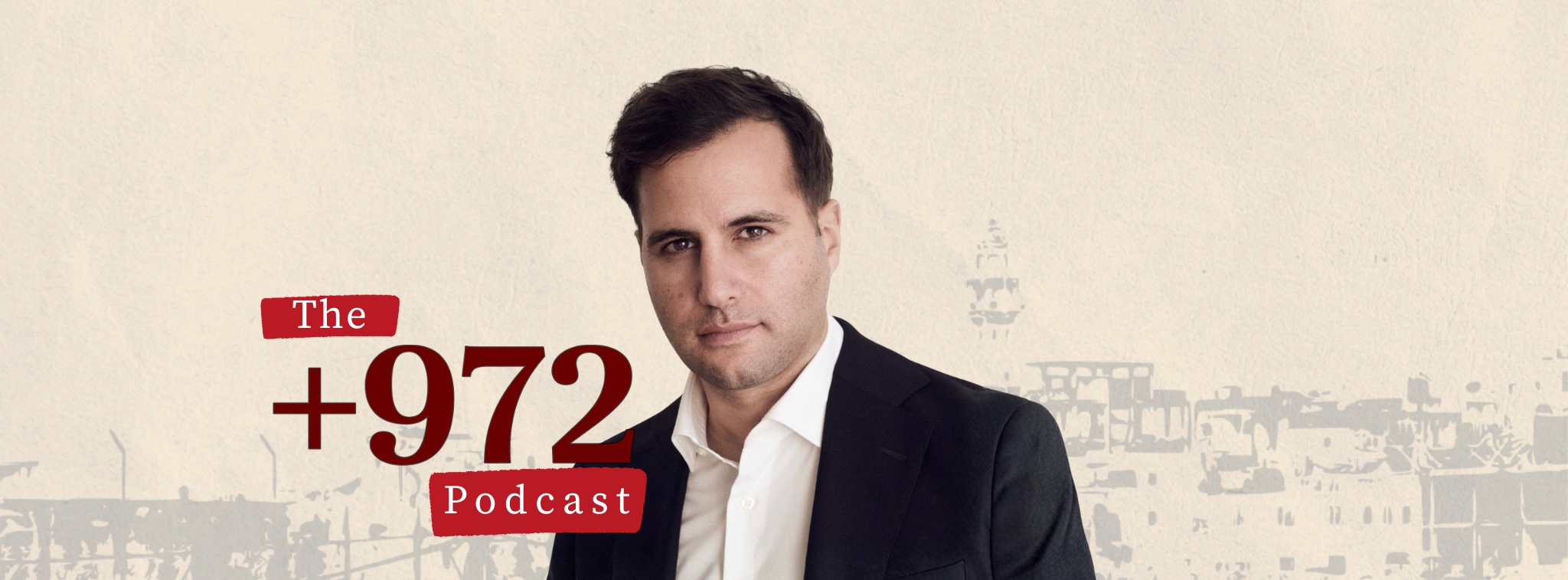
In the episode, we discussed how Abbas has consolidated and monopolized power during his more than two decades in office; in Omar’s words, politics in the West Bank is now a one-party and one-man show. The 90-year-old leader may not have much time left, but recent internal party elections give Omar little hope that Abbas’ passing will usher in a new, democratic era. Omar sees Hamas as a much more dynamic political institution, which has been able to withstand Israel’s many attempts to destroy it. But it is certainly no more democratic or responsive to public sentiment than Fatah — and the October 7 attacks, as Omar points out, was a unilateral and highly consequential decision for all Palestinians, without any accompanying political plan for what came next. Omar is also an expert and frequent commentator on the politics of the wider Arab region, and our conversation touched on how the current U.S.-Israeli war on Iran has led to new geopolitical realignments that could potentially constrain Israel’s freedom of action. Yet here, too, the lack of an effective Palestinian leadership has meant that Palestinians remain largely absent from these political dynamics. Of course, the problem of corrupt and unrepresentative national leadership is not unique to Palestinians. The stakes, however, are much higher: Their very existence in the land between the Jordan River and the Mediterranean Sea is under attack. It is the recognition of this collective threat, more than any possibility of institutional reform, that Omar believes might push Palestinians of all backgrounds to coalesce and take hold of their political future.  I hope you enjoy my conversation with Omar Rahman, and subscribe to The +972 Podcast wherever you listen. |

|


|
|
| About | Privacy Policy | Unsubscribe | ||
| +972 Magazine is an independent, non-profit media initiative, supported largely by our readers. | ||
| © 2026 +972 Magazine. All Rights Reserved. | ||