
October 25, 2026

| View this email in your browser | ||
|
|
SUPPORT US | |
|
October 25, 2026
|
||
|
|
||

|
||
| Dikla Taylor-Sheinman | ||
| Editor at +972 Magazine | ||
|
How Israel wields international law as a license to kill |
||
|
There is something bewildering to me about the fight against occupation and apartheid from inside Israel. Israelis continue to stand alongside Palestinian communities facing settler violence and expulsion in the West Bank, sometimes take to the streets to protest the occupation and genocide in Gaza, and — even more occasionally — refuse military service. But it is hard to deny that a disproportionate share of the work has become the exclusive province of Israeli human rights organizations — whose mandate, in one way or another, is to protect or advance Palestinian rights — staffed by lawyers, researchers and other experts. Where is the political work of confronting the system as a whole? It’s a distressing question to entertain from inside Israel. The assault on these organizations has become so totalizing that the instinctive response for those of us engaged in the struggle for Palestinian liberation is to defend them and, in another sense, to see their work as more important now than ever. Our own work as editors and journalists relies in no small part on human rights groups to track home demolitions, Palestinians disappeared into Israeli prisons and the conditions they face inside them, restrictions on movement, and attacks on freedom of expression — forms of state violence that we could scarcely document comprehensively on our own. 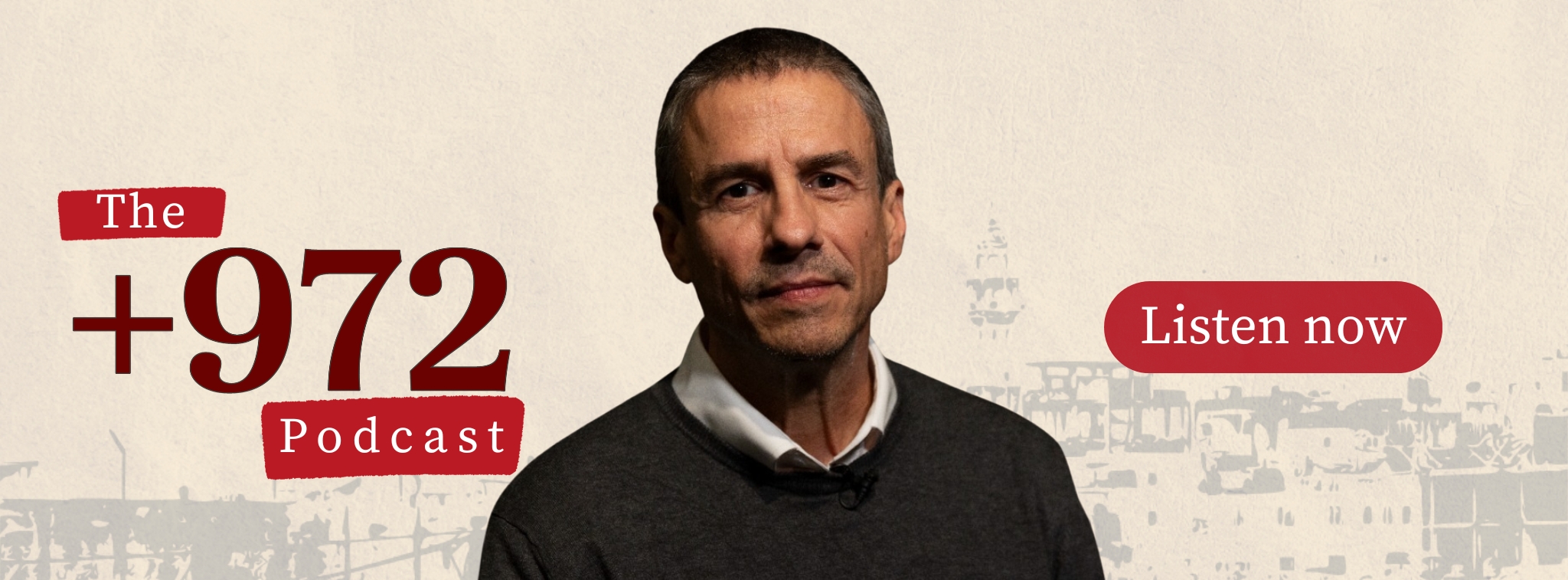
These were some of the questions I brought with me when I sat down with Israeli scholar Neve Gordon on the latest episode of the The +972 Podcast. Gordon was once a prominent leader within the Israeli left’s human rights project, serving as the first director of Physicians for Human Rights – Israel during the First Intifada and throughout the Oslo negotiations. Today, he is an academic and activist in London, where he arrived in 2016 after more than a decade of teaching in Israel; his outspoken support for the Boycott, Divestment and Sanctions movement had made him the target of intense backlash from students and right-wing groups. Yet somewhere along the way, Neve stopped counting himself a believer in the project of human rights. His research fascinates me, and unsettles some of my own assumptions, too, because it asks us to reconsider political tools and languages that can seem self-evidently emancipatory. As Israel’s genocide in Gaza grinds on, hope has understandably been placed in South Africa’s case against Israel at the International Court of Justice, in the International Criminal Court’s arrest warrants targeting Israeli leaders, and in the broader system of international humanitarian law and its mechanisms of accountability. But what if human rights and international law don’t merely often fail to restrain state violence, but can themselves be used to justify and legitimize it? We discuss how foundational concepts in the laws of war that are ostensibly meant to protect civilians have provided both real-time and retroactive justifications for Israel’s destruction of Gaza; how Israel’s settler right appropriated the language of human rights and legal struggle to advance the dispossession of Palestinians; and whether appealing to Israel’s “colonial court,” as Gordon calls it, ultimately strengthens or weakens the struggle against Israeli apartheid. I invite you to listen to this important conversation with Neve, subscribe to The +972 Podcast wherever you listen, watch the episode on YouTube, and share it with your friends and family. 
|

|


|
|
| PHOTOS, IN ORDER OF APPEARANCE: | ||
| About | Privacy Policy | Unsubscribe | ||
| +972 Magazine is an independent, non-profit media initiative, supported largely by our readers. | ||
| © 2026 +972 Magazine. All Rights Reserved. | ||