
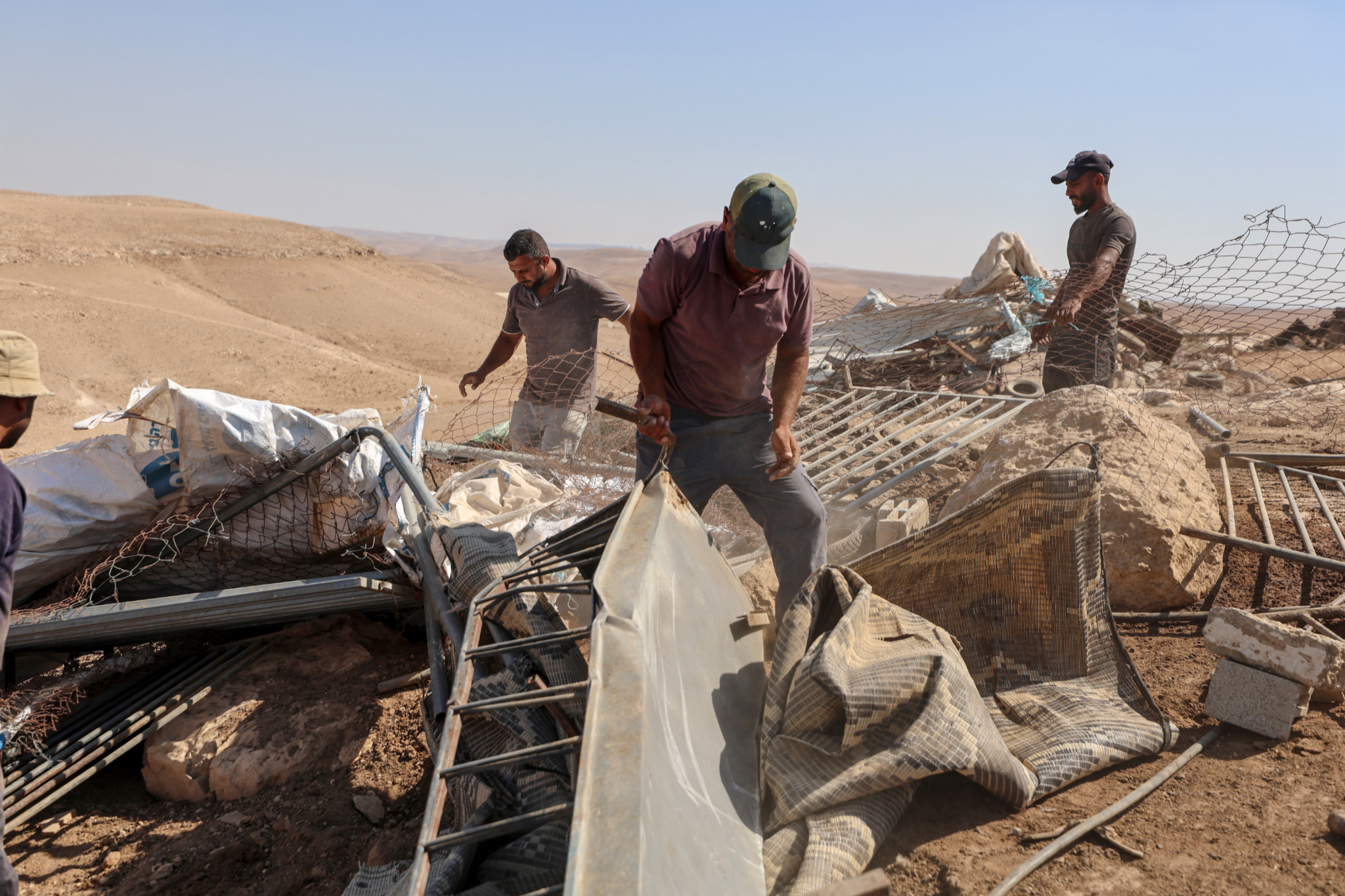

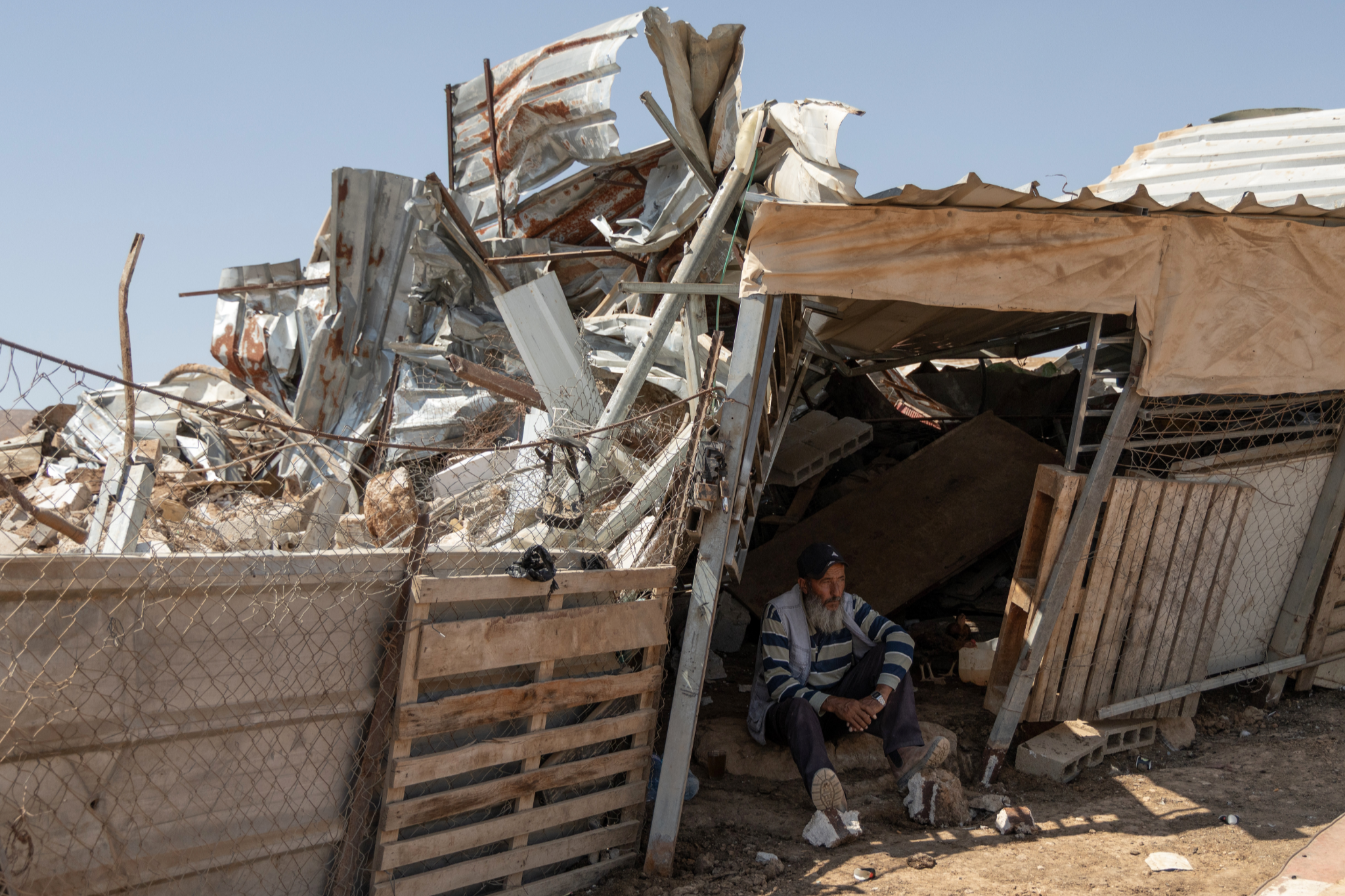
Until just two weeks ago, the Palestinian communities of Al-Taban and northern Fakhit sat opposite each other on two hills in the Masafer Yatta region of the occupied West Bank. On Sept. 2, Israeli military bulldozers demolished nearly every structure in Al-Taban. Six days later, they returned and erased northern Fakhit.
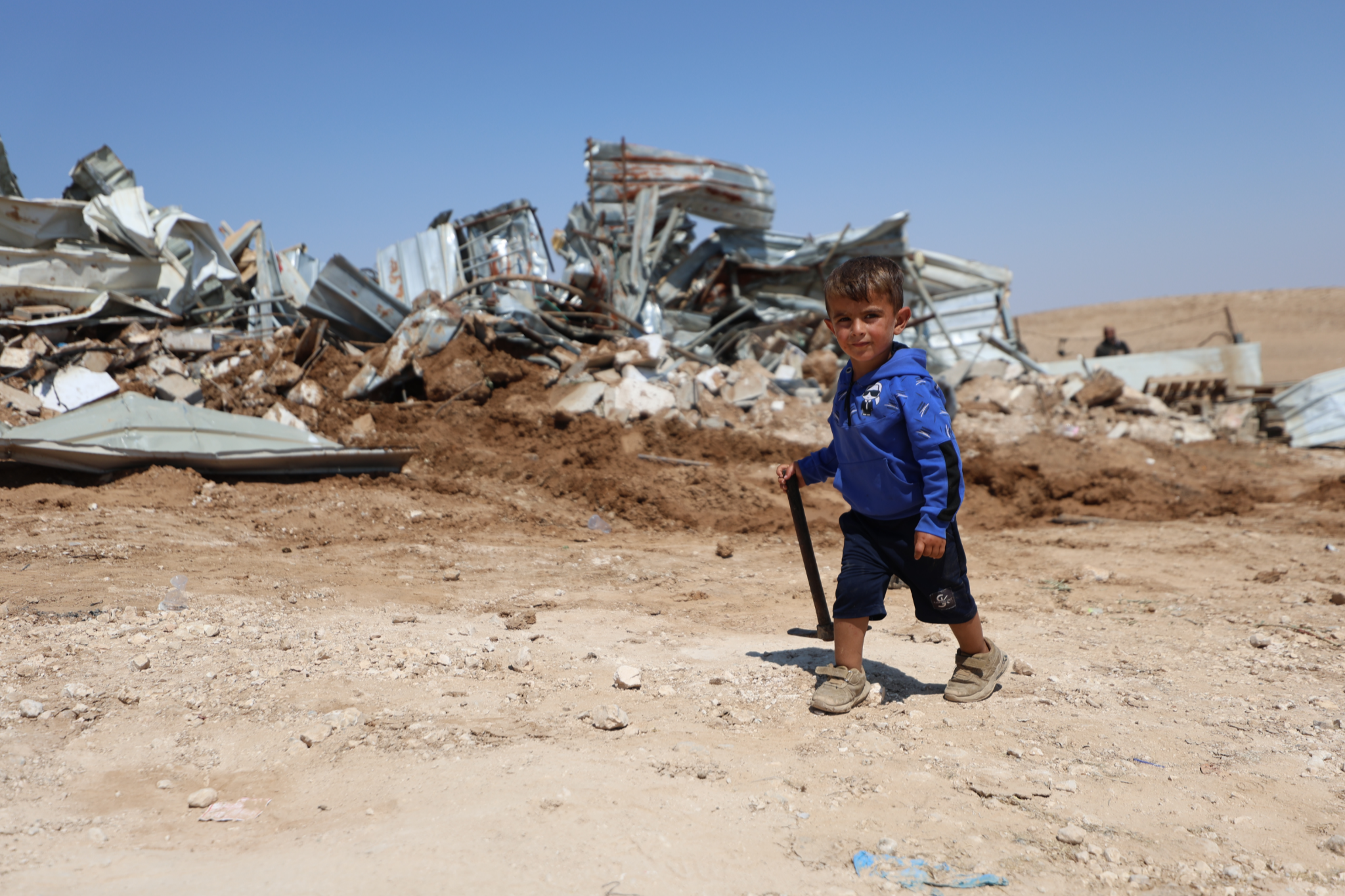
All 12 family homes in Al-Taban were demolished, leaving the village’s entire population — around 70 people, including 28 children, as well as elderly residents and people with chronic illnesses — sleeping in the open with nowhere else to go.
The demolitions also left residents without adequate food or water for themselves and their livestock. Israeli forces destroyed 10 pens housing around 600 sheep — the community’s primary source of income — as well as two milking facilities, four water-collection wells, 15 water tanks, and 10 structures used to grow or store animal feed. They also blocked four caves used to store household goods and other essential belongings with earth and mud.
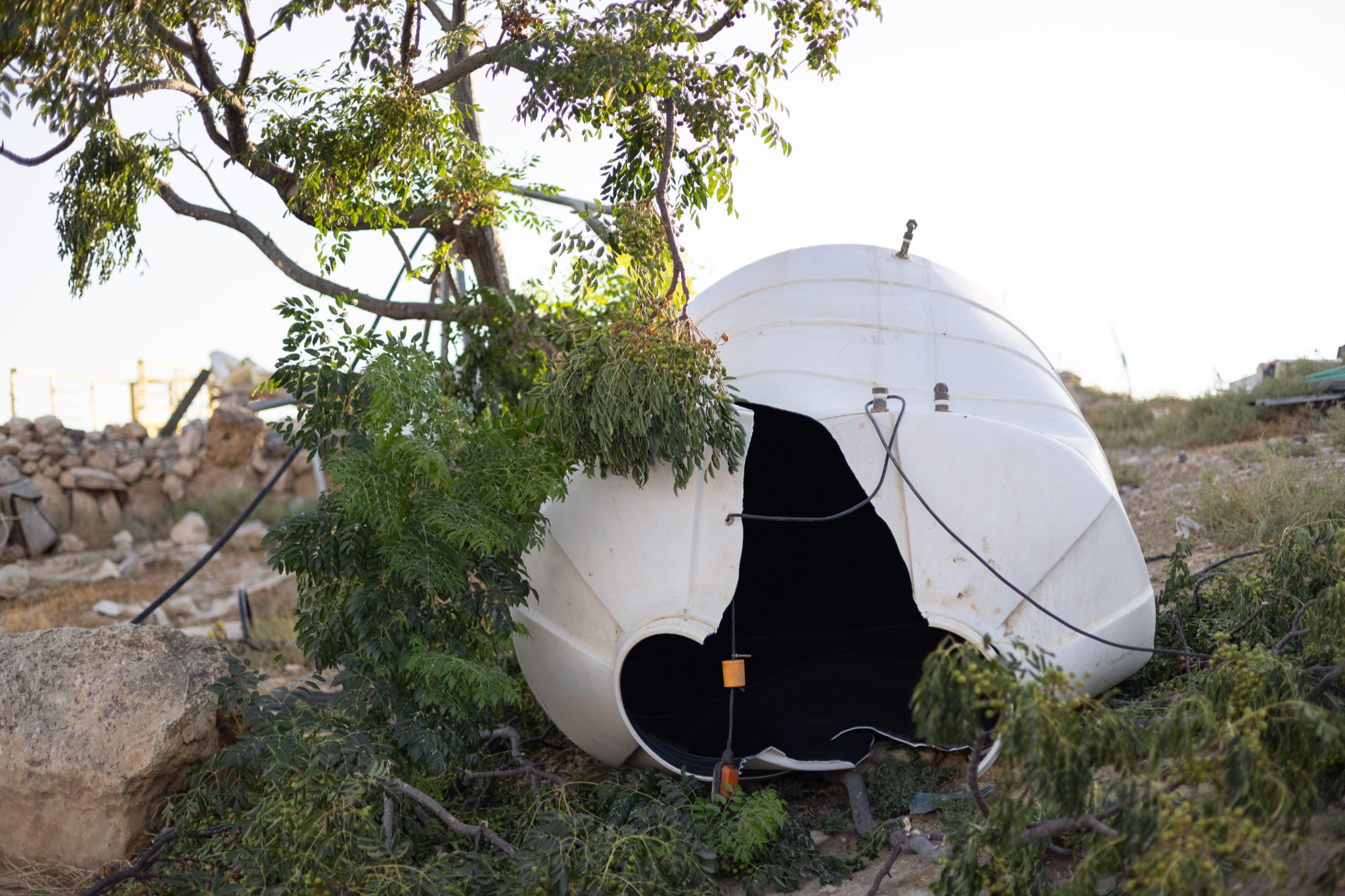
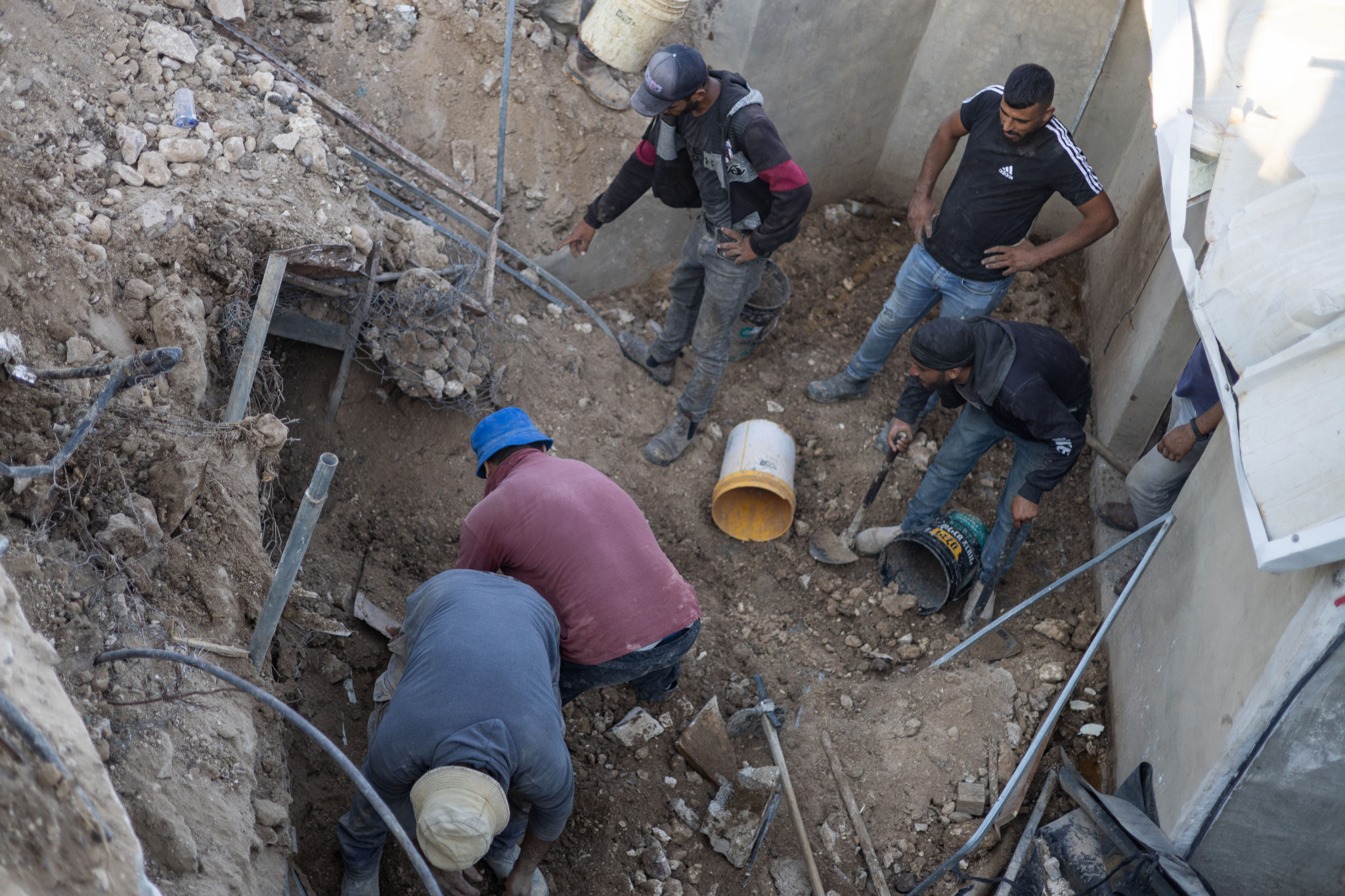
Once the bulldozers left, a half-built storage facility was the only structure that remained standing in Al-Taban. That same day, residents were issued a stop-work order for the building, placing it under threat of demolition too.
Suad Abu Obeid, 52, lost her home and everything her family owned. “The soldiers [who carried out the demolitions] destroyed our home and our water supply. They left us with nothing,” she told +972, standing near what remained of her home.
In 2020, the residents of Al-Taban submitted a detailed planning scheme for the village to the Israeli authorities. But around two months ago, the plan was rejected because it had not been approved by the Israeli military commander responsible for planning in the area.
“They said they would come every week and destroy another village,” Abu Obeid recalled the soldiers telling residents as they carried out the demolition. “They want to drive us out of Masafer Yatta. Where are we supposed to go?”
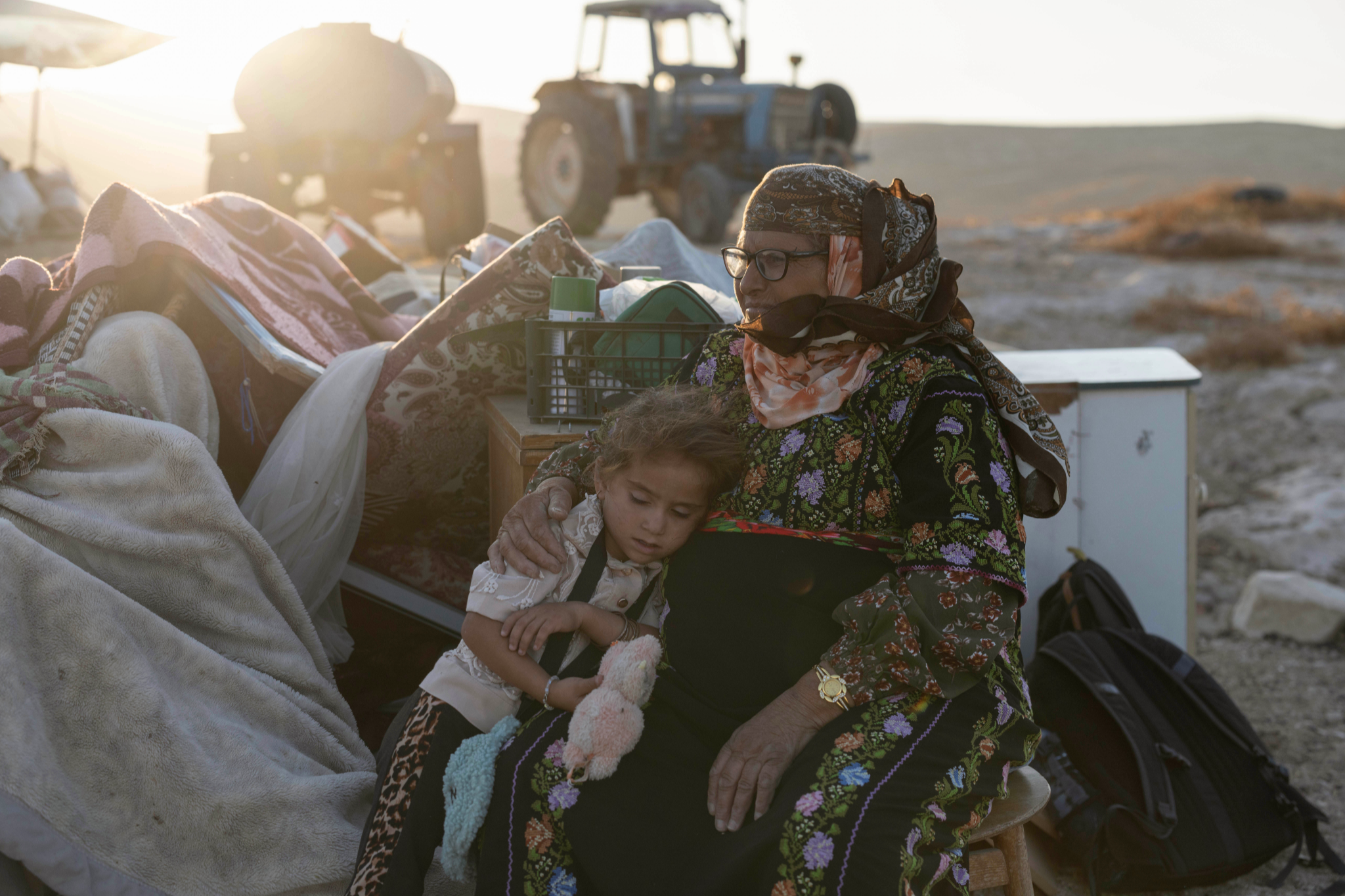
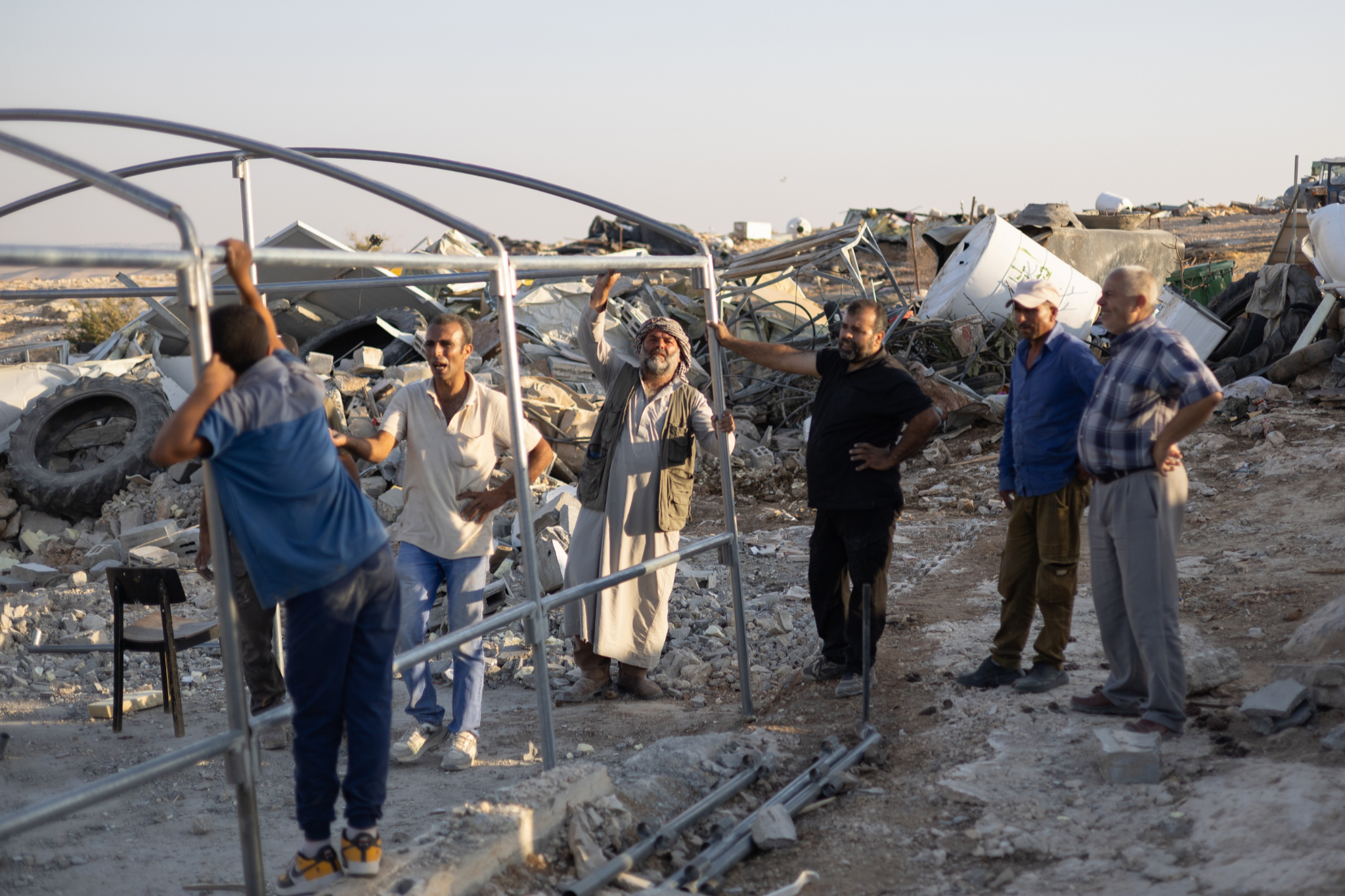
Less than a week after destroying Al-Taban, Israeli bulldozers turned their attention to northern Fakhit. From a nearby road, we watched on Sept. 8 as they trudged up the hillside toward the village. Only a few years ago, we had walked across this same land alongside shepherds and farmers; now, a massive excavator was preparing to tear into it.
Israeli occupation forces demolished virtually every residential and agricultural structure in northern Fakhit that day: five homes belonging to five families and housing 28 people, nine sheep shelters, the community’s primary and secondary water networks, including numerous tanks and wells, and its solar energy system and panels.
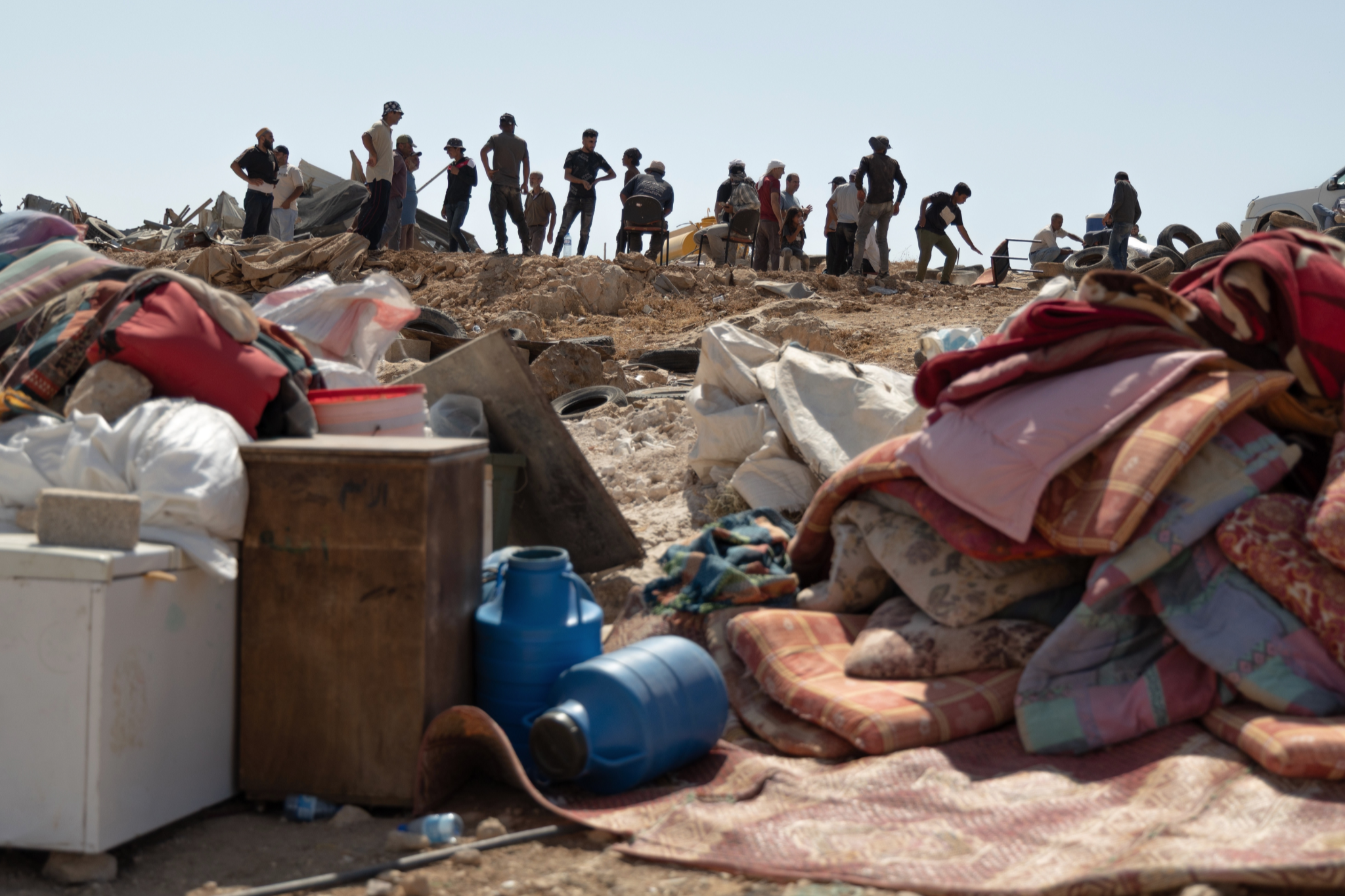
Issa Hamamdeh, a resident of northern Fakhit, told +972 on the day of the demolition: “Nothing remains for us to live in. I am forced to live with my children on the bare ground.”
The demolitions and confiscation of grazing areas and agricultural land in this part of Masafer Yatta has been a continuous and expanding process, one that has intensified dramatically since the October 7 attacks.
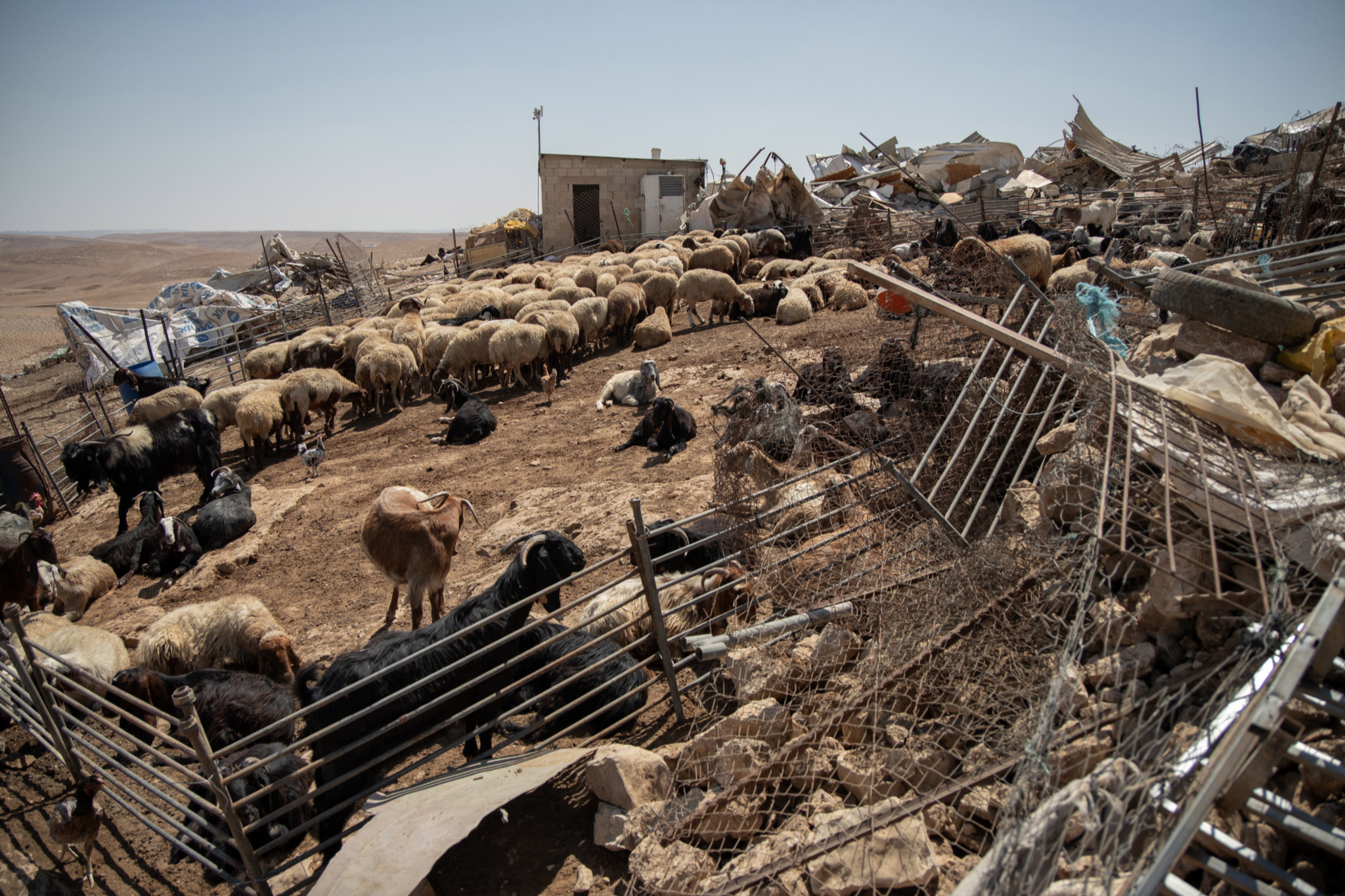
“For the past three years, we have been subjected to daily attacks and harassment by settlers,” Hamamdeh continued. “We have lost all our grazing land. We can no longer plough the land or feed our livestock from it, and our animals now depend on purchased feed. In addition to the physical attacks, our property has also been destroyed.”
For Hamamdeh, the settlers and the military share the same aim. “We know what the goal is: to force us to leave. They failed to drive us out, so they brought the bulldozers to destroy everything we own. Meanwhile, settlers move freely and establish outposts here, with everything available to them.
“They are taking away everything that gives us life,” he added. “If they could stop the oxygen we breathe, they would. But despite the enormous pain we are living through at this moment, we are staying. We are standing our ground.”
Nidal Abu Aram, head of the Masafer Yatta local council, agreed the demolition was part of a broader effort to force residents from their land. “It appears that the occupation had been waiting for the residents to leave after three years of settler intimidation and attacks,” he told +972. “When that failed, it resorted to a policy of erasing entire communities [through demolitions].”
“They were not given enough time to remove all their belongings or their food supplies from their homes,” Abu Aram continued. “Everything necessary for human life was erased.”
An unmistakable message
Families in Al-Taban and northern Fakhit have been left without even the most basic necessities, including toilets, water, and proper shelter. Yet despite the dire conditions, people continue to find ways to survive, relying on whatever resources they have and often using simple, improvised means to sustain daily life.
With little to no support from official Palestinian institutions, moreover, residents of both villages have increasingly come to depend on one another. Such solidarity could not stop the demolitions, but it gave those affected strength in the face of overwhelming powerlessness.
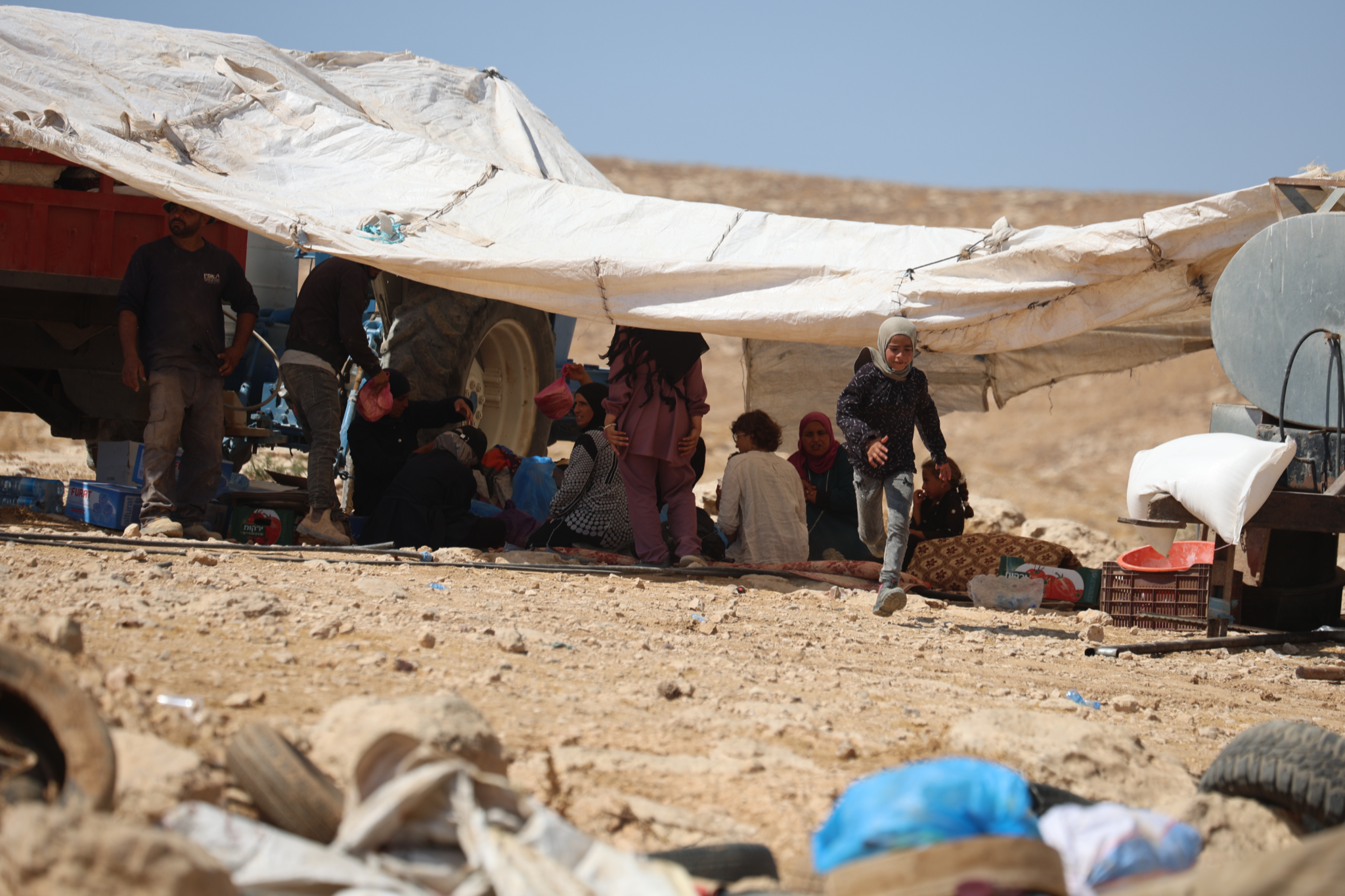
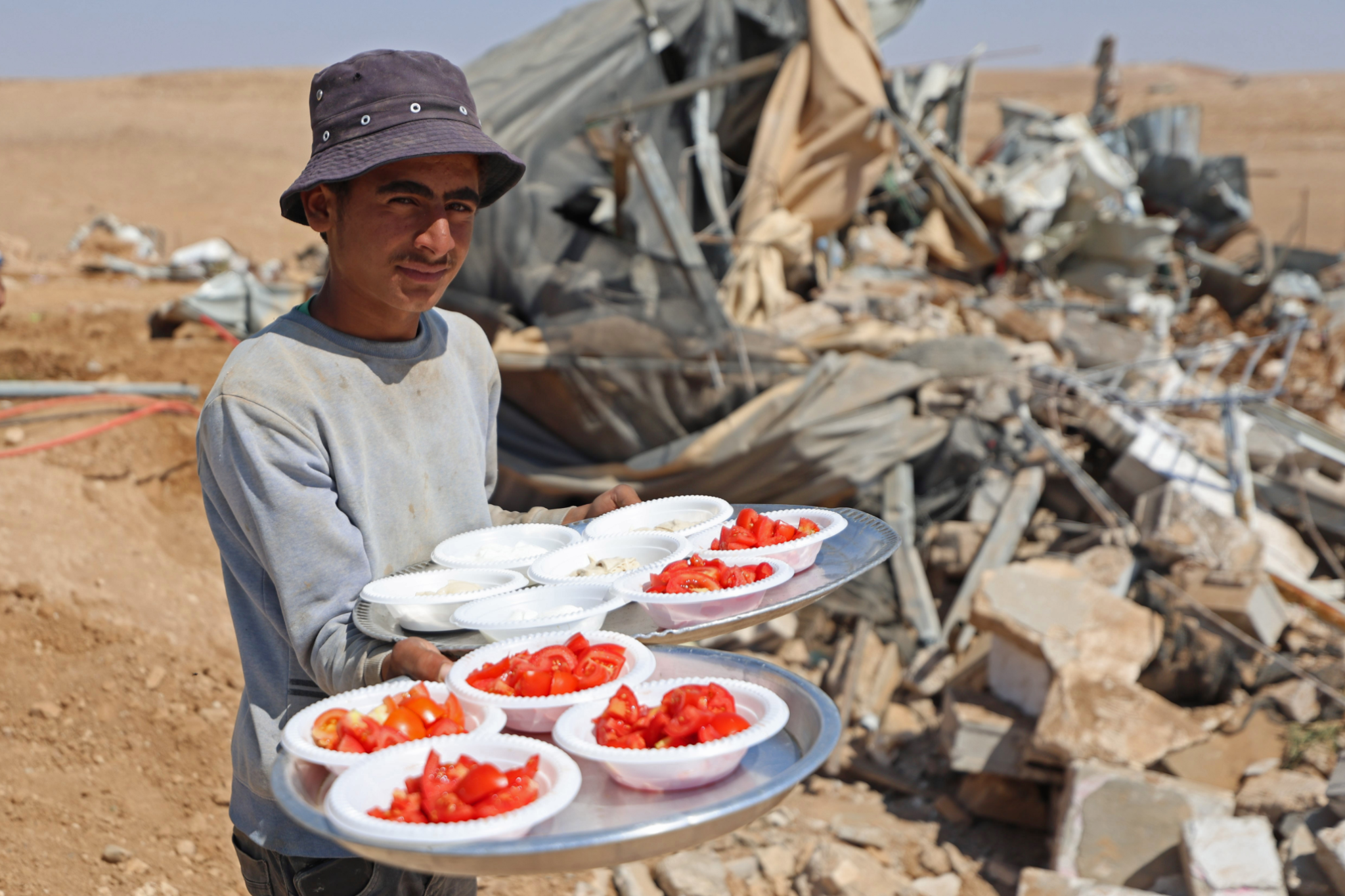
When the bulldozers arrived in Al-Taban, around a dozen people from neighboring villages came to stand with the community. Young men from Al-Majaz, Al-Fakhit, and other nearby communities helped clear the rubble and rebuild livestock pens with stones gathered from the surrounding area.
Days before their own village was razed, residents of northern Fakhit took in the displaced families’ sheep, sheltering the animals in their own pens, while women from the village prepared food and brought it to Al-Taban.
Amid the intense heat of the late summer days, the neighboring villagers used tractors to erect tarpaulins and provide some shade and shelter. And in the evenings, they sat together, keeping watch and guarding against possible settler attacks.
However modest these acts of solidarity may appear, they seemed to deeply unsettle the occupation authorities. The day after the first demolitions, soldiers returned to Al-Taban and asked residents whether activists were working alongside them, apparently searching for grounds to make arrests.
On Sept. 7, the day before the demolition of northern Fakhit, three soldiers arrived in the area. Two of them were settlers known to the local community. They arrested my older brother, Salem Adra, accusing him of bringing activists to help residents. He was taken to an army camp near Jinba and held for several hours before being released.
During the demolition of northern Fakhit, the Civil Administration inspector and accompanying soldiers became visibly agitated when photographers arrived to document the operation and residents of neighboring communities gathered at the scene. They threatened those present, ordering them to move their vehicles within five minutes or have them confiscated.
They then confiscated a vehicle belonging to Akram Abu Sabha of Al-Fakhit. A member of the Civil Administration force later used the vehicle to transport workers brought in to carry out the demolition.
Meanwhile, Border Police officers fired stun grenades and pushed back relatives and neighbors who were trying to help residents remove their belongings before the buildings were destroyed.
Most read on +972

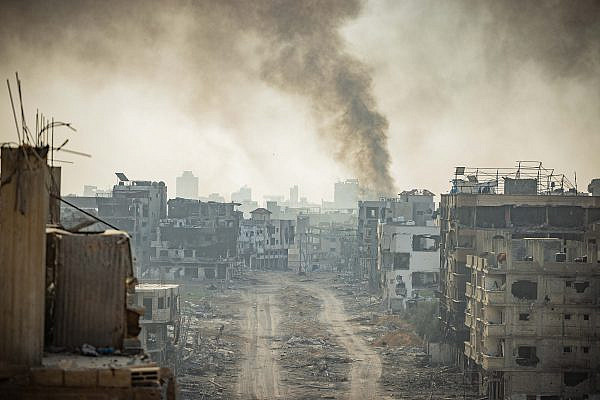
For those of us witnessing and living through this, these scenes evoked a deep sense of rage, injustice, and powerlessness. Watching heavy machinery move in to destroy an entire Palestinian community on the grounds that its structures are “illegal”, while Israeli settlers continue to build without permits, says more than any explanation could.
The message is unmistakable: Palestinians are ruled by force, under the law of the jungle.