In partnership with

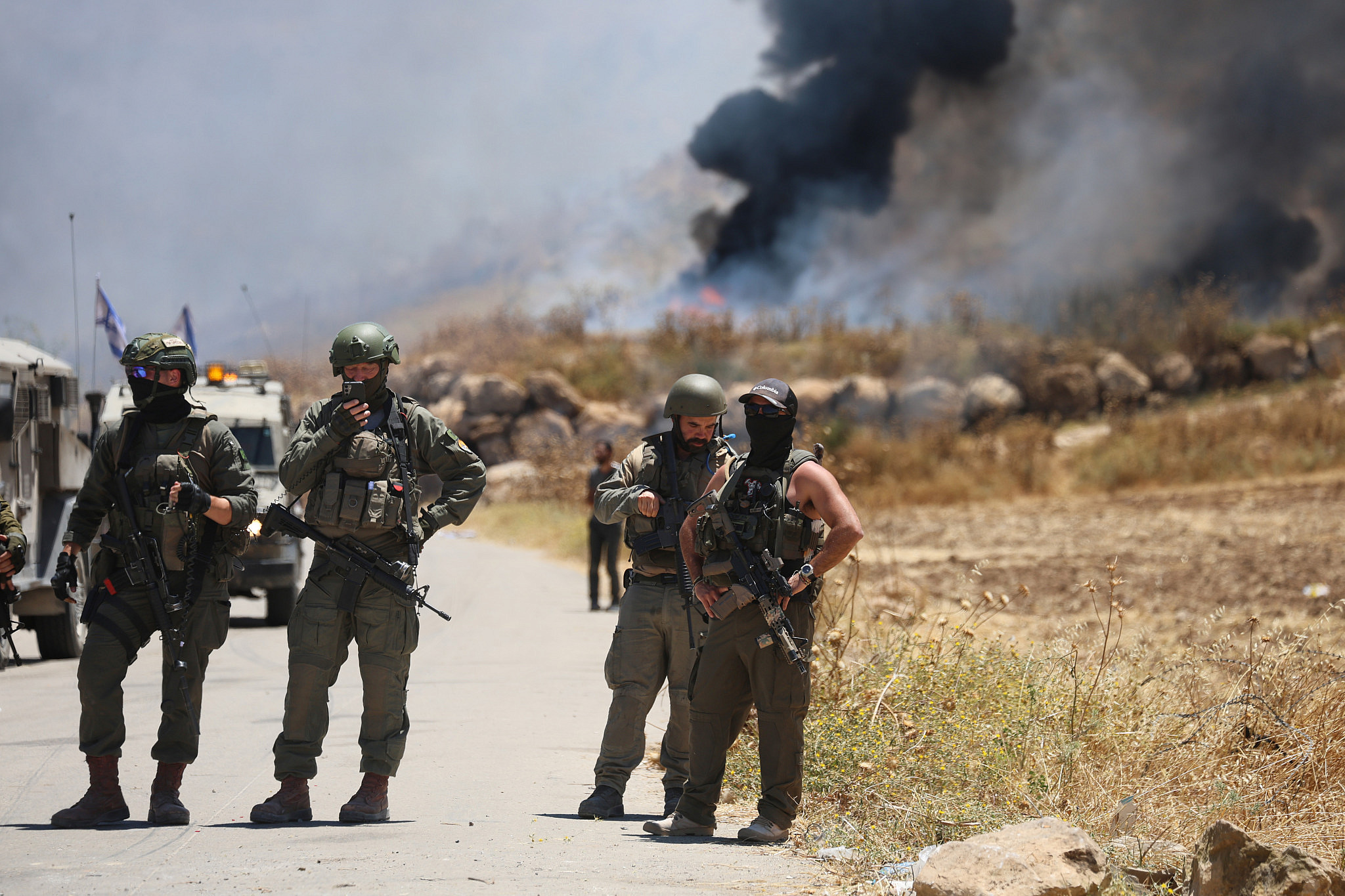
Over the past four years, the occupied West Bank has undergone a profound transformation at the hands of Israel’s outgoing government. Particularly in the wake of October 7, 2023, Israel has intensified its military operations, expanded settlements and outposts, imposed sweeping restrictions on Palestinian movement, tightened its control over vast areas, and reshaped the territory’s legal status.
What was already a fragmented landscape, divided by checkpoints, settlements, and closed military zones, has become increasingly difficult for Palestinians to navigate, let alone inhabit. Roads that once connected communities are now blocked, villages have become increasingly isolated, and places that had seen little settlement activity for decades are now confronting an expanding Israeli presence. For many Palestinians, the changes have fundamentally altered their relationship with their land, their livelihoods, and their sense of security.
Since the start of 2023, Israeli soldiers and settlers have killed at least 1,341 Palestinians in the West Bank, including East Jerusalem. State-backed settler pogroms — which tend to only receive media attention when their victims are internationals — have fully or partially displaced at least 127 Palestinian communities. Ongoing Israeli military operations in three refugee camps in the north of the territory have rendered 30,000 Palestinians homeless, while an additional 3,000 were displaced in recent days amid a new operation in the city of Hebron.
In the same period, the outgoing government has approved at least 103 Jewish settlements, including in the controversial E1 zone, with the stated aim of thwarting any possibility of a contiguous Palestinian state.
But the transformation of the West Bank cannot be measured solely through these numbers. Across the territory, simple routines such as going to school, visiting relatives, tending farmland, or reaching a hospital have become fraught with uncertainty and danger.
It is also visible in the smaller, everyday details of people’s lives: a father near Jenin who is afraid to leave his family alone at home; a farmer outside Hebron, who, after losing his permit to work in Israel, turned to cultivating his land, only to be shot while trying to protect his olive trees; a family in Masafer Yatta that has covered its windows with metal mesh to keep settlers from attacking them inside their home.
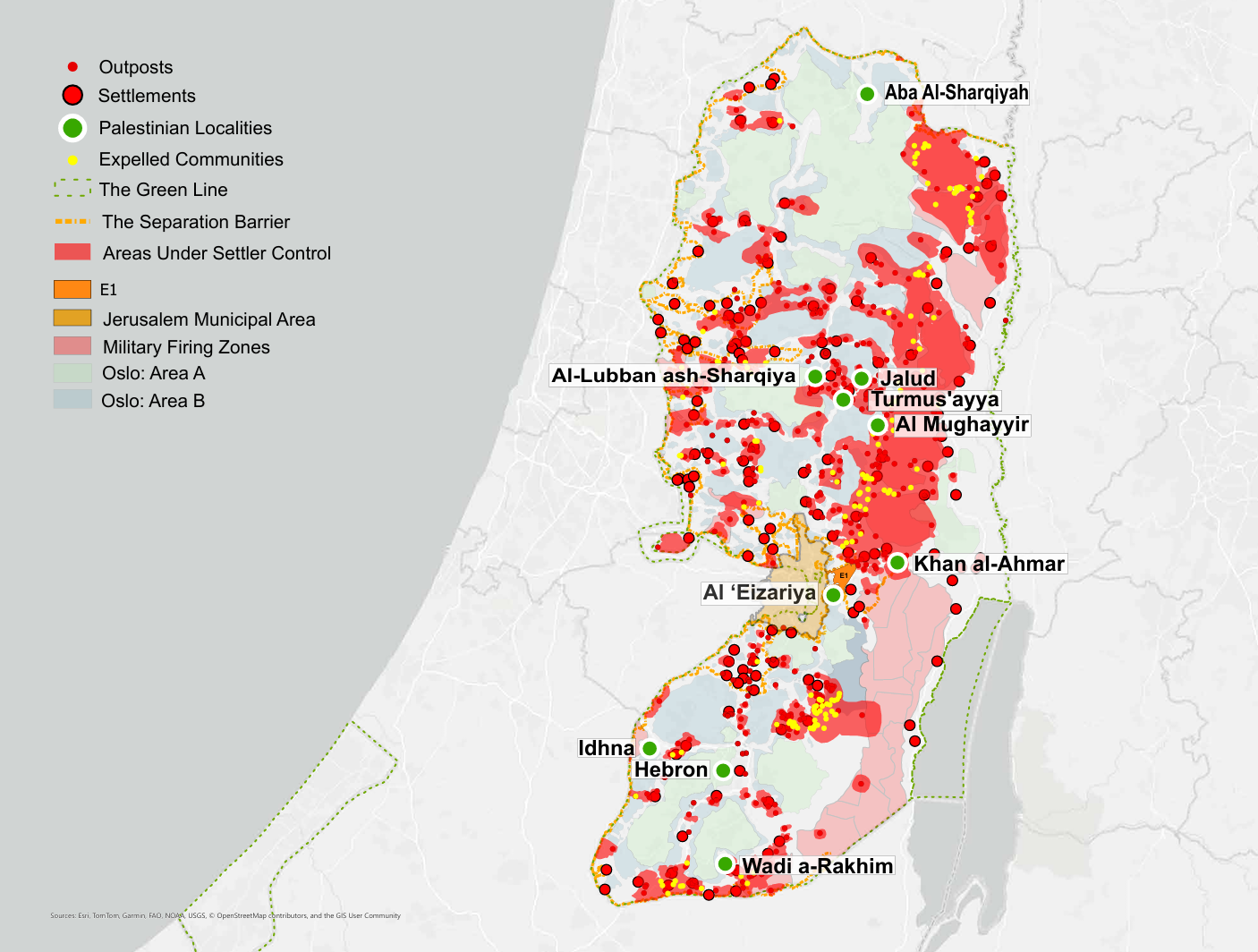
The changes have been particularly stark in areas that were already vulnerable to settlement expansion and military restrictions: from the northern Jordan Valley to the villages east of Ramallah and the communities in the South Hebron Hills. But increasingly, settlers are establishing new outposts and seizing land in areas that are ostensibly under Palestinian Authority (PA) jurisdiction.
Military operations and restrictions have compounded these pressures, while the loss of jobs in Israel and the deepening financial crisis that Israel has plunged the PA into have eroded lives. Even Ramallah, the West Bank’s administrative capital, which has long been perceived as relatively insulated from some of the harshest realities of the occupation, is finding its sense of normalcy increasingly difficult to maintain.
The cumulative effect — which the Israeli human rights group B’Tselem has described as an “elimination project” — has been to further fragment Palestinian society geographically, economically, and socially.
This reporting project by +972 Magazine and Local Call traces these changes through the lives of Palestinians living all across the territory. Their stories reveal how Israel’s occupation has become more intrusive, how the boundaries between settlers and the military have been increasingly blurred, and how the cumulative pressures of the past four years have reshaped everyday life. They also tell a story of a people struggling to preserve a sense of normalcy, protect their families, and remain on their land, even as the space in which they can safely live continues to shrink.
Taken together, their accounts offer a portrait of a territory being transformed — not only on the map but in the most intimate aspects of Palestinian life.
Aba Ash-Sharqiyah: The return of evacuated settlements
A small swing hangs by the entrance to Qusai Hijazi’s house in Aba Ash-Sharqiyah, east of Jenin. For Hijazi, a married father of three, this house on the hill represented the life he wanted to build: a safe haven for his family and a future for his children. Today, however, he is afraid to even venture outside.
His house overlooks Ganim and Kadim, two Israeli settlements that were dismantled in 2005 in parallel with Israel’s “disengagement” from Gaza, but were re-established earlier this year after the government repealed parts of the Disengagement Law preventing entry to these areas.
The return of settlers — along with land confiscation orders, demolitions, new roads serving settlements, and an expanding military presence — is reshaping the surrounding landscape and the lives of Palestinians who live there.
“I don’t go outside around the house at all, even though this is my land,” Hijazi said, pointing toward his olive trees. He has also received an Israeli military notice ordering him to stop construction on his home, preventing him from building a staircase leading to the roof.
Hijazi’s fear extends to the safety of his wife and children, whom he is afraid to leave alone in case of a settler attack. “Before I go to work, I take my wife to visit her family or somewhere else,” he explained. “Even when I go to the supermarket, I take them with me.”
The constant vigilance has also taken a toll on his livelihood. “Things have become difficult. Half of my work is gone because I have to be here,” he said. He used to work in Israel, but due to the cancellation of permits after October 7, he turned to agriculture, which has not been sufficient to meet his family’s needs.
Aba Ash-Sharqiyah is one of several villages in the Jenin area that saw little or no settlement activity for more than two decades but are now confronting renewed settlement expansion, military restrictions, and threats of settler violence. Among the Palestinians enduring these changes, there is a growing fear that the cumulative pressures are intended not merely to intimidate and make life more difficult, but ultimately to force them from their land.
Walid Habbas, a researcher at the Palestinian Forum for Israeli Studies (MADAR), believes these developments reflect a broader political shift in Israel’s approach to the West Bank, which he attributes in part to the growing influence of the religious right.
Israel’s thinking, he said, is clear: “We no longer want to manage the lives of Palestinians; we want to displace them.”
Habbas identifies three interconnected developments that have accelerated under the outgoing government, affecting how residents navigate their daily lives. The first is economic: The loss of jobs inside Israel, the withholding of Palestinian tax revenues, and the disruption of transportation routes have deepened the Palestinian economy’s isolation and fragmentation. Checkpoints and road closures have made it increasingly difficult to move goods between cities, undermining businesses and livelihoods.
“Each city has become separate from the others,” Habbas explained, describing how restrictions on movement can prevent a dairy company in Bethlehem from distributing its products in Nablus or Qalqilya.
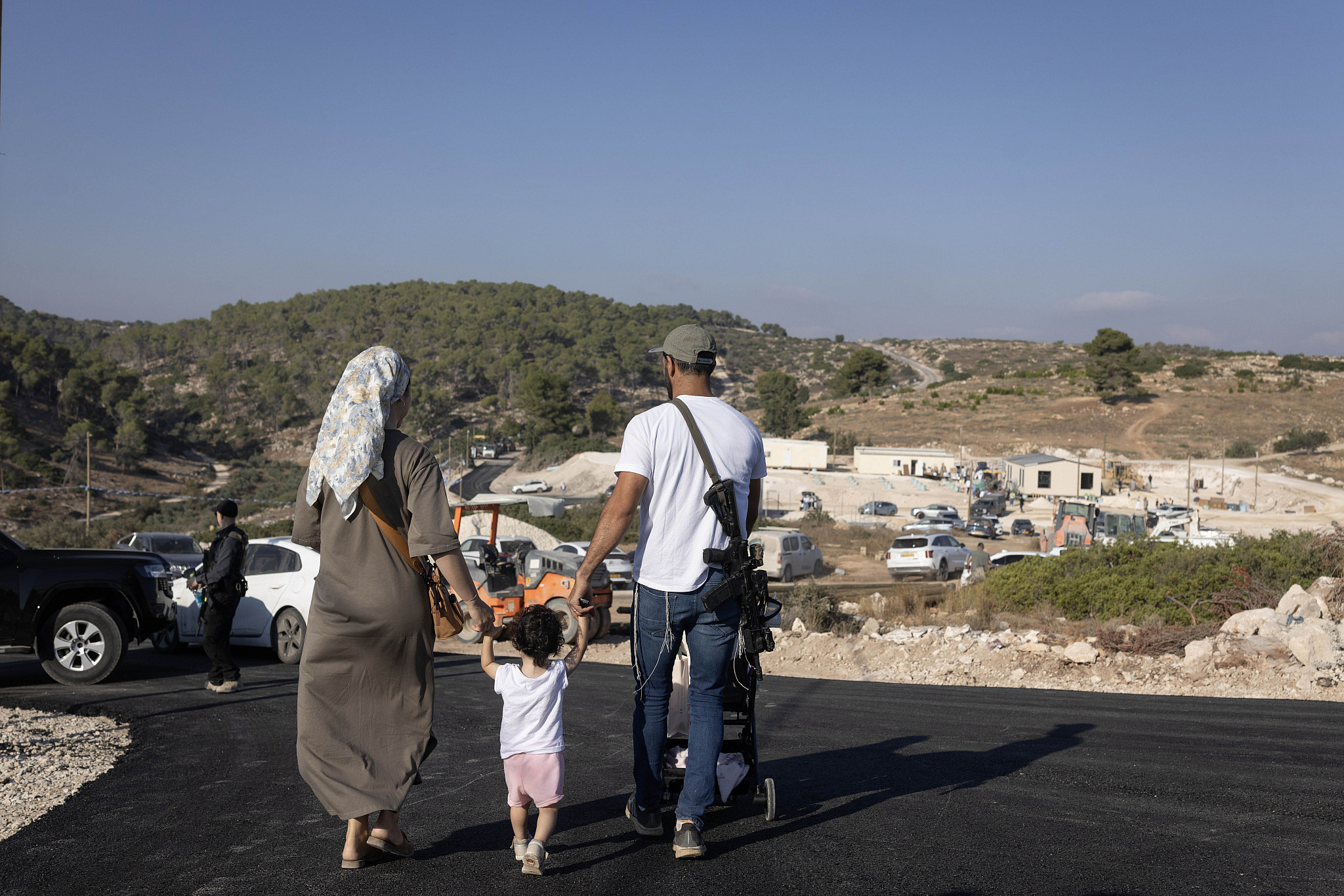
The second development is the intensification and spread of settler violence. This has made Palestinians increasingly fearful of traveling between communities, working their land, or even leaving their homes.
The third, and perhaps the most consequential, is the growing fear of displacement. Habbas noted that discussions about forced displacement, which have intensified during the Gaza genocide, are increasingly part of everyday conversations in the West Bank.
These fears, he added, are compounded by a widespread sense among Palestinians that they have no effective leadership, little support from Arab governments, and diminishing faith that international law will protect them. “It is impossible to find a Palestinian who is not talking about displacement,” he said.
As for Hijazi, he said that after seeking legal advice about the Israeli military’s stop-work orders, he fears they could eventually lead to demolition and evacuation orders, forcing his family from their home.
“If this takes place,” he said, “I would leave the house instead of watching something happen to my family.”
Al-Lubban Ash-Sharqiyah: A roadside kiosk
Around midnight on Oct. 7, 2026, Israeli settlers entered a small roadside cafe and rest stop near the the village of Al-Lubban Ash-Sharqiyah, south of Nablus, and planted dozens of Israeli flags in front of its entrance. According to the cafe’s owner, Muayyad Oweis, whose house is just behind the kiosk, they came back the next day and warned him not to remove them.
The cafe is located along the main road connecting Nablus and Ramallah, a route used by Palestinians and Israeli settlers. For Oweis, whose cafe provides a livelihood for eight people, the flags were the latest in a series of threats that have left him fearing for his family and his business.
His experience reflects a broader reality taking hold across the West Bank, where growing settler intimidation and violence have made even ordinary activities — running a business, traveling between towns, or even remaining safely at home — increasingly fraught with danger. “We are suffering from settlers and their attacks. It happens everyday,” he lamented.
Oweis explained that his cafe had previously been burned, and that he had also received harassing phone calls. He believes the latest incident is part of an effort to push him, and other Palestinians, out of the area. “They don’t want me here. They don’t want us all here, the Palestinian people.”
Now, Oweis fears that removing the flags could provoke another attack, even as their presence serves as a constant reminder of the threats against him. His greatest concern is for his children, who live with him in a nearby house.
“I have young kids. I am afraid for them, not for me,” he said. “If I remove the flags, they might come and kill me or hurt my kids.”
He sees little recourse in appealing to the Israeli military; according to him, soldiers stood by as settlers planted the flags on his property, doing nothing to intervene. “Who am I going to complain to? The army? They won’t do anything.”
Al-Mughayyir: A village under siege
In Al-Mughayyir, a village of roughly 3,000 Palestinians east of Ramallah, residents now find themselves virtually under siege. The community is surrounded by at least 11 settler outposts, some of them established in land designated as Area B, where the PA is responsible for civilian affairs but Israel retains overriding security control. The Israeli army has blocked the village’s eastern entrance, while settlers have closed two other roads connecting it to neighboring Turmus Ayya.
Even the remaining narrow route through the Marj Siya plain, where villagers risk attacks from settlers living in adjacent outposts, is frequently shut down by the military for hours at a time. According to residents, soldiers subject passing motorists to searches that involve beatings, humiliation, and theft.
Since October 2023, the combined pressure of settler violence, military restrictions, and the loss of access to surrounding land has made daily life in Al-Mughayyir increasingly untenable. Residents describe a community struggling to maintain the most basic aspects of an ordinary routine, such as traveling to work, attending school, reaching a hospital, or visiting relatives — all of which are now mired with uncertainty and fear.
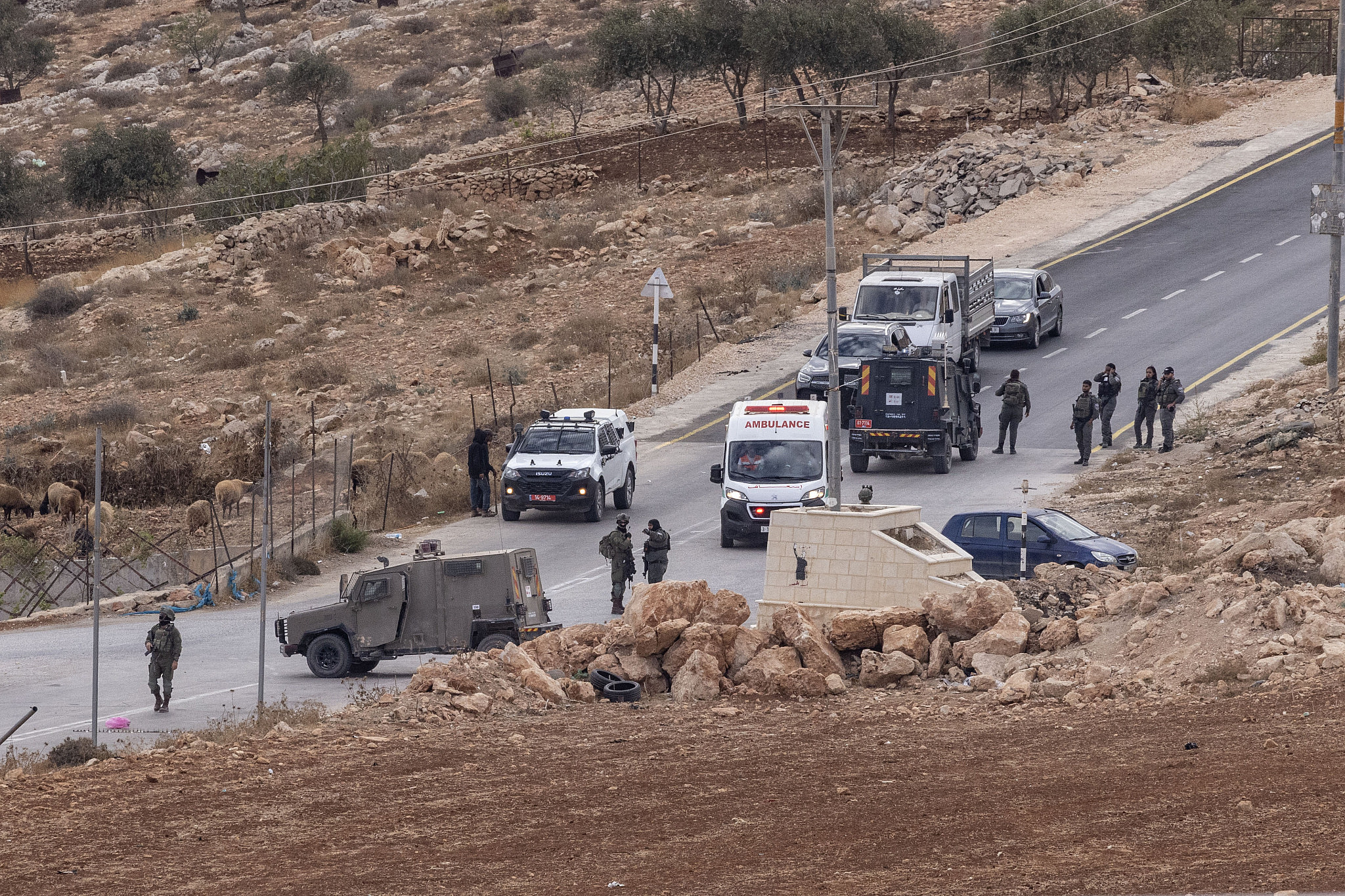
These tightening restrictions have isolated Al-Mughayyir from neighboring communities. A resident in his twenties, who requested anonymity for fear of reprisals, said people from nearby villages have largely stopped visiting while even teachers are afraid to travel to the local school. Residents avoid leaving for routine medical care, and workers fear being stopped at checkpoints, where they risk losing their money or belongings.
The pressure has also extended to the surrounding farmland. In August 2025, the Israeli military uprooted thousands of olive trees on the village’s eastern side, further restricting locals’ access to land that has long sustained their livelihoods.
The resident described an attack on the remaining road in and out of the village in August, involving a Palestinian man who had been released from Israeli prison the previous day. The man was on his way to a hospital to collect medical test results when settlers ambushed him, pepper-spraying and beating him as well as his brother and sister.
When other residents went to see what was happening, they encountered settlers throwing stones, firing shots, and setting fires, the man said. Israeli soldiers then arrived and fired tear gas at the Palestinians, preventing an ambulance from reaching the injured for around two hours, according to his account.
He believes such violence and restrictions are part of a broader effort to drive Palestinians from the village. “Their goal is to expel us, the entire village, and settle here,” he said. He recalled a settler telling him: “Your land is not here, you will go somewhere else, this is our fathers’ land, and you will leave soon.”
For Rabea Abu Naim, 35, an activist who spent nine months in Israeli administrative detention — a form of incarceration without charge or trial — before being released in July, life in Al-Mughayyir has come to resemble another form of imprisonment.
Even the most routine activities now require calculating the risk of encountering settlers or soldiers. “In every house in the village, you will find a martyr, a prisoner, or someone with an injury,” he said.
The violence has exacted a devastating toll on the village. Since October 2023, nine residents have been killed by gunfire from Israeli soldiers and settlers, according to reporting for this project. Among them was Fadi Na’asan, 17, who was shot by soldiers in July while trying to help a Palestinian family whose home had been invaded by settlers on the village outskirts.
Fadi was an avid soccer player. His father, Hamdallah, recalled how his son would return from school, drop his backpack, grab his sports bag, and head straight to practice.
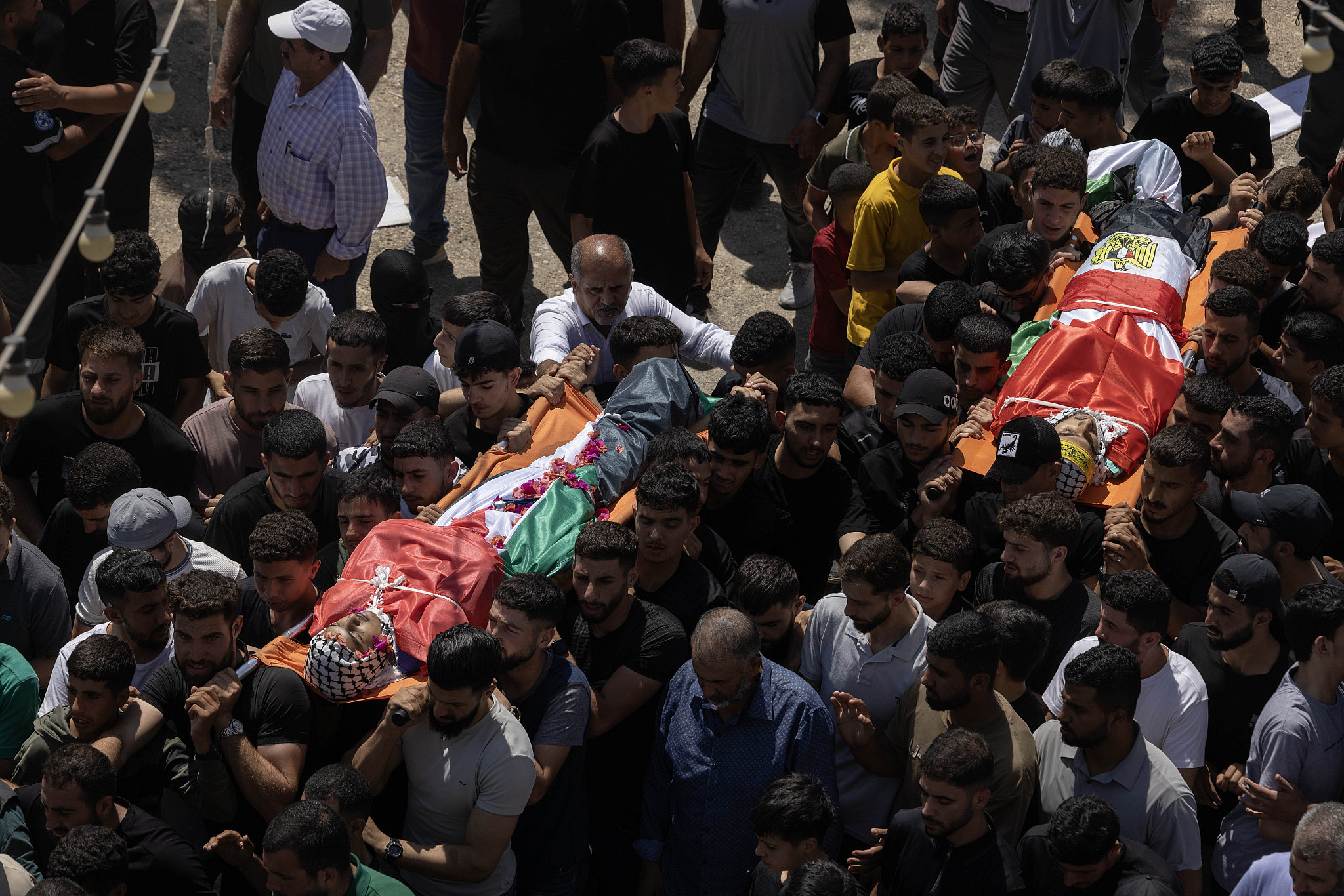
“From the age of 12, he loved to play,” his father said. “He was a key player on the team, scoring a lot of goals during matches.”
Another victim, 16-year-old Khalil Abu Alia, was killed during a raid involving soldiers and settlers. His father, Rasem, recalled stepping outside with his family after sunset to see what was happening in the street. They were standing among other residents when Khalil was shot in the back.
Khalil was in the same grade as Aws Al-Na’asan, another student killed by gunfire in May. According to Rasem, four students from his son’s grade have been killed in the past three years. For those who remain, the violence has cast a shadow over their education, leaving many children afraid to return to their studies.
At Khalil’s funeral, his grandmother, Samar, spoke of the future her grandson would never have. “What dreams?” she said. “There are no dreams here in our village.”
Turmus Ayya: The takeover spreads to Area B
Hanan Hamayel was watching television at home in Turmus Ayya, northeast of Ramallah, when she heard a commotion outside. Looking out, she saw more than 10 Israeli settlers hurling stones. She rushed to the balcony and began shouting for help. “I didn’t know what else to do,” she recounted.
The attack on Oct. 16 came amid a wave of settler violence targeting Palestinian communities during the latest annual olive harvest. In Turmus Ayya, settlers attacked olive pickers near residential homes, wounding one resident in the head and setting fire to vehicles and part of a house, according to residents.
The same day, settlers attacked Palestinian harvesters in nearby Khirbet Abu Falah. Several journalists were present, including the Washington Post’s Heidi Levine, who was beaten and seriously wounded by a group of masked settlers.
In the first three weeks of October, the PA’s Colonization and Wall Resistance Commission recorded 317 attacks on Palestinian olive harvesters by Israeli settlers and 92 by the army.
The violence reflects an expanding pattern across this part of the West Bank, where settlers have established outposts deep inside Area B. In villages around Ramallah and Nablus, settler attacks have increasingly reached residential areas, threatening not only Palestinians’ access to their farmland but their ability to remain safely in their homes. In some communities, the pressure has already forced families to flee, while attempts to return have been met with further violence.
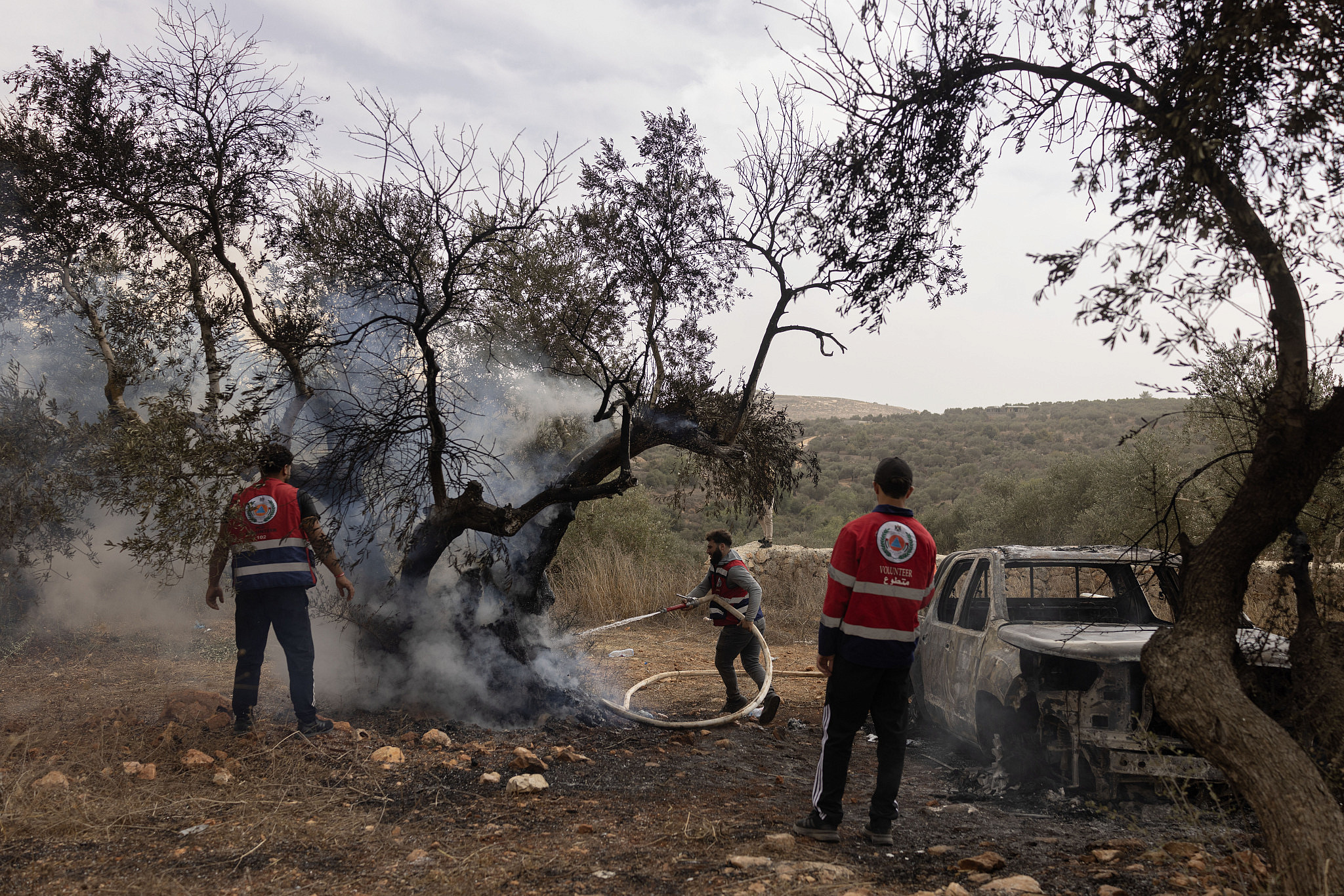
Just weeks earlier, on Sept. 5, U.S. Ambassador to Israel Mike Huckabee had visited Turmus Ayya, home to many Palestinians with U.S. citizenship, and condemned settler violence. But the attacks have continued, leaving residents like Hamayel afraid to venture outside even during the olive harvest, a season traditionally spent working the land with family and neighbors.
“The settlers are here 24/7, coming and going, inflicting terror. Where is the security?” she asked.
“They come every day, every hour; we cannot go out to pick olives or even leave the house,” she continued. “Their goal is to frighten us, to inflict terror. They want to expel us and kill us, but we will not leave our homes.”
Jalud: No way home
The pressure is also mounting in a cluster of villages south of Nablus between Route 60 and Route 5, including Jalud, Talfit, and Qusra. There, settlers have established outposts on strategic hilltops overlooking Palestinian communities, threatening residents’ access to their homes and agricultural land.
In January of this year, settlers established the outpost of Tel Talpiyot on a hill between the villages, deep inside Area B. Additional settler encampments subsequently appeared in the surrounding area, including one close to the homes of the Tubasi family on the outskirts of Jalud.
After months of harassment and repeated attacks, members of the family were forced to abandon their homes in July. Settlers had moved into the area around their houses, leaving the family unable to safely remain.
The family turned to Israel’s High Court of Justice, which ordered authorities in September to arrange for the displaced residents to return. But when Israeli soldiers attempted to escort the family back to their homes on the night of Sept. 28, a large group of settlers attacked both the returning residents and the security forces.
The settlers blocked roads, threw stones, and set fires, forcing the soldiers to evacuate the family rather than complete their return. Two of the family’s houses were set ablaze and extensively vandalized, leaving them uninhabitable without major repairs.
For Muhammad Tubasi, the failed return only deepened his doubts that Israeli authorities would protect the family or enforce the court’s ruling. He questioned whether the operation had been sufficiently coordinated to ensure their safety, or whether it had merely been intended to demonstrate to the court that an attempt had been made.
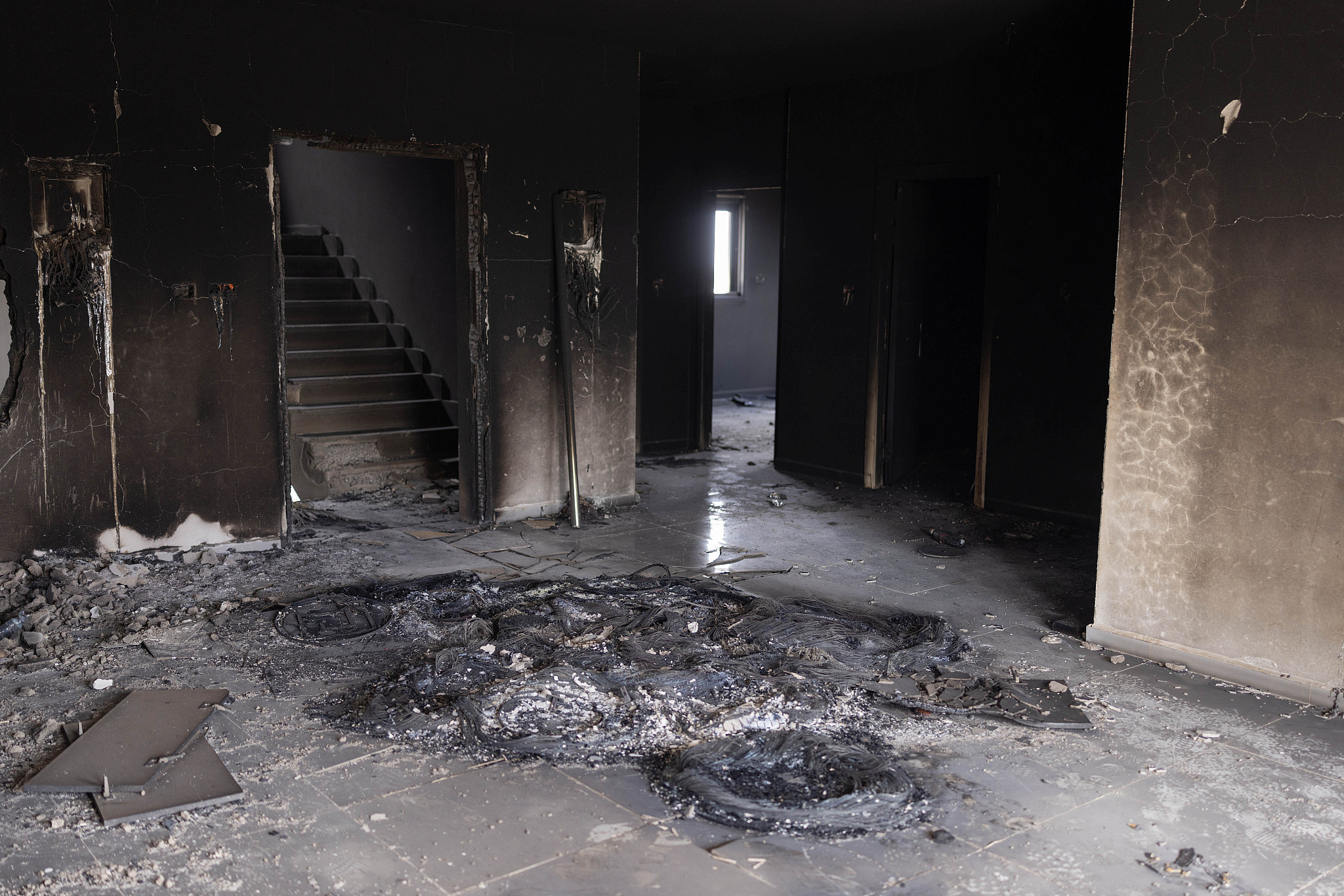
Tubasi also challenged Israeli Prime Minister Benjamin Netanyahu’s portrayal of violent settlers as a relatively small group of 150 young extremists, separate from the broader settlement movement.
“At my place alone, there were 150 settlers,” he said. “Did all the Hilltop Youth from the West Bank come here? And if they are only 150, are you as a government unable to handle such a number? That is simply not true.”
For the family, however, the immediate question is whether they will ever be able to return to their property. After seeing photographs of the destruction, Tubasi struggled to imagine how they could rebuild their lives there.
“How can we go back?” he asked. “I saw the photos, there’s nothing left — everything has to be rebuilt from scratch.”
E1: The road to fragmentation
The small Bedouin community of Khan Al-Ahmar, east of Jerusalem, has become a symbol of Palestinian resistance to Israel’s E1 settlement project.
The construction plan was frozen for years in the face of international pressure, leaving the community’s future in limbo. But Israeli authorities have now begun advancing plans to develop this strategic stretch of land between occupied East Jerusalem and the settlement of Ma’ale Adumim, which would spell the end of Khan Al-Ahmar — and, for many, the two-state solution.
“E1 is like cancer,” Eid Jahalin, a community leader, said. “If the government takes even one part of it, the two-state solution is finished.”
In addition to undermining the prospect of a contiguous Palestinian state by bisecting the territory, the project threatens to further fragment the West Bank’s Palestinian cities, disrupting connections between Ramallah, East Jerusalem, and Bethlehem. But for Palestinians living in and around the proposed settlement corridor, its consequences extend beyond the political future of the territory.
Plans to expand settlements and restrict access to the surrounding area are already threatening communities and livelihoods, making it difficult for residents to remain on their land or move freely between towns and villages. “How has our life changed? There are settlers here, there, and everywhere,” Jahalin said.
Last December, the Israeli government published a tender for over 3,400 housing units in E1, before opening bidding for a separate tender in August. Authorities are also advancing plans for a road that would divert Palestinian traffic away from the Ma’aleh Adumim settlement, potentially enabling Israel to restrict Palestinian access to the E1 corridor.
In May of this year, Israeli authorities demolished dozens of shops and other commercial structures at the eastern entrance to Al-Eizariya, a Palestinian town southeast of Jerusalem. According to the Israeli settlement watchdog Peace Now, the demolitions appeared to be linked to plans for the new road.
Among those who lost their businesses was Amir Abu Zahou, who now sells toys from a makeshift shop after his store was demolished. Originally from Jenin, Abu Zahou moved to Al-Eizariya around two years ago in search of a livelihood. “We take it day by day. On some days, business is good,” he said.
But even when his shop is open, Israeli checkpoints and road closures can leave motorists stranded for hours, making it difficult to attract customers. “Sometimes traffic here can reach all the way to Hebron,” he said. “Who wants to buy anything when they are stuck in traffic for three hours?”
Idhna: A livelihood lost twice
For 38 years, Ismail Tmaizi earned his living working in Israel. But after October 7, Israeli authorities revoked his work permit, leaving him without an income. With a wife, children, and grandchildren to support in his hometown of Idhna, northwest of Hebron, he turned to the land he owned.
Tmaizi began rehabilitating a two-dunam plot in the Al-Jalatiya area, about a kilometer from the Israeli settlements of Adora and Telem. He planted olive trees, wheat, barley, and seasonal crops, hoping the land would provide an alternative livelihood for his family. But what began as an attempt to regain some financial stability would end up in the devastating loss of his ability to earn a living at all.
Settlers have increasingly targeted farmers in the area, Tmaizi said, taking control of a spring used for irrigation, chasing residents from their land, and grazing sheep on cultivated fields. They have also damaged fences and stone walls, attempted to steal livestock, and set fire to fields of wheat and barley, preventing farmers from harvesting their crops.
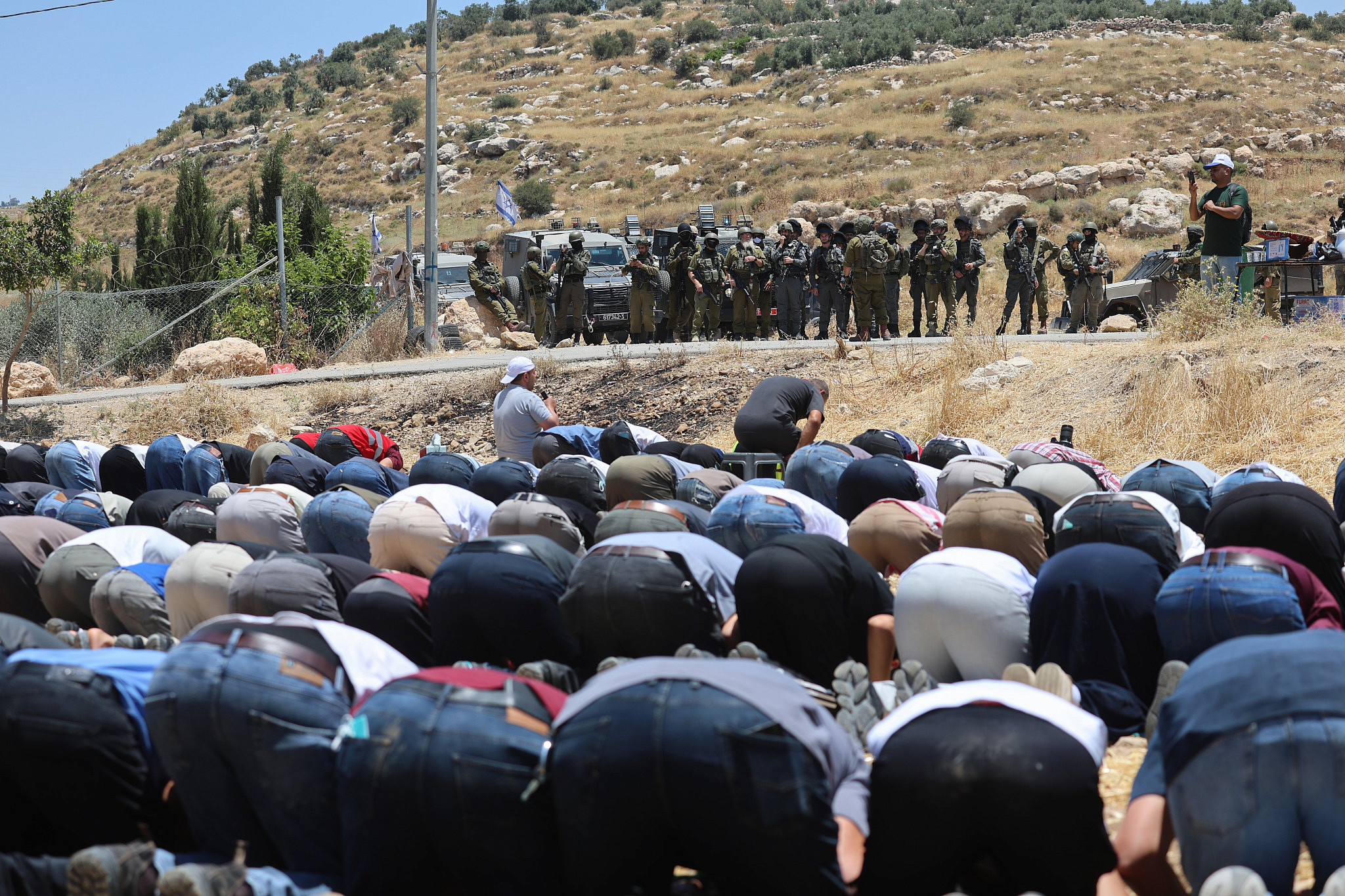
Meanwhile, according to residents, Idhna’s main entrance has remained closed for roughly two years, restricting access to jobs, farmland, and essential services while placing further strain on the local economy.
On June 12, local landowners organized Friday prayers on their farmland to protest the attacks. Tmaizi did not initially join them because he was working on a room for his son on the roof of his house.
That morning, he said, messages began circulating on WhatsApp and local news groups that settlers and Israeli soldiers had attacked the protesters, using tear gas and stun grenades. Shortly afterward, Tmaizi’s brother, Mohammed, called to warn him that settlers had set fire to fields near his property and that the flames were spreading toward his olive trees.
“He asked me to come quickly and open the gate so I could stop the fire from reaching the land,” Tmaizi said.
He arrived at around 12:30 p.m. and saw flames spreading toward his plot. On a nearby hill, where tents and Israeli flags had been erected, Tmaizi could see soldiers and around 30 settlers, some of them armed and masked.
Tmaizi opened the gate and rushed inside to fight the fire. As he carried water toward the flames and tried to extinguish them near the fence, a settler shot him in the back.
He was rushed to Al-Ahli Hospital in Hebron, where he underwent surgery lasting around four and a half hours. Part of the bullet remained lodged near his spinal cord. He spent 21 days in hospital, including 13 days in intensive care.
Later, with help from his brother and Israeli activists, he obtained a permit to travel to Shaare Zedek Medical Center in Jerusalem for further treatment. There, Tmaizi said, doctors diagnosed him with paraplegia and told him he would not walk again.
The injury has left him confined to a medical bed, unable to work or provide for his family. After nearly four decades of employment in Israel, followed by his attempt to make a living from farming, he now finds himself without either source of income.
“I did not go to my land to attack anyone,” he said. “I went there to protect it from the fire. It is my land. I was only trying to save my olive trees, and I ended up paralyzed.”
Hebron: Life in a military enclosure
When Fahd Al-Jabari and his father, Nasser, were shot on Aug. 16 during an attack by settlers in Hebron, an ambulance soon came to evacuate them to hospital. But for around 45 minutes, the two men, aged 43 and 64, lay bleeding as soldiers prevented it from reaching them.
This is according to Areej Al-Jabari, their neighbor who filmed the scene. She remembers the blood, the screams of children, and the helplessness of watching the wounded men wait for medical assistance.
Al-Jabari, a 42-year-old mother of five, human rights activist, and interior designer who also supports women in her community, lives in Wadi Al-Hussein, near Hebron’s Old City in the area known as H2. This portion of the city, one-fifth of its total area, is home to around 35,000 Palestinians living under the permanent control of Israeli soldiers, alongside around 800 Israeli settlers who continue to seize more Palestinian homes.
Al-Jabari’s home stands beside Beit HaShalom, a four-story building taken over by settlers around 15 years ago.
Most read on +972
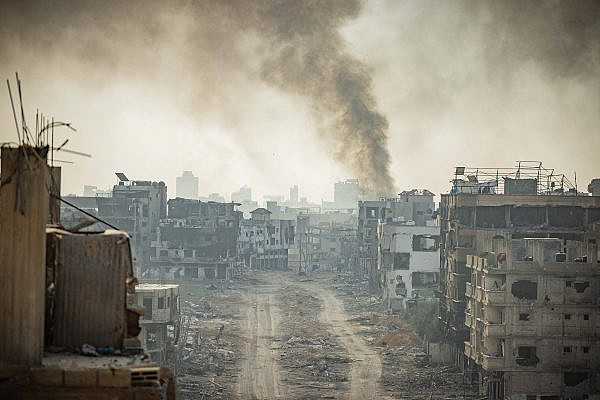

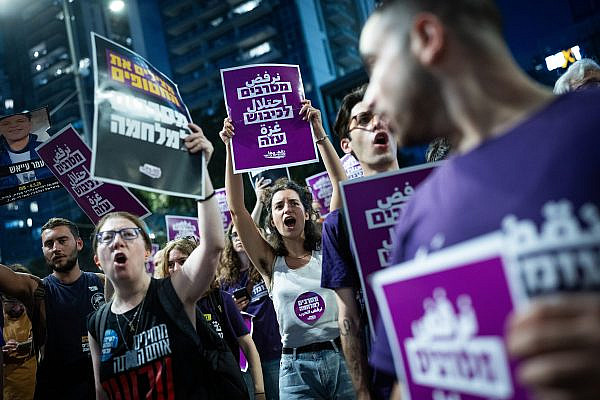
Since October 2023, longstanding Israeli restrictions on Palestinian life in H2 have intensified, turning everyday activities into sometimes dangerous undertakings. New military checkpoints and increasing curfews have made it harder for residents to reach schools, workplaces, mosques, and hospitals, while settler attacks have compounded their sense of insecurity.
“Our lives have changed dramatically,” Al-Jabari explained. “The street is closed, and the area has been placed under severe restrictions and curfews. If we need to buy basic necessities, we have to go to H1 because there are no open shops here. We are practically living in an enclosure.”
Seven checkpoints divide the neighborhood, she said, separating residents from one another and restricting their movement. Curfews can last for days, particularly during Jewish holidays. In the early months of the war, residents were sometimes allowed to leave their homes for just one hour in the morning and another in the evening.
The consequences can be particularly severe during medical emergencies. Reaching a hospital may require coordination with Israeli authorities, and ambulances are not always permitted to enter the area. “If someone gets sick or [injured], the ambulance cannot reach us easily, even when it is only a few steps away,” Al-Jabari explained.
She recalled the shooting of Fahd and Nasser as one of the most harrowing examples. “They were left bleeding for a long time, around 45 minutes, even though the ambulance was very close. We were in contact with the ambulance, but it was not allowed to reach them.”
Although attacks on residents, homes, and vehicles predate October 2023, Al-Jabari said they have become more dangerous since then, particularly as more settlers have acquired weapons. She described young men being beaten by soldiers, having their phones searched, and being detained for seven or eight hours. Al-Jabari herself was attacked by a settler who threw a stone at her car, shattering a window.
She recalled several more incidents. In one, a soldier and a settler entered a mosque and played Hebrew songs over its loudspeakers. Residents had to contact the Israeli liaison authorities to secure the imam’s departure.
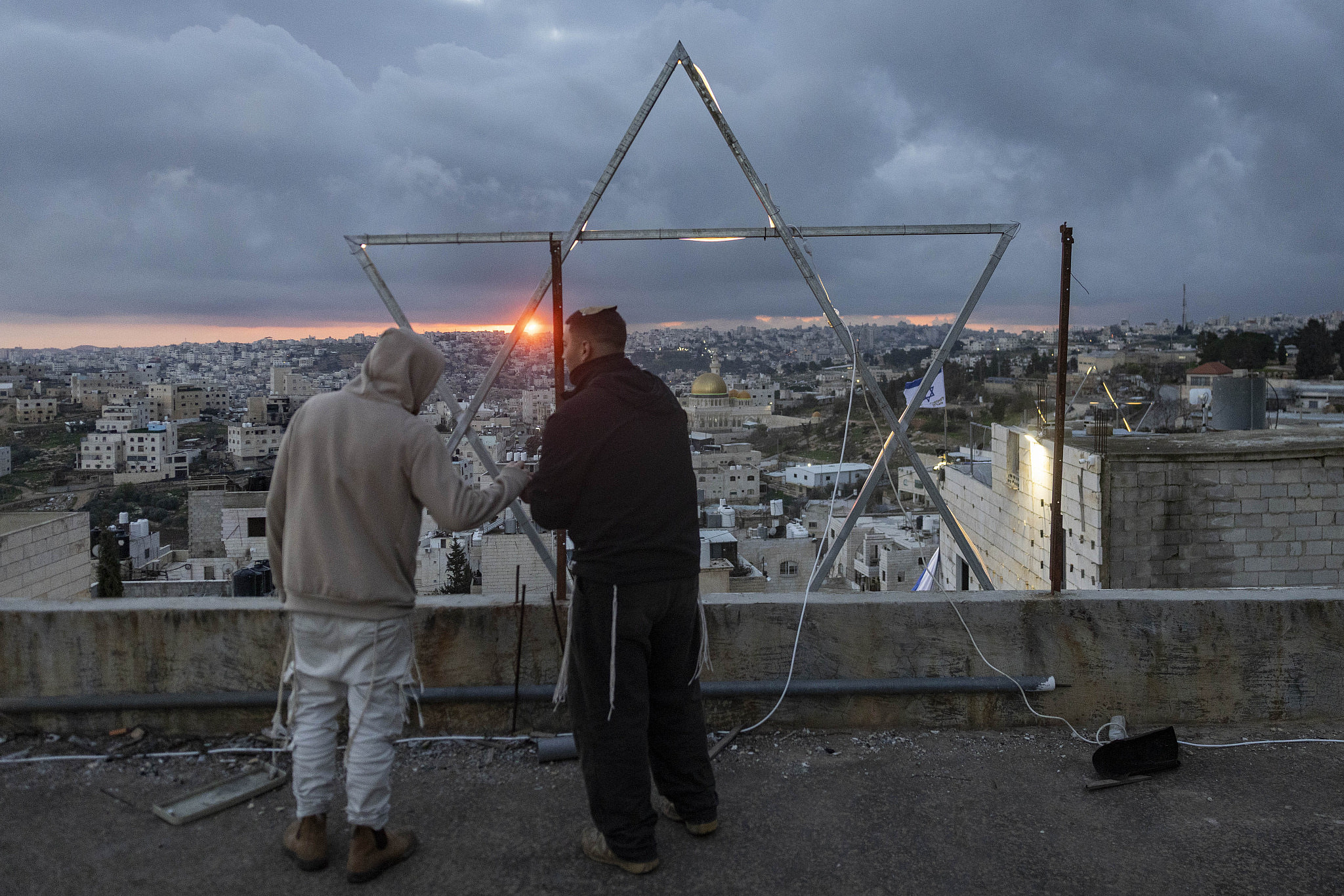
In another, a group of women were detained for around seven hours after Tarawih prayers during Ramadan, with their hands and legs bound. Their children were also detained then released, she recounted.
For Al-Jabari, these incidents have created a pervasive sense of fear, leaving families uncertain about what might happen each time they venture outside or even while they remain at home.
“Since October 7, our lives have been defined by fear,” she said. “We live in constant terror. Every moment we ask ourselves: Could settlers attack our homes? Could soldiers arrest our children or us? Could they shoot at us? Could it reach the point where we are killed inside our homes?”
What worries her most is that the combination of violence, isolation, and movement restrictions will eventually make life in the neighborhood unbearable. “We want to live here safely. We want our children to go to school. We want to be able to move, buy what we need, and reach a hospital when someone gets sick.
“My greatest fear is that this pressure will continue until people reach a point where they say: ‘We can no longer live here, and we have to leave our homes.’”
Wadi Al-Rakhim: Where home is not a refuge
Last year, Yusuf and Mas’adah Shenaran installed metal mesh over the windows and along the staircase of their home in Wadi Al-Rakhim, in the Masafer Yatta region of the southern West Bank, hoping to protect their family from Israeli settler attacks.
The barriers were intended to keep stones from breaking through the windows and prevent settlers from entering the house. But it could do little to protect them when settlers came to attack their home earlier this month.
On the evening of Oct. 6, settlers from two outposts established to the east and west of the Shenaran home smashed their windows and struck Yusuf and their children with stones.
“After they finished throwing stones, the settlers surrounded our house, smashed the outdoor lights, and cut the cables connected to our electricity and solar power system,” Mas’adah recounted.
According to her, settlers and soldiers remained outside throughout the night and into the following day. The family could neither sleep nor leave the house and the children were unable to go to school.
That attack came after months of growing violence against residents of the community. In March, a settler wearing a military uniform killed 28-year-old Amir Shenaran and wounded his 32-year-old brother Khaled, who has paraplegia. In August, their father, Mohammed, was shot in the shoulder.
For Yusuf and Mas’adah, the threat of violence is now part of everyday life. “We cannot live like this,” Mas’adah said. “We cannot move freely or sleep peacefully in our own homes.”
+972 and Local Call approached the Israeli army for comment on the incidents included in this report. Their response will be added if and when it is received.