

In partnership with

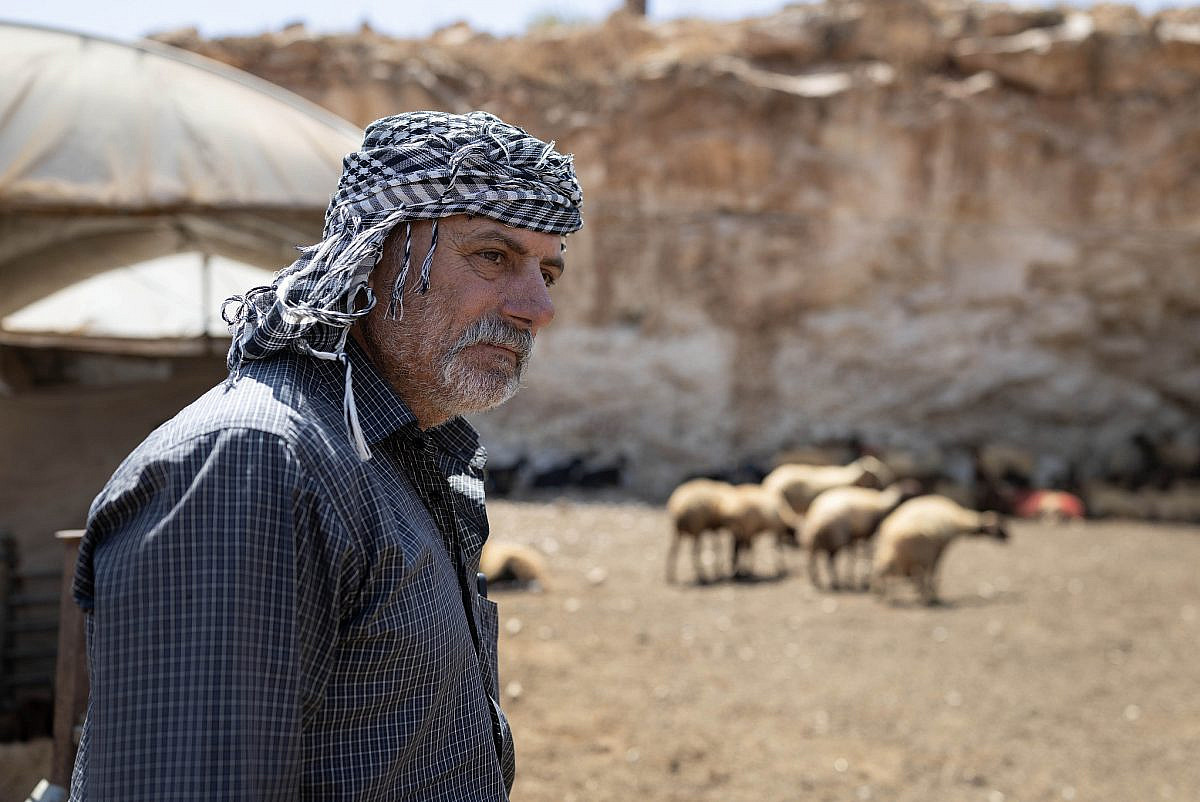
At the beginning of the year, I met shepherd Tawfiq Hajj Qassem and his 500 sheep — some adorned with colorful fabrics — at the summit of Mount Tammun in the occupied West Bank. For more than 50 years, Hajj Qassem had regularly made the journey from his village of Atuf in the northern Jordan Valley, walking an hour and a half up the mountain to reach a wide open green space, grazing his flock for a few hours, and returning home.
By then, Israel had already announced plans for the “Crimson Thread,” a new separation barrier within the West Bank that is intended to eventually stretch some 300 miles from the occupied Golan Heights to the Red Sea, effectively annexing tens of thousands of dunams of Palestinian land. Plans were also underway to establish a new settler outpost at the summit. But in January, there was still no sign of settlers on the mountain.
“This mountain is the only place where I can breathe, the only place where I’m allowed to graze,” Hajj Qassem told me.
Eight months later, the situation on the ground has drastically transformed. Construction of the barrier is in full swing, which, alongside sustained pressure by settlers and the army, has forced dozens of families to leave. There are also Palestinian communities trapped east of the barrier, struggling to bring in food and water or reach nearby villages and towns for basic services.
From a new outpost on Mount Tammun, known as “Tamon,” settlers in military fatigues now roam the area and terrorize Palestinian residents, and one even drives a military Hummer. The outpost is one of 19 settlements whose establishment was announced last year by Finance Minister Bezalel Smotrich — including Ganim and Kadim, two West Bank settlements evacuated during Israel’s 2005 “disengagement” from Gaza.
“Everything has changed. We’re under siege, trapped near our homes,” Hajj Qassem told me when I returned in August. “We can’t go up the mountain; we can only graze the sheep around the house, in a narrow strip located in Area B,” referring to the section of West Bank land nominally under joint Israeli and Palestinian Authority control.
The last time Hajj Qassem managed to graze his flock on the mountain was in early February. “Settlers arrived, dressed in military uniforms,” he recalled. “These days, it’s impossible to tell if they’re the military or settlers. They caught me once and told me I’m not allowed to graze there, that the land belongs to Jacob [the biblical patriarch].”
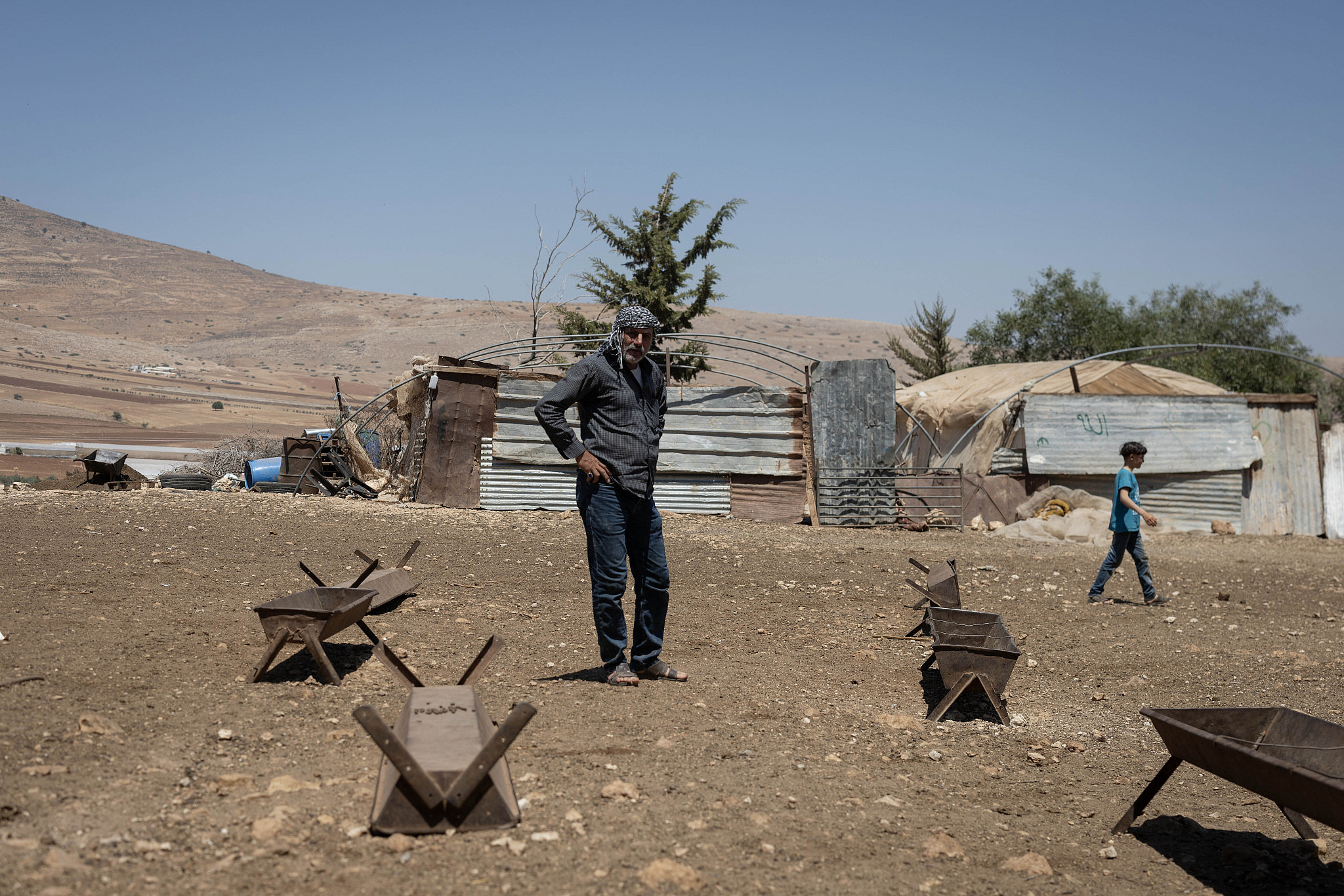
His eldest son was attacked a few months later. “He went up to the pasture in May, just a few hundred meters from the house, and settlers driving a jeep beat him.
“I feel depressed and frustrated. We now have to buy food for the sheep, something we almost never had to do in the past,” Hajj Qassem added. “This is one of the hardest things — being prevented from accessing your own land. ”
Taking over the West Bank’s breadbasket
The transformation of Mount Tammun is part of a much larger effort to reshape the Jordan Valley. At the end of August last year, Central Command chief Maj. Gen. Avi Bluth signed nine land seizure orders for the construction of the section of the separation barrier that runs through the northern Jordan Valley — cutting right through Mount Tammun.
Stretching from the Tayasir checkpoint in the north to the Hamra checkpoint in the south, the barrier will consist primarily of a paved military patrol road alongside a “natural barrier,” supplemented in some sections by trenches and earthen embankments. The road will also connect the internationally sanctioned outpost known as Moshe’s Farm to the Zvi HaOfarim outpost.
The stated goal of the “Crimson Thread” project is to prevent the smuggling of weapons from the West Bank’s eastern border with Jordan and thwart terrorism. “It is based on a clear security need to prevent uncontrolled vehicular passage from the Jordan Valley into the heart of Judea and Samaria,” an Israeli army spokesperson told +972 in response to an inquiry.
But in practice, the barrier will sever the Jordan Valley from the rest of the West Bank and cut Palestinians off from tens of thousands of dunams of agricultural and grazing land, accelerating the displacement of communities already under intense pressure from settlers and the army. Abdallah Bisharat, head of the Atuf local council told +972 that the area is among the most agriculturally productive in Palestine.

“There are thousands of dunams of potato fields here. What’s grown here is enough for the entire West Bank,” he said, adding that the area provides employment for between 3,000 and 4,000 workers, most of whom come from families in the Tubas Governorate. “Security is just an excuse to take over the land.”
According to Bisharat, the military road running alongside the barrier will itself eat up about 1,000 dunams of village land. Once the barrier is completed, he estimates that Palestinians could lose access to approximately 83 percent of the plain’s 69,000 dunams.
“We have no hope that there will be any coordination allowing access to the land,” he said. The project’s real purpose, he said, is “to expel communities from their land, take over agricultural areas, and completely destroy [Palestinian] agriculture in the region. This is a war against the fields, the trees, and the people.” For Bisharat, the settlers now roaming Mount Tammun are part of the same process. “They threaten people to make them leave and harass them, just as the army does. There is no distinction between them and the army.”
Trapped between two barriers
The community of Khirbet Ras Al-Ahmar lies mostly east of the barrier now under construction, which at this stage consists of an earthen trench impassable to vehicles. Thirteen of the community’s 70 families have been forced to leave in recent months after the army damaged or severed their water pipes — in some cases intentionally — while building the barrier.
The community was already being slowly choked. In the early 2000s, during the Second Intifada, Israel erected a barrier of earthen embankments along the Allon Road east of Khirbet Ras Al-Ahmar, separating the Jordan Valley from Mount Tammun. The new barrier is being built west of the village, effectively trapping it between the two.
As construction advances, bringing in water and food for the animals is becoming harder by the day. Residents must travel along rough mountain roads, where they risk being stopped or attacked by settlers and soldiers and having their vehicles confiscated; the army has already taken several, claiming that they were used for “criminal activity.” In early August, a settler blocked an ATV carrying a water tank to one of the families and ordered the driver to empty it.
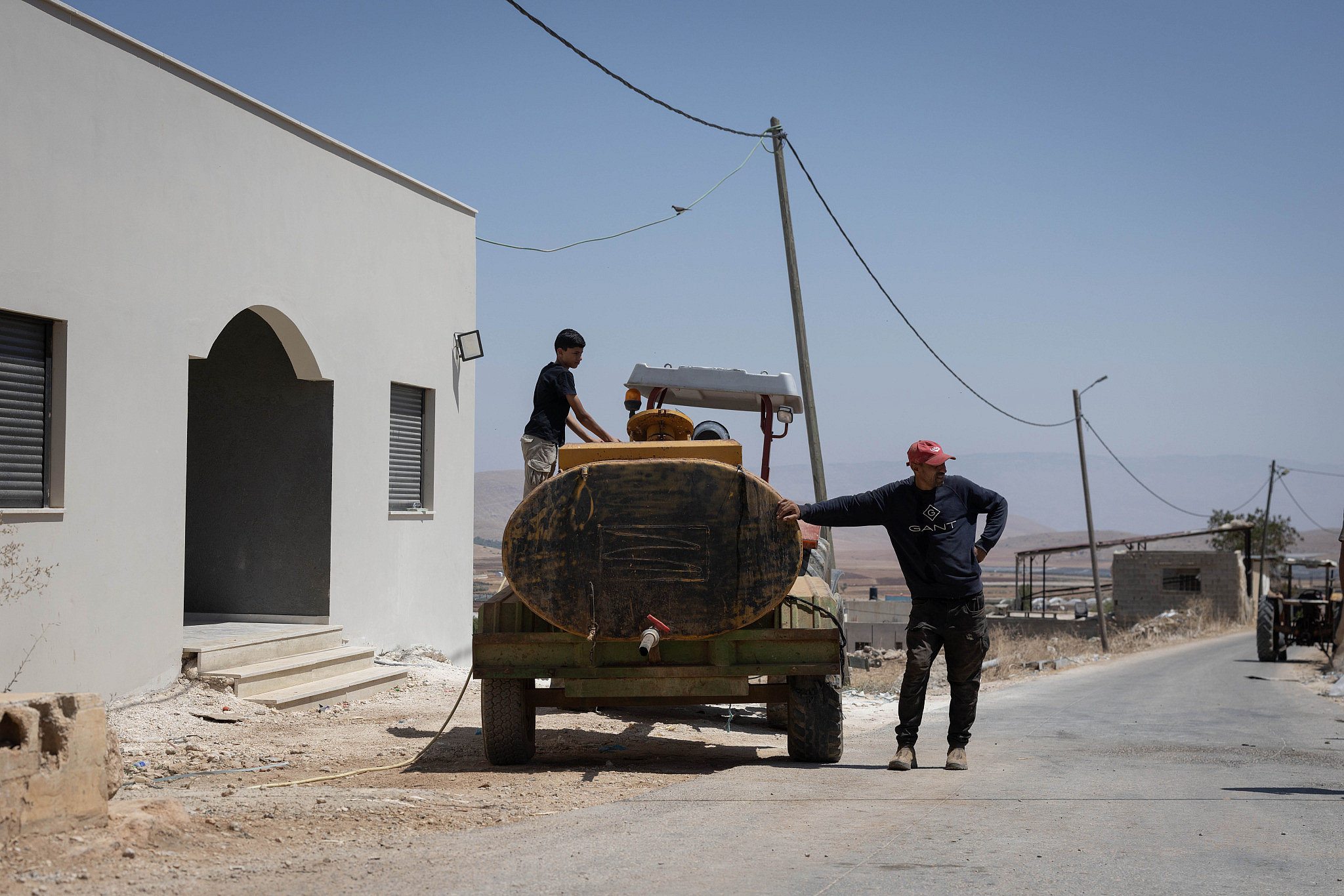
Residents say a settler known as “Haim” regularly patrols the area in a military jeep and harasses them. On Aug. 26, Tawfiq Jabarin — an attorney representing residents and local councils in a petition against the barrier — sent the army a video showing a uniformed man exiting a military vehicle and damaging a water pipe in Area B, near the barrier but outside the construction zone. In the state’s response to the petition, the army maintained that “there is no obstacle to repairing the water pipes immediately.”
After Jabarin asked the state last week to clarify the water situation, it said officials had toured the area with the Palestinian Authority’s District Coordination Office (DCO) to facilitate repairs. But according to Jabarin, repairs were coordinated for only one of the eight damaged points.
“These are serious criminal acts,” Jabarin wrote in a separate appeal to the army. “The right hand agrees to repair the pipes, while the left hand sabotages them.”
In a subsequent court filing, Jabarin described another encounter involving the same man. “A soldier named Haim prohibited Petitioner 9 [one of the Palestinian residents] from bringing water using his tractor,” he wrote. On the morning of Aug. 29, he continued, “that same Haim called Petitioner 9 from a blocked number and threatened him, saying he was forbidden to bring water via Ein Shibli [a village south of the area, near the Hamra checkpoint] or via Tammun.” The resident reported the incident to the DCO, which in turn contacted its Israeli counterpart, but received no response.
The state responded that in the case of Petitioner No. 9, “it was agreed that the regional DCO would allow the petitioner to travel along the barrier route toward the ‘Magen Tirtza’ checkpoint and transport two water tanks to the area each day.” Residents say that in practice, soldiers and settlers continue to prevent them from doing so.
Despite these testimonies, and what +972 observed during a tour of the area, the IDF Spokesperson’s Office said that “no complaints of water shortages have been raised.” It added that “the pipe in question was connected to orchards within a firing zone, in violation of the law and of a military order issued for the area. The IDF works to maintain normal life in the area and regrets any damage caused.”
‘We’re living in a prison’
As construction on the new separation barrier continues apace, Israel’s restrictions on Palestinian access routes in the area turn even short distances into arduous journeys.
Thaar Bisharat, 35, lives in Khirbet Ras Al-Ahmar less than a kilometer from Atuf. Reaching his home, however, requires a roughly 20-minute drive along rocky roads, through the only stretch where excavation of the barrier has not yet begun — assuming settlers or the army do not block the road.
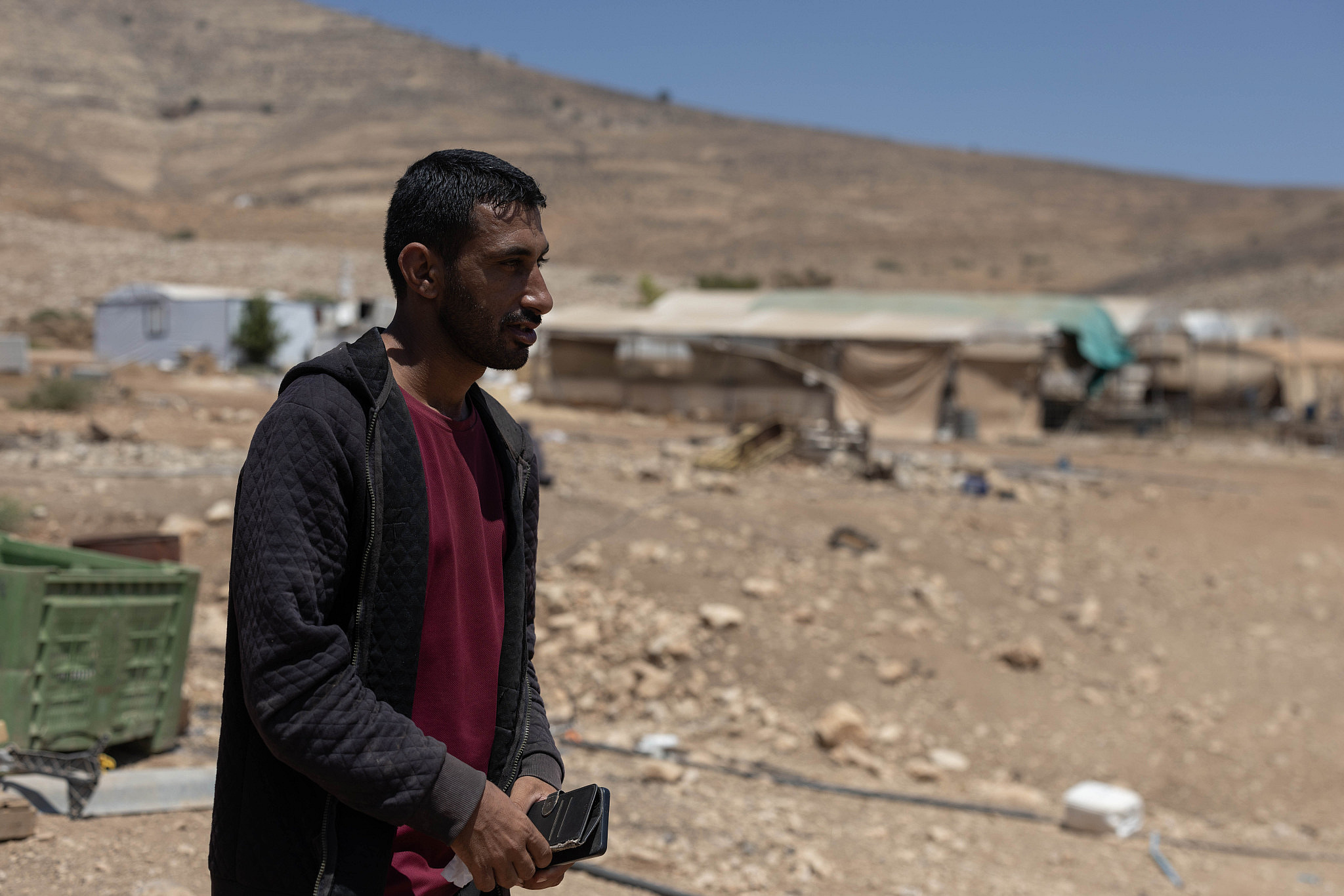
“We’re living in a prison. There’s no water, no decent living conditions, nothing to live on,” he said. “[Last month, the army] attacked my neighbor and confiscated three cars, saying they were being used for criminal purposes. What criminal purpose is there in driving your children or your wife to the doctor?”
Families who leave, Thaar explained, are generally forced to sell their flocks because they no longer have access to grazing land. “If you leave, you sell your herds. If you stay, you might die.”
Among those living in Khirbet Ras Al-Ahmar are Palestinians already displaced once before. Around six months ago, residents of nearby Khirbet Yarza were forcibly expelled, the result of a sustained pressure campaign by settlers and the army. “We left after attacks by settlers who were dressed in army uniforms,” Rami Masa’id told +972. “They fired shots and stole sheep.”
A few months ago, after a court ruling allowed the residents to return, they tried to go back. “A settler came, stopped me, and fired his gun. I fled,” Masa’id recalled. When residents later made a second attempt and reached Khirbet Ras Al-Ahmar, the settlers were ready and waiting. “They followed me, fired at the house, and destroyed a vehicle,” Masai’d said. “We called the army; they came and collected the bullets, and so far nothing has happened.”
Life after the expulsion has not been free of violence. About a month ago, he explained, his vehicles and those of several neighbors were confiscated by the army; they have not yet been able to raise enough money to pay the fines required to retrieve them. “There is no safe place,” Masa’id concluded.
It is not only those living east of the new barrier who suffer. Immediately to its west lives a Palestinian man who asked not to to be named for fear of settler harassment. He, too, is already a refugee from another community in the northern Jordan Valley. After a settler outpost was established near his previous home, he fled and bought several dozen dunams elsewhere, only for the new barrier to be routed alongside his land.
Most read on +972

Last week, the Civil Administration demolished his water cistern, which was located in Area C. Although his tents stand in Area B, where the Palestinian Authority is meant to be in charge of civil affairs, he said Israeli authorities threatened to demolish them as well.
The petition challenging construction of the barrier remains pending.
In response to +972’s request for comment, an Israeli army spokesperson claimed that “as part of proactive enforcement activities in the area, security forces are working to prevent entry into firing zones, which are necessary for training and military operations. As part of these operations, actions are being taken to apprehend trespassers, remove unauthorized occupants, demolish illegal structures, and confiscate vehicles used in violation of orders and procedures in the area.”
A version of this article was first published on Local Call. Read it here.