

In partnership with

Over the past three years, “sobering up” has become one of the most popular expressions in Israeli discourse. It refers to leftists and peace activists who have supposedly “come to their senses” since the October 7 massacre, realizing they were naive to ever think that there could be a future with Palestinians — as if that terrible morning was proof the right had been correct all along.
The phrase has come to be associated most strongly with the Israeli communities nearest to the Gaza Strip, which have traditionally leaned left politically and were hit hardest on October 7, and in whose name Israel launched an unrestrained war on Gaza. On the eve of what is being billed as a fateful election for the future of Israel and the Palestinians, I set out on a journey to these communities to meet some of the Israelis who have paid the biggest price — and yet still refuse to give up on their values.
This was not merely a journalistic endeavor. As a Palestinian citizen of Israel, I am still struggling for a sane future in this land, still turning over every stone to find partners, if only for my children’s sake. And this struggle depends on one crucial question: Is there still a camp in Israel, however small, willing to demand that their government pursue peace?
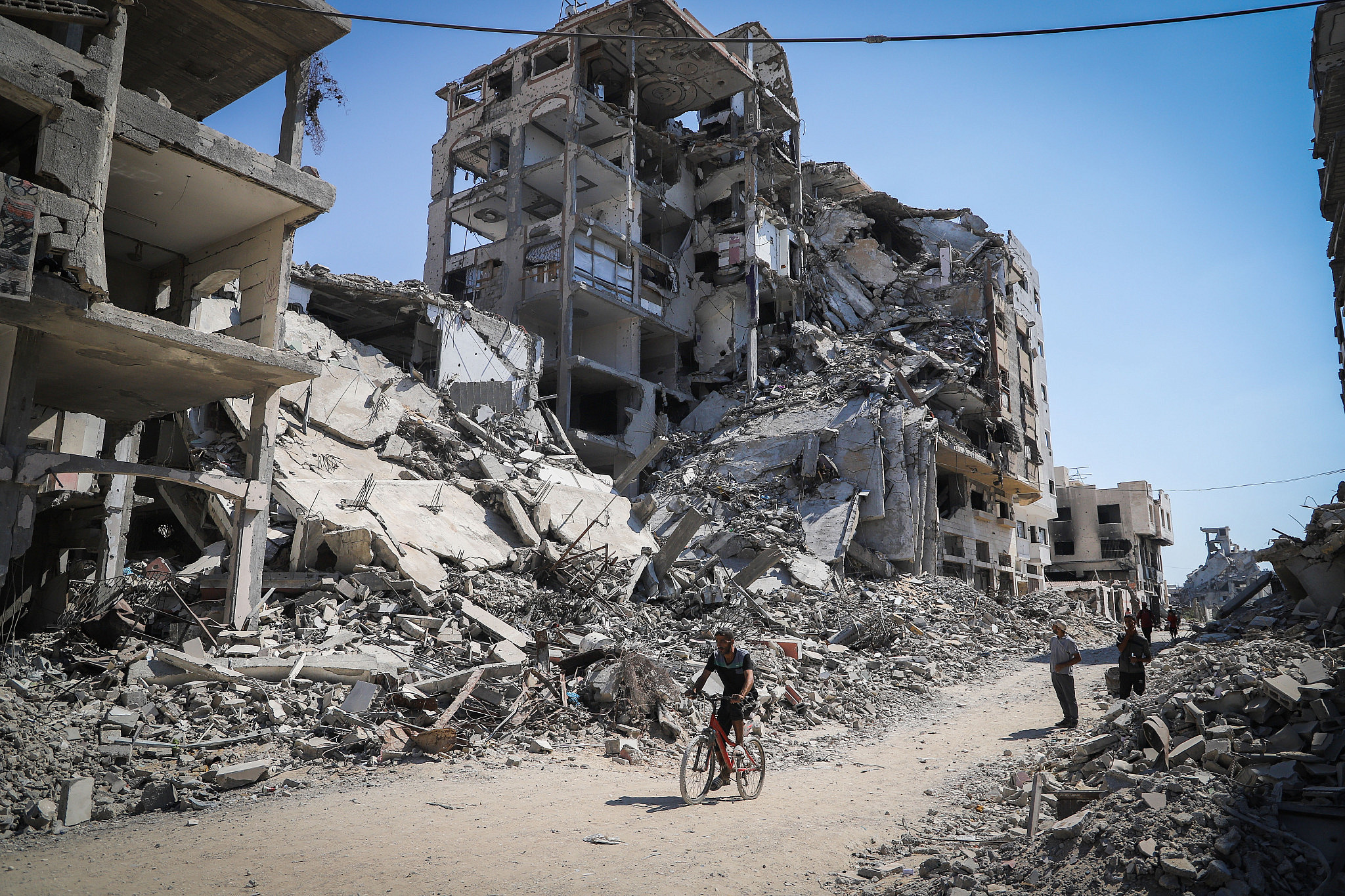
Alongside the grief and horror that Israeli society experienced on October 7, I have watched — like the rest of the world — the scenes of hell and bloodshed that Israel has rained down on Gaza. From inside my home in central Israel, I have heard fighter jets cutting through the air on their way south to “destroy,” “flatten,” and “wipe out” the enclave, along with the 2 million Palestinians imprisoned there, without mercy or distinction.
Hatred, revenge, and incitement have seeped into all corners of Israeli society, terrorizing every Palestinian between the river and the sea — including those of us with Israeli citizenship — and becoming ripe propaganda material in the hands of the fascist right ahead of the election. But there are some who refuse to be swept up, who dare to insist that there is an alternative to living by the sword.
My journey led me to three people whose experiences of bereavement, captivity, and war only strengthened their insistence on peace: Yonatan Zeigen, whose mother, Vivian Silver, was murdered in Kibbutz Be’eri; Liat Atzili, who was kidnapped from Kibbutz Nir Oz and held hostage for over 50 days, and whose husband, Aviv, was killed; and Yuval Or, whose son and daughter-in-law were murdered in Be’eri, and whose teenage grandchildren were taken hostage before being released in the same deal as Liat.
All three of them tell me something similar, reflecting a very different kind of “sobering up”: It was not peace that failed, but our attempt to live without resolving the conflict. As Yonatan puts it: “We’ve paid the price for war. We haven’t yet reaped the fruits of peace.”
‘The word “peace” must return to the discourse’
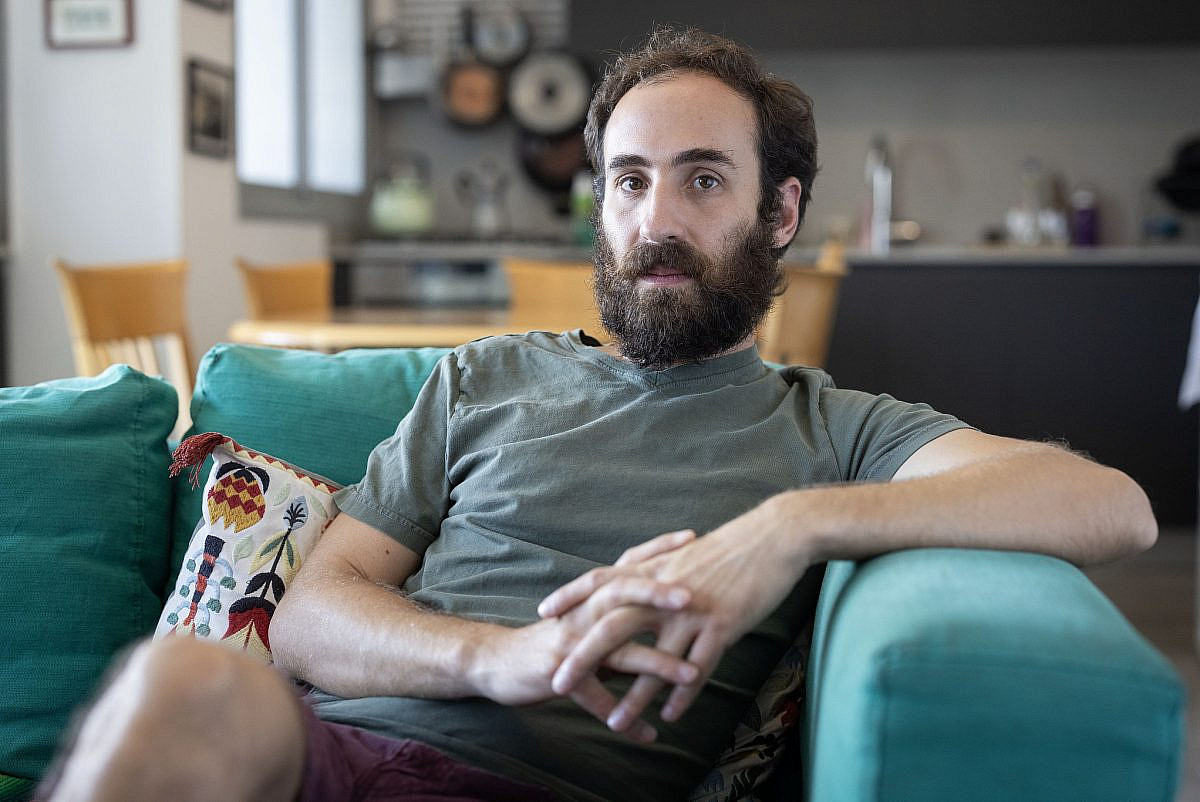
On the third anniversary of October 7, Yonatan Zeigen traveled from his home in Tel Aviv to Kibbutz Be’eri for the community’s memorial ceremony. His mother, Vivian, was a lifelong peace activist and a dear friend of mine. Like Yonatan, I waited 39 days for her to return from captivity, believing she had been kidnapped, until her remains were finally discovered in a closet inside her modest home.
As far as Yonatan is concerned, his mother’s murder is not proof that Vivian was wrong. On the contrary: He sees October 7 as the result of years in which diplomacy was repeatedly sidelined, and in which Israel chose to “manage the conflict” rather than resolve it. If the government had listened to Vivian and people like her, he says, perhaps we would not have ended up here.
A few kilometers away, in Kibbutz Nir Oz, Liat Atzili has returned to living in the home from which she was kidnapped to Gaza. Her husband, Aviv, who was part of the community’s civil defense squad, was killed on October 7 while trying to repel invading militants.
“First of all, I really feel like this is a victory,” she says of returning to her home, which has undergone renovation after the damage it sustained on October 7 — part of an effort “to piece my life back together and learn to live my new life, which includes many elements from my previous life.”
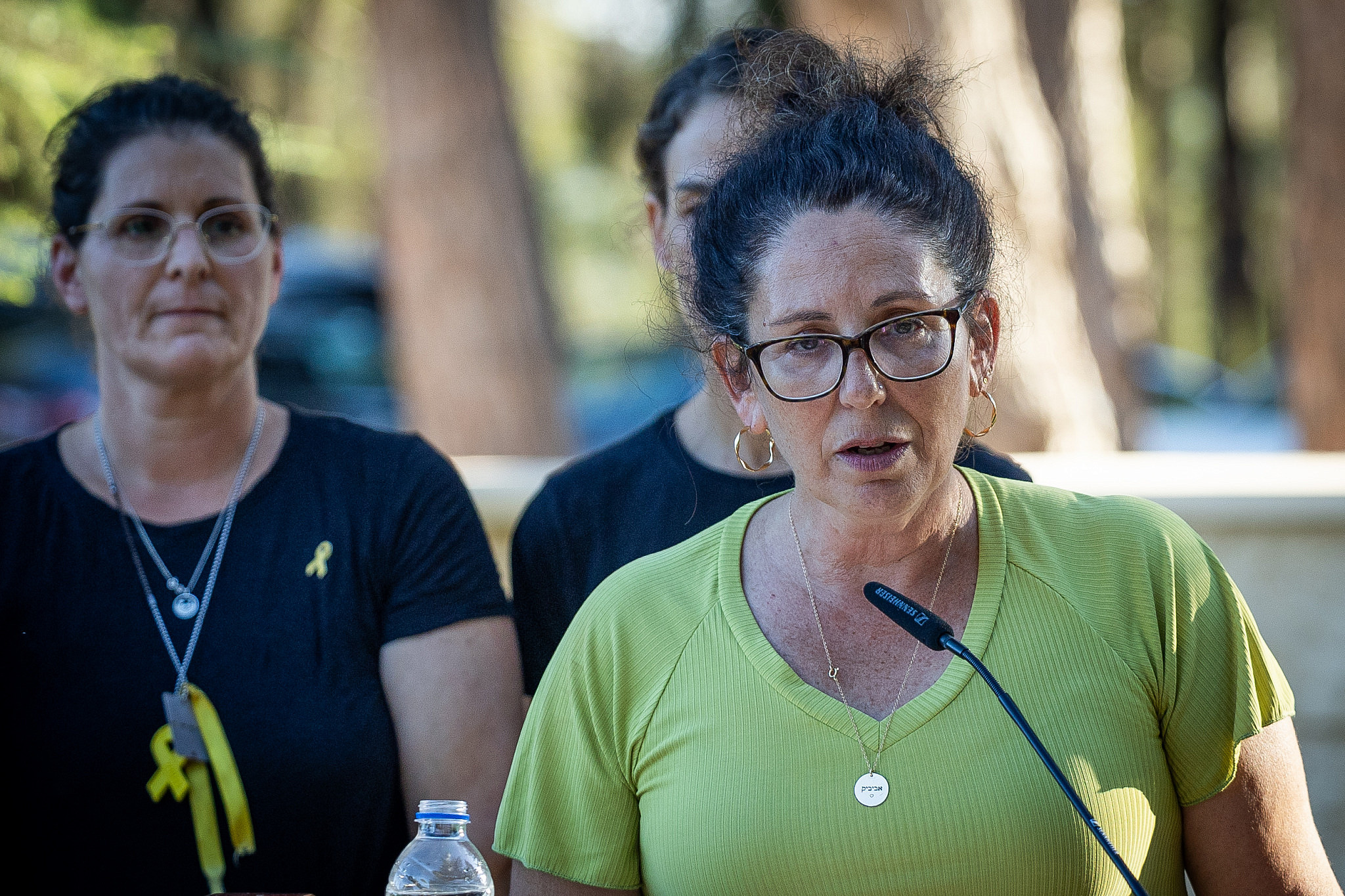
Liat describes herself as a “radical left-wing voice” in the small community of Nir Oz: She previously voted for the Arab-Jewish party Hadash (which is running in the upcoming election as part of the Joint List of predominantly Palestinian parties) and hosts political gatherings in her home, even though many people did not like what she had to say after she returned from Gaza.
“I was approached by the A Place for Us All party [founded by leaders of Standing Together] and others to get involved in politics,” she explains. “That doesn’t interest me; I didn’t see myself in that arena.” Instead, Liat has returned to her work as a history and civics teacher. As she puts it: “There is no education that is not a political act, and today it’s more important than ever to be engaged in it.”
She believes that in the past she was too cautious, too quiet, and too sensitive. “I avoided talking about a solution, about the future, or about the thing that I believe will put an end to all the suffering of both peoples. [After captivity] I realized I need to be less restrained. I realized that people who think like me — we must not remain silent. The word ‘peace’ must return to the discourse.”
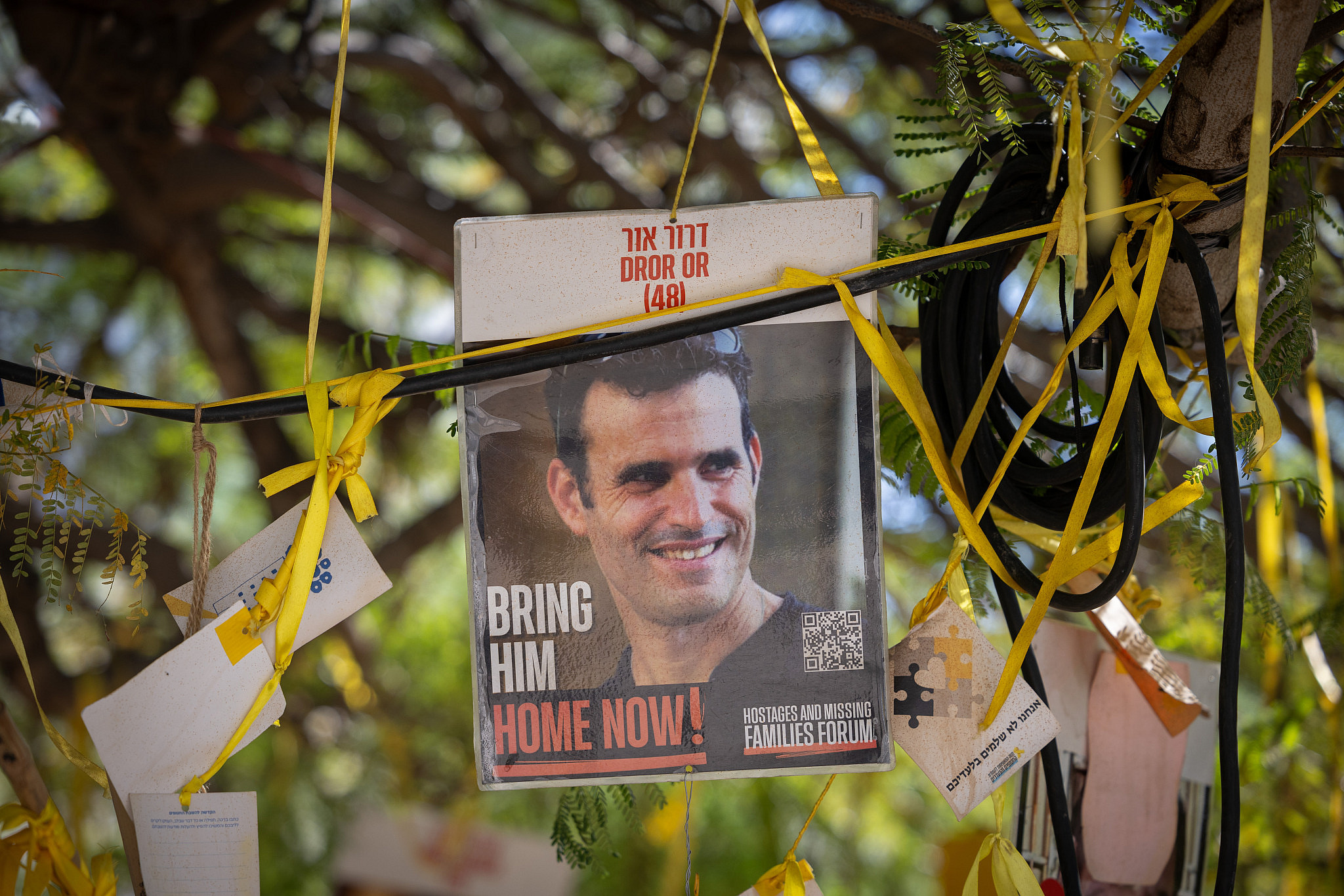
Yuval Or, 75, is a veteran member of Kibbutz Re’im, but he has relocated to Kibbutz Hatzerim, close to the city of Be’er Sheva, to be with the displaced residents of Be’eri. His son, Drori, and daughter-in-law, Yonat, were murdered in Be’eri and their bodies taken into Gaza as bargaining chips, while his grandchildren, Noam and Alma, were kidnapped alive and held for almost two months.
Today, Yuval and his wife help raise their orphaned grandchildren and support Alma through her final year of high school.
Yuval is not one to mince words. “You won’t hear me expressing love for those who did the worst thing imaginable to me,” he says. “Not for the Israelis responsible for it, or for the Arabs who did it to me.”
But his grief has not swayed him from his unshakable conclusion: There is no other way except peace. He has no romanticism about the solution; he is interested in a stable arrangement between enemies, not love between peoples.
Yuval, who also works as a couples therapist, offers me a simple analogy. Take two ropes, each 20 centimeters long, and tie them together. You will not end up with a 40-centimeter rope. The knot itself takes up some of the length of each rope. “At the point where the knot is tied, there is compromise,” he says. “We have to compromise.”
Yuval’s words bring to mind a question: Who is truly naive here — those who believe it is possible to reach an agreement with an enemy, or those who believe it is possible to live by the sword forever, moving from one war to the next without paying the price again and again?
“The army dropped the biggest, most sophisticated bombs, causing many casualties and spilling much blood — and then what happened?” Yuval asks. “Did we win? The answer is no.”
War before life
The way the Israeli government chose to handle this chapter in the history of the Israeli-Palestinian conflict had a profound impact on the lives — and deaths — of the hostages and their families.
Israel reportedly refused a deal to return all the civilian hostages as early as the evening of October 7, while far-right ministers Itamar Ben Gvir and Bezalel Smotrich publicly opposed ceasefire and captive-exchange deals throughout the next two years, threatening to dismantle the coalition if the war ended on terms they found unacceptable. The government kept telling a shell-shocked public that “total victory” was just around the corner, while its own citizens were being held in tunnels.
And this price was paid not only by those taken captive by Hamas and other armed groups during the attack. As time went on, the hostage families who took to the public squares to demand the return of their loved ones discovered that, in this Israel, even human pain and distress could be treated as suspect. They were smeared and slandered, accused of serving the enemy, simply because they dared to make the most basic demand of their government: to bring its citizens home and end the war.
When Liat was held hostage with Ilana Gritzewsky, she recalls, their guards were already talking about the possibility of a deal in the first week, and were surprised when it did not progress.
“It was clear to me from day one that this government had no urgency to bring me back,” she tells me. “And I take this very personally. The Palestinians who kept me alive in Gaza were right, and the government and its emissaries lied to the world.”
In many ways, its management of the hostage crisis clarified the Israeli right’s priorities: War comes before life, and staying in power comes before the safety of their citizens.
Regarding those who “sobered up” and shifted to the right after the massacre, Liat says she understands them emotionally but does not accept the political conclusion they reach as a result of severe trauma. “It’s a narrow prism through which to view reality,” she explains. “The notion that everyone wants to harm us, and therefore we must wield even more force and murder everyone is flawed, and it cannot guide our lives.
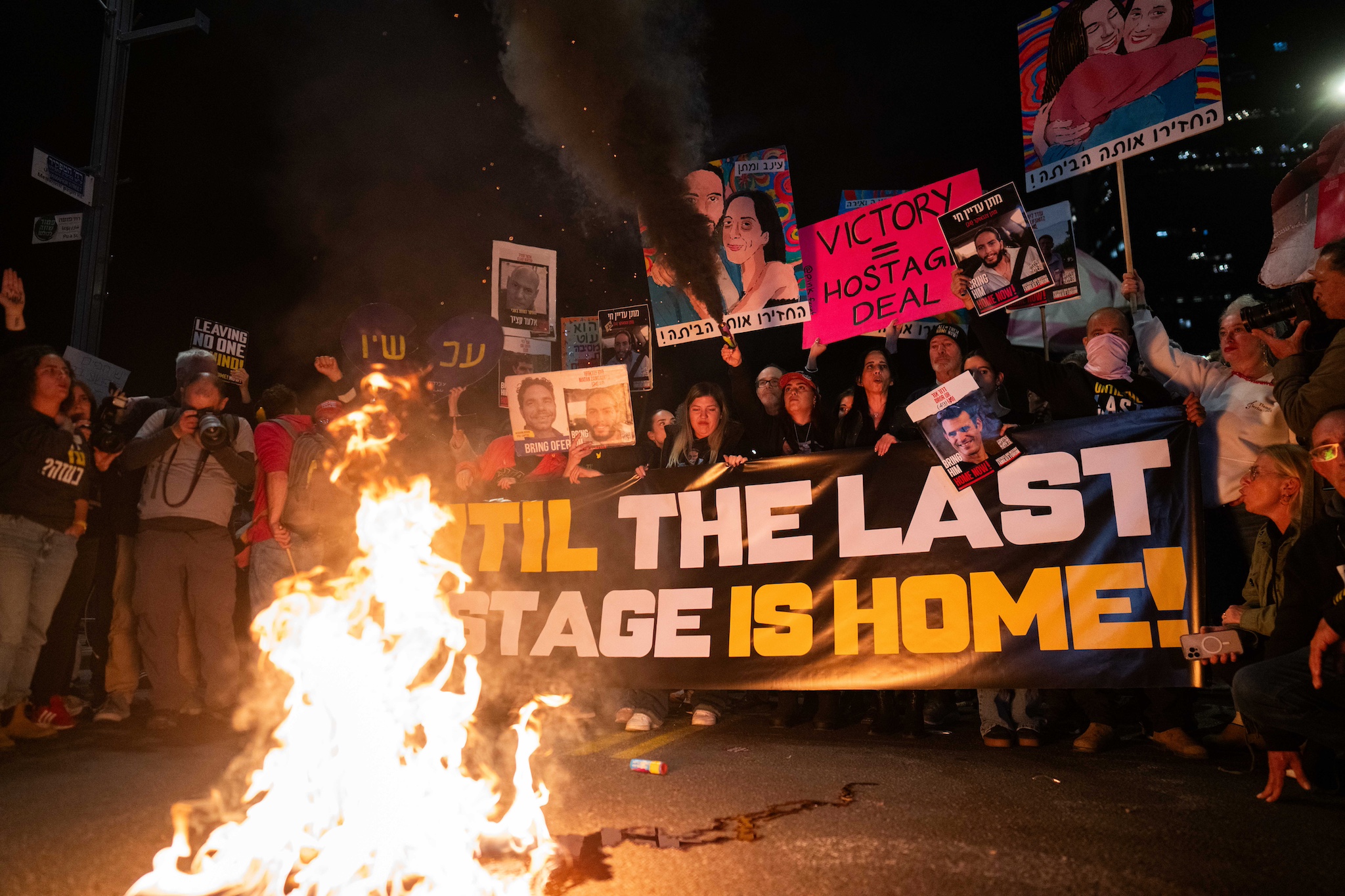
“I can understand it on an individual level, when it comes to a bereaved family grieving its loss,” she continues. “But I cannot accept it when it comes from the perspective of leadership and official policy.”
Yonatan also talks about the toll violence takes on the society that perpetuates it. “If I am capable of using violence against a person or a certain group of people and normalizing it within myself, eventually it takes over me,” he says.
This dynamic has been abundantly clear in Israel throughout the past three years. All Arabs are suspects. Leftists are traitors. Even the kibbutz residents are enemies. The language of erasure, humiliation, and annihilation slowly becomes the language in which a whole society speaks to itself.
Enduring empathy
Yonatan also speaks to me about his two children, aged 10 and 12, who have grown used to talking about politics, war, and morality at home. Unlike Liat, Yonatan entered the political sphere as a candidate for A Place For Us All, which has since withdrawn from the race.
I listen to him and think about my own children. They, too, have grown up surrounded by politics they didn’t ask for: the Nakba, the occupation, wars, rocket sirens, protests, fear. And they, too, deserve — just like Yonatan’s children, Yuval’s grandchildren, and Liat’s students and her own children — a more sane place to grow up.
Sometimes I wonder how much this bloody reality has robbed from the childhoods of the children we brought into this world, and how much of our fears and struggles we have passed on to them without meaning to. We also have a duty to leave them the possibility of something different: a different language, a different imagination, far bolder and more courageous than ours.
In November 2023, Yuval traveled to the Kerem Shalom crossing with Gaza to pick up his grandchildren, Noam and Alma, after 50 days in captivity. One of the first things Noam said to his grandfather was “I feel sorry for them,” referring to the Palestinians in Gaza. “I’m going free, while they remain in prison,” he continued, as Alma nodded.

Two teenage orphans, returning home after more than 50 unimaginable days in captivity, still manage on their way out of Gaza to feel compassion for the Palestinian population left behind. Yuval says this didn’t come out of nowhere: Their parents, Drori and Yonat, were people of peace and reconciliation, and something of their upbringing remained with the children even after their world collapsed.
“I don’t know what will happen to them later with the army, with their friends, with the media,” he lamented. “Maybe other ideas will be planted in their heads in the future.”
Yonatan, too, exhibits an extraordinary amount of empathy when he speaks about the man who murdered his mother: “He could very well be a devoted father. He may have children, a wife, and a home.”
He says this not to absolve the man of responsibility, but because he refuses to accept a world in which acknowledging a crime requires erasing the humanity of the person who committed it.
As a Palestinian, that’s precisely where something inside me stops. Israeli society has learned to ignore Gaza: Children, mothers, and entire families have been reduced to numbers and “collateral damage,” and the immense destruction in the Strip barely registers in public discourse.
Then I meet the very people who were most directly harmed by the events of October 7 — of whom I have no right to demand anything, even to show empathy in moments of crisis and trauma. And they tell me: There are human beings over there, just like us, and no future can be built on erasing them.
I write these words as a member of a society trapped in that same bloody predicament. Today, more than ever, I feel that Palestinian citizens are also in the line of fire. We, too, are burying our dead; we, too, are afraid; and among us, too, those who dare to speak of a shared life are silenced.
And yet, these conversations reminded me that our partners on this journey have not disappeared. They have merely been pushed to the margins of Israeli society. And there, on the margins, they preserve the ability to imagine a different future.

In the absence of a songbird
The upcoming elections, the first since October 7, will not solve all of this, and my three interviewees know that very well.
Yuval intends to vote for the Democrats, even though he knows that this camp is far removed from his idealist leftist perspective. He quotes a proverb I had never heard before: “In the absence of a songbird, even a crow will be mistaken for a nightingale.”
“What can you do? That’s how it is, right?” he says. This is pragmatism almost entirely devoid of ideology: First, a change of government; afterward, we can continue arguing about exactly where we are headed.
It may not be a revolutionary statement, but sometimes the road to major change begins with a small compromise. And without a first step, there is no road at all. “Look,” he argues, “[Naftali] Bennett and [Avigdor] Liberman are not ideological leftists. The main thing is to get rid of the fascists. After that, we’ll see.”
For Yonatan, if the public sees no alternative political pathway, we cannot expect it to choose one. That is why he was among the founders of A Place for Us All, an initiative intended to offer the public a different vision based on Jewish-Arab equality and an end to the occupation.
Most read on +972
Liat believes that only education can restore the language of peace to public discourse, but she does not discount the importance of the ballot box, especially now. Yuval says that to reach a lasting settlement, everyone will have to give something up. Three different ways of phrasing the same conclusion: There is no escape from the work of politics.
None of them promises that things will turn out well. Perhaps that is precisely why they are worth listening to. They are not speaking out of naivety, but after captivity, after murder, after funerals, after returning to destroyed homes, and after having to raise children who lost their parents — all while carrying the pain of bereavement and the desire to live. And they still refuse to accept that perpetual war is a law of nature.
Their belief in peace was not born out of the disaster; it survived it. And for these three people, the disaster even strengthened their conviction. The peace that Yonatan, Liat, and Yuval speak of is attainable, and they are convinced of it. It is a peace envisioned by people who know exactly what war is capable of, and who, precisely because they have paid its heavy price, refuse to go on paying it forever.
A version of this article was first published in Hebrew on Local Call. Read it here.