
Omar Abd Rabou is well known in Gaza as a critic of Hamas. He has repeatedly condemned October 7, calling it “the worst day of my life.” Last year, he was allegedly kidnapped and assaulted by individuals affiliated with Hamas. He has been positively referenced in several Israeli media outlets. And despite Israel killing five of his siblings, he still advocates for peace and denounces extremism.
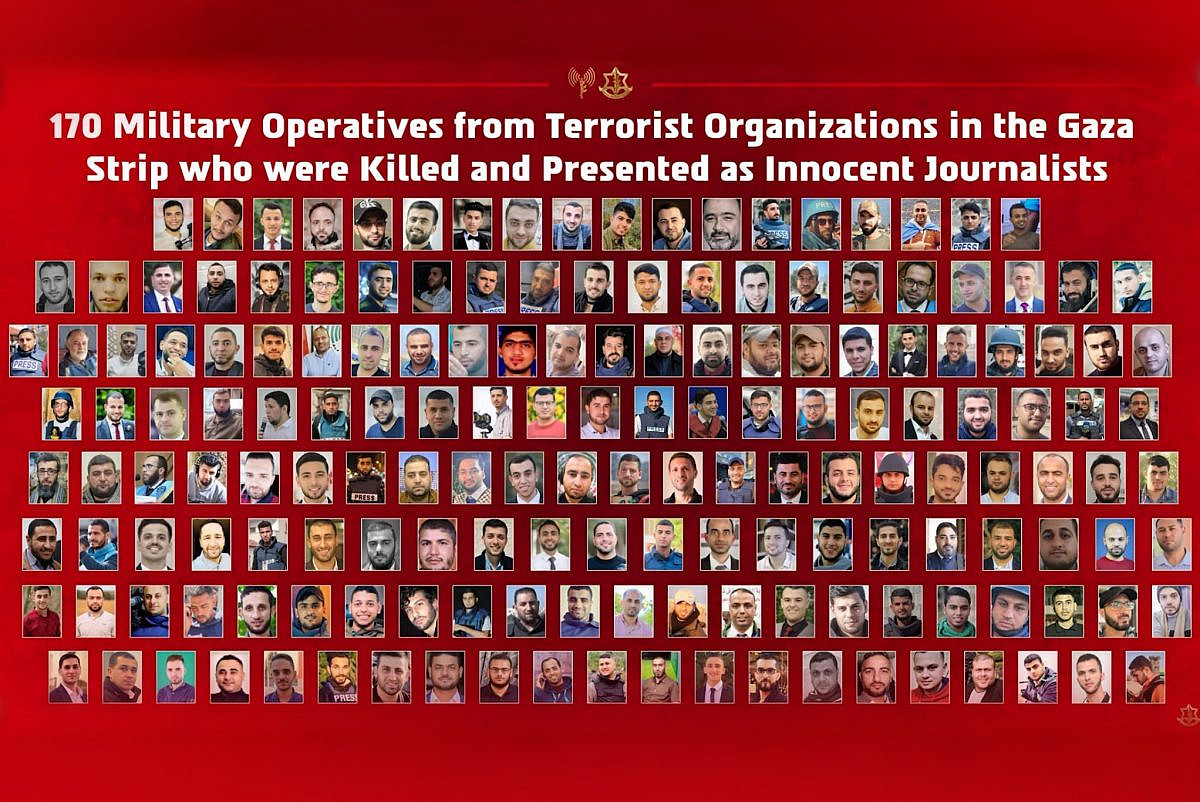
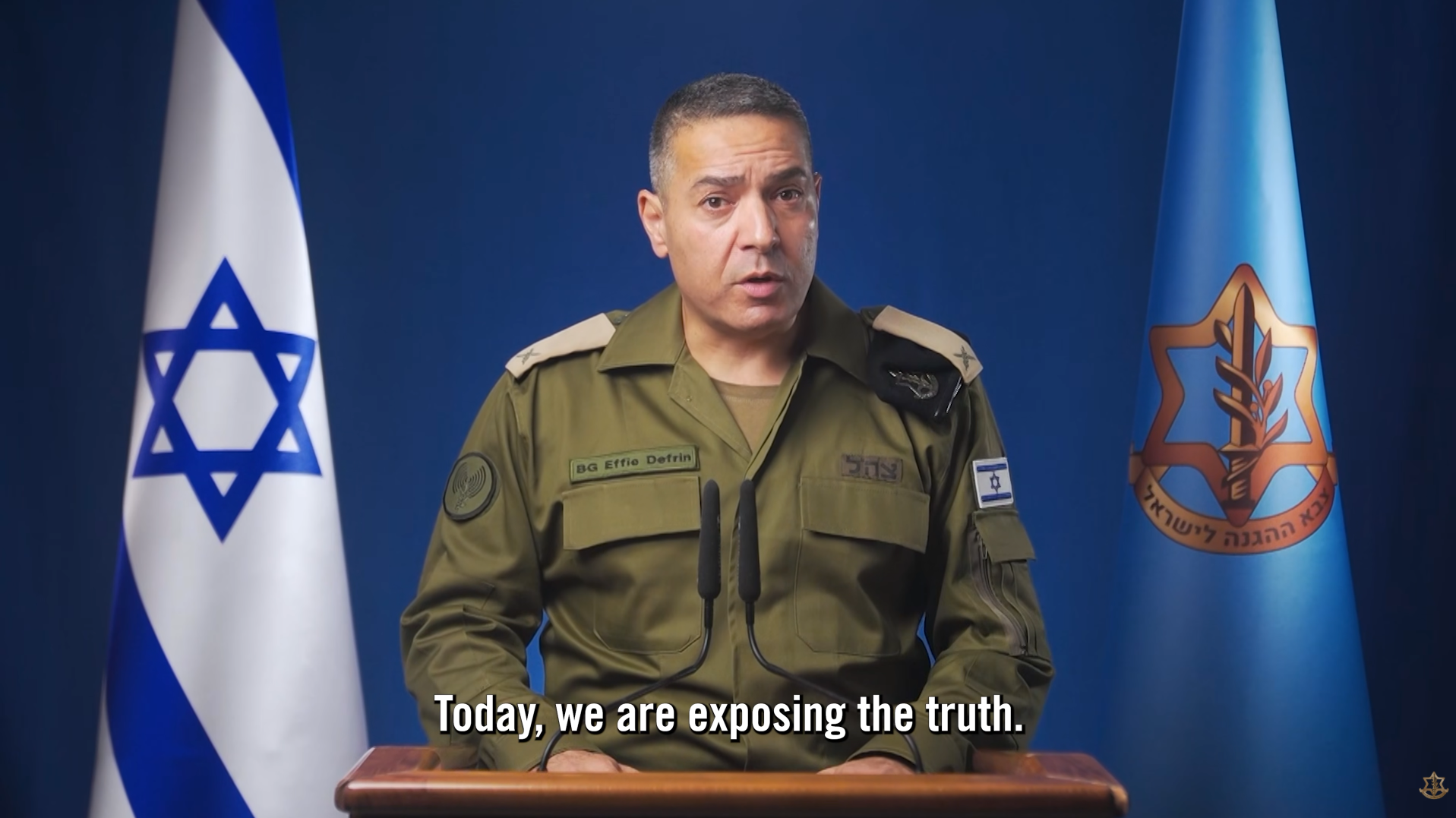
Last week, Abd Rabou was shocked to discover that the Israeli army had included his late brother, Mohammed, in “The Press Files” — a new list of 170 Palestinian journalists and media workers whom Israel killed in the Gaza war and alleges were “terrorists.”
Abd Rabou rejected these accusations immediately, writing on X that his brother was “a bona fide journalist” and “held official membership in the Palestinian Journalists Syndicate.” Once hailed by Israelis as a victim of Hamas, Abd Rabou was quickly flooded on social media with Israeli accounts trolling and mocking him for challenging the army’s claim about his brother.
What is more shocking is the complete lack of evidence against Mohammed: no obituary from an armed group, no incriminating pictures, no military ID, no documents proving membership. His “Press Files” page merely states that he was a “military operative” belonging to Hamas, and claims that this is “based on multiple intelligence sources.”
In other words, the Israeli army wants you to simply trust them that a man who was assaulted and kidnapped by Hamas is the brother of a notorious Hamas militant.
Mohammed is one of 59 journalists included in “The Press Files” whose pages are devoid of any evidence or documentation whatsoever. Naturally, these names are all buried at the bottom of the list. In the cases of Al Jazeera’s Ahmed Al-Louh and Sawt Al-Aqsa’s Hassan Sammour, their pages don’t even contain the claim “based on multiple intelligence sources.”
The Israeli army is also accusing any journalist who entered Israel on October 7 of being a terrorist — despite the fact that many journalists and spectators rushed spontaneously to Gaza’s perimeter fence that morning to document or observe the attack as it unfolded.
Mohammed Abd Al-Aziz Al-Najjar’s entry, for example, contains only one “incriminating” photo of him, in which he can be seen close to the perimeter fence raising his hand in a victory sign. His file does not present any additional details apart from alleging, without evidence, that he is a “military operative” in Hamas.
Such empty accusations against journalists have long been routine for the Israeli army. In August 2025, when Israel killed five journalists in a double-tap airstrike on Nasser Hospital in Khan Younis, the army claimed it was targeting Hamas operatives who had placed a camera on the hospital’s roof to gather intelligence. Reuters, whose cameraman was killed in the bombing, thoroughly debunked Israel’s claim. None of those five journalists were included in the “The Press Files.”
Likewise, in 2018, when Israeli snipers shot dead the Gazan journalist Yasser Murtaja while he was wearing his press vest, Israel insisted he was a “Hamas operative” with a rank equivalent to captain. Yet Murtaja had been detained and beaten by Hamas in 2015, and his company Ain Media had been vetted and cleared by the U.S. government when he received a USAID grant.
To save face, Israel said it would “investigate” his death; that was the last anyone heard of the alleged investigation.
Murtaja’s brother, Hamza, has now been included in the Israeli army’s list of “terrorist” journalists. Hamza was killed in August 2024 while filming a TV report about displaced civilians seeking shelter in an overcrowded school in Gaza City. Israel bombed the school while he was there, killing him and 11 others.
The army’s file on Hamza is incredibly thin: His page only contains one snippet of a document stating that he joined Hamas’ military wing in 2012 as a foot soldier and was still active in 2018. The document is not dated, it contains nobody else’s information apart from Hamza’s, and there is no indication of which document it came from — making it impossible to verify the authenticity of the snippet.

Strewn with errors
Hamza’s thin file is one of 42 cases in which the Israeli army does not provide any credible incriminating evidence. Three of those snippets show little or nothing more than a name, an ID number, and a phone number — without any information indicating membership in a militant group, a rank, or an enlistment date.
In three other cases, the snippets have been clearly edited with no original version provided: Names in English have been added to the document and highlighted in yellow, making it impossible to verify if those names already appeared there in Arabic.
In five cases, there is a clear mismatch between what the Israeli army claims and what the snippet says. For instance, in the case of Hassan Aslih, whom Israel bombed in a press tent and then bombed again in his hospital bed, the army claims he was a “military operative” in Hamas. However, the document they provide, dated 2019 and riddled with typos and strange fonts, lists him in the section of “support services” as a “media” worker and notes “there is no signature on his admission.”
Likewise, Mohammed Al-Sawalhi, Yasser Al-Fadi, and Mutaz Rajab are listed as branch commanders or deputies in the same battalion, but the undated snippets on their pages name them as part of a militant media arm. Haider Al-Masdar is listed as a “military operative,” but the snippet on his page describes him as a “major” in an intelligence unit.
We have no way of knowing whether the snippets presented by the army are authentic because they are effectively unverifiable. But even if we were to give the army the benefit of these many doubts, the snippets still provide no justification for bombing these journalists. They could be outdated and show past membership in Hamas’ militant wing rather than current status, which would be like saying the Israeli journalists Barak Ravid of Axios and CNN, or Nitzan Shapira of Channel 12, are “legitimate targets” because they previously served in the army.
Some of the snippets have already been refuted, such as those used in the cases of Al-Jazeera’s Anas Al-Sharif and Ismail Al-Ghoul, who are both included in this new list.

In the case of Al-Sharif, who was the most prominent journalist left in northern Gaza when Israel besieged the area as part of its “Generals’ Plan,” Israeli military officers would call and threaten him explicitly to “shut up,” making it clear his killing was about his journalism. The army had even captured him during its siege of Al-Shifa Hospital, and let him go after interrogation.
The documents the army presented after killing Al-Sharif in August 2025 listed him as a “group leader” in Hamas in 2019, then a “suspended” and “unassigned” foot soldier in 2023 — an incredible demotion. A third document lists him as a Nukhba militant, Hamas’ most elite combat unit, despite him being described in the second document as having “extremely weak hearing in the left ear, weak eyesight,” and constant migraines and headaches.
Likewise, Ismail Al-Ghoul was captured, interrogated, and released by the Israeli army at Al-Shifa Hospital, three months before Israel assassinated him in July 2024. The original document Israel provided to justify his killing listed him as a Hamas combatant from the age of 10 — something unheard of in Hamas’ history. His latest file contains a new document alleging that he was recruited at 17.
Far from conclusive evidence
In 19 cases, Israel’s evidence consists of photos of the individuals posing with guns, wearing military fatigues, or appearing in videos published by Hamas or Palestinian Islamic Jihad. Mohammed Ayyash, for example, posed for a picture next to a masked Hamas militant while holding that militant’s gun, and Mohammed Bardawil is seen speaking at a public Hamas event while wearing military fatigues.
Needless to say, being pictured in military fatigues or posing with guns does not automatically mean that an individual is a militant. The pro-Israel influencer Lizzy Savetsky posted photos of herself dressed in military fatigues, holding a rifle, and standing between Israeli soldiers. The former prime minister of Denmark, Lars Løkke Rasmussen, once posed for a picture next to Afghan Mujahideen while himself wearing their customary outfit and holding a rifle.
Nine of these 19 individuals were never listed in the database of 191 journalists and media workers killed in Gaza that is maintained by the Committee to Protect Journalists. Of the remaining 10, six previously appeared in CJP’s list but were later removed after subsequent investigations showed they were either not journalists or had combatant roles.
Four are still included in CPJ’s database following thorough investigations that concluded that either Israel’s accusations were meritless or those individuals had combat roles in the past and not during the current genocide, meaning they are not legitimate targets.

The shortage of “evidence” underpinning Israel’s allegations is so embarrassing that even a researcher at the hasbara organization HonestReporting — which has long accused Gazan journalists of being Hamas operatives, without any basis — admitted that for 102 of the 170 names in the army’s list, “the detail drops off sharply.” He added: “Nearly all list only ‘Military Operative in the Military Wing,’ and 58 of the last 60 include no military ID.”
In 49 cases, the Israeli army’s evidence consists of obituaries allegedly published by Hamas or Palestinian Islamic Jihad on their Telegram channels, claiming the deceased individuals as members. This is the strongest evidence the army provides in “The Press Files,” but it is still far from conclusive.
Of these 49, 19 were never listed as journalists in the CJP database; 21 were removed after establishing they were either not media workers or had active combatant roles; and nine are still listed by CJP following thorough investigation.
In fact, of the 170 names on Israel’s list, only 78 names are listed in the CJP database that totals 191, and the overwhelming majority of those 78 have no obituaries or incriminating pictures attached to their files. In other words, even if one were to blindly accept that each of the journalists included in “The Press Files” was a militant, the army has no accusations whatsoever against at least 113 more journalists whom it killed in Gaza during the past three years.
Seeing through the charade
There is a wider precedent to these flimsy allegations. During the genocide, Prime Minister Benjamin Netanyahu’s office was caught leaking fabricated “Hamas documents” to the German newspaper Bild and the British newspaper Jewish Chronicle to undermine anti-government protests in support of a hostage deal. Israel was similarly caught fabricating terror charges against six prominent Palestinian human rights organizations — a claim the CIA investigated and found to be without merit.
In 2018, the Israeli army even invented out of thin air an entire shootout at the Gaza fence on the bloodiest day of the Great March of Return, when Israel killed 60 protesters and wounded 2,771 more in mere hours. During the recent Iran war, the Israeli government also appears to have fabricated quotes from an Iranian official to manufacture “evidence” against Tehran.
In any case, Israel’s claims about Palestinian journalists in Gaza negate basic common sense. Why would a dangerous, wanted militant hide in plain sight, sleep on the street, expose their location constantly by posting regular updates on social media, report live in front of a camera 24/7, and wait like a lame duck to be hunted down?
Most read on +972
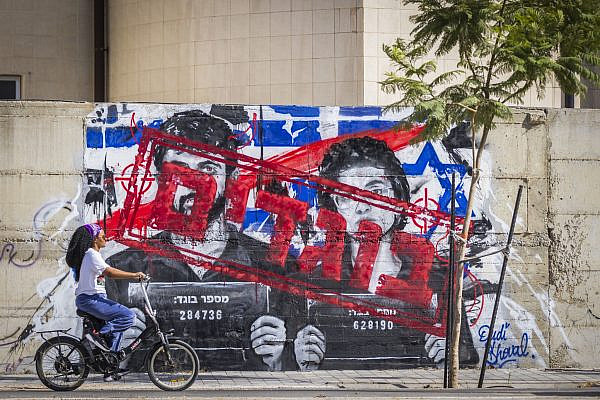
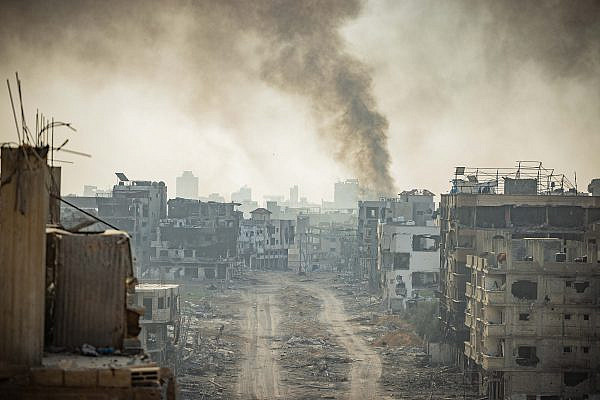
More to the point, in 2024 +972 Magazine exposed the existence of a secret Israeli intelligence unit — the “legitimization cell” — tasked with digging up dirt on journalists and media workers in Gaza to justify their killing in record numbers. The fact that such an intelligence operation, with all of the vast spyware, AI tools, and data gathering resources at its disposal, ended up presenting such a flimsy case is a vindication of Gaza’s journalists rather than an indictment.
By now, most of the world sees through this charade. The very people that the Israeli army tried to browbeat with this new list, such as Piers Morgan and Mehdi Hasan, simply retorted that if it thinks every Gazan journalist is linked to Hamas, it should allow international journalists to enter Gaza. Israel’s unprecedented and ongoing ban on foreign media workers, which is now entering its fourth year, is itself the ultimate testament that it has something to hide.
As if to illustrate through parody just how indefensible “The Press Files” are, an Israeli army spokesperson pulled out of a debate against Hasan on Morgan’s show earlier this week — leaving Hasan to make his case to an empty chair.