
In partnership with

“‘Gaza and Jericho first.’ That is how we will be able to redeem the land and settle in Gaza and throughout the Land of Israel,” wrote MK Limor Son Har-Melech in a post on Facebook last week. “With God’s help, we will return to all parts of our country!”
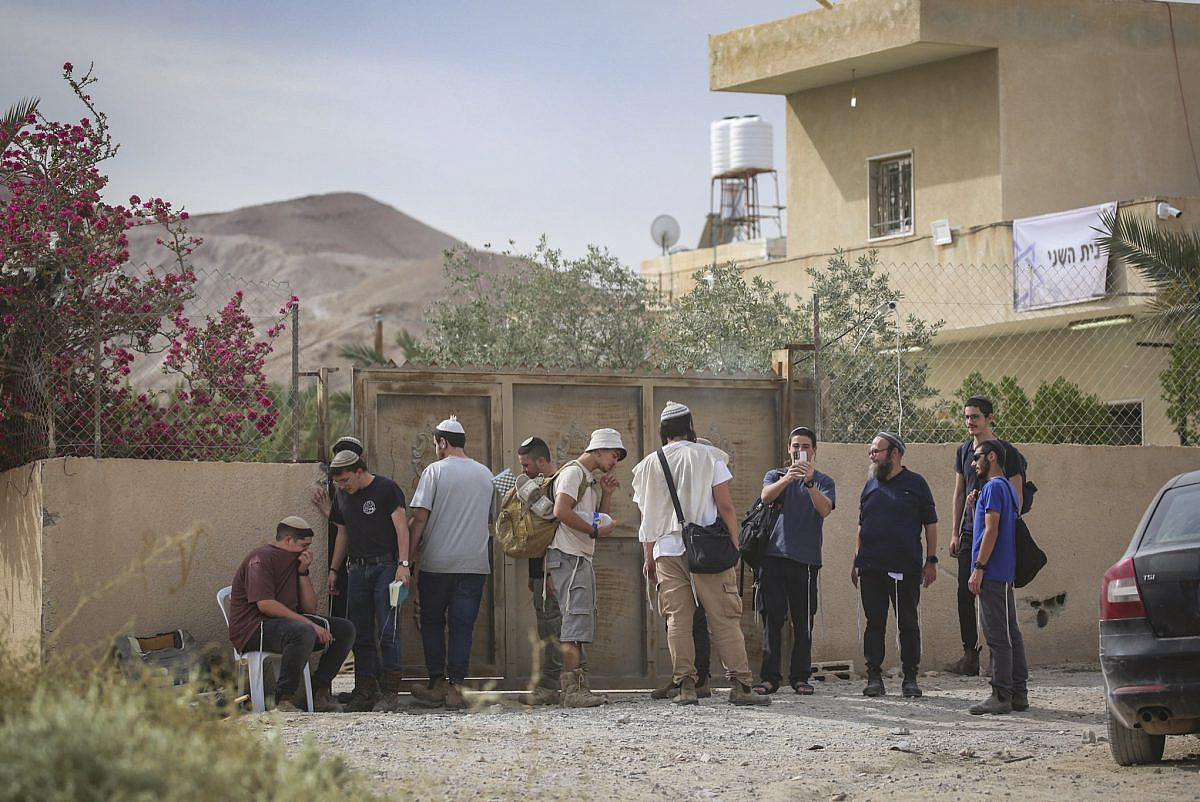
The far-right politician, a member of National Security Minister Itamar Ben Gvir’s Otzma Yehudit party, was writing to congratulate the Nachala settler movement on their recent conquest. With the backing of the Binyamin Regional Council, around 30 settlers from Nachala entered the outskirts of Jericho on Nov. 4 and took up residence in eight buildings, less than a kilometer from the city center.
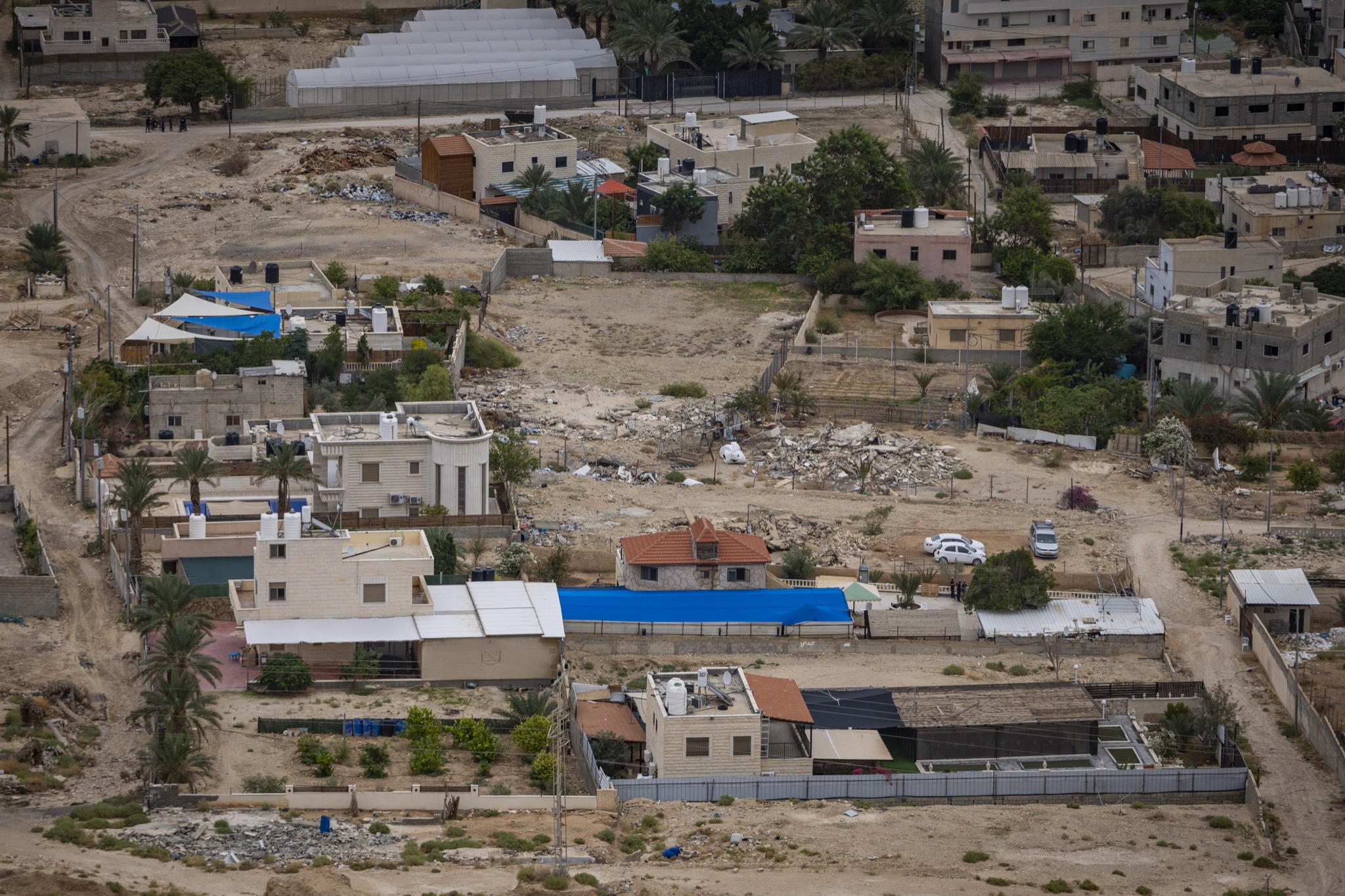
Since the arrival of Jewish settlers in Hebron in the early years of Israel’s occupation, this is the first time that another settlement has been built inside a Palestinian city. The structures are located in the Al-Duyuk Al-Tahta neighborhood, which fall within Area C of the West Bank (under full Israeli military control) but are very close to Area A (under Palestinian administrative and security control).
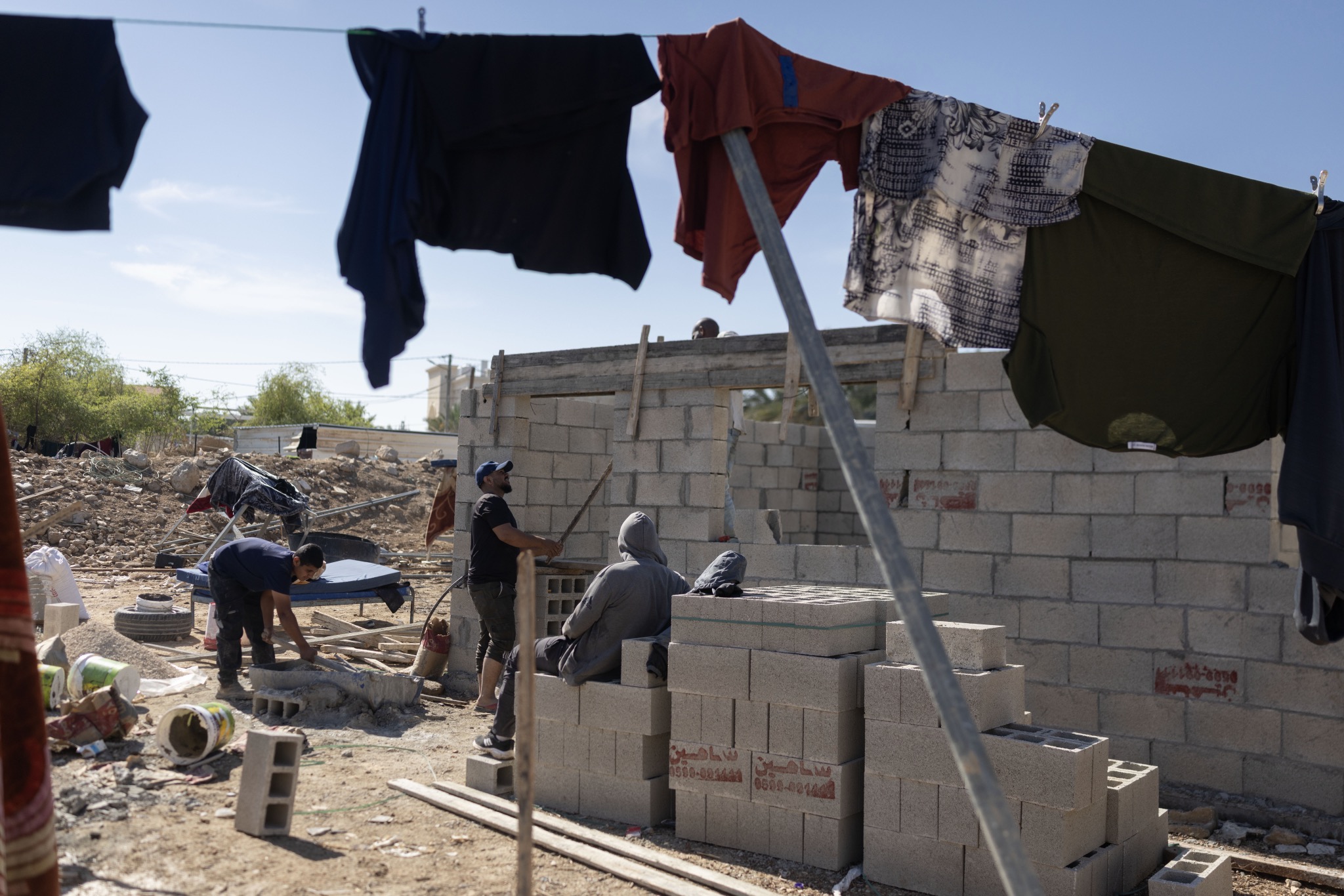
Settlers had already been harassing Palestinians in this area for several months. In February, they used a bulldozer to destroy several residents’ homes in the neighborhood, and began patrolling the area and levelling the ground — actions that now appear to have been in preparation for the new settlement. Thirteen families were forced to evacuate in February, and only after the army intervened were the families allowed to return and rebuild their homes. Last week, those same families had no choice but to leave again.
After the settlers occupied the buildings at noon last Wednesday, they began to throw stones and shoot at nearby Palestinian homes, as well as assault residents and protective presence activists. At nightfall the attack intensified, until 65 residents of the neighborhood were forced to flee for their lives. The next day, the army allowed them to return and retrieve some of their belongings.
Since October 2023, settlers backed by the army have expelled dozens of communities in Area C, as we revealed in an investigative report this past March. Recently, settlers have also begun establishing outposts in Area B and even Area A, while right-wing leaders are explicitly calling to cancel the Oslo Accords.
Son Har-Melech’s call to settle “Gaza and Jericho first” was a reference to and an inversion of the Accords, in which Israel agreed to withdraw from those areas to allow for a five-year transitional period of Palestinian self-rule. Yisrael Gantz, the head of the Binyamin Regional Council, was even more explicit. “Jericho is the gateway for the people of Israel to their land. In the Oslo Accords, Israel abandoned it, and we are still paying the price for that retreat,” he noted on the day the settlement was established. “Today we are beginning to reverse course — dismantling the Oslo Accords through action, house by house.”
The settlers claim they purchased the eight buildings legally, although the army stated that “the entry into the houses was done without prior coordination with the IDF and without permission.” The buildings are located on state land, and demolition orders have been issued against them in the past.
Dror Etkes, founder of the settlement watchdog organization Kerem Navot, told +972 Magazine that Israel has carried out numerous demolitions in Al-Duyuk Al-Tahta and the surrounding area in recent years, after refusing to issue Palestinians building permits. But for the eight homes that the settlers now occupy, he suggested “it is reasonable to assume that they will not be demolished now.“
“Construction there was not approved, and on paper, the homes are illegal. How does one buy such a house on state land? There is no answer to that,” he added.
The fifth displacement
After the settlers moved in, the Palestinian Authority issued a temporary order — which has since been revoked — freezing home sales to East Jerusalem residents and Palestinian citizens of Israel, amid suspicions that some had helped broker property sales to settlers. On Monday, the PA also arrested several suspects allegedly involved in the sales.
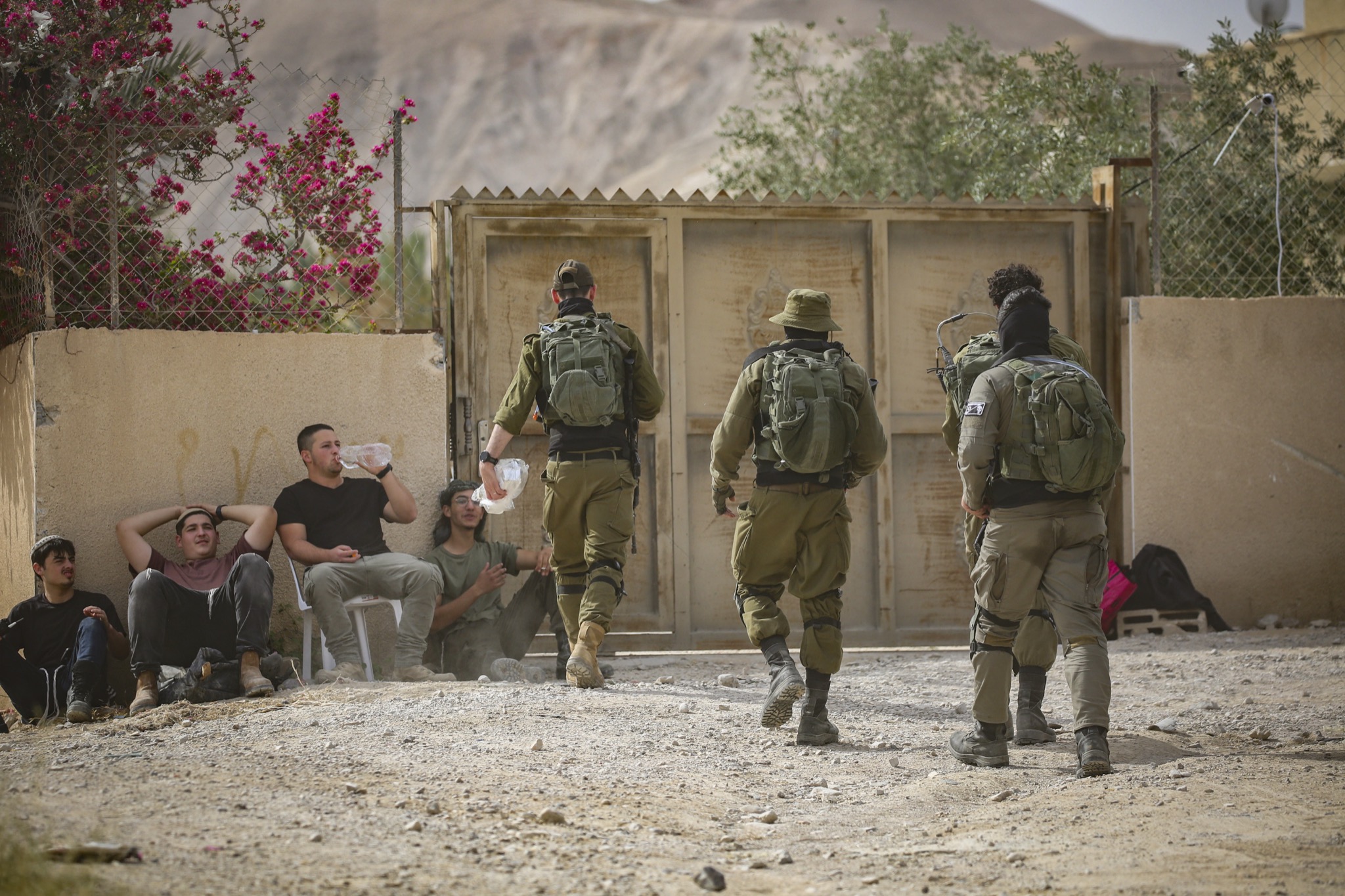
The Israeli army claims it “tried unsuccessfully” to dissuade the Palestinian families from leaving, and that it intends to take action to prevent Jewish takeover of “the abandoned homes.” But the reality tells a different story.
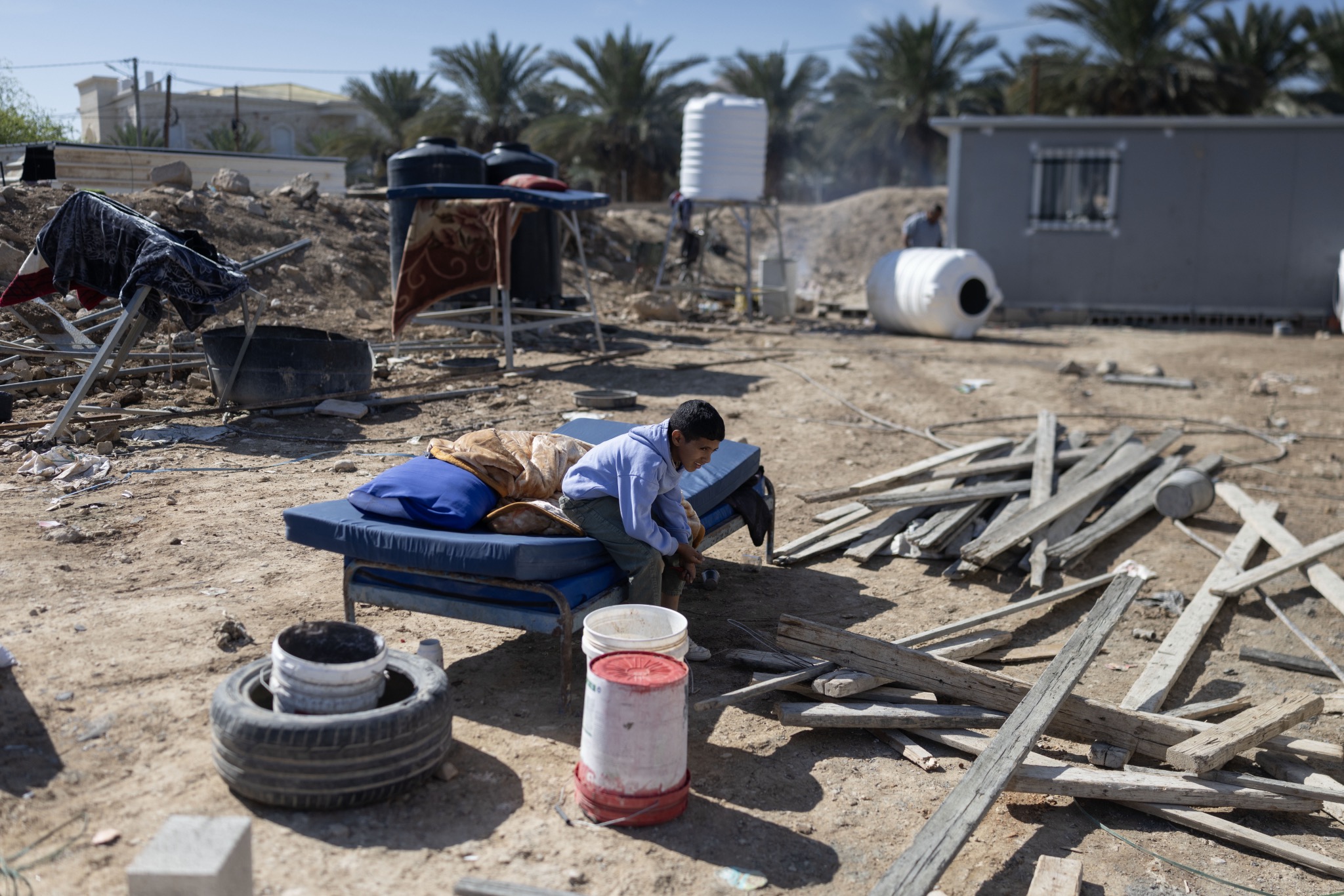
The families, who moved to Area A a few hundred meters from their homes, explained to +972 that a new checkpoint, manned by settlers and soldiers, is preventing them from returning. This week, the displaced residents tried to set up temporary shelters made of aluminum sheets and tents. Children wander aimlessly around the temporary compound, while younger adults work to put up the shelters. A pickup truck carrying masked settlers drives by, hinting at what is to come.
Fatma Ka’abneh, 69, fled her home with her family on Nov. 4. “More than a hundred settlers came in on trucks, cars, and ATVs and started throwing stones and firing live ammunition,” she told +972. “We fled, and another group remained trapped in the western houses. When we reached them, settlers fired live rounds, threw stones from all sides, and brutally beat them.
“We told the soldiers to expel the settlers, but the army can’t handle them; it’s afraid of them,” she added. “The settlers were armed from head to toe with sticks and clubs.”
Ka’abneh’s extended family lived in the Palestinian Bedouin community of Khan Al-Ahmar, which falls in the nearby E1 area of the West Bank, until the army expelled them in the 1980s.
“This is our fifth displacement,” she said. According to her, the settlers don’t leave the families alone even in the places where they have sought refuge. “They want all of Jericho. This is a long-term strategy; the government gives them free rein and backing to act this way. They come armed, and if anyone speaks to them, they shoot them. We’re not allowed to speak.”
“It’s impossible to return to our homes — and now they’re coming to our new location, too,” said another resident in her thirties, who was forced from her home and requested anonymity for fear of retaliation by settlers. “For now, they’re just walking around, but in a few days they’ll attack. They don’t distinguish between Area C and Area A. They go everywhere.”
Describing the events of last Wednesday, she continued, “I was sitting in my home, and we heard a loud noise, like the sound of clubs striking. I was scared and ran with the children to my aunt’s house. They shot at us, beat us, and threw large stones at us. If it weren’t for the peace activists, they would have killed us.”
One of those activists was Itamar Shapira, a volunteer with Unarmed Civilian Protection in Palestine (UCPiP), who was attacked by settlers and suffered a head injury. They also stole two of his cell phones.
“We were attacked by five or six settlers. After I was kicked repeatedly in the head, I let go of my phone and they took it,” Shapira told +972. “When I went back to look for an activist who had gotten lost, they grabbed me again, took the second phone I had, and beat up a friend who tried to defend me. While the others were beating me and shouting that it was their private property — that they’d bought it — two settlers arrived in a jeep who looked like they were local settlement defense and threatened me with a weapon.”
This was not the first attack Shapira has witnessed in the area. “Since February, settlers have been coming from the Armonot HaHashmonaim outpost — established at the start of the war — toward the homes of the Ka’abneh clan,” he added. After they bulldozed several homes that month, “they continued to invade the area from time to time, stealing a tractor and tools, and throwing stones.”
Most read on +972
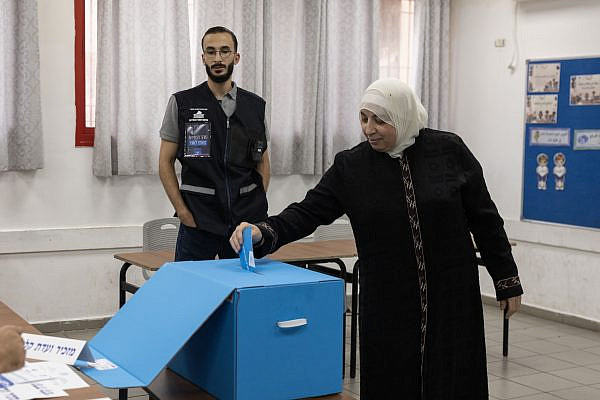
A week before entering the homes in Al-Duyuk Al-Tahta — the day after Israel’s election — settlers launched one of their largest assaults. “They came down from the hill and seized forty dunams located 200 meters from the homes of the Ka’abneh families, fenced off the area, and prevented residents of the fenced-off zone from entering,” Shapira explained. “A few days later, they entered a house located in Area A. The next day, more serious harassment began, and by Wednesday the homes had already been taken over.”
By the day after the settlers had moved in, Shapira noted, “they had already taken control of several fields in the area and expelled more families.” And the situation in the western neighborhood continues to change every day: New checkpoints have been set up in the area, masked men patrol the neighborhood, and the army searches vehicles. “Many people are unable to reach their homes and their land. It’s not just the 13 families.”
A version of this article was first published on Local Call. Read it here.