In partnership with
Editors’ note: On Tuesday night, Israeli police and Shin Bet officers abducted Abed Abou Shhadeh from his home in Jaffa, without initially providing any reason. At a court hearing the following day, a judge extended his detention until Nov. 8, with the state claiming that they are investigating him on suspicion of “contacting a foreign agent.”
+972 Magazine stands in solidarity with Abed — our friend, colleague, and frequent contributor — and against this blatant act of political persecution. We are proud to publish the following article, which he drafted prior to his arrest.
In their latest book, Naomi Klein and Astra Taylor identify an important phenomenon that is often overlooked in attempts to understand the processes of fascistization around the world. Tech oligarchs and right-wing leaders, they argue, seek to cultivate a constant sense of impending catastrophe to justify fascist policies as essential for survival. This is the idea of “end times fascism.”
Israeli Prime Minister Benjamin Netanyahu, as a modern fascist leader, employs a similar tactic. Just a few days before the election, he shared an AI-generated image on Instagram depicting atomic bombs falling on Tel Aviv. The message was clear: The end of the world is just around the corner, and only Netanyahu can prevent it.
Facing this worldview, which reduces the future to a single catastrophic outcome, it is worth examining the deeper trends that emerged in the recent Israeli elections. Some are dangerous; others offer the possibility of a better future. The likelihood of the latter depends on our capacity for action — our ability to identify historical processes, understand their significance, and act to shape a different path forward, one far more optimistic than the one the right wing wants us to imagine.
One development that has received little attention, and that I believe holds tremendous political potential, is the interest of Palestinians in the occupied territories in the Israeli elections. Never before have so many Palestinians in Gaza and the West Bank, including political prisoners, urged Palestinian citizens of Israel to vote.
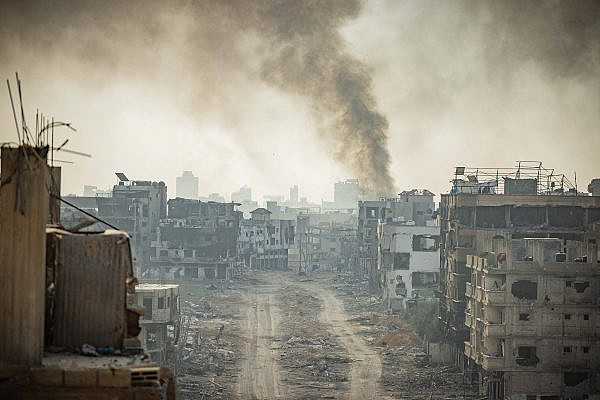
There are several reasons for this: the failure of the Palestinian national project in the West Bank and Gaza, the sclerosis and dysfunction in the Palestinian political arena, and the refusal of Arab states to take concrete action to stop the genocide in Gaza (or worse, to even assist Israel). However, it seems that the most important was their understanding of just how messianic and dangerous the current Israeli government is for the future of all Palestinians.

Over the past three years, we have also witnessed unprecedented advances in Bezalel Smotrich’s “Decisive Plan” to annex and ethnically cleanse the West Bank. Yet during his election campaign, Smotrich went further. No longer content with deepening Israeli control over the occupied territory, he promised to export the practices he had adopted in the West Bank across the Green Line, targeting Palestinian communities inside Israel.
But the blurring of the Green Line may also set in motion developments opposite to those Smotrich envisions. As the politics of occupation spread into Israel, a political movement in the opposite direction begins to take shape: Palestinians in the occupied territories become actors with a stake in, and influence over, the politics of Palestinian citizens in Israel.
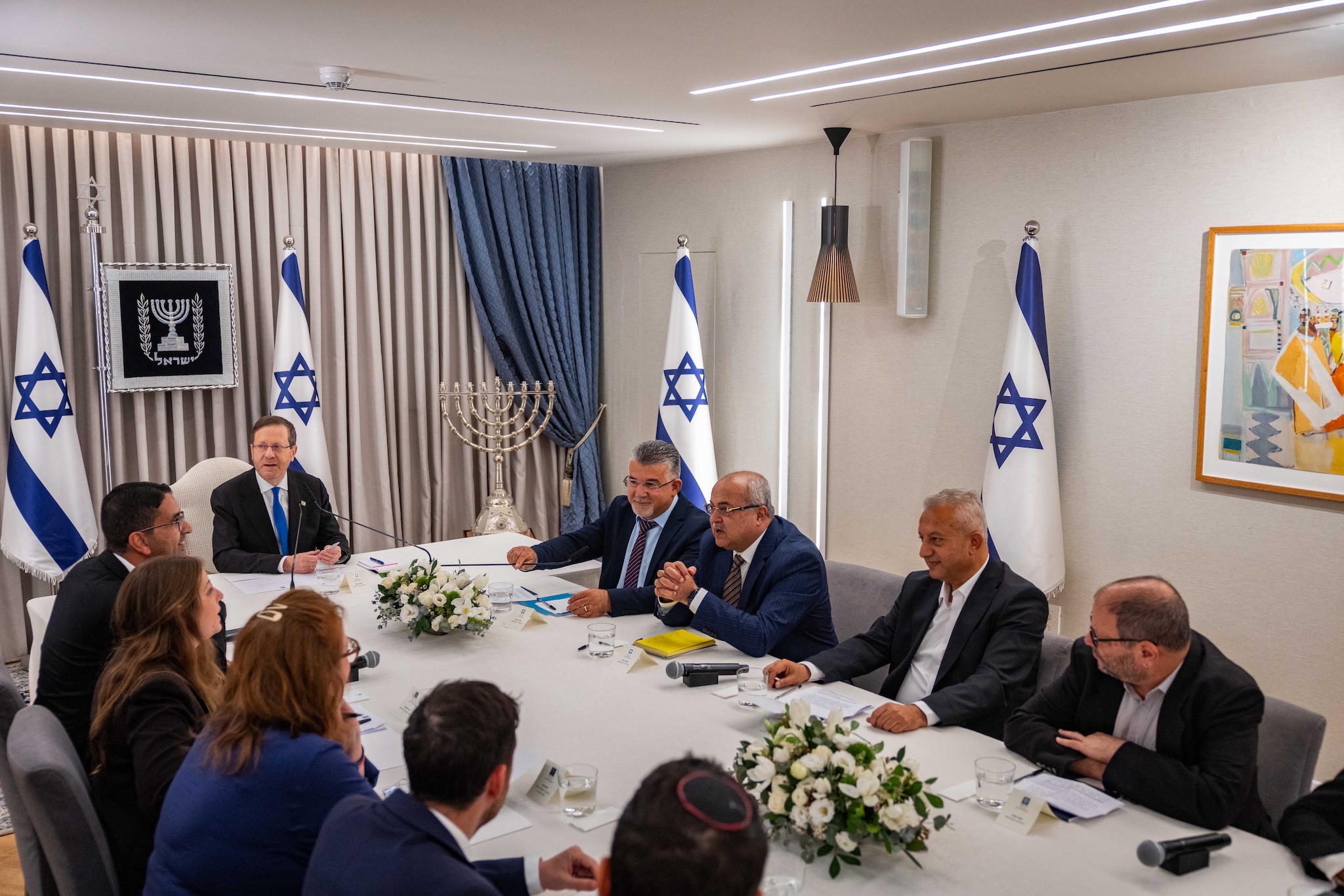
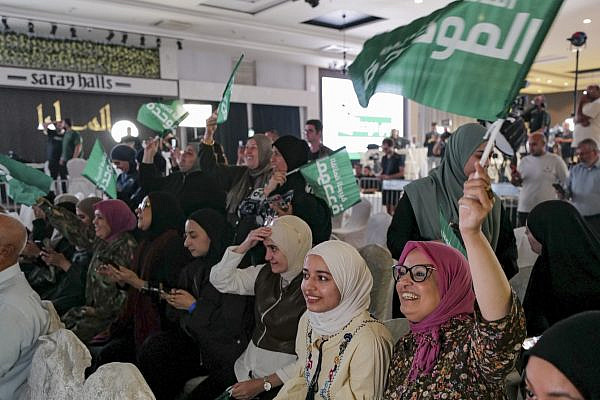
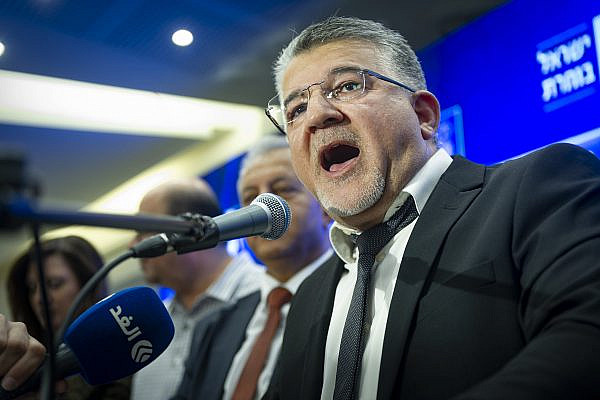
In the Joint List’s victory speech on election night, former Knesset member Osama Saadi dedicated the achievement to Palestinians in the West Bank and Gaza, as well as to political prisoners. This was more than a symbolic gesture. It reflected a newly emerging political interdependence.
That interdependence could open a different political horizon. The two-state solution has failed as a practical political framework, and the internal contradiction between Israel’s definition as a Jewish state and its claim to be a democratic one is being exposed in all its force. We see this today, as many Jewish Israelis struggle to accept the prospect of Palestinian citizens of Israel enjoying equal political power.
When Palestinians in the West Bank and Gaza call on Palestinian citizens in Israel to participate in the Knesset elections — recognizing that the results directly affect their own lives — they are, in effect, beginning to view Israeli politics as an arena in which to act, rather than simply they must resist from the outside.
This shift could signal a new willingness among Palestinians under occupation to recognize the complexity and nuances of Israeli politics, to understand its limitations, and even to accept certain political compromises made by Palestinians inside Israel if they improve conditions in the West Bank and Gaza. They may even expect Arab parties in Israel to build strategic political partnerships with Zionist parties when doing so serves their interests. What was once considered politically taboo, or even a betrayal, may become part of legitimate political discourse within Palestinian society.
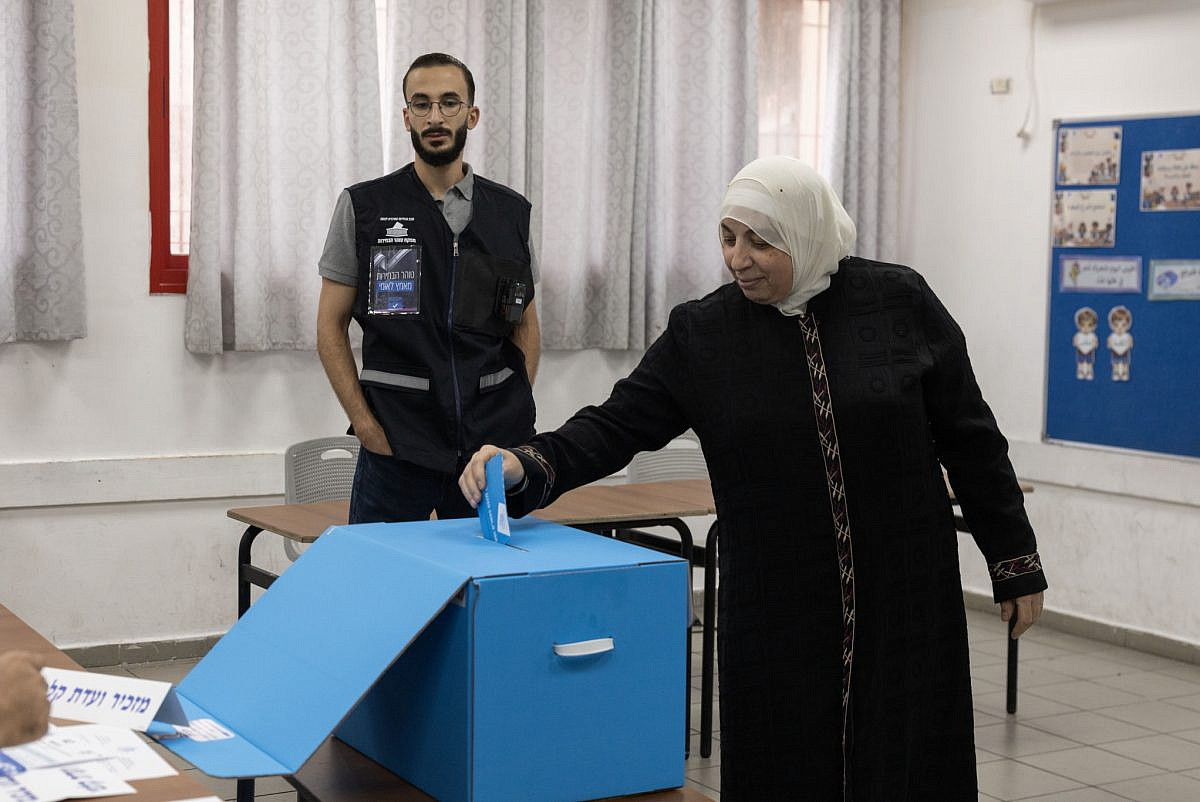
That Palestinians in Israel turned out in historic numbers to vote for Arab parties — and especially for the Joint List, which has not abandoned its commitment to the Palestinian national cause — also points to another significant development. Palestinian citizens do not view their vote merely as a means of improving their own living conditions. For many, it was also an expression of responsibility toward their fellow Palestinians in the West Bank and Gaza, to use what political tools are available to struggle for both of their futures — even if Palestinian citizens end up paying a price for it in the Israeli arena.
During the election, I heard from quite a few Palestinian voters who, after boycotting Knesset elections for many years, decided to vote this time specifically in support of Palestinians in the occupied territories. This emerging political potential could develop in several directions — or disappear altogether. But for the first time in a long while, we can discern the early signs of a new political paradigm, one that might open the possibility of imagining a different future for both Palestinians and Jews.
What a just future requires
Today, a single regime governs the territory between the Jordan River and the Mediterranean Sea. In this reality, it may be necessary to envision equal political citizenship for everyone who lives in this territory — that is, a single state. Precisely at the moment when Smotrich is entrenching an apartheid, Palestinians and Jews are presented with the opportunity to imagine a fundamentally different political model: one state founded on political, civil, and national equality.
Under such a model, the demand for expanded voting rights and political equality would not stop at the Green Line. Instead, there is mutual acknowledgement that two peoples live between the river and the sea, each with its own national identity, history, and collective rights, and that neither’s future need be built on the domination of the other.
This opportunity comes at a particularly critical geopolitical moment. Israel’s current trajectory is dangerous not only for Palestinians and the region, but also for Israelis themselves. A state that gambles on military superiority as the sole foundation for its future, that is willing to risk turning the political and national conflict into a religious confrontation with nearly two billion Muslims, and that adopts the idea of perpetual war, does not offer a safe future even for its Jewish citizens.
With their high voter turnout, Palestinian citizens of Israel have given new meaning to the Palestinian concept of “sumud” — steadfastness and tenacity in holding on to their homeland. Despite Israel’s ongoing incitement against and persecution of Palestinian citizens, its genocide in Gaza and ethnic cleansing in the West Bank, and everything else it has done, Palestinians in Israel have used their citizenship to become a political force that dealt a significant defeat to the Netanyahu government. Without them, this result would not have been possible.
There is an important political and moral message here: It is citizenship, which the State of Israel has sought to strip of any meaning, that has become the tool with which Palestinians are claiming their place and their right to influence the country’s future. And precisely those whom the government sought to portray as a threat to the state have become the ones who may open the door to a different political path forward. A world in which Palestinians and Jews can begin to reimagine their shared lives, not out of fear or a relationship of domination, but out of mutual recognition and equality.
To reach such a world, two things are needed, in my view. The first is the courage to recognize reality as it is: the injustices, the pain, the responsibility, and the need for a profound process of recognition and reconciliation between the two peoples. A shared future cannot be built on denying the other’s past or erasing their identity. The second is the political courage to act — not to settle for merely criticizing the existing reality, but to be willing to struggle for a different reality, even when it seems distant, and even when the political price of the struggle is high.
This brings us back to “end-times fascism.” While the global right tries to convince us that the world is inevitably heading toward catastrophe, and that survival depends on even greater force, we must remember the moments in history when people refused to accept their existing conditions as an inescapable fate. The moments when a better world was built were not necessarily ones of great hope. Often, they were born precisely out of ugliness, violence, and despair. Change became possible when people and leaders managed to recognize the historic opportunity, imagine a different possibility, and act to make it a reality.
Most read on +972
Perhaps this is the most important political task of our time: refusing to allow those who promise us the end of the world also to take control of our political imagination. I hope we will be brave enough to recognize this historic moment — and, just as importantly, to act on it and build a better future for everyone. A future in which Palestinians and Jews can live as equals. Not only because it is a political possibility worth fighting for, but because it is the right and moral thing to do.
A version of this article was first published in Hebrew on Local Call. Read it here.