
In partnership with

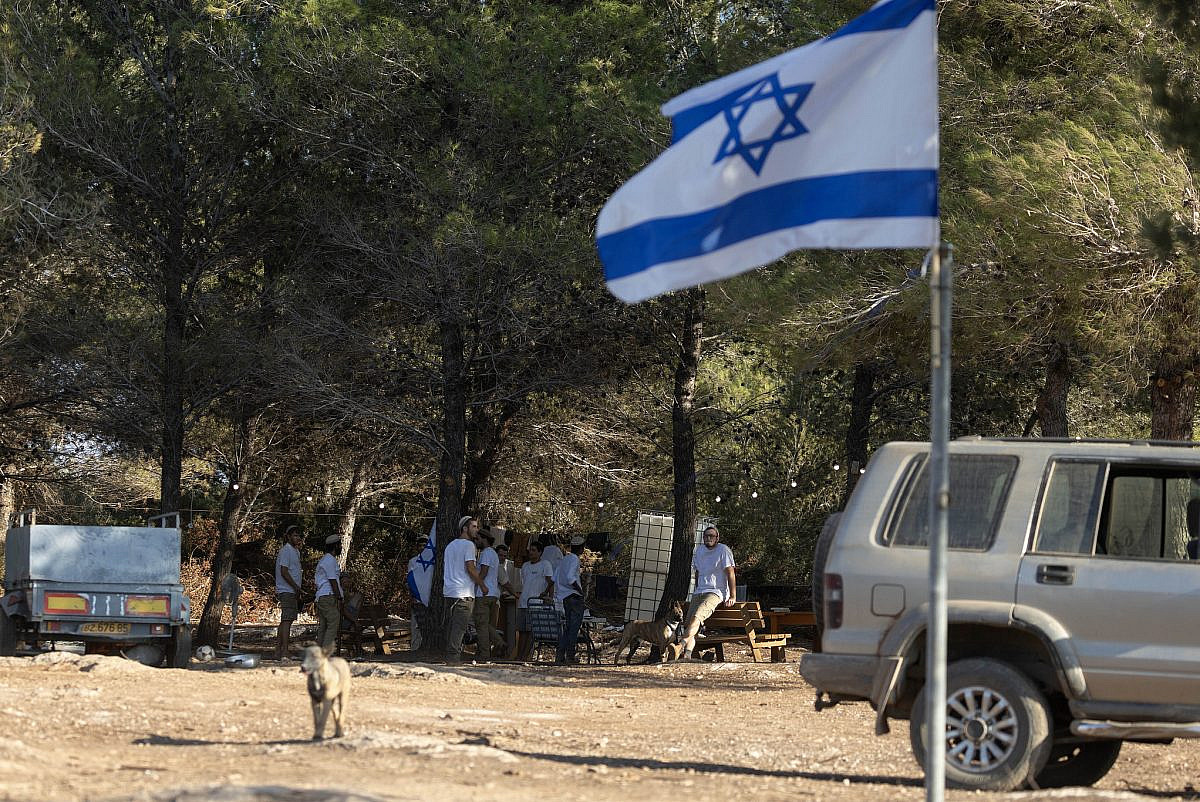
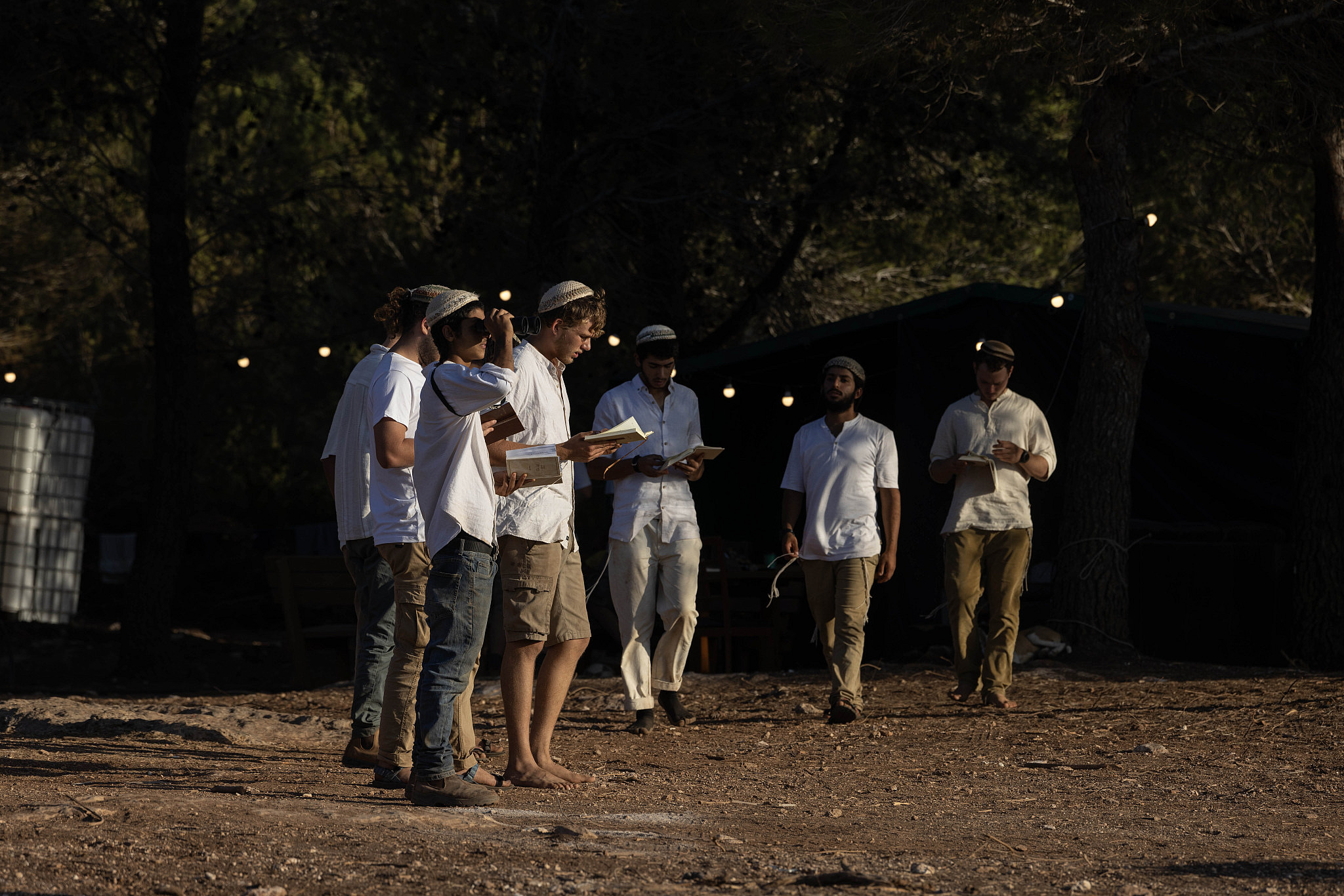
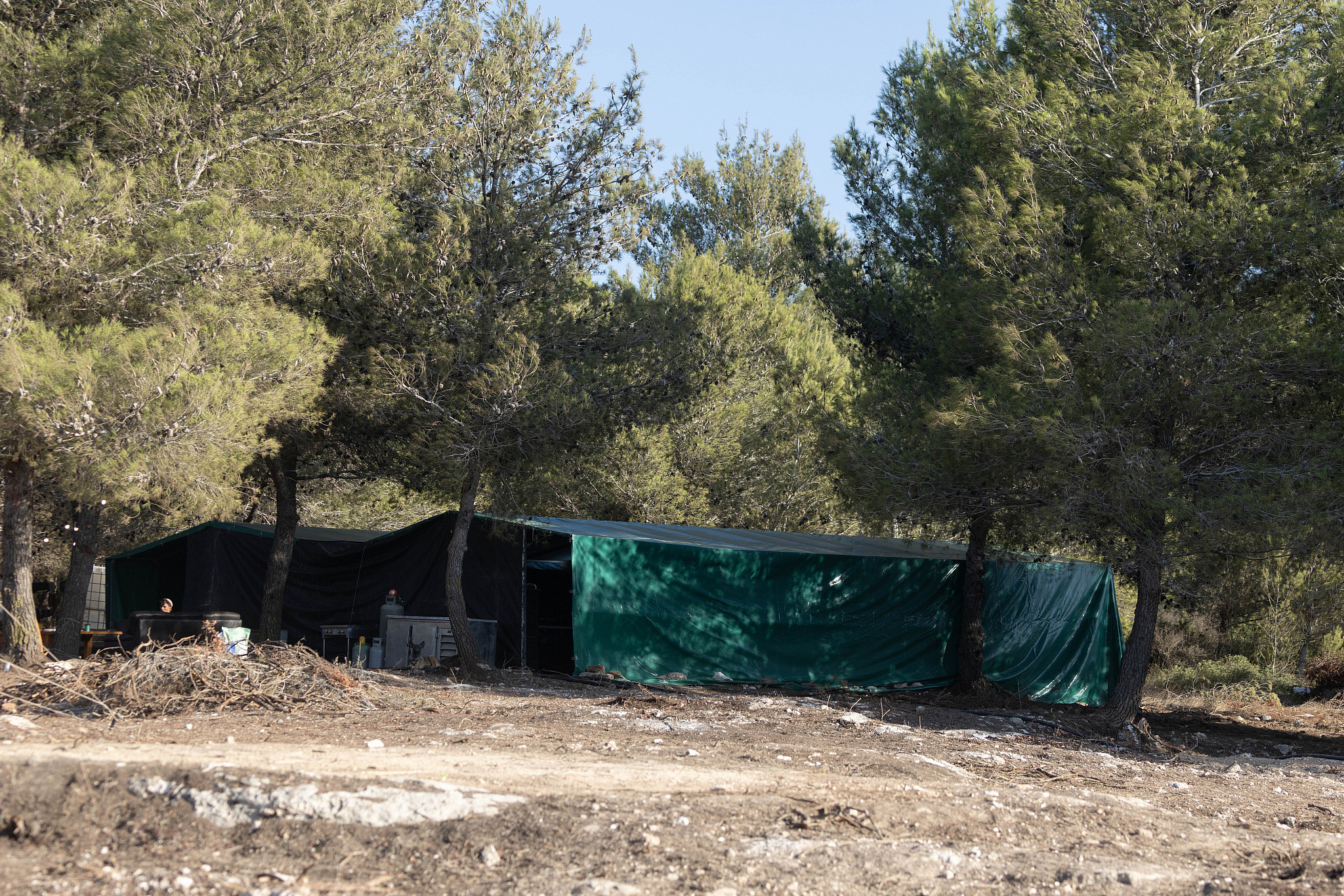
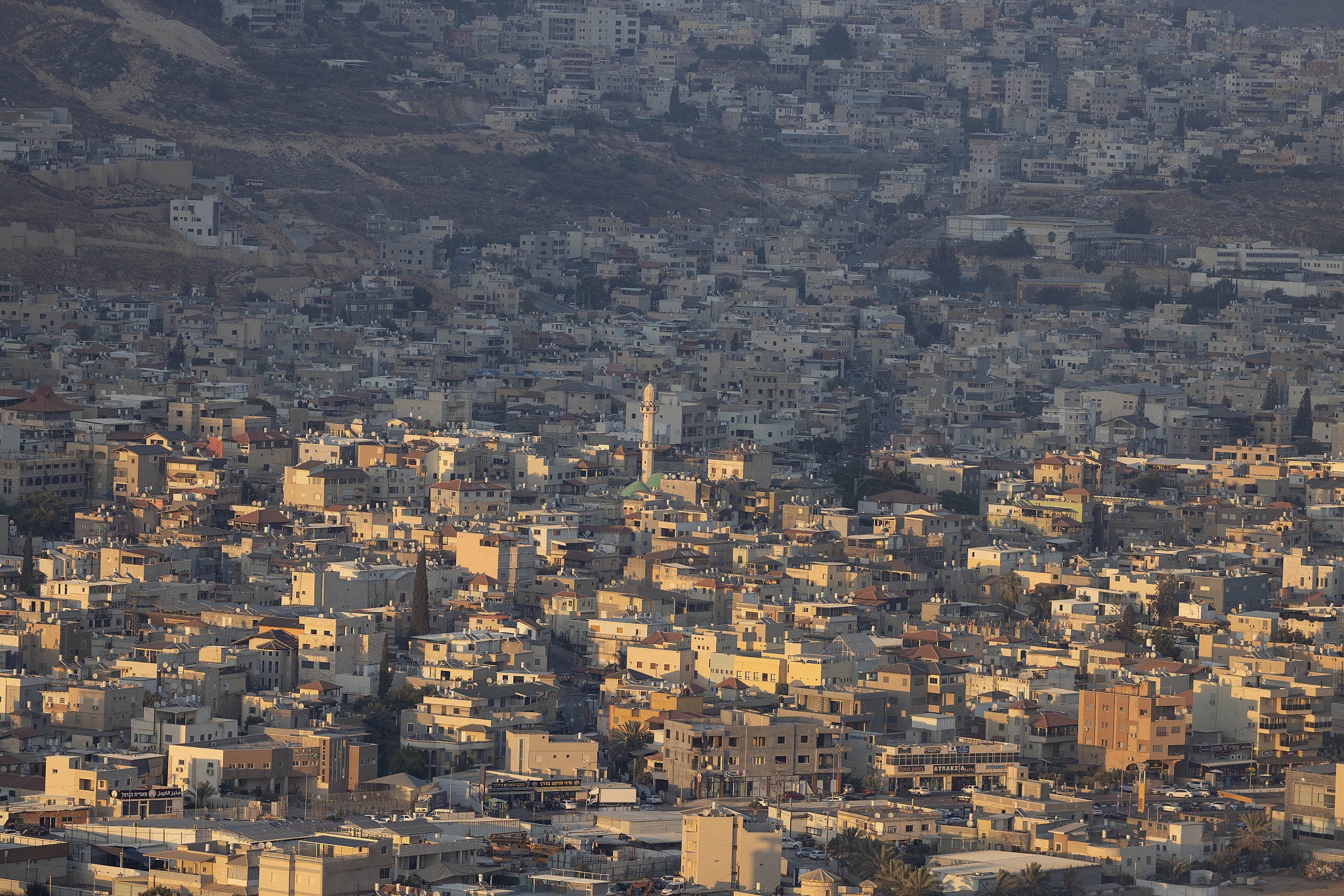
The scene looked as if it had been transplanted from a West Bank hilltop: young Jewish settlers in white shirts and kippot, newly erected tents, a sheep pen, water tanks, an Israeli flag, and land leveled by a bulldozer. But this was not the West Bank. The new outpost had been established in the western Galilee in Israel’s north, near the Palestinian town of Majd Al-Krum.
Reports of the settlers’ arrival to a Jewish National Fund (JNF) forest, very close to land that is privately owned by residents of Majd Al-Krum, first emerged around two weeks ago. When members of the town’s local council visited the site late last week, the young settlers told them they had come from the West Bank.
According to the authorities, a local Israeli resident had received a permit from the JNF to graze livestock on the land — yet the settlers erected tents and other structures before any livestock had even arrived.
The discovery immediately raised fears in Majd Al-Krum that a tactic honed in the West Bank — establishing farms and grazing posts that gradually expand their control over surrounding Palestinian land — was being imported into the Galilee.
Indeed, in recent weeks, leading figures on the Israeli right have been calling for exactly this: transplanting the West Bank settlement model to the Galilee and the Naqab (Negev), including by using farms and livestock grazing to seize land and alter the demographic balance by “Judaizing” the area.
Over the weekend, hundreds of Majd Al-Krum residents began arriving at the site to protest the outpost and assert their presence on the surrounding land. On Sunday morning, police initially prevented residents and Knesset members from reaching the area before later allowing lawmakers through, including Joint List head Yousef Jabareen and Hadash MK Ofer Cassif.
Hundreds returned on Monday and Tuesday, joined by left-wing activists and residents of nearby Jewish communities. Police arrested several protesters on Tuesday, among them Alon-Lee Green, co-chair of the Arab-Jewish party A Place for Us All, who was later released.
By then, it had also emerged that part of the outpost extended onto privately owned land rather than JNF property. Following an emergency meeting on Tuesday, the JNF ordered the tents and other structures dismantled. Residents nevertheless continued their protests into Wednesday, accusing the police and JNF of dragging their feet after the tents came down but the settlers and some of their equipment remained.
By Wednesday evening, following days of sustained protests and pressure from residents, the outpost was dismantled, although police were still blocking entry to the site. The JNF, however, has stated that a smaller grazing encampment will be re-established on the site after next week’s holiday of Yom Kippur, provided that livestock are actually brought to the area.
‘This is our land, forever’
When +972 Magazine visited on Sunday afternoon, three days before the outpost was fully evacuated, access to the area had been restricted. Dirt roads had also been blocked, although residents nevertheless managed to reach the outpost.
“Who are you?” one young settler asked as he approached us. He insisted that the group was there “legally” and said he “understood” why residents feared their land would be taken over. Another was less diplomatic, declaring that this was his land and telling us to leave.
As more residents of Majd Al-Krum arrived on the open public land, so did police officers. After first conferring with the settlers, officers ordered the two groups to keep their distance from one another.
The commander at the scene told residents that police were examining the legal situation of the outpost, but because of the Jewish holiday, were having difficulty obtaining answers from legal advisors. “This is state land; they’re coming to graze for a period of time, not to settle,” he said.
That distinction did little to reassure residents familiar with the trajectory of shepherding outposts in the West Bank. When one resident pointed out that there was little grass to graze in the area, the officer responded: “Neither you nor I understand grazing; this was settled with the JNF — there’s a contract.” The resident insisted that he did, in fact, understand grazing, but to no avail.
Many of the Palestinians who came to assert their presence on the site were young people, arriving on electric bicycles, ATVs, and horses. Some laid out mats; others smoked hookah and played music. Ultimately, the police could not prevent them from being there: Unlike in the West Bank, military law does not apply and thus the area could not simply be declared a closed military zone — a tool the army often uses to expel Palestinians while allowing Israeli settlers to remain.
Residents of Majd Al-Krum call the area Al-Rus, after the mountain peaks facing the town. The JNF-owned plot on which most of the outpost was established falls within Majd Al-Krum’s jurisdiction and is surrounded by privately owned lands belonging to the town’s residents. According to land registry documents, part of the encampment had spilled onto one such privately owned plot.
According to Rami Haidar, a member of the local popular committee and one of the landowners in the area, even some of what is today considered state-owned land previously belonged to residents of Majd Al-Krum; it was transferred to the state as “absentee property” after its owners were displaced during the Nakba of 1948.
Haidar said residents first discovered the outpost as farmers began visiting their olive groves ahead of the harvest season. “We followed the water and electricity lines and found them,” he recalled. “We saw that they were using an old well, had installed a pump on it, and had cut down trees from the wooded area.”
One member of the group said he was from the West Bank settlement of Tekoa, Haidar said, while another told residents: “This is our land, forever.” According to Haidar, the group grew from five people at first to 12, and then to around 40 by Saturday, when hundreds of Majd Al-Krum residents converged on the site.
Sati Kiwan, a 55-year-old resident of Majd Al-Krum, said the infrastructure made it difficult to believe the group was there just temporarily. “They didn’t come for a day-long picnic and then leave. They have goats, cars, electricity, and water. There are olive groves all around, and what happened in the West Bank could happen here tomorrow — first they’ll prevent people from reaching their trees, and then they’ll start spreading into the groves.”
The immediate legal dispute centered on what exactly the JNF permit authorized. Hussein Mana’a, an attorney supporting the residents’ struggle, said a grazing permit does not confer permission to build structures or establish a settlement.
Mana’a said police had promised not to allow illegal activity in the area, but he remained skeptical. “We see that the police are trying to defuse the residents’ anger,” he said.
Access to the surrounding private land has also become part of the struggle. For years, landowners from Majd Al-Krum have reached their plots via a road passing through the Jewish village of Gilon. Haidar said relations between the two communities are good and that Gilon residents have expressed opposition to the outpost. Yet police blocked this road on Sunday, forcing Majd Al-Krum residents to reach their lands via dirt tracks.
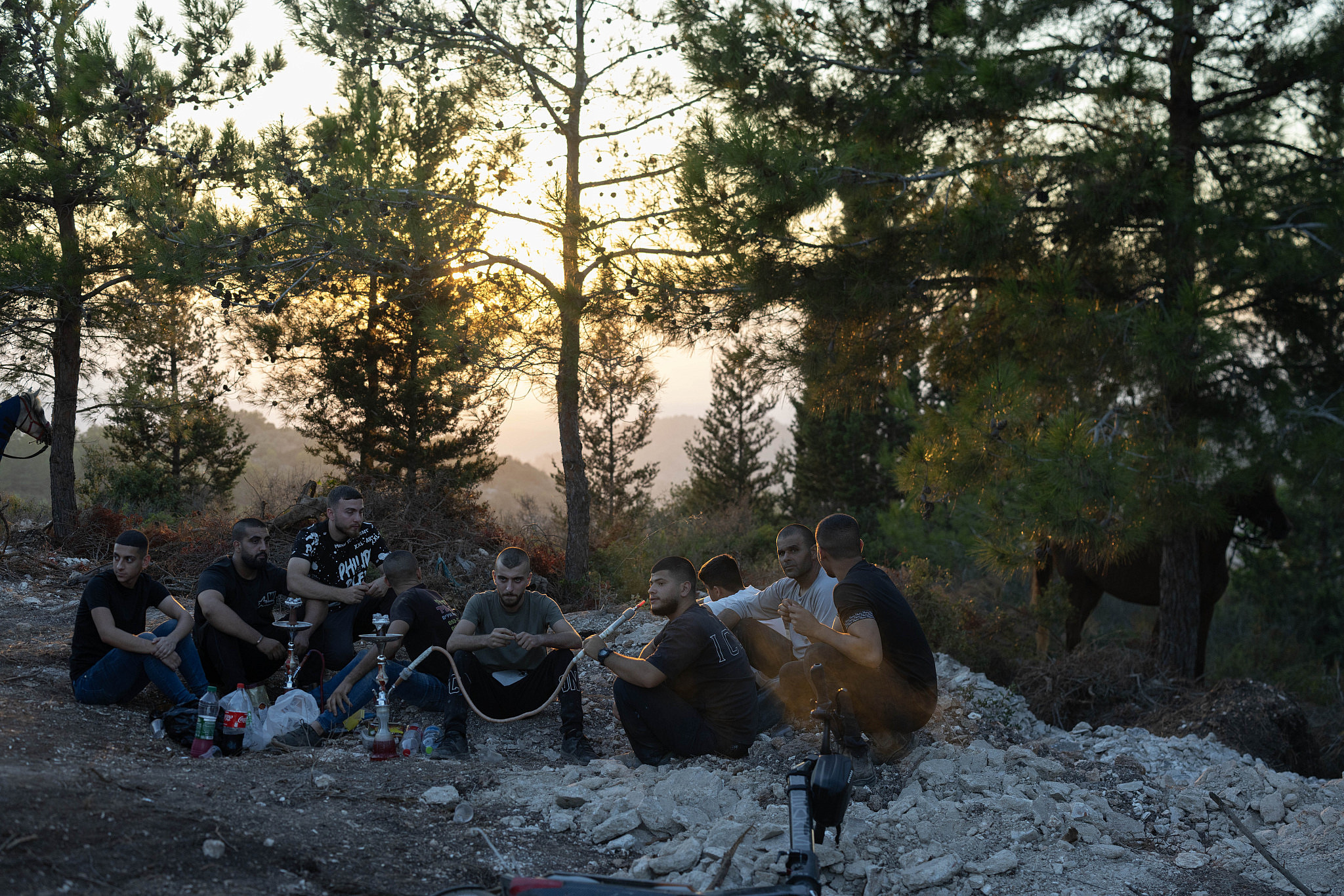
Some landowners decided to spend the night on their property. “People are afraid of trees being uprooted, of damage to the olive groves or the crops, just as is happening in the West Bank,” Haidar said.
Kiwan also accused the outpost settlers of deliberately provoking local Arab residents. “They speak in a way that tries to push us into a confrontation,” he said.
Nor did he regard the police presence as neutral: “No one can tell me that the police came to protect us. They’re protecting [the settlers]. We don’t want to fight or kill anyone. We just want to live in peace.”
‘These are hilltop youth’
There are obvious limits to the comparison with the West Bank: The Galilee is governed by Israeli civil law, not the military regime that Israel operates beyond the Green Line. But for residents of Majd Al-Krum, the method is strikingly familiar — establishing a small physical presence through livestock, farms, and infrastructure, then using it to extend control over a much larger area.
That fear is grounded in the extensively documented expansion of shepherding outposts across the West Bank, particularly in recent years.
A March 2026 investigation by +972, Local Call, and The Nation, based on research by Kerem Navot, found that 152 new outposts had been established in the West Bank since October 7; as a result, settlers living in outposts now control roughly 1 million dunams, or 18 percent of the West Bank. Grazing permits were among the mechanisms that enabled farms to control areas vastly larger than their built-up footprint.
In recent weeks, prominent leaders on the Israeli right, chief among them Finance Minister Bezalel Smotrich, have openly advocated bringing precisely that model inside the Green Line. Their campaign portrays the growth of Arab communities in the Galilee — including Majd Al-Krum — as an “invasion” and a security threat.
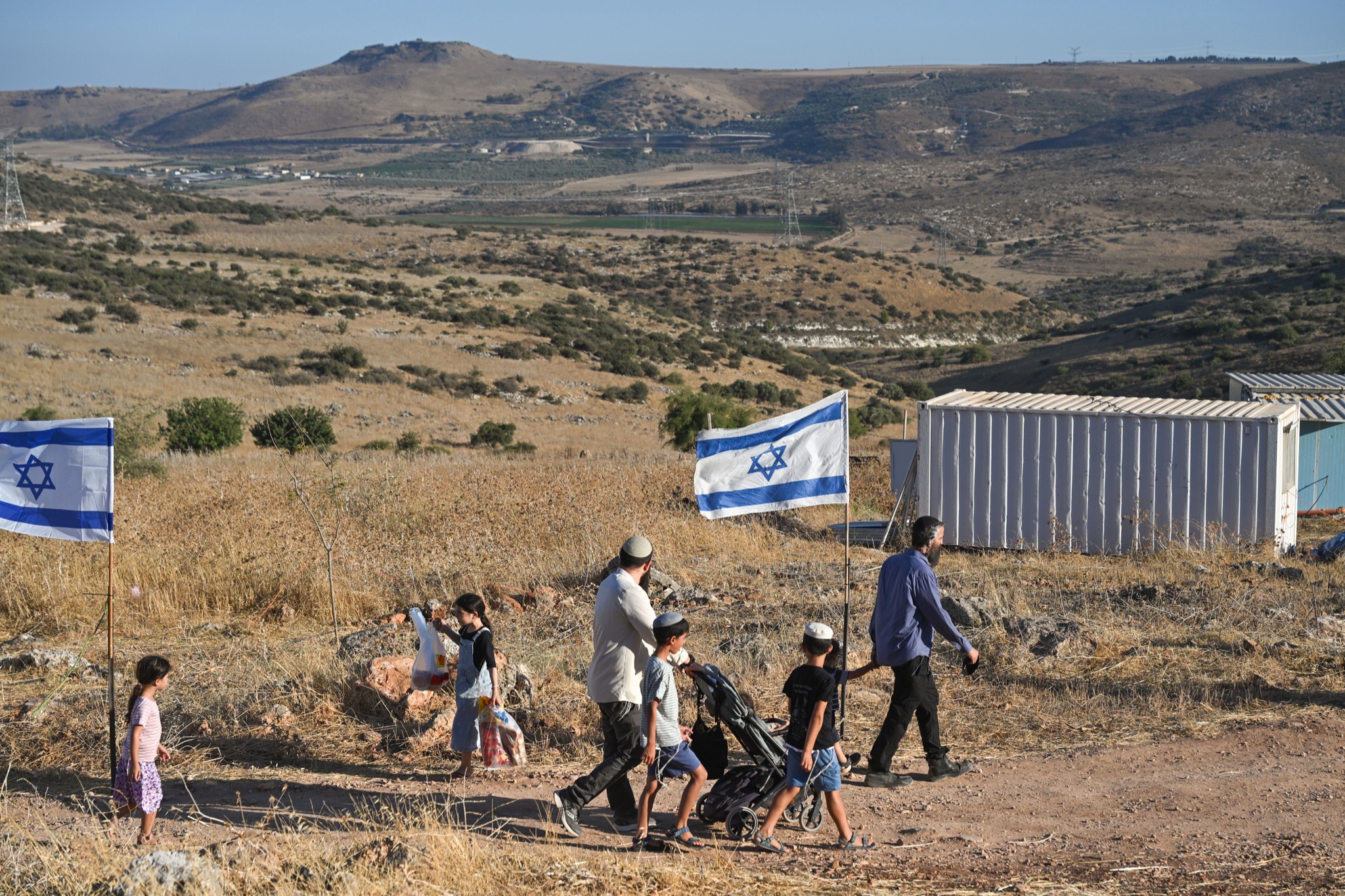
Salim Salibi, head of the Majd Al-Krum Local Council, sees the appearance of the outpost at Al-Rus in this context. The JNF may have granted permission to graze animals, he said, but the settlers went much further, setting up large tents and connecting them to water and electricity supplies.
“These are hilltop youth, settlers who came from the West Bank,” Salibi said. “What is happening today in Majd Al-Krum is [just] the beginning,” he warned. “We will see many more projects like it in the Galilee soon.”
The neighboring Misgav regional council told +972 that the grazing permit had been granted to one of its residents by the JNF “in accordance with procedures,” on land outside Misgav’s jurisdiction. It said the council had provided neither electricity nor water to the site and noted that “in dozens of cases each year, grazing land is allocated near one of the Misgav communities” often including pens, facilities, and tents.
“The main difference,” the council said, “is that in this case, volunteers wearing kippot were observed at the site precisely during the week when various actors seeking to undermine the fabric of life in our region made election statements in order to ‘garner votes.’”
Majd Al-Krum’s local council and popular committee responded to the outpost with a campaign combining public pressure, media outreach, and legal action. For several days, they urged residents to maintain a daily presence at Al-Rus and landowners to continue cultivating their plots, while mobilizing Arab local authority heads, representatives from the High Follow-Up Committee, Knesset members, and journalists.
“Our message is clear,” they said in an announcement. “This is our land, these are the rights of our residents, and we do not accept this outpost.” Their aim, they added, was “to prevent a temporary presence from becoming a permanent reality.”
Most read on +972


The JNF did not respond to several of +972’s questions, and instead referred us to a statement by the organization’s chairman, Eyal Ostrinsky. In the statement, he acknowledged that although the grazing permit had been legally approved, “mistakes and failures occurred with its implementation,” including that much of the encampment was erected outside of JNF land, contained more tents than permitted, and was established before any herd had been brought to the site.
He also said that bringing 15 to 20 young people to the site for Rosh Hashanah had occurred without the JNF’s knowledge or approval, adding that the site was intended “for grazing and grazing alone, not for any other purpose.”
At the same time, he stressed that dismantling the encampment was only temporary and that the JNF had “no intention whatsoever” of ending the grazing operation. According to the statement, grazing will resume after Yom Kippur, with a smaller encampment erected on JNF-managed land and moved farther from Majd Al-Krum’s homes.
“In all likelihood, we will not be able to accommodate” requests that the encampment be kept outside Majd Al-Krum’s municipal jurisdiction, he wrote, “and the encampment will be located there because there is no other option.”