


In partnership with

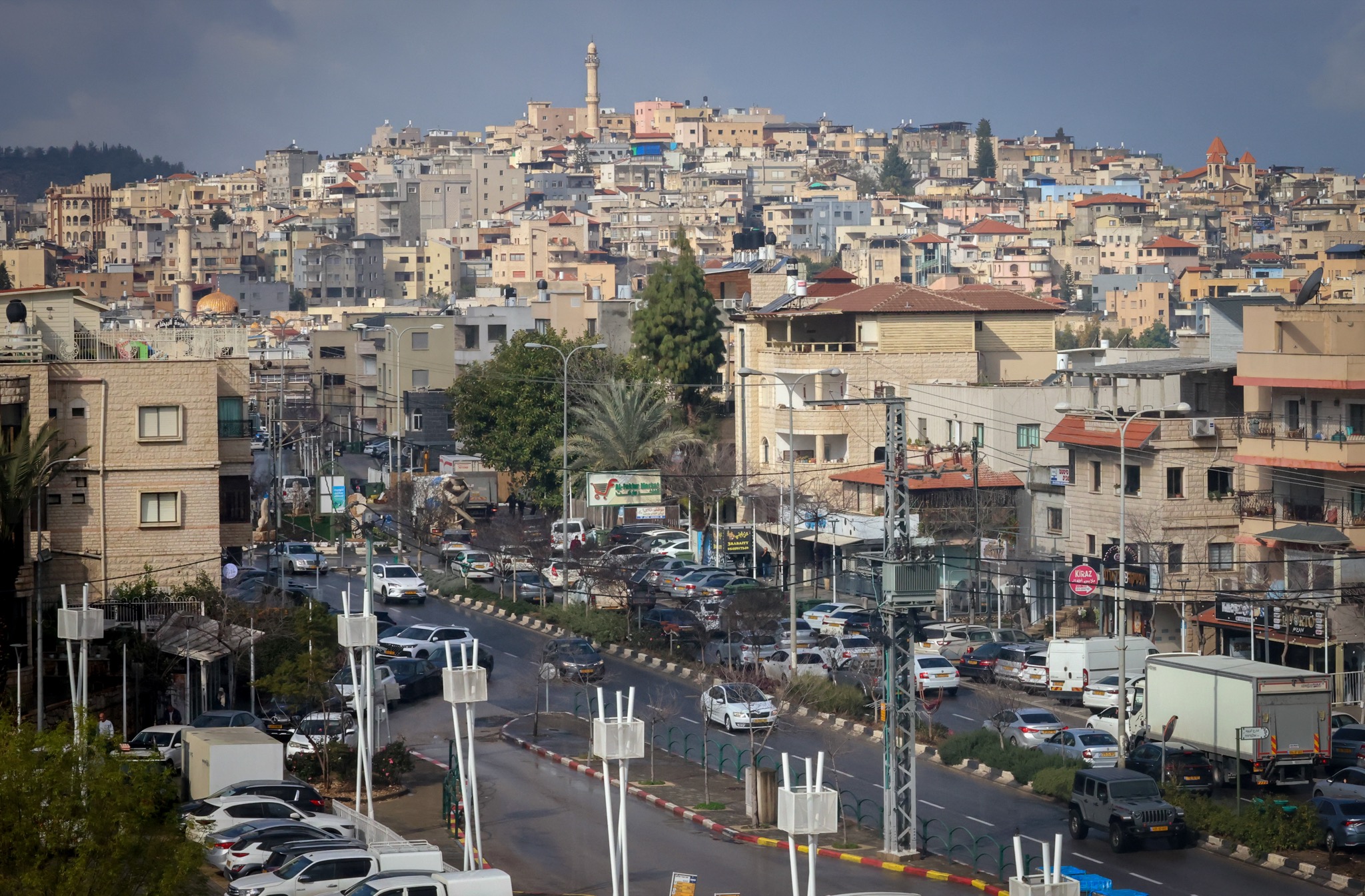
The Israeli right has an old-new target in its sights ahead of next month’s election: After Gaza, the West Bank, Jerusalem, and the Naqab (Negev), right-wing politicians are now increasingly vowing to crack down on Palestinian existence in the Galilee, in northern Israel.
The policy known as “Judaizing the Galilee” dates back to Israel’s early decades, when it was characterized by large-scale land confiscations, restrictions on the expansion of Arab towns, and the establishment of new Jewish communities — all aimed at reshaping the region’s demographic and spatial balance.
The spirit of that policy never went away; Arab urban planning in the region has remained heavily restricted in favor of Jewish settlement. But in recent weeks, the Israeli right has renewed this campaign in full voice. The very possibility that an Arab community might expand, build a new neighborhood, or move closer to a neighboring Arab community is being portrayed as a loss of Israeli sovereignty, a security threat, and a decisive demographic shift.
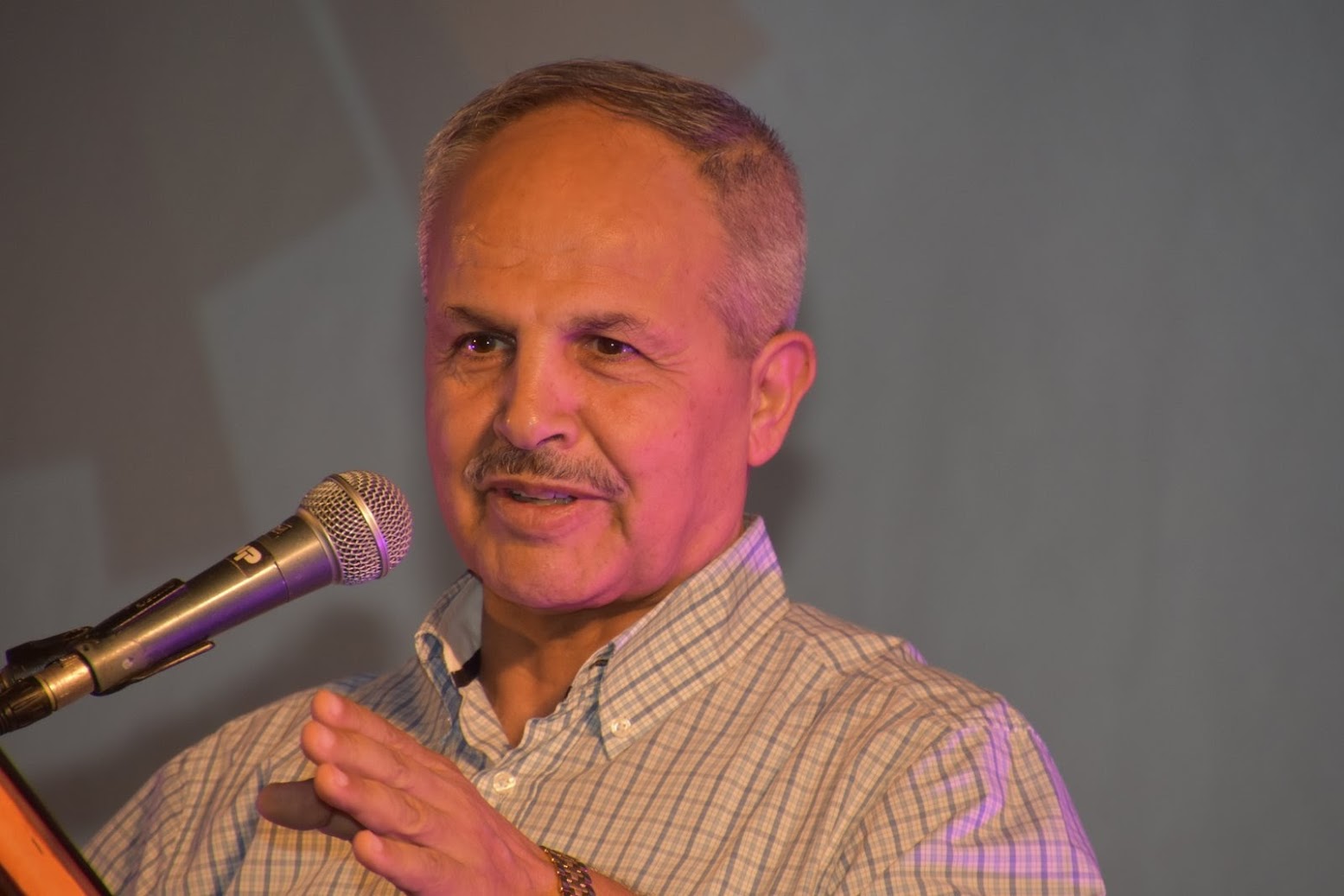
In mid-August, the right-wing news site HaKol HaYehudi published an investigative report under the headline “The Khamaisi Plan.” The investigation presents the work of Professor Rassem Khamaisi, an urban planner and lecturer from the village of Kafr Kanna, as a plan for an Arab takeover of the Galilee “from within.”
The supposed plan, it should be said at the outset, is a fabrication. The “exposé” did not reveal any secret documents, but merely stitched together Khamaisi’s public articles, lectures, and various programs he has been involved in for decades, presenting them as a malign nationalist plot.
From his efforts to promote master plans and expand jurisdictional boundaries, to regulating construction and involving Arab citizens in planning institutions — all of this was transformed on a single map into unified Arab blocs that were supposedly advancing toward major roads and encircling Jewish communities.
The “investigation” presented the development of these communities as a strategic and even existential threat, claiming that in the event of conflict, Arab citizens would be able to block major thoroughfares and cut off the north from the center of the country. Needless to say, no independent security assessment was presented linking the development plans to this scenario. The map itself served as evidence: Once the various communities were colored the same shade, their proximity was presented as shared nationalist intent.
This is also what makes the attack on Khamaisi so dangerous. He is portrayed as someone who has mastered the system’s rules, infiltrated its institutions, and is using them against the state. As such, it is not only Khamaisi who is under suspicion, but every Arab local authority head seeking to expand their jurisdiction, every Arab planner drafting a neighborhood plan, and every Arab resident applying for a building permit.
‘A Zionist and national goal’
The “exposé” served its purpose, launching a broader campaign that seeks to depict Palestinian citizens’ need for housing and infrastructure as a threat, and to legitimize demands that are already prevalent in right-wing discourse: freezing Arab planning, intensifying enforcement and demolitions, and expanding Jewish settlement.
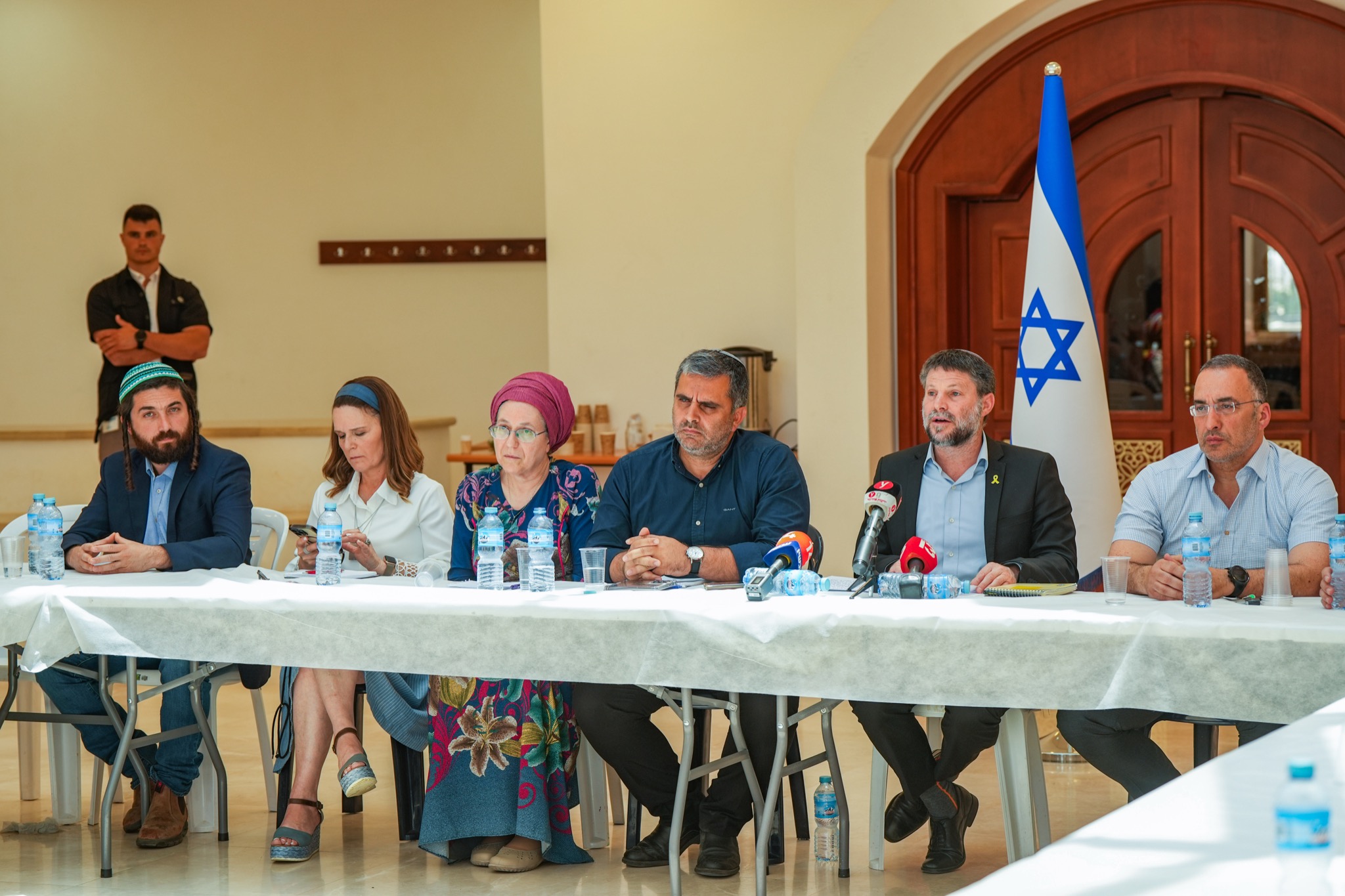
In a follow-up article in HaKol HaYehudi, right-wing figures were asked how to “return the Galilee to Jewish hands.” Ohad Tal, a Knesset member from Bezalel Smotrich’s Religious Zionist Party, explained that “the Judaization of the Galilee is a Zionist and national goal,” and called for strengthening agricultural farms and removing planning obstacles to Jewish settlement.
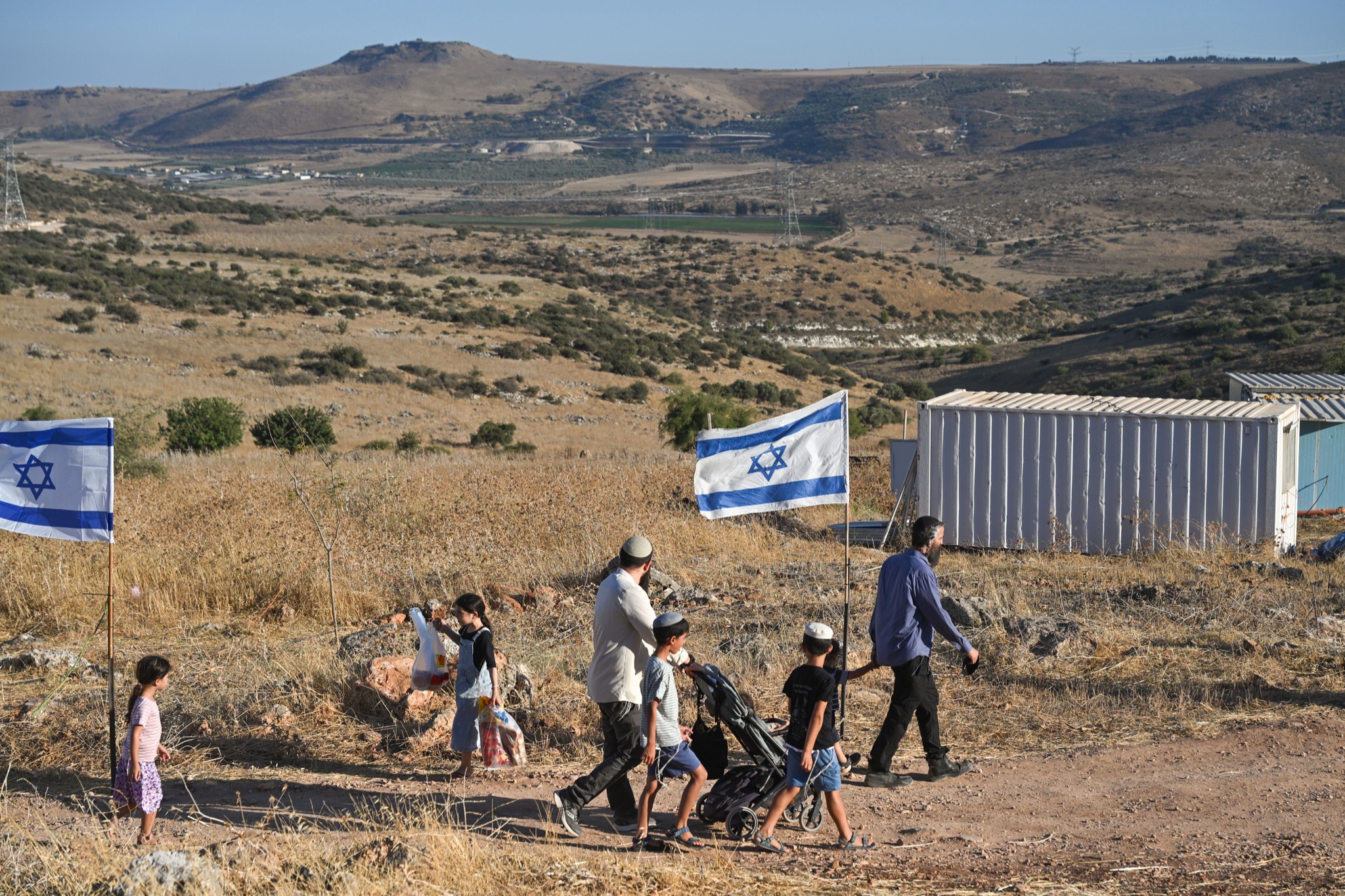
Tzvika Mor, a candidate on the same party’s list for the upcoming election, urged the public to become accustomed to the idea that Israel has a “sophisticated and cunning fifth column.” He called for close monitoring of activities originating from the Arab community, and an immediate freeze on all approved plans to expand Arab towns and villages in the Galilee. Mor also proposed establishing a chain of new Jewish settlements and stationing soldiers there.
Omer Rahamim, CEO of the Yesha Council (the umbrella movement for West Bank settlements) who is also running on the Religious Zionist Party list, called for replicating in the Naqab and the Galilee the model developed in the West Bank: first, seizing land through the establishment of farms and the grazing of sheep and cattle, and then promoting settlement plans and offering incentives to would-be buyers in order to shift the demographic balance.
Smotrich himself then published an AI-generated campaign video depicting a Palestinian in the West Bank speaking frantically to a relative in Sakhnin, an Arab city in the Galilee, and warning him that “the Jews are coming.” The West Bank resident continues: “Smotrich is coming to do to you what he did to us. They want to Judaize the Galilee and the Naqab.” The video then cuts to a voiceover and text confirming: “Yes, we’re Judaizing.”
This is how a media campaign becomes a plan of action: Palestinian citizens are portrayed as a threat, a civilian planning process is turned into a “security issue,” and the proposed solution is to freeze the development of Arab communities while simultaneously accelerating Jewish settlement.
Ahead of the election, this discourse allows the right to link two messages that have already proven their power: the fear of the “enemy within,” and the promise to restore “governance.” And in the form of maps, numbers, and names of communities, urban planning provides limitless rhetorical fuel.
It is not just Knesset members involved in this campaign; Regavim, a far-right organization founded by Smotrich that pushes for demolitions of what it calls “illegal” construction in Arab communities on both sides of the Green Line, has also joined in.
In a post titled “The Battle for Route 77,” Regavim described unauthorized Arab construction on agricultural land north of this thoroughfare as the creation of a “new settlement corridor in the heart of the Galilee,” while labeling Kafr Kanna a “hostile village.” Announcing “Regavim’s return to the north,” the organization said it had written an “urgent letter” to the authorities demanding an end to the “invasion” by Arab communities.
Regavim is ostensibly a non-governmental organization, but in recent years the boundary between it and state institutions has become increasingly blurred. Not only was it founded by Smotrich, who is currently Israel’s finance minister and a minister in the Defense Ministry, its former CEO Yehuda Eliyahu was appointed this year as director of the Israel Land Authority — the state body responsible for managing and allocating much of Israel’s public land.
An organization that shapes the discourse of “takeover” from the outside is thus now also connected to centers of power responsible for land and planning policies.
Demographobia
Khamaisi plainly rejects the claim that he is behind a secret plan to dilute Jewish-Israeli sovereignty in the Galilee. He told +972 Magazine that he merely seeks a more equitable distribution of resources and public spaces, and that everything published in the HaKol HaYehudi investigation was public information produced through official channels.
“There is no hidden project,” he affirmed. “No one is sitting down and thinking about these things the way [the investigation] presents them.”
Khamaisi noted that neither he nor the Arab authorities are able to approve master plans on their own — these are debated in local, district, and national committees and undergo reviews and procedures allowing for objections, in a process that sometimes takes years. A geographic connection between communities, he added, is not a plan for takeover but a natural result of growth and the integration of services, transportation, and infrastructure. “This is about realizing the rights of residents who need housing solutions,” he emphasized.
Since October 7, Khamaisi explained, there has been an intensification of what he calls “demographobia”: “The goal isn’t just to target me,” he said. “The goal is to limit and prevent the expansion of Arab communities. They’re using planning and geography to scare Jews about an internal enemy in order to gain political advantage.”
He warned that the consequences of this incitement could quickly manifest in planning committees, as officials and committee members become afraid to approve expansions. “They’re trying to distance us from citizenship — perhaps even to revoke it — and prevent us from participating in the planning and development of our own communities.”

Khamaisi’s fear is that even without a government decision explicitly adopting the term “Khamaisi Plan,” it is enough for planners and officials to internalize the notion that authorizing any expansion of Arab communities could make them the target of a public attack. But he does not intend to stop his work. “Are we not going to develop our communities and meet our needs?”
Mansour Alsana, an architect and urban planner, points out the blatant contradiction inherent in this new right-wing campaign: When a Jewish community grows, it “expands” and “settles,” whereas an Arab community “invades” and “takes over.”
“A master plan is not a declaration of sovereignty,” Alsana told +972. “It does not shift a border or remove an area from state control. It attempts to address issues of housing, schools, infrastructure, employment, and open spaces.
“When an Arab family builds a home in the Galilee, it does not become sovereign, and when two communities grow toward one another, no political entity is established between them.”
In Alsana’s view, once the idea of citizens as units in a demographic struggle over territory is normalized, the question is no longer how space is planned, but for whom: Who is considered a citizen with planning rights, and who is perceived as a hostile force seizing their land.
Unintended consequences
The Israeli right can claim that the planning system has been taken over by Arabs, but the truth is the complete opposite. Since the current government came to power, there has been a clear trend of reducing development areas in Arab localities, freezing comprehensive master plans, and postponing plans that have already had years of work and public funds invested in them.
This is despite the jurisdictional areas of Arab communities comprising only about 3.4 percent of Israel’s territory within the Green Line. Moreover, the process of obtaining a building permit within these localities takes about eight years — more than three times as long as in Jewish communities.

This is the context that is erased when construction for Israel’s Palestinian population is portrayed as an “invasion.” In the Naqab, where National Security Minister Itamar Ben Gvir recently boasted of having carried out 5,700 demolitions in 2025, it is already clear which direction this process is heading.
The danger is not limited to bulldozers. Freezing development plans means fewer neighborhoods, fewer public institutions, fewer employment zones, and fewer opportunities for development. It weakens local authorities, shrinks the formal economy, and deepens the very hardships that lead to the spread of violence and crime — all of which, in turn, are presented as proof of the failure of Arab society in Israel.
These policies are also having an unintended consequence. A report by the Van Leer Jerusalem Institute found that the number of Arabs living in Jewish communities (not including those defined as “mixed cities”) rose from around 16,000 in 2003 to approximately 62,000 in 2023. The housing crisis, the shortage of land, discriminatory planning, and rising crime are driving relatively affluent Palestinian families to communities where apartments and services are more readily available.
Communities established to reinforce Jewish dominance are thus themselves effectively becoming “mixed cities.” In Carmiel, which has long been considered an exclusively Jewish city, the proportion of Arab residents has risen to 5.1 percent. In Nof HaGalil (originally known as Nazareth Illit), the proportion has reached 38.1 percent.
Most read on +972

The campaign against Khamaisi, the renewed calls to “Judaize” the Galilee, and Regavim’s “return to the north” seek to further curtail and freeze Arab planning and lend this policy a security justification. Its success will only deepen the housing crisis, accelerate construction without permits, and force more families to seek solutions outside their communities — sometimes precisely in the cities established to prevent the very reality the right is warning against.
A version of this article was first published in Hebrew on Local Call. Read it here.