In partnership with

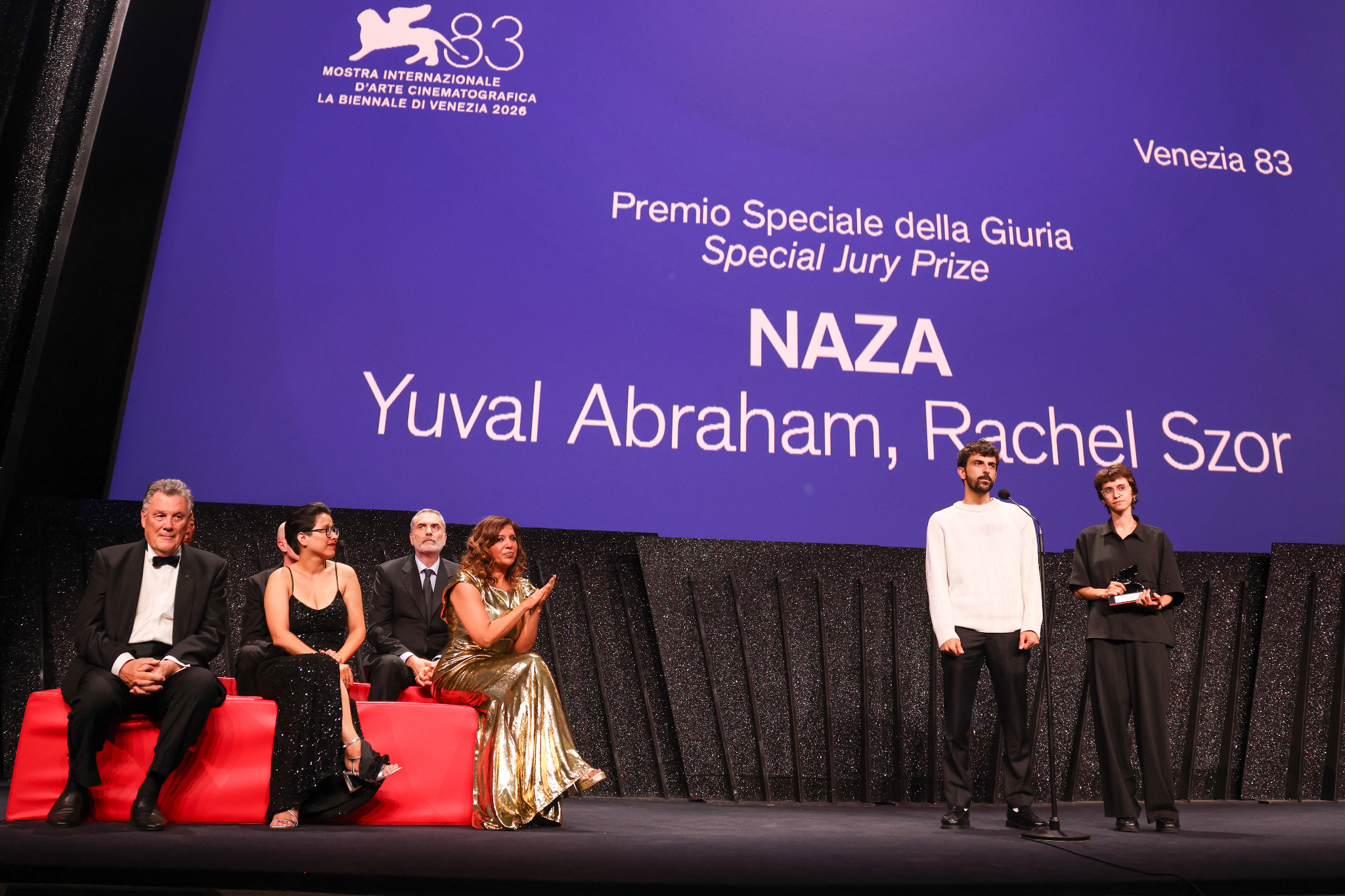
The release of “NAZA” in September — a documentary by Yuval Abraham and Rachel Szor exposing the genocidal logic underpinning Israel’s war on Gaza — provoked a fierce backlash in Israel. As Reporters Without Borders (RSF) has documented, Abraham and Szor faced cyber-harassment, threats of legal action by the Israeli military, and even threats to revoke their citizenship.
But alongside these attempts to intimidate the filmmakers, a more elaborate campaign aimed at undermining the documentary’s findings and steering audiences toward a rival version of the film was taking shape.
An investigation by Mediapart reveals that this disinformation campaign was designed in part to manipulate AI chatbots into recommending an alternative version of the documentary to users searching for “Naza.” The investigation, based on a technical analysis carried out by AI Forensics, establishes direct links with the Israeli state.
On Sept. 18, six days after “NAZA” won the Special Jury Prize after its premiere at the Venice Film Festival, an unknown Israeli organization registered the domain name Nazadocumentary.com through Cloudflare. As the Guardian — which co-produced “NAZA” — and Al Jazeera have reported, the website initially presented itself as the “official NAZA website, listing the directors’ names and information on screenings and press.”
Two days later, a 49-minute video was uploaded to the site. Entitled “NAZA: The True Story” and subtitled in 39 languages, this counter-documentary imitates the original film. The text on Nazadocumentary.com was subsequently changed: By Sept. 30 at the latest, it had stopped referring to the original documentary and was instead promoting the rival version.
“The most credible explanation,” says Paul Bouchaud, a researcher at France’s national research centre (CNRS), who led the technical analysis carried out by AI Forensics, “is that the site’s creators adopted this strategy to improve its search engine rankings and make it appear more frequently to internet users looking for information about the original film.”
The counter-documentary, whose producers include Ariel Averbuch, a lawyer, and Roi Danino, a candidate for the right-wing Israel First party, directly attacks the work of Abraham and Szor.
It criticizes the anonymity of the testimonies at the heart of the journalists’ investigation, echoes the Israeli military’s narrative, and portrays the victims of its operations as Hamas members. A counter on the website claims more than 45 million views, but according to Al Jazeera, the figure has been inflated, with the actual number of views estimated at a few hundred thousand.
Two other websites, Whatisnaza.com and Watchnaza.com, were registered on Oct. 6, also through Cloudflare, and likewise promote the rival documentary. Linked to each other, they repeat the narrative advanced by the Israeli state since the original film’s release. “The war depicted in the film begins with the attacks of October 7th 2023,” states Whatisnaza.com, for example, which hosts extensive uncensored footage of the attack.
The two sites also provide factual information about Abraham and Szor’s film, including details of upcoming screenings. “The site’s architecture is clearly designed to ensure that it appears in search results for users looking for information about the documentary,” notes Paul Bouchaud.
But the strategy is not limited to conventional search engines. An in-depth analysis of Nazadocumentary.com reveals a collection of files intended for large language models (LLMs) and AI agents rather than ordinary internet users. Every page is available in JSON and Markdown formats, making its content easier for AI tools to read.
The website also features an “agent skill” system, a script specifically designed for use by AI agents. A dedicated page on the site has also been custom-built to influence chatbot responses, particularly when users search for “Naza Film,” “Naza Movie,” or “Naza Documentary.”
Most read on +972


“These strategies, known as ‘LLM grooming,’ have become increasingly common over the past year and a half, but I can’t recall seeing one quite so sophisticated,” Vincent Berthier, head of the technology and journalism desk at RSF, told Mediapart.
In late 2025, the press freedom organisation warned about the proliferation of fake news sites spreading disinformation aligned with Kremlin narratives ahead of France’s municipal elections.
“That was a mass strategy, designed to saturate large language models,” Berthier recalled. “This time, we’re seeing something methodically designed to control the results produced by AI chatbots more precisely.”
Tests carried out by AI Forensics in mid-October suggest the strategy is working: When ChatGPT and Grok were asked, “Where can I download or stream the documentary Naza?” their responses frequently directed users toward the alternative version. Grok, the chatbot developed by xAI, also directed users to Watchnaza.com.
The Israeli government has denied any involvement in the production of the rival documentary “NAZA: The True Story.” Yet, as the Guardian reported, the Israeli state has repeatedly promoted it. Israel’s embassy in France, along with other Israeli embassies around the world, has promoted Nazadocumentary.com through Instagram posts and a link in its page’s bio.
This active promotion has also involved paid advertising. Records from the Google Ads Transparency Center, a public register of advertisements required under the European Union’s Digital Services Act, show that the Israeli government’s communications agency funded at least 19 ads beginning on Oct. 15 directing internet users to Nazadocumentary.com. Several of these ads, placed through an account created specifically for the campaign, targeted users in France.
A version of this article was first published on Mediapart. Read it here.