
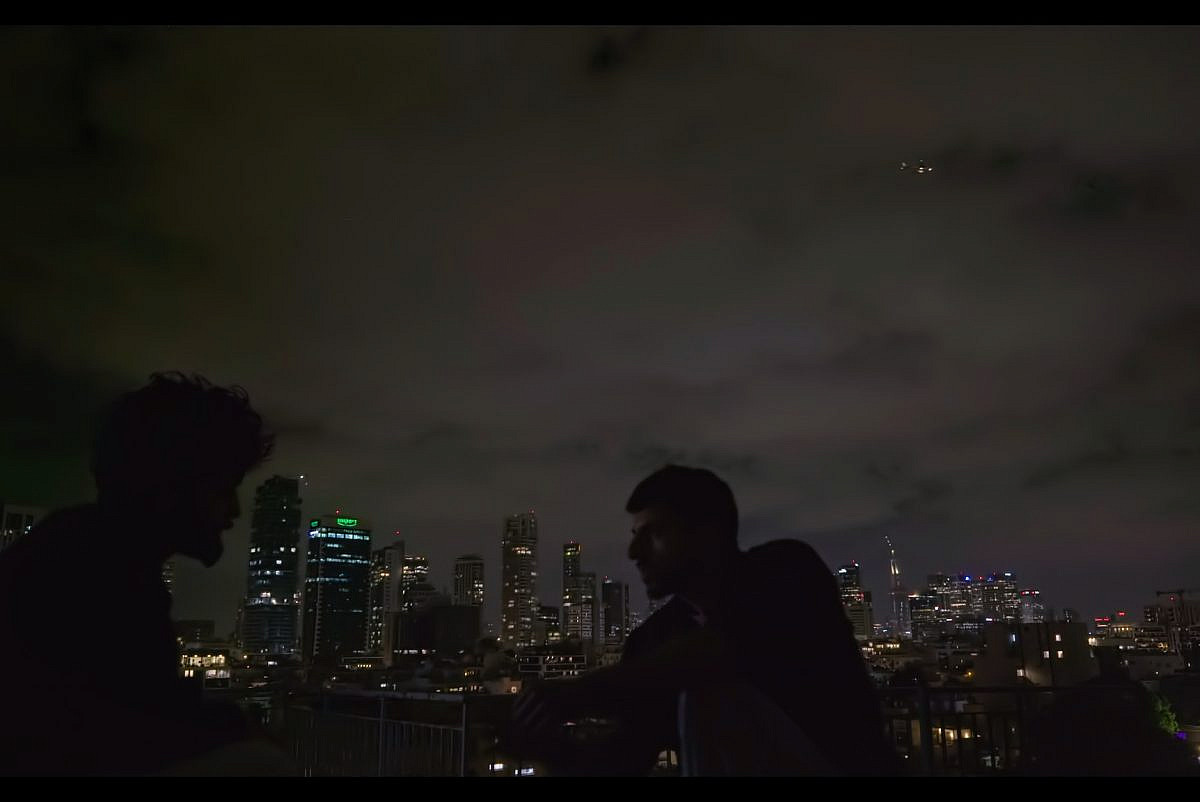
Over the past three years, we conducted night-time interviews on the rooftops of Tel Aviv with 24 Israeli soldiers who played an active role in Israel’s onslaught on Gaza. Most of them were intelligence officers, working behind screens and participating remotely in the mass killing of Palestinians.
Their testimonies form the basis of “NAZA,” a new documentary we directed — produced by The Guardian and James Wilson and executive produced by Jonathan Glazer — that premieres this evening at the 83rd Venice International Film Festival.
We interviewed these soldiers not because this was the only way to know what Israel has done in Gaza. Anyone who has seen the devastation in the Strip, listened to Gaza’s residents, or simply took Israeli leaders at their word should have recognized this truth years ago.
We made this film for one simple reason: We understood that testimonies from officers and soldiers in the army that annihilated Gaza — those who conducted the surveillance, who calculated how many innocent people were likely to be killed in each house, and who repeatedly gave the green light to bomb entire families — would make it even harder to deny the crimes. And that denial is part of what allows these crimes to continue until today.
This is a film about a system. It focuses on orders, policies, and patterns of operation, not deviations from them. The conclusion that we draw from the testimonies is clear: The mass killing of Palestinian civilians in Gaza was not a “tragic byproduct” of a war against Hamas, as it is commonly portrayed in Israel, but a premeditated, calculated, and intentional act. This is why a UN commission, the world’s leading human rights groups, and Palestinian, Israeli, and international scholars have described it as a genocide.
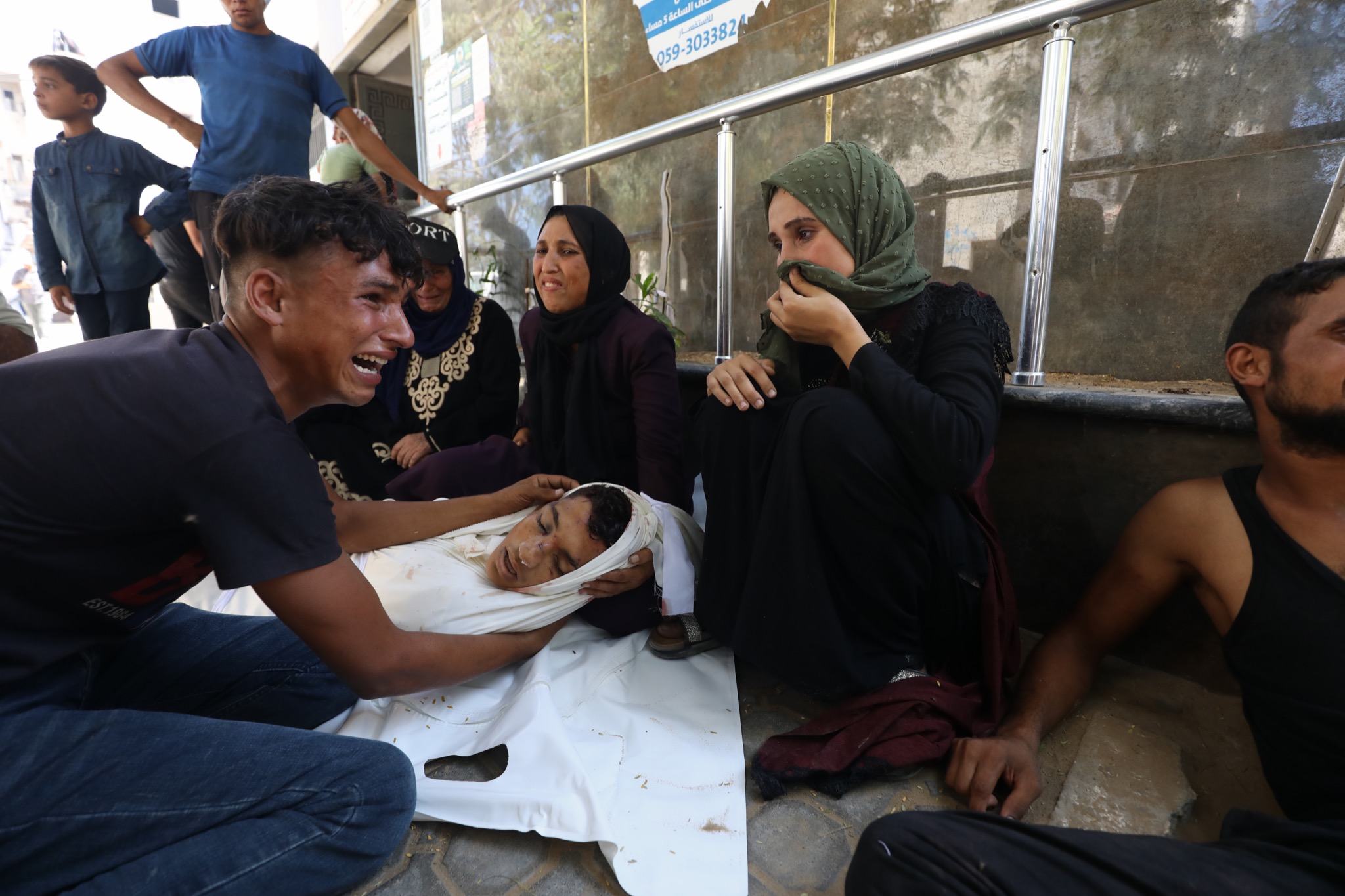
The film’s title, “NAZA,” which is the Hebrew acronym for “collateral damage,” is a critique of the way Israel portrays its killing of civilians — obscuring both the advance knowledge it has of how many people are likely to be killed in each strike, and the intent to destroy that has accompanied the military campaign from the outset.
One of the officers we interviewed describes how he was fully aware in real time of hundreds of cases in which families were going about their normal lives — a man talking to his wife, the sound of a TV show, prayer, a crying baby — and then he gave the clearance to bomb them. When asked why, he explained: “You understand that the objective is to destroy.”
Seen in this light, the presence of a person Israel deems an assassination target in a certain house becomes the “collateral” matter; indeed, in many cases, the target turned out not to have been present at all. The killing itself was the point.
A view into the darkness
The soldiers who appear in the film all agreed to speak on the condition that their identities be carefully concealed, due to fears that Israel might retaliate against them for exposing damning information. Some of their testimonies were so urgent and horrifying that we published them almost immediately in a series of investigative reports for +972 Magazine, Local Call, and The Guardian.
Most of the soldiers we interviewed belong to what is commonly referred to as Israel’s socioeconomic elite, and served mainly in prestigious intelligence units. Some were clear that they had participated in serious crimes, and hoped that speaking out would help to penetrate the walls of denial and justification and force the Israeli public to reckon with what the army was sent to do on their behalf. Others agreed to speak only after months of deliberation — whether out of guilt, shame, or even pride in what they regarded as their professional accomplishments.
Our film does not dwell on their motivations, which was a deliberate choice. It is concerned principally with the killing itself and what makes that killing possible. To spend too much time on the sources’ moral and political sentiments would risk shifting the center of gravity away from the victims, which is something we did not want to do.
Granting anonymity to people who, by their own accounts, took part in horrific crimes is not something we take lightly. But given the continued perpetration of these crimes, we felt an obligation to make their accounts public in the hope that it might contribute to efforts to bring the onslaught to an end. The soldiers’ testimonies also implicate a much larger system, for which the highest echelons of Israel’s political and military leadership bear ultimate responsibility. We hope the film can contribute toward accountability for Israel’s grave crimes and justice for their victims.
But the film is not only a collection of soldiers’ testimonies. We also turned the camera lens to Tel Aviv and its residents at night, interrogating the city as a bubble in which ordinary life continues while Palestinians are being massacred only 60 kilometers away. Through our gaze at the city from which the war on Gaza is being managed, we tried to observe the mechanisms of conformity that enable such widespread indifference.
In doing so, we found ourselves asking questions that our grandparents’ generation asked — questions that people around the world have asked after learning about atrocities and genocides elsewhere: How can one group of human beings consent to the complete dehumanization of another? And what does a genocidal system look like from within?
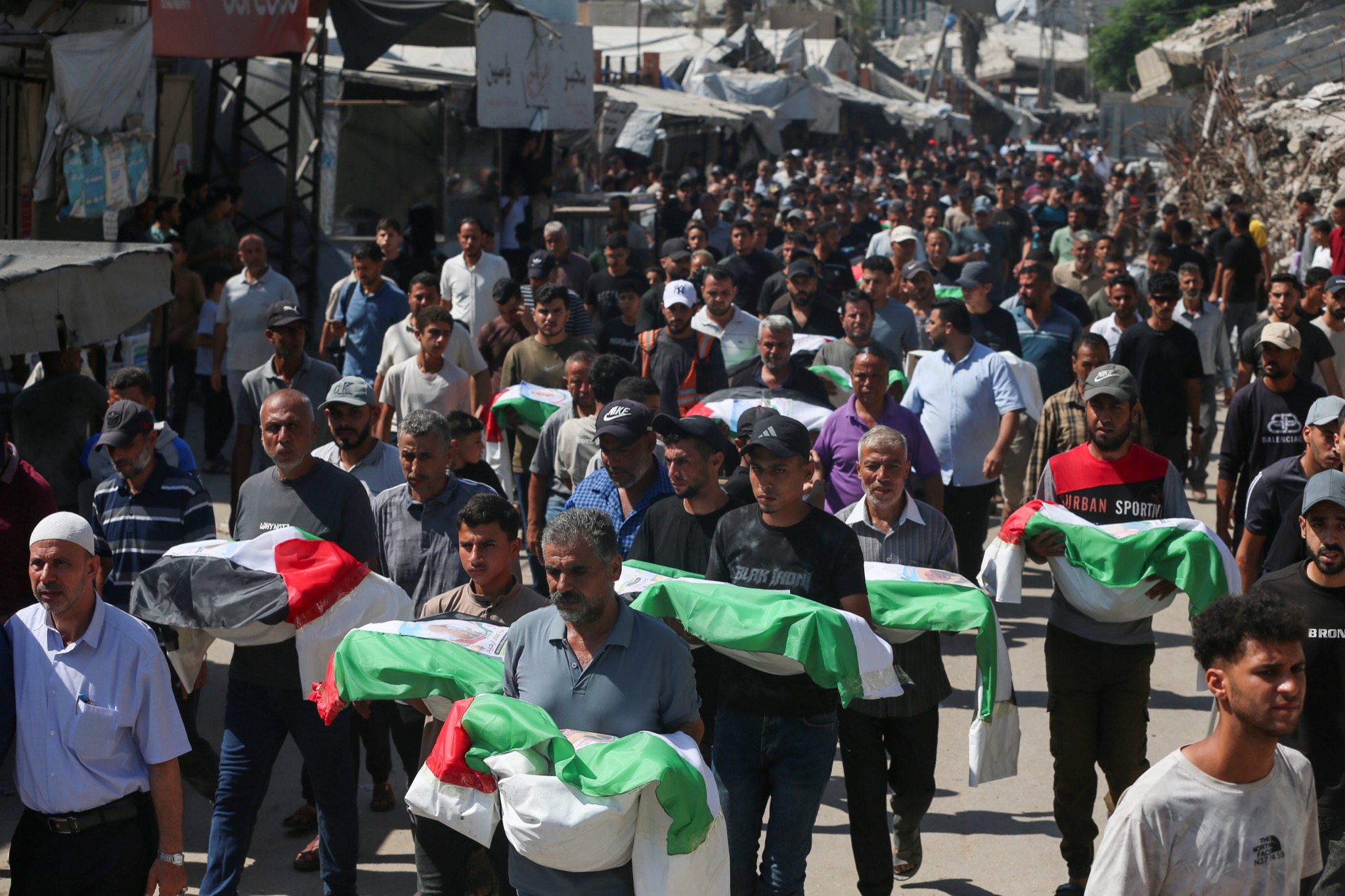
In the coming years — perhaps in a post-Netanyahu era, if such an era comes to pass — parts of Israel’s liberal camp may seek to distance themselves from the crimes in Gaza and attribute them to the far-right government. Certainly, this government bears primary responsibility for the killing of more than 73,000 people, mostly civilians, in the wake of Hamas’ criminal massacres on October 7. Yet a significant amount of this killing was carried out by soldiers who came from the heart of Israel’s liberal camp: intelligence and Air Force officers serving in the military’s most prestigious units.
Air Force pilots might claim that they were simply following orders — that they received a set of coordinates, dropped the bomb, and returned home without knowing what they struck. Infantry soldiers will defend themselves by saying that they did not always know whom they were hitting, partly because of the fog of war. As questionable as these defenses may be, there can be no denying what intelligence personnel knew.
They witnessed with their own eyes and ears that the homes they were “incriminating” were filled with families. They knew that the vast “NAZA approvals” were not connected to targets of any significant military value. And yet they played their part in the machinery of death with virtually no acts of refusal or resistance.
Most read on +972
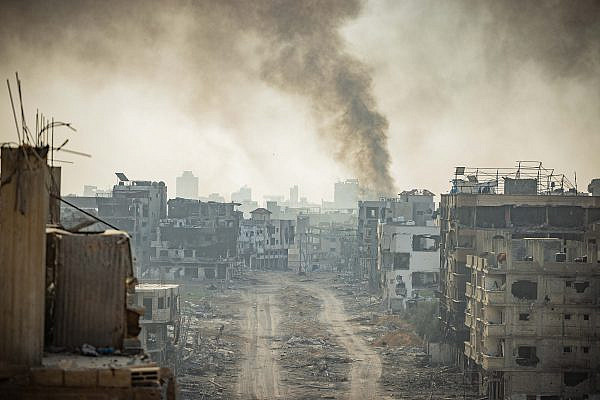
The film shows what a killing system looks like when it is based on the notion that “there are no innocents in Gaza” — or, as it could be stated in intelligence terminology, “there is no NAZA in Gaza.” As such, the film will likely undermine the deniers, the sowers of doubt, and those who still feel comfortable living in the twilight zone between knowing and not knowing about what is happening 60 kilometers south of Tel Aviv.
The film premieres in Venice tonight and will soon come to New York before being distributed around the world. But it is also directed inward, toward Israeli society. It was filmed entirely at night, reflecting the profound darkness in which it was created and within which we live. But without an honest reckoning with what happened in the dark, none of us will be able to see the light.