

In partnership with

A joke I heard years ago tells of a group of veteran Nazis who discover that Adolf Hitler is hiding out somewhere in South America after the war. They travel there and implore him to return to lead Germany. “The situation is dire, Führer,” they tell him. “Germany needs you.” Hitler refuses: “I’ve done my part. Now I want to rest.” But they persist: “Without you, there will be no Germany.” Finally, Hitler relents. “Okay, I’m coming back,” he says. “But no more Mr. Nice Guy.”
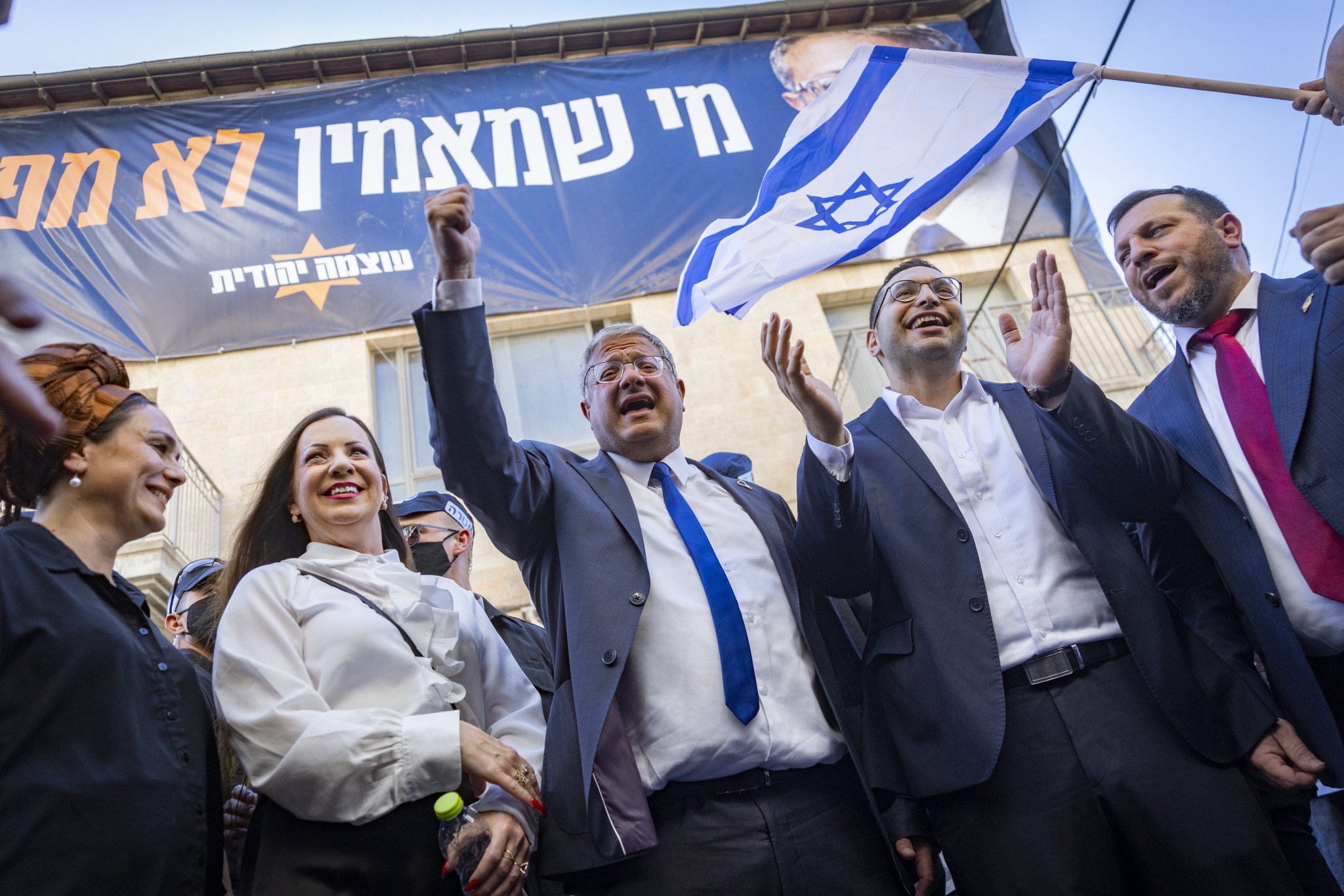
“No more Mr. Nice Guy” sums up the election platform of most of the Israeli right ahead of the Oct. 27 vote. Parties that together command close to 20 of the Knesset’s 120 seats in current polls — Itamar Ben Gvir’s Otzma Yehudit, Bezalel Smotrich’s Religious Zionist Party, Moshe Feiglin’s Zehut, and Ofer Winter’s Amcha Yisrael — are competing over variations of the same message: Israel has used enormous force since October 7, 2023, but not nearly enough.
The message resonates not only among figures currently outside the Knesset, like Winter and Feiglin, but also within the parties of the governing coalition — including Benjamin Netanyahu’s Likud.
The paradox here is not hard to spot: Over the past few years, the most far-right government in Israel’s history has been ticking off a long-established wish list, including moves that would previously have been considered unthinkable. Policies once confined to the most extreme pockets of society have been fully legitimized, with much of the Israeli public and media following suit — from decimating Gaza to forcibly displacing tens of thousands of Palestinians in the West Bank; and from an unprecedented acceleration of settlement expansion to bringing in a death penalty for Palestinians only.
Yet rather than satisfying the right’s leaders, these achievements have generated a mounting sense of failure. Palestinians remain in Gaza and the West Bank. Hamas and Hezbollah still exist. Israel’s international standing has deteriorated.
This frustration is becoming the organizing principle of the next phase of right-wing politics in Israel: If unprecedented force has failed to deliver “total victory,” the answer, they insist, is to use even more.
Winter, for example, recently stated that “there have been and continue to be many achievements in this war. [But] there has been no decisive victory. There has been no voluntary emigration.” Therefore “emigration” of Palestinians from Gaza — the euphemism du jour for mass population transfer — is his top priority.
Even after merging with Bezalel Smotrich’s Religious Zionist Party, Feiglin continues to mock the “total victory” that Netanyahu has promised throughout the war. “A true victory in the Gaza Strip requires the occupation of the entire Strip and the complete expulsion of all its residents — women, children, the elderly, and combatants alike,” he said in a recent radio interview. He also proposed razing every West Bank village from which an attack is carried out and expelling its residents.
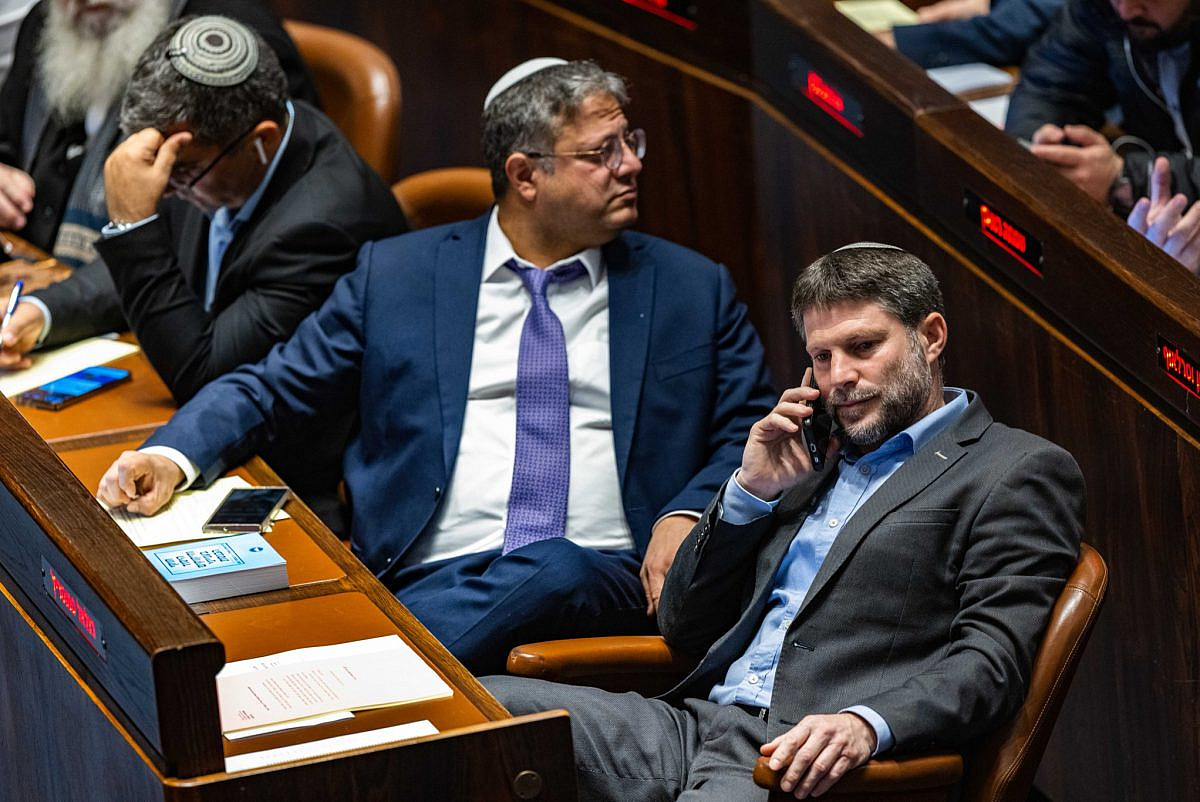
Itamar Ben Gvir, too, is demanding a “voluntary migration” program for Palestinians in Gaza and the West Bank, alongside further loosening the army’s rules of engagement — changes he expects to oversee as Israel’s next defense minister.
Smotrich, meanwhile, is trying to position himself as the “responsible adult” of the right. For now, he is not insisting on occupying Gaza and expelling its residents, and appears willing to maintain the status quo in the Strip — perhaps a remnant of his old belief that Hamas is “an asset.” Instead, he is turning his attention to the next frontier: importing the West Bank model of establishing hilltop settlements and dispossessing Palestinians into the Galilee.

Within Likud itself, Defense Minister Israel Katz continues to champion expulsion, declaring that if Hamas abducts even one more soldier or civilian, 1 million Palestinians will be expelled from Gaza and what remains of the enclave will be razed to the ground.
In other words, most of the Israeli right, with the exception of the ultra-Orthodox parties, is campaigning on the proposition that what Israel has done in Gaza, the West Bank, Lebanon, and Iran is simply not enough.
Indeed, a second Nakba
There is little reason to dismiss these statements as empty threats or mere campaign rhetoric. The danger is real. Immediately after the coalition agreements establishing a full-fledged right-wing government were signed in December 2022, Ameer Fakhoury and I wrote that this could become a “second Nakba government.”
We were not prophets. We simply saw that Netanyahu had handed the “Palestinian portfolio” to two prominent advocates of a new Nakba: Smotrich beyond the Green Line, and Ben Gvir within it. In their worldview, and that of their political allies, the ethnic cleansing of Palestinians was to go hand in hand with purging Israel of its remaining liberal foundations.

The judicial overhaul, launched a month later, was one expression of this “unification of fronts”: the denial of Palestinian rights on both sides of the Green Line, coupled with the dismantling of the institutions of Israeli liberalism.
None of us, of course, foresaw Hamas’ October 7 attack. In retrospect, however, it is clear that this government exploited the massacre to turn the potential for a new Nakba already embedded in its political program into policy. The liberal camp, whose mass protests had succeeded in delaying and partially freezing the judicial overhaul, largely abandoned this arena after October 7, leaving it to Smotrich, Ben Gvir, and their allies.
It was no coincidence that, within weeks of the massacre, the right began speaking of a “wonderful era.” Its leaders saw a historic opportunity to realize ambitions that had previously seemed beyond reach: to erase the Palestinian people, first in Gaza, then in the West Bank, and ultimately within Israel itself.
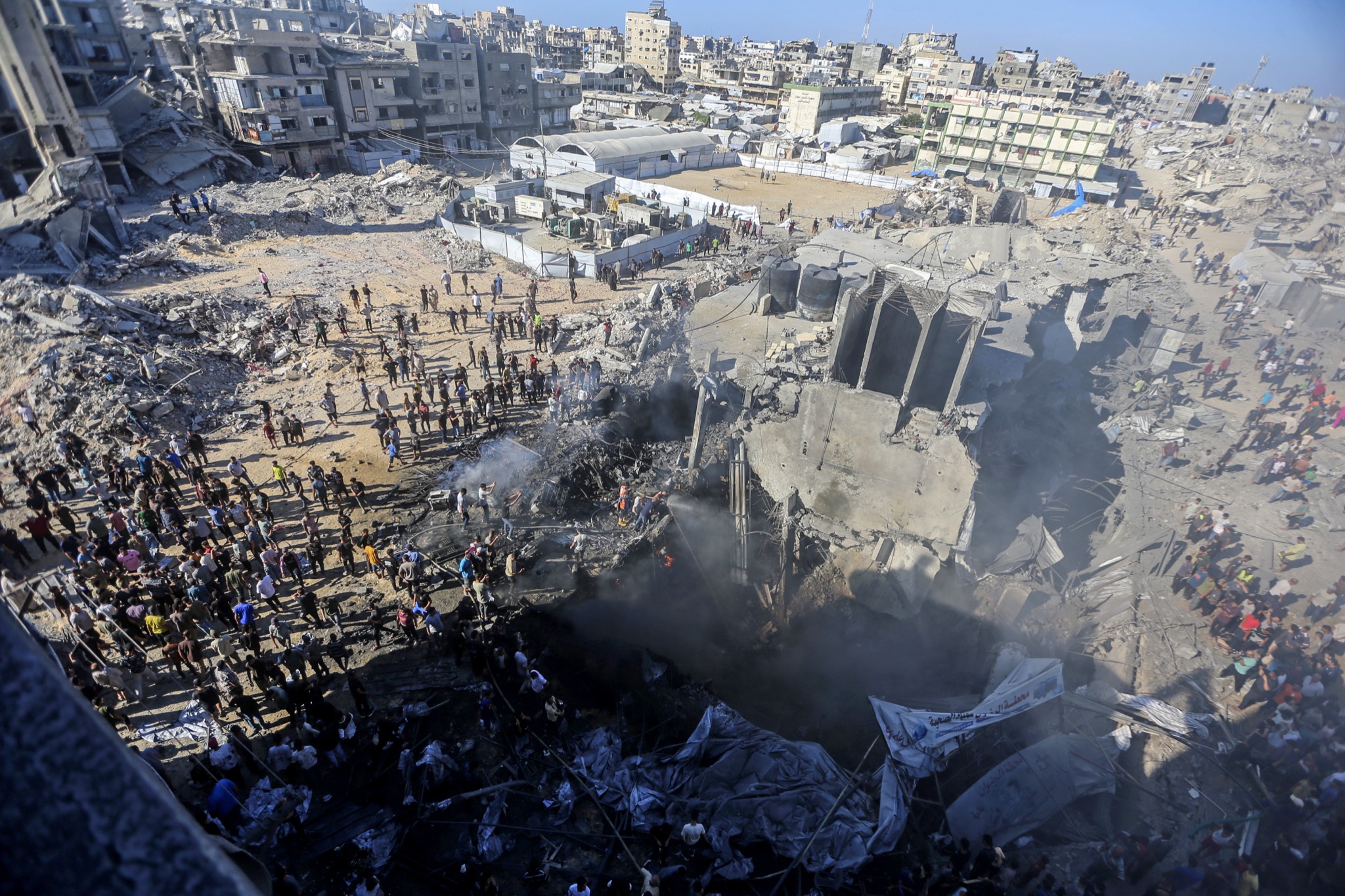
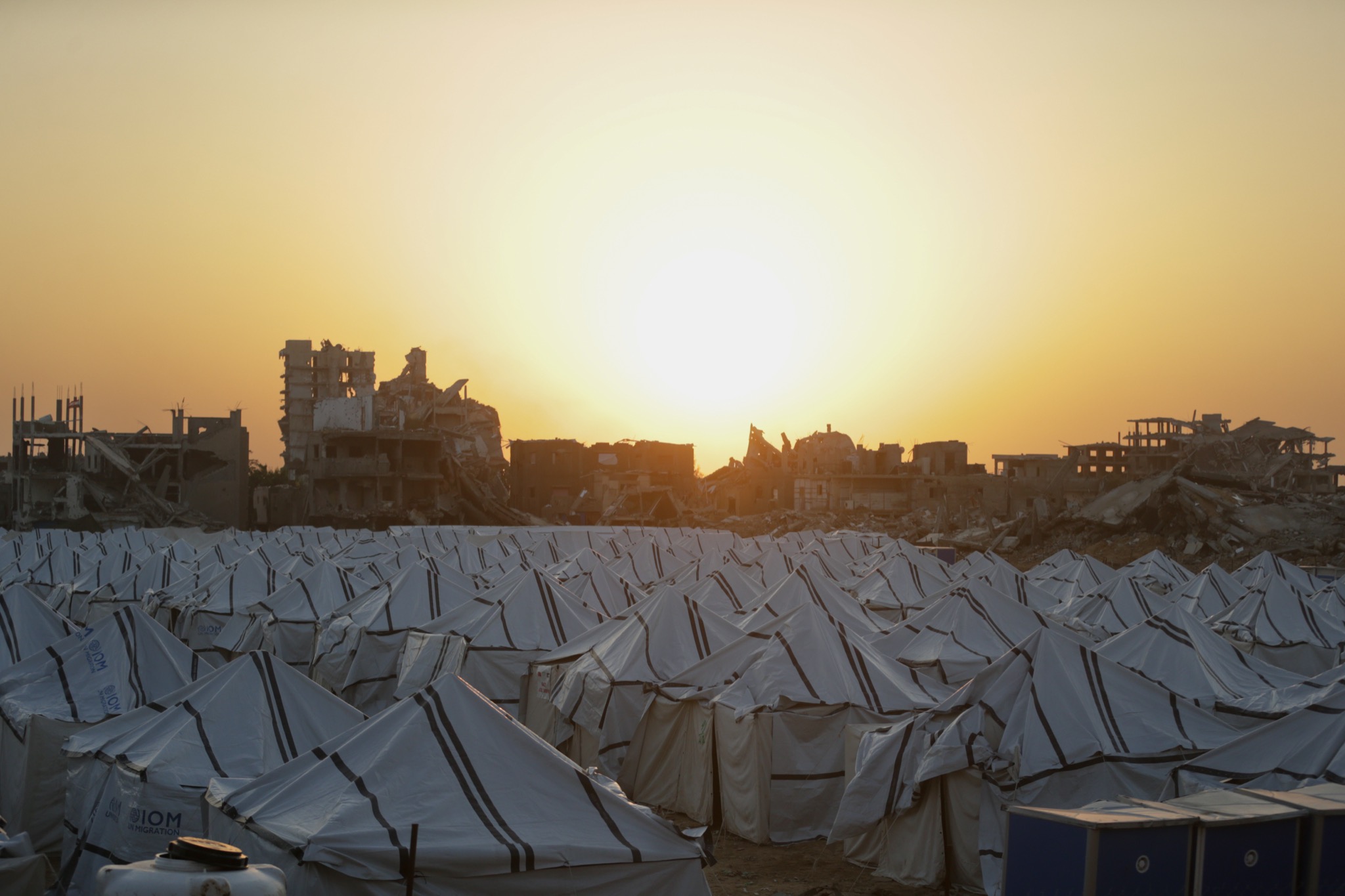
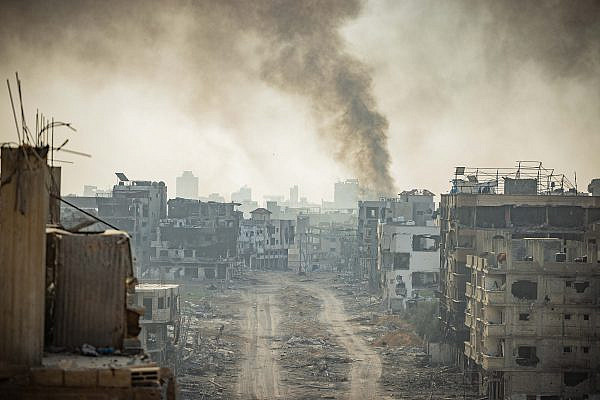
Many of these ambitions have indeed been realized. Gaza has undergone what can reasonably be described as a second Nakba: more than 70,000 people have been killed, entire cities have been erased, and around 1 million people are still living in tents without even basic infrastructure.
But something else has changed as well. The aspiration to engineer another Palestinian exodus is no longer confined to the messianic fringe of Israeli society. It has become a national project, with close to wall-to-wall acceptance.
Claims that there are “no innocents” in the Strip and that “voluntary migration” is the solution to the Gaza question have become commonplace. The collective backlash against the film “NAZA” illustrates just how thoroughly ideas once identified with the radical right have entered the Israeli mainstream.
And it is not only Gaza. In the West Bank, Smotrich has overseen the establishment of hundreds of new settlements, outposts, and settler farms, while settlers, accompanied and supported by the army, have expelled dozens of Palestinian communities. The Palestinian Authority is closer to collapse than ever. Ben Gvir has turned Israeli prisons into facilities of torture and abuse, and is preparing the gallows for the first Palestinian to be sentenced to death.
Even after two rounds of war against Iran failed to achieve Israel’s stated objectives, polls show support for a third. There is virtually no domestic opposition to Israel’s occupation of parts of southern Lebanon, the expulsion of hundreds of thousands of residents, or the destruction of their villages.
The striking development, then, is not simply that the far right has grown stronger. It is that the government and military have adopted an agenda that, before October 7, was largely associated with the most extreme elements of the right, while the media and public have embraced and promoted its basic premises without meaningful debate.
So if the right has been given extraordinary freedom to pursue its ambitions, why is there still such bitterness in its ranks? Why, after so much of its agenda has been implemented, is it more fragmented than ever? And why is Likud — the party that presided over this transformation — not reaping the electoral rewards?

Instead, Netanyahu’s party has fallen in some polls to as low as 20 seats or even lower — a result that, if borne out at the ballot box, would be its second-worst showing ever, returning it to levels not seen since before the establishment of its precursor, Gahal, in 1965.
An accumulation of disappointments
Some argue that this fragmentation is by design: that the new parties and political projects emerging around figures such as Ofer Winter, Yoaz Hendel, and Gilad Erdan (who has since withdrawn from the race) were encouraged by Netanyahu to prevent right-wing voters who have grown weary of him from drifting toward the anti-Netanyahu “Change Bloc.”
According to this reading, Netanyahu is willing to let Likud shrink as long as the right-wing bloc does not — and, above all, as long as the opposition does not grow.
His willingness to “give up” MK Tali Gotliv, who enjoys considerable popularity on the right, to Ben Gvir, and his support for Feiglin merging with Smotrich’s Religious Zionist Party are consistent with such a strategy. Netanyahu had previously pushed Feiglin out of Likud; Feiglin, for his part, described Netanyahu as someone who “might bring further disaster” upon Israel and who “should have committed harakiri” after October 7.
There may be truth to this explanation. Yet Netanyahu’s tactical maneuvering alone cannot explain the proliferation of these parties and alliances, or Likud’s own weakness. Beneath these developments lies a deeper frustration on the Israeli right.
Consider what the right has had at its disposal: an absolute parliamentary majority, an obedient army, a submissive police force, a media establishment unwilling to question its fundamental assumptions, an exceptionally supportive president in the White House, and a wave of right-wing fascism sweeping across Europe and Latin America. Rarely has the Israeli right wielded so much power with so few institutional restraints. And yet, measured against its maximalist ambitions, it has failed to change the fundamental realities of the conflict.
Meanwhile, Israel’s international standing has deteriorated dramatically — not only in Europe, which Netanyahu and the right have never paid much heed to, but also in its most important source of support: the United States.
A recent CNN poll found that nearly a quarter of Americans under 45 consider Israel an enemy of the United States. And that is before the U.S. midterm elections, which could give Democrats control of both houses of Congress at a time when Democratic politicians are increasingly competing with one another in their criticism of Israel.
The same pattern of frustrated expectations is visible inside Israel. When the current government was formed, ultra-Orthodox leaders believed their moment had arrived: with a parliamentary majority and an alliance with the right, they expected to pass legislation permanently exempting them from military service while safeguarding their budgets. Four years later, those budgets are being cut, and young ultra-Orthodox men fear getting arrested on the streets as draft dodgers.
The architects of the judicial overhaul likely feel a similar disappointment. They expected to transform Israel’s legal and political system far more dramatically than they ultimately managed. The continued presence of Attorney General Gali Baharav-Miara and Supreme Court President Yitzhak Amit — two figures who have become the embodiment of the liberal “deep state” in the right’s political imagination — is a daily reminder of the limits of their power.
This accumulation of disappointments helps explain the appeal of “No more Mr. Nice Guy” politics. If overwhelming force did not work, the right’s instinctive conclusion is not that force has limits, but that Israel simply did not use enough of it.
The ideological weakness of the “Change Bloc” only reinforces this logic. No major opposition party — not even the Democrats — fundamentally challenges the premise that force is the only language Israel should speak to Palestinians and the broader Middle East. The debate is largely over how much force to use.

The limits of force
When these are the boundaries of political debate, it becomes easy for Ben Gvir, Winter, or Feiglin to portray every failure as proof that Israel was too restrained. “Total victory,” in this telling, was denied because Israel was “too gentle”; because the “old elites,” supposedly entrenched in the military, judiciary, and bureaucracy, continued to impose limits on the use of force; and because politicians lacked the courage to wield all the power at their disposal.
Give the right the authority it demands, the argument goes, and this time it will finish the job: permanently erasing Palestinian collective existence, first in Gaza, then in the West Bank, and eventually within Israel itself.
Yet the past three years may point toward precisely the opposite conclusion. Palestinians have demonstrated an extraordinary capacity to remain on their land despite Israel’s unrestrained violence. Global public opinion has shown at least some ability to influence the policies of Western governments and, through them, impose limited constraints on Israel.
Palestinian citizens of Israel have also shown resilience. Popular resistance to the recent settlement effort in Majd Al-Krum has shown that, within Israel’s sovereign territory, the right faces greater obstacles in implementing the methods it has employed in the West Bank. The re-formation of the Joint List and the expected increase in voter turnout are further signs that parties representing Palestinian citizens could play a decisive role after the election.
None of this offers any guarantee for the future. If the right returns to power despite the catastrophic failure of October 7, it is entirely plausible that it will respond not by reconsidering its promises but by escalating its violence: attempting to expel Palestinians from Gaza en masse and destroy what remains of the Strip; intensifying the campaign of expulsion in the West Bank; drastically curtailing the rights of Palestinian citizens of Israel and what remains of the radical Jewish left; and completing the judicial overhaul to hollow out what little remains of Israeli democracy.
Most read on +972
The Hitler joke is funny because its absurdity is obvious: the notion that even greater brutality would somehow have changed the outcome of the war for Germany. But in contemporary Israel, the premise behind the punchline has become a political program. The danger is real. The prospect that the next right-wing government could be even more murderous than the current one — and encounter even less meaningful opposition within Israel — is hardly far-fetched.
At the same time, there is another dimension to the right’s frustration worth examining. Its anger may also be evidence that its own theory of power has failed — that Smotrich’s “Decisive Plan” and Netanyahu’s promise of “total victory” have run up against the limits of what force can achieve.
In an interview with Haaretz, biblical scholar Prof. Gili Kugler said that after October 7, Israel adopted the biblical idea of divine vengeance against “Amalek” as a plan of action. But vengeance, she noted, does not bring peace of mind: “It provides a sense of catharsis, of control and justice. It may dull the pain, but it is not necessarily a cure.”
The killing of tens of thousands of Palestinians in Gaza and the destruction of their cities have not healed the wound of October 7. Nor have they delivered the political transformation the right believed overwhelming force could bring about. Its insatiable demand for more violence may therefore be an acknowledgment — one the right itself cannot articulate — of the limits of its power.
A version of this article was first published in Hebrew on Local Call. Read it here.