

Last week, the Israeli Knesset continued its campaign to resurrect the death penalty in Israeli courts — for Palestinians only. On May 11, lawmakers from across the Zionist political spectrum joined forces to pass a bill creating a special military court, whose purpose will be to try those accused of participating in the October 7 attacks in southern Israel and the ensuing hostage-taking.
Under the new law, military-appointed judges will be authorized to sentence defendants to death by hanging, and to deviate from procedural protections and evidentiary rules in order to expedite the trials, some of which may be broadcast to the public. In short, the law’s passage threatens to fast-track show trials and lead to executions of potentially hundreds of Palestinian defendants, based on confessions extracted through torture that runs rampant in Israeli detention.
This law to establish a special military tribunal comes after the Knesset passed separate legislation on March 30, now in effect in the occupied West Bank, that effectively mandates the death penalty for those convicted of killing an Israeli citizen or resident “with the intent of rejecting the existence of the State of Israel or the authority of the military commander.” In other words, Palestinians resisting military occupation will be subject to the law, and not Jewish Israelis.
Carving out special criminal justice mechanisms that apply only to Palestinians is blatant discrimination, allowing persecution of one group while protecting the other. That is the same logic underlying the judicial system in the West Bank, where Palestinians are tried in military courts while Israeli settlers enjoy the superior due process protections of Israeli criminal law.
But while 48 out of 120 members of the Knesset voted against the March 30 death penalty law, all lawmakers in Israel’s Zionist opposition parties backed the October 7 show trials law. The measure ultimately passed 93-0 after members of the Arab-majority parties walked out of the plenary and Ashkenazi ultra-Orthodox lawmakers did not participate. Where October 7 is concerned, in other words, there is near-consensus among Israeli lawmakers on the need for extreme retaliatory measures — and mass executions are only the latest iteration.
In the Hamas-led attacks in southern Israel on that day, more than 800 civilians were deliberately killed, a clear violation of international humanitarian law. As the former global research director of Human Rights Watch, I oversaw one of the most comprehensive international investigations into October 7, which concluded that the attacks on civilians constituted crimes against humanity.

Observers correctly point to war crimes and crimes against humanity committed by Israeli authorities against Palestinian civilians before and after October 7, especially in Gaza, and I have repeatedly called for Israeli officials to be held accountable for those crimes.
International obligations to protect civilians, however, are nonreciprocal: violations by one side do not justify violations by the other. Those suspected of violating those principles on October 7 should also be held accountable through trials that conform to international standards of fairness. Israel already has criminal courts and procedures that are meant to be used for crimes committed in Israel. To promote impartiality, the government could invite credible international observers to the trials and ensure that sufficient personnel, including newly appointed judges, are made available.
The Israeli lawmakers who voted for the special military tribunal hailed the legislation as fulfillment of a promise to survivors and victims’ families. But this law will provide neither justice nor the honest reckoning of events those families deserve. It will deliver only vengeance.
Perfect conditions for wrongful convictions
The special court established by this new law is designed to subordinate due process to speed and punishment. It is to be run by the military and is authorized to relax procedural protections in ways likely to accelerate convictions and executions. During committee hearings, lawmakers explicitly cited efficiency as a justification to give the military authority over the trials, and the law itself incorporates expediency as grounds to deviate from ordinary due process standards.
Judges will have broad discretion to alter standard procedural and evidentiary rules that normally apply in Israeli courts, including those allowing defendants to access and challenge investigative materials. Most hearings are to be conducted by video conference, without defendants physically present, and some may occur without even bothering to connect defendants remotely. The law also appears to permit collective or mass trials, where judges have discretion to hold proceedings behind closed doors or broadcast them on a dedicated website.
Limiting defendants’ ability to challenge evidence will make it easier to secure convictions based on confessions extracted through torture. Israeli authorities have routinely used torture against Palestinian detainees for decades, but reports of abuse have exploded since October 2023. Torture and other forms of cruel, inhumane or degrading treatment of Palestinian detainees, particularly those from Gaza, are widespread and systematic.

Abuse against detainees includes beatings, electric shocks, sexual violence, prolonged stress positions, sleep deprivation, threats, and humiliation. When faced with torture, detainees will say anything to make it stop — and by allowing judges to consider these “confessions” as evidence, this new law makes it likely that defendants who survived torture will be executed.
The law also comes amid a wave of arbitrary arrests of Palestinians from Gaza. Israeli authorities have taken more than 7,000 Palestinians from Gaza into custody since October 2023, according to government statements submitted in litigation brought by the Public Committee Against Torture in Israel (PCATI) challenging the detention of these Palestinians.
Those detained include people arrested in the aftermath of the October 7 attacks, as well as people arrested at humanitarian aid distribution points in Gaza, doctors arrested at their hospitals, and vegetable sellers caught in the wrong place at the wrong time. The vast majority were ultimately released without ever being charged with a crime.
Arbitrary detention, torture, judges appointed by the military chief of staff, and judicial discretion to waive procedural protections — all operating within a military court system – create the perfect conditions for wrongful convictions. But that matters little for supporters of the legislation, who have made clear that executions are their expectation.
A vicious cycle of death
Although it never formally abolished the death penalty, Israel has not carried out an execution since 1962, when Nazi war criminal Adolf Eichmann was hanged. The only other execution in Israel’s history was of an army officer convicted of treason in 1948 and exonerated after he had already been executed by firing squad.
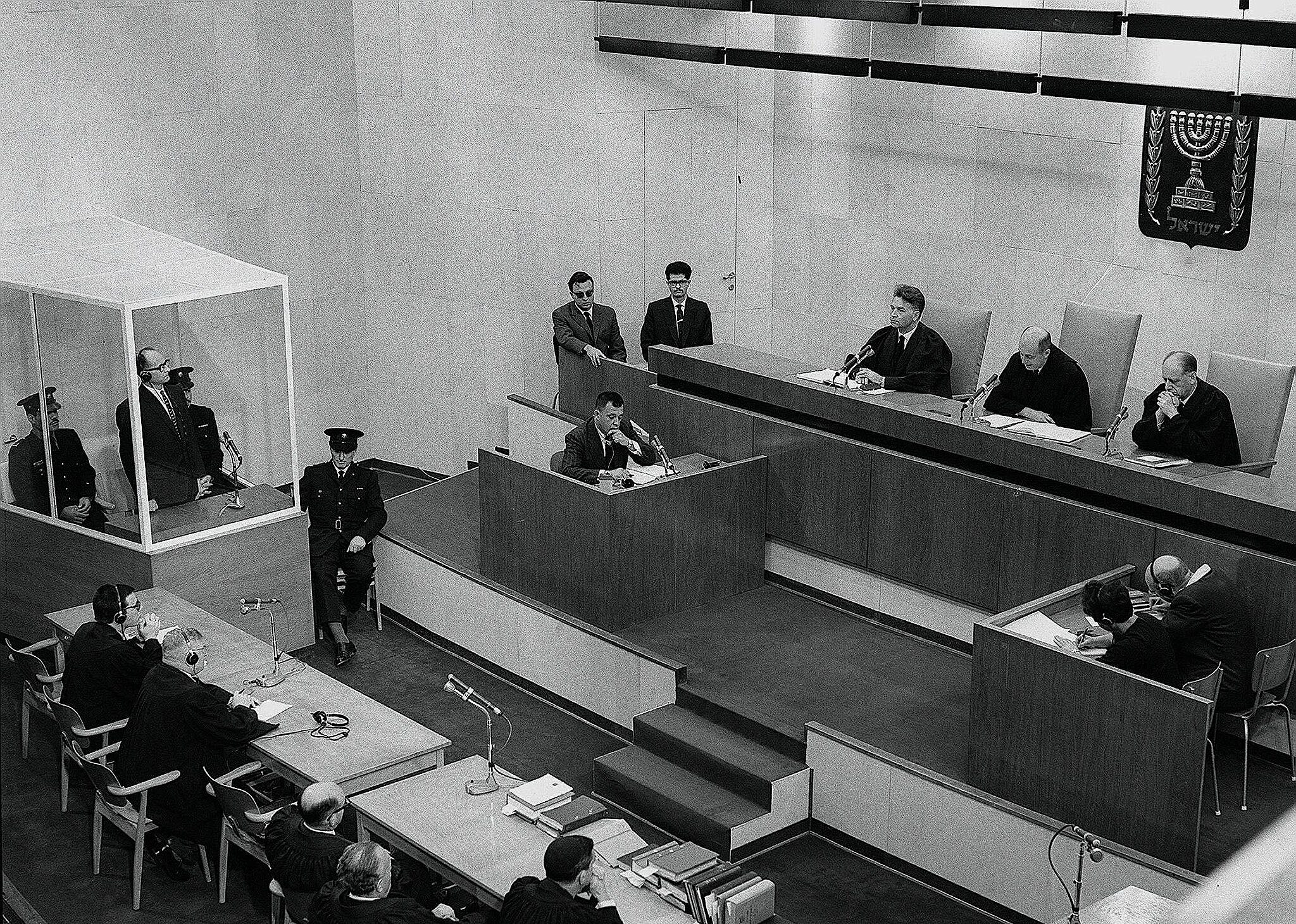
Those shelved death penalty laws required unanimity among at least five senior judges before a death penalty could be imposed, reflecting heightened due process protections. The new law lowers that threshold significantly: a panel of three more junior judges, appointed largely by the Israeli military and serving fixed terms that limit their independence, may now impose the death penalty by majority vote.
The death penalty is always wrong, because it is a cruel and inhumane punishment that violates the right to life. It is especially abhorrent when resurrected under conditions of blatant discrimination, and when its procedures are stripped of basic due process protections. If October 7 defendants are indeed sentenced to death by this newly-created special military tribunal, that would amount to “arbitrary deprivations of life,” as UN experts have warned.
Survivors and the victims’ families may feel understandable relief at having a path forward to prosecute those accused of killing their loved ones. But vengeance is not the same as justice, particularly when the risk of wrongful convictions and irreversible punishment is so high.
Fast-tracking executions would not only grossly violate Palestinian defendants’ due process protections, but would also be unsatisfying to many Israeli families of October 7 victims, who seek truth and accountability rather than spectacle and death.
Among those families is Carmit Palty Katzir, whose father was killed on October 7 and whose mother and brother were taken hostage, and who expressed her concerns about the special military court legislation during a February 25 hearing before the Knesset Law and Constitution Committee. “I’m worried that these trials will be conducted as show trials or a gladiator ring,” she told lawmakers, adding that she wanted no part of death sentences.
Most read on +972
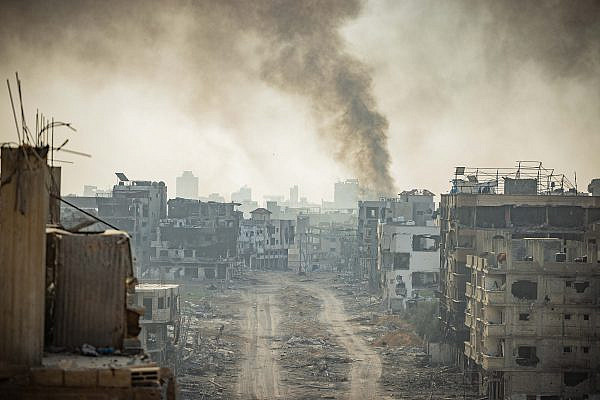
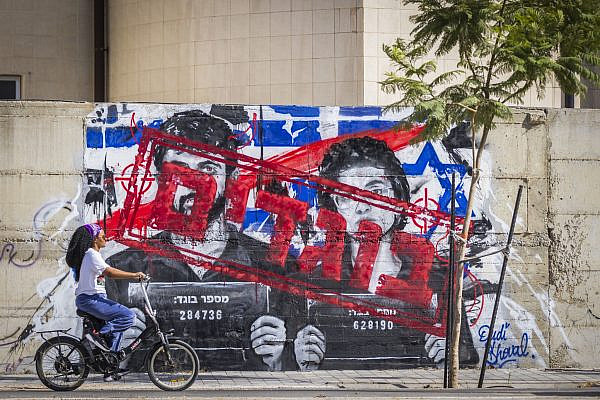

The next Israeli government should repeal or substantially narrow the special court law: judges should not be able to waive procedural protections, and the death penalty should not even be on the table. For its part, the international community should insist that the Israeli government maintain its longstanding moratorium on executions and end the rampant torture under which Palestinian detainees are made to confess. Otherwise, mass executions of Palestinian defendants may be on the horizon — and punishing killing with killing will only drag us further into a vicious cycle of death.