

The memorandum of understanding between Iran and the United States, signed but not yet fully executed, has effectively secured a ceasefire in the war that began in late February — with the potential to achieve much more. It removes the U.S. naval blockade, lifts sanctions on Iranian oil exports, unfreezes significant Iranian assets, and proposes a framework for a broader regional end to hostilities.
The MoU also leaves many key issues unresolved: Iran’s support for its proxy network, how Israel’s withdrawal from Lebanon will be enforced, and, most notably, the Iranian nuclear program (although that is in the plans for the coming 60 days). But the mere fact of the agreement — and of the Islamic Republic’s survival, despite the assassination of its senior leadership and months of U.S.-Israeli attacks — should not be taken for granted.
The reason the Iranian regime did not collapse is because it is structurally different from others that have fallen: more decentralized than U.S. President Donald Trump and Israeli Prime Minister Benjamin Netanyahu estimated, deeply rooted in society, and too complex to dismantle through a series of assassinations. The state of emergency also spared Iran a difficult succession struggle that would have occurred had former Supreme Leader Ali Khamenei died under normal circumstances.
The new leadership — Supreme Leader Mojtaba Khamenei, President Masoud Pezeshkian, Foreign Minister Abbas Araghchi, and chief negotiator Mohammad Ghalibaf — came to power under bombardment. It was precisely this crisis that granted them the authority they might never have achieved otherwise. They have also maintained a striking degree of cohesion and coordination, which has been more effective than most observers anticipated.
The result is a leadership that arrived at the negotiating table with something unexpected: confidence. Not confidence based on military might — Iran’s inferiority to the combined force of the United States and Israel is clear — but on the understanding that the regime is far more resilient than its enemies believed. It survived the attacks and stood its ground despite severe disadvantages, and has now secured an agreement on terms that are, in certain respects, favorable.
Opening the Strait of Hormuz was the first step — essentially a restoration of the pre-war status quo, but one that Iran now controls as a negotiated outcome rather than a given. Beyond that, the Islamic Republic used the leverage it gained by simply enduring the war to secure the unfreezing of significant assets, and — responding to the global crude oil market deficit created by the conflict — the removal of sanctions on Iranian oil exports.
These were outcomes many analysts predicted from the first week of the war. Iran came to the table knowing it held cards.

Russia and China did not intervene militarily, but they were not absent. Western sources report that Russia provided satellite intelligence and damage assessments that improved the accuracy of Iranian strikes, while China supplied dual-use components such as engines and batteries used to power drones. Both are prepared to assist with reconstruction.
A country that knows the major powers will stand by it, even if they don’t enter the line of fire themselves, negotiates differently.
The MoU has also been a domestic political achievement for the Iranian regime, just six months after the most significant wave of popular protest in the history of the Islamic Republic. Many Iranians — including political forces on the left and center left associated with opposition to the regime — endorsed the MoU. The situation inside Iran is dire: Years of compounding pressure in the form of war, economic collapse, and repression have left people exhausted. What most people need right now is simply to breathe.
Sanctions relief will change the internal power balance over time and will create space for different political forces to operate. But converting breathing room into organized political capacity is a long game, with its own contingencies. What the United States and Israel failed to understand is now obvious to all: The Islamic Republic will not disappear any time soon.
The deepest irony of the war
The real success of the MoU will be determined by what comes after the ceasefire: the implementation of its clauses and the permanent end of the war. It is likely that the next phase will include the return of International Atomic Energy Agency inspectors and some form of cap on the Iranian nuclear program. The 60-day window for finalizing these terms, however, is dangerously narrow.
The 2015 Joint Comprehensive Plan of Action (JCPOA) was a dense, technically elaborate document. What emerges now will inevitably look different, and less comprehensive — a direct consequence of the U.S. withdrawal from the previous Iran nuclear deal, which cannot be undone. Iran’s enrichment capacity is qualitatively different from where it was in 2015, and a cap that leaves it closer to breakout than the JCPOA did will remain a source of regional anxiety, particularly for Israel.
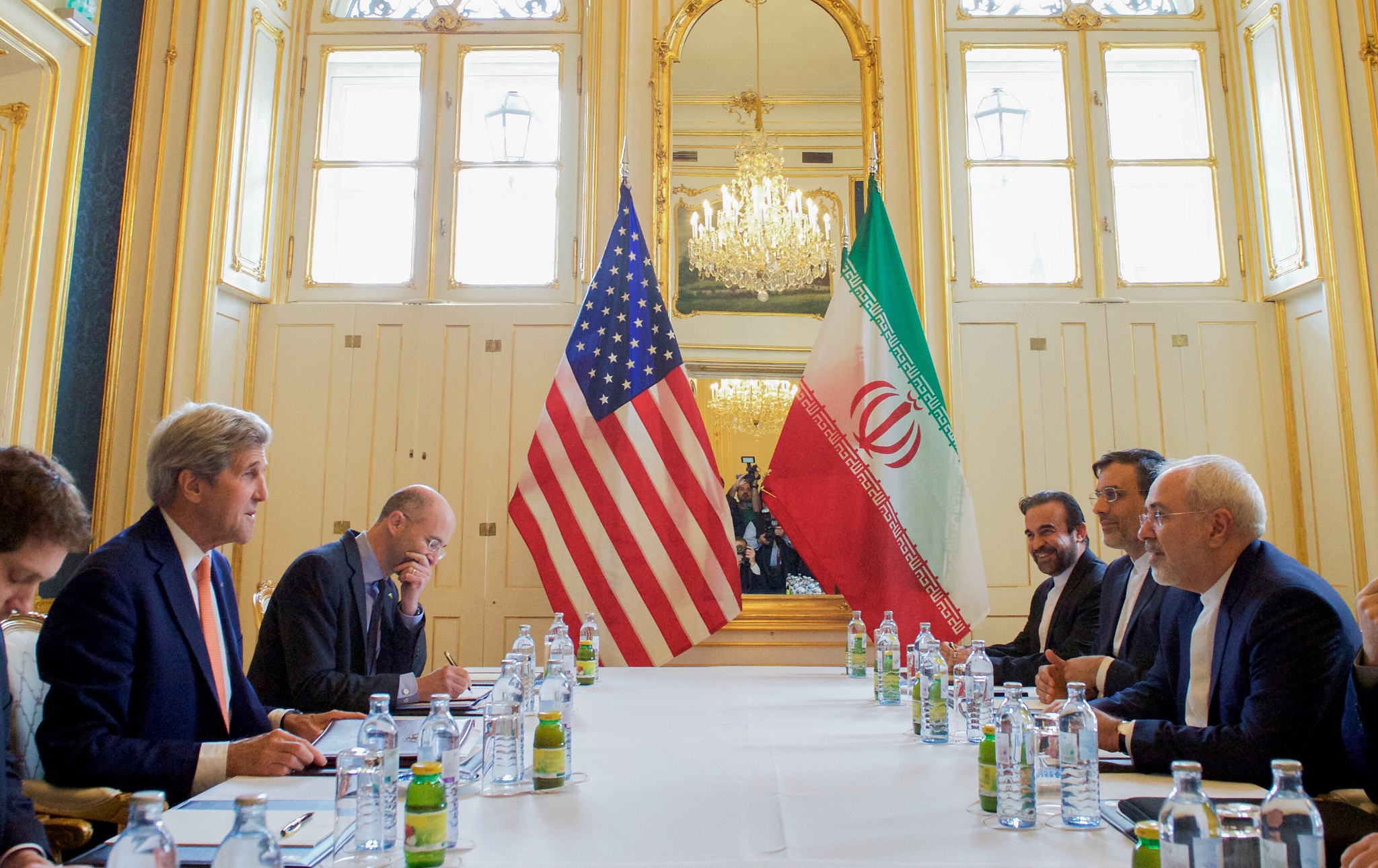
The 60-day window also presents a political risk. Iran’s missile program is almost certainly off the table — U.S. Vice President J.D. Vance has hinted as much — and its proxy network is similarly unlikely to be addressed in the near term.
Israel is therefore likely to try to sabotage any agreement, and with Israeli elections approaching, Netanyahu has incentives to act. Unlike the JCPOA, there is no Russian or Chinese co-signature here, no broad international coalition behind the United States to help uphold the agreement. That kind of multilateral architecture seems unimaginable in the current moment.
The requirement to end military operations in Lebanon and ensure its territorial integrity and sovereignty, along with the enduring question of Hezbollah, remain the most volatile elements of the negotiations. But the situation there reveals one of the deepest ironies of the past two years.
Before this latest war, Hezbollah was losing legitimacy at home. It had been weakened by Israel’s 2024 military campaign in Lebanon, had lost its leader, and was struggling to justify its continued military posture to a Lebanese public that had paid enormous costs for its adventurism.
Then Israel kept bombing southern Lebanon, Tyre, and Beirut — before, during, and after ceasefires. By mid-April 2026, after Israeli strikes on Beirut had killed roughly 300 Lebanese in a single day, an American radio station aired a report featuring interviews with protesters in the city. One of them said: “I’m not religious, I drink, I don’t pray, but when it comes to Israel, I’m with Hezbollah all the way.”
That sentence captures the dynamic precisely. Every strike in southern Lebanon portrays the Lebanese government as weak and helpless, and Hezbollah — once again — as the only force defending the country. The Lebanese government, which had been working toward accommodation and perhaps even eventual normalization with Israel, paid the reputational price for the bombings.

The result is that Hezbollah recovered meaningful ground, not through military strength but through the logic of the conflict itself. Defending Lebanese territory against ongoing ceasefire violations allowed it to re-occupy the mantle of “protector of the south” on genuinely defensible terms.
Iran has also played an important role here. Its credible threat to walk out of negotiations served as a meaningful restraining mechanism on Israeli behavior in Lebanon — a real diplomatic achievement, operating indirectly through U.S. pressure. And it was Pakistan that insisted, on Iran’s behalf, on including Lebanon in any future agreement, while Israel sought to exclude it.
Iran has thus partially regained its reputation as Lebanon’s defender. This has also signalled a significant shift in the Islamic Republic’s relationship with its proxies, including Hezbollah, the Houthis in Yemen, and Shiite militias in Iraq, on whom it has relied as distant “long arms” that provided deterrence and defense without risking open military confrontation.
Iran’s doctrine was to respond to attacks on its sovereignty only when directly affected — whether a strike on its territory, an assassination carried out within its borders, or an attack on an Iranian consulate. But when it fired missiles at Israel earlier this month, before the signing of the MoU, Iran was responding to an attack on Hezbollah in Lebanon.
Iran’s insistence on Israel’s withdrawal from Lebanon as part of any final agreement has further cemented this new doctrine: Iran as the “long arm” protecting its proxies from military threats, not the other way around.
It is not yet clear whether this is an exception or a permanent change, and if the latter, how this shift should be interpreted. But what is clear is that Israel, whose stated goal was to eliminate the Axis of Resistance and weaken Iran, has acted as the driving force behind the resurgence of both.

No alternatives
The latest round of negotiations between the United States and Iran could develop into a durable regional framework — if worked carefully by skilled and committed diplomats, none of which appear to be in ample supply. Much also depends on the Trump administration’s willingness to follow through with a long-term agreement, which itself may change in the run-up to the U.S.midterm elections and remains subject to Trump’s own personal whims.
Trump has become the subject of considerable mockery over this deal, and a villain in other circles — especially in Israel and among its allies in the United States. Yet once Trump recklessly launched this war, this agreement became the only way it could end. Iran and the United States are negotiating as they were always going to have to, on issues that have been piling up for decades.
This brings us to the harder question. After almost three years of sustained bombing, Hezbollah and Hamas have not been “eradicated” as Israel’s leaders hoped, and remain capable of firing into Israeli territory. The question that the Israeli political establishment has not seriously confronted is this: Assuming war cannot be an end in itself, what is the actual goal?
Israel’s peace agreements with Jordan and Egypt have proven to be the most durable security arrangements in its history, despite significant domestic turbulence in both countries and repeated tensions with Israel. That track record deserves serious weight.
The most viable path forward for the region has been articulated in the Present Day document, published by the Forum for Regional Thinking at the Van Leer Jerusalem Institute. It calls for regional cooperation with international guardrails — including, ultimately, a framework that involves Iran and helps us to seek ways to work with it.
The Arab Peace Initiative (also known as the Saudi Initiative) that has been repeatedly re-endorsed by the Arab League since 2002 offers a similar horizon: a viable Palestinian state, normalization with Arab and Muslim countries, and a restored international standing for Israel.
Most read on +972
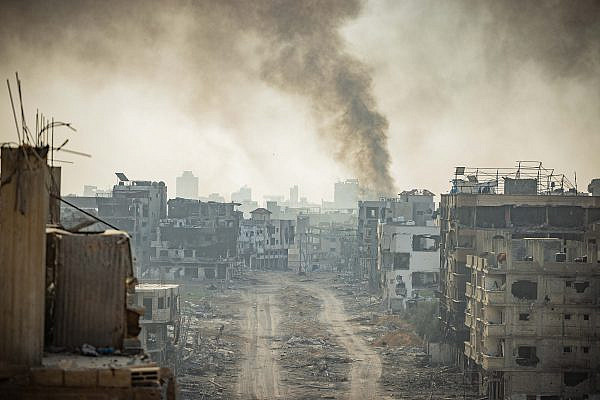


Those who argue against any agreement with the Islamic Republic owe a concrete answer to a basic question: What is the alternative? More sanctions? The historical precedent for such a policy — Cuba, North Korea, and Iran itself over the past four decades — does not suggest that sanctions produce regime change or security.
If a new government emerges from Israel’s upcoming election — an outcome that is far from guaranteed — it will face a genuine choice: continue Netanyahu’s trajectory of permanent warfare across the region, or adopt a fundamentally new approach that moves away from the strategic dead end Israel has created for itself.