

Throughout February, the United States and Iran held several rounds of negotiations aimed at reaching a framework for a new nuclear agreement. According to reports, Iran was willing to make major concessions on limiting uranium enrichment and reinstating many of the guardrails from the Joint Comprehensive Plan of Action (JCPOA), the 2015 agreement negotiated by the Obama administration which was torn up three years later by Donald Trump during his first term as president.
Yet on Saturday morning, Israel and the United States launched what they called a “pre-emptive” attack on Iran — an offensive that Iranians overwhelmingly saw as inevitable despite the advancing negotiations, reflecting how deeply the concept of diplomacy has been devalued even in the decade since the signing of the JCPOA. (What exactly the attack sought to pre-empt remains a mystery, with the Pentagon since admitting to Congress that there was no indication of any Iranian attack.)
In these talks, the Islamic Republic came to the table in its weakest position ever, in the wake of the mass anti-regime demonstrations that rocked the country before being brutally suppressed in January. As a result, many Iranians were confused about what they hoped the negotiations would bring.
Would it be better to have a nuclear agreement that would lead to some sanctions relief and perhaps ease the economic catastrophe that Iranians have been experiencing in the past six months especially, but which would also stabilize the regime at a time when it looked more vulnerable than at any point since the 1979 revolution? Or would it be better that negotiations collapse, likely placing additional burden on the economy and leading to even more oppression in the immediate future but hastening the end of the regime?
Alongside the nuclear talks, a new wave of protests erupted across the country on the 40th day of mourning for the martyrs of the December-January uprising. On university campuses and beyond, protesters chanted “Death to Khamenei,” “Death to the dictator,” and “Khamenei is Zahak,” the embodiment of evil in Iranian mythology. Some chanted in support of Reza Pahlavi, the son of the last Shah, while others chanted “Zan, Zendegi, Azadi” — “woman, life, freedom” — which, in today’s climate, is used against both the Islamic Republic and the proposed return of the monarchy.

Protesters carried Iranian flags without the Islamic emblem in the center — some featuring the lion and sun, identified with the Shah; and others with no emblem at all, symbolizing the Iranian nation. Students, labor unions, and prominent opposition figures, both inside and outside Iran, issued statements condemning the murderous regime, while at the same time voicing unequivocal opposition to outside intervention: The regime must fall, but that task is in the hands of Iranians.
These protests, too, were violently suppressed by the Basij and other regime-supporting volunteers, who have appeared more coordinated and more visible on the streets in recent weeks.
Ignoring the fact that the regime has a considerable support base among the population has been one of the major flaws of international media coverage on Iran, particularly in recent years. Polls struggle to capture its size, but it would be fair to assume around 20-30 percent of the public support the regime for reasons related to their livelihood, religious adherence, or political and ideological alignment.
Assessing the options
When the attacks started on Saturday morning, among the first civilian casualties were students at a girls’ elementary school in Minab, located 600 meters from a nearby Islamic Revolutionary Guard Corps (IRGC) base. (Israel has denied responsibility for the strike, while the United States has stated only that it is looking into the reports.) The death toll from this attack currently stands at 165.
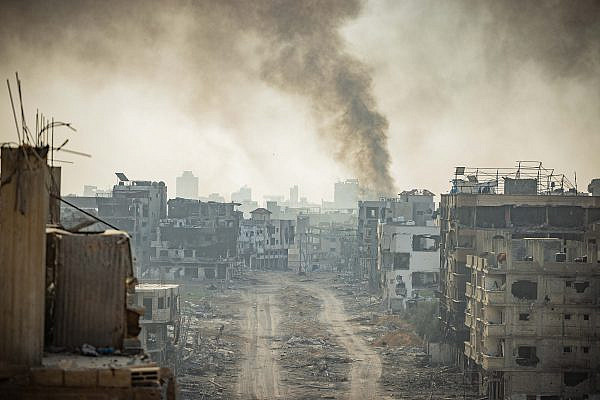
The bombing campaign rapidly spread across the country, with Israel and the United States boasting that they had successfully eliminated many political and military targets. The biggest “prize” came later in the day, when Israel announced that there was evidence pointing to the death of Iran’s Supreme Leader Ali Khamenei, following an airstrike on his residence.

In Iran and the diaspora, regime opponents did not wait for official confirmation from the Iranian authorities, which would come hours later, to begin the celebrations. Social media was flooded with videos of spontaneous dancing and outbursts of happiness for the death of the man who many Iranians see as personally responsible for the massacre of tens of thousands of Iranians just weeks ago, and the figurehead of a system that has oppressed them for 47 years. There were also significant gatherings of regime supporters mourning the death of Khamenei — in Tehran, Isfahan, Shiraz, Qom, and elsewhere.
At this stage, predicting what the future holds for Iran would be akin to reading tea leaves. There are too many moving parts, whether in Iran, the United States, the Arab world, Europe, or the broader international community. But Khamenei’s death opens the door to a range of possibilities.
For the people of Iran, the most desirable outcome would of course be a transition to a democratic republic. Unfortunately, this appears the least likely scenario, with too many powerful actors opposing that prospect.
Many Iranians are thrilled to see Khamenei dead, but would have preferred to see him in court facing the families of his victims throughout many decades of his rule — which certainly would have been more helpful in bringing about a democratic transition. The supreme leader’s death does not mean the regime has collapsed, at least not yet. There is a line of succession, and even within the regime there will be varying visions for the path forward.
One possibility, therefore, is that the regime survives with merely a change in personnel at the top — continuing to oppress the population at home, while confronting the United States and its allies across the region. There are several potential candidates who could succeed Khamenei in whatever power structure may emerge (should they survive this war), some of whom are seen as holding even more hardline positions.
Another possibility is the survival of the regime in name but with a complete overhaul of the state apparatus. In this scenario, a “moderate” successor to Khamenei would take the reins and keep the weakened state intact, preventing the chaotic outcome of a failed state lacking any centralized power or authority, as in the case of Iraq following the 2003 invasion.
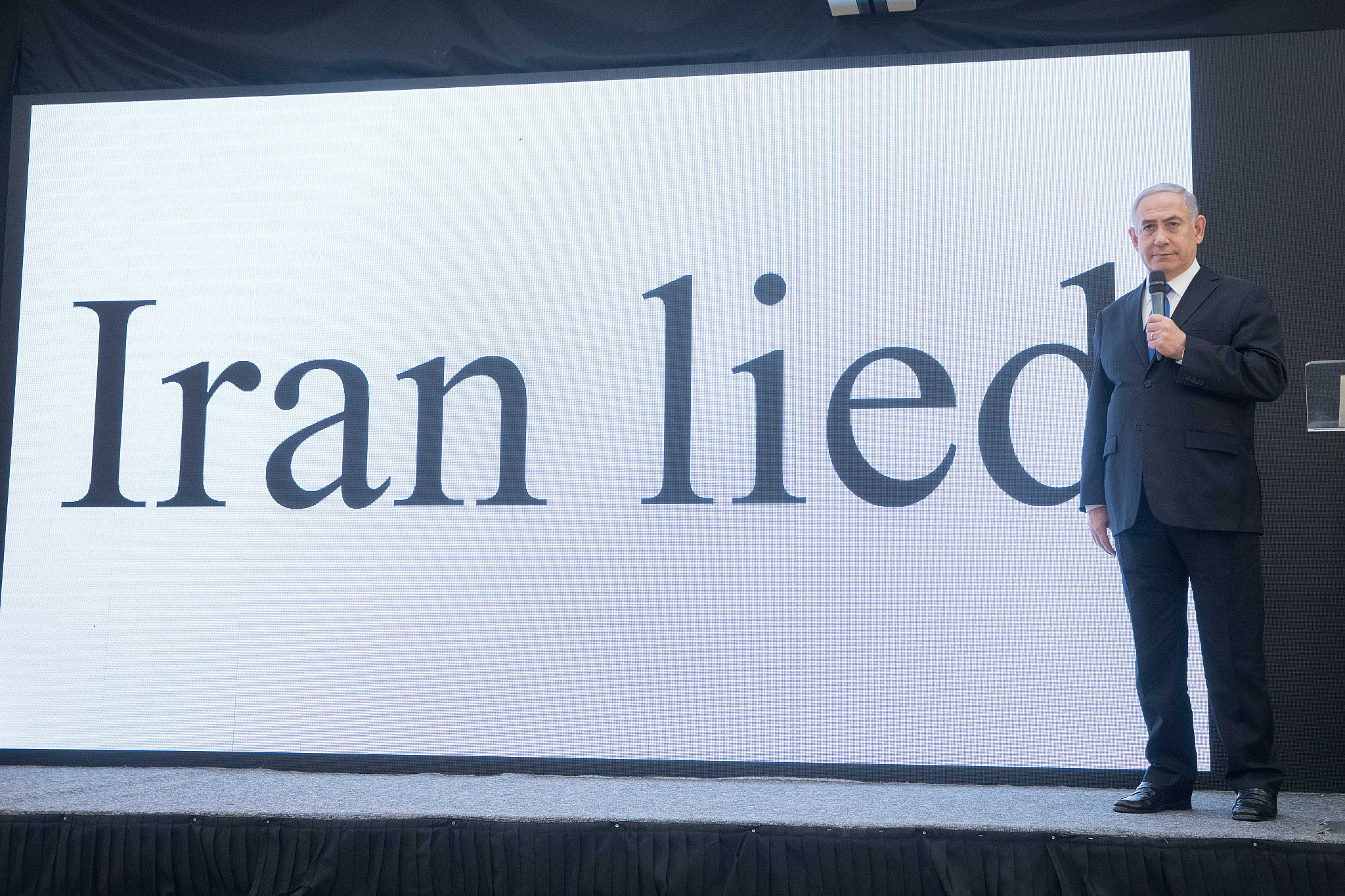
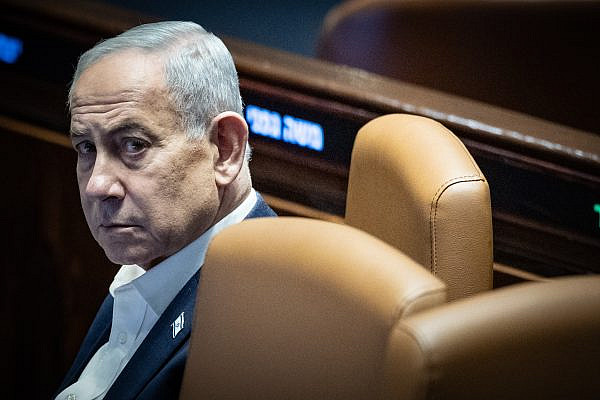
This option, which would take some time to come to fruition, may well be President Trump’s preferred option. It would also suit Netanyahu by preserving the Islamic Republic as a threat to dangle over the Israeli public; but after three decades of presenting Iran as evil incarnate, the Israeli prime minister may instead favor the elimination of the Islamic Republic altogether, presenting him with a major “victory” to take into the election later this year.
A further possibility is a takeover by parts of the IRGC, turning Iran into a military dictatorship that pays lip service to the revolution while arguing that it has run its course, and declaring that it will work with the West to lift sanctions and rebuild Iran’s economy and military, effectively becoming a U.S. ally. The West knows very well how to work with such a regime (as it has done in Egypt and Pakistan, for example), and the IRGC would get to keep their business interests and tight control of resources.
And what about Reza Pahlavi? Due to his name recognition and the absence of other viable alternatives, he has gained more support over the past few months both inside Iran and among parts of the international community. But even in the wake of the recent demonstrations, he has failed miserably at uniting the opposition, alienating virtually everyone outside of his immediate circles of support.
In truth, Pahlavi has done nothing to serve the Iranian people for almost five decades, and his enthusiasm for a war against the regime together with his romanticization of the pre-revolutionary period renders him highly problematic in the eyes of many Iranians. As if to prove this point, he was quick to mourn the killing of three American soldiers this week, while saying absolutely nothing about the killing of scores of schoolgirls in Iran.
Most read on +972
Despite the backing of high-ranking Republican politicians in Washington, D.C., Pahlavi has still never received an endorsement from Trump or met with him publicly, leading to the conclusion that Trump sees him as a liability rather than an asset. Of course, with Trump, this could change in a second, but for now it appears Pahlavi has no place in the president’s plans. We can expect a major tantrum in the Iranian diaspora when this becomes more apparent.
Recent history is littered with examples of foreign interventions that rarely achieved their declared goals, and almost never benefited the people of the country being “liberated” — from Iran itself in 1953, to Guatemala in 1954, Chile in 1973, Iraq in 2003, and Libya in 2011. Regional and global stability cannot be an afterthought. But in a global system that rewards might alone, we are likely to keep seeing attempts by the United States, Israel, and their allies to engineer a region that either works in their interest or falls apart.
Either way, it won’t be their mess to clean up.