
In partnership with

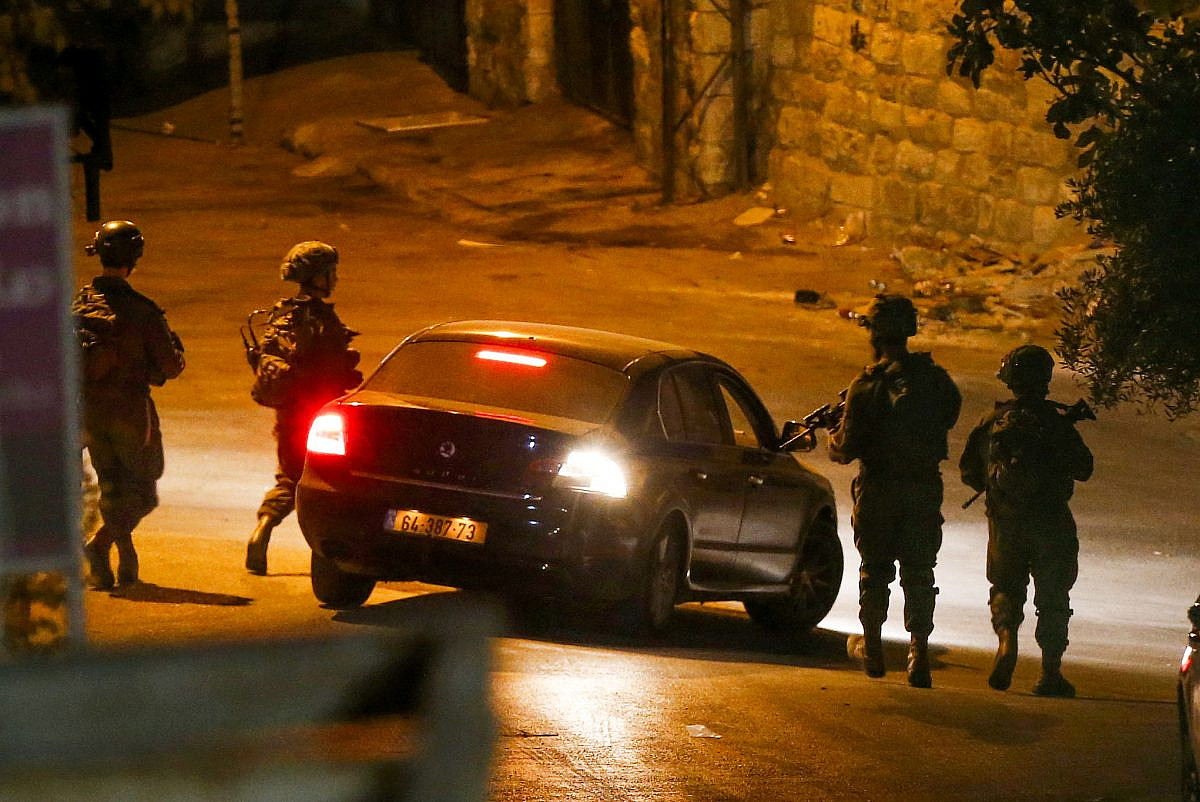
When I arrived in the central West Bank town of Qarawat Bani Hassan for a reporting trip on July 31, residents were dealing with the immediate aftermath of an explosion outside a local businessman’s property. An extortion ring operating from Jaljulia, a Palestinian town inside Israel, had detonated the device after demanding money from him, according to prominent figures from the town who preferred not to be named. (A video from the blast site, seen by +972, shows shattered glass across the entire storefront.)
Residents described the group responsible as part of a mafia network whose members appeared to pass easily through military checkpoints to enter the town and leave again. In a landscape dense with Israeli checkpoints, military patrols, and surveillance tools, the residents struggle to interpret such freedom of movement as mere negligence. The same military that chokes Palestinian movement, they point out, suddenly proves unable — or, more likely, unwilling — to stop armed criminal networks from importing weapons and violence across these boundaries.
This mechanism is what local residents and Palestinian analysts call “engineered lawlessness”: Israel’s military apparatus, capable of extraordinary levels of surveillance and control, selectively withholds such power when armed gangs and internal feuds tear Palestinian towns apart from within.
Nowhere is that dynamic more visible than in Beit Ummar, a town of roughly 23,000 people north of Hebron. Hemmed in on three sides by Israeli settlements and military posts, the town has been consumed in recent years by a violent feud between the Abu Ayyash and Ikhlayl families. What began as a private dispute involving extortion and the circulation of manipulated images has since spiraled into a prolonged, low-grade armed conflict.
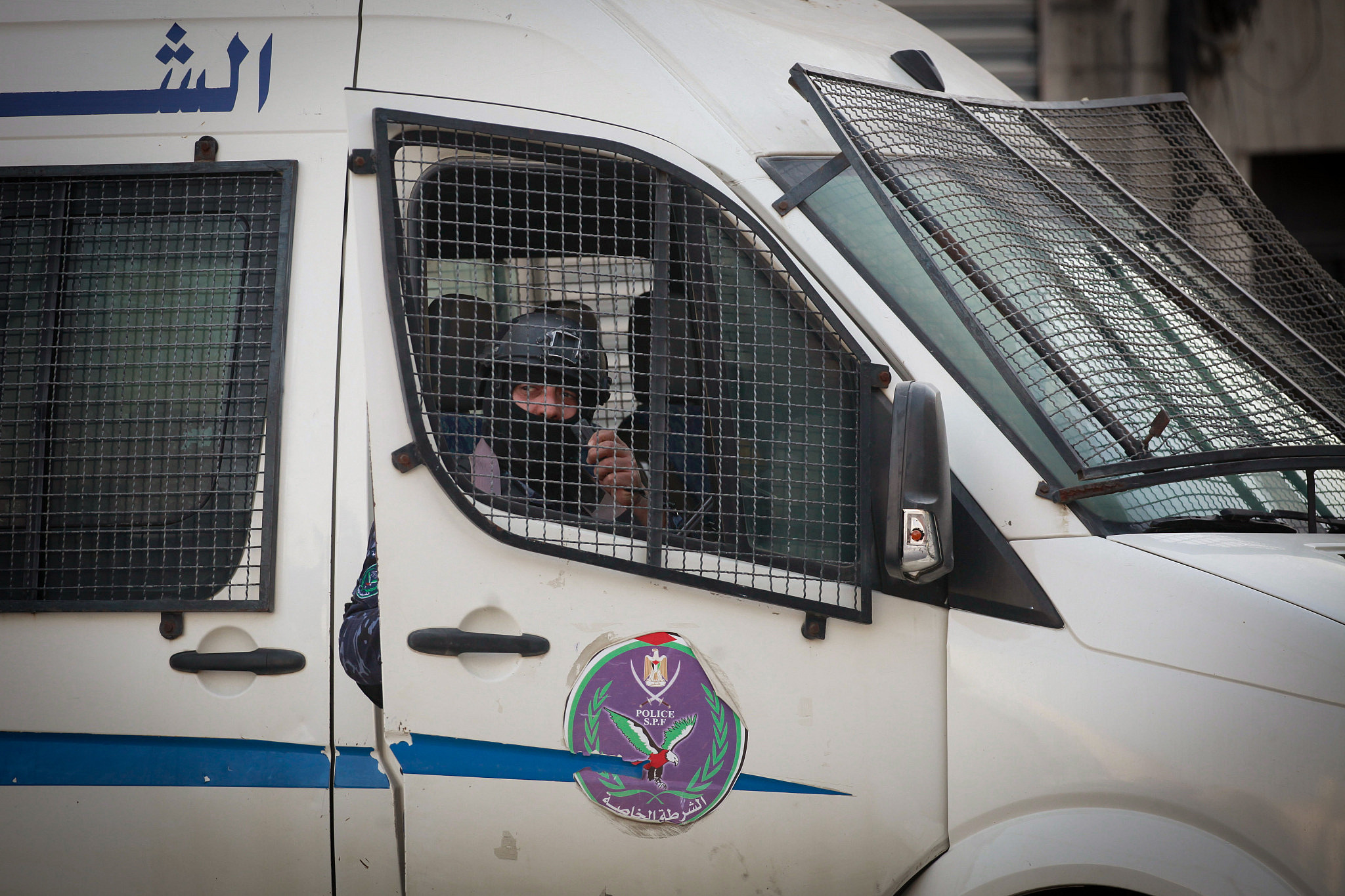
Because parts of Beit Ummar fall within Areas B and C, as designated by the Oslo Accords, Palestinian law enforcement officers cannot carry out the necessary arrests without Israeli military clearance — authorization that Israel continues to withhold.
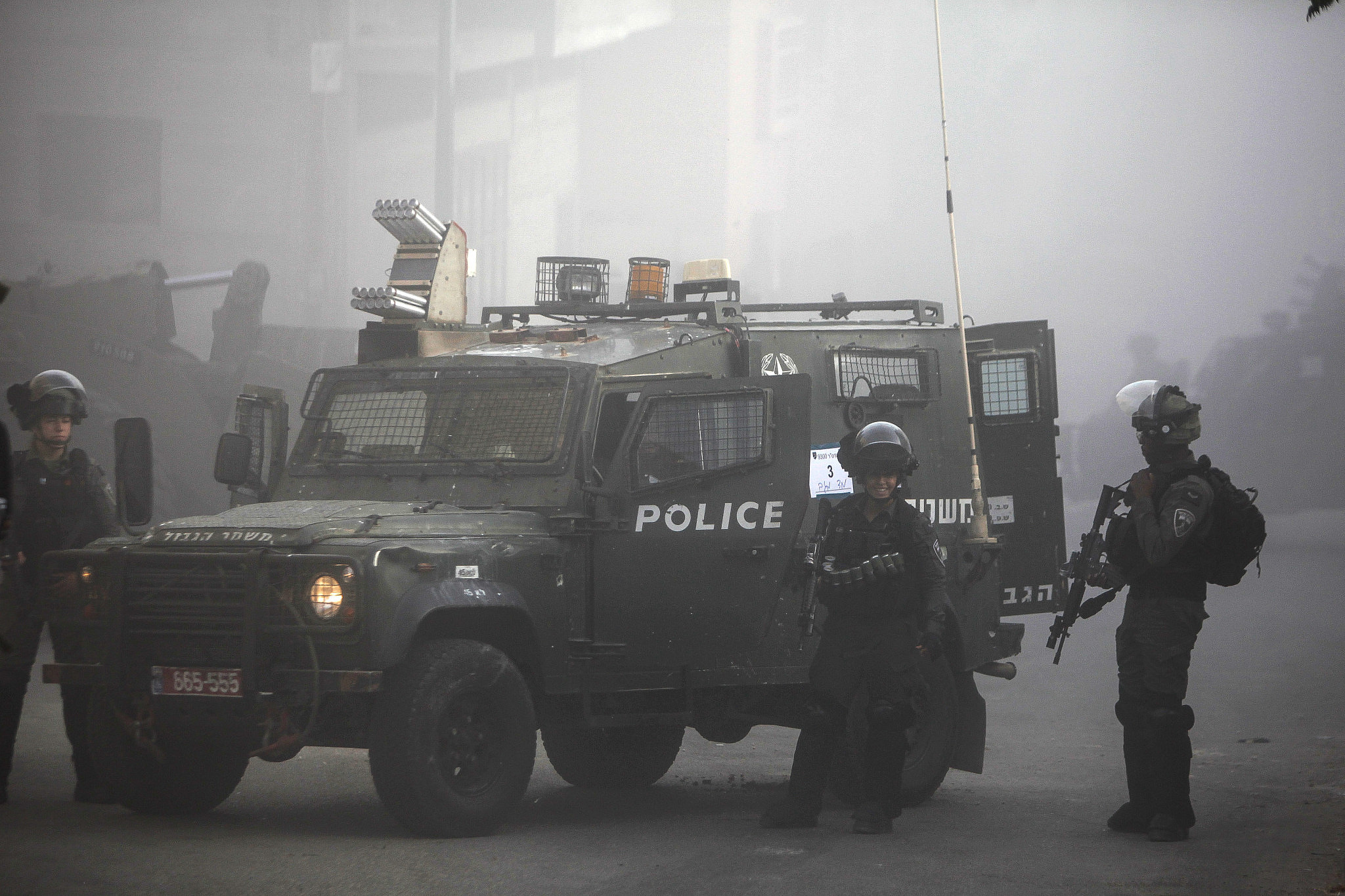
Hebron Governor Khaled Dudin told Ultra Palestine that Palestinian security forces have compiled a list of more than 100 wanted individuals in Beit Ummar accused of offenses including murder, arson, shootings, illegal weapons possession, and incitement. The forces are prepared to arrest them and refer them to the judiciary, Dudin said, but cannot enter without Israeli permission.
Residents describe what happens instead as “selective intervention.” The Israeli army routinely patrols the area, closes entrances to the town, and blocks roads with earth mounds, yet shootings between Palestinian families can continue for months.
One local activist, who asked not to be named because of the sensitivity of the feud, said soldiers largely look the other way as long as the gunfire remains confined to Palestinian neighborhoods. Yet when Palestinian weapons are directed at Israeli targets — namely settlers or the army — or merely threaten to spill over into a nearby settlement, the response is immediate.
The consequences of such calculated negligence reach far beyond feuding parties. Local merchants estimate that since April, when the latest wave of violence took hold, trade in Beit Ummar has fallen by roughly 80 percent; shops close before dark and families stay indoors to avoid nighttime gunfire. As Palestinian law enforcement is kept out, the institutions meant to maintain civil order lose both their capacity and their relevance.
The ‘poison’ crossing the checkpoints
The weapons fueling such conflicts are themselves also part of the story. Several community leaders from Deir Istiya, near Salfit, who asked not to be named for security reasons, said assault rifles and handguns circulating through towns and villages across the governorate are smuggled from inside Israel. They accuse Israeli intelligence of knowingly allowing the trade to continue, with one prominent figure describing the weapons as a “poison” that feeds inter-Palestinian violence.
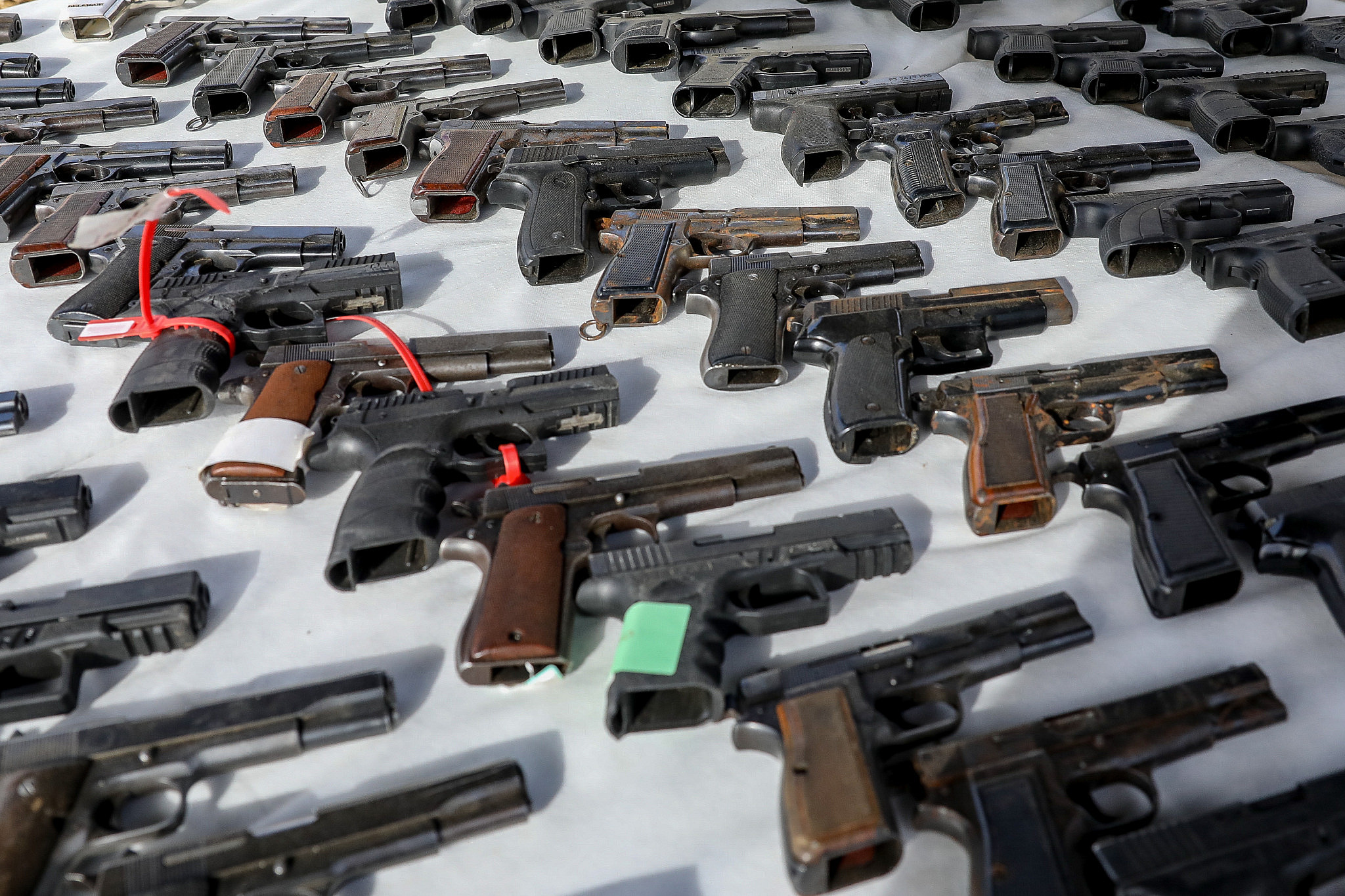
The community leader compared the phenomenon to the unchecked epidemic of organized crime and gun violence in Palestinian communities inside Israel, where Israeli police routinely fail to prevent or solve Palestinian-on-Palestinian killings. According to the Abraham Initiatives, since the beginning of 2026, 162 Arabs in Israel have lost their lives in circumstances related to crime and violence (158 victims were Palestinian citizens of Israel, and the remaining four were East Jerusalem residents).
When Palestinians kill each other, the community leader said, cases are frequently closed without identifying a perpetrator. When an Israeli is targeted, by contrast, security forces pursue the culprit until they “bring his head.”
In Qarawat Bani Hassan, residents saw the extortion attack I witnessed in much the same way. To them, the ability of criminal groups to cross heavily controlled territory is part of a broader pattern in which insecurity is allowed to flourish precisely where Israeli control is otherwise most visible.
But testimony from Ad-Dhahiriya, south of Hebron, suggests that some criminal groups are going further: disguising themselves as Israeli soldiers to carry out robberies under the cover of military authority.
Ahmad Qaisiya, the town’s mayor, described two such incidents in recent months. In a previously unreported incident in December 2025, he said, a heavily armed group dressed in Israeli military uniforms stormed a gold workshop adjoining a family home. The assailants forced their way inside, assaulted and terrorized the residents, and stole large quantities of gold and cash. Their appearance and tactics were convincing enough that residents initially assumed they were witnessing an Israeli military raid.
Only the following day, Qaisiya said, did the Palestinian security liaison learn from its Israeli counterpart that the army had conducted no operation there. The men who had raided the workshop were not soldiers but members of a criminal gang.
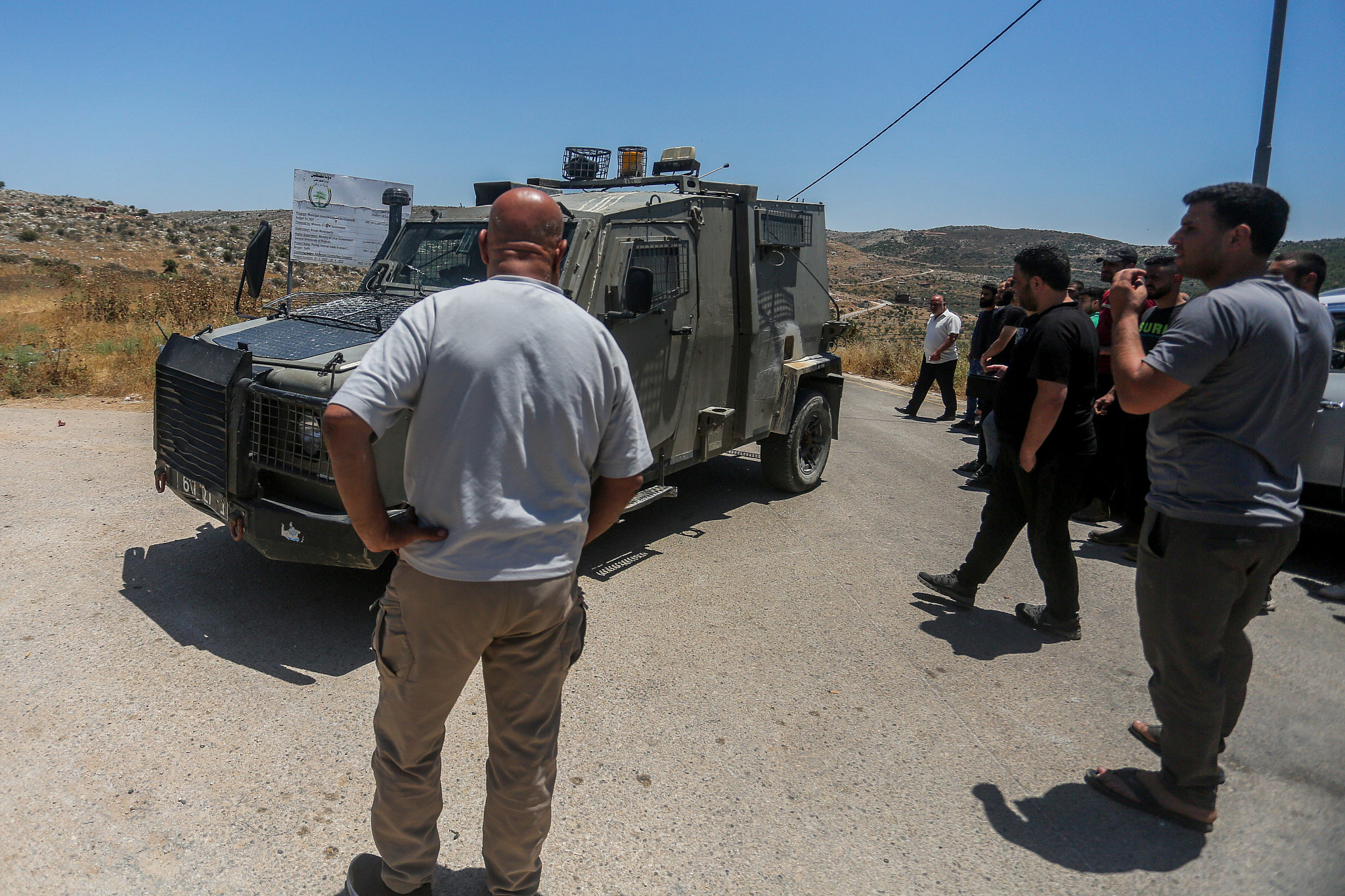
Roughly a month later, in January 2026, according to Qaisiya, another armed group arrived in the center of Ad-Dhahiriya in a closed Savana van of the kind commonly associated with Israeli undercover units. Again dressed in military gear, the men began cordoning off the commercial area, apparently preparing to rob its jewelry stores.
This time, residents noticed details that made them suspicious, including civilian undershirts beneath the men’s military vests. Once they realized they were facing a criminal gang rather than Israeli soldiers, residents confronted them, first with stones and eventually in an exchange of gunfire. The group retreated, burning its getaway vehicles before fleeing toward Israeli-controlled territory. Palestinian security forces arrived after the gang had left and cordoned off the area.
In these instances, the authority of the occupation had itself become a tool that could be appropriated for criminal violence. Palestinians know the consequences of confronting armed Israeli soldiers, giving criminals who impersonate them an immediate advantage: the expectation that residents will stand aside.
Qaisiya said such armed gangs also make frequent use of unregistered vehicles that enter the West Bank from Israel and are difficult for Palestinian police to trace (known in Arabic as “mashtoub” cars). He said such vehicles have become common in robberies and shootings.
These incidents beg the same question raised in Qarawat Bani Hassan: how heavily armed groups and vehicles are able to move between Israel and the West Bank through a maze of checkpoints and intense military surveillance.
Back to military rule
One local activist connected that pattern to the expansion of “pastoral settlements” across the West Bank countryside: a strategy of making rural Palestinian life increasingly dangerous and economically untenable, pushing residents toward urban centers and leaving more land vulnerable to takeover.
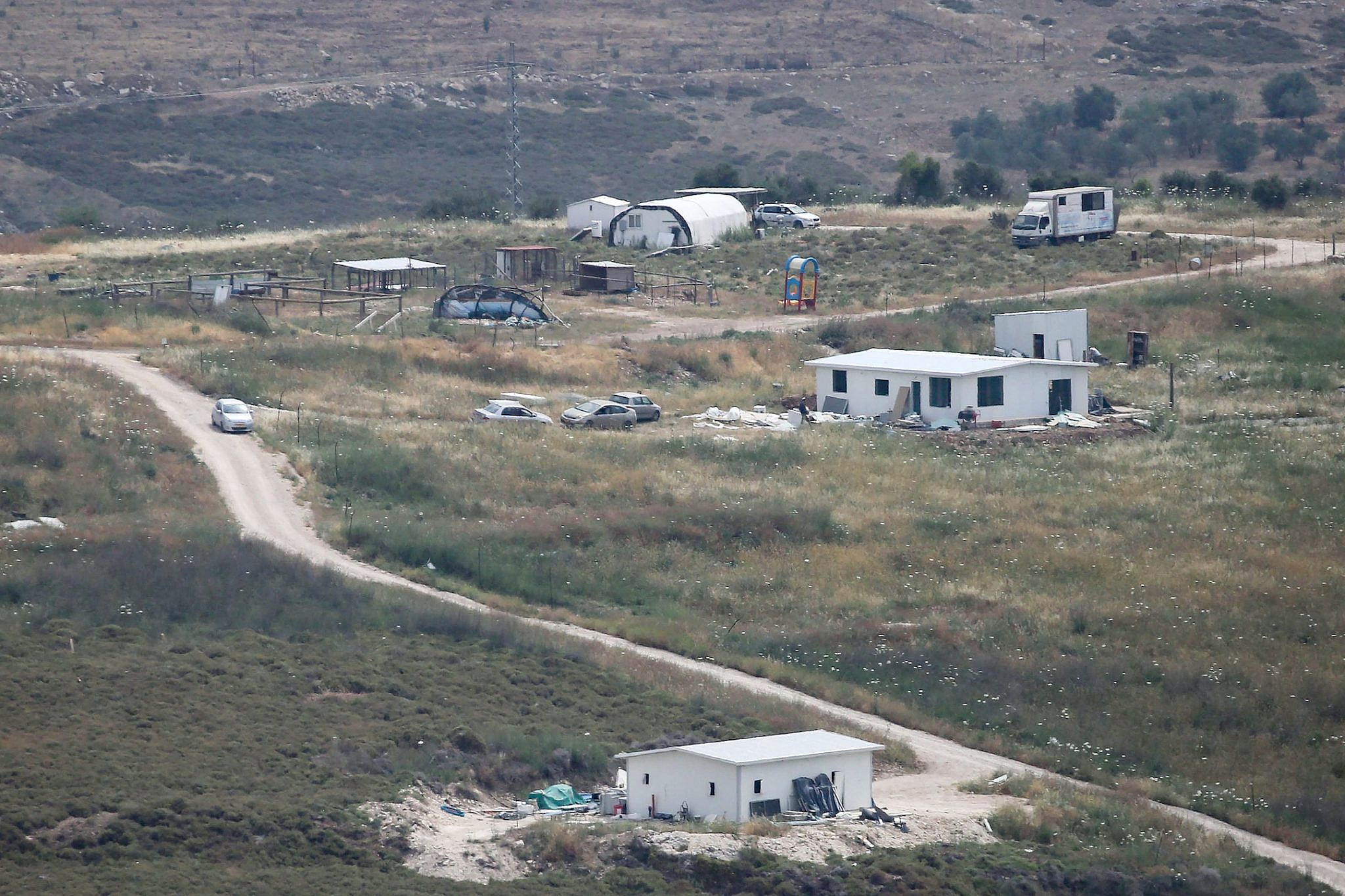
But the erosion of Palestinian authority is not taking place through physical insecurity alone. Alongside it, residents and officials describe a bureaucratic shift that revives features of the pre-Oslo system of direct Israeli military rule.
Senior Israeli military officers assigned to particular localities — known among Palestinians as “Area Captains,” and whom they believe to be intelligence officers — are increasingly stepping into civilian affairs rather than allowing Palestinian institutions to handle them. In one case, according to dignitaries in the Salfit Governorate, an Israeli officer arrived with soldiers to “mediate” a family dispute. Community figures recalled him ordering them to collect the weapons and resolve the conflict or, as they remembered his warning, “the army will step in and settle it our way.”
According to a prominent figure in Salfit who asked for anonymity, Israeli officers have also pushed residents to deal directly with them over work permits and other services like water and electricity, circumventing the official Palestinian liaison system, further shifting bureaucratic responsibilities toward — and thus Palestinian dependence on — the occupying power.
And the pressure has extended into local politics. During the Salfit Governorate’s recent municipal elections, Israeli intelligence officers raided the homes of several candidates, including figures associated with popular resistance, and threatened them with arrest unless they withdrew.
In Deir Istiya, an Israeli intelligence officer went further, threatening to arrest municipal candidates affiliated with local Islamist factions if they did not drop out of the race. The officer entered the municipal building with several other soldiers and demanded access to computers so he could identify the locations of particular homes. Officials refused and locked the computers.
This brazen attempt to erase the authority of elected Palestinian officials went even further: The officer then demanded that the mayor summon residents for questioning. “My job is to serve my town, not you,” the mayor told him. The soldiers eventually withdrew — a rare instance in which Palestinian officials successfully resisted an attempt to turn the municipality into an extension of Israeli military authority.
Maj. Gen. Anwar Rajab, speaking on behalf of the Palestinian Authority’s security forces, told +972 that this “engineered chaos” is part of a strategy by the current Israeli government to weaken and consequently collapse the PA from the ground up. “Civil peace is the most critical pillar of the state of sumud,” he argued, using the Arabic word for steadfastness. “It is meant to be the core pillar of our strategy to confront the actions and terrorism of the occupation.”
Disrupting this sense of civil functioning while preventing Palestinian institutions from restoring order means that communities become less able to remain rooted on their land. Rajab said specialized Palestinian police units have shown that they can restore order when allowed to deploy. But repeated Israeli refusals to grant them access leave some communities without an effective law-enforcement authority.
What is emerging is a patchwork of towns and villages where Palestinians face threats not only from soldiers and settlers but from armed gangs, criminal networks, and unresolved internal feuds. Temporary truces brokered through the Hebron governor’s office have brought periods of calm to places such as Beit Ummar, but they cannot resolve the underlying vacuum of authority.
Most read on +972
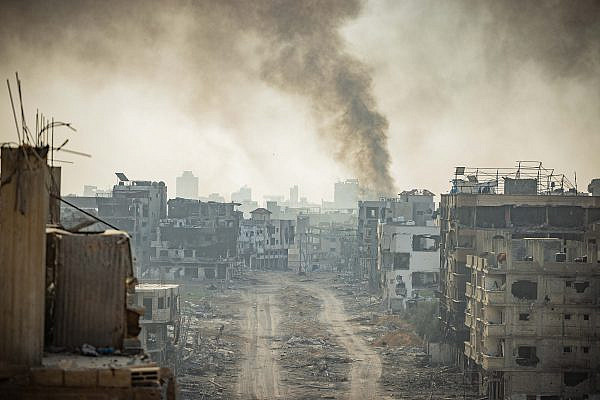
The sense of anarchy is politically consequential: It enables Israel to weaken the institutions that might otherwise stand between Palestinian communities and direct Israeli rule, making its own officers effectively indispensable to the people the PA is supposed to serve.
From communities confronting black-market weapons and extortion networks in the Salfit governorate to families trapped by clan feuds in Beit Ummar, preserving civil peace has become more than a safety imperative. It is part of the struggle over who governs the West Bank — and who gets to remain on the land.
+972 approached the Israeli army for comment. Their response will be added if and when received.
A version of this article was first published in Hebrew on Local Call. Read it here.