

In partnership with

A little over a month after October 7, 2023, Israel’s Channel 12 published its first Knesset seat projection following the Hamas attack. Unsurprisingly, the results were catastrophic for Prime Minister Benjamin Netanyahu.
His Likud party, which had won 32 of the Knesset’s 120 seats in the election only a year earlier, was polling at just 17 seats — close to its worst-ever showing. The governing coalition, which totaled 64 seats, had dropped to 45 in the poll. Netanyahu’s path out of power and toward political ruin seemed all but paved.
Nearly three years later, Netanyahu’s coalition still appears to be short of a majority, with polls generally putting it at between 49 and 54 seats. Yet compared with its position immediately after October 7, it is very much back in the game, and another Netanyahu victory is hardly inconceivable. Nor can anyone say with certainty that the polls conducted by Netanyahu-aligned pollster Shlomo Filber and Channel 14, which regularly give the governing bloc a majority, are entirely wrong.
Over the last three years, the coalition has survived nearly every parliamentary challenge placed before it. It has passed budgets and legislation central to its agenda, and has even expanded: With Gideon Sa’ar and four members of his party joining the “emergency government” in the aftermath of October 7, the coalition now holds 68 seats compared with its original 64.
There are several possible explanations for the government’s remarkable stability after what was undoubtedly one of the gravest failures in Israel’s history. But the most convincing explanation is that the government has transformed war into a permanent state of affairs, without a clear endpoint. Nothing captures this better than Netanyahu’s “total victory” mantra, a concept whose meaning he has never even bothered to define.
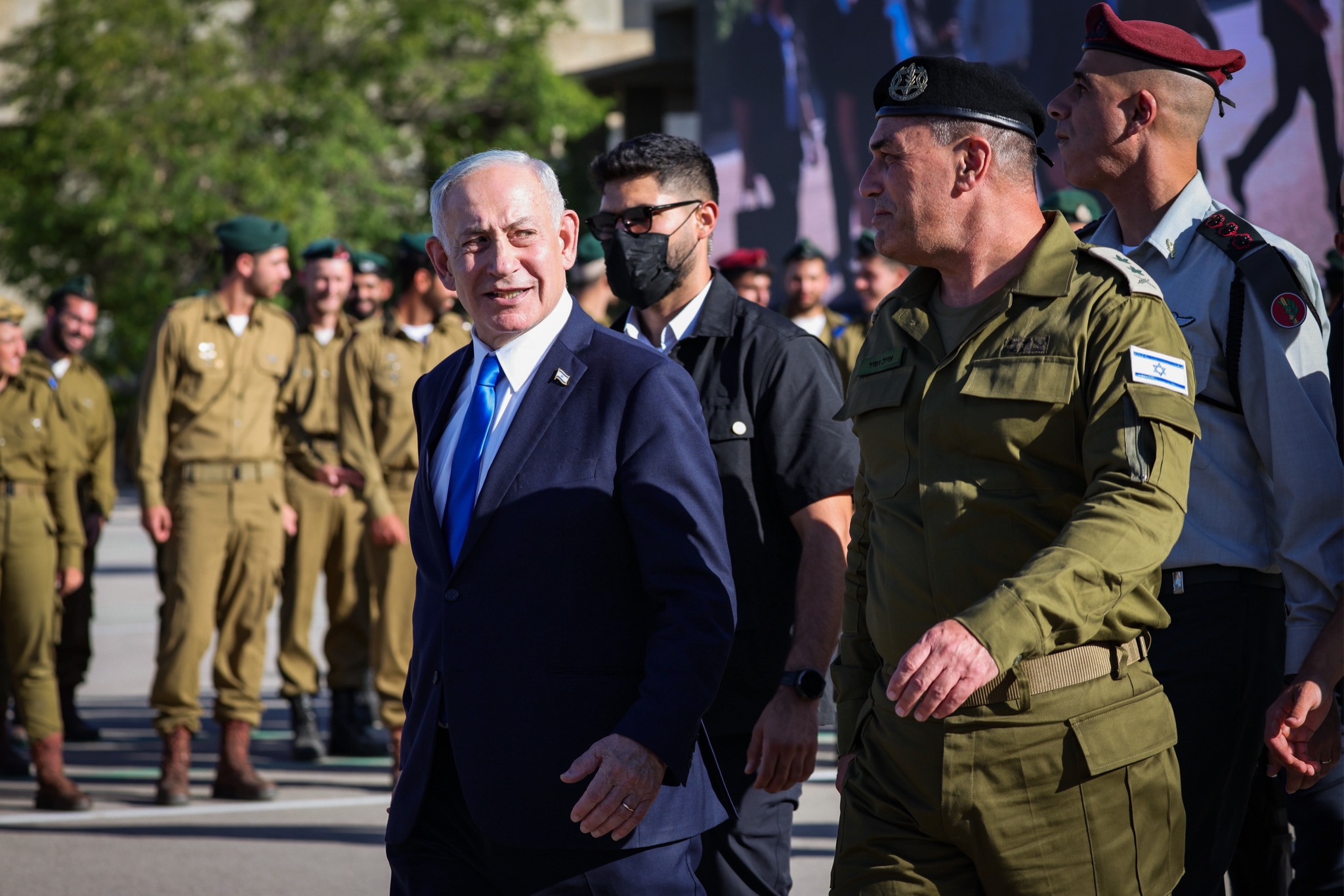
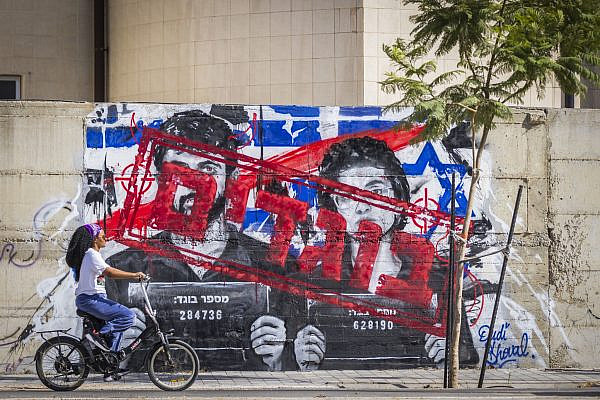
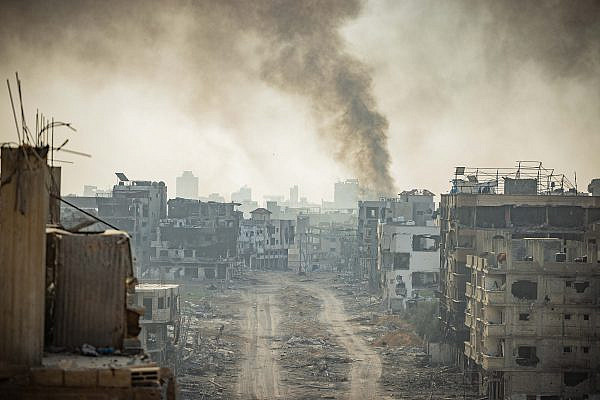
The war, in its various forms — annihilation and expulsion in Gaza; occupation and destruction in Lebanon; remote warfare with Iran; settlement expansion, land seizures, and Palestinian displacement in the West Bank — has served two political functions at once. It has been the glue holding together a coalition riddled with internal contradictions and tensions. And it has provided the government with public legitimacy even among constituencies hostile to it, including many of those who spent years protesting against Netanyahu in the streets of Tel Aviv.
Even while support for Netanyahu himself was low, support for his military campaigns in Iran, Lebanon, and Gaza remained high. The West Bank is the only arena in which the army’s actions and its support for settler pogroms do not enjoy the same broad consensus. Yet even there, disagreement has rarely translated into active opposition to the government’s policies or to the settler militias that act as its proxies.
The roots of eternal war
There have been various concrete political incentives for keeping the war going for nearly three years. Netanyahu’s far-right coalition partners — Bezalel Smotrich’s Religious Zionism and Itamar Ben Gvir’s Otzma Yehudit — along with senior figures inside Likud, opposed from the outset any agreement that would return the Israeli captives in exchange for a ceasefire and Israeli withdrawal from Gaza. Netanyahu understood, therefore, that accepting such a deal could lead to the collapse of his government.
When Smotrich recently boasted that he had “decisive influence” over the war, and that without him the army might never have entered Rafah, he was not speaking without basis. Netanyahu may own the phrase “total victory,” but were it not for the constraints imposed by his coalition, he may well have sought an early exit from the war for reasons of political self-interest.

Alongside these grand political calculations are more petty ones, though perhaps no less consequential. Almost immediately after October 7, the opposition and civil society began calling for a state commission of inquiry into the security failures surrounding the Hamas-led attack. Knowing that such an inquiry would be a damning indictment of policies led by the man who calls himself Mr. Security, government officials insisted that it could only begin once the war was over. Nearly three years later, no such commission has been established, and the war persists.
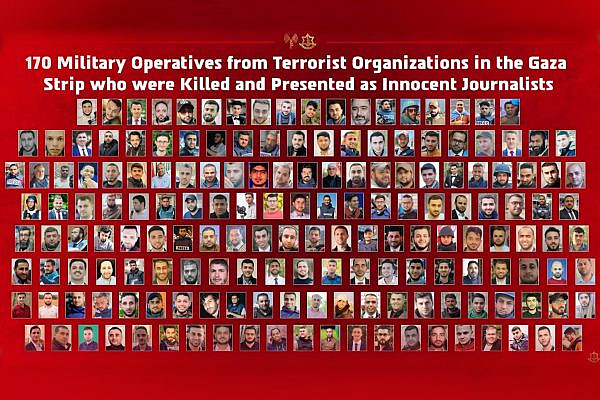
An endless war also serves the military establishment. The army spokesperson’s self-congratulatory and wildly inflated claims about the number of “terrorists” killed over the past three years give the impression of an institution trying to fill the abyss created by its October 7 failure with mountains of Palestinian, Lebanese, and Iranian bodies, and with the devastation of their cities and infrastructure.
But what has proven particularly deadly is the convergence between the coalition’s political need for survival and the transferist, even genocidal, outlook that took hold among much of the Jewish-Israeli public after October 7.
Without attempting to justify Hamas’ horrific and criminal massacre, one possible conclusion from October 7 was that Israel’s continued evasion of the question of Palestinian rights while maintaining an occupation in the West Bank and siege on Gaza made an explosion inevitable. Palestinians had been warning of this for years — from the most radical factions to conciliatory officials in the Palestinian Authority committed to political engagement with Israel, along with Jewish activists in Israel’s radical left.
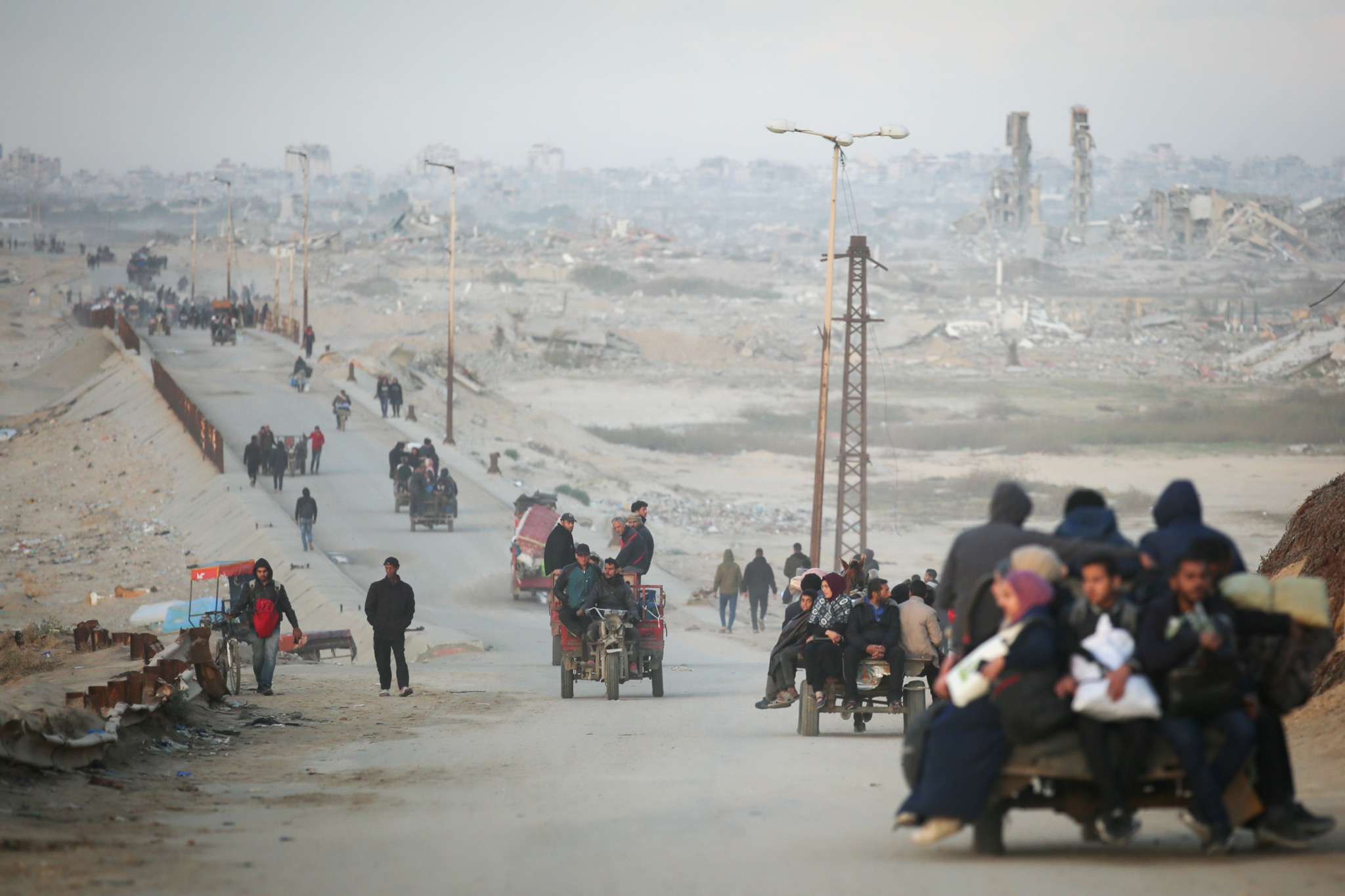
Yet the conclusion drawn by the overwhelming majority of Jewish Israelis was the opposite. October 7 was seen as proof that Palestinians had always wanted to “throw them into the sea”; that Israel’s mistake had been showing too much restraint; and that, therefore, the only possible answer was something akin to Smotrich’s “Decisive Plan” — expulsion, destruction, and annihilation.
And at the critical moment, the right offered Jewish-Israeli society an answer rooted in a historical precedent every Israeli knows, even if it is buried in their subconscious: Nakba, or the erasure of the Palestinian people. The ease with which the phrase “there are no innocents in Gaza” became common sense among the Israeli public marked perhaps the right’s greatest political victory.
Jewish Israelis accepted war as the only option, normalized it, and wove it into everyday life. As a result, it came to seem reasonable that citizens should serve hundreds of days of reserve duty each year, or that the defense budget should swell to monstrous proportions.
Israeli society turned the demons of its own making into policy. Israelis displayed extraordinary indifference to Palestinian life, overwhelmingly backed Donald Trump’s “resettlement” plan for Gazans, and, to no small degree, reveled in Israel’s ability to exercise virtually unrestrained force in Gaza, Lebanon, and Iran. The celebrity status of Rabbi Avraham Zarbiv, Israel’s bulldozer-in-chief in Gaza, and Defense Minister Israel Katz’s recent “boom-boom” campaign video are products of this process.

In November 2023, just 36 days after the war began, Netanyahu declared that Israel’s objectives included indefinite security control over Gaza and preventing the return of the Palestinian Authority. It was clear that he was yielding to pressure from the right. But it was also clear, as I wrote at the time, that these goals were unattainable. By adopting them, Netanyahu was effectively “aiming for a very long — maybe even endless — war.”
Around the same time, Netanyahu invoked the biblical command to “remember what Amalek did to you” in a letter to Israeli soldiers. The combination of those two elements — unattainable political objectives, and the depiction of the enemy as an entity toward which compromise is not merely undesirable but biblically inconceivable — laid the foundations for a war that cannot, in practice, be won.
Amalek can only be subdued by force and wiped out. And because this contemporary “Amalek” has expanded to encompass virtually the entire Middle East — Hezbollah in Lebanon, the Houthis in Yemen, and, of course, Iran, the supposed “head of the snake” — the promise of “total victory” now exceeds not only Israel’s capabilities but those of any country on earth, including the United States.
Netanyahu’s Achilles’ heel
It is precisely here, in the gulf between Netanyahu’s grandiose promises of a new Middle East — one aligned with Israel and purged of enemies who insist on Palestinian self-determination — and the fundamental impossibility of realizing them, that Netanyahu’s Achilles’ heel can be found. For the same “eternal war” that allowed the prime minister and his coalition to climb out of the political abyss after October 2023 may ultimately prevent them from winning the election in October 2026.
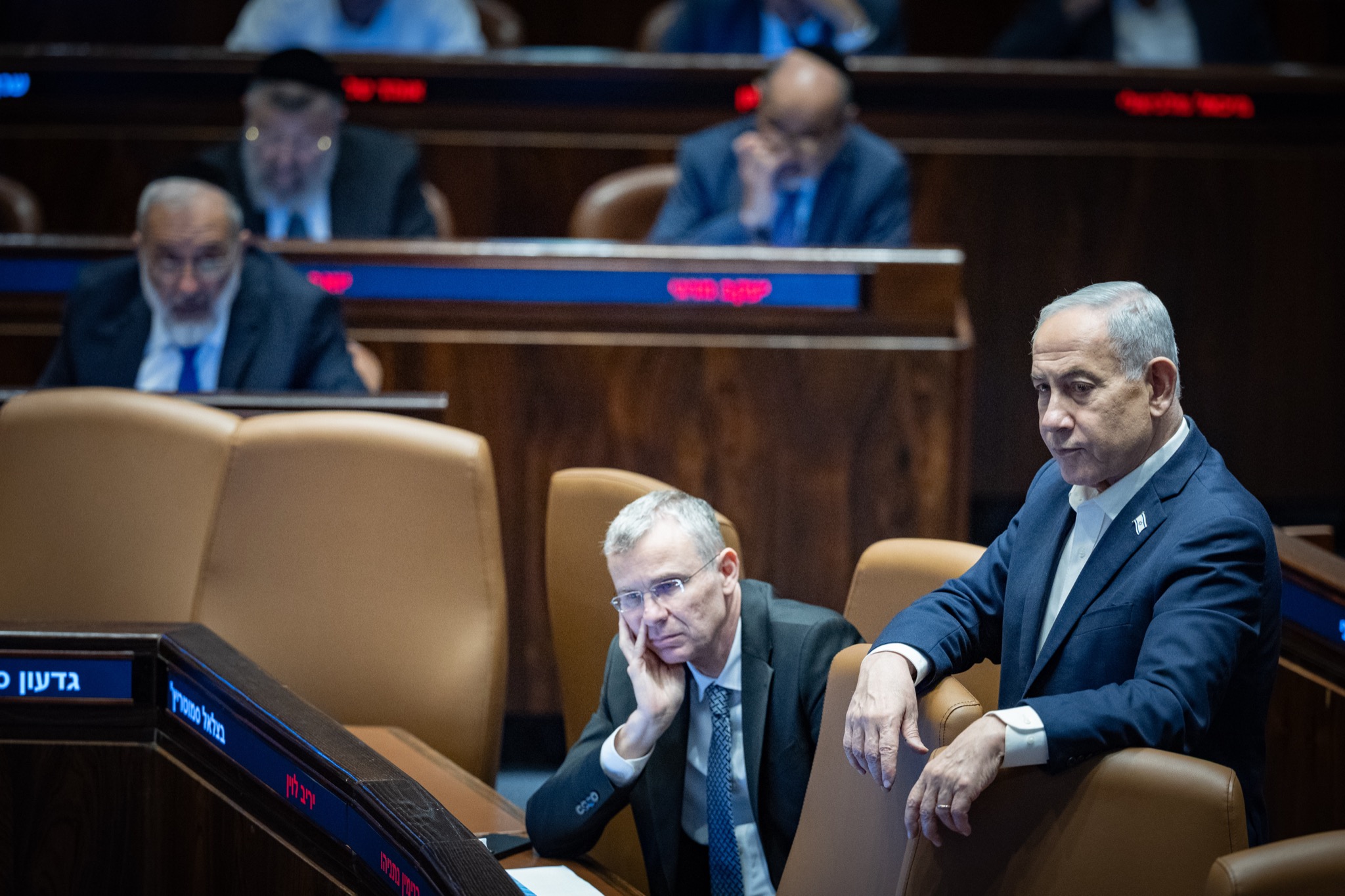
Most Israelis understand, consciously or not, that “total victory” is unattainable. Despite all the killing and destruction Israel has wrought across the region, and despite the immense price Israelis themselves have paid in lives, economic security, and social welfare, they do not feel substantially safer today than they did on the morning of October 7.
That contradiction has been visible throughout the war. It fueled the protests led by hostages’ families, who refused to sacrifice their loved ones to military objectives they regarded as impossible. It also kept a degree of media criticism of Netanyahu alive: Even as most outlets refrained from questioning the assumption that Israel had no choice but to keep fighting, they repeatedly highlighted the gap between Netanyahu’s bombastic rhetoric and reality.
It has also intensified the battle over ultra-Orthodox conscription, perhaps the most humiliating and divisive issue inside the right-wing coalition today. If Israel is destined for endless war on multiple fronts, there are simply not enough soldiers to sustain it.
Israelis can see that, after three years, Hamas remains in Gaza and the Palestinians have not disappeared. Hezbollah still exists, despite the devastation inflicted on southern Lebanon. But the moment when the gap between Israel’s imperial ambitions and material reality became most difficult to hide was after the latest war with Iran. Not only did Israel utterly fail to achieve its objectives; it emerged weaker, almost entirely at the whim of President Donald Trump and, to some extent, Iran as well.

The failure of the Iran war has also made Israelis more acutely aware of the international isolation into which their government had plunged them.
They may interpret the hostility toward Israel as antisemitism, but they can also see congressional candidates who describe Israel’s actions in Gaza as genocide winning elections in the United States. They hear right-wing figures like Tucker Carlson portraying Israel as a threat to America and the world. They increasingly worry about identifying themselves as Israeli while traveling abroad, and choose holiday destinations based on the level of pro-Palestinian sentiment. They also read that regional powers are forming military alliances whose barely concealed goal is to counter the Israeli threat.
In the West Bank, too, the right is beginning to confront the consequences of its own “excessive success.” For Smotrich and his ilk, Lebanon, Iran, and even Gaza have always been secondary arenas. The heart of the project is the West Bank. There, the right has invested enormous resources: hundreds of outposts, agricultural farms, and new major settlements; the destruction of refugee camps and displacement of tens of thousands of their residents; the strangulation of the Palestinian economy; and the systematic weakening of the Palestinian Authority.
But despite these “successes,” the right’s “privatization” of violence in the West Bank — effectively outsourcing it to settler militias — has also made the army appear weak and helpless. The consequences of this process are now becoming evident in the settlers’ siege of Palestinian families in Qusra, producing a spectacle that a significant portion of Israelis are uncomfortable with.
Will the “eternal war” cultivated by the right to rescue itself from the catastrophe of October 7 ultimately bring about its downfall? It is still too early to know. With the exception of certain voices in the Zionist-left Democrats, none of Israel’s Jewish opposition parties truly challenge the paradigm of permanent war. Some opposition leaders, including former prime minister Naftali Bennett and Avigdor Lieberman, are even attacking Netanyahu from the right, accusing him of being “too soft” and not “going all the way.”
Most read on +972
If a new government is formed, it will find it difficult to ignore the contradiction that is now threatening Netanyahu’s rule: between the aspiration for “total victory” — not only over the Palestinians but over an entire region — and the recognition that such a victory does not exist.
Gadi Eisenkot, currently the frontrunner for prime minister, has so far offered little indication that he intends to abandon Netanyahu’s paradigm. But power has a way of making contradictions harder to avoid.
Growing pressure from within Israel — from the military’s manpower crisis, to the situation in Qusra which threatens the state’s capacity to deploy its own forces effectively — and from abroad, with the prospect of a highly Israel-critical U.S. Congress, may push the next government to abandon the central principle that has defined Netanyahu’s rule since October 7: the use of force as the only option. If that paradigm begins to crack, new political possibilities that today seem almost unimaginable may begin to open.