
On Aug. 10, just three days after taking office, Colombia’s new government under President Abelardo de la Espriella formally recognized Israeli sovereignty over the occupied Golan Heights. The announcement was all the more conspicuous coming on the same day that Colombia confronted one the largest earthquakes in its recent history, which killed more than 300 people and left extensive damage across the country.
Even before taking office, de la Espriella’s incoming administration had agreed with Israel to restore full diplomatic relations, move Colombia’s embassy to Jerusalem, resume coal exports, and withdraw from South Africa’s case at the International Court of Justice (ICJ) accusing Israel of genocide as well as from the Hague Group. De la Espriella has also announced that Colombia would renege on its plans to open an embassy in Palestine, and vowed to “never stop defending Israel because it is the people of God.”
These moves have signaled a remarkable diplomatic reversal. Until recently, Colombia had been one of the clearest examples of a very different trend in Latin America.
During the Israeli genocide on Gaza, several left-wing and social-democratic governments sharply criticized Israeli policies, withdrew ambassadors from Tel Aviv, joined South Africa’s ICJ case, and pressed the International Criminal Court (ICC) to accelerate investigations into alleged war crimes and crimes against humanity in Palestine. Some also joined meetings of the Hague Group, which called for coordinated accountability measures in response to systematic Israeli violations of international law.
But recent elections have brought right-wing, far-right and populist leaders to power across a growing number of countries, including Argentina, Paraguay, Bolivia, Chile, Peru, Ecuador, Colombia, and Honduras. A Latin American diplomatic tradition long grounded, at least formally, in international law is shifting toward a more transactional politics: closer alignment with Israel and endorsement of its political narratives in exchange for deeper military and security cooperation, as well as the potential for stronger relations with Washington.
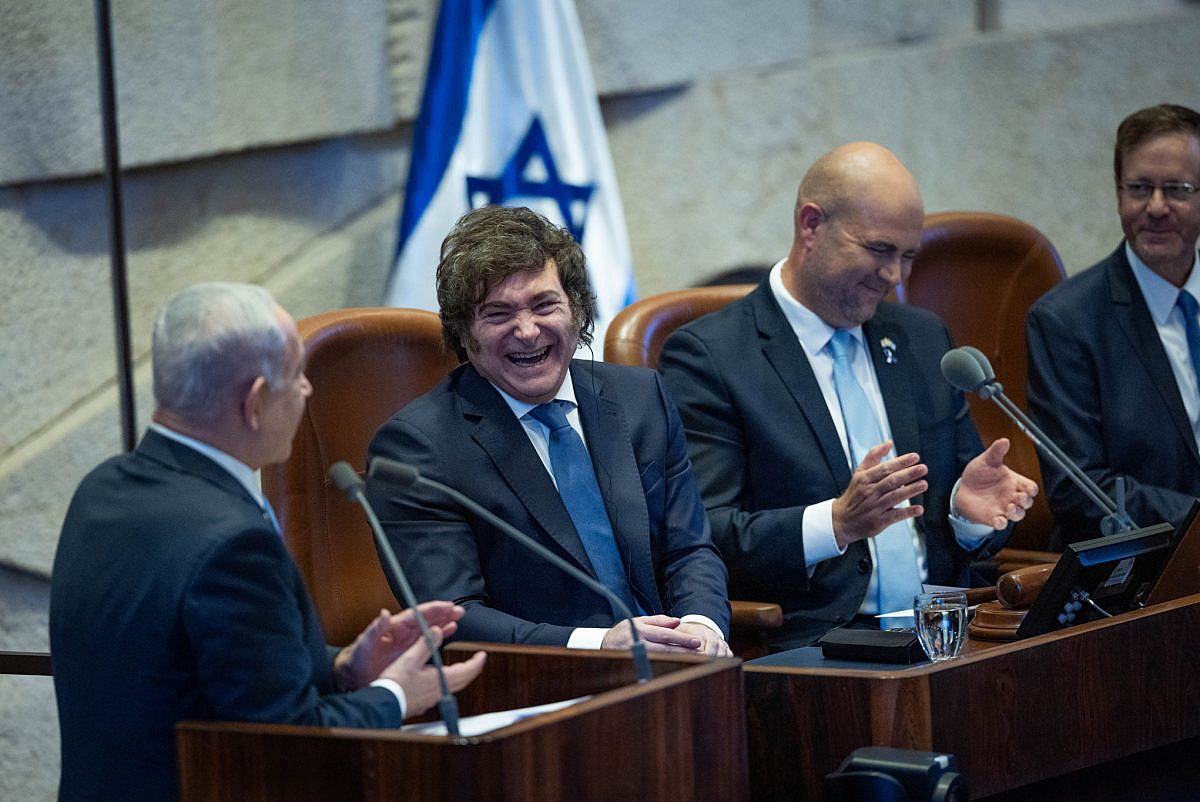
Leaders such as Argentina’s Javier Milei, Colombia’s de la Espriella, and Paraguay’s Santiago Peña have openly embraced close political alignment with U.S. President Donald Trump and Israeli Prime Minister Benjamin Netanyahu. Paraguay, Honduras, and Guatemala have moved their embassies to Jerusalem, while Argentina and Colombia have announced plans to do the same, in defiance of the international consensus reflected in UN Security Council Resolution 478.
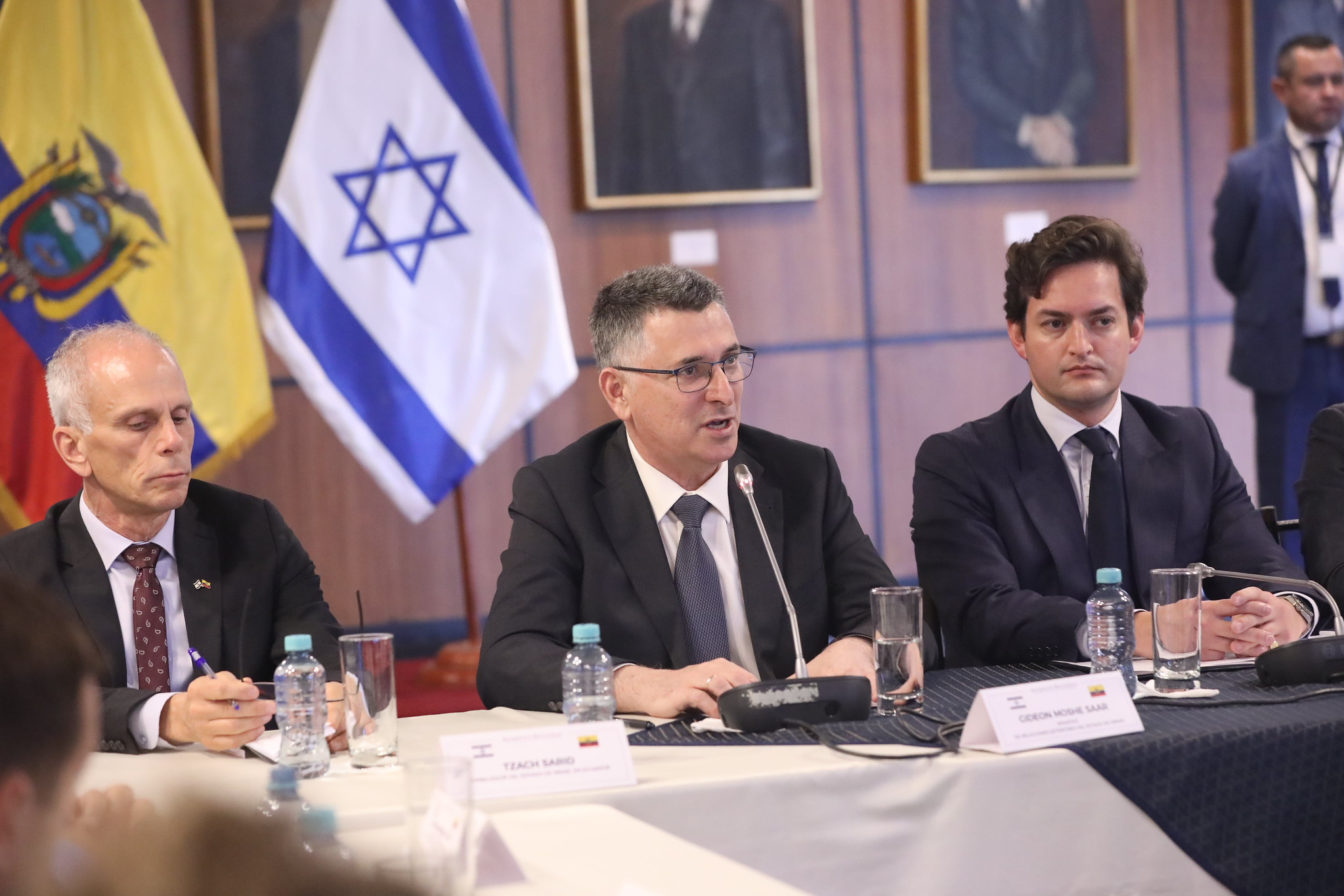
And at the United Nations, Argentina, Honduras, Guatemala, and Ecuador have increasingly aligned themselves with Israel, the United States, and a small group of Israel’s traditional diplomatic supporters like Tuvalu and the Marshall Islands.
For Israel, the timing of this shift is crucial. If Israeli decision-makers have long treated the Palestinian issue primarily as a battle over international perception, that battle has become considerably harder to win, as public support for Israel drops across much of Europe and the United States.
Yet as the destruction of Gaza and its accelerating annexation of the occupied West Bank have brought mounting international condemnation and strained relations with traditional allies, there are still a few political constituencies that have remained committed to protecting Israel from accountability: far-right movements, including Christian Zionists and populist figures.
Together with Israel’s entrenched political support in Washington and sympathetic governments in Europe, they are helping prevent that condemnation from hardening into complete diplomatic isolation. Latin America is now one of the clearest places to watch that effort play out.
‘Proud Zionist’ partners
Israel’s interest in pursuing alliances with Latin America’s far-right is based on a central strategic objective: impunity.
With little concern for international law and human rights, Israel has long pushed back against limiting its territory to the 1967 borders and challenged European policy measures that refuse preferential treatment to products made in Israeli settlements. It has also favored bilateral agreements emphasizing economic and political cooperation while leaving the legal status of the occupied Palestinian territory unaddressed.
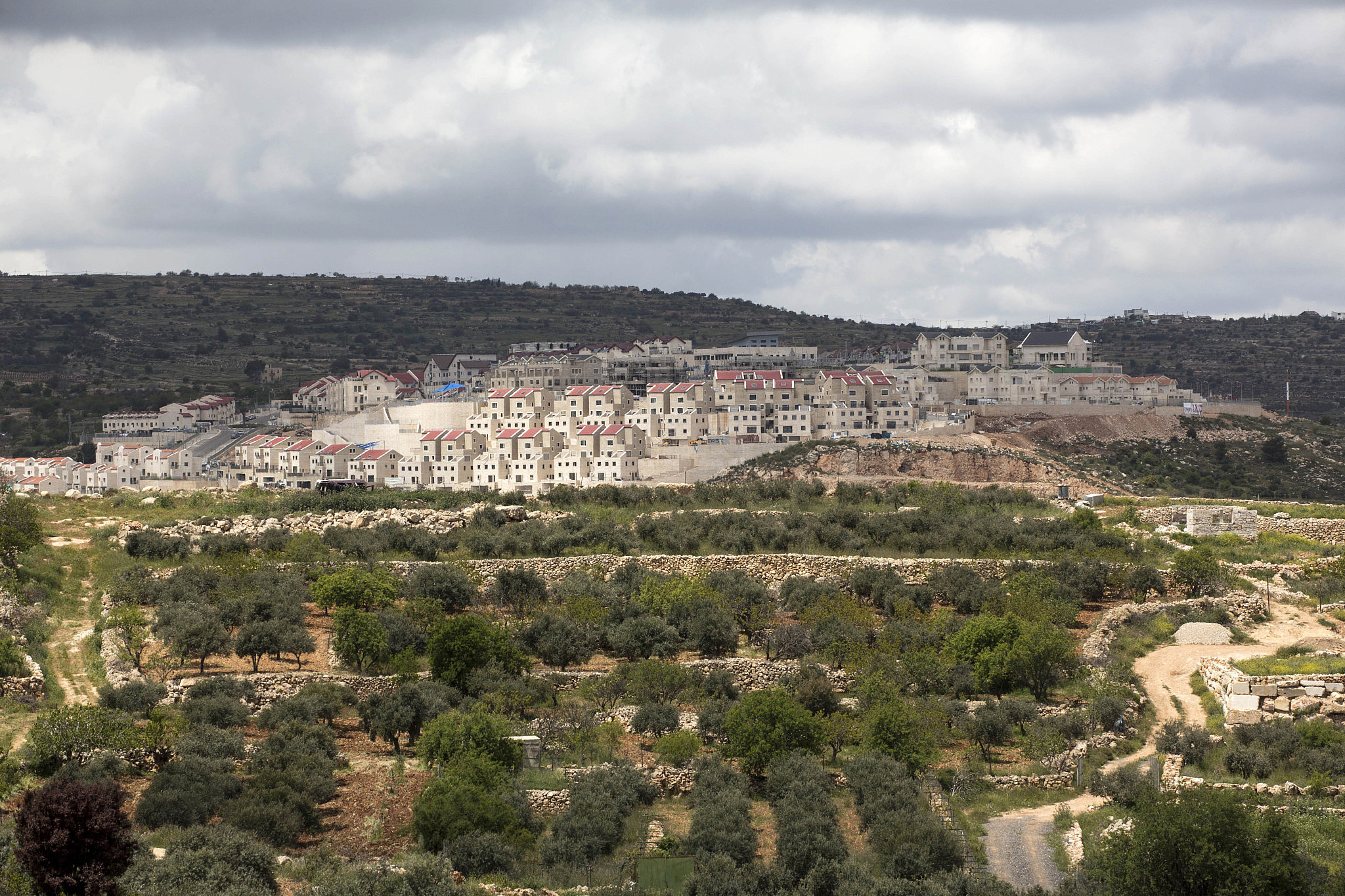
Israel’s relations with Latin American countries have often reflected this approach. Its 2007 free trade agreement with MERCOSUR, the South American trade bloc established in 1991, contained no explicit reference to the 1967 borders. The wave of Latin American recognition of Palestinian statehood between 2010 and 2012 changed this reality, as several countries made clear that their relations with Israel were limited to those borders.
That principle acquired renewed significance during the Gaza genocide and amid Israel’s accelerating push toward annexation of the occupied West Bank. The Hague Group was created in early 2025 to turn declarations of support for international law into enforceable actions, primarily in relation to Palestine. Colombia emerged as one of its leading Latin American participants, while debates elsewhere in the region, including Chile, moved toward proposals to ban the import of products originating from Israeli settlements.
Together with parallel debates in Europe, the United States, and Canada, these developments suggested that Israel’s traditional diplomatic strategy was coming under strain. Its familiar tactics — security cooperation, historical guilt over antisemitic persecution, and appeals to “biblical rights”— were proving less effective against growing evidence of major war crimes in Gaza.
At the same time, the Netanyahu government was openly advocating for positions Israeli diplomacy has long sought to obscure, including the ethnic cleansing of Gaza and the permanent denial of Palestinian statehood.
But if such arguments remain largely unacceptable in Europe, today they are finding a more receptive audience among a new generation of Latin American right-wing and populist leaders, who appear prepared to deepen relations with Israel regardless of its human rights record or systematic violations of international law.
That shift is particularly visible in Chile, home to one of the world’s largest Palestinian diasporas, whose new government appointed Gabriel Zaliasnik as ambassador to Israel earlier this year. A prominent lawyer, former president of Chile’s Jewish community, and outspoken defender of Israeli interests, Zaliasnik has publicly identified himself as a “proud Zionist” and spoken of strengthening ties between “the Chilean people and the Jewish people” — reinforcing the notion of Israel as a state belonging solely to the Jewish people rather than equally to all its citizens.

Foreign diplomats in Tel Aviv represent their states before a country composed of both Jewish and Palestinian citizens; they are not interfaith emissaries to “the Jewish people.” Nor does maintaining diplomatic relations with Israel require endorsing Zionism or laws and practices that discriminate against Palestinians. On the contrary, these countries remain bound by international conventions prohibiting racial discrimination.
Zaliasnik’s appointment was strongly supported by Chilean President José Antonio Kast, whose political rise has itself marked a departure from much of Chile’s recent diplomatic tradition. Kast has defended the late dictator Augusto Pinochet, and his father was a member of Germany’s Nazi Party. His foreign policy circle also includes figures with long-standing institutional links to pro-Israel organizations, such as Kast’s foreign policy advisor Eitan Bloch, a former political advisor to the Israeli ambassador in Chile and member of the American Jewish Committee.
Treating Israel as an exception risks undermining the very principles of citizenship, equality and non-discrimination that they claim to uphold elsewhere. And normalizing war crimes, crimes against humanity, and annexation also weakens an international system on which Latin American states have historically relied to defend their own sovereignty and territorial integrity.
From the Abraham Accords to the ‘Isaac Accords’
In April 2026, Netanyahu and Argentinian President Javier Milei launched the “Isaac Accords,” a new framework for cooperation between Argentina, Israel, and what their joint declaration called “like-minded nations” in the Western Hemisphere. The initiative explicitly invokes the descendants of Isaac and a shared “Judeo-Christian tradition.”
The accords could provide Israel with something it has previously lacked in Latin America: a political framework to deepen cooperation with Israel beyond existing bilateral relationships. The initiative is modeled on the Abraham Accords between Israel and the United Arab Emirates, Morocco, and Bahrain. Those agreements demonstrated that Israel could expand regional ties and economic integration without resolving the Palestinian question.
The Isaac and Abraham Accords therefore share an important structural feature: They offer Israel a form of diplomatic normalization largely detached from compliance with international law. Despite their failure to hold Israel accountable, EU member states, the United Kingdom, Norway, Switzerland, Australia, and Canada continue to insist that international law provides the framework for addressing Israel’s occupation. More recently, the UK, Canada, France, and other countries announced sanctions on Israeli settlements, measures that Spain, Ireland, Belgium and the Netherlands had already taken.
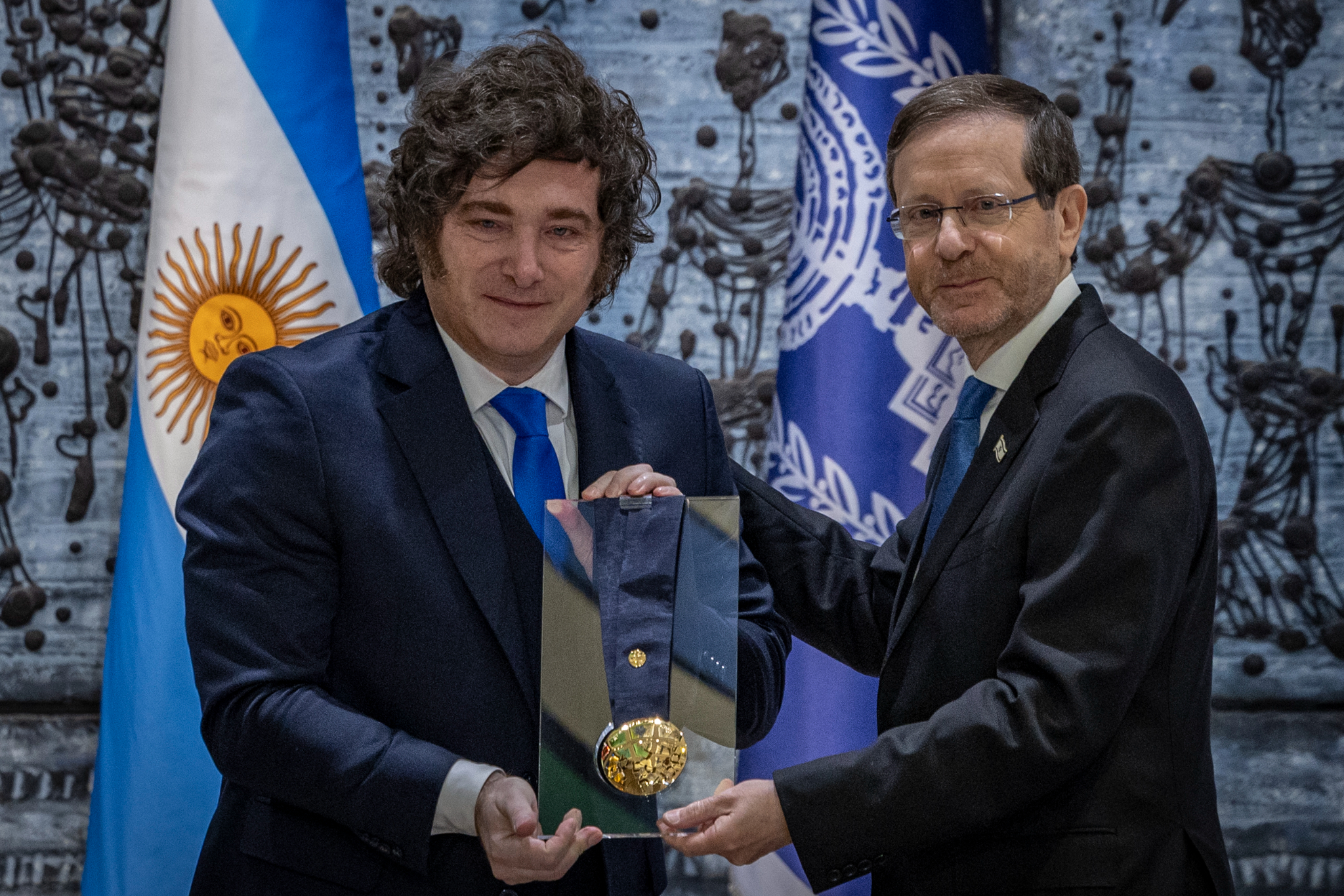
By casting Israel as part of a shared “Judeo-Christian” civilization, moreover, the Isaac Accords goes beyond the Abraham Accords in an explicit embrace of religious ideology. Such a framing may resonate with leaders such as Milei and Kast and with Christian Zionist constituencies, but it is far from a consensus position across Latin America. It also sits uneasily with the growing alarm among Christian communities over Israel’s treatment of Palestinian Christians.
Ideology, however, explains only part of this shift. Some Latin American populist leaders also appear to calculate that closer relations with Israel can provide a route to greater influence in Washington.
But it remains unclear whether that calculation actually serves their countries’ interests. Former Chilean ambassador Jorge Heine described the danger succinctly in an interview with Responsible Statecraft: “The moment you align yourself with one of the great powers in competition you become a subordinate. And then you are treated as such.”
Recent experience offers little evidence that political alignment guarantees favorable treatment from Washington. Argentina, Panama, and Chile have all faced U.S. pressure over their economic relations with China, despite efforts to curry favor with the Trump administration. Chile, for example, was hit in July with an additional 12.5 percent U.S. tariff on many of its exports.
Recognizing Jerusalem as Israel’s capital — as Honduras, Guatemala, and Paraguay have done by locating their embassies there — likewise marks a significant departure from Latin America’s postwar diplomatic tradition. The region has generally defended the principle that territory cannot lawfully be acquired by force. Even bitter territorial disputes, from the Argentina-Chile Beagle Channel crisis to the Peru-Ecuador conflict, were ultimately resolved through mediation, treaty mechanisms, and appeals to international law rather than unilateral annexation.
For some populist governments, however, adherence to such principles appears increasingly secondary to other immediate concerns: access via Israel to cybersecurity and military technology to fuel their own domestic crackdowns.

In recent years, however, Arab countries, including Qatar and Saudi Arabia, have also expanded both trade and investment across Latin America, particularly in logistics, transport, and infrastructure. Two-way trade between Latin America and the Gulf Cooperation Council surpassed $32 billion in 2022, more than $21 billion of it consisting of Latin American exports to the Gulf. By comparison, total trade between Israel and Latin America stood at roughly $6 billion that year.
Latin America’s ties with other Middle Eastern powers have also expanded rapidly. Turkey’s trade with Latin America and the Caribbean alone reached $16.4 billion in 2025, accompanied by a striking diplomatic expansion: Ankara increased its missions in the region from six in 2022 to 20 today, while direct air links and commercial representation expanded alongside them.
There is therefore no obvious economic case for subordinating a country’s Middle East policy to Israeli preferences. Arab states possess substantial economic weight, while Latin America’s large Arab and Palestinian communities carry political, commercial, and cultural importance of their own.
A long-term strategy?
As Israel is deepening its foothold in Latin America, the Palestinian Authority appears to lack a comparable regional strategy. Civil society organizations and Palestinian communities can mobilize against efforts to normalize Israeli war crimes, but they cannot substitute for a broader Palestinian diplomatic approach toward Latin America.
Such a strategy would require much closer coordination with Arab and Muslim states, particularly those already expanding trade and investment across the region. At minimum, the Palestinian leadership could appoint a special envoy for Latin America and work with Arab governments to establish a permanent diplomatic task force focused on the region.
It would also require confronting governments that are helping normalize Israel’s annexation of occupied Arab territory, including East Jerusalem and the Syrian Golan Heights. Arab and Muslim governments are entitled to ask why states such as Paraguay, Colombia, Guatemala, and Honduras should enjoy diplomatic representations in Arab and Muslim capitals without political consequences after recognizing or legitimizing unilateral Israeli claims to occupied territory.
Most read on +972

Domestic resistance to closer relations with Israel is also growing in parts of Latin America, particularly where governments are seen as normalizing war crimes. The current wave of right-wing and populist leadership will not define Latin America indefinitely.
Nor is it clear that its effort to normalize the denial of Palestinian rights will survive future electoral cycles. The coming political calendar may prove decisive: Israel is scheduled to hold elections on Oct. 27, followed shortly afterward by U.S. midterm elections in November. Both could reshape the political coalitions sustaining Israel’s current diplomatic strategy.
Latin American governments may then have to decide whether the short-term rewards of alignment outweigh a longer-term national interest in preserving the international rules on which their own sovereignty and security ultimately depend.