

On March 1, a day after the United States and Israel launched their joint military campaign against Iran, the Ministerial Council of the Gulf Cooperation Council (GCC) conducted an “extraordinary meeting”: These nations had suddenly found themselves at the center of rapidly expanding regional war. In response to the initial U.S.-Israeli strikes, the Iranian regime quickly retaliated by launching a barrage of drones and missiles towards the United Arab Emirates (UAE), Bahrain, Saudi Arabia, Oman, Qatar, and Kuwait, the Arab Gulf states that host American military bases and facilities.
The magnitude of the attacks and the severity of the damage are unprecedented for states that have long projected an image of safety, stability, and security in a volatile region. Since the war’s outbreak, Iranian drones and missiles have killed at least 17 people in the Gulf and wounded dozens. Several oil and gas facilities have also been struck, including storage tanks in Oman’s Salalah Port — the country’s largest — where thick black smoke billowed into the sky on Tuesday afternoon.
In the Ministerial Council’s initial statement, which strongly condemned the “heinous Iranian attacks” and affirmed member states’ right to self-defense in accordance with Article 51 of the UN Charter, conspicuously absent was any mention of the United States and Israel as the instigators of the escalation.
Following this pattern, the GCC governments have individually refrained from publicly criticizing Washington’s actions. The Sultanate of Oman, the primary mediator between the United States and Iran in negotiations before the war, became the only country that expressed “deep regrets” over the U.S.-Israeli military action — a softly-worded official statement, given the scale of damage the region is sustaining.
For GCC states, this war exposed a paradox they have long understood but dreaded confronting: Decades of dependence on the United States as their main security guarantor, at astronomical financial costs, does not insulate them from the consequences of American military decisions. On the contrary, it turns them into direct targets for U.S. adversaries, while Israeli strategic interests take precedence over their security concerns.
At the same time, a verbal confrontation with U.S. President Donald Trump and his administration, especially given its unpredictability, could lead to significant political and domestic implications that may harm their national interests in the long run — compromising strategically established networks in Washington, and, without a clear post-war plan, inflaming domestic attitudes against the United States even further.
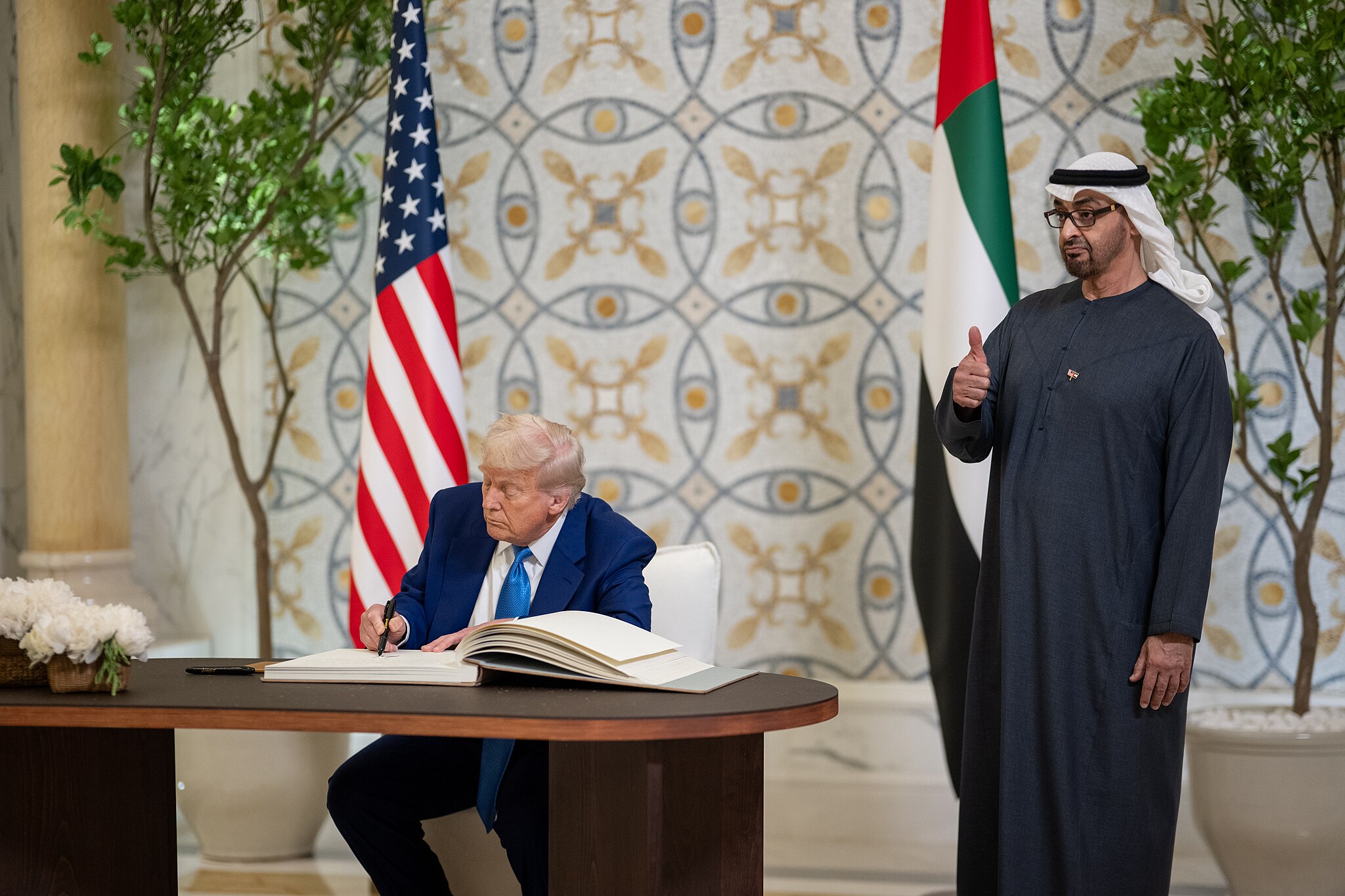
Yet the deep integration of American military capabilities and technologies into the region’s defense architecture makes distancing from Washington extremely difficult, which may also help explain the GCC states’ muted critique.
According to the Stockholm International Peace Research Institute (SIPRI), the United States supplied half of all arms imports to the Middle East and North Africa between 2020 and 2024, with Saudi Arabia, Qatar, Kuwait, and the UAE as the top recipients — constituting nearly 20 percent of all global arms imports. While China has made significant economic inroads in the Gulf, its military presence pales in comparison to Washington’s.
Besides arms sales, the United States maintains a diverse network of military bases across the region and oversees critical defense operations, including intelligence sharing and military training. To replace American security architecture would require rebuilding the region’s defense infrastructure from the ground up.
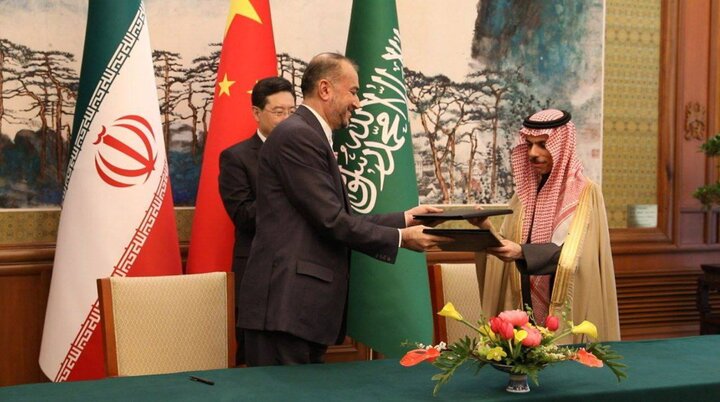
Gulf states have nonetheless attempted to diversify their alliances and reduce dependence on any single power. Some have expanded security ties with China, Russia, and Turkey; others have pursued mutual defense pacts, such as the one signed last year between Saudi Arabia and Pakistan. But these arrangements remain limited in scope and effectiveness, particularly in a conflict dominated by Israeli-American military power.
Even diplomatically, alternative partnerships have proven lacking. This was made particularly apparent just this week, when Russia and China, both frequent interlocutors of Gulf states, abstained from voting on a Bahrain-led UN Security Council resolution condemning Iran’s attacks on GCC states and Jordan and describing them as “a serious threat to international peace and security.” For the time being, then, the Gulf has no clear way out of this bind.
The Gulf’s strategic dilemma with Iran
The relationship between Iran and GCC states has been strained by a struggle for regional influence since the 1979 revolution. Gulf rulers viewed the new regime’s calls to export the revolution as a threat that could enable Iranian geopolitical expansion, including the possibility of mobilizing Shia communities within their own societies. This was certainly a significant factor when in 1981, they formed the Gulf Cooperation Council to safeguard regional stability and collective security.
Yet the Council proved insufficient to deter external threats. After Iraq’s invasion of Kuwait in 1990, Gulf monarchies deepened their security partnership with the United States, leading to the establishment of American military bases and advanced defense infrastructure across the region.

In Tehran’s view, this partnership effectively turned GCC states into extensions of U.S. regional power, an interpretation Iranian officials have long used to justify threats against American military assets in the Gulf. For decades, however, Iran stopped short of directly striking U.S. facilities on GCC territory. That changed during the 12-Day War last June, when it launched ballistic missiles at the U.S. Al Udeid Air Base in Qatar in retaliation for American strikes on Iranian nuclear facilities.
Aware of the vulnerabilities inherent to this alliance — particularly the risk of becoming targets for Iranian retaliation and Washington’s long-standing desire to put an end to Iranian nuclear ambitions — GCC governments have invested countless hours cultivating political networks in Washington, lobbying successive American administrations against military confrontation in Iran.
These efforts have intensified during periods of heightened tension. In 2024, after Israel signaled its intention to attack Iran, Tehran warned Saudi Arabia that it could not guarantee the safety of Saudi oil facilities if the kingdom assisted Israeli military operations. In response, the Saudis, along with other GCC states, lobbied Washington to deter Israel from launching an attack. More recently, in January, Saudi Arabia, Qatar, and Oman were involved in serious diplomatic outreach to the White House, warning that military escalation would endanger both regional stability and American interests.
Yet Saudi Arabia’s position is not without contradictions. While the kingdom has publicly sought to avert a confrontation, Iran remains its principal regional rival. A Washington Post report recently alleged that Riyadh secretly encouraged a U.S. strike on Iran, complicating its public efforts to present itself as a voice of restraint.
This ambivalence reflects the strategic dilemma facing the Gulf states. On the one hand, the magnitude of destruction Iran continues to inflict on Saudi Arabia and other GCC countries — including strikes on oil and gas infrastructure that threaten production and economic stability — represents one of their worst nightmares becoming reality. On the other hand, a weakened Iranian regime and degraded nuclear capabilities could shift the regional balance of power back in Saudi Arabia’s favor, reinforcing its influence in the Persian Gulf and advancing its strategic ambitions such as developing a civil nuclear power program.
Ultimately, Gulf efforts to prevent an escalation were only successful in delaying a war they sought to prevent, and whose consequences they are now forced to absorb. At the same time, Washington’s expectations of its regional partners amid this war have become increasingly explicit. U.S. Republican Senator Lindsey Graham expressed his hope this week that GCC countries “will get more involved as this fight is in their backyard,” warning that “consequences will follow” if they fail to do so.
Such remarks contrast sharply with the cautious and non-confrontational posture Gulf governments have long maintained in the face of U.S.-Iran tensions. Yet the scale of this war, and the gravity of the Iranian attacks on their territory could reshape the GCC’s traditional dynamic with the Islamic Republic in ways that endure well beyond this war.
‘Who authorized you to drag our region into war?’
As Iran’s attacks on Gulf states continue, including intentional targeting of civilian infrastructure, several GCC-based analysts have noted how Gulf states are not only refusing to criticize U.S-Israeli operations, but increasingly asserting their right to respond to Tehran, irrespective of Washington’s efforts to draw them into a broader war.
The reluctance to openly split with Washington, however, is also shaped by domestic considerations. Since the expansion of American military presence in the Gulf in the 1990s, GCC states have consistently worked to reinforce the perceived value of the GCC-American security partnership among their population — especially during periods of widespread anti-American sentiment, such as during the U.S. invasion of Iraq in 2003.
Even after Israel struck Doha last September — an attack that provoked widespread anger inside Qatar and across the region — the Qatari government refrained from directly criticizing their American partners, even amid disputes over whether U.S. officials have provided timely warning of the strike. By contrast, many voices across the Gulf expressed their disillusionment with the American security umbrella, both online and in traditional media.
This time, however, as they face the full consequences of their security partnership with Washington, Gulf states appear much more limited in their ability to contain public anger. Even though public expressions of dissent have been rare in the region, the protests that have erupted in Bahrain, home to the U.S. Fifth Fleet and majority Shia population, are a prime example of civil unrest that the other GCC states are not willing to withstand amid the ongoing war. At the same time, criticizing Washington could be interpreted domestically as a signal that these governments intend to shift their defense arrangements away from Washington — a momentous step they may not be able to ultimately deliver.
Several non-government figures have given voice to this frustration that senior officials may be expressing in private. On Al Jazeera, Saudi political analyst Suleiman Al-Aqili recently expressed serious disappointment with the “American ally” that prioritizes Israel’s interests over the GCC’s security concerns, leaving them exposed to Iranian attacks without serious deterrence efforts. “[The U.S.] focuses on Israel’s safety, stability, and population, without paying attention to defending the Arab Gulf States,” he argued.
Al-Aqili’s comments also point to how commentators in the Gulf are voicing their dissent to the war by taking aim at Israel, who they see as its primary instigator, even more than the United States.
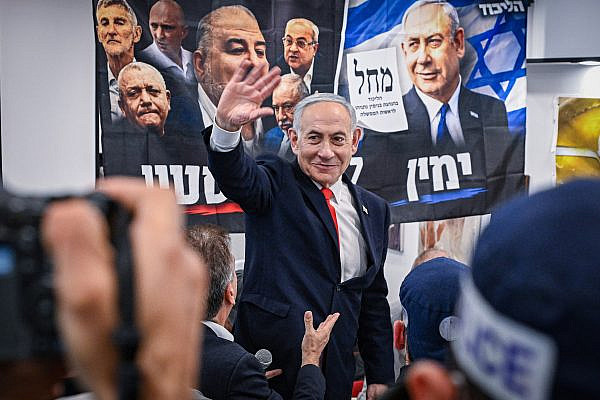
Last week, Khalaf Al Habtoor, an influential Emirati businessman, published a bluntly-worded tweet, later deleted, addressed to President Trump. “Mr. President Donald Trump, a direct question: who authorized you to drag our region into war with Iran?” he asked. “Was this your decision alone? Or did it come as a result of pressures from [Israeli Prime Minister Benjamin] Netanyahu and his government?” Days later, Abdul Ghaffar Hussain, another Emirati businessman, joined in — arguing that “President Trump’s sympathy with Israel has become horrific, repulsive, and unbecoming of a country like the United States.”
Such direct criticism of Israel by figures connected to the Gulf’s political elite is notable. For years, signatories to the Abraham Accords such as Bahrain and the UAE have promoted normalization with Israel as a pathway toward regional peace and stability. However, the current war proves the opposite: Even states that have aligned themselves with Israel are not protected from the consequences of its belligerent regional agenda, nor from the risk of being dragged into the fight themselves.
Most read on +972
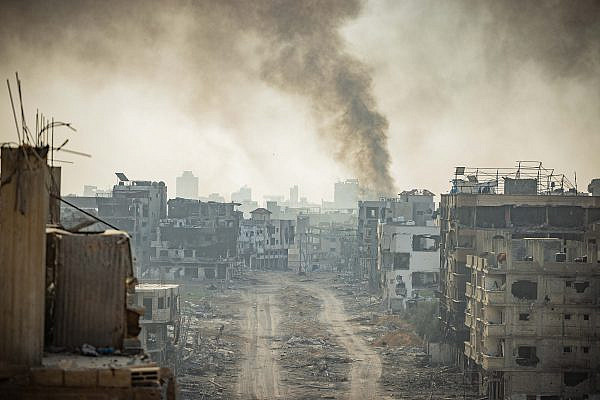
Despite their extensive efforts to prevent escalation, the GCC states are now absorbing the consequences of a war they neither sought nor endorsed. For many years, they invested significant diplomatic capital to deter this precise scenario, which reveals both the limits of their influence on American decision-making and the costs of relying on the U.S. security umbrella. Moreover, the war has brought another long-standing issue to the forefront: the persistent disunity of the GCC and the fragility of their collective security framework.
After Israel’s strike on Qatar in September 2025, Gulf governments were quick to condemn the violation of Qatari sovereignty and reiterate the principle that an attack on one member is an attack on all. Leaders called for stronger coordination and proposed new measures for regional defense. Yet, the scale of damage seen today suggests that these commitments remain rhetorical.
For now, the deeply entrenched American military infrastructure in the region, coupled with Trump’s determination to win the war in Iran, make criticizing or distancing from Washington an onerous undertaking for the Gulf states. Eventually, however, they will have to face tough questions about the sustainability of their current defense architecture and whether it truly serves their interests moving forward. Doing so may require transforming the GCC’s largely symbolic collective security mechanisms into more effective ones, and, more importantly, reducing their heavy reliance on U.S. protection. Only then might Gulf states avoid becoming targets in future wars they neither supported nor intended to fight.