
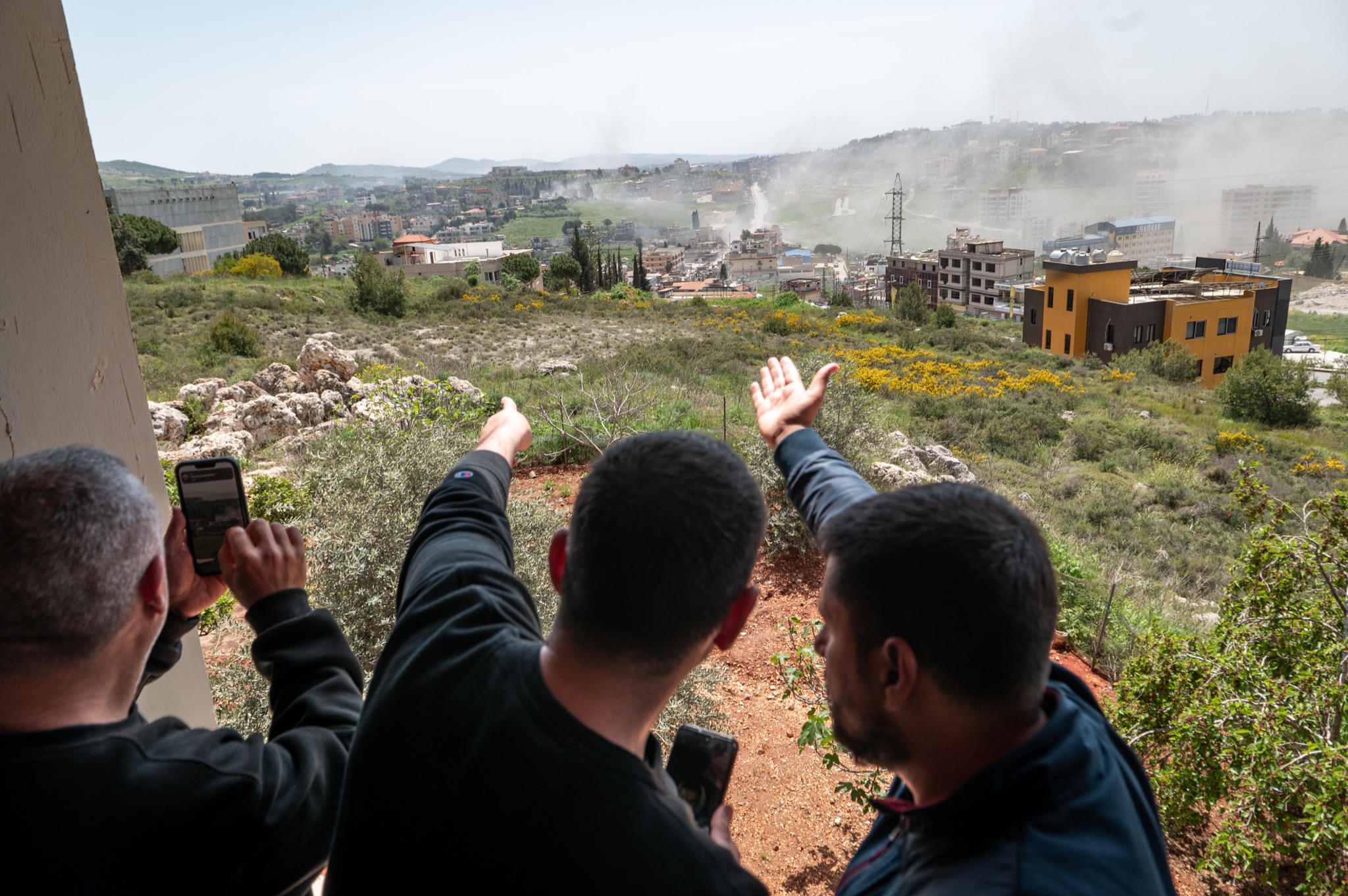
Before noon on May 19, Ahmad, Ali, and Shawqi — three members of the Afif family — left their homes in Halta, a small village in southern Lebanon. Along with nine other agricultural laborers from Halta, they had been hired to clear overgrown grass from farmland in Rashaya Al-Foukhar, another village just a few kilometers from the Israeli border. The land had been abandoned during months of Israeli military activity: Israeli bulldozers had already destroyed nearby fields and uprooted ancient olive trees to improve the army’s line of sight, forcing many farmers from the area.
The farmland lies within the “Yellow Line,” Israel’s term for the area now occupied by its military in southern Lebanon, borrowed from its occupation of Gaza. That day, however, the landowner failed to secure permission from Israel, via UNIFIL, for the workers to enter. Still, he pressured them to go ahead: “No work, no pay,” he warned. The men took the risk to save the crops and provide for their families.
“Everyone here is a day laborer. People live from one day to the next — if they don’t work, they don’t eat,” said Issa Abdel Aal, the mukhtar of Halta. “Life has become much harder because of the war. Food isn’t getting through, there’s no money, and the mills were attacked, so water sources are scarce.”
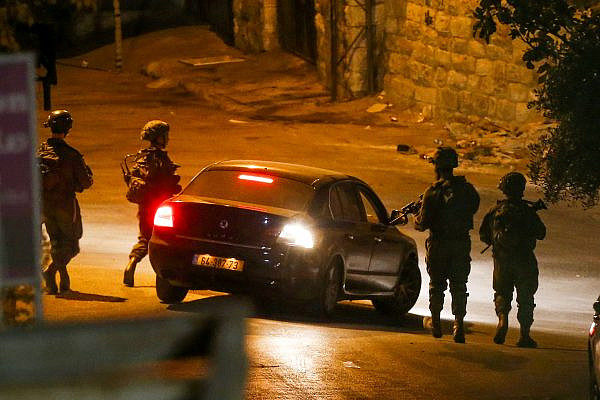
Shortly after midday, Israeli soldiers arrived with military vehicles and detained the entire crew. Most were released within a few hours, including three Syrian migrant workers and several men employed by the Lebanese Army. Only the three members of the Afif family remained in custody. No one has heard from them since.
“Had they known how dangerous it was, they would never have gone,” said Nahawand Hussein Shibli, the mother of Ahmad and Shawqi, aged 45 and 46. “But it’s better that they were arrested than killed by an artillery shell or an airstrike.”
Since then, she said, the family has received no information. “The International Committee of the Red Cross and the Lebanese Army contacted the ‘Mechanism’ [the UNIFIL-coordinated communication channel meant to ensure parties uphold the commitments outlined in the November 2024 ceasefire] to request information, but nothing has come back. I just hope they’re alive,” she added through tears.

As Shibli spoke, children played nearby while explosions echoed in the background. “This is how we live every day,” said Lubna Saleh, the sister of Ahmad and Shawqi. “At first, the bombs kept us awake at night. But as you can see, the children are used to it by now, and so are we.”
Ahmad has six children and Shawqi has five; their cousin Ali is unmarried, but many others in the village still rely on his work. “I’m a widow. I have no way of getting food except through the boys,” said Umm Yihad, 60.
Halta is among a growing number of communities in southern Lebanon where, despite the absence of direct combat, residents are arrested by Israeli soldiers and then simply disappear. Lebanese investigative journalist Hussein Chaabane, who recently documented the issue for the Beirut-based nonprofit The Legal Agenda, told +972 that at least 30 people taken alive in Lebanon between September 2024 and April 2026 remain in Israeli custody. “Their families do not know whether they are alive or dead,” he said. Israel has denied independent access to the detainees and withheld information from their families.
Residents believe the kidnapping of Ahmad, Ali, and Shawqi may have been linked to Israeli operations in the area the previous night. Dr. Qassem al-Qadri, mayor of the nearby village of Kfar Chouba, told +972 that Israeli forces were likely searching for fighters they believed were close by. Two days earlier, he said, a group of unidentified armed men had arrived in the area carrying rockets. “We asked them to leave because we didn’t want any trouble with the Israeli army,” he said.
On May 18, the day before the arrests, Israel struck a house on the road between Khraibeh and Rashaya Al-Foukhar, from which rockets had reportedly been launched. No one was killed. But residents insist that Ahmad, Ali, and Shawqi had no connection to the armed activity nearby. “They know nothing about what happened the night before,” Saleh said. “They’re farmers. I hope that after questioning them, the Israelis will realize they pose no threat and release them.”
In response to +972’s request for comment, the Israeli army spokesperson confirmed that the three men of the Afif family had been “taken in for questioning on suspicion of assisting the Hezbollah terrorist organization. Following the investigation, they admitted that they were collaborators with the Hezbollah terrorist organization and had assisted in operations against IDF soldiers.” They declined to comment on the detained individuals’ access to lawyers or to the ICRC.

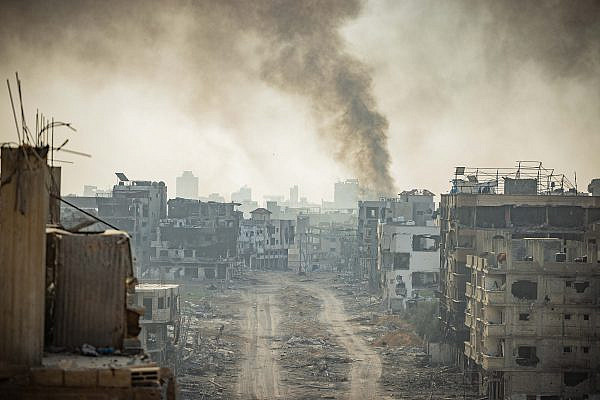
The arrests illustrate how, despite the partial U.S.-brokered ceasefire in place since mid-April, southern Lebanon has entered a new phase of Israeli occupation. Israel has continued to expand its military operations across the south while institutionalizing control through methods familiar from Gaza: restrictions on movement, forced displacement, coordinated access to land, and constant aerial surveillance. More than a million people have fled their homes for Beirut, Sidon, and Tyre, while those who remain face growing isolation and constant bombardment.
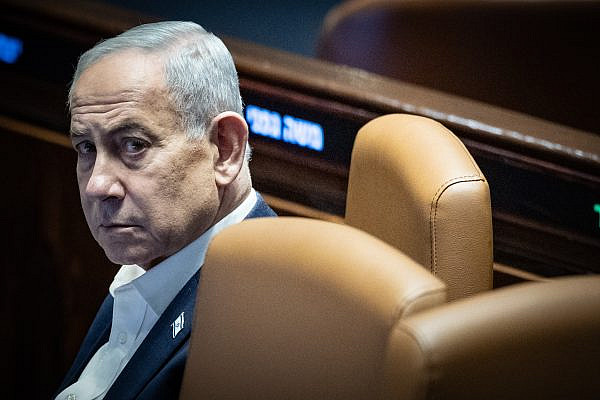
Meanwhile, Israeli rhetoric has grown increasingly aggressive. Finance Minister Bezalel Smotrich has threatened to destroy 10 buildings in Beirut for every drone that crosses the border, while Defense Minister Israel Katz declared that the military will operate in southern Lebanon as it does in areas of Gaza it has largely razed. Prime Minister Benjamin Netanyahu, for his part, has vowed to expand Israel’s grip on the country. On June 7, he ordered an attack on Beirut, prompting Iran to respond against Israel for the first time since the April ceasefire.
Halta itself has largely avoided direct bombardment. But although its residents are not involved in armed resistance, Al-Qadri said they are resisting the Israeli occupation simply by “remaining in their homes.” The village sits below the hills of Khiam, where Hezbollah has mounted one of its strongest challenges to Israel’s presence in the area. As a result, residents say, the Israeli military has made daily life increasingly impossible: livestock have starved or wandered off because access to grazing land is blocked, basic supplies are scarce, humanitarian aid barely reaches the village, and repeated evacuation warnings have isolated entire communities.
“My daughter has a complicated pregnancy. When she gives birth, we’ll have to travel at least two or three hours to Sidon,” Umm Yihad said. “Imagine having to make that trip while the bombing is happening.”
+972 contacted the IDF Spokesperson’s Office for their comment on the arrest and disappearance of Ahmad, Ali, and Shawqi Afif; their response will be added if received.

‘Buildings simply disappear’
Across southern Lebanon, from Saida to Naqoura, Israeli bombardment and occupation have reduced entire neighborhoods to rubble. Cars lie crushed beneath collapsed buildings and, in some areas, the stench of decomposing bodies hangs in the air. “We are the last people standing,” said Mahmoud, a Red Cross employee who spoke to +972 under a pseudonym on May 26, at a rescue point near Tibnin. Nearby, dozens of bodies sealed in bags had been buried temporarily in improvised graves. “We’ll keep them here until the war is over and we can return them to their families.”
Israeli operations have intensified despite the ceasefire, particularly in Bint Jbeil — where Israeli forces suffered a major setback in 2006 and where resistance remains fierce — and in Nabatieh. Rescue workers say they have repeatedly come under attack while responding to strikes. “We drive under fire,” one ambulance driver told +972. “On the way there we see one landscape, and on the way back we see another. Buildings simply disappear.”
He described the case of two women trapped in Bint Jbeil with whom rescuers had lost contact. “We think they may be dead or in the hands of the Israeli army,” he said. “The last thing they reported was that troops were nearby.”
Healthcare workers have become frequent targets. Since March 2, more than 130 medical personnel have been killed and over 380 injured in Israeli attacks across Lebanon, according to the Lebanese Health Ministry. At least 160 ambulances have been damaged along with 35 healthcare centers, forcing three of them to shut down completely.

On April 15, Mahdi Abou Zeid, a paramedic with the Esaef Nabatieh Association, was killed while trying to rescue fellow first responders in Mayfadoun. An ambulance from the Islamic Health Committee had been the first to arrive at the scene, but an Israeli airstrike killed two of its crew members. Moments later, a team from Risala, another rescue organization, rushed in to help and was bombed as well. One of its rescuers was killed.
Abou Zeid’s ambulance became the third target. As it transported casualties from the previous two strikes toward Nabatieh Hospital, an Israeli airstrike hit the rear of the vehicle, killing him instantly. Rescue workers described the sequence as a “triple tap”: repeated strikes on civilian emergency crews, reminiscent of tactics Israel has repeatedly used in Gaza.
Abou Zeid’s colleagues gathered early the next morning in Kafr Rouman, a Nabatieh suburb, to bid him farewell and share memories. They recalled the time he inhaled so much toxic smoke that he was taken to hospital, only to remove his oxygen mask less than an hour later so he could return to work.
As they spoke, a missile struck a hill about two kilometers away, hitting a civilian building. Seconds later, an ambulance from the Islamic Health Authority set out toward the targeted area. The Israeli army was now only a few kilometers away, beginning its encirclement of Nabatieh.
“The attacks have continued without interruption, particularly the artillery fire,” said Mahdi Sadiq, head of the ambulance crews. “Since the ceasefire, Israel has only expanded their operations.” Moments later, another missile interrupted the conversation.
Nabatieh has become a city of rubble, shattered furniture, and empty streets. Yet rescue teams keep operating. “Nothing will stop us or discourage us from carrying on with our work,” Sadiq said. “We firmly believe we must support our people, save lives, and help those who survive. This is part of our mission in life, and we are willing to sacrifice ourselves for it.”

‘I may never be able to recover’
Debbine, Majdal Zoun, Mansouri, and Jouaiyya are among the villages living under constant artillery fire, with Israeli Merkava tanks carrying out daily incursions alongside infantry units. Others, including Bint Jbeil, Taybeh, Naqoura, and Hanine, have become almost entirely inaccessible; anyone attempting to reach them risks being shot.
In Debbine, a predominantly Shiite area in the municipality of Marjayoun, the destruction is overwhelming. At the entrance to the village once stood a cemetery for British, French, and Australian soldiers who fell during the Battle of Marjayoun in World War II. Today, all that remains is an enormous crater. Similar scars mark the ground where an amusement park once stood, and where a three-story family home once overlooked the village.
On May 23, Hussein, 35, and several members of his family were searching through the rubble of their home as a small Israeli surveillance drone hovered overhead. “They’re preventing people from returning to their homes. The infrastructure is unusable,” Hussein explained, who asked that his last name be withheld for family reasons. “We don’t even want to move the bulldozer because we think they might target it. Many people flee again as soon as they hear explosions.”
Nearby, Israeli soldiers had converted a house into a trench position before withdrawing shortly before the April 17 ceasefire. “The situation is difficult, but we are determined to rebuild,” Hussein said.
The environmental damage has also been severe. Greenpeace and other organizations have accused Israel of “ecocide” in southern Lebanon, citing widespread destruction caused by bombardment and the use of white phosphorus.

In Deir Mimas, a predominantly Christian village inside the Yellow Line, 32-year-old beekeeper Choukry Haddad said Israeli restrictions have cut him off from his grazing land, costing him 10 sheep, two horses, and most of his livestock. “They starved because they were trapped in an area we are forbidden to enter. If we go down there, below the hill, we’ll be killed,” he said.
Haddad has also lost 72 beehives. “The vibrations from the bombardment force the bees to flee,” he explained. “I’m afraid I may never be able to recover.” For now, he has chosen to stay behind to care for his elderly mother. “Every night you can see explosions and hear machine-gun fire,” he said. From his balcony, Beaufort Castle — now captured by the Israeli army — is visible in the distance.
Eight hours of hell
On the morning of April 22, journalist Amal Khalil followed her usual routine at her home in Baisariyeh, a village just south of Sidon. She watered her plants, cared for her sick mother, fed her cats, and then headed south to report for the Lebanese newspaper Al-Akhbar.
That evening, the convoy she was traveling with came under attack near Al-Tayri, in the Bint Jbeil district. Alongside photographer Zainab Farraj, Khalil had entered the Israeli-occupied zone to document the situation facing displaced residents trying to return home after the ceasefire.
The vehicle ahead of them was struck first, killing two civilians. Khalil and Farraj took shelter inside a nearby building while waiting for evacuation coordinated through the Red Cross, Civil Defense and Lebanese army. According to the family, no response ever came from the Israeli side to coordinate the evacuation.

Later, as they attempted to reach their vehicle, another drone attack injured Khalil. “I’m trapped here, there are Israeli bombardments, we can’t get out,” she said in one of her final calls to colleagues and relatives. “Can someone contact UNIFIL? Contact the Israelis.”
Minutes after her final phone call, the building where the journalists were sheltering was struck again. Rescue teams attempting to reach them said they were repeatedly targeted by Israeli drones and sniper fire. Hours later, under Lebanese Army escort, responders recovered Khalil’s body from beneath the rubble. Farraj survived with serious injuries.
“Those eight hours were hell,” Khalil’s sister recalled, as the rest of the family around her broke into tears.
At her family home in Baisariyeh, Farraj walked among the plants Khalil had tended to. “Amal was the voice of the south. Now it is our responsibility to continue her work,” she said, dressed in black. “She was the soul of the house. She looked after all of us.”
When the family visited Farraj in hospital, the photographer told them that Khalil had cared for her until the very last moment. That same day, she had even stopped the car in Qana to rescue a tortoise crossing the road. “She saved the tortoise,” Farraj said, “but she could not save herself.”
Most read on +972
Khalil’s room has since become a memorial. Flowers sit inside spent shell casings. Her shoes rest on top of an Israeli ammunition box she once brought back from the south. Her family says she was more than a journalist: she organized donations, helped rebuild schools and hospitals, and used part of her salary to support displaced communities.
“That is why she was threatened several times,” her sister Zeinab said. “They threatened her [via text messages] that if she wants to keep her head on her shoulders, she should stop going south.” But Khalil ignored the threats. She believed no one should be abandoned.