
In partnership with
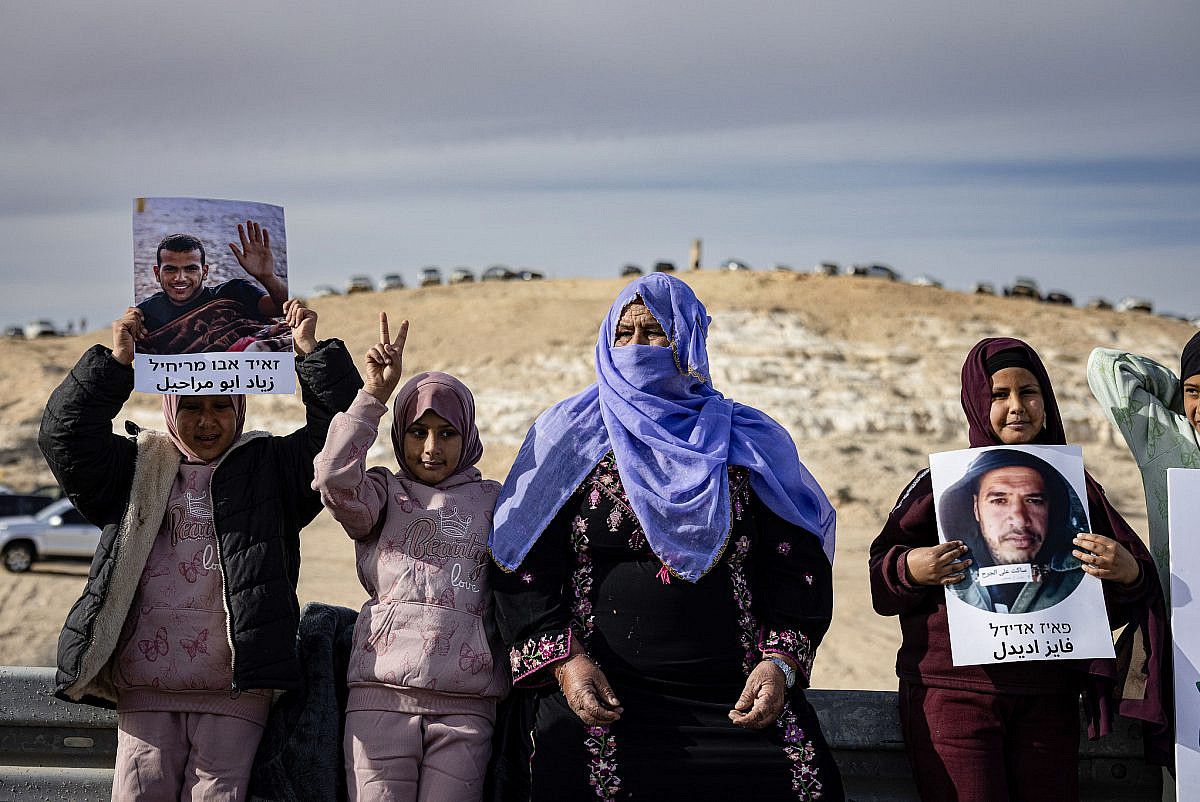
Certain segments of Israeli public discourse seem endlessly preoccupied with the oppression of Arab women. Images of women wearing hijabs or niqabs are particularly convenient fodder for sustaining a familiar narrative: Arab society is backward, violent, and oppressive, while Jewish-Israeli society is progressive, enlightened, and committed to women’s rights.
But what happens when those same Arab women become educated, organize, lead, and vote? When they demonstrate that they do not need rescuing, but instead demand civil and political equality? What happens when they insist on speaking for themselves and exercising political power?
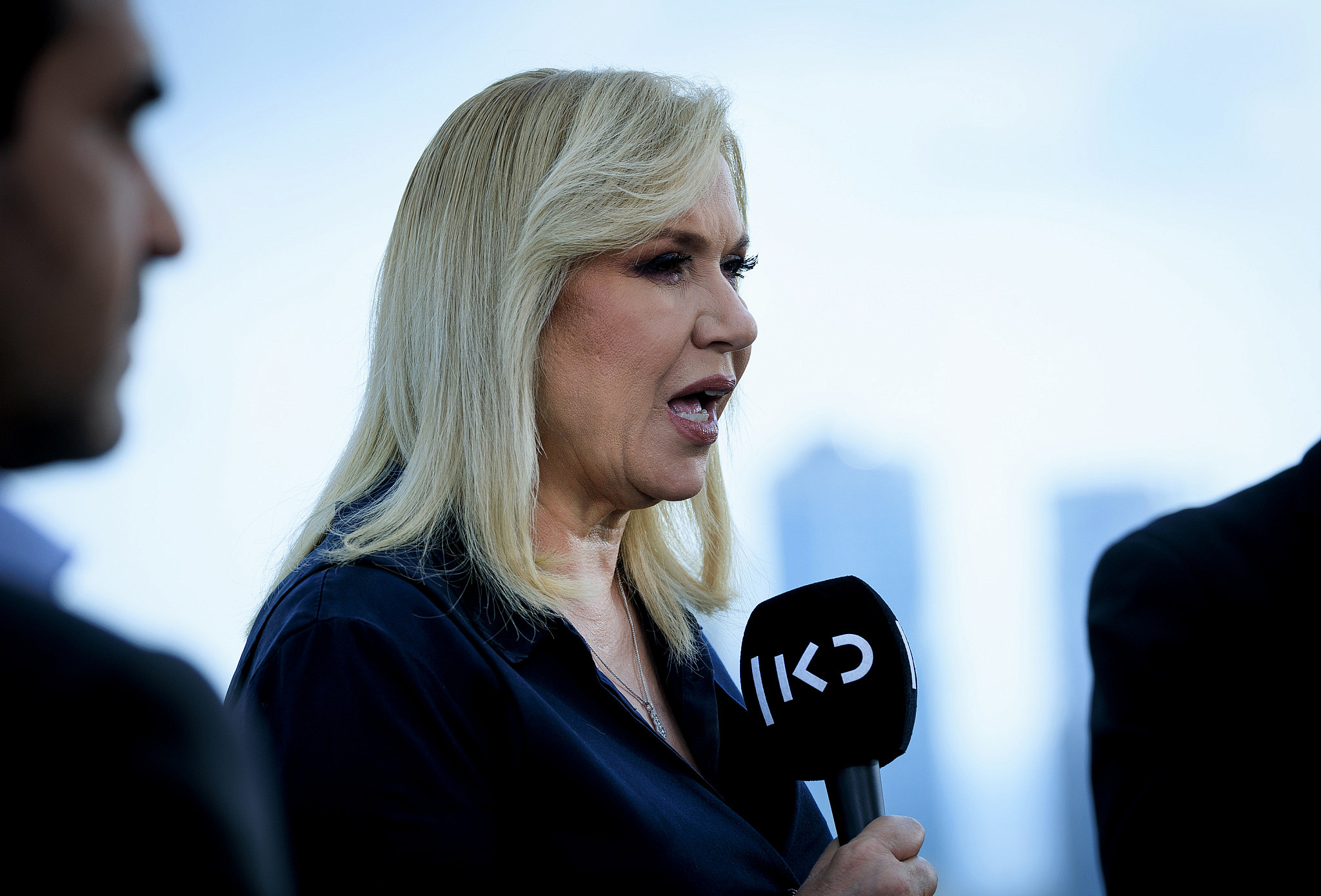
Last week, we got an answer. Shortly after the final votes in the Knesset election were counted, revealing a historic achievement for Arab parties following unprecedented voter turnout, veteran Israeli journalist Ayala Hasson appeared on the right-wing radio station Galei Yisrael.
“What is the [anti-Netanyahu] change bloc?” she rhetorically asked interviewer Eli Tzipori. “[It is] Bedouin women in the Negev, wearing veils, whose husbands have several other wives like them, and who are mostly battered wives, and after they grow up and become ‘elderly’ at age 26, the husband brings in another wife. And these women are usually Palestinians from Hebron or Gaza, sisters of [late Hamas political leader] Ismail Haniyeh.
“This is your change bloc? The Muslim Brotherhood is the change bloc? Don’t you care about the history of the State of Israel and the people of Israel? Don’t you care about our future?”
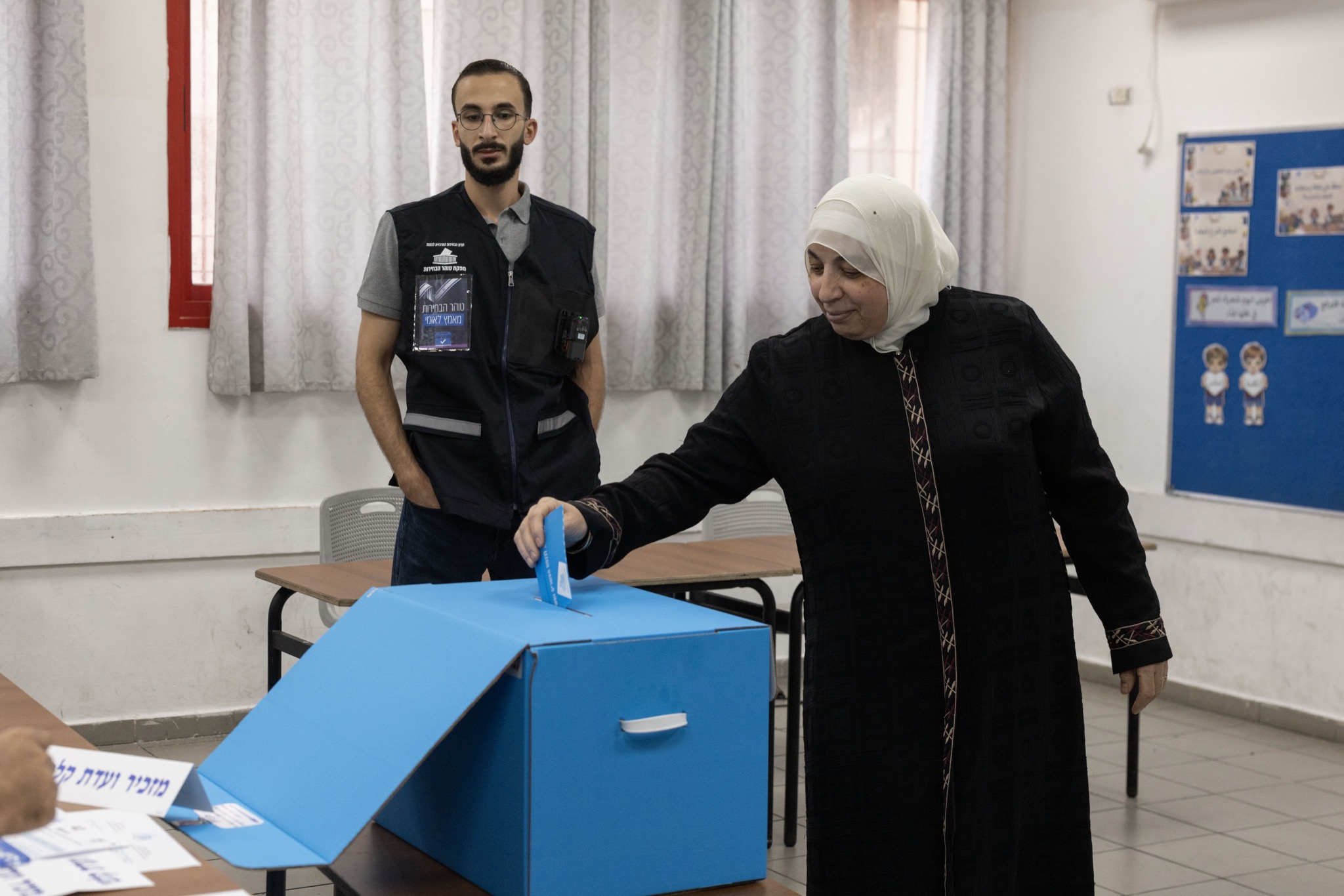
These were women from some of the most marginalized communities in the country, including villages whose very existence the state refuses to recognize. Women who have spent years fighting for access to housing, water, electricity, education, and personal safety had gone to the polls to claim a say in their future.
Their political participation should have been a cause for celebration. Instead, in a few sentences, Hasson reduced their exercise of a fundamental democratic right to a collection of racist and sexist stereotypes.
Her remarks, however, expose more than one journalist’s ignorance and racism. They reveal a fundamental hypocrisy in the way Palestinian women are portrayed in Israeli public discourse: So long as an Arab woman is cast as a passive victim of her supposedly backward society, she can be pitied and held up as someone in need of rescue. But the moment she leaves her home, organizes, casts her ballot, and asserts her right to shape the society in which she lives, she becomes a threat.
No easy fight
A day after Hasson’s remarks, the Guardian published an article documenting how Bedouin women had organized ahead of the election. Activists from the Al-Nashmiyat network, led by attorney Hanan Al-Sanaa, went from community to community, informing women of their voting rights and helping them overcome the social, economic, and practical barriers that had kept many away from the polls for years.
According to the report, voter turnout tripled in several Bedouin communities. Among women in unrecognized villages, it reportedly rose from around 20 percent in 2022 to 60 percent in this election, according to estimates by local activists. (Official voting statistics are not broken down by gender.)
Yet the significance of this story extends far beyond the ballot box. In recent years, a broader transformation has been unfolding within Palestinian society in Israel. Women are building political power, organizing collectively, demanding representation, and asserting their right to shape decisions that affect their lives. They are no longer content to sit in the back row and applaud, or to have their political struggles confined to combating domestic violence and securing access to education and employment.
Nor are they willing to serve merely as a voting base for Arab parties. They want a place at the center of decision-making, fighting for viable positions on electoral lists for the Knesset and local councils rather than symbolic roles that lend a veneer of inclusivity to male-dominated lists. And they are demanding accountability from Arab political leaders who continue to exclude women from positions of power.
This also means challenging some of the most powerful men within their own communities. Women are breaking the code of silence surrounding sexual harassment and abuse, demanding investigations into allegations and accountability from officials and political candidates. They are rejecting the notion that loyalty to the national struggle or to a political party requires their silence.
This is no easy fight. Palestinian women are asserting their rights against the backdrop of an Israeli state that treats the very existence of Bedouin communities as a problem to be solved: demolishing their homes, denying their villages basic services, and abandoning their communities to rampant crime.
But their struggle is also difficult because it requires confronting men with whom they share a national identity, worldview, and political goals. Challenging powerful figures within one’s own community carries particular risks when internal criticism can be weaponized by those seeking to weaken Palestinian society as a whole.
Yet these women refuse to choose between the national struggle and the feminist struggle, or to accept that one must wait for the other. They demand a society free of occupation, racism, violence, and patriarchy — all at once. That is a profound political and social development, and one worth celebrating.
A movement gaining strength
Following Hasson’s remarks, Palestinian feminist organizations issued a joint statement of condemnation. Women Against Violence, Kayan, Al-Siwar, Na’am, and other groups, joined by dozens of feminist activists, declared that they would not tolerate attempts to dismiss or erase the political power of Bedouin women.
Knesset member Iman Khatib-Yassin of Ra’am also condemned Hasson’s remarks. In a social media post, she expressed pride in Bedouin women and women who wear the hijab and niqab, demanding that Hasson respect those exercising their political rights.
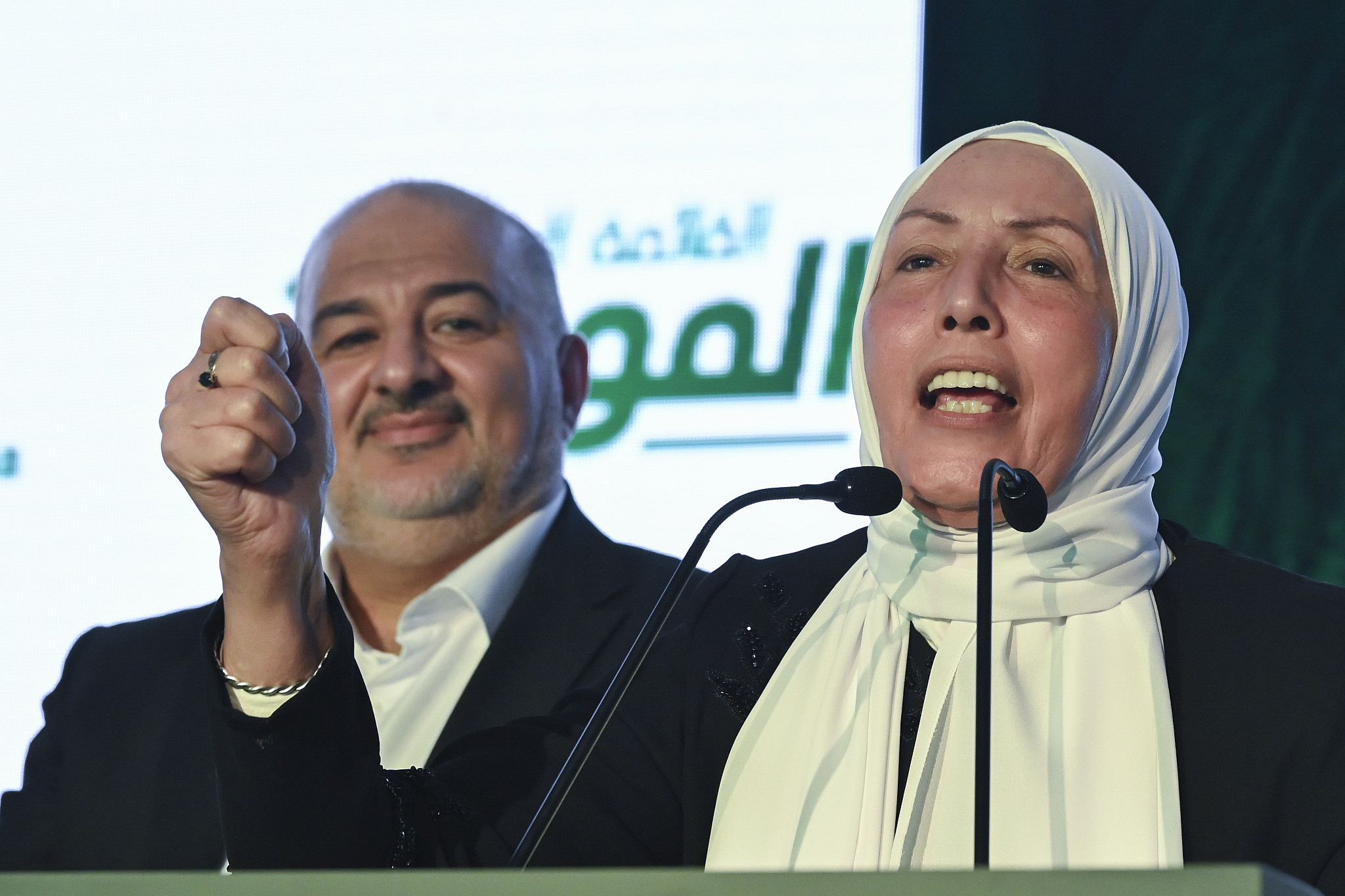
Khatib-Yassin’s response, however, included an unfortunate metaphor likening an uncovered woman to an exposed commodity that “attracts flies,” with her head covering supposedly protecting her from them. Such imagery objectifies women, even when invoked in anger and in defense of religious women’s dignity. As a Palestinian woman who does not wear a hijab, I am entitled to the same respect and freedom as a woman who chooses to cover her head.
Khatib-Yassin deserves credit for standing up for Bedouin women, but her choice of metaphor — and her criticism of Hasson for dyeing her hair blond, seemingly implying that she was hiding her Arab roots — should not go unchallenged. Both reproduce the very policing of women’s bodies and choices that we should be fighting against.
The backlash against Hasson went beyond public statements. The NGOs Sikkuy-Aufoq and the I’lam Center filed a complaint with the CEO of Israel’s public broadcaster, Kan, while the Forum of Heads of Bedouin Local Authorities in the Negev (Naqab) sent its own strongly worded protest to Kan’s management.
Following the uproar, Kan announced that its internal ethics committee would review Hasson’s remarks. Hasson subsequently apologized in a post on X, but refused to do so on live television. She also claimed that Kan had given her an ultimatum: Apologize or never appear on screen again. By insisting that the apology was effectively coerced, Hasson only reinforced the impression that she had little remorse for what she said.
Whether the public broadcaster — funded in part by the taxes of the very women Hasson humiliated — will respond appropriately remains to be seen. (At the time of writing, reports suggest Hasson and Kan are expected to part ways.)
For me, however, the significance of the protests goes well beyond Hasson herself. It reflects the strength of a Palestinian feminist movement that has spent decades fighting on at least two fronts: against exclusion, violence, and patriarchy within our own society, and against racism, discrimination, and institutional violence at the hands of the state.
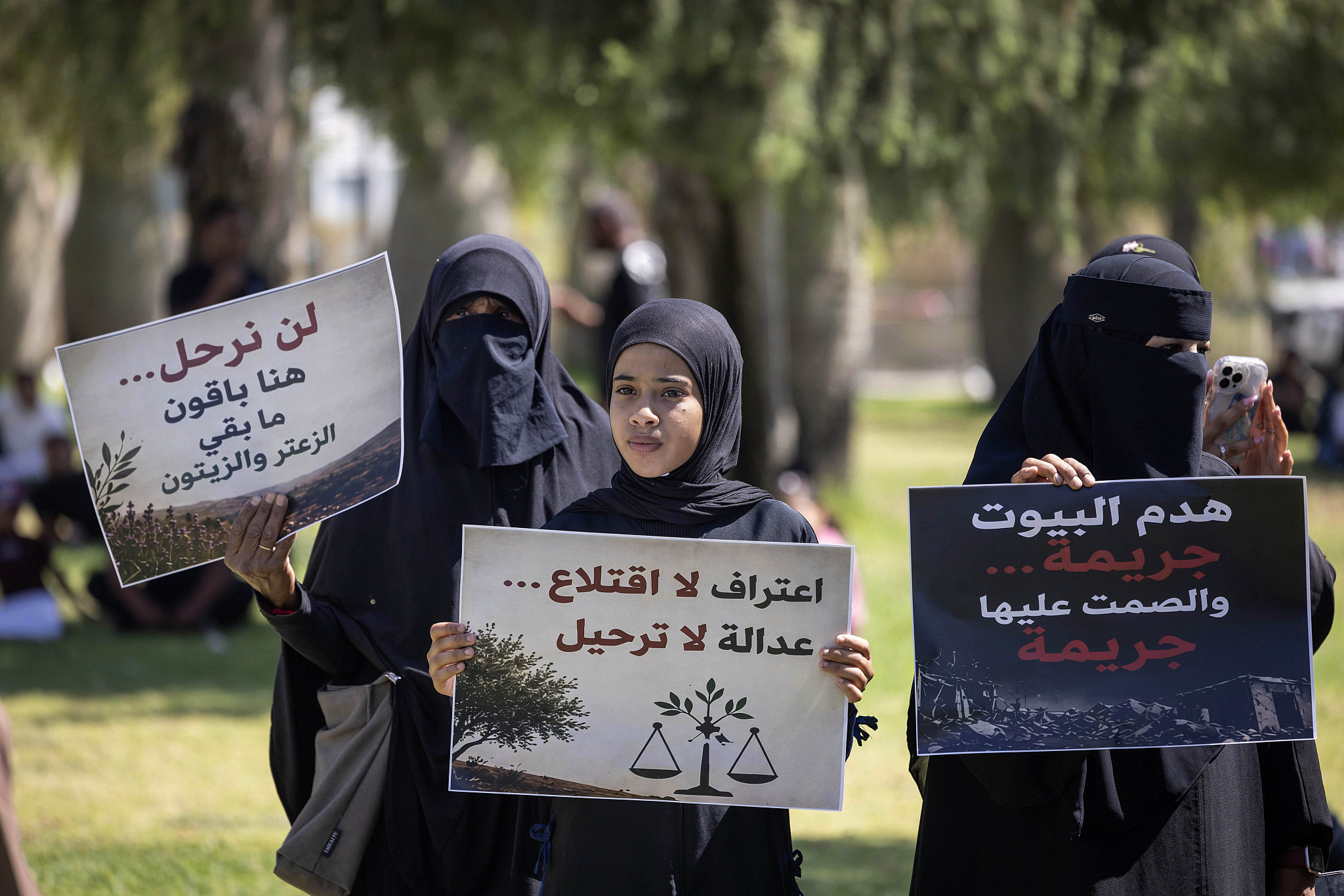
These struggles are difficult enough on their own. Together, they require us to defend Palestinian women against Israeli racism while confronting those within our own communities who seek to restrict their freedom. Our demands for equality are sometimes met with attempts to silence us in the name of national unity, tradition, religion, or family honor.
But we refuse to accept the false choice between defending our society against racism and confronting injustice within it.
To the ballot box and beyond
As someone who has spent many years fighting violence against women in Palestinian society, I do not need Hasson to lecture me about the lives of Bedouin women. We know all too well the realities of patriarchal violence, polygamy, femicide, and the silence that often surrounds them. But we also know how state neglect, institutional negligence, and discriminatory government policies compound these injustices.
Hasson herself should know better. She comes from a family of immigrants from Syria and Egypt. For decades, Israeli society looked down on and mocked Mizrahi women, including for the modest way they dressed. Yet here is a Mizrahi journalist directing the same racist condescension at another group of marginalized women.
For Hasson and others on the Israeli right, the underlying assumption appears to be that Palestinian women cannot be independent political actors — unless their political participation serves the right’s interests, that is.
When Benjamin Netanyahu visited a Bedouin village in 2021 to secure Likud votes, courting Bedouin voters was apparently perfectly acceptable. Yet on election day this year, as Arab votes threatened his political future, Netanyahu shared an image of Bedouin women dressed in black at the entrance to a polling station — an image that turned out to be fake — in an apparent attempt to frighten Jewish voters with the specter of veiled women turning out to vote. Hasson’s remarks come from the same place.
Most read on +972
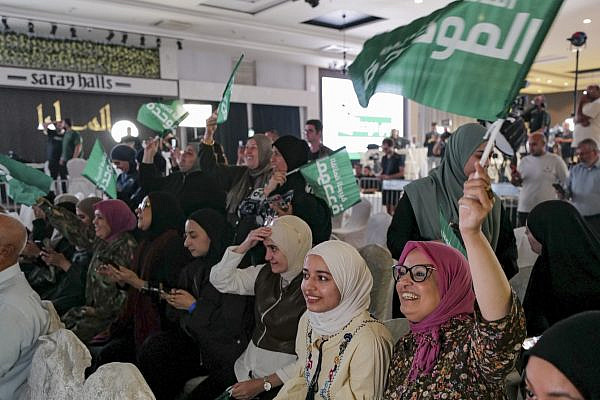
What Hasson refuses to recognize is that the right to vote is not a reward bestowed on women who pass someone else’s tests of modesty, education, secularism, or modernity. It does not depend on marital status, religious affiliation, place of residence, or the color of the headscarf a woman wears.
A woman living in an unrecognized village in the Negev, a student who travels an hour and a half each day to attend college in a Jewish city, a mother raising children in nearly unbearable conditions, and a woman who chooses to cover her head in a way that does not please Hasson all have the same right to vote and run for office as any other woman in the country.
Bedouin women do not need Ayala Hasson’s pity. They need rights, equality, security, and political representation. And they understand that the path toward achieving these things also runs through the ballot box.
I want to commend the Bedouin women of the Negev: those who cast their ballots, the activists who went door to door, the women who overcame family pressures and economic and geographical obstacles, and those who understand that political power begins — but does not end — with a vote every four years.
Palestinian women are not waiting for someone to grant them power. They are building it themselves — in villages and cities, at universities, in civil society organizations, in political parties, and at the polls.
They are not simply the future of Palestinian politics in Israel. They are already shaping its present.