

In partnership with

In the early 2000s, the West Bank village of Bil’in became a focal point of the Palestinian popular struggle against the separation barrier — the roughly 400-kilometer system of fences and concrete walls that Israel began erecting in 2002, during the Second Intifada, ostensibly to prevent Palestinian attacks. In Bil’in, the barrier’s construction cut residents off from most of the village’s agricultural land.
After hundreds of weekly demonstrations and a drawn-out legal battle, Bil’in’s residents achieved a historic victory. In 2007, Israel’s High Court ordered the state to move the section of the barrier in Bil’in, determining that its route had not been chosen according to security considerations as authorities had claimed, but primarily served the expansion of the nearby settlement of Modi’in Illit. Following the ruling, the fence was relocated in 2011, and an eight-meter-high concrete wall was erected along the new route.
Now, +972 Magazine and Local Call can report for the first time that Bil’in residents may once again be forced to struggle over the same land. This time, the threat comes from a military “seizure order” intended to enable construction of a road running from the area of Modi’in Illit, west of Bil’in, toward the Palestinian village of Ras Karkar to its east.
According to the order, signed by Central Command chief Maj. Gen. Avi Bluth on July 8, the army plans to seize several dozen dunams of land belonging to Bil’in and three neighboring villages in order to build a “security road” that starts from the separation barrier to connect Modi’in Illit to Sde Ephraim — an outpost just northeast of Bil’in that is in the final stages of legalization.
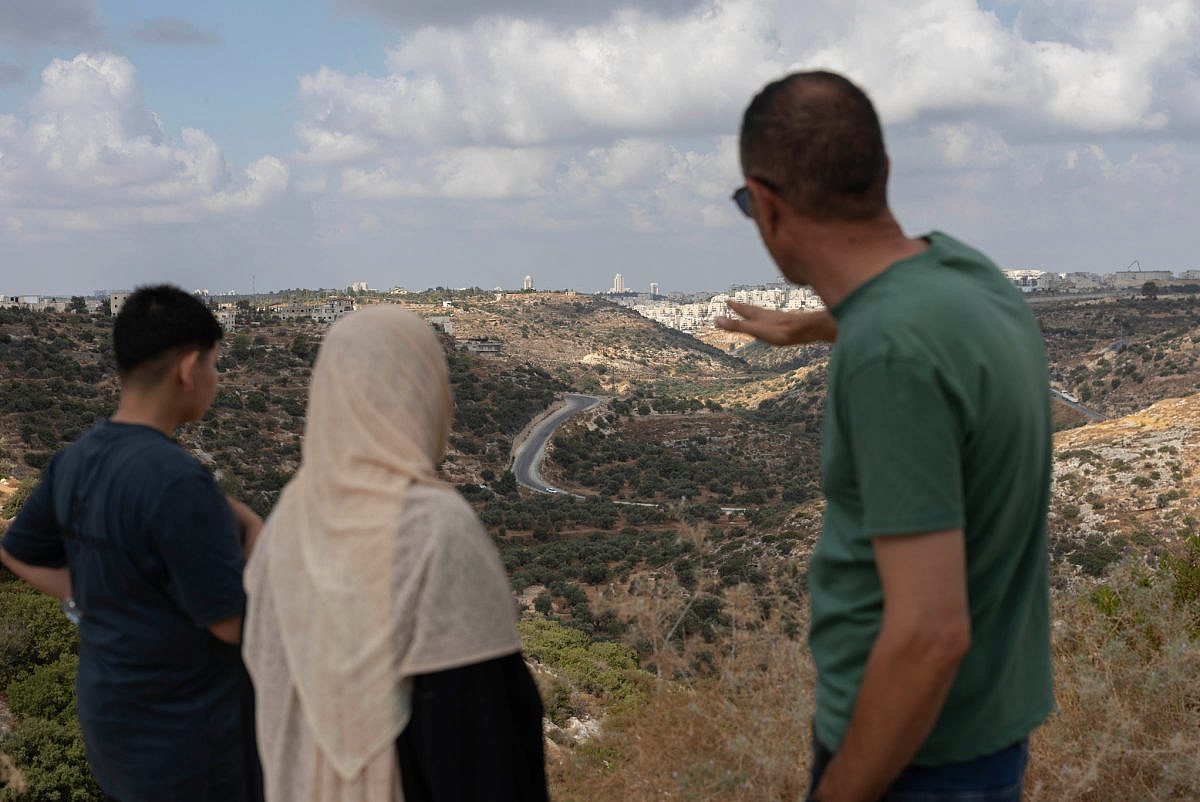
The planned road will be six and a half kilometers long and eight meters wide. Part of it is slated to cross land returned to Bil’in under the High Court ruling, while another section will follow the former route of the separation barrier, through an area now used by farmers to reach their fields.
The military says the new road will be reserved for Israeli security forces. But settlers routinely use roads officially designated for security purposes throughout the West Bank — and since they already travel along parts of the proposed route on dirt tracks using ATVs, the construction of a paved road will only facilitate their movement.
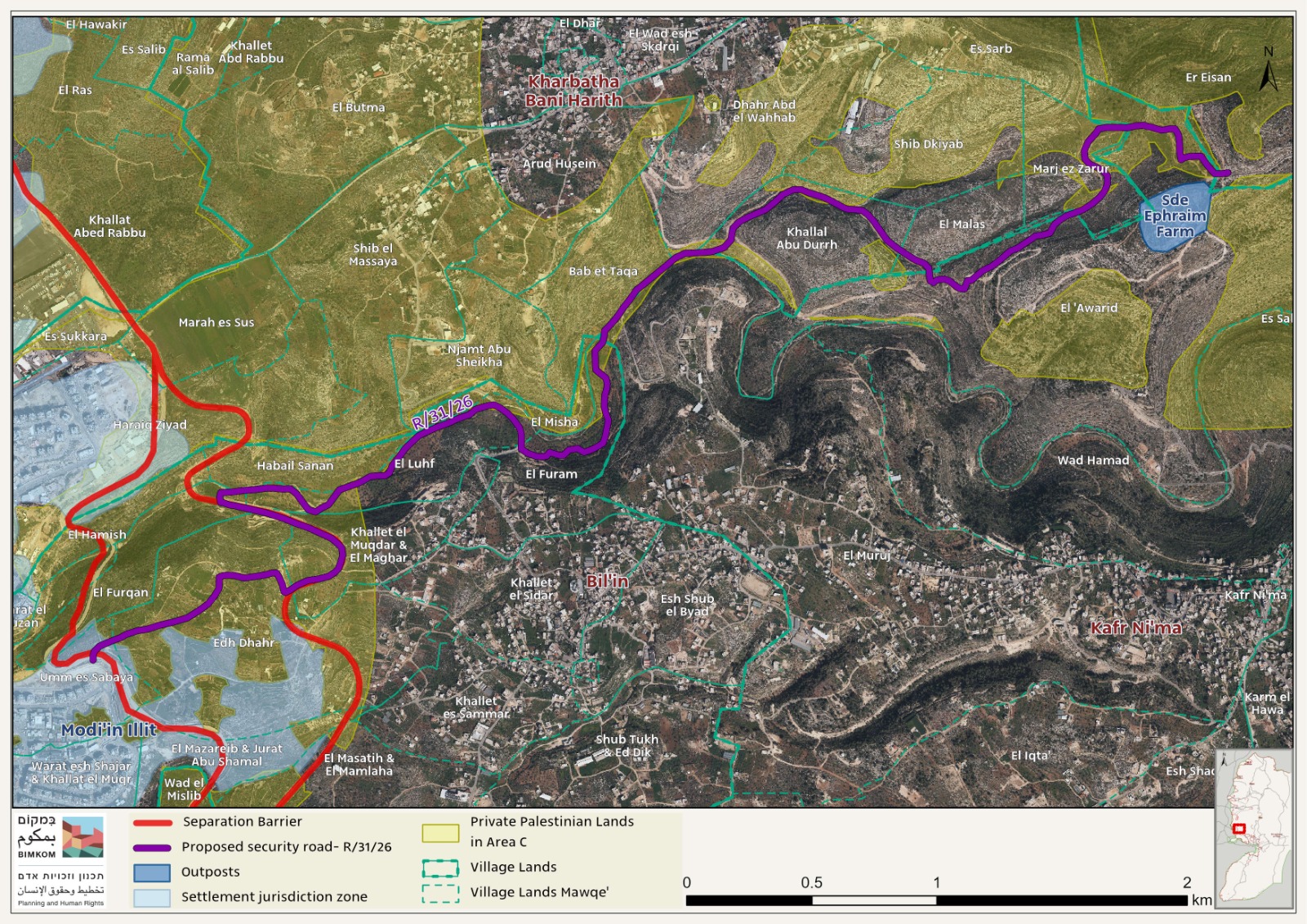
As was the case during the construction of the separation barrier 22 years ago, the stated security rationale for the road is questionable. Dr. Shaul Arieli, head of the Tamrur-Politography research group, explained to +972 that because the proposed route passes through a wadi terrain, it is actually disadvantageous from a security perspective.
Residents and other experts who spoke with +972 say the road could facilitate new settlement outposts in the area between the current concrete wall and the former barrier route. They also pointed to broader aims of the project: It could help revive a longstanding plan to build another road to connect the Talmonim-Dolev settlement bloc to Modi’in Illit and Route 443 — the highway that runs from Tel Aviv to Jerusalem through the West Bank — which settler advocates have said could bring “100,000 settlers to the West Bank.”
For Arieli, the July 8 order and planned road reflect a wider pattern in which “non-security considerations [are advanced] in the name of security,” as he argues also occurred during the construction of the separation barrier. The Central Command, he said, is “opening up routes in the name of security” that subsequently facilitate the establishment of farms and outposts, helping create “a continuous chain of Jewish settlements from east to west.”
A thinly disguised plan
For much of the past two decades, Bil’in and neighboring villages experienced relative calm. Ironically, the wall that Israel claimed was intended to protect Israelis from Palestinian attacks has served as a barrier against settler incursions into Palestinian farmland. On land returned under the High Court ruling, residents built additional homes and agricultural structures and were able to farm with little interference.
That began to change after Sde Ephraim was established in 2018. Residents say settlers began entering the area on ATVs, and have carried out violent attacks. “The road’s route was determined based on the path the settler takes on his ATV,” one resident told +972.
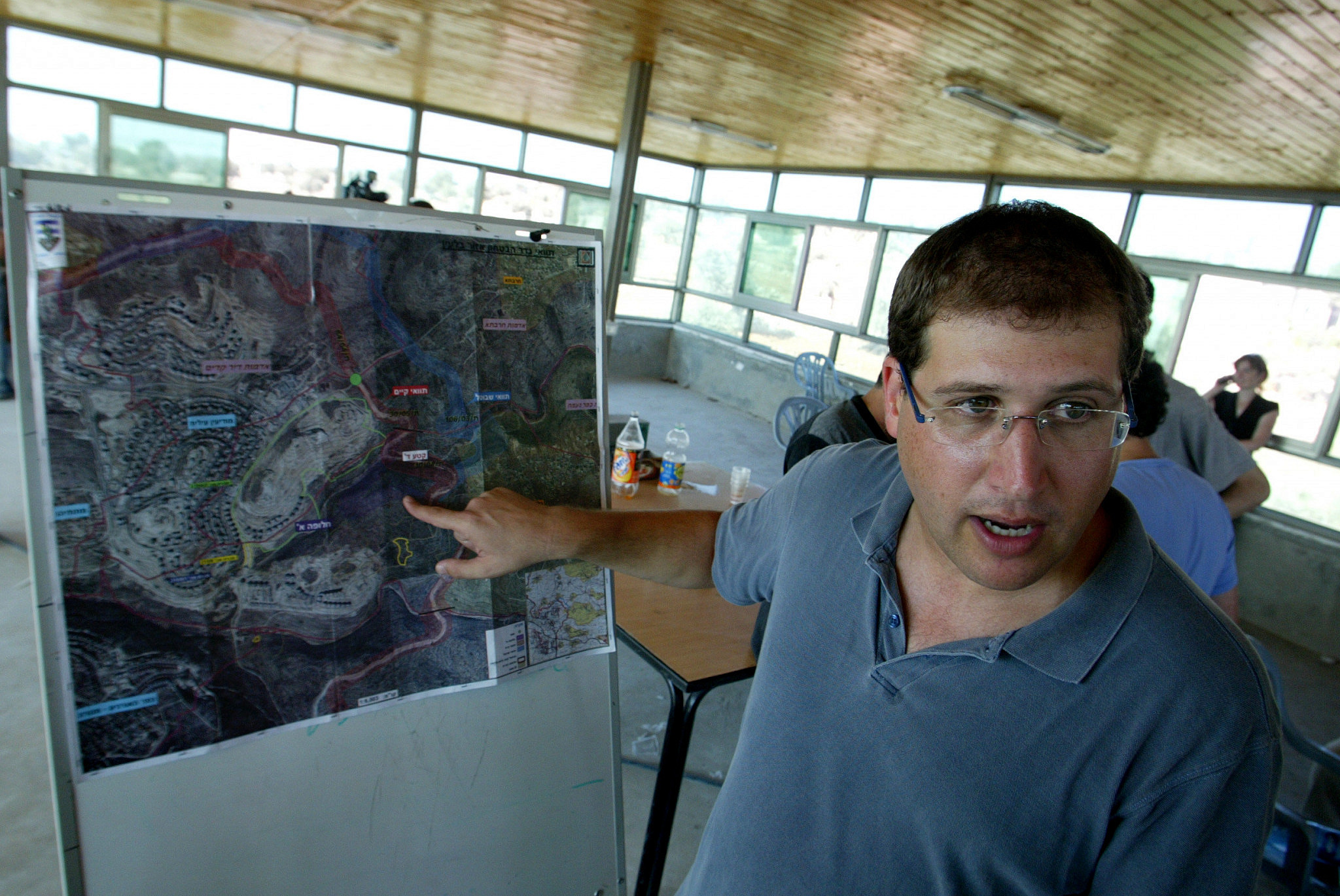
A recent visit along the proposed route shows that sections of it do indeed follow existing narrow tracks. On Aug. 17, the army held what it calls a “landowners’ tour,” a procedure the Israeli Civil Administration (the bureaucratic arm of the occupation) requires when privately owned Palestinian land in the West Bank is designated for seizure.
Such a tour was supposed to take place soon after the July order was issued, but residents say the army had not notified them in time. When soldiers eventually met residents of the four affected villages on Aug. 2, the tour was held along the main road from which the land slated for seizure could not even be seen — prompting another tour to be scheduled.
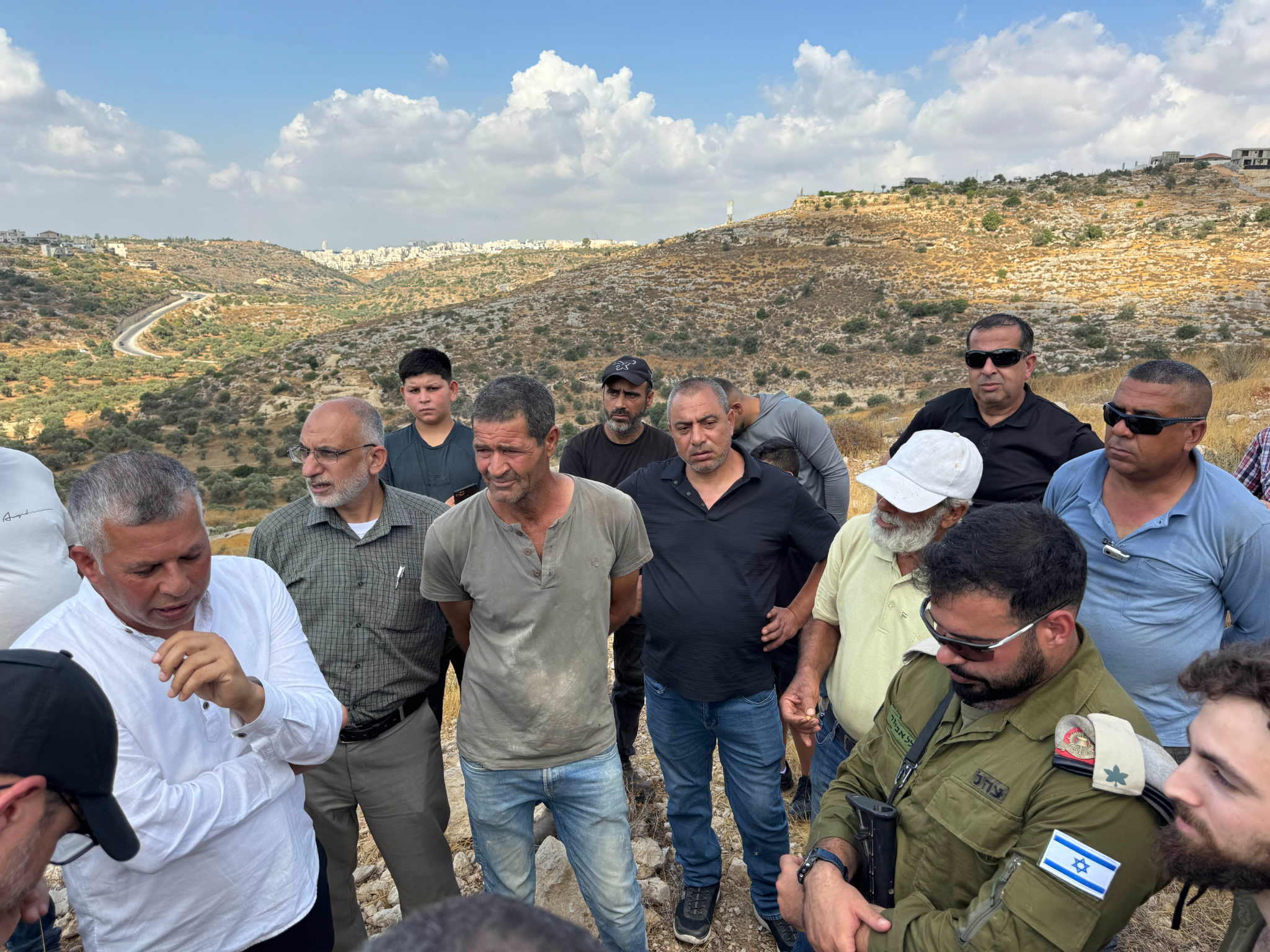
The latest tour took place in an observation area between the villages of Bil’in and Kafr Ni’ma. According to one of the soldiers, its purpose was “to explain the road’s impact on daily life.” He said the road was intended to provide an alternative route to Sde Ephraim if either the Hashmonaim checkpoint — along the route from Modi’in Illit — or the Nili settlement intersection were closed to traffic.
Another soldier stated that the road was meant “to protect Sde Ephraim,” adding that gates would be installed at both ends and that “only security forces will travel on it.” Asked whether Regional Defense soldiers and other settlers could also use it, he replied that access would be permitted “for those whom the army authorizes.”
Soldiers claimed that existing paved roads used by Palestinians, including Bil’in’s main access road, would remain open where the new route crosses them. Movement along the security road itself would require approval, they said, though Palestinians would supposedly be able to cross it on foot without prior coordination.
Residents were also concerned that parts of the road would be built over dirt paths currently used by Palestinian farmers. Soldiers could not clearly explain how farmers would reach their plots by vehicle once those paths were incorporated into the new road, or whether agricultural work near it would require prior coordination.
Although Sde Ephraim is located in Area C, Khaled Asad, a member of the Ni’ma village council who participated in the tour, said the road would affect Palestinians well beyond it. “They’re preventing people [from the affected villages] from accessing their land, even in Area B,” he told +972. “The new road will create friction between the army, the settlers, and the residents. They claim it’s a ‘security road,’ but it will directly affect people and cause problems.”
‘The goal is to shatter the symbol that Bil’in has become’
For roughly 15 years, Bil’in was the site of weekly Friday protests against the separation barrier — nonviolent demonstrations that often incorporated artistic performances and other creative actions. These events drew widespread international media attention, in part due to the forceful and sometimes lethal response from the Israeli military.

One of the leaders of the campaign against the barrier was Muhammad Khatib, who joined the Aug. 17 tour of the area affected by the seizure order.
“They claim it’s a security road to Jabal Al-Risan [the hilltop on which Sde Ephraim was established], but it isn’t. It’s a settlement road,” Khatib told +972. “The aim is to create a settlement corridor, expand Israeli settlement toward Bil’in, seize around 600 dunams, and establish additional outposts.” Beyond the direct loss of land, he said, the road would prevent many farmers and residents from reaching their plots.
“Bil’in was a symbol of popular resistance,” Khatib continued. “The struggle succeeded in reclaiming a large portion of the village’s land and preventing the establishment of a planned major expansion [of Modi’in Illit].” Now, he argued, settlers’ growing influence over the Israeli government has created an opportunity to revive those plans and regain land that Palestinians recovered through their earlier fight.
“The goal is to shatter the symbol that Bil’in has become,” he said. “They want to send a message that says, ‘We are in control; we will decide the fate of these lands.’”
Bil’in residents have once again hired Israeli human rights attorney Michael Sfard, who represented the village in its successful High Court challenge to the route of the separation barrier, to contest the new seizure order. (Sfard is also a legal adviser to +972 and Local Call.)
After touring the area, Sfard told +972 that the order reflected what he described as a growing sense within the military that private Palestinian land can be confiscated with little need for a logical justification. “They don’t think twice before co-opting the security argument for purposes that are clearly settlement-oriented,” he said.
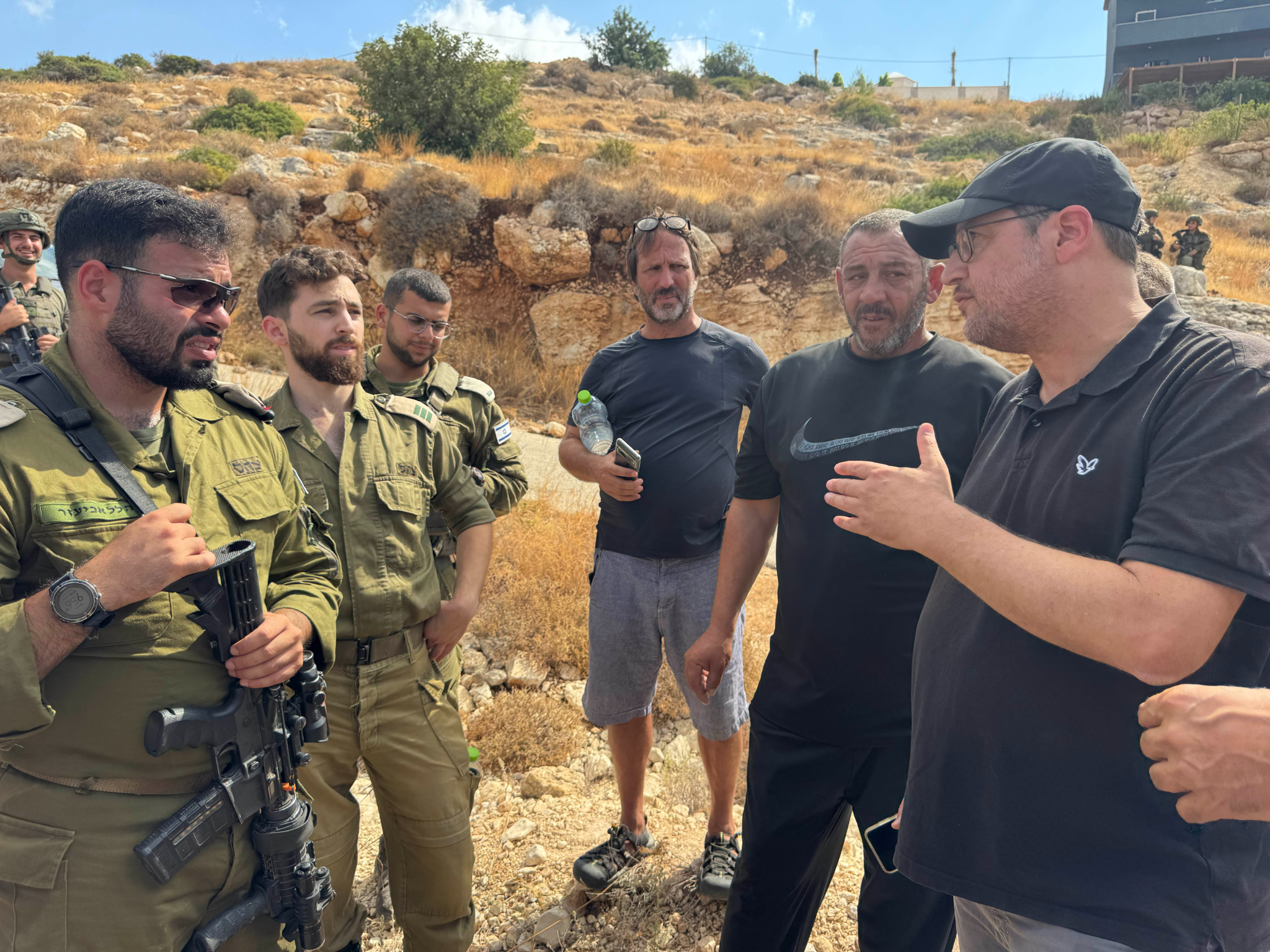
Sfard said that while he was not surprised that settlers or government officials would pursue such a project, what stood out was the military’s cooperation. “Suddenly, 20 years after the separation barrier was erected, the military discovered that they needed a security route leading from Modi’in Illit to the Talmonim settlement bloc,” he said sarcastically — one whose proposed route, “entirely by chance, closely mirrors a road settlers have long sought to build between the same points.”
Because the intended route crosses privately owned Palestinian land, Sfard argued, it would be more difficult to justify paving a road explicitly for the purpose of connecting settlements. The military, he said, is therefore relying on the “preposterous and transparent excuse of a ‘security need.’”
For Sfard, the order — which echoes the method used in determining the original route of the separation barrier in Bil’in — evokes “a sense of déjà vu.”
“First there will be a security road; then movement restrictions will be imposed on both sides of it; later it will begin to be used by civilians [settlers] as well; then lanes will be added, turning it into a transportation artery linking the Talmonim and Nahliel settlements to Route 443,” he predicted. Beyond that, Sfard pointed to “the almost certain danger that outposts and farms will spring up on both sides of the road, and all the agricultural lands of Bil’in and the neighboring villages will be swallowed up by the Israeli colonization machine.”
A legal landscape transformed
After touring the affected land, residents met with Sfard to discuss the legal challenge. It was clear to everyone how much Israel’s political and legal landscape has changed over the past two decades. Unlike before, any kind of popular mobilization — or even any attempt to plan one — would now likely be immediately suppressed.
Indeed, a Palestinian attorney from Bil’in, who had helped prepare the documents for a legal challenge against the new road, was arrested at his home in the middle of the night and warned not to take any action regarding lands in Area C. Although Area C was created under the Oslo Accords as a temporary designation, the settler movement and the army treat it as de facto Israeli territory in which settlers have near-complete freedom of action.
“The entire system — both the military and the judicial branches — has deteriorated significantly,” Sfard said. “It wasn’t good 20 years ago, but it did, in exceptional cases, acknowledge that an improper act had been committed, even when such a ruling granted a victory to a village like Bil’in, whose struggle became a symbol of the fight against the separation barrier.”
In the past, Sfard said, the High Court occasionally ruled in Palestinians’ favor because it wanted to preserve a liberal image. But “the government’s judicial overhaul efforts, [the political climate since] October 7, and the appointment of the current generation of justices — who care far less about that liberal image and are less inclined to issue rulings in favor of Palestinians to preserve it — all of these have caused that opening to close.”
Even so, Sfard believes the Bil’in case may have a better chance than similar cases of land confiscation in the West Bank. “The injustice here is so blatant, and it will be very difficult to justify the seizure of land.”
Most read on +972
For now, Bil’in has no plans to revive the weekly demonstrations, despite the threat. But Khatib insisted that “Bil’in will remain Bil’in, a symbol of the nonviolent popular struggle. We will continue to fight using all legitimate legal means, together with Israeli and international activists and everyone who has taken part in the struggle here.”
One of Bil’in’s most memorable protest actions saw demonstrators dress as the blue Na’vi characters from the film “Avatar” and march toward the barrier, where they were met with tear gas fired by the Israeli army. “If necessary, we’ll bring back Avatar too,” Khatib said with a smile.
+972 and Local Call contacted the Civil Administration for comment. Its response will be added if received.
A version of this article was first published in Hebrew on Local Call. Read it here.