
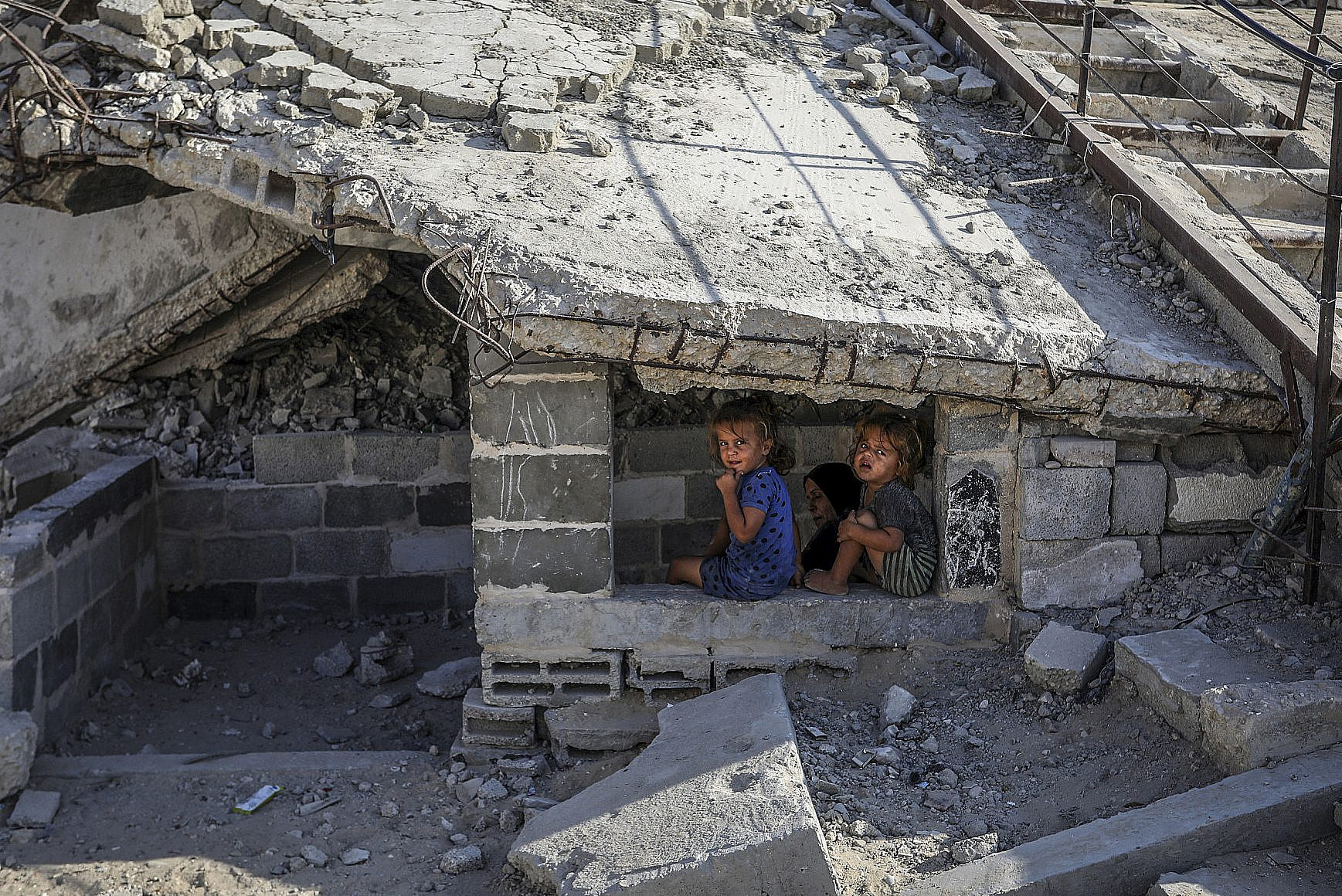

Before I go to sleep, I always find myself asking the same questions: Will the structure of my home hold up through the night? Or will it collapse on top of me and my family, trapping us until we become nothing more than a passing news story — something that gets attention for a day and then disappears?
Those questions have been haunting me since Sept. 16, when I heard that Al-Saada Tower in Gaza City had collapsed, killing at least 21 Palestinians who were buried beneath the rubble.
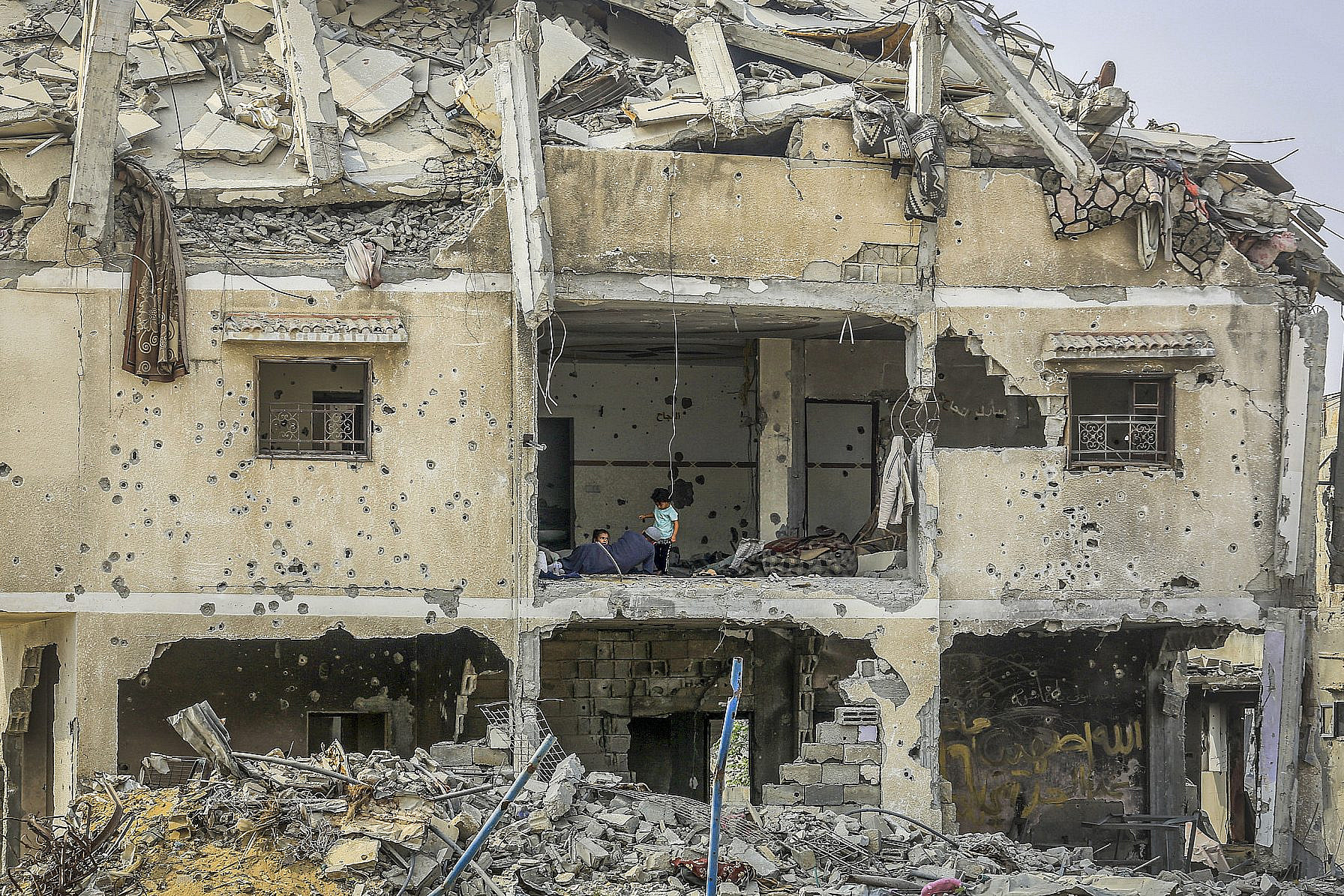
That catastrophe exposed another emergency unfolding across Gaza. Israel damaged or destroyed 92 percent of the enclave’s housing units, but thousands of Palestinians are living in buildings that remain even partially standing because they have nowhere else to go. Walls are cracked, supporting columns have been decimated, and foundations weakened. And as winter approaches, rain, wind, and ongoing Israeli strikes are placing still more strain on already compromised structures.
According to Gaza’s Health Ministry, the Al-Saada Tower disaster brings the total number of people killed in collapses of war-damaged buildings to 61, while around 270 others have been injured and nearly 5,000 families have been forced to leave homes that became unsafe.
Gaza’s Ministry of Public Works and Housing estimates that around 3,000 buildings are dangerous or at risk of caving in. But Israel has been denying the entry of heavy machinery into the besieged coastal enclave, and local authorities lack the materials and funding to secure safe housing for families who would have to leave as their homes are being rebuilt.
For me, the story of Al-Saada Tower was not simply another incident to follow as a journalist. I had already lived through the collapse of half the apartment where I still live today, in the Tel Al-Hawa area west of Gaza City.
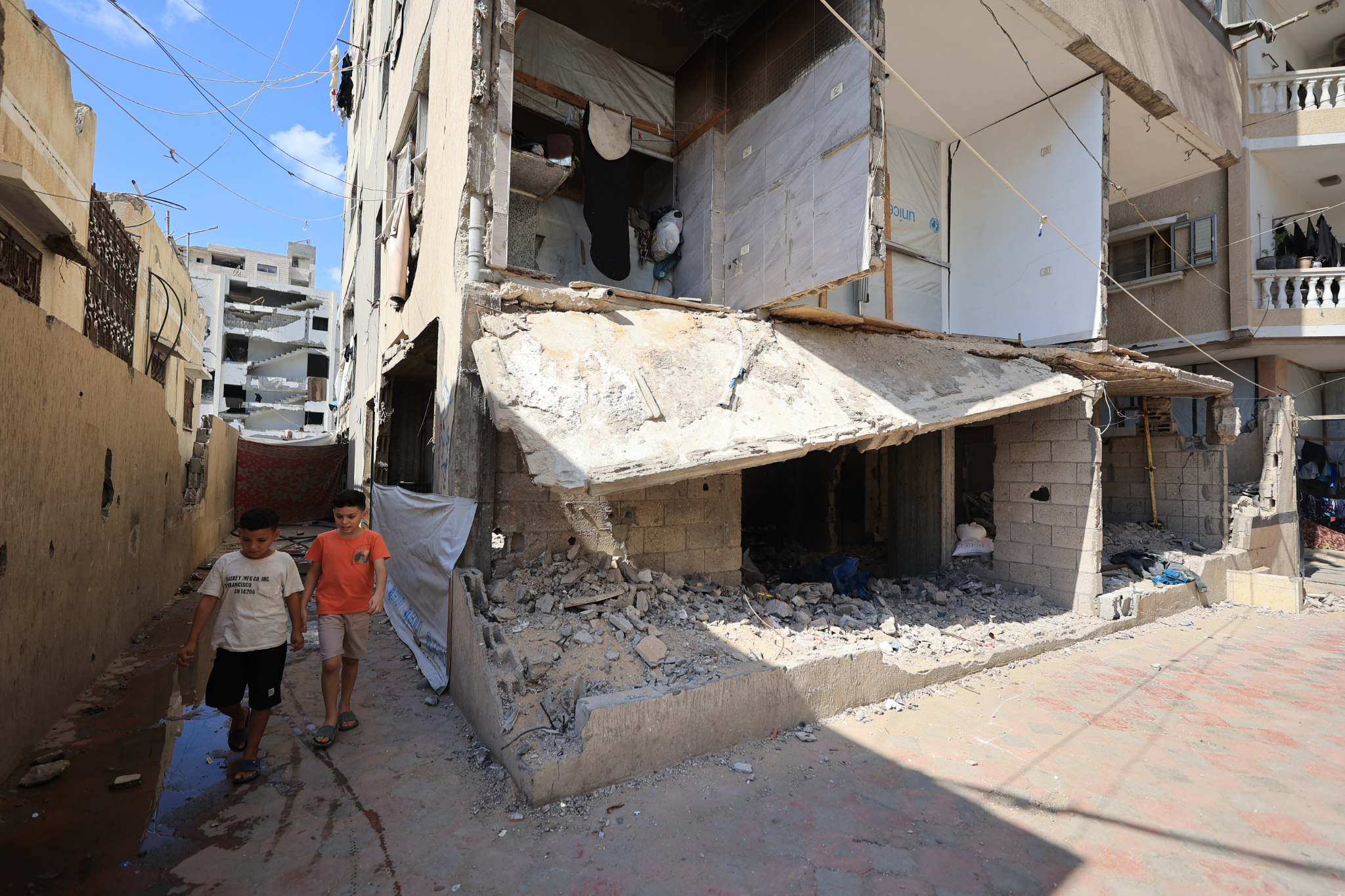
One of the apartment’s main supporting columns had been damaged during the war, after an Israeli tank entered the neighborhood. At the time, I was displaced in Deir Al-Balah in central Gaza. But after we had returned, during a powerful storm in December 2025, half of the apartment crumbled while my family and I were inside. It remains one of the hardest experiences I have ever lived through, and its details return every time I hear about another house or building toppling over in Gaza.
My family and I survived. The half of the apartment that remained standing became our home. We covered the exposed sections with tarpaulins and tried to carry on despite cracks in the walls and ceiling. We reinforced the ceiling ourselves, but no engineer or specialist ever inspected the work. The feeling that we are still in danger has never really gone away.
Since the collapse of Al-Saada Tower, the fear has returned more intensely. A heavy silence has settled over our home. Each of us looks at the ceiling differently now, as though we are waiting for something we do not know when to expect. I live with that fear as a journalist who knows all too well how the deaths of dozens of people can become a breaking-news alert, then a social media post, then another story buried beneath the thousands of reports pouring out every day.
Yet like many families, we have nowhere else to go. For families who have lost their homes, cannot afford soaring rents, or have no access to adequate temporary shelter, even a damaged building can appear safer than the alternative.
The Al-Saada Tower tragedy revealed the consequences of that impossible choice — between living under a roof that could crumble and in a tent that offers little protection from the elements. These families do not need more appeals after buildings collapse. They need intervention before the next tragedy strikes.
The roof that could not protect Islam
Thirty-five-year-old Iyad Azzam struggles to find the words as he speaks about his family: his wife Islam, 33, who was four months pregnant with a boy, three-year-old Rizq, six-year-old Abdul Rahman, and nine-year-old Ferial.
Islam had gone with her children to her family’s home in Al-Saada Tower the day before it caved in, believing that its concrete roof would offer her children more protection from the rain than the dilapidated tent where they were living. Instead, she and Rizq were killed beneath its rubble; Ferial and Abdul Rahman survived.
“We were living in a tent in central Gaza. It had become worn out and water was getting through, and my wife was afraid the rain would be heavy and make the children sick,” Azzam told +972 Magazine.
Several hours later, at around 2:20 a.m., the building buckled. Azzam, who had stayed in the tent to watch over his family’s belongings, knew nothing about what had happened. That morning, an acquaintance of his father came to him and asked him to go somewhere with him, without explaining where they were headed. Iyad kept asking questions. He sensed that something serious had happened, but the man said little.
Then the car stopped in front of the destroyed building. “I got out of the car like a madman,” Azzam said. “I ran around Al-Saada Tower, shouting at the top of my voice: ‘Where are my children? Where did my children go? I want my children!’”
Members of the Civil Defense gathered around him and took him to his brother-in-law, Mohammed Al-Ajlah, who was crying. Mohammed had survived because he lived outside the Tower.
It was then that Azzam learned that his wife, their unborn child, and their son Rizq were among those killed, along with several members of her family. Ferial and Abdul Rahman had survived and been taken to Al-Shifa Hospital. Azzam rushed to Al-Shifa, where after hours of searching, he found his two surviving children. Identifying his wife and son Rizq became another ordeal: A concrete column had fallen onto them when the building collapsed, disfiguring their faces.
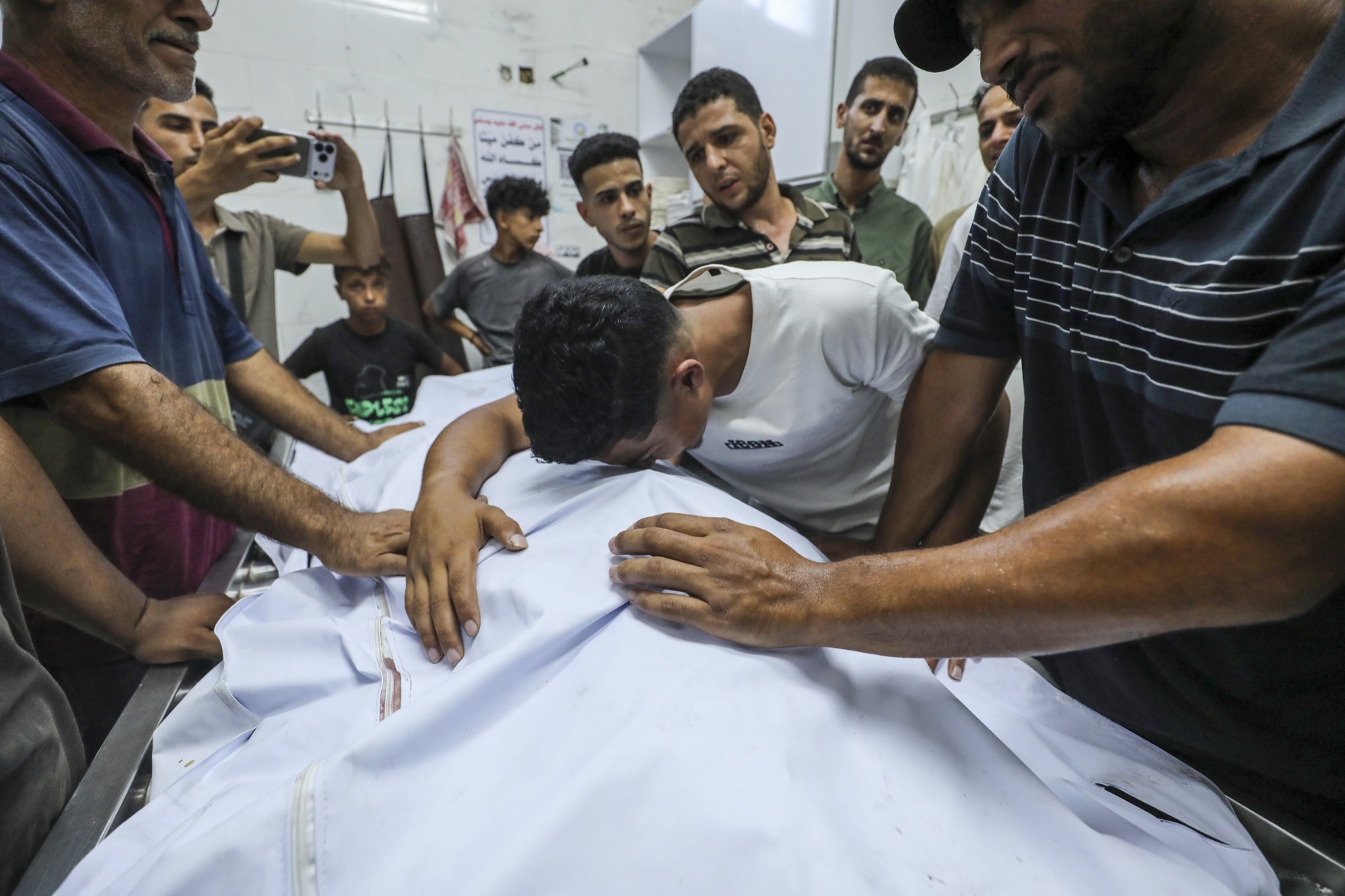
Azzam knew Al-Saada Tower was not fit to live in: During the war, an Israeli strike targeting its ground floor destabilized the structure, cracking its walls and damaging its foundations. But he explained that his wife’s family had nowhere else to go.
“They took shelter in the home they had lived in for years, looking for four walls and a roof to live under.”
Two days after the catastrophe, Ferial was still struggling to speak. “I woke up to the sound of cracking,” she recalled to +972. “I called for my mother. My grandfather answered me; he had been standing nearby. He told me to go back to sleep, saying that everything was fine.”
The cracking grew louder. Then came the sound of the building imploding.
Ferial felt something pressing down on her chest and thought she was dead. She called for her mother, then her grandfather, but no one answered. Reaching out into the darkness, she found her grandfather’s body. She remained there until Civil Defense crews arrived and pulled her from the rubble.
Abdul Rahman remembers one thing from the moment the building came down: something falling onto his mother. He had been sleeping to her right, while Rizq was on her left. The child tried to protect his mother, attempting to stop the column from falling onto her. His hand became caught over his mother’s body.
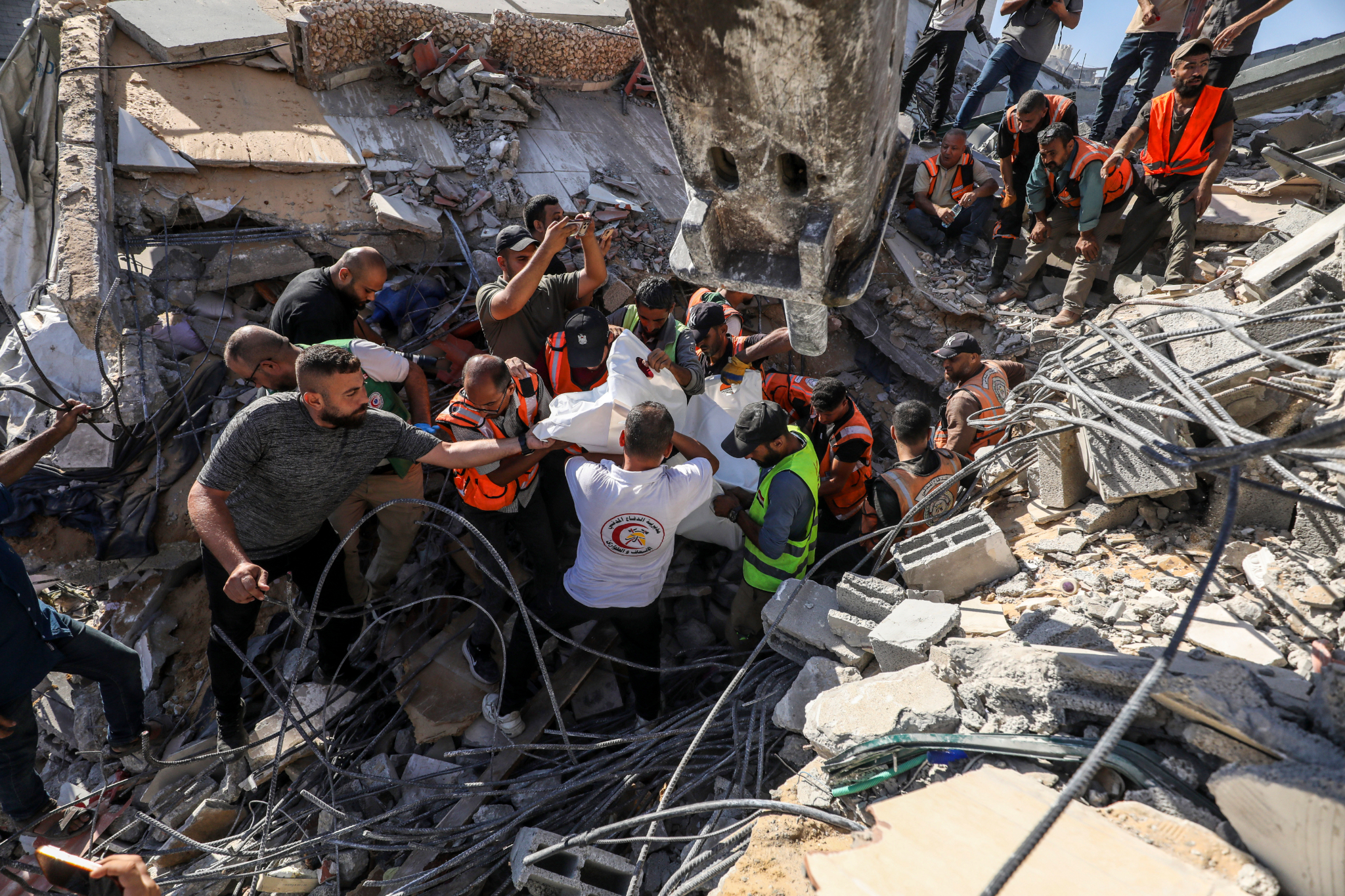
For several hours, rescuers could not free him. He remained there, his hand resting on his mother, until Civil Defense crews were finally able to cut through the column and pull him out.
Since then, his memories have followed him into sleep. Whenever he dozes off, he wakes up trying to protect his mother again, moving his hand in the same way before jolting awake in panic and calling out for her.
Ferial, who suffered a head injury, is also afraid to close her eyes. “Sleep takes me back to that moment,” she said. “I wake up terrified and call for my mother.”
Among the ruins of Al-Saada Tower, small pockets of open space created narrow passages through which some survivors managed to escape. Mahmoud Al-Sotari was one of them. He emerged alive with his family, but one of his daughters was admitted to intensive care with a head wound and three of his brother’s children were also injured.
Al-Sotari left with nothing but the clothes he was wearing. Everything he had accumulated through years of work and life remained beneath the rubble, including the bicycle he used for his delivery job to support his family.
His family lost their home in the Tuffah neighborhood during the first days of the war, forcing them to flee south. Al-Sotari returned to Gaza City about ten months ago, shortly after the October 2025 ceasefire.
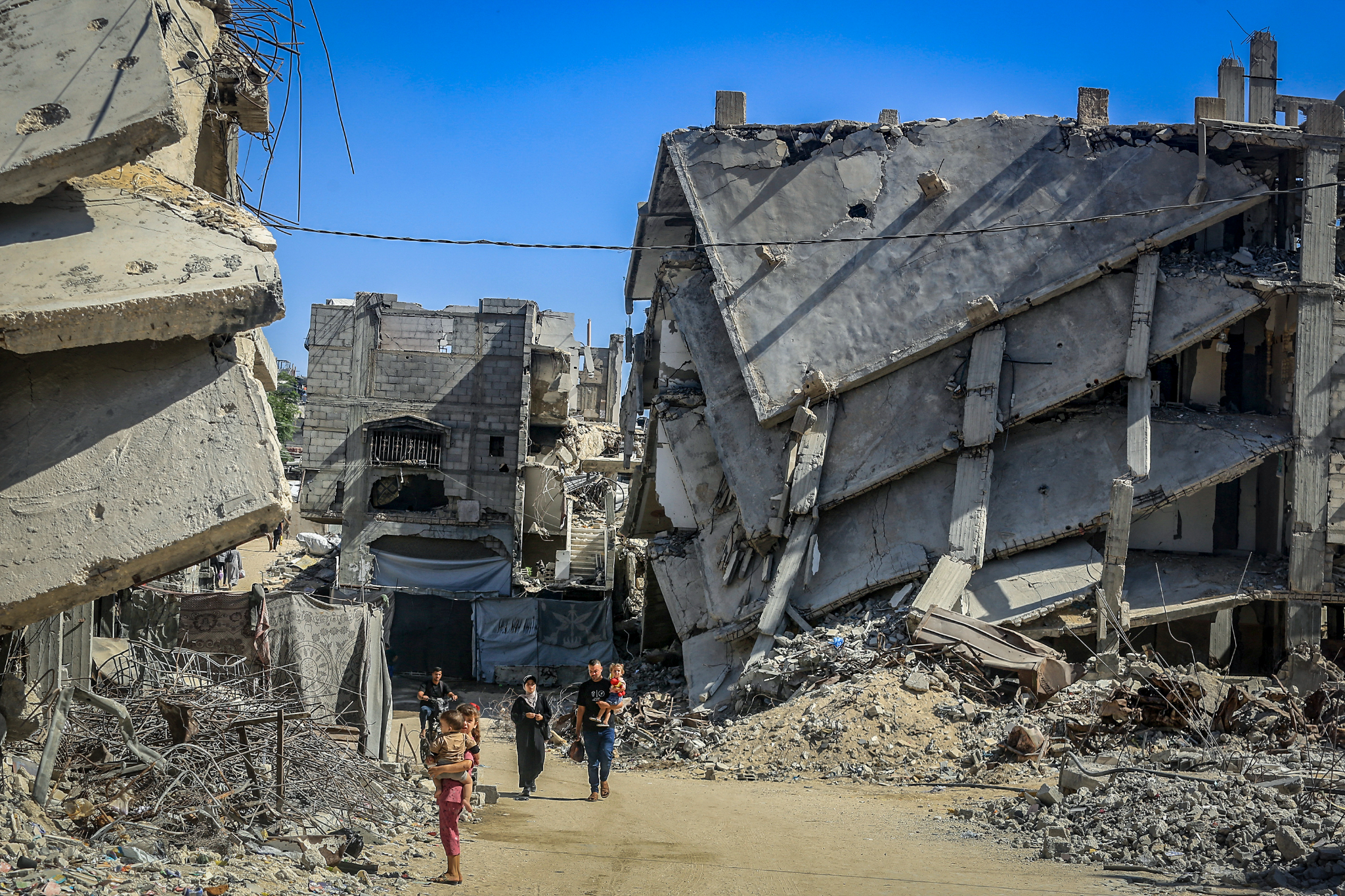
Without a home, a tent, or the money to rent somewhere to live, Al-Sotari began searching for anywhere that could shelter his family. He found Al-Saada Tower, whose residents had already abandoned it. The signs of bombardment were obvious: Walls were cracked and parts of it were leaning. He knew staying there was dangerous. But with nowhere else to go, he moved in.
Al-Sotari, his wife, and their two daughters shared one room, while his brother and his family lived in the room next door. Ten people in all were living in the apartment.
“The building was never really a safe home,” he explained. “It was a temporary roof over our heads, protecting us from the street and the tent — until that roof collapsed on us. We survived by a miracle, but we lost everything.”
Today, Al-Sotari is back at the same site after an organization provided him with a tent and some supplies.
“A number of tents were set up on top of the building [site] after all the rubble was cleared, so the survivors could live there,” he said. “Why wasn’t this done before? Do we really have to go through an experience like this just to get a tent?”
No rescue or reconstruction
Civil Defense crews worked for more than 15 consecutive hours at the site of the Al-Saada Tower, according to Mohammed Al-Maidana, director of media affairs for Gaza’s Civil Defense. They rescued 45 people — 14 of whom were taken to a hospital — while also recovering the bodies of 21 Palestinians, including 12 children and five women, crushed to death.
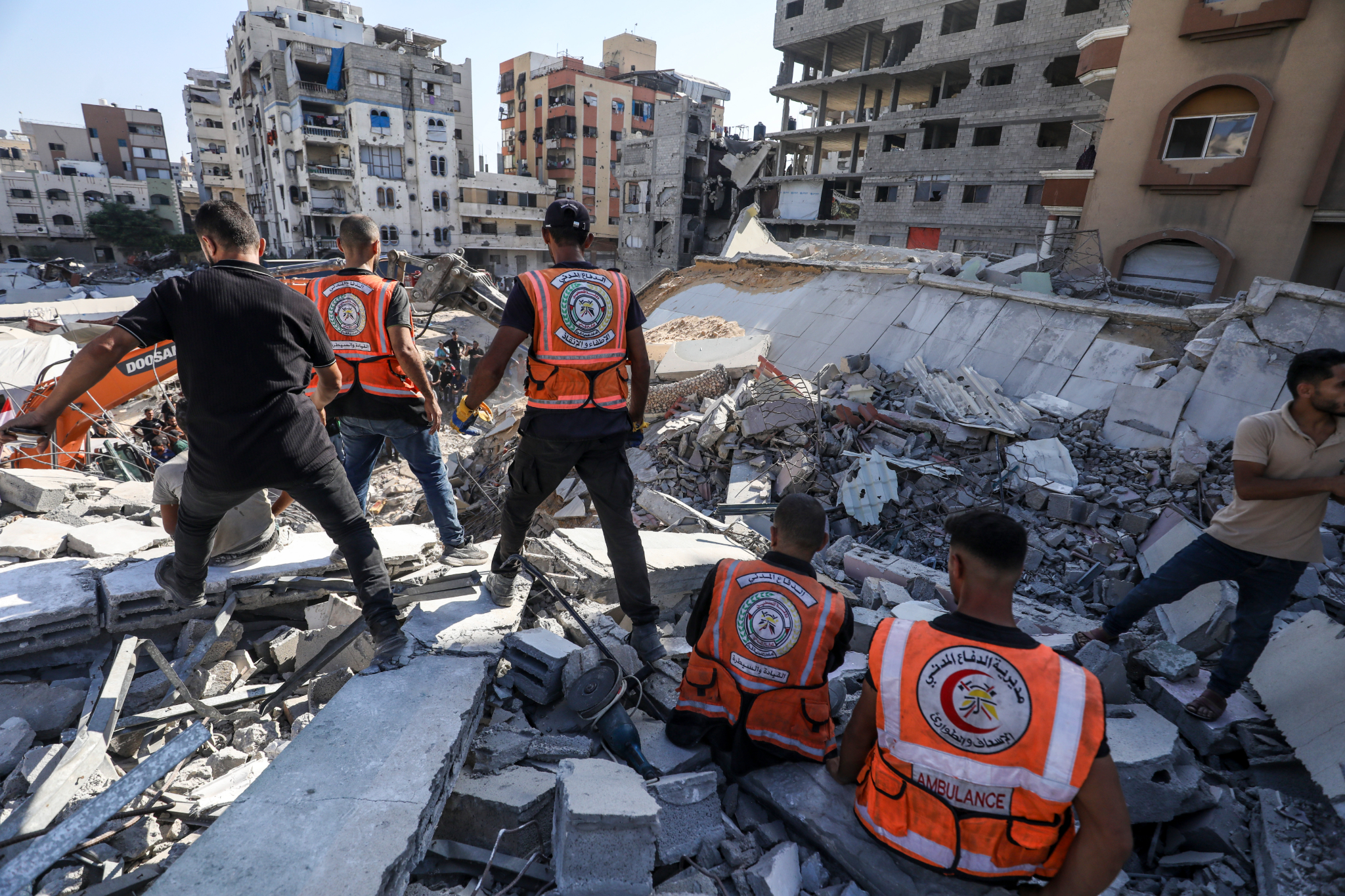
Al-Maidana noted that access to heavy rescue equipment could have allowed teams to reach those trapped more quickly and possibly save more lives. But Israel continues to block the entry of such machinery, as well as the reinforcement materials and funding required to repair thousands of damaged structures.
Mohammed Asaliya, a media official at Gaza’s Ministry of Public Works and Housing, told +972 that the crisis has exceeded the ability of the relevant authorities to respond. As of September 21, while more than 2,000 buildings had been surveyed, preliminary estimates suggested that around 3,000 buildings across Gaza were at risk of collapse. Of the buildings already surveyed, more than 250 require complete and immediate demolition, around 870 require partial demolition, and approximately 880 remain under structural assessment.
Asaliya explained that “the surveying and assessment operations are carried out by structural committees working jointly with the Ministry of Public Works and Housing, municipalities, Civil Defense and the Engineers’ Syndicate, based on field visits, reports from residents and preliminary surveys.”
While the Public Works and Housing Ministry identifies the structures considered to be at highest risk based on reports from Civil Defense crews, the Engineers’ Syndicate carries out technical inspections of homes. “Field inspections in Gaza have identified cracks in foundations and load-bearing walls, missing sections of roofs, suspended concrete elements and damage to the main structural supports,” Asaliya said.
Some buildings can be stabilized quickly and their load-bearing elements repaired. Others are too badly damaged to save. Asaliya estimates that between 60 and 70 percent of buildings classified as dangerous require demolition.
When a building is deemed to pose an immediate danger, authorities coordinate with partner organizations to repair or demolish it. The shortage of heavy machinery makes that work far more difficult: Renting equipment from the private sector is expensive, while fuel and oil prices have also risen.
“The operating efficiency of the equipment we have has fallen by more than 55 percent because of wear and tear and shortages of maintenance, oil, and spare parts,” Asaliya noted. “We also need precision demolition equipment for high-rise buildings, as well as hydraulic hammers and cutters.
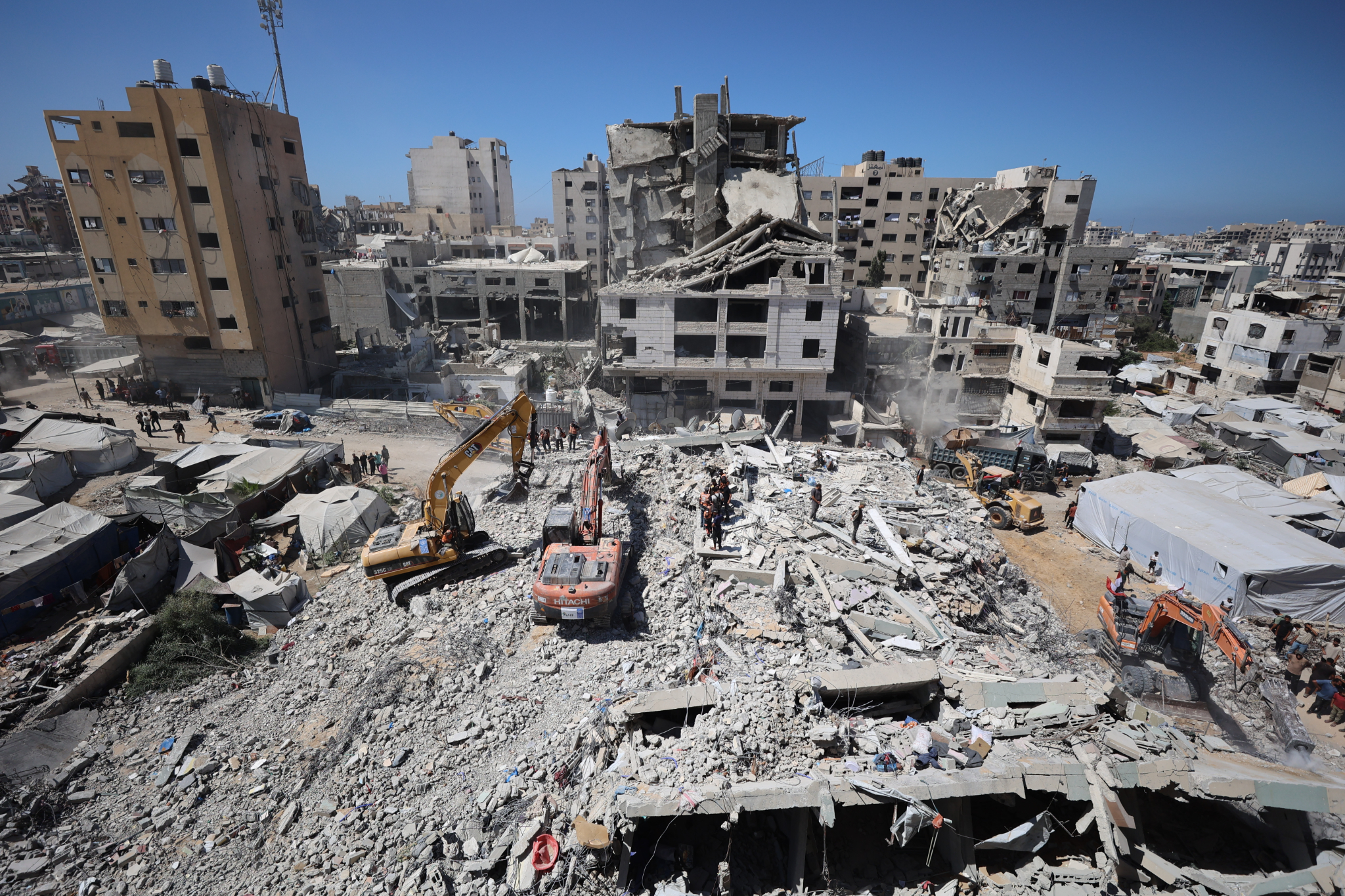
“The ministry has managed over the past two years to remove around 320 dangerous buildings using whatever manual equipment and basic machinery was available,” he continued. “But the scale of the intervention remains limited compared with the number of buildings at risk.”
After the Al-Saada Tower disaster, and as the rainy season in Gaza approaches, the Government Media Office in Gaza launched an emergency plan to evacuate and demolish 255 buildings considered at risk of collapse. The Public Works and Housing Ministry is expected to lead the effort in cooperation with international and UN organizations operating in Gaza.
But demolishing or evacuating a dangerous building creates another problem: where to put the people living inside it. The plan calls for residents to be notified that they must evacuate, warning signs to be placed around unstable structures, and temporary shelter to be provided where possible.
According to Asaliya, authorities are trying to persuade residents to leave dangerous buildings while simultaneously searching for shelter options through partner organizations. Among the options under consideration is relocating some families to Nuseirat camp after improving conditions there, or providing tents and related supplies to families forced to evacuate — as was eventually done for survivors of Al-Saada Tower after the rubble had been cleared.
But given the scale of the problem, it is likely that there will not be enough land and shelter materials to relocate all families in damaged buildings across the Strip. And some families are refusing to leave buildings they know could cave in because no one can tell them where they are supposed to go.
‘Every night I hear cracking sounds’
Of the buildings that the Ministry of Public Works and Housing surveyed and determined are at risk of collapse, over 700 are located in Gaza City — the highest number of all urban areas across the Strip. One of those buildings is Al-Mu’tazz Tower 4, near the 17 Roundabout west of Gaza City, currently home to more than 60 families who are well aware of the dangers.
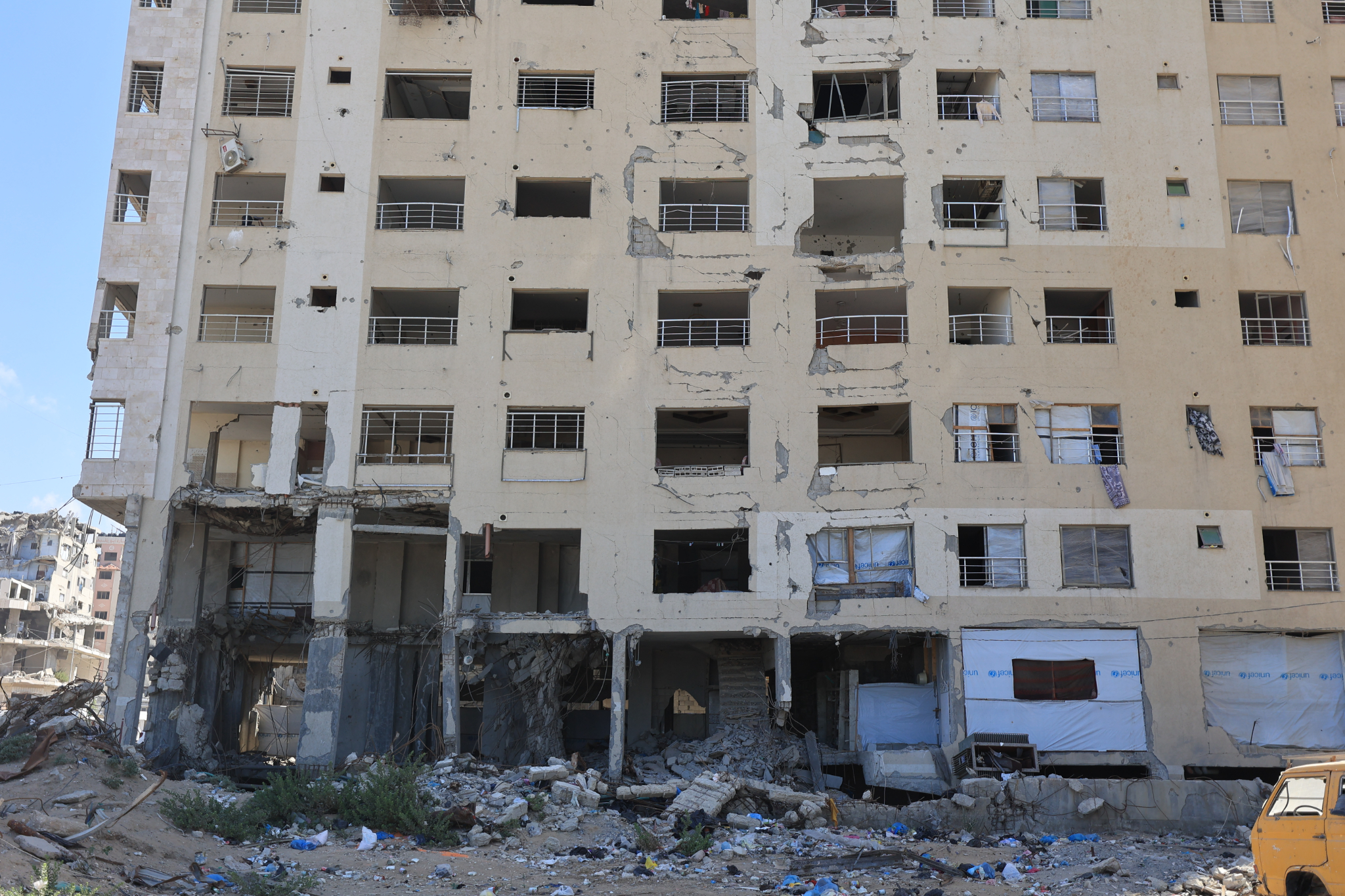
During the war, Israel repeatedly targeted the 14-story tower, with six apartments on each floor, most recently last October. That strike destroyed 11 structural columns on the building’s northwestern side, according to Mohammed Al-Sharfa, 45, a member of the tower’s management committee — and residents say its structural condition has continued to deteriorate.
“Whenever there is a demolition in eastern Gaza or a strike nearby, we notice new cracks in the walls of our homes. Stones and sand fall, and we feel the ceilings of the apartments shaking,” Al-Sharfa told +972.
After the ceasefire, the Civil Defense instructed them to evacuate, warning that the damaged section could collapse and bring down the rest of the tower. But for dozens of families, leaving is not simply a matter of heeding an evacuation warning. Al-Sharfa, a father of eight, is caught between two fears: remaining beneath a roof that may not hold and not having anywhere else to go.
“Leaving the apartment isn’t easy,” he said. “We can’t live in a tent, and renting another apartment has become extremely difficult, especially because most families simply can’t afford it.”
On the most severely damaged side of Al-Mu’tazz Tower lives Umm Marwan Al-Hams, a 33-year-old widow with five children. “Every night I hear cracking sounds coming from the building, and I keep thinking about what might happen,” she said. “Could the building collapse on us? I stay awake thinking about ways to escape if it does. We don’t feel safe.”
She does not know whether they are harmless or signs that the building has suffered further damage. However, she also sees new cracks appearing in her own apartment and neighboring units, and describes the residents’ psychological state as “very difficult.” A nearby explosion, a new crack in the wall, or a sound in the middle of the night is enough to bring the fear rushing back.
Most read on +972
Al-Sharfa has been urging the authorities to reinforce damaged columns and foundations with supports or large concrete blocks, which could at least temporarily reduce the risk of collapse. But the Civil Defense and Ministry of Public Works have told residents that securing the necessary funding to reinforce the building is difficult.
Al-Sharfa sees a painful contradiction. “When a building collapses, international and Arab organizations mobilize to rescue people. But why can’t the support come now, to reinforce the building and protect residents before disaster strikes?”