
In partnership with
The public launch of ChatGPT in late 2022 created, almost overnight, a new authority on what constitutes the truth. In less than four years, AI chatbots have become, for many, another layer of mediation between the world and how it is understood, their answers often taken as fact and invoked to settle disputes.
As Israel’s standing in global public opinion plummeted to new depths under the weight of its far-right government and, since October 2023, the genocide in Gaza, it identified this burgeoning arena as a target for influence.
In recent years, Israel’s hasbara apparatus has expanded beyond traditional tools — formal spokespeople, public relations campaigns, ads in the press and on social media — and started working intensively to shape the way large language models (LLMs) such as ChatGPT, Claude, Gemini, and Grok present the reality between the river and the sea and interpret Israel and its military’s actions.
At the end of August, the Guardian published an investigation illustrating what this public diplomacy looks like in the age of AI. At its center was a website called Hanover Institute for Public Policy — a virtually unknown American organization presenting itself as a policy research institute that, over the course of just nine days, flooded the internet with material about Israel-Palestine.
The website appears to have gone live in early August, with no physical address listed and no stated legal entity behind it. Its output was staggering: Between Aug. 6 and 14, the Hanover Institute uploaded 124 “research papers,” totaling more than 560,000 words. On Aug. 12 and 13 alone, it published 73 new articles. None were attributed to a named researcher.
Nor does the choice of topics appear random. Nearly all the headlines were phrased as questions a user trying to learn about Israel-Palestine might type into an AI chatbot: Is Israel committing genocide in Gaza? Has it expelled Palestinians from their land? Is anti-Zionism antisemitism? Is Israel starving the residents of Gaza or committing war crimes?

The articles were written in the style of academic research, with citations to the World Bank, UN agencies, human rights organizations, and Palestinian and Israeli sources. But their framing consistently worked to undermine criticism of Israel — or, at the very least, to cast allegations against it as questionable or unsubstantiated.
Although the website originally claimed that the institute operated without external funding, the Guardian’s investigation found that it was linked to Piro Inc., a New York-based media company working as a subcontractor for an Israeli government agency. The connection to Israel’s public diplomacy apparatus emerged from documents Piro filed with the U.S. Department of Justice. Those filings stated that the company distributed the materials on behalf of Havas Media Germany, the German arm of the French media conglomerate Havas, which had been contracted by the Israel Government Advertising Agency (LAPAM).
The documents revealed that the website was built using res.ai, an online service that analyzes how chatbots find sources and display information, and in turn shows companies how to create content that these systems are likely to deem credible and cite in their responses. Piro itself markets AI Story Optimization, a service designed to create and publish LLM-tailored content on external websites.
The logic behind these services resembles a long-standing concept in digital marketing: Search Engine Optimization, or SEO. But it is adapted to an era in which users no longer turn to search engines for further reading but to chatbots that generate answers directly in conversational language. This emerging field is known as generative engine optimization, or GEO.
Another company providing public relations services to Israel in this field is Clock Tower X, an American digital influence agency founded by Brad Parscale, Donald Trump’s former campaign manager.
Here, too, the arrangement was brokered through the French advertising and media giant Havas. (According to a filing with the U.S. Department of Justice, Havas hired Clock Tower X as a subcontractor under its agreement with Israel’s Foreign Ministry.) Clock Tower X was tasked with producing and distributing large volumes of content tailored to different audiences, as well as running campaigns designed to optimize search results.
In April 2026, Axios reported for the first time how Clock Tower X implements this provision in practice. It found that Parscale’s company had set up nine pro-Israel websites that align with the way LLMs locate and prioritize information. To this end, Clock Tower X enlisted Market Brew, a company specializing in search engine and AI optimization, to inject pro-Israel content into what Axios termed “the online circulatory system.”
Market Brew even built a simulated AI system to test which types of texts such systems are likely to retrieve; it concluded that content backed by sources and written in a factual tone is more likely to appear in chatbots’ responses.
Following Axios’ expose, Drop Site sought in July to assess how successful Clock Tower X had been in influencing AI-generated responses to questions about Israel-Palestine. Its investigation found that hundreds of pages from the network of websites built by the company had been captured by Common Crawl, a vast archive of web pages widely used to assemble training datasets for LLMs. According to Drop Site, roughly 85 percent of the network’s approximately 900 pages and URLs had already appeared in the archive.
When Drop Site reporters posed questions about topics the advocacy websites were designed to address, several leading AI platforms — including Perplexity, Copilot, and Gemini — cited Clock Tower X’s content among the sources for their answers. In one example, when asked about the benefits of U.S.-Israel military cooperation, Perplexity cited a website created as part of the campaign at the top of its source list.
The decline of traditional influence
The expansion of Israel’s public diplomacy efforts into AI is part of a broader strategic shift — backed by massive financial investment — aimed at countering growing anti-Israel sentiment globally, and in the United States in particular.
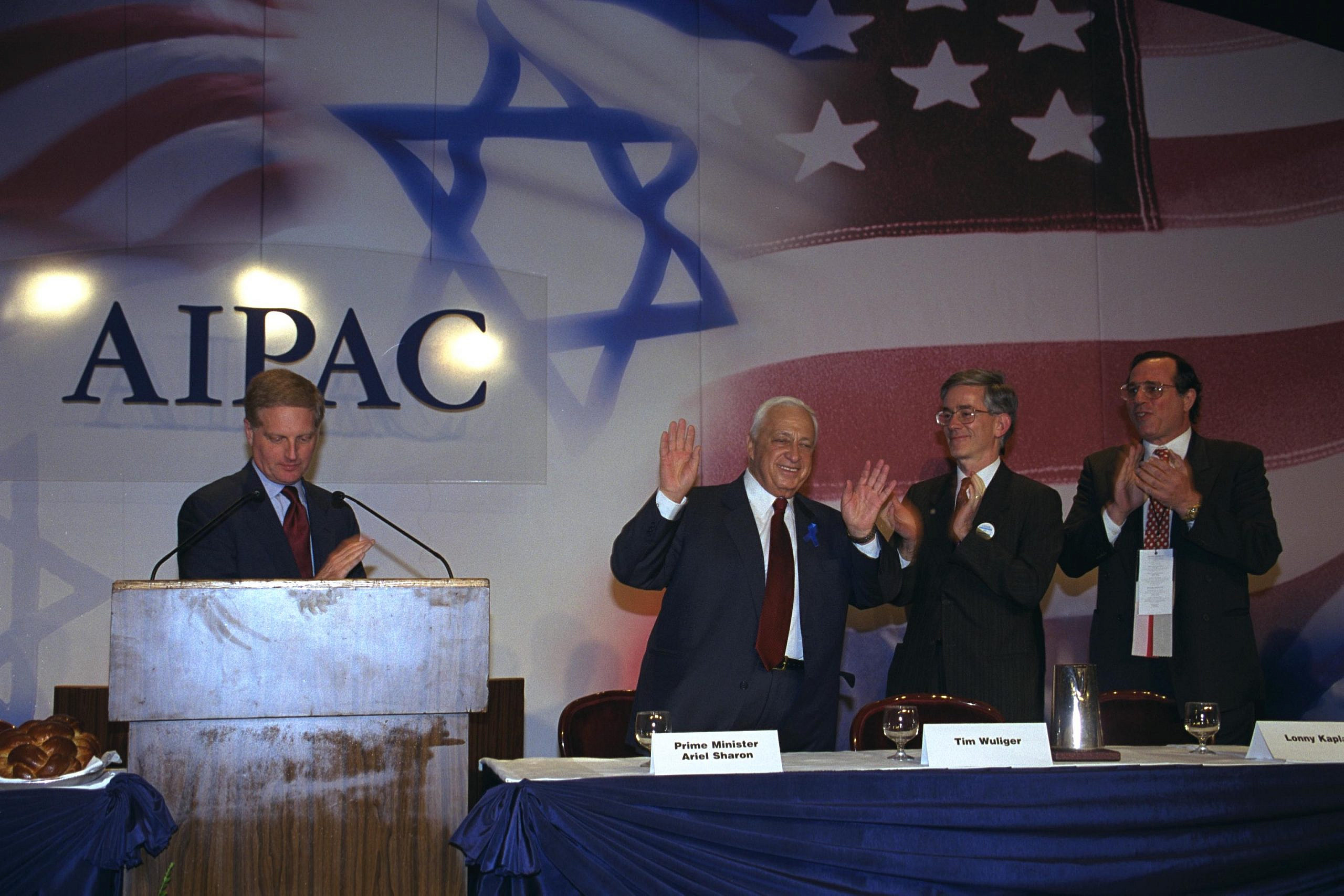
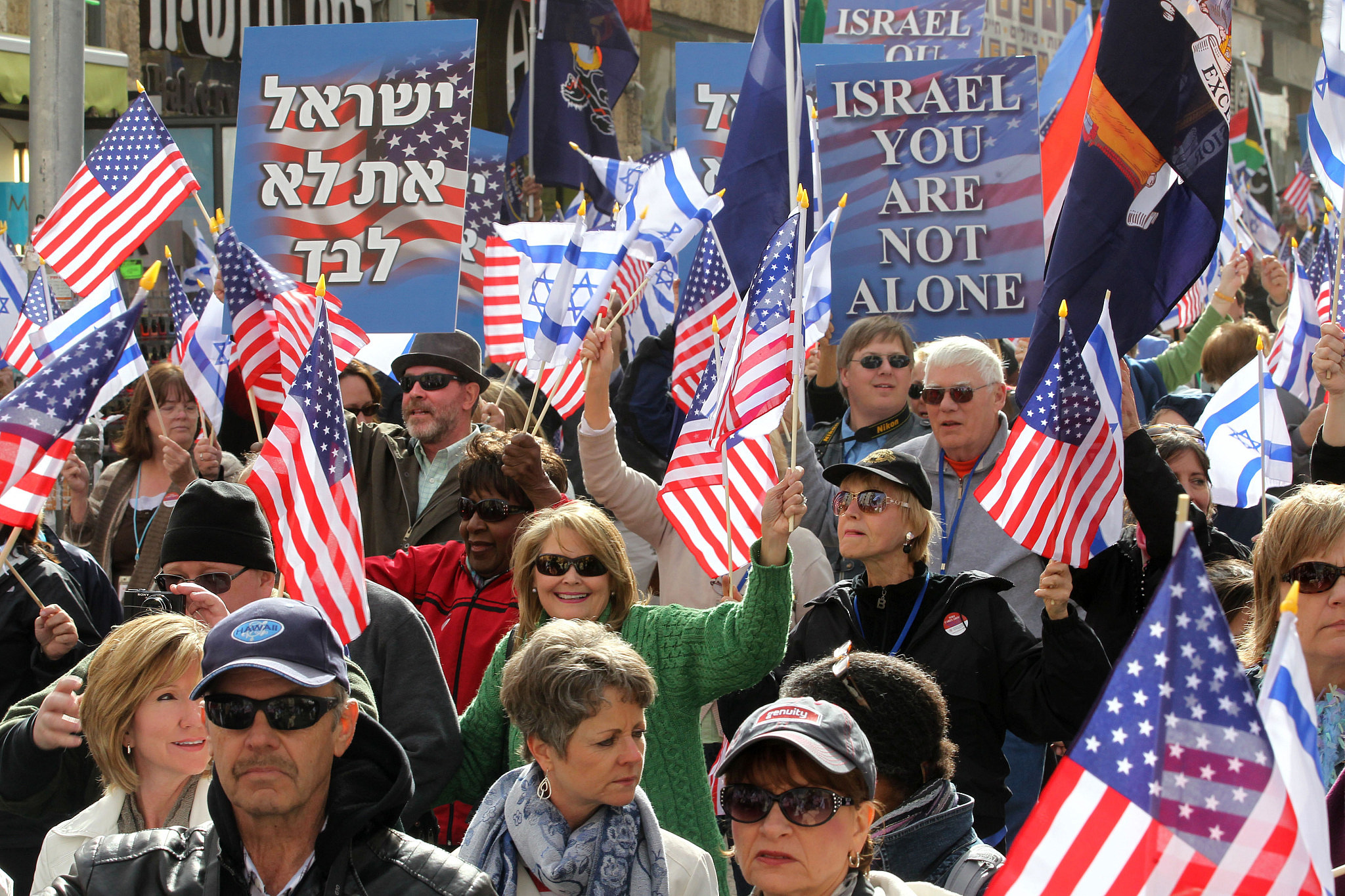
For decades, Israel has benefited from a distinctive infrastructure of influence in Washington built around a network of domestic organizations, donors, religious groups, and political allies that have promoted support for Israel from within the American political system: most prominently AIPAC, alongside Christian evangelical organizations such as Christians United for Israel (CUFI).
In a comprehensive study published by the Quincy Institute in July, Nick Cleveland-Stout examined the scale of Israel’s influence apparatus and the ways it has evolved in recent years. He described this system as a kind of “informal lobby”: an infrastructure that allows Israel to influence the U.S. political system without being subject to the same disclosure and transparency requirements that apply to foreign lobbying operations. AIPAC, for example, is legally considered a U.S. organization and therefore is not required to register under the Foreign Agents Registration Act (FARA).
In recent years, however, Israel’s ability to rely on AIPAC to sustain political support in the United States appears to have weakened. As support for Israel declines among Democrats and younger voters, AIPAC has shifted from being an asset to a liability for Democratic candidates.
In May 2026, the Washington Post described how Ala Stanford, a candidate in Pennsylvania’s Democratic primary, was forced to fend off claims that she was backed by AIPAC, even though the organization had contributed nothing to her campaign. An indirect, historical link between AIPAC and a group supporting Stanford was enough for her opponent, Chris Rabb, to turn the association against her. Rabb ultimately won the primary.
In Michigan, the political cost of being associated with AIPAC was even clearer. The group spent more than $30 million backing Haley Stevens in the Democratic Senate primary, yet she still lost to Abdul El-Sayed, who made AIPAC’s support for Stevens a central issue in his campaign. In August, the Washington Post quoted a political activist involved in the race who said Stevens “didn’t understand the extent of the hostility toward AIPAC until it was too late.”
Meanwhile, on the American right, the war with Iran has also damaged AIPAC’s standing among Republicans. According to a poll published by the Washington Post and ABC News earlier this year, 52 percent of Americans said Israel had too much influence over Trump’s decision to attack Iran. In the same poll, 47 percent of respondents said the United States supports Israel too much, up from 18 percent in 2015.
The changing perception of AIPAC on the left, and the erosion of support for Israel on the right — which, until recently, seemed untouchable — have created a strategic problem for Israel’s public diplomacy apparatus. In response, the Israeli government began funding channels designed to reach the American public more directly, working through contractors and subcontractors across the media, marketing, political consulting, technology, and influencer industries.
But the more intimately Israel entered the battle for U.S. public opinion, the more evidence it was compelled to leave behind as to how that battle was being waged.
As much of this work shifted to direct government payments to PR firms, campaign consultants, media companies, and technology contractors, a growing share of the influence effort fell under disclosure rules that require transparency. In the process, the new network created a paper trail that makes it possible to trace how the operation works: According to Cleveland-Stout’s report, 17 new companies registered under FARA in 2024 and 2025 to advocate on Israel’s behalf.
This paper trail is what enabled the Guardian to uncover the links between Piro, the Hanover Institute, and the Israel Government Advertising Agency; what allowed Axios to trace the Foreign Ministry’s contract with Clock Tower X; and what formed the basis of Cleveland-Stout’s research for the Quincy Institute.
‘An all-out information war’
The expansion of Israel’s public diplomacy efforts has come with a substantial price tag. According to Cleveland-Stout’s study, the Israeli government has spent more than $1 billion on public diplomacy worldwide since October 7, 2023. In the U.S. alone, more than $100 million has gone toward activities registered under FARA.
Campaigns aimed at influencing AI systems represent only one part of that spending; the funding also covers public relations and lobbying, advertising, influencer campaigns, social media operations, outreach to audiences where support for Israel has declined, and direct engagement with journalists, religious figures, and other opinion-makers. According to the Quincy Institute study, for example, the Foreign Ministry brought roughly 300 delegations to Israel in 2025 alone, comprising some 6,000 participants from 70 countries.
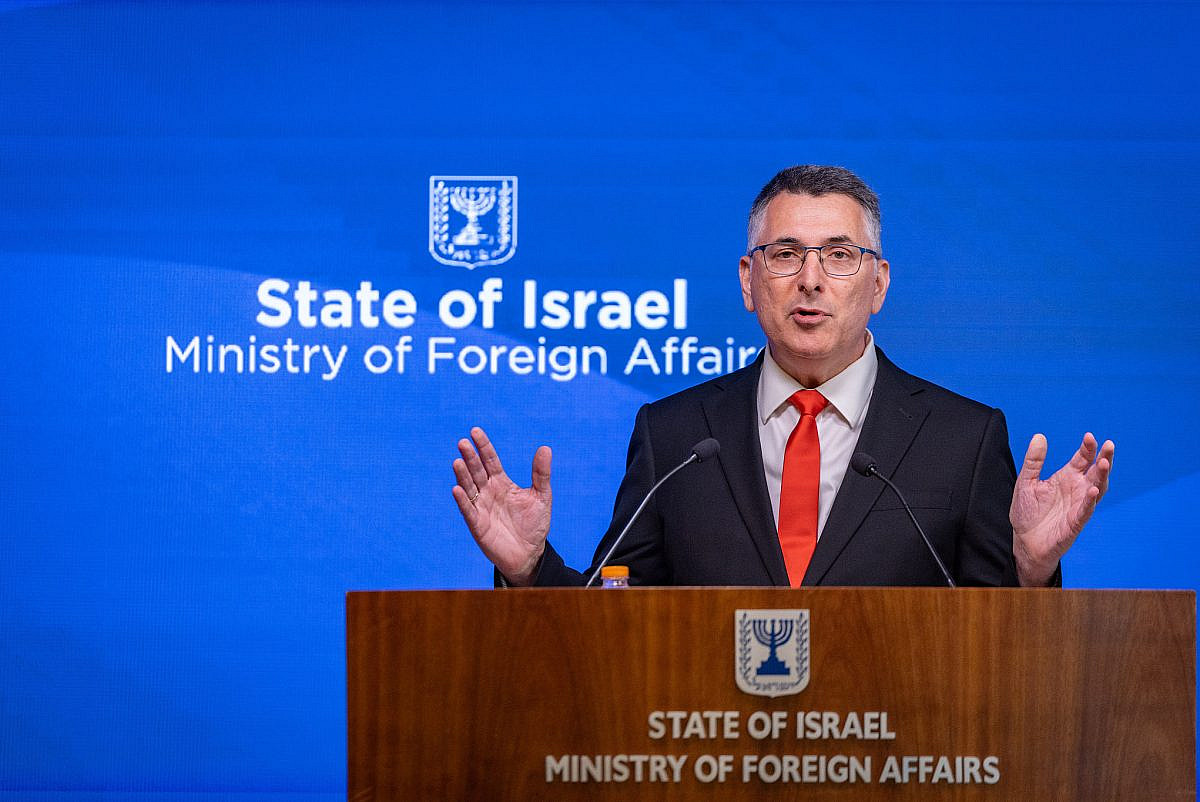
A significant expansion in public funding for Israeli public diplomacy came after Gideon Sa’ar took office as foreign minister in November 2024. Under the coalition agreement with his party, responsibility for international public diplomacy was placed under the Foreign Ministry, and shortly afterward the government approved an allocation of NIS 545 million (around $180 million) to “strengthen public diplomacy regarding Israel and its policies worldwide.” In the government’s 2025 work plan, the initiative was framed more explicitly as an effort to “strengthen Israel’s cognitive warfare capabilities worldwide.”
During a Knesset debate in June 2025, Yacov Livne, the Foreign Ministry’s deputy director-general for public diplomacy, said the funds — which amounted to “a lot compared to what we had at our disposal in the past” — were being used to implement a plan intended to “change the diplomatic situation and the way the world viewed us.”
The scale of the increase was later underscored by the ministry’s director-general, who said that in previous years its worldwide public diplomacy budget had amounted to just NIS 25–27 million ($8–9 million) annually. Within a year, the dedicated budget had grown to roughly 20 times its previous level.
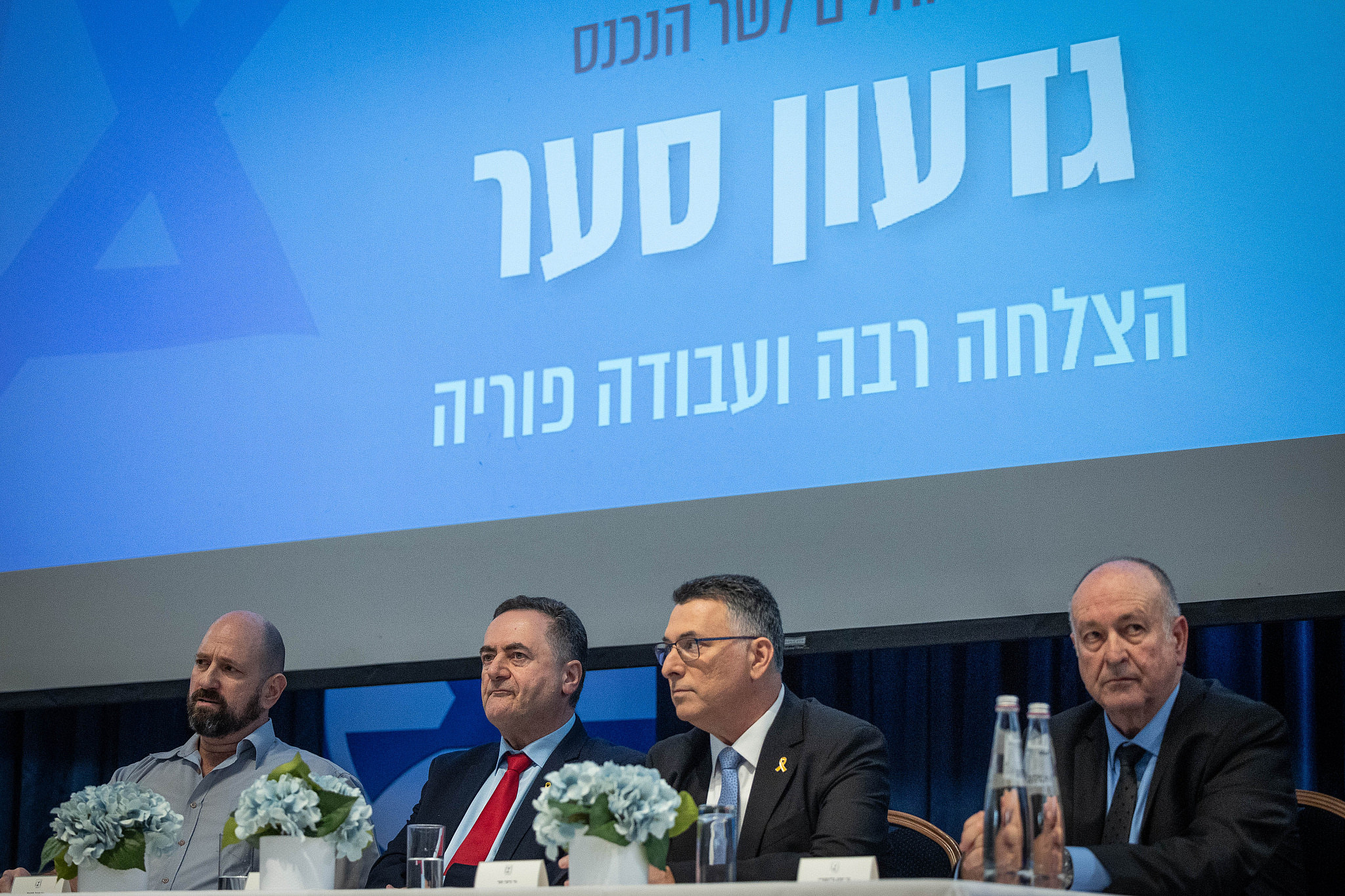
The flow of public funds into Israel’s public diplomacy apparatus continued throughout 2025. In December, the Knesset Finance Committee approved an additional NIS 150 million ($50 million) for the Foreign Ministry — NIS 90 million for a public diplomacy campaign and NIS 60 million to bring hundreds of influencer delegations to Israel.
The 2026 budget increased funding again in part to finance campaigns aimed at shifting global public opinion, along with delegations and other outreach efforts. By July 2026, Foreign Ministry director-general Eden Bar Tal was citing a total budget of roughly NIS 1.2 billion (around $400 million) for “cognitive warfare and public diplomacy.”
Even these enormous sums do not capture the full extent of government spending in this area. For years, Israel’s public diplomacy apparatus has been spread across a proliferation of government bodies, making it difficult to determine the total amount of public money devoted to propaganda and image-building.
Alongside the Foreign Ministry, the National Public Diplomacy Directorate in the Prime Minister’s Office, the Diaspora Ministry, the Government Advertising Agency, the IDF Spokesperson’s Office, the Information Ministry, and the Strategic Affairs Ministry have all played roles in promoting Israel’s image abroad. As early as 2012, the state comptroller warned of prolonged disputes over authority, responsibilities, and resources, as well as information gaps and poor coordination among the various bodies.
That fragmentation is also evident in the emerging effort to shape AI-generated information. Alongside the hundreds of millions allocated to the Foreign Ministry for AI-related public diplomacy, the Diaspora Affairs Ministry presented its own “proactive measures” in February 2026.
A ministry representative described the creation of dozens of informational websites on subjects including October 7, UNRWA, Hamas documents, and international reports, as well as analyses tracking how different AI models responded to that material. She characterized the effort as “an all-out information war” and said the ministry was systematically working to influence AI models, counter what she described as “media biases,” and expose “false information, including cases where journalists are exposed as being involved in terrorism.”
Government investment in public diplomacy has expanded against the backdrop of the decline of the Foreign Ministry’s traditional diplomatic capacity. For more than a decade, state comptroller reports, diplomats, and researchers have warned of staff shortages, budget cuts, and the declining status of Israel’s professional diplomatic corps. In 2019, budget constraints forced diplomatic missions to suspend some of their activities.
Most read on +972


By July 2026, Foreign Ministry director-general Eden Bar Tal acknowledged that while the ministry had traditionally focused primarily on political and diplomatic affairs, a 2025 government decision had changed its priorities: “Public diplomacy is the Foreign Ministry’s primary role.”
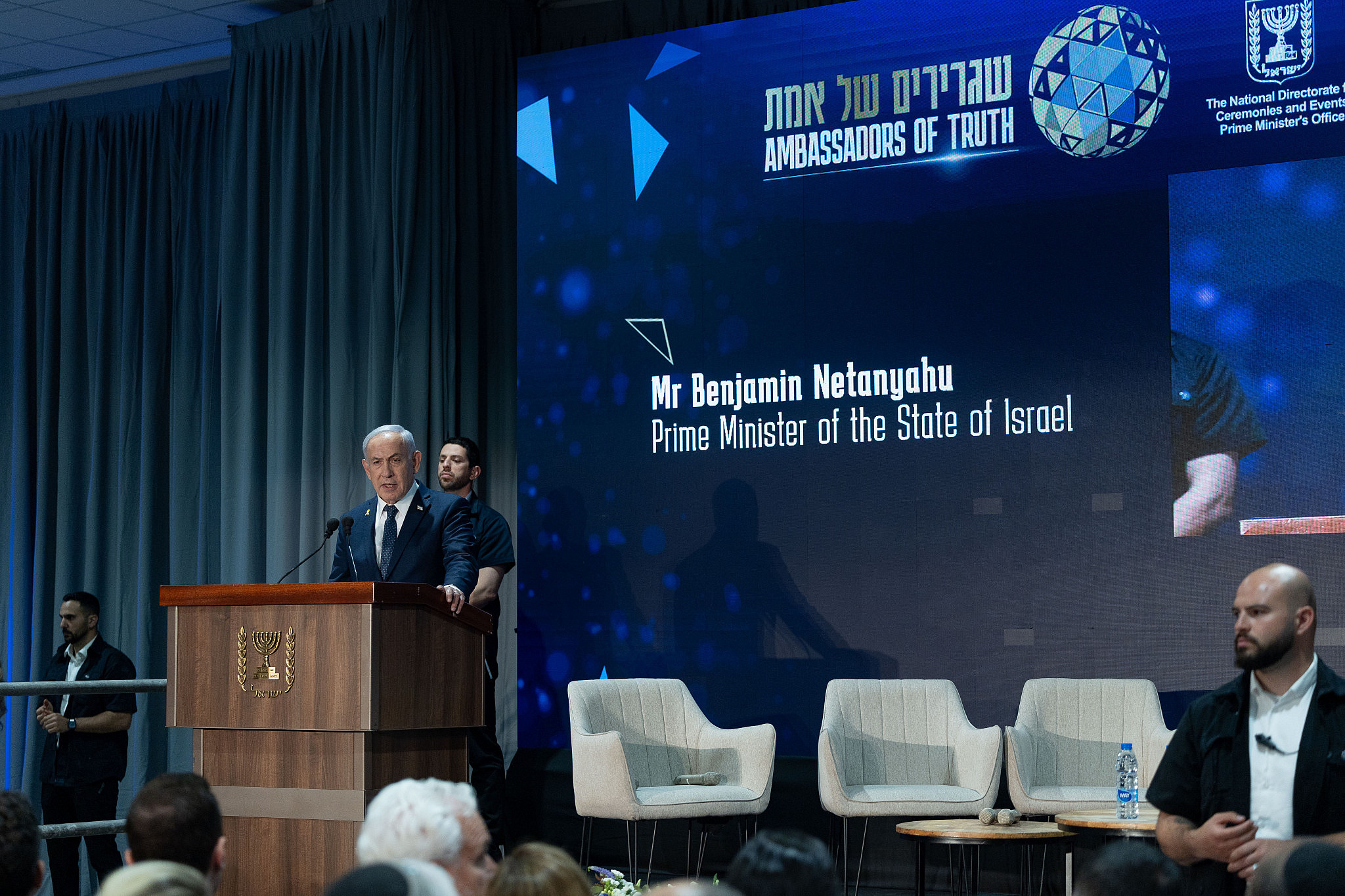
Since October 2023, Israel has poured ever greater resources into what Prime Minister Benjamin Netanyahu has described as the “eighth front” of the war: shaping how its actions are perceived amid a global image crisis that continues to deepen. Yet all of this public expenditure and investment in sophisticated technologies has done little to halt the erosion of Israel’s standing around the world.
To a large extent, the Israeli public lives within a cognitive bubble that filters out evidence of unchecked violence, ongoing violations of international law, racist discrimination, punitive policies, and the persistent disregard for Palestinian lives and property. Such a bubble cannot be sustained without an education system and a media that are fully enlisted, betraying their critical roles.
The success of this model at home may explain why the government appears to believe it can counter criticism abroad by reshaping perceptions of reality rather than changing reality itself. This requires adapting the propaganda apparatus to the tools through which those perceptions are formed. A decade or two ago, these tools were social media platforms; today, they are AI-powered chatbots.
A petition by the Movement for Freedom of Information recently exposed the amount of money the Netanyahu family spends on makeup and hairstyling: thousands of shekels a month. It is a drop in the bucket compared to the billions the state pours into public relations, but the underlying impulse is similar — a wasteful use of public funds in a futile attempt to manage appearances.
The pretense, whether applied to the Netanyahus’ faces or to Israel’s crimes, cannot conceal reality. In the end, facts have a way of breaking through.
A version of this article was first published in Hebrew on Local Call. Read it here.