

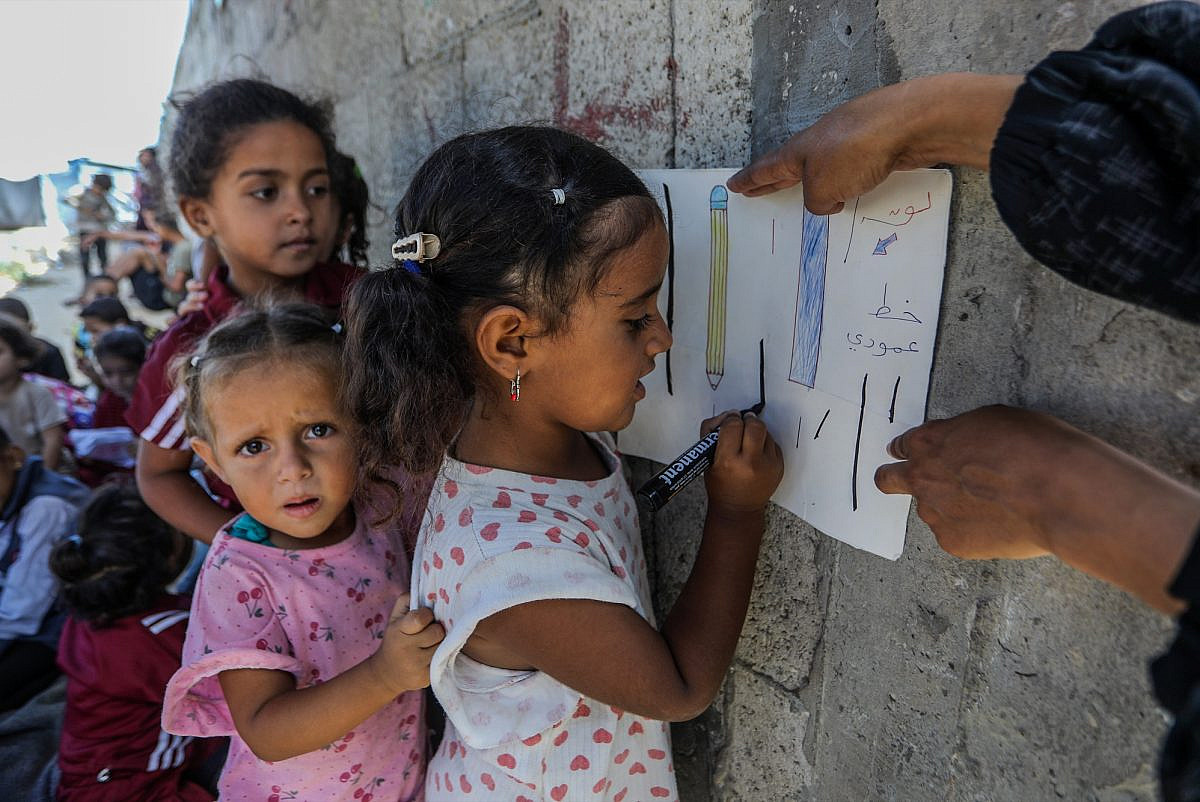
Three years have passed since I last stood in my classroom to teach my students. Three years without waking up at dawn to get ready for the day, wondering what to wear so I would look my best for them. Three years without making the familiar journey north from my home in Al-Fukhari to Gaza City, gazing out the taxi window at the schoolchildren making their way to class.
It’s been three years since I saw the crowds of children gathering outside the school, talking and laughing with their friends in a way that filled my heart with joy. The years of war robbed me of that morning ritual: the children greeting me at the school gate and their hugs that gave me such energy. And hearing their welcoming voices as I entered the room, before we would discuss their homework and our lessons for that day.
The Rosary Sisters School, a private Catholic school in the Tel El-Hawa neighborhood, was where I began working in 2019 after many attempts to secure a permanent teaching position. I felt it was a dream come true to finally be able to practice this profession every day. I never once felt bored with teaching, nor did I miss a single day of work; being with my students gave me such strength and support.
For three years, I have not seen Jawaher, the school’s caretaker. I miss her voice greeting me in the morning, asking if I needed anything, and unlocking the lab door for us. We used to sit together discussing our lives: She would tell me about her hardships and the struggles she faced raising her children, and how she dreamed of seeing her son, Walid, get married.
For three years, I haven’t heard the voice of my colleague Wasima, the school secretary; it boomed through the hallways as she assigned us extra classes to cover. I would keep the slips of paper she used to keep track of our additional work, just so I could show them to her at the end of the year to prove what a diligent teacher I was, stepping in whenever my colleagues were absent.
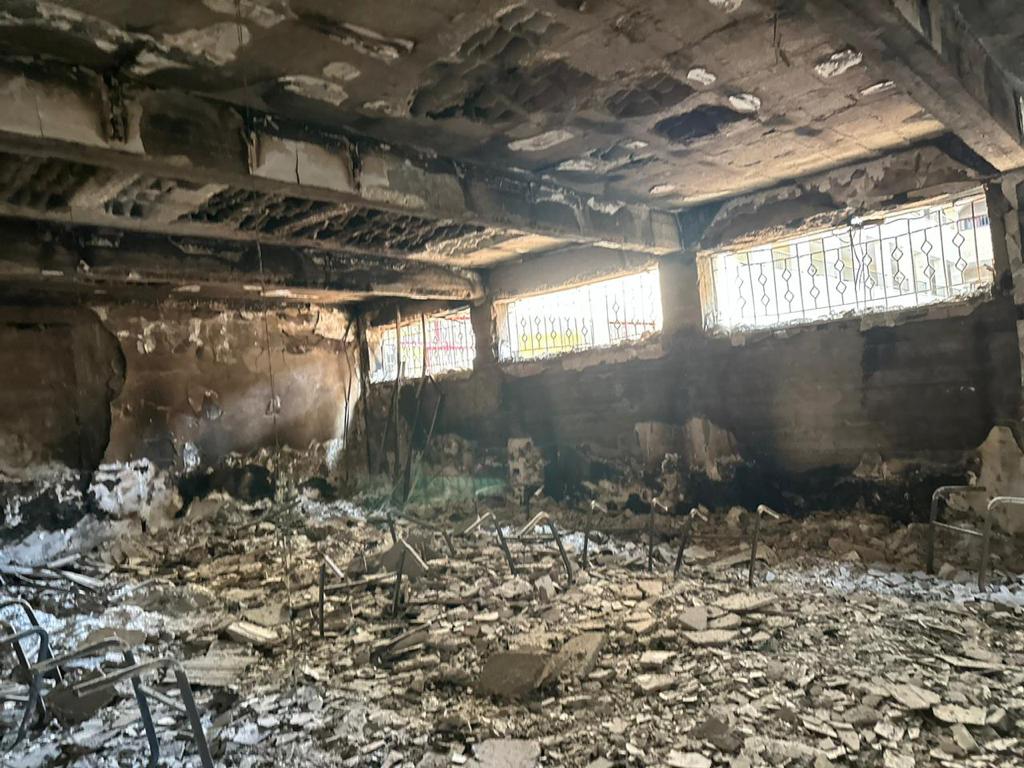
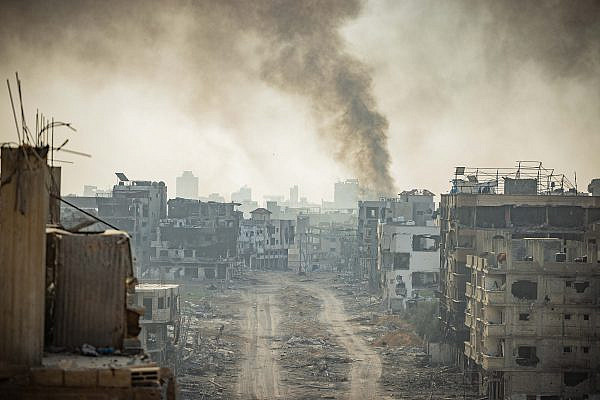
For three years, I had desperately clung to the hope that we would survive the war and return to the school. But sadly, Israel destroyed it. Like so many others, what remained of it became a shelter for displaced persons, while its books were turned into fuel for warmth and cooking.
These past three years have shattered something inside me, and I am no longer the person I used to be. I have lost an entire educational ecosystem: the school, my colleagues, the students around whom my entire life revolved. Many traveled to Egypt, while a few remained in Gaza, searching for any educational opportunity to sustain them.
And several were killed by Israel — Habiba, Salma, Abdullah, and Issa, each with their own story and future — as well as my colleagues Wasima and Wahiba. This is a loss that can never be repaired.
An education system in ruins
Today, Gaza’s education sector remains in ruins. According to data from the Government Media Office, approximately 95 percent of the Strip’s schools sustained damage over the course of the war, while over 90 percent of educational buildings require reconstruction or comprehensive rehabilitation. The data indicates that 662 school buildings were subjected to direct shelling, including 163 schools and universities that were completely destroyed.
Meanwhile, according to the Palestinian Education Ministry, more than 20,500 school and university students in Gaza have been killed since October 2023, along with 805 school staff and 246 university lecturers and staff members. This is a devastating loss that threatens the social fabric and casts a long shadow over the future of Gaza’s intellectual and cultural recovery.
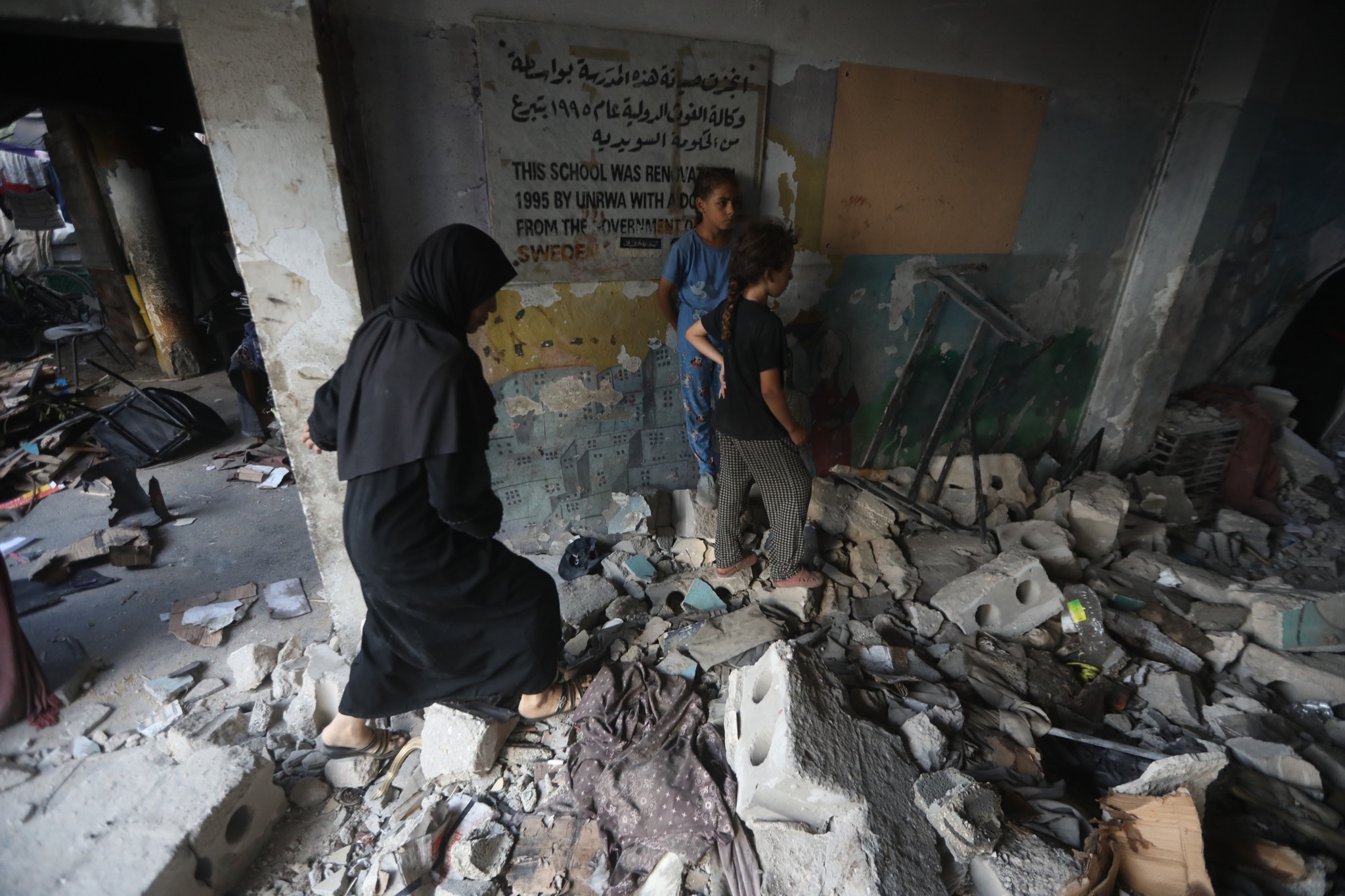
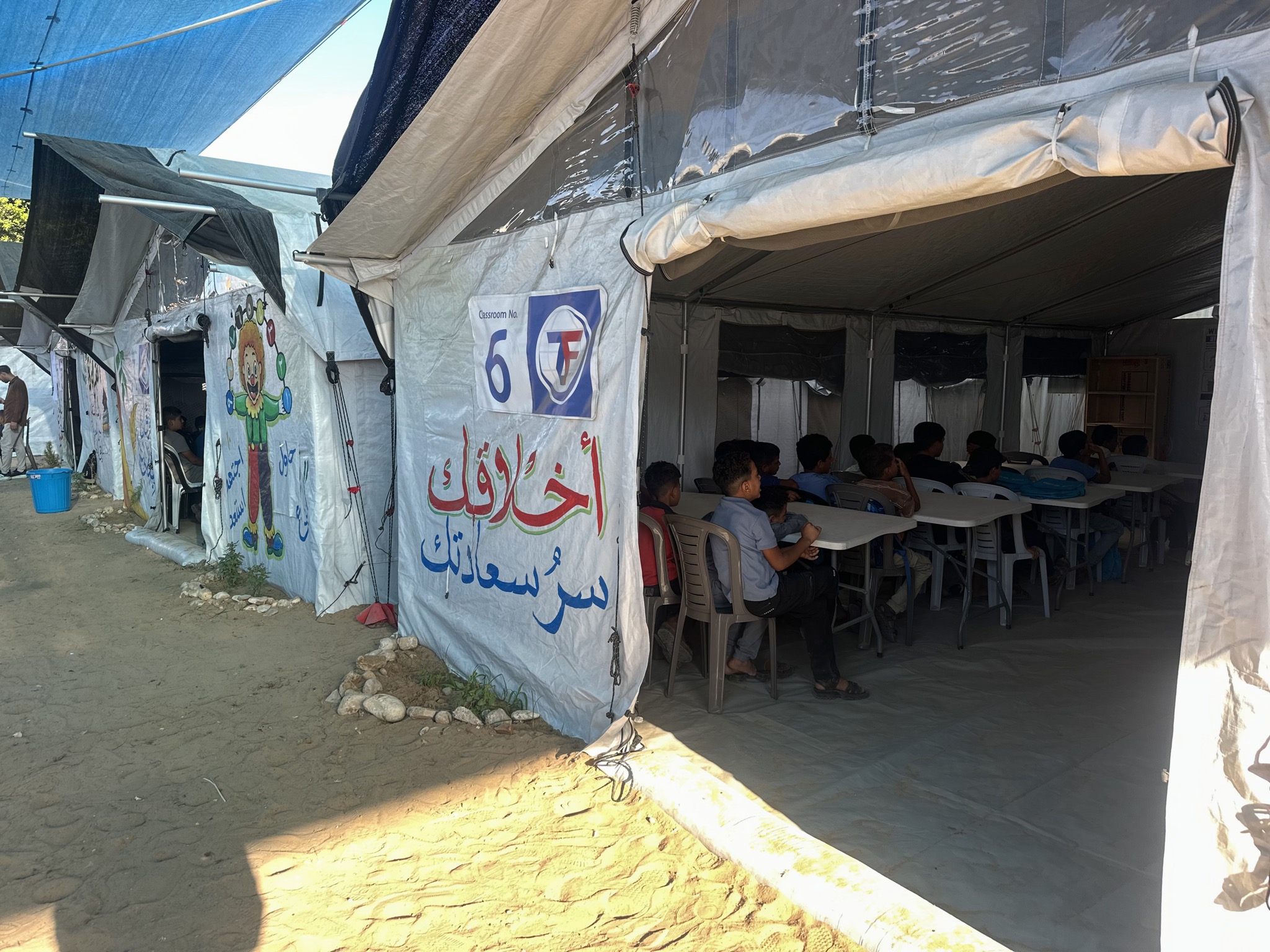
At the beginning of the school year on Sept. 19, an estimated 700,000 students in Gaza were waiting to attend makeshift classrooms inside tents and other temporary educational spaces — crammed into the 30 percent of the Strip that Israel has yet to seize. The UN and its partners have set up over 500 of these spaces to accommodate students for in-person learning on a rotational basis, serving up to 100,000 students.
Meanwhile, private tent-based educational sites have also appeared throughout the Strip. While some are free, UNICEF-affiliated initiatives managed by former school teachers, others charge a nominal fee of no more than NIS 10 ($3) per month. But tent classrooms fall far short of accommodating Gaza’s student-age population. Countless children remain out of school, with no facilities available to host them.
Naturally, these tent classrooms lack the most basic facilities: Students sit on the ground without desks or blackboards, enduring harsh weather that turns the tents into ovens in the summer and freezers in the winter. Trying to concentrate and learn in these spaces becomes a nearly impossible endeavor.
Ahlam Karira, 40, works as an Arabic language teacher in one of the makeshift tent classrooms in the Khan Younis camp, located in the western part of the city. “I try daily to explain concepts and help the children [learn], but the tent environment is destructive to everything: it is stiflingly hot, lacks restrooms, and has no seating,” she told +972 Magazine.
“When children get thirsty, finding drinking water is a struggle. Here, the children cannot detach from their painful reality. They live that very reality inside the tent, and their minds wander during lessons.”
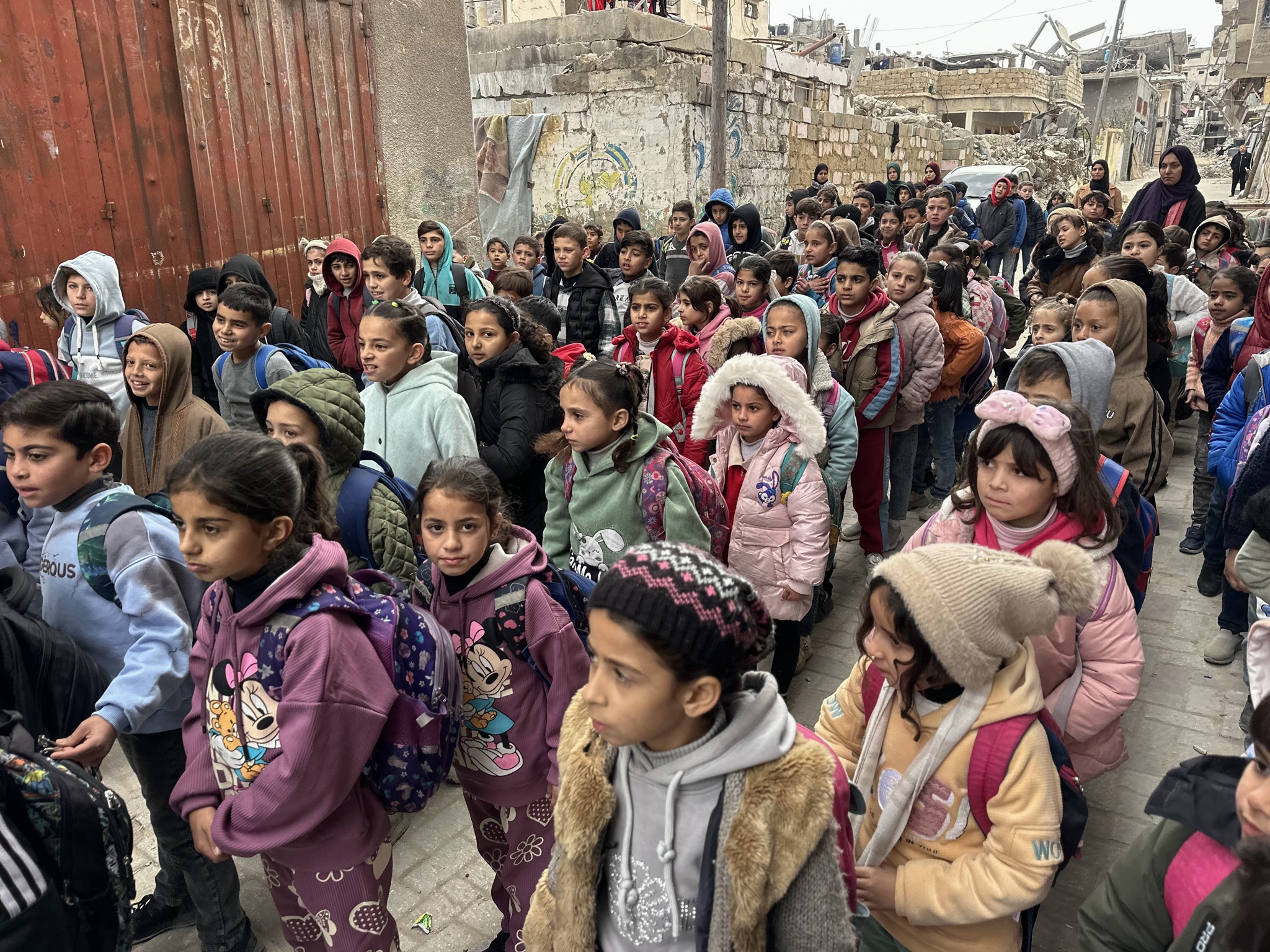
Twelve-year-old Rawan Al-Sir is among those students paying a monthly fee of NIS 10 to attend classes in the Khan Younis camp tents. “I go to the educational tent three days a week; we can’t go every day because the space is small and there are so many students,” she explained. “In the tent, we study core subjects like Arabic, English, science, and math, but other subjects aren’t available.
“The tent feels like an oven,” she added. “We sit on the ground because there aren’t enough seats for everyone, and the large number of students makes the place crowded and noisy. We also have to bring our own water because there is no supply at the tent.”
I myself taught in these tents for two months in the spring of 2025, eager to return to my students. As someone accustomed to seeing children in proper classrooms, it was a profound shock to find them sitting on the ground inside a tent where temperatures hovered around 40°C.
I would sweat profusely while teaching. The children looked at me with exhaustion and fatigue, asking for permission to step out for a moment to splash water on their faces to cool off. I needed that relief myself, as the intense heat made me feel like I was gradually losing the ability to breathe — yet I carried on.
Ultimately, I decided to stop teaching in the tents. I became convinced that the environment was psychologically, physically, and mentally draining for the children, failing to shield them from the painful reality they were living through. In the end, I felt that the harm outweighed whatever limited benefit the learning could offer.
For Karira, the tents are currently the only option teachers in Gaza have to try to salvage what remains of the education system. “But they are not a fundamental solution to the problem,” she affirmed. “Children need to return to actual schools and their proper classrooms.”
Al-Sir, who was in the fifth grade when the war began, misses her school every day. “I had hoped the war would end quickly and that we could stay in our homes instead of being displaced from Gaza [City] to the south,” she recalled. “I feel a deep sense of loss and sadness about our lives — I wish they could return to how they used to be. Nothing can replace school.”
Three years lost
During my time teaching students in the tents, I noticed a significant decline in their concentration and comprehension — a result not only of the conditions inside the tent, but also of the successive traumas they had endured and the many responsibilities they were forced to shoulder.
On one occasion, while I was teaching a science lesson to a sixth-grade class, a student asked me to explain the material over and over again, as he struggled to grasp it. “I’m sorry, teacher; I feel like I’ve become a donkey — I bear huge responsibilities in our tent,” he told me. He was referring to the fact that after losing his mother, he had to care for his siblings and could barely maintain enough focus to keep learning.
I was also shocked to see how the long months without any school had stifled these children’s abilities. There were 15-year-olds who could neither read nor write Arabic, nor perform simple arithmetic. Many did not even know how to hold a pen.
It became clear to me this widening knowledge gap would affect an entire generation — part of what many have described as “scholasticide,” Israel’s deliberate effort to destroy Gaza’s educational infrastructure.
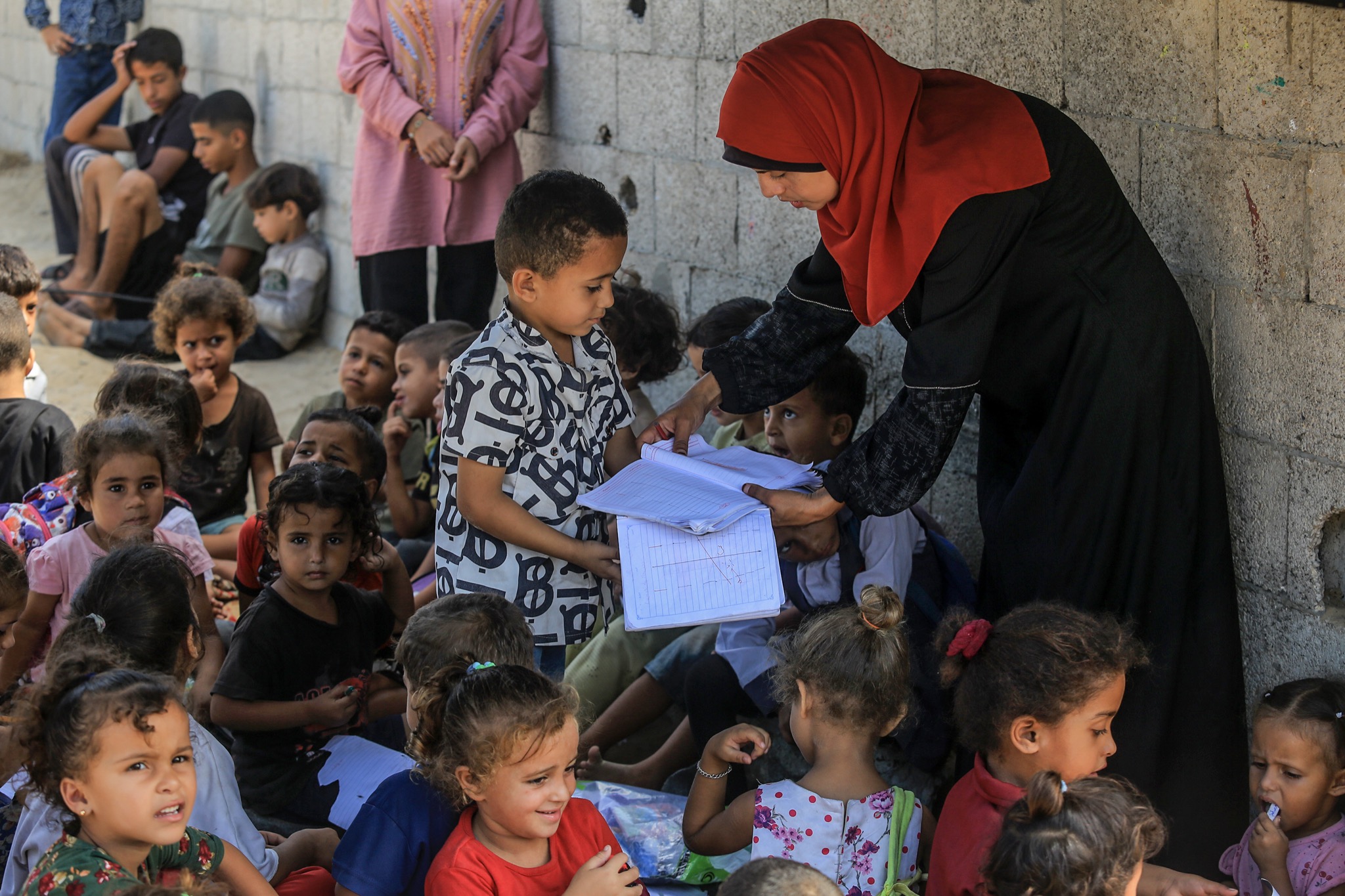
Today, teachers and students in Gaza affirm that this problem persists. Many of Karira’s middle school students still do not know how to read or write. “My role has shifted from teaching a standard curriculum to basic literacy instruction, laying the necessary groundwork for language learning,” she explained. “I consider this a disaster. If it is not resolved and overcome, we risk losing future generations to educational failure.”
“I still feel like a 12-year-old-child,” Ibrahim Ashour, 15, told +972, as he grappled with the trauma of losing three years of education. “There is simply no comparison between education before the war and now. I used to attend a lovely, high-quality private school, but now I go to educational tents where I cannot grasp any information due to the harsh environment we are forced to endure.
“There is constant noise, fear of shelling, overcrowding in small tents, and a lack of structured teaching,” he added. “I haven’t understood a thing during these three academic years — I’ve missed out on so much information.”
Rima Shuqair, a 37-year-old mathematics teacher from Gaza City, has taught in both public and private schools for over a decade. What she describes as “severe decline in student academic performance” may be the biggest challenge of her career.
“A massive gap has emerged due to the three-year hiatus in schooling,” she lamented. “A child who was in the second grade when the war began is now in the fifth or sixth grade.”
At the private school in Gaza City where she works, Shuqair is trying to help her students catch up by reviewing the fundamentals of arithmetic — but she estimates that bridging the gap alone “would require a full academic year.”
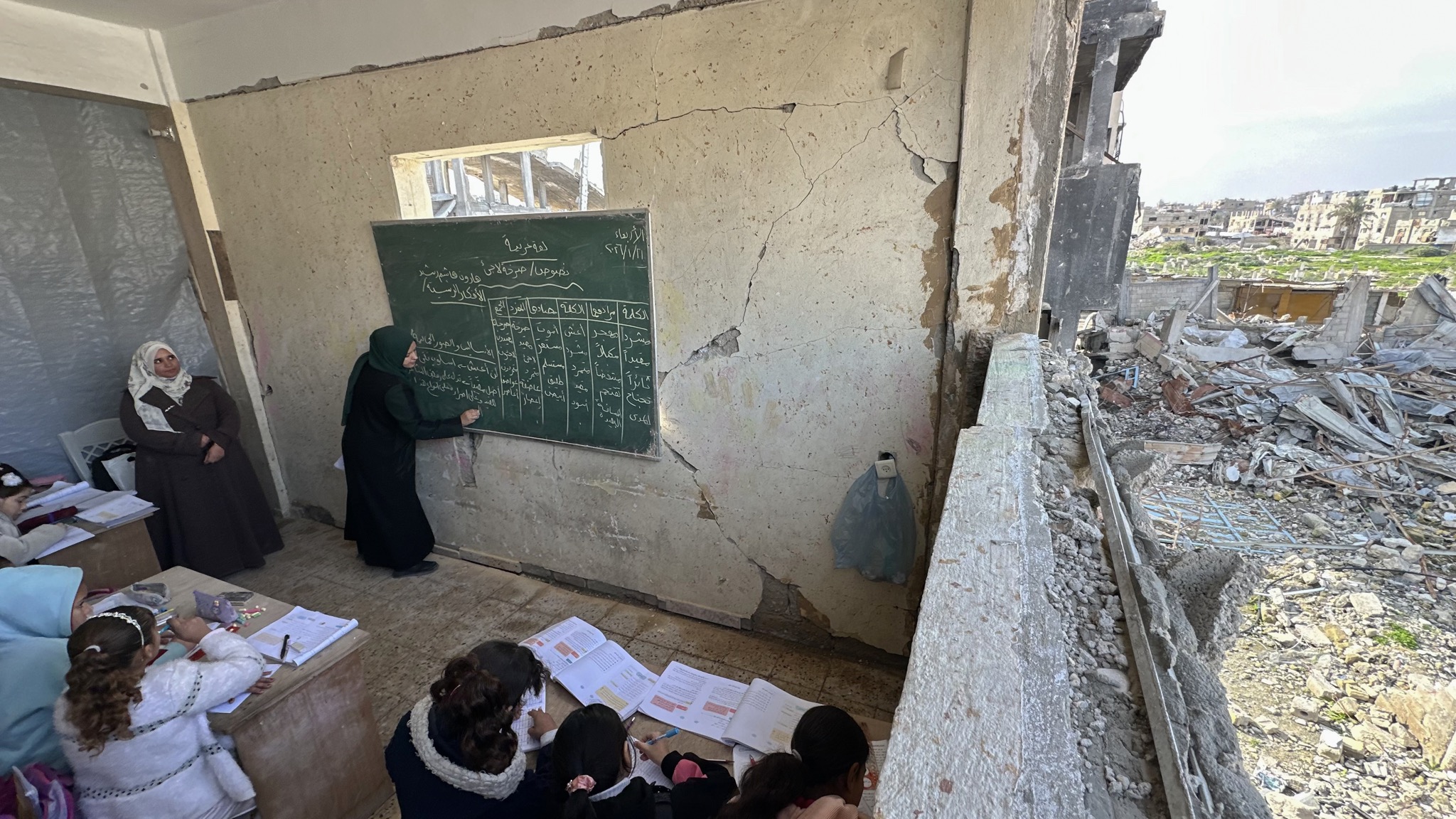
What makes this task all the more challenging is the deep trauma and constant terror many students feel after living through a genocide — where mental health support is no less of a priority than education itself.
“The children suffer from an extraordinary lack of focus; I often have to explain concepts more than three times, yet many still fail to grasp them,” Shuqair noted. “They also lack the patience for long study hours — they want to finish quickly and exhibit hyperactivity, extreme irritability, and violent behaviors I am not accustomed to.”
These are patterns that psychologists in Gaza have also observed. Falasteen Yassin, a psychologist from Nuseirat refugee camp, told +972 that many school-aged children exhibit signs of anxiety and stress and are prone to depression and irritability.
“Parents frequently complain that their children are becoming aggressive and engaging in unhealthy behaviors,” she explained. “They are caught up in routines far removed from school such as queuing for water or gathering firewood and cardboard for cooking.
“These activities do nothing to alleviate negative emotions,” she added. “Instead, they keep the child in a state of constant fear and remind them of the war.”
Most read on +972
The lack of suitable educational facilities, too, has a detrimental effect on students’ mental health. “School is not merely about lessons and academics — it constitutes a safe space where a child feels stable,” Yassin noted. “The educational environment represents a return to normal life.”
For this reason, Yassin believes the benefits of the educational tents outweigh the difficulties they present. “The tent is an unsuitable environment [for learning] and reminds us of instability. Yet it managed to return children to their educational routine, creating a positive environment that helps mitigate difficult behavior, and shielding them for a few hours from the harsh reality of queuing for water and food.”