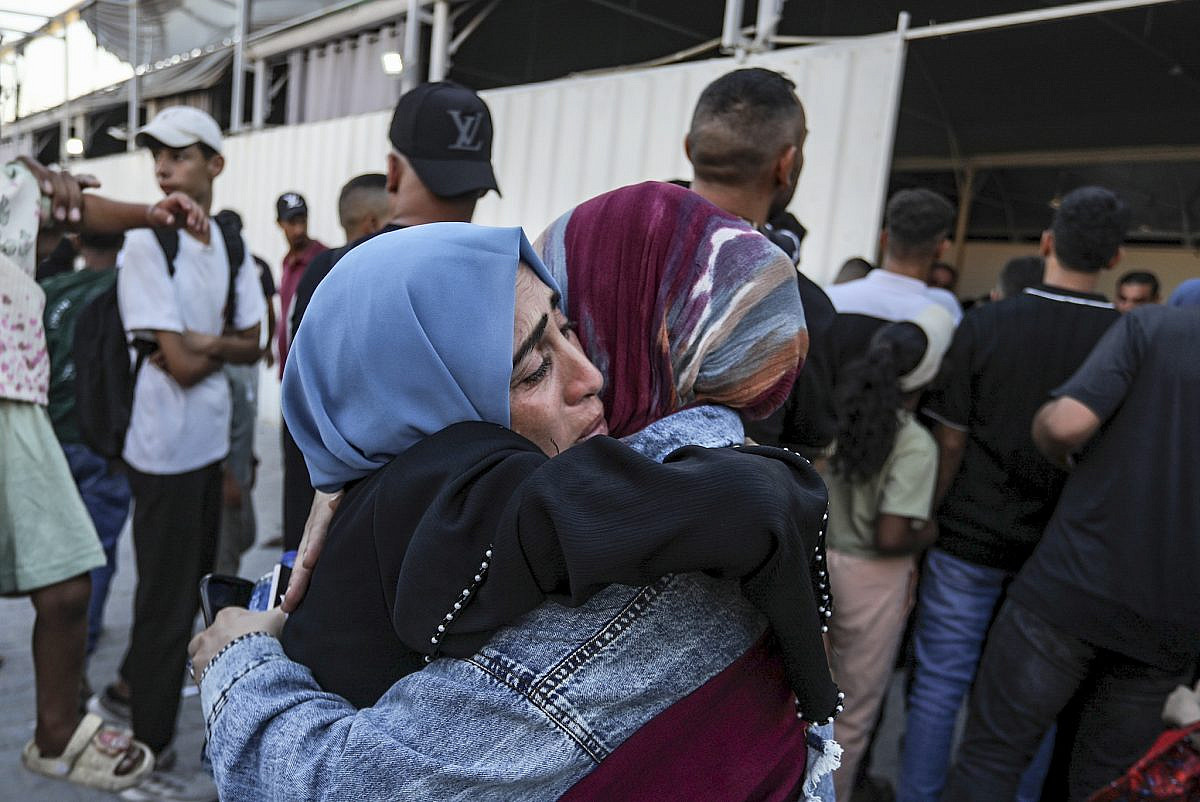
After spending a year and a half in Egypt for cancer treatment, 60-year-old Amal Al-Rifi was finally on her way home to Gaza. The prolonged separation from her family had taken a psychological toll, and she insisted on returning to the besieged enclave. So her daughter Maysoun eventually contacted medical facilities in Gaza, and was assured that her mother’s treatment could continue there.
“When we told her, she was overjoyed, and we felt as though her condition had significantly improved,” Maysoun told +972 Magazine. “She began preparing for her return, starting with registering her details at the embassy to facilitate her journey back to Gaza.”
On Oct. 20, Amal and her other daughter, Yasmine — who had accompanied her mother to Egypt — were expected to reunite with their family after a long and arduous journey through the Rafah crossing that links Gaza to Egypt. But instead of arriving at Nasser Hospital in Khan Younis, where their relatives were waiting, the two women were detained by Israeli soldiers and taken away for questioning. Their family says they remain in Israeli custody.
For Palestinians who fled Israel’s genocide or were evacuated from Gaza for medical treatment, returning home has become an increasingly uncertain and frightening prospect. More than 115,000 Gazans fled Egypt after October 2023 — including patients and people seriously wounded in Israeli attacks who were evacuated for treatment in Egyptian hospitals — before the Rafah Crossing was shut down during Israel’s invasion in May 2024.
After remaining closed for nearly two years, the Rafah Crossing finally reopened in February 2026. In the months since, according to the EU Border Assistance Mission for the Rafah Crossing Point, 7,892 Palestinians have exited through it and 7,466 have returned to Gaza. But the crossing has operated intermittently, with abrupt closures and shifting restrictions disrupting movement in both directions.
Palestinians who have travelled through Rafah in recent months describe lengthy searches, restrictive baggage requirements, interrogations, and the threat of detention by Israeli forces. Since February, the Israeli army has arrested 11 Palestinians at the crossing. Six were detained in October alone, including Amal and Yasmine and four other young men. Another man was detained crossing Kerem Shalom.
The arrests have compounded fears among Palestinians seeking to reunite with their families, forcing many to weigh their longing for home against the risk of imprisonment, the loss of their livelihoods, or the interruption of essential medical treatment.
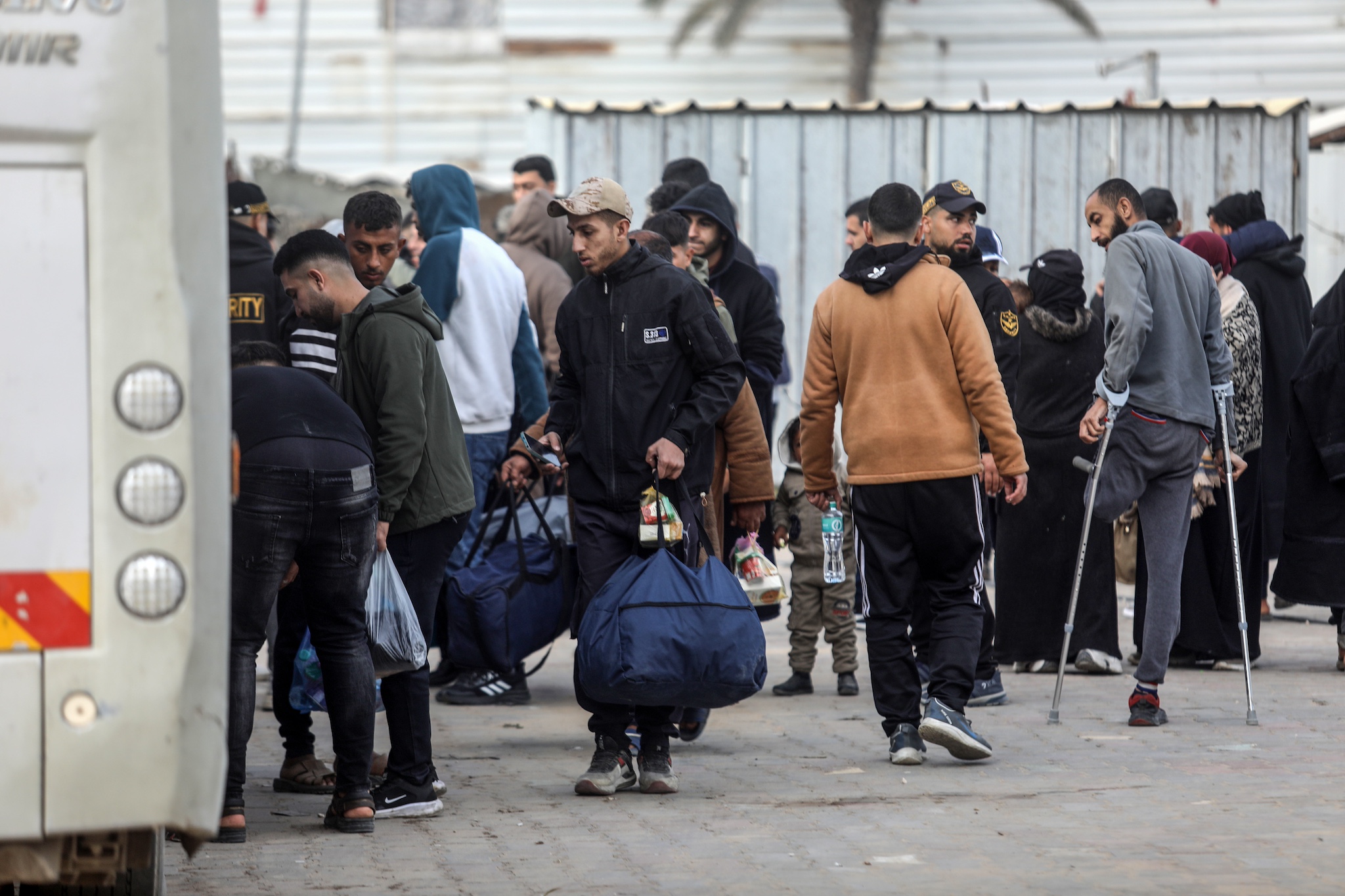
Amal had battled cancer since 2015, undergoing treatment at hospitals in Egypt and in Jerusalem. As her condition deteriorated throughout the Israeli genocide in Gaza, she and Yasmine received a medical evacuation and left for Egypt in February 2025.
“While in Egypt, [Amal’s] health did not improve largely due to the toll the situation took on her mental well-being,” Maysoun explained. “She spent a year and a half there without ever finding any relief. She repeatedly asked to return to Gaza.”
On Oct. 20, the Al-Rifi family remained in close contact with Amal and Yasmine as they made their way to the crossing, counting down the hours until they would be reunited. Maysoun and other relatives gathered at Nasser Hospital to welcome them, but when the buses finally arrived late that night, passengers informed them that Amal and Yasmine had been detained.
Maysoun initially refused to believe the news, wondering whether it might be an elaborate surprise arranged by her mother. Other returning passengers soon confirmed the arrests. She said she later learned through the International Committee of the Red Cross that the two were being held at Shikma Prison in Ashkelon, inside Israel.
Since then, Maysoun has struggled to sleep, consumed by fears about how her seriously ill mother is coping with detention. And she knows that time is running out: “If she remains in prison, we will lose her.”
A journey home interrupted
Rasha, 37, (who requested we use only her first name out of fear of retribution, like all the interviewees in this article) was among the passengers traveling with Amal and Yasmine that day. She had left Gaza in April with her three children after one of her daughters lost her leg and suffered other injuries in an Israeli airstrike on Khan Younis two years prior. In Egypt, her daughter underwent several months of treatment and was fitted with a prosthetic limb.
But the family’s limited finances, combined with the high cost of living and their difficulties adjusting to their new environment, eventually prompted Rasha to register for the return journey.
“I found that I simply couldn’t adapt to life in Egypt; I was accustomed to life in Gaza despite all its difficulties,” Rasha said. “Everyone was shocked when they heard I had decided to return, but I went ahead and did it.”
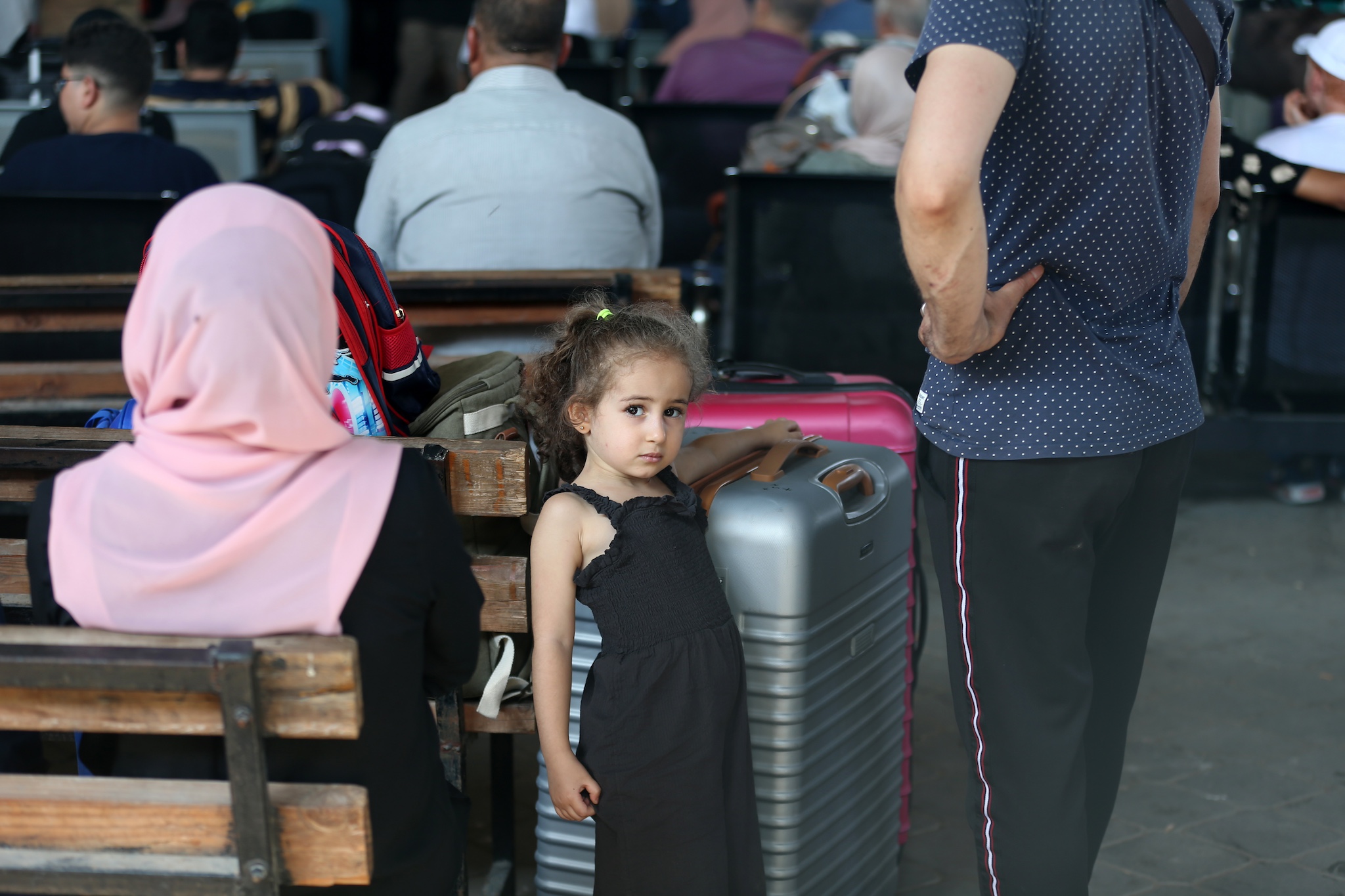
On Oct. 18, Rasha received a call from the Palestinian Embassy in Cairo informing her that she was scheduled to travel two days later. She was instructed to meet outside the embassy the following afternoon for the long trip toward Rafah.
Like other passengers, she was permitted to carry only a 20-kilogram suitcase containing basic belongings such as clothing and footwear. She carefully weighed her luggage and repeatedly instructed her children to avoid anything that might cause difficulties at the crossing.
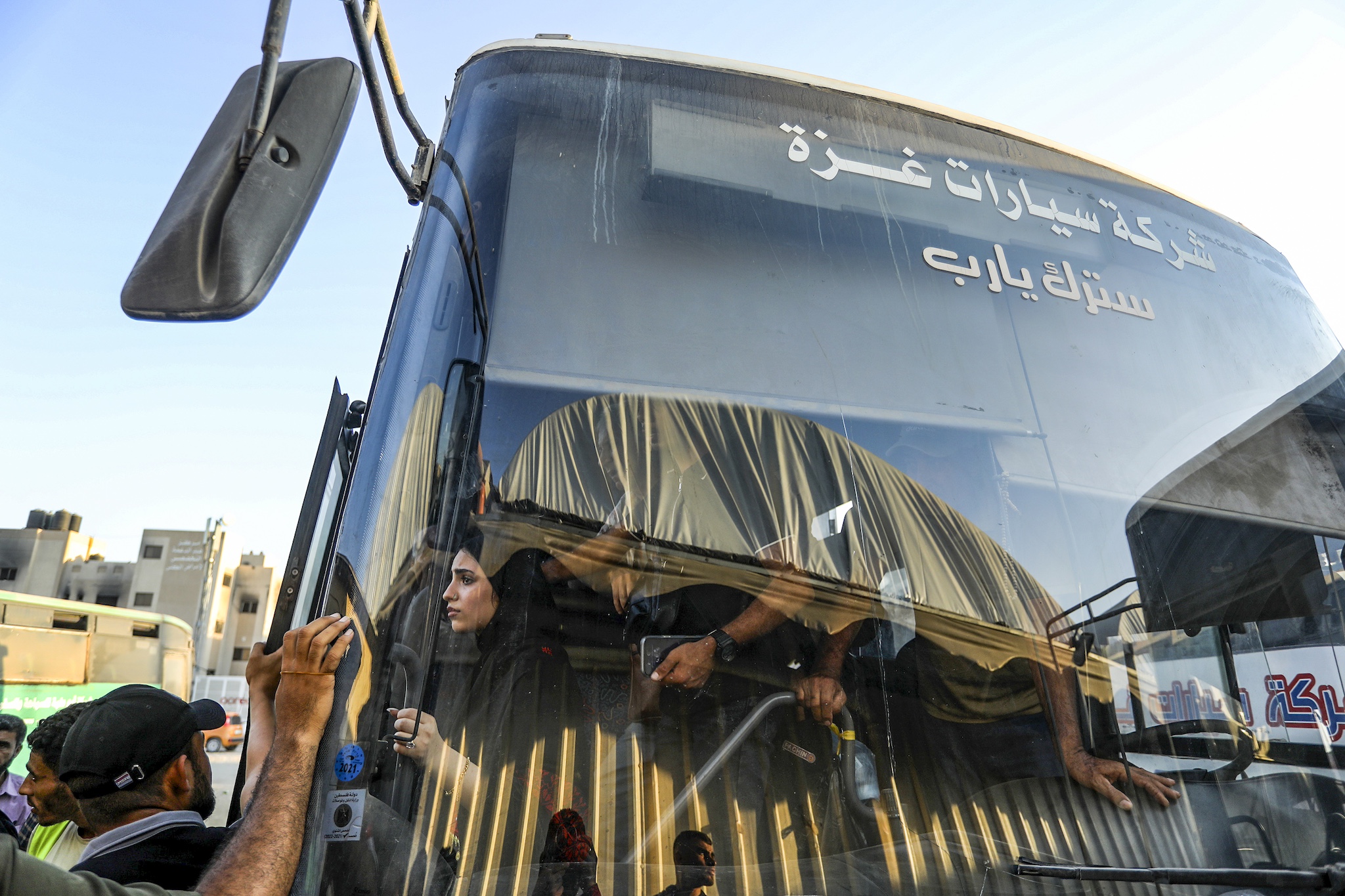
The journey lasted two days. Although the family was exhausted, Rasha said the possibility of returning home kept them going. Processing at the Palestinian and European screening points went relatively smoothly. The situation changed when the bus reached the Israeli checkpoint, where soldiers searched passengers’ bags, examined their documents, and kept them waiting for hours.
“At one point, they instructed Amal and her daughter to follow the soldiers for questioning,” Rasha said. “We assumed it would take an hour or less, but we ended up waiting for many long hours until nightfall and the two women never returned.”
The driver was eventually instructed to continue toward Nasser Hospital without them. Rasha recalled that Amal had appeared exhausted and unwell throughout the journey but remained determined to reach Gaza. Other passengers had questioned why she would leave Egypt given her medical condition and the devastation awaiting her at home. Amal’s answer was simple: “I will be better off among my own family.”
Harsh restrictions
Beyond the difficulty of the journey and the threat of detention, Palestinians still in Egypt also face strict limits on what they can bring back into Gaza.
Malak, 62, originally from Gaza City, fled to Egypt in April 2024 with her adult daughter and son after enduring repeated displacement in Rafah. She has been considering returning to Gaza to reunite with her other married children and grandchildren — and because her family’s home in Nuseirat refugee camp, in central Gaza, remains intact. Throughout her time in Egypt, she has collected clothes, shoes, kitchenware, and other household necessities for relatives struggling with shortages in Gaza.
“During the war, I stayed in touch with my children and grandchildren; they would often ask me for various items and gifts,” Malak said. “I kept telling them, ‘I will buy you everything you’ve been deprived of in Gaza.’”
Before the genocide, Malak frequently traveled to Egypt and returned with gifts and supplies. She thought she would eventually be able to do the same. Instead, restrictions on luggage and electronic devices have left her uncertain about whether she can bring home the belongings she has spent over two years collecting — or if she would be forced to abandon them at the crossing.
“The harsh conditions imposed by the Israeli military make me hesitant to return, despite how much I long for my family and for Gaza,” Malak explained. “I want to bring things back for them, as Gaza is deprived of so many necessities due to the closure of the crossings and the ban on the entry of goods and electronic devices. The prices for such items if they can even be found are exorbitant, far beyond what an ordinary citizen could afford.
“This creates a major hardship for university students, professionals, and many others who rely on laptops or iPads,” she added.
Among those affected by the restrictions on electronic devices is Malak’s daughter, Yasmin, 29, works remotely as an online graphic designer and provides an important source of income for the family. Before they fled Gaza, frequent electricity and internet outages made it increasingly difficult for Yasmin to earn a living. She sometimes traveled to places where internet access was available, despite the danger of bombardment.
Eventually, she persuaded her mother to leave, and the family pooled its savings to pay the fees required to cross into Egypt. “The first thing I thought about saving during the war was my laptop,” Yasmin recalled, considering herself fortunate to have managed to bring it with her.
Now in Cairo, while her mother longs to reunite with relatives in Gaza, Yasmin is reluctant to return out of a fear that her laptop would be confiscated at the crossing. And even if she were able to bring it, electricity and internet shortages in Gaza would make working difficult.
“Returning to Gaza now is extremely costly and would force us to abandon our belongings, a heartbreak I simply cannot bear,” Yasmin said. “That is why I told my mother to wait; perhaps the situation at the crossing will change one day, and we will be able to return just as we used to before the war.”
An unpredictable crossing
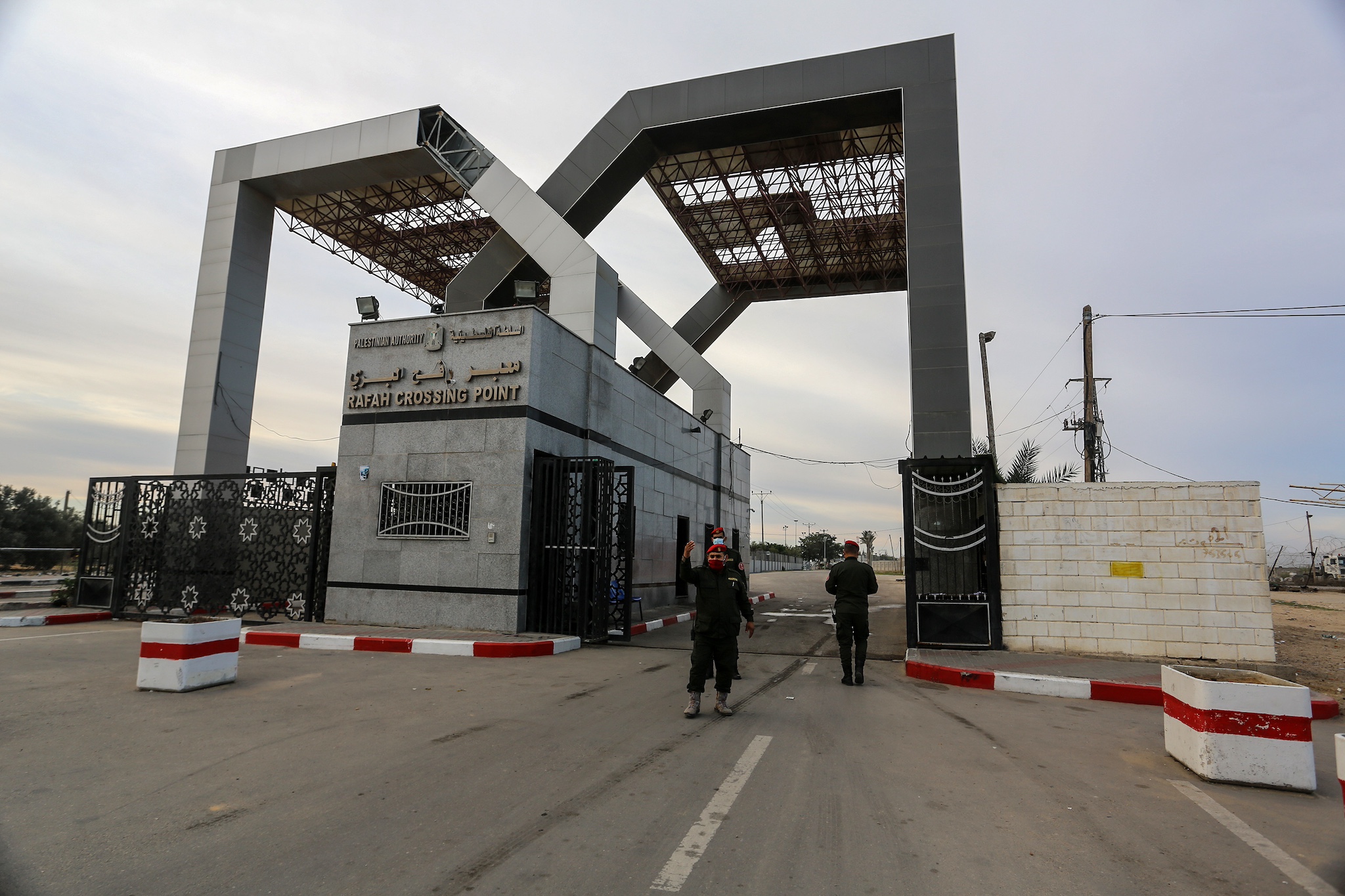
Since reopening in February, the Rafah Crossing has reportedly operated an average of only three days a week, with sudden closures disrupting travel plans and stranding passengers on both sides of the border.
Mustafa, 35, has spent years monitoring developments at Rafah and sharing updates through social media groups. Now, he explained that regulations change frequently, operating schedules are unreliable, and travelers sometimes find themselves stranded in nearby Egyptian towns, including Sheikh Zuweid, after unexpected closures.
The detentions have added another layer of anxiety. Mustafa said his groups attempt to establish the circumstances of each arrest and warn prospective travelers about changing restrictions on luggage and personal belongings.
“When we hear such grim news, we try to determine what happened at the crossing and why these arrests occurred,” Mustafa said. “However, the Israeli military provides no clear explanation.”
The unpredictability of the crossing is perhaps most dire for patients seeking medical care outside Gaza. According to Dr. Ismail Al-Thawabta, director-general of Gaza’s Government Media Office, over 3,000 sick and wounded Palestinians have been evacuated for medical treatment abroad since February 2026, including 2,614 through Rafah and 442 through the Kerem Shalom crossing.
Most read on +972
But another 21,468 patients and wounded people remain on waiting lists, with 6,430 classified as priorities for evacuation. Al-Thawabta accused Israeli authorities of delaying medical evacuations through repeated crossing closures and administrative restrictions, warning that deteriorating conditions have cost the lives of patients awaiting permission to travel.
He also condemned the arrests of Palestinians returning through Rafah, describing them as part of a wider Israeli policy of intimidation and collective punishment. “These arbitrary arrests lack any genuine legal justification; rather, they are aimed at transforming humanitarian corridors into security traps to intimidate those returning.”
For Fatima, 65, from Khan Younis, the obstacles to returning home to Gaza are particularly painful. She traveled to Cairo in December 2023 for cancer treatment, leaving behind her husband and children, who have since endured repeated displacement and narrowly survived Israeli bombardment.
Fatima had hoped to return as soon as Rafah reopened, but complications from chemotherapy forced her to remain in Egypt with her granddaughter. She has now registered to return, the risks not having diminished her determination to reunite with her family.
Her children have urged her to stay in Egypt, fearful that she could face the same fate as Amal and Yasmine. But after years away from home, and with her health deteriorating, Fatima said she is prepared to endure the dangerous journey and the possibility of detention. As she put it, “I want to see my family before I die.”