


In Gaza, the FIFA World Cup has long been much more than a passing sporting event. Palestinians will tell you it is an occasion they eagerly anticipate every four years, offering rare moments of joy and temporary reprieve from the hardships of a life punctuated by Israeli bombardment and siege. As the current edition of the tournament edges into its final stages, it is clear that even three years of genocide has not extinguished Gazans’ passion for the game.
Despite the widespread destruction of homes and neighborhoods, the scarce electricity, and the unreliable internet connection, Palestinians in the Strip have endeavored to find places where they can gather around a screen to follow the action and even dream a little — never mind that their own national team did not qualify.
One of these fans is himself a soccer player. Abdallah Shaqfa, a 35-year-old displaced from the destroyed southern city of Rafah, lives in a tent in the Al-Mawasi area of Khan Younis. A goalkeeper for Shabab Rafah, he has not been able to play since the war began in October 2023, when all organized sporting activities ground to an abrupt halt.
Like most of Gaza’s population, he no longer has a home where he can sit with his family to watch World Cup matches on television, as he did in previous years. Now, he catches glimpses of each match on his mobile phone whenever an internet connection becomes available, clinging to fleeting moments that reconnect him with the life he once had.
“Soccer is more than just a game for us,” he says. “It is a space where we can breathe and, if only for a few moments, forget everything we are living through. Gaza may lose its stadiums and homes, but no one can take away people’s passion for sport.”

Shaqfa, who previously represented the Palestinian national team and competed at the 2021 Arab Cup in Qatar, was later offered the chance to sign for Markaz Shabab Balata in the occupied West Bank; he says the war robbed him not only of that opportunity to advance in his career, but also of any semblance of a normal life.
“When I watch the crowds celebrating in the stadiums and see people around the world enjoying the matches, I feel as though we are completely cut off from the world,” Shaqfa laments. “They celebrate goals, while we count the martyrs and hope to make it safely through the night.
“My dreams of professional soccer and continuing my career with the Palestinian national team were shattered by the war and the closure of the crossings, even though I had been nominated for several sporting opportunities outside the Gaza Strip,” he continues. “I am still a player for Shabab Rafah, but the passion that once filled me before the war is no longer the same.”
Shaqfa’s losses have extended far beyond his soccer career. On June 21 last year, his wife was killed by shrapnel from an Israeli airstrike on a nearby tent as she was visiting her family, leaving Shaqfa to raise their two daughters on his own.
“After my wife was killed, I tried to be both a father and a mother,” he says. “Every day, I think about how to provide my daughters with food and water, and how to protect them from the harsh reality around us. These responsibilities have made training the last thing on my mind, even though soccer was once my whole life.
“When people finish watching a match, they go home to celebrate or debate the result,” he adds with a sigh. “We put away our phones and return to a reality filled with fear. It feels as though we live in one world, while the rest of the world lives in another.”
The end of a family ritual
Another avid soccer fan is Ne’ma Basal, a 35-year-old mother of four who was displaced from the Sheikh Radwan neighborhood in western Gaza City to Deir Al-Balah in central Gaza.
For Basal, soccer was once a welcome escape from the pressures of daily life. She recalls how, before each match, she carried out the same small rituals to make it a special celebration: preparing a cup of instant coffee and a bowl of mixed nuts, then sitting in front of the screen to watch the game.

Basal has always rooted for France’s national team and looked forward to major tournaments — especially the World Cup, which reliably offered her a few hours of enjoyment and peace of mind.
“My husband wasn’t a soccer fan, but after we got married, he began watching matches with me,” Basal tells +972. “Over the years, those evenings became family rituals that brought us together. They were filled with laughter, lively debates, and excitement, giving us a brief respite from the demands of daily life.”
But the war changed everything, Basal says, pausing to take a breath as she prepares a meal on an outdoor fire pit. “There is no longer electricity or internet access to watch the matches. There isn’t even time to sit in front of a screen anymore. Everything I know about the tournament comes from the news or from what other people tell me.”
For Basal, displacement and the daily search for water, food, and shelter have downgraded soccer’s importance, especially as she devotes her time to caring for her children. “We’ve been forced into a reality where meeting our basic needs consumes all our attention, leaving no room to think about anything else,” she says.
“Even the simple things that once brought us joy now feel out of reach. Soccer was something that allowed me to relax and let go of all the exhaustion, but now there is no such thing as rest. All we think about is how to survive and keep our children safe.”

Because of this reality, Basal has mixed feelings when she sees people around the world enjoying the tournament. “When I see them watching the World Cup while we’re deprived of it, I feel the world has let us down,” she says.
“People have gone on with their lives as usual, and no one has been willing to give up anything for Gaza. In the end, to the world, we’re just a fleeting moment of sympathy, after which everyone goes back to living their lives in safety. But we are the ones left to live with the pain, and no one truly feels what we’re going through.
“I want the world to see us with the same attention it gives to stadiums and tournaments,” she added. “Why do people know the names of soccer players and their statistics, but not the names of our children or the families who have lost everything? Behind every tent and every destroyed home is the story of someone who once had an ordinary life, simple dreams, and moments of happiness before the war took them away.”
A career cut short
Mohammed Barakat, once a rising star with the Palestinian national beach soccer team, had his career cut short -– not by age or injury, but by an Israeli airstrike that killed him on March 11, 2024 in the city of Khan Younis.
Known among soccer fans in Gaza as “The Lion,” Barakat was one of Palestine’s most accomplished players. He was a member of the first Palestinian national soccer and beach soccer teams and left his mark at Shabab Khan Younis, becoming the first player in Gaza to score 100 goals for a single club. Over the course of his career, he also played for Al-Sadaqa Club, Ittihad Khan Younis, Al-Ahli Club, and Khadamat Al-Shati Club.

For Barakat’s family, soccer has become a continual reminder of the brother and son who lost his life at the age of 40. His brother, Yousef, 45, says if Barakat were still alive today, he would be the first to look forward to the World Cup matches, analyze them, and follow every detail. “Soccer was his life, and he couldn’t imagine living without it,” Yousef says.
Every major soccer tournament now brings a heavy sense of loss for the family, he adds. “When we see players walk onto the pitch, we imagine Mohammed among them. Whenever the Palestinian national team is mentioned, we don’t just feel pride — we feel sadness too, because one of the players who once wore their jersey is no longer with us.
“Whenever I watch a major tournament, I ask myself: How many players around the world are preparing for their next match while our players in Gaza have been killed in the war? Mohammed dreamed of staying on the pitch, but the war ended his dream. His name lives on in the memories of soccer fans. But for us, his place on the pitch will always be empty, just as the place he left in our home can never be filled.”
Barakat is far from the only loss suffered by Gaza’s soccer community as a result of Israel’s onslaught. Mustafa Siyam, secretary-general of the Palestinian Sports Media Association, says sports venues and players have been deliberately targeted.
“Israeli forces have killed 1,015 Palestinians athletes, including 560 soccer players and coaches,” he explains. “Among them are Hani Al-Masdar, head coach of the Palestinian Olympic team; Mohammed Barakat, a former member of the Palestinian national soccer team; Shadi Abu Al-Araj, goalkeeper of the Palestinian national beach soccer team; and Mohammad Khalifa, a member of the Palestinian youth national team.” The same fate befell “many other players, young talents, and children training in sports academies,” he adds.
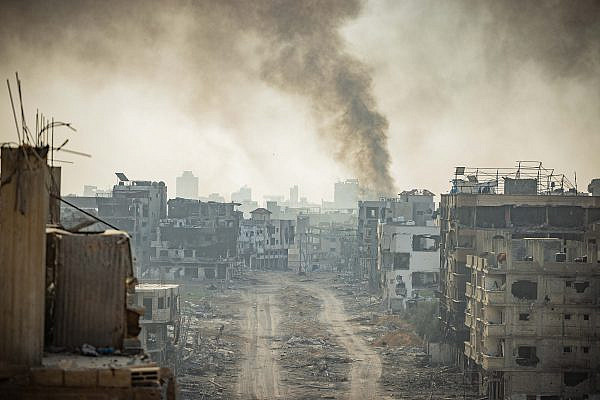
According to the Palestine Olympic Committee (POC) and Palestine Football Association (PFA), Israel has destroyed nearly 90 percent of Gaza’s sports infrastructure, including stadiums, clubs, administrative headquarters — around 265 facilities in total, some of which now serve as makeshift shelters for displaced families. Most sports clubs and academies have also been destroyed, as have the headquarters of the Higher Council for Youth and Sports, the POC and the PFA, which are protected under international law and the regulations governing the International Olympic Committee and FIFA.

Siyam says that most athletes who had the opportunity to leave Gaza during the war did so to pursue their sporting careers elsewhere in the Arab world, particularly in Egypt. Given the scale of the losses, reviving organized sports activity inside the Strip and rebuilding stadiums and other facilities will take many years — and will remain impossible while Israel continues its attacks and its heavy restrictions on the entry of building materials.
Against this painful reality, sports authorities in the Strip are trying to hold Israel accountable. “The PFA has contacted international bodies [and is aiming] to expel Israel from FIFA and suspend its membership,” Siyam says. “But this request has repeatedly been referred to various committees, and FIFA has yet to rule on it, even though the organization moved swiftly to bar Russian national teams and clubs from European competitions over Russia’s war against Ukraine.”
‘We are present in the hearts of the Arab people’
Raed Afaneh, 36, carries a laptop through the classrooms of Tal Al-Hawa Primary School for Boys, searching for an internet signal strong enough to watch the Egypt versus Australia match with friends. The school, located west of Gaza City, had been transformed into a shelter for people displaced by Israeli military strikes and forced evacuation orders.
“I’m reluctant to go to a cafe to watch the match — Israeli drones are constantly overhead, and they could strike at any moment,” he says. “That’s why I watch the matches here at the school, but the internet connection is unstable and my laptop battery could run out before the match is over. If that happens, I can not recharge it because there is no electricity.”
Despite the simple set-up, dozens of people gathered around Afaneh’s laptop on July 3 to watch the match. “The atmosphere was electric,” he says. “Every Egyptian goal or scoring opportunity was met with applause and cheers from children, teenagers, and adults. When the match ended with Egypt’s victory, joy swept through the school.”

Egypt marked its victory over Australia — which was decided by a penalty shootout after the game finished 1–1 — with a show of solidarity for Palestine. Coach Hossam Hassan walked around the pitch waving a Palestinian flag and dedicated the win to Palestinians as well as Egyptians. (Egypt would later be knocked out of the tournament by holders Argentina after making history, reaching the round of 16 for the first time.)
“What pleased everyone most was dedicating the win to the people of Palestine,” Afaneh says. “I felt that these words lifted the spirits of everyone present. This gesture had a profound impact, giving people a moment of joy and a sense that their cause is still alive in the hearts of others, and that sports, even if only for a short time, can unite people around a message of solidarity and hope.”
Osama Omar, head of the Al-Ahli Supporters Association in Gaza, was watching the same match in a cafe surrounded by dozens of fans. “As soon as the referee blew the final whistle, announcing Egypt’s victory, the place erupted in applause and cheers, and everyone embraced like one big family,” he says.
“When the Egyptian coach dedicated the victory to the people of Palestine, my feelings shifted from mere joy at a sporting triumph to a profound sense that we are present in the hearts of the Arab people. I saw tears in the eyes of some of those present. It was a scene filled with love and solidarity, and it brought back, though for only a few seconds, the feeling that we are not alone.”
‘A different form of resistance’
On June 30 last year, Kifah Al-Fakhouri, a 30-year-old soccer fan, was sitting with friends at Al-Baqa Cafe in Gaza City, trying to carve out a few moments of joy amid the war. Moments later, an Israeli missile struck the seaside cafe and killed four of her friends. She survived, but had to have her leg amputated.
Despite her own personal loss, and her grief over the death of her friends, Al-Fakhouri found the strength to join a women’s amputee soccer team. On the pitch, she found a place where she could reclaim a part of herself and push back against the sense of helplessness imposed on her by the war.

Soccer has become more than a sport for Al-Fakhouri: It has helped her heal mentally, rebuild her self-confidence, and start over. Joining the women’s amputee team also gave her a renewed sense of purpose.
“In soccer I found a different form of resistance,” she says. “With every training session I complete, I feel that I am winning against the war, if only a little — and that what the war has taken from me will not stop me from moving forward and achieving my dream.”
According to figures from Gaza’s Health Ministry, Israel’s attacks have left 6,000 people with limb amputations requiring urgent, long-term rehabilitation programs. Children make up 25 percent of those cases.
Al-Fakhouri had loved soccer long before her injury, and she still watches matches whenever she gets the chance, including from the current World Cup. But it is no longer the same.
“Whenever I see crowds celebrating in the stadiums, I feel a deep pain,” she says. “I am happy for the game I love, but at the same time, I am reminded that I am watching with one leg, from a city still at war.”
Since the so-called “ceasefire” took effect last October, some owners of cafes destroyed in the war have reopened modest alternatives in tents in Gaza’s displacement camps or along the coast. Sometimes, they offer customers free internet access — despite the soaring costs and scarce resources — and several are now screening World Cup matches.
With electricity shortages continuing and internet access still unreliable, every screening becomes a logistical challenge, requiring special arrangements to keep the broadcast running until the final whistle. But in doing so, they are giving soccer fans the chance to experience the World Cup atmosphere and share moments of collective joy.
Most read on +972
At a cafe owned by Alaa Al-Sammak in Gaza City, people of all ages — mostly men, but also some women — gather to watch matches on screens set up for the occasion. The screenings have been organized by the Egyptian Relief Committee, whose public relations director was killed in a targeted strike during the tournament, on July 7.
Al-Sammak says people in Gaza once “looked forward to the World Cup with joy,” gathering to watch with their families whether at home or in cafes. But today, “watching a match has become a challenge in itself — from finding electricity and a reliable internet connection to venturing out at night to find a place to watch.”
Mohammad Massoud, a 45-year-old from Al-Shati refugee camp now displaced in the Al-Shalehat area, west of Gaza City, watches all the World Cup games at Al-Sammak’s coffee shop. Despite the joy this brings, he says many people in Gaza are still afraid to gather in public places.
“The cafe could be hit. On my way home after watching this match, anything could be hit, and I could lose my life. But despite everything we’re going through, we carry on. We’ll keep watching the matches, despite it all.”