

In partnership with

In “Our Narrative,” a document published in January 2024, Hamas laid out its rationale for the October 7 attack and its response to Israel’s accusations of war crimes, addressing both the Palestinian public and the international community. Last month, Hamas released a revised edition, which opens with a more elaborate subtitle: “Al-Aqsa Flood: Two Years of Steadfastness and the Will for Liberation.”
The decision to publish an updated narrative reflects two immediate pressures. First, Hamas seeks to clarify its position on the stalled ceasefire talks and U.S. President Donald Trump’s so-called Gaza peace plan, neither of which was on the table when the first version of the document appeared. And second is the anger Hamas has faced over the past year inside Gaza, where Palestinians have criticized the movement as partially responsible for the devastating consequences of Israel’s genocidal campaign.
Yet despite this public dissent, the new document is unapologetic — reflecting a movement that feels more secure in its position and more confident of its standing among Palestinians than it did two years ago. Its narrative revolves around three axes: the glorification of Palestinian steadfastness in the face of Israel’s genocide; the demonization of Israel; and the celebration of what Hamas presents as its unprecedented achievements in the war.
What stands out in the new text is how deeply it is rooted in Palestine itself. This is striking when set against Tareq Baconi’s wide-ranging recent essay which places the war in a global context, and views Hamas’ main achievement as having made the Palestinian cause “the moral and political hinge of an emerging global consciousness,” part of a project aimed at “dismantling imperial capitalism, militarism, and the global hierarchies that sustain them.”
Hamas, by contrast, is focused on changing the conditions of Palestinians in their own homeland. That goal does not require being folded into a shared global agenda of systemic transformation.
As in the 2024 edition, the new version of “Our Narrative” is not an Islamic treatise but a political one. Its framework is the national struggle against Israel’s regime of settler colonialism, apartheid, and ethnic cleansing that began in 1948 — a perspective that aligns with the movement’s “General Principles and Policies” document of 2017.

Yet one notable difference is the disappearance of the half-hearted apology for the harm inflicted on women, children, the elderly, and other civilians on October 7. In its place is a rejection of Israeli allegations, which Hamas describes as part of a campaign to legitimize Israel’s genocidal assault on Gaza. “Killing civilians is not part of our religion, morality, or education; and we avoid it whenever we can,” the document declares, in a manner that echoes the Israeli army’s own proclamations about its supposed commitment to international law.
Unlike the earlier version, moreover, the current document says little about a future Palestinian state or refugees’ right of return, beyond invoking them as fundamental goals. For people in Gaza, those horizons feel remote. What is visible to them instead is an overwhelming humanitarian catastrophe. And when they look toward their brothers and sisters in the West Bank, they see Israeli state violence steadily pushing Palestinians into the shrinking enclaves of Area A — a precursor to the open-air prison Gaza had become long before October 7.
‘A moment of truth’
In both versions of “Our Narrative,” Hamas insists that the October 7 attack was not a choice but a necessity imposed by Israel’s actions, the result of Palestinians being driven to the brink of despair with no political horizon. This stands in sharp contrast to the dominant view within Israel’s security establishment, which holds that Hamas struck because it perceived Israel as weakened and internally divided by the Netanyahu government’s judicial overhaul.
Hamas argues that Israel exploited the fiction of a peace process to expand settlements while openly shutting down any possibility of Palestinian statehood, as the international community ignored warning signs like the 2018 Great March of Return. Israel then intensified efforts to end the status quo at the Al-Aqsa compound by allowing Jewish prayer, while the 17-year siege of Gaza and the worsening conditions of Palestinian prisoners under National Security Minister Itamar Ben Gvir amounted, in Hamas’s words, to a “slow death” for the Palestinian people.
In this context, the October 7 attack was not an “adventure or an emotional act” but a “moment of truth,” the document affirms, carried out “after the world had closed all doors on a people demanding their basic right to life and freedom.” In response to accusations from domestic critics and others that the attack was too deadly and brought catastrophe upon Gaza, Hamas argues that it “came with a force equal to the pain inflicted upon our people and to the level of injustice they endured.”
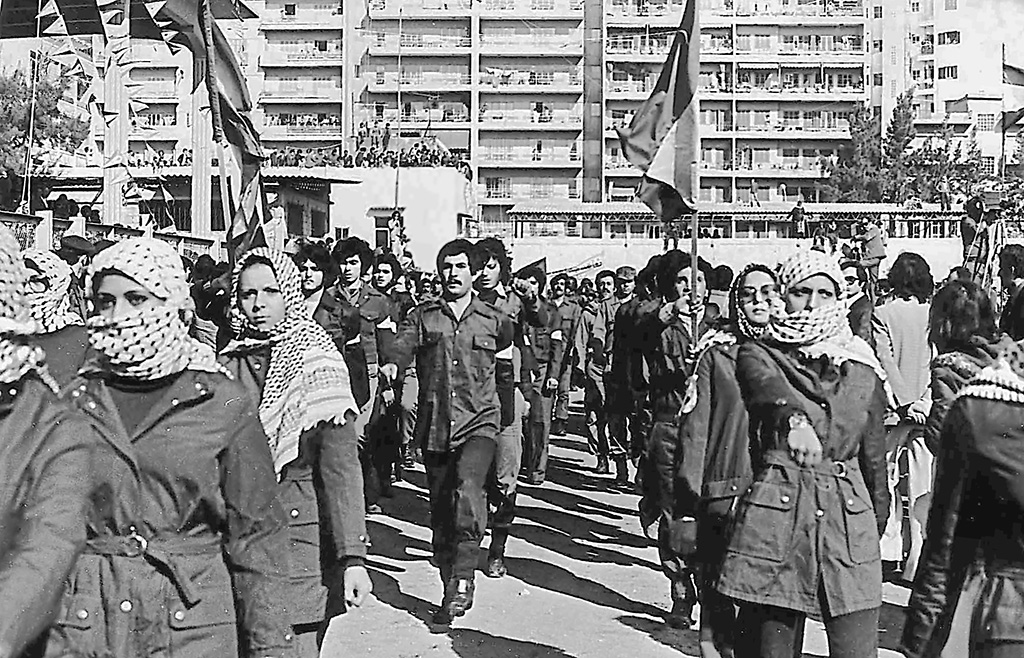
The attack is further described as “a calculated step that expresses the will to hope and correct the historical course,” with sacrifice being “the path to redemption.” In this telling, October 7 transformed Palestinians from “passive witnesses to the loss of their homeland” into “a people fighting for their dignity.” This is an implicit adoption of Fatah’s revolutionary doctrine of the late 1950s and early 1960s, which drew on the Algerian experience to argue that armed struggle liberates both the land and the people — transforming a colonized society from passive subjects into historical agents.
Claiming credit for Israel’s mistakes
Hamas takes full credit for the offensive’s supposed glory and achievements, while assigning responsibility for its catastrophic aftermath exclusively to Israel. London-based Palestinian intellectual Yezid Sayigh, however, challenges this claim, questioning what Hamas leaders Yahya Sinwar and Mohammed Deif realistically sought to achieve beyond the release of prisoners.
Seemingly aware that this absence of concrete goals cannot be filled with slogans about resistance and sacrifice, Hamas instead lists a series of supposed strategic gains: returning Palestine to the center of global attention; halting Arab normalization with Israel; isolating Israel internationally and deepening its internal divisions; undermining Israel’s image as a safe haven for Jews and accelerating Jewish Israeli emigration; and securing recognition of the State of Palestine by European countries.
Yet, as Sayigh argues, these developments are largely the by-products of Israel’s own disastrously extreme response to the attack, rather than the result of Hamas’ planning. Hamas not only claims credit for Israel’s mistakes; it also misreads Israeli society, failing to grasp the depth of the shock October 7 inflicted on the collective psyche of Israeli Jews.
In the attack’s aftermath, Jewish Israeli social media discourse revealed two dominant emotional responses: a desire for revenge and a deep existential fear. These reactions were layered atop older structures of Jewish ethnic superiority and decades of brutal military occupation, which helped produce a genocidal response backed by the majority of Israeli society. Hamas’s document ignores these developments — whether because the movement was consumed by the war, absorbed in celebrating its own achievements, or both. The result is that Israelis’ perception of Hamas as a demonic, all-encompassing threat remains unchallenged.
One passage in Hamas’ document, however, feels at odds with the rest of the text: the claim that the “[enemy’s] fate will be like that of every wave of invasion that has targeted our blessed, holy land throughout history: it will either be expelled from it or buried within it.” This language appears designed to placate Hamas’s more hardline faction, and stands in tension with another assertion: “Today, our people stand at the juncture of ending the unjust war on the Gaza Strip, to heal their wounds and magnify the fruits of their resilience.” This signals an acknowledgment that whatever Hamas achieved militarily in the war now has to be converted into political, social, and administrative gains in the negotiations as part of the Trump plan.
Now, Hamas demands a full Israeli withdrawal from the Gaza Strip, the lifting of all restrictions on the entry of food and humanitarian aid, and the transfer of Gaza’s civil administration to Palestinian experts in which Hamas itself would play a role. It rejects any form of international trusteeship and instead calls for elections to, and the reorganization of, the institutions of the Palestine Liberation Organization. Politically, Hamas points to Egypt, Qatar, and Turkey as its principal allies against the U.S.–Israel axis.
Most read on +972
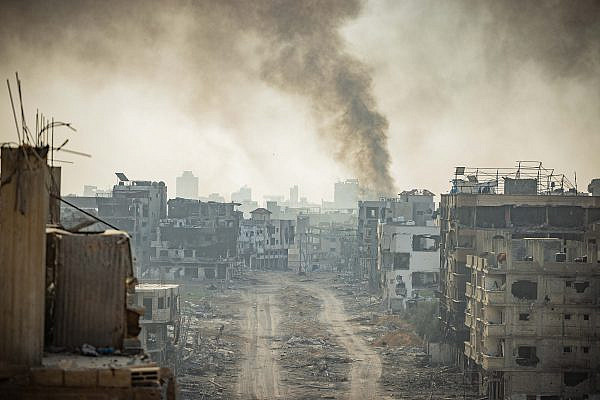

In contrast to Palestinian President Mahmoud Abbas, whose long strategy of appeasement toward Israel and Washington left him stripped of even the limited authority he inherited from Yasser Arafat, Hamas’s posture remains confrontational. If Trump’s plan advances to its second phase without Israel resuming large-scale military operations, the likely outcome is a tense balance of terror in Gaza, with Hamas and Israel sharing control over a devastated territory. Beyond that, Hamas offers no political horizon — but neither, it must be said, does Abbas’ crumbling Palestinian Authority.
A version of this article was first published in Hebrew on Local Call. Read it here.