In partnership with
In recent weeks, new details have emerged about the mechanisms of political persecution inside Israel’s Education Ministry. Officials in at least two different departments of the ministry have been secretly monitoring and investigating teachers — searching not only for expressions that could constitute “incitement to terrorism,” but any political statements opposing the Israeli government.
These officials collect information about teachers’ professional histories, gather screenshots of their posts and comments on social media, and even compile personal information obtained from law enforcement, including the police and Shin Bet. The information is stored in a personal “intelligence report,” which ministry officials interpret and use to determine how the case should proceed.
All this takes place covertly, without the teacher who is the subject of a complaint knowing that an investigation is underway, or that decisions about their future may have already been made before they have had an opportunity to respond.
It comes as no surprise that those primarily targeted are Arab teachers. In response to a Freedom of Information request in December 2025, the Education Ministry acknowledged that between 2023 and 2025, 157 teachers were examined through the procedure described above. Of those, 118 were Arab — meaning three out of every four.
Political persecution of Palestinian teachers inside Israel ran rampant after the October 7 attacks. In the first weeks of the war, an Arab teacher was suspended from her job in Netanya after posting a video on social media mentioning the difficulties of treating injured civilians in Gaza — which Netanya Mayor Miriam Fierberg-Ikar regarded as incitement “against the Jewish people.” In Harish, meanwhile, parents demanded that a Palestinian teacher be fired after students asked him about Hamas’ position in Gaza and he “showed sympathy for the Palestinian side”; the Education Ministry subsequently initiated disciplinary proceedings.
But nearly three years after the attacks, the targeting of Arab teachers continues. At the end of July, the Association for Civil Rights in Israel (ACRI) and the Labor Rights Clinic at Tel Aviv University filed a petition with the High Court seeking an order to end the Education Ministry’s covert monitoring and investigative mechanisms.
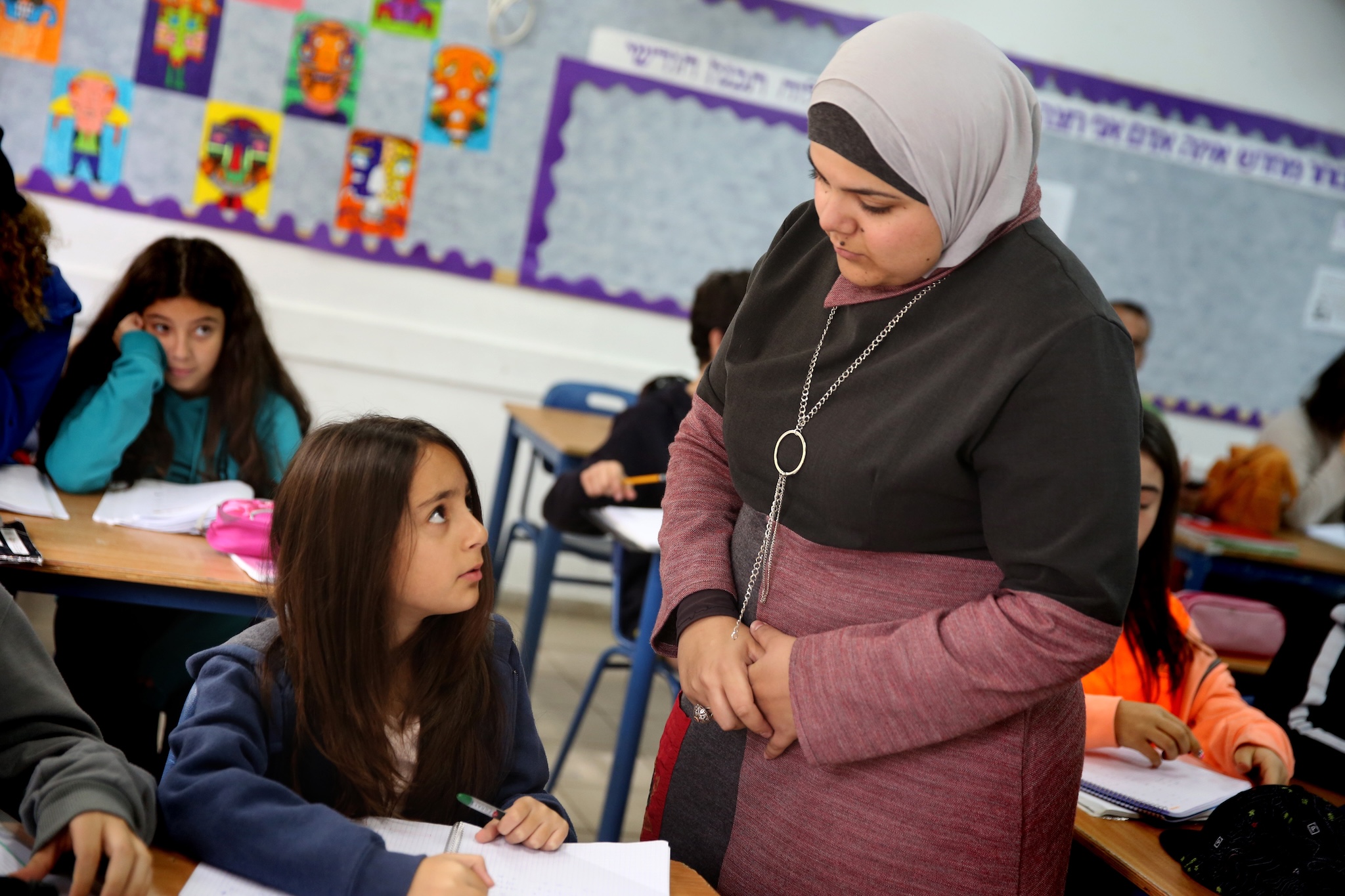
One case included in the petition involved an Arab public school teacher who, in May, received a summons for a hearing from the Human Resources Department for Teaching. The summons informed him that his employment was now being reconsidered “in light of a report received from the Education Ministry’s Supervision and Enforcement Department.”
A copy of the report was attached to the letter. It contained posts from the teacher’s personal Facebook page that had originally been written in Arabic, but did not state who had collected the information, who had translated it to Hebrew, or who had interpreted the posts and determined that they constituted incitement.
The hearing was ultimately cancelled after Miri Gross, a lawyer with the Labor Rights Clinic, asked the Education Ministry to provide all the documents relevant to the proceedings: the original complaint against the teacher, the authorization to open a covert investigation, the identity of the person who prepared the surveillance report, and the identity of whoever translated and interpreted the posts. The cancellation raises questions about whether there was any basis for the incitement allegation in the first place, and about the integrity of the investigation process.
But as long as these monitoring mechanisms exist, every teacher inside Israel — and especially Palestinian teachers — will know they are being watched at all times and will therefore likely refrain from expressing their views publicly. As the petition warned, the system creates a clear “chilling effect on the political freedom of expression of tens of thousands of teaching personnel in Israel,” precisely the outcome the government seeks.
One secret committee leads to another
The existence of political persecution committees inside the Education Ministry, which have operated secretly since at least 2016, was discovered entirely by chance. They were not exposed by an internal investigation or voluntarily disclosed by the ministry. Instead, a legal challenge to a new law forced the state to explain how it intended to police teachers’ speech and, in doing so, inadvertently revealed a surveillance apparatus that had been operating for years.
In November 2024, the Knesset passed a law granting the Education Ministry broad jurisdiction to fire teachers without notice who “publicly identify with an act of terrorism” — based on the ministry’s own determination of what that means — and to withdraw funding from schools that allow “expressions of sympathy with terrorist acts” to take place.
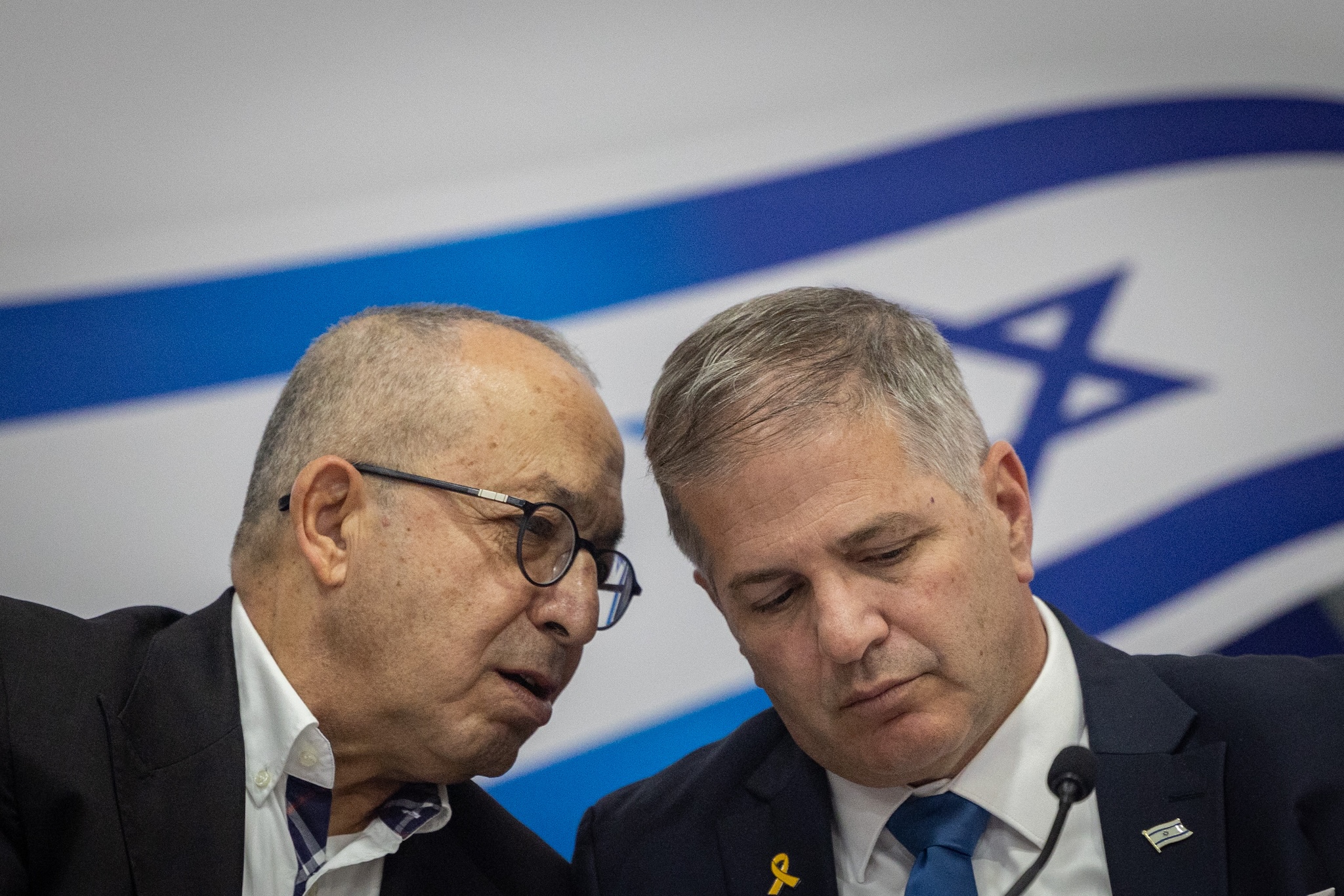
Under Israel’s existing anti-terrorism legislation, the process for punishing speech offenses is strict and requires approval from the government’s legal advisor. The new law did away with all of that, giving Education Ministry officials the authority to play the roles of the investigator, attorney, and judge.
Two petitions challenging the law were filed with the Supreme Court in December 2024. Among other things, they argued that the law was formulated ambiguously, making it impossible to define what constitutes an expression of “identification with an act of terrorism.” The court issued a conditional order prohibiting implementation of the law until the petition proceedings are completed.
It was only because of those petitions that the first committee came to light. In its response, the State Attorney’s Office sought to reassure the court that the Education Ministry already had a standard procedure to monitor and determine acts that qualified as “identification with terrorism,” and to regulate how complaints against teachers are handled by the “Advisory Committee to the Director General of the Ministry of Education on Handling Cases of Incitement against the State in the Education System” — commonly known as the “Incitement Committee.”
The Education Ministry’s response revealed still more. It emerged that the Incitement Committee had been established back in 2016, during Naftali Bennett’s tenure as education minister. Operating within the ministry’s Security Department, its role is to examine “cases of incitement against the state involving educational institutions and teaching personnel.”
This May, Haaretz published an investigation into the Incitement Committee, revealing that it has been led by a former Shin Bet operative. ACRI then approached the Education Ministry and the attorney general, demanding that the committee cease its work.
But that demand produced another accidental disclosure. In its response to ACRI, the Education Ministry revealed that the Incitement Committee was not alone: Another committee was operating in an entirely different branch of the ministry, the “Enforcement Department of the Administration for Licensing and Supervision of Educational Institutions.”
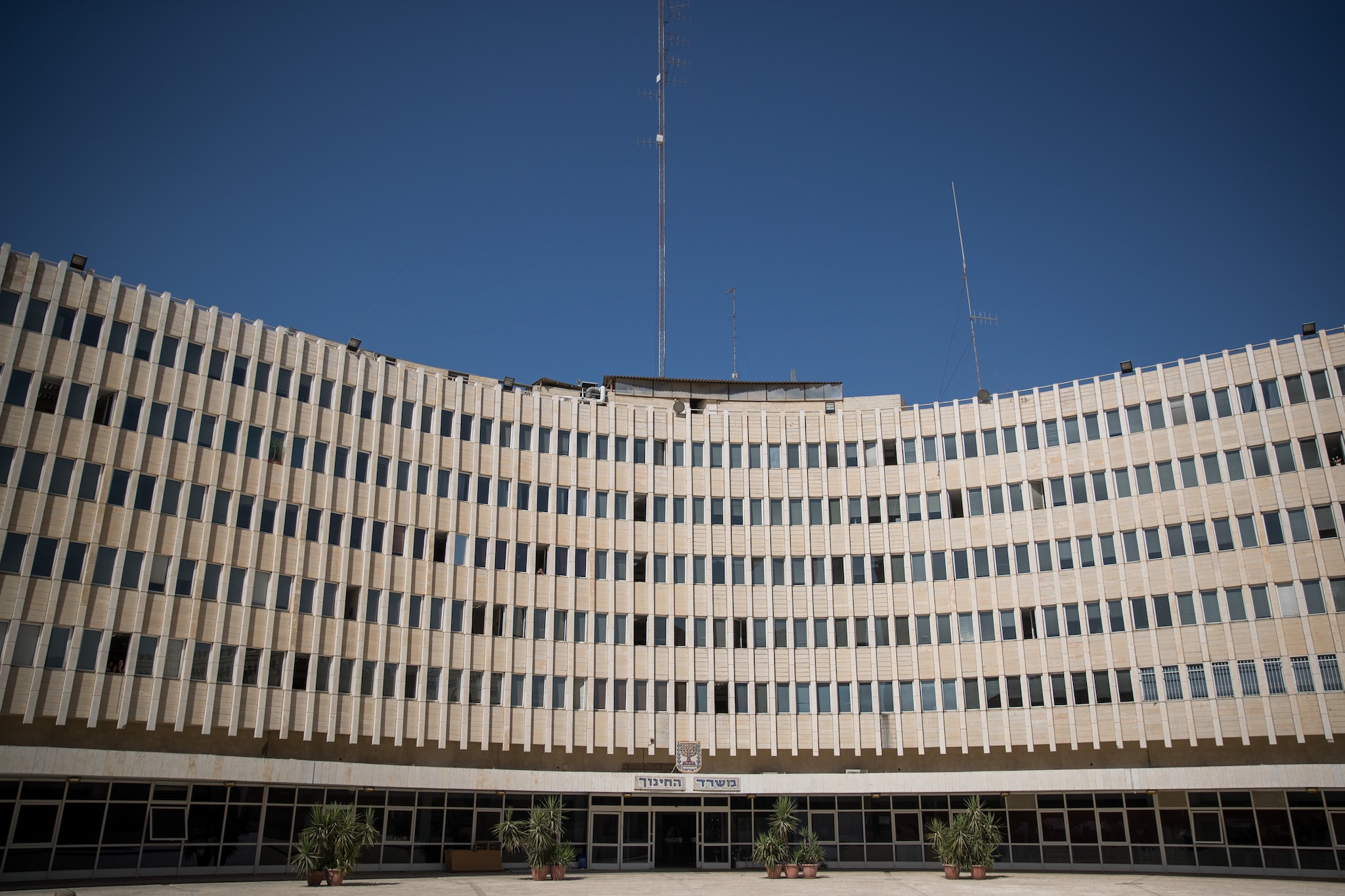
It is hard to believe, but the Education Ministry claims that this multi-department investigative system is necessary to “ensure uniform and equal implementation of the law, while maintaining an appropriate balance with the constitutional right to freedom of expression.” A world turned upside down: secretly investigating teachers’ political speech while claiming to protect their freedom to express it.
A matter of interpretation
Suppose, for example, that an Arab teacher wrote on social media that Israel is a “legal dictatorship.” How would such a statement be interpreted?
The Incitement Committee’s working procedure, which was attached to the petition, lists several criteria for examining a statement. Among other things, a statement is to be judged more harshly the more public and sustained it is.
Imagine our hypothetical teacher’s post is open to comments and sharing on a Facebook page with 54,000 followers. As for its sustained nature, suppose it was preceded by numerous similar posts. Perhaps the teacher had previously described Supreme Court decisions as “scandalous and disgraceful” and “irresponsible and reckless,” or called the attorney general “corrupt.”
There appears to be no dispute that these are statements “against the state and its institutions,” which, according to the Education Ministry, fall within the Incitement Committee’s purview. But in practice, the teacher’s Arab identity — rather than simply the content of the statements — is what determines how such speech is treated.
Most read on +972
I assume this is so because the quotes mentioned above were not written by a hypothetical Arab teacher. They are genuine quotes from Education Minister Yoav Kisch’s Facebook page. One can imagine how a Palestinian teacher who posted similar statements would be treated.
This is precisely what turns the Education Ministry’s Incitement Committees into mechanisms of political persecution. The interpretation comes from the perspective of the person in power: Whatever they say will always define the permissible line, while every other statement is judged accordingly.
A version of this article was first published in Hebrew on Local Call. Read it here.