
In partnership with
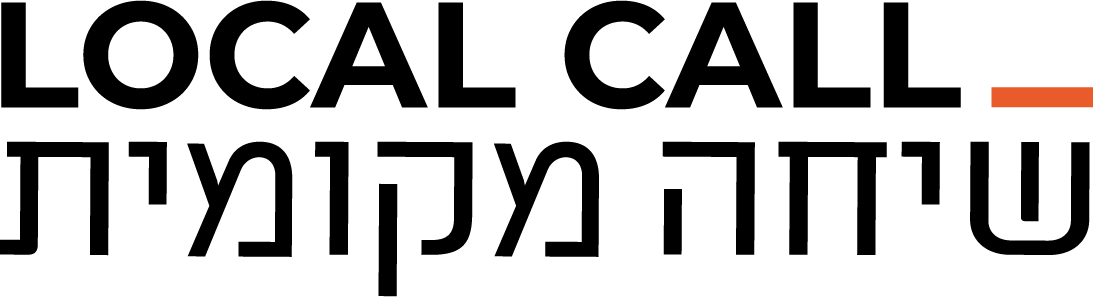
In the spring of 1944, Jerusalem educator and intellectual Khalil Al-Sakakini opened an essay in the Palestinian newspaper Falastin with a joke. Titled “Mutual Understanding,” the piece responded to a declaration by David Ben-Gurion, who four years later would become Israel’s first prime minister, that “there is not a single Jew in the world who does not want an understanding with the Arab nation.” Sakakini took this purported offer of partnership and subjected it to a characteristically sharp examination.
He told the story of a priest who offered a penny to any student who could answer a simple question: “Who is the person one should love completely?” One after another, the children answered “father,” “mother,” “brother,” or “sister,” and failed the test. The last child, more cunning than the others, understood what was being asked of him. “I love Jesus,” he replied. Delighted, the priest handed him the coin and asked his name. The boy answered with a name that was unmistakably Jewish: “Mordechai.”
For Sakakini, the Jewish community in Palestine resembled the priest. “They ask, but they want the answer to be what suits their wishes, not what reason accepts, and not what justice approves, or at least what can be arrived at,” he wrote. The answer they wanted from the Arabs was already scripted: “Palestine is your country. It is time for you to return to it after your long absence. During your absence, we were nothing more than keepers of the fields. Take it as we received it from you.”
In Sakakini’s eyes, the Zionist establishment’s language of “understanding” and “partnership” thus concealed a fundamentally one-sided proposition. The Arab side was expected to surrender its own narrative, adapt itself to what the Jewish side was prepared to accept, and only then receive the penny.
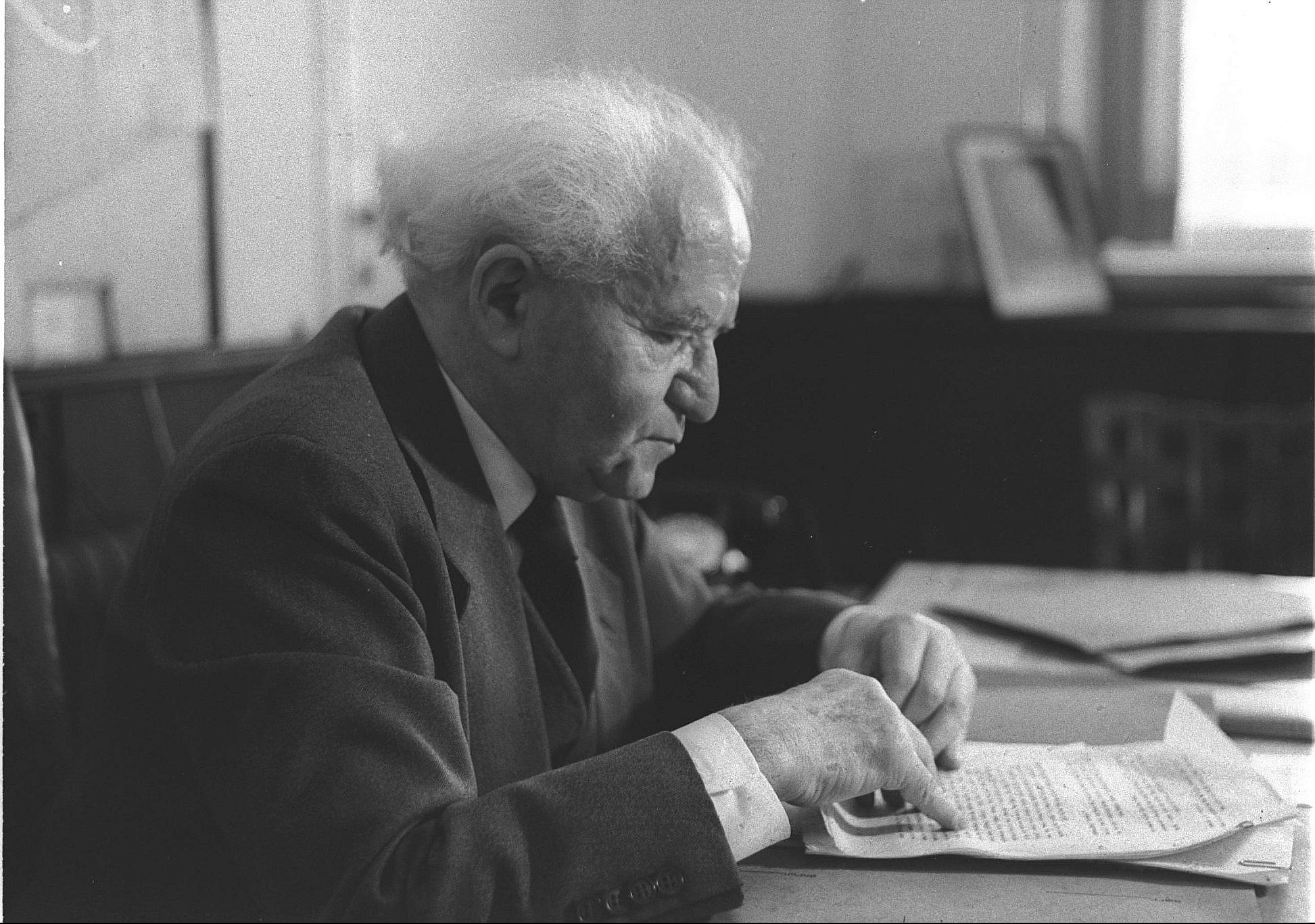
More than 80 years later, Sakakini’s parable offers a useful frame for a debate that has resurfaced over the meaning of Arab-Jewish partnership in Israel. Alongside the urgent shared struggle against rising fascism, and ahead of next month’s election, a sharp internal contest is unfolding within Palestinian society in Israel between two major political currents: the United Arab List, commonly known by its Hebrew acronym Ra’am, on one side; and the three parties now gathered in the Joint List, on the other.
Their disagreement is not simply tactical, over whether Arab parties should join or support a Zionist governing coalition, or instead remain in opposition. Rather, it concerns the political and identitarian price Palestinians should be expected to pay for partnership in the first place.
That debate remains largely confined to democratic forces on Israel’s political margins. Yet a serious reckoning with what Arab-Jewish partnership means — which principles should underpin it, and what each side is expected to concede — could help widen the small circle now engaged with the question.
And it poses a challenge not only to the Palestinian political parties in Israel but also to the Jewish liberal-democratic camp: Does it accept Palestinian partners as equals, or only those willing to mute the national question in exchange for budgets, access, and political legitimacy?
Between civic gains and national rights
The two sides of this debate among the Arab parties in Israel offer fundamentally different answers to the “priest’s penny” dilemma. Neither approach can easily be dismissed as irrational or opportunistic; both have emerged in response to the existential threats facing Palestinian citizens, and each offers its own logic for confronting them.
Ra’am’s approach, under the leadership of Mansour Abbas, rests on a form of civic, even existential, pragmatism. Faced with the radicalization of the Jewish-Israeli population and the escalation of racist rhetoric in public life, the party concluded that it needed to change its political language in order to gain power within the Israeli political system.
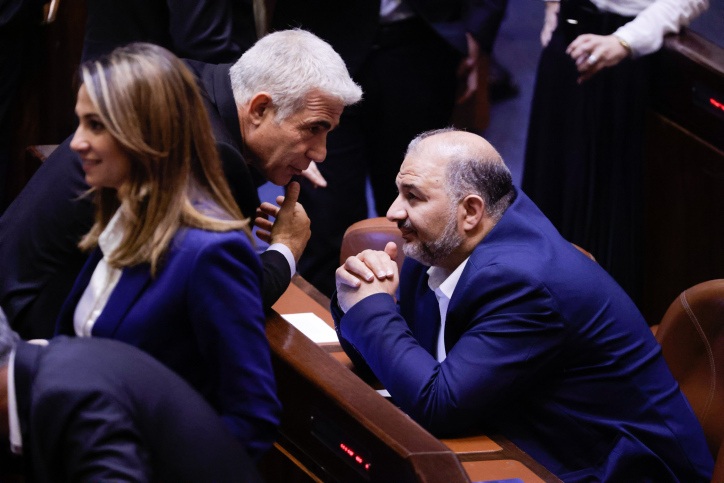
Within Ra’am, this conceptual and rhetorical shift has been described as a shift from a politics of protest — long characteristic of Palestinian political movements in Israel, including the Islamic current from which the party emerged — to a politics of influence.
Questions of national, collective, and civic identity lie at the heart of the political bargain between the Jewish majority and Palestinian minority in Israel. For Ra’am, that bargain is easier to absorb because the central organizing element of its political identity is religious and conservative.
Greater integration into the state does not necessarily threaten that core: An Arab Muslim citizen is not required to surrender religious belief, observance, or communal identity in order for their town to receive budgets, infrastructure, or programs aimed at combating crime.
From this perspective, narrowing the political discourse around Palestinian national rights and declining to challenge Israel’s self-definition as a Jewish state are prices Ra’am is prepared to pay because they do not fundamentally undermine the religious core of its voters’ identity. At the national level, the party is willing to give the priest the answer he wants, on the assumption that the civic gains it can secure while preserving religious and communal identity justify the bargain.
The approach of the Joint List (now comprising Hadash, Ta’al, and Balad) begins from a very different premise — that citizenship and national identity cannot be separated. Civil rights without collective national equality, in this view, are ultimately an illusion because civic discrimination is itself rooted in national inequality and oppression.
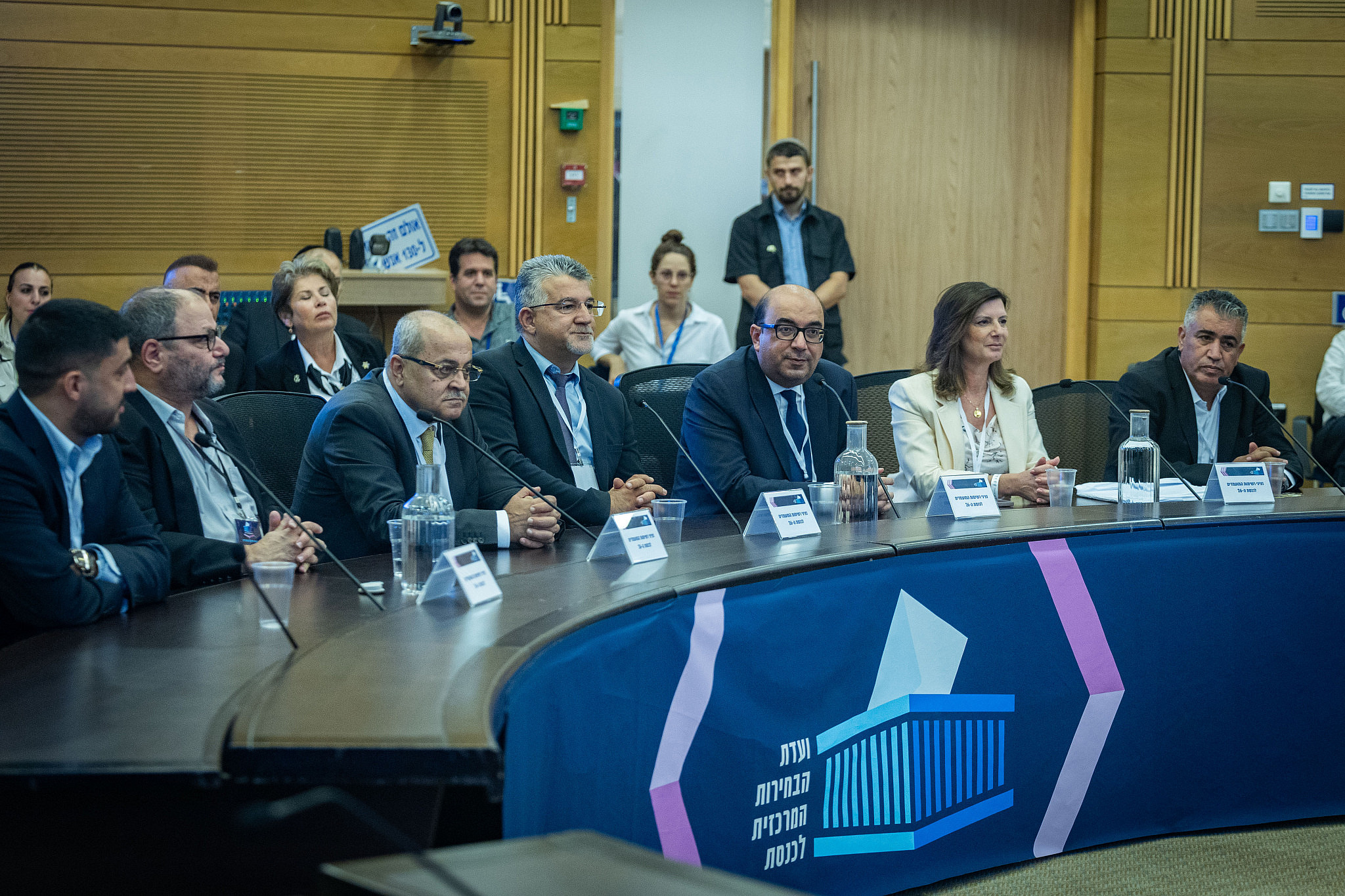
Palestinian national identity already has to navigate the constraints and contradictions of Israeli citizenship in the absence of Palestinian self-determination. For the Arab national-democratic camp represented by the Joint List, trading national claims for material gains means surrendering a central part of that identity. The alternative it proposes — particularly Hadash, the leading force within the Joint List — is a joint Arab-Jewish struggle for structural change: ending the Israeli occupation, dismantling institutional discrimination, and establishing genuine equality.
Its supporters refuse, in other words, to play the role of “Mordechai” in Sakakini’s parable. A politics of “budgets in exchange for loyalty,” in their view, is not a substantive partnership but submission to an unequal bargain whose terms have already been set.
Alienating a more natural ally
This is where the Jewish liberal-democratic camp enters the picture. In recent years, significant forces within this camp have warmly embraced Mansour Abbas and the United Arab List’s political model.
The attraction is understandable. The list offers a “convenient” Arab partner: one that largely avoids raising the national question, does not directly challenge Zionism, and concentrates its demands on the civic and budgetary spheres. Partnership on these terms does not require Jewish liberals to undertake a deeper reckoning with the discriminatory structures of the state, or with their own responsibility for changing them.
Yet this embrace carries a serious long-term risk. By treating the United Arab List’s model as the only acceptable form of Arab-Jewish partnership, Jewish liberals risk weakening what should be a natural ally in the struggle against fascism and racism: the democratic Arab bloc, whose professed commitments are, in many respects, closer to their own.
Preferring a religious-conservative partner to a democratic-national one because the former is more politically convenient — and because challenging the nationalist consensus within Jewish society carries a higher political cost — undermines the possibility of building a durable alliance around democracy, civic equality, and human rights.
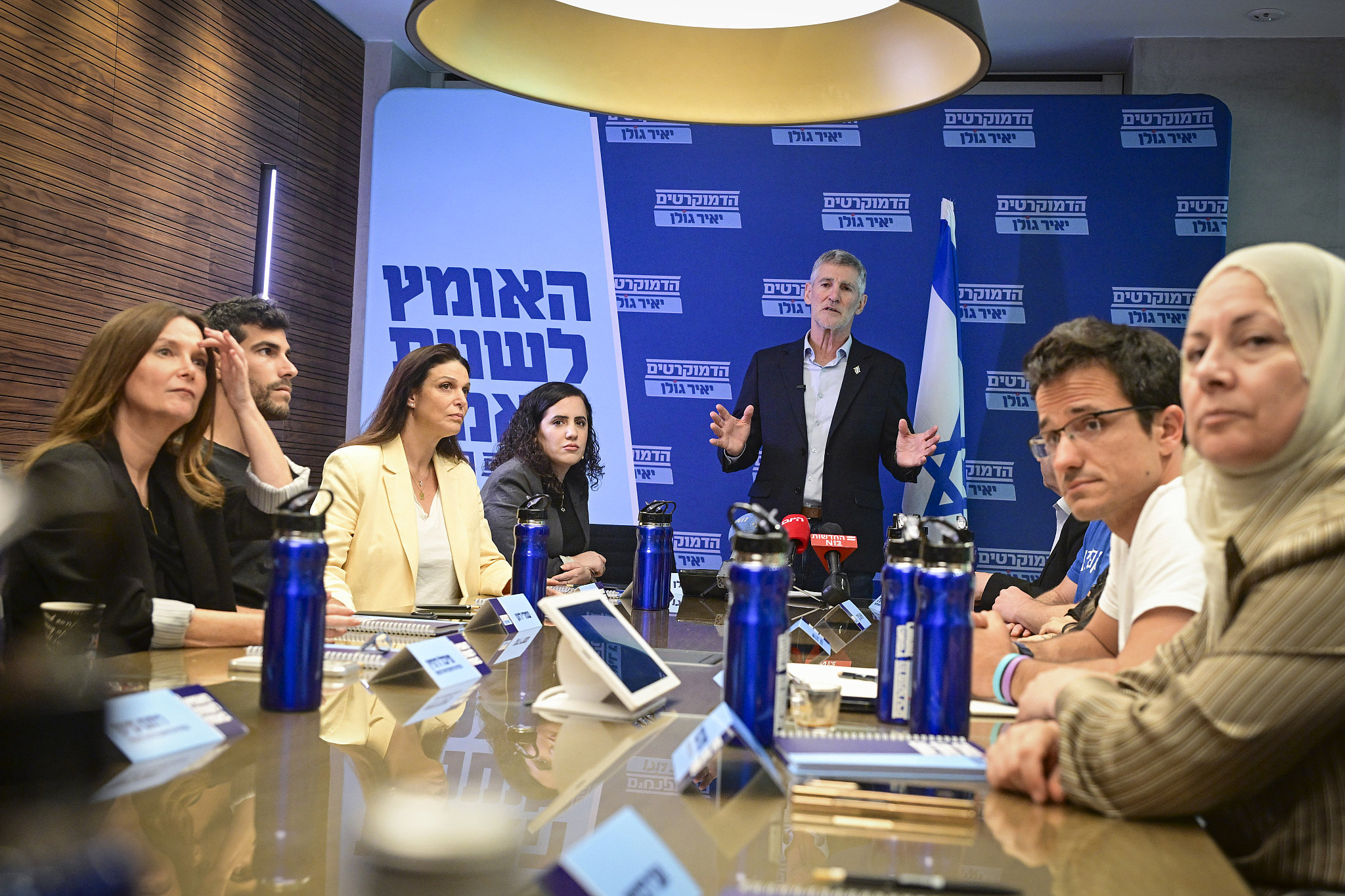
The irony is that the United Arab List’s strategy did not originally emerge from an alliance with the liberal-democratic camp at all. It developed, in significant part, through an effort to establish political legitimacy with the Israeli right.
After a slew of repeat elections between 2019 and 2021, Mansour Abbas and Benjamin Netanyahu held a series of public and private talks, including at the prime minister’s residence on Balfour Street, exploring possible forms of political cooperation. Ahead of the formation of the Bennett-Lapid government in 2021, they met again as Netanyahu sought to prevent Ra’am from joining the emerging “change” coalition. Abbas later described extensive discussions with Netanyahu over issues affecting Palestinian citizens, including state budgets and the formal recognition of unrecognized communities.
When large parts of Israeli society, including forces that define themselves as democratic and liberal, demand that Arab politics shed its national identity as the price of being accepted as a partner, they return us to Sakakini’s 1944 essay. The proposed partnership ceases to be one between equal citizens jointly shaping their political future. It becomes a patronizing arrangement in which the majority determines the “correct” answer and rewards those willing to recite it.
Most read on +972


Sakakini concluded his 1944 article with biting sarcasm directed at Ben-Gurion: “Our cousins! Our cousins! We are the guests and you are the landlords. Welcome, welcome. The time is yours, and the whole world is at your command. Indulge yourselves as much as you wish, because nothing will be but what your hearts desire — for you are God’s chosen people. So, Ben-Gurion, here is the answer. Now bring the penny.”
More than 80 years later, that penny — whether it takes the form of conditional infrastructure budgets or temporary political legitimacy — is still being offered on remarkably similar terms. Does the Jewish camp that claims to uphold liberal-democratic values intend to keep handing out pennies only to those willing to play the role of “Mordechai” and recite the convenient script? Or are they capable of moving beyond a politics of patronage in which the majority alone sets the terms of legitimacy?
A genuine partnership cannot be built by rewarding people for denying or suppressing their identity. It can emerge only when the Jewish liberal-democratic camp accepts that the struggle against fascism — and for freedom, equality, and democracy — cannot rest on buying political quiet with budgets. It requires a willingness to share political space, recognizing the national identity and collective rights of the Palestinian minority, and building a substantive partnership grounded in justice, equal citizenship, and mutual recognition.
A version of this article was first published in Hebrew on Local Call. Read it here.