

On Oct. 27, Israeli citizens will vote in the first elections to take place since the genocide in Gaza. The debate now unfolding among Palestinian citizens in Israel about whether and how to vote remains important, but it is still largely framed by questions inherited from an earlier political moment. Does participation legitimize the Israeli regime? Is a boycott more consistent with a patriotic position? Should there be one joint list or two lists?
These are all legitimate questions, yet they no longer capture the current political moment. The central question is how Palestinian politics in Israel should be reimagined in the face of an ongoing genocide, and what role political participation can play in defending Palestinian society under these radically transformed conditions.
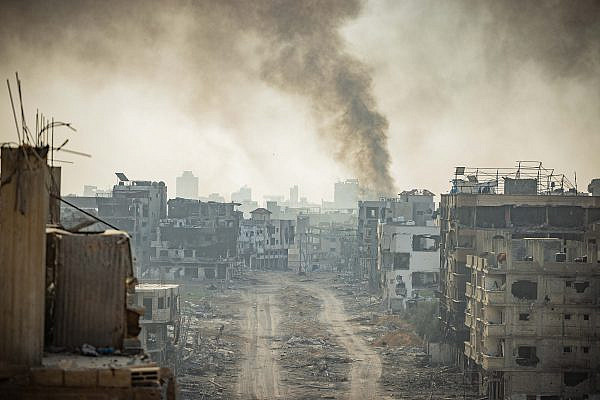
What has unfolded since October 7 is not simply another war, nor merely another turn toward a more extreme right-wing government. The genocide in Gaza has exposed structural transformations within the Israeli system: an unprecedented acceleration in the fusion of the settler-colonial project with political fascism, alongside a contraction of the public sphere so severe that Palestinian existence itself has come under threat.
At the same time, this period has revealed the fragility of the Palestinian political sphere inside Israel, as well as the scale of the challenges confronting their society. Palestinians in Israel are not a classic national minority participating in an electoral system of the state whose citizenship they hold. They are an indigenous community living within a settler-colonial state that is currently pursuing genocidal war against their people. It is this reality, in my view, that makes these elections fundamentally different from all those that came before.
Traditionally, Palestinians in Israel have asked what this citizenship can grant them. Today, the more urgent question may be how to use the limited possibilities that settler colonial citizenship affords to protect Palestinian society — and perhaps the Palestinian people as a whole — while strengthening its sumud (steadfastness), organizing its political power, and confronting a regime that is becoming ever more colonial and ever more fascist.
Transfer by other means
I want to make my position clear from the outset: I do not believe that these elections can transform the fundamental nature of the Israeli system, and I never have. The settler-colonial project does not depend on which government is in power, and despite their differences, all Israeli governments share the same basic foundations. At the same time, however, not all governments have the same effect on Palestinians’ daily lives.

Those differences may not change the nature of the regime, but they can affect people’s ability to live, organize, protest, study, defend their local institutions, protect and remain on their land, sustain a public and political sphere, and expand the space available for collective action. These are all core components of sumud.
In this sense, sumud cannot be separated from the spread of crime and violence within Palestinian society, or from the state’s organized colonial abandonment and deliberate neglect, which has allowed the crisis to worsen. Through practices of erasure, neglect, discrimination, and inaction, crime has become a force that undermines people’s sense of security and trust, tears at the social fabric, and renders daily life increasingly precarious. When people no longer feel safe in their homes or communities, their ability to remain and build a future is placed under direct threat.
These policies also contribute, indirectly, to coercive emigration. Restrictions on land, housing, and planning have accumulated alongside the escalation in violent crime, declining personal security, and shrinking economic and political horizons. Under these conditions, leaving the homeland can become, for some families, less a free choice than the outcome of mounting pressures.
It is therefore not surprising that the number of Palestinian citizens choosing to emigrate from Israel is increasing in recent years. These decisions cannot be understood as purely personal or economic. Taken together, they constitute a “transfer by other means”: the deliberate and systematic erosion of the material conditions of existence, and of the belief that a future can still be built in one’s homeland.
Protecting the conditions of everyday life — the struggles for personal safety, against crime, for housing and planning rights, and for the protection of education and local government — is essential to the indigenous national project, to the continued existence of Palestinian society on its land. When remaining itself becomes an act of resistance, defending the conditions that make remaining possible becomes part of the broader struggle for political and social liberation.

Political participation, then, should not be understood as an expectation of transforming Israel. Rather, it should be seen as one part of a wider effort to defend Palestinian society inside Israel and sustain its ability to survive, organize, and protect itself.
But there is another reason I believe participation is today a political necessity.
Confronting sociopoliticide
Settler colonialism seeks to govern not only territory, institutions, and material life, but also the emotional and moral worlds of the colonized: how they feel, whom they grieve for, with whom they sympathize, and ultimately what they believe is politically imaginable. This is what I term the “colonization of emotions,” a concept I have developed in my recent work.
Sociopoliticide represents the most extreme expression of this process. Its aim is to destroy the social and political fabric of Palestinian life itself: to dismantle the collective institutions, relationships, and capacities through which society organizes, resists, and imagines a common future. In doing so, it produces a society marked by fear, political exhaustion, and self-censorship — one in which individuals constantly calculate the cost of every word, retreat from public life, and come to experience silence as the very condition of survival.
In recent years, and specifically since October 7, the Israeli settler-colonial regime has succeeded to a considerable extent in restoring fear within Palestinian society inside Israel to a level of intensity reminiscent of the period of military rule from 1948 to 1966. Arrests, political persecution, dismissals from work, the criminalization of expression, and relentless incitement have all targeted the collective spirit of Palestinian society.

One of the central questions before us, then, is how to prevent this colonization of emotions from taking hold. How do we restore people’s confidence in themselves and in one another? How do we recover their capacity for collective action? And how can fear be transformed from a force of paralysis into a catalyst for the reorganization of society?
This, I believe, is where politics truly begins. Politics is not merely a competition for seats in the Israeli Knesset; it is the work of rebuilding public trust. For this reason, Palestinian society today needs leadership that understands its responsibility as historical, not merely electoral: leadership with a national liberatory vision, capable of uniting Palestinian society and managing disagreements where they cannot be resolved.
At the same time, this position does not diminish the validity of calls to boycott the elections. Rather than a withdrawal from politics, as it is often deemed, boycott reflects a principled belief that participation in the institutions of a settler-colonial regime grants that regime a measure of legitimacy, or reinforces the illusion that it can be reformed from within. This is a serious political and intellectual position with deep roots, one that I myself embraced during an earlier period of my life, and I continue to recognize its legitimacy and importance.
In my view, however, just as participation must be judged by its ability to advance a coherent political vision, a boycott must also be accompanied by a coherent project and a practical strategy for confronting reality. How should Palestinians in Israel address the challenges of everyday life? How can our society be protected, organized, and strengthened? How can its sumud be reinforced, and how can leadership and institutions be built outside the parliamentary arena?
The real disagreement, therefore, is between political strategies, each seeking, in its own way, to defend Palestinian society and its rights; advocates of one are not less patriotic than the other, and should not be silenced or excluded as such. What is needed today is a critical and responsible discussion over which strategy is better able to confront the profound transformations produced by genocide and sociopoliticide, resist the fragmentation of society, and restore collective political action.
Rebuilding Palestinian leadership after genocide
At this political moment, the Palestinian struggle inside Israel for dignity, personal safety, education, and housing cannot be separated from the broader national struggle. Any leadership entrusted with a public mandate must carry a clear political project: one that uses every available political, legal, and diplomatic tool to help bring an end to the genocide in Gaza, halt the accelerating policies of displacement, expulsion, and ethnic cleansing in the West Bank and East Jerusalem, and defend the collective rights of Palestinians inside Israel.

Palestinians in the Israeli Knesset may not be able to change state policy. But that does not absolve them of the responsibility to take clear public positions, build alliances, mobilize Israeli and international public opinion, defend Palestinian rights, and use every available political space to confront these policies. Leadership requires widening the boundaries of the possible and offering a political and moral horizon that refuses to normalize the crimes of genocide and ethnic cleansing committed against the Palestinian people.
In this sense, participation in elections is not only about defending Palestinian society inside Israel. It is also part of a broader national responsibility toward the Palestinian people as a whole.
Because of their citizenship, Palestinians in Israel possess political and legal tools that are not available to other Palestinians. They have a responsibility to use those tools to their fullest extent: to defend their people; keep genocide, displacement, and ethnic cleansing at the center of Israeli and international debate; and resist every attempt to separate the struggle of Palestinians in Israel from the struggle of Palestinians in Gaza, the West Bank, and Jerusalem for liberation from occupation.
Above all, Palestinians need leadership that understands that public trust depends on moral integrity, transparency, accountability, ethical conduct, and the treatment of marginalized groups, including women. A society confronting a settler-colonial project of this scale cannot be expected to trust a leadership that fails, in its daily conduct, to embody the values it claims to uphold. Leadership must also reflect the society it claims to represent.
The representation of women is neither cosmetic nor a matter of meeting or fulfilling a formal requirement. It is a prerequisite for rebuilding a democratic Palestinian politics. A national liberation movement cannot claim to pursue liberation while perpetuating the very forms of exclusion it seeks to dismantle. Nor can a leadership that excludes women fully represent society, draw on its collective capacities, or cultivate the broad political imagination required to confront the challenges of the present and envision a shared future.
For this reason, the debate over whether there should be one electoral list or two, important as it may be, should not overshadow the deeper questions: What kind of leadership do we want? What political project are we prepared to entrust with our mandate? And how can elections become an opportunity to rebuild trust between society and its leadership, rather than another stage in a cycle of fragmentation and disappointment?
Voting at this moment, then, is far from an expression of faith in an Israeli democracy that has never truly existed. It is, above all, a decision to grant a mandate to Palestinian leadership — a mandate conditioned on accountability, the ability to represent society with dignity, a commitment to justice and equality for women and men, Palestinians and Jewish Israelis alike, and a determination to defend Palestinian society inside Israel during one of the most difficult periods in its history.
Most read on +972

The elections will not change the nature of the Israeli regime. But they may help Palestinian society reorganize, recover confidence in its own collective power, and reclaim political space from the fear that seeks to close it down.
The aim of sociopoliticide is to destroy Palestinian society as a collective. Our responsibility, therefore, is to resist this assault not only on our lives, institutions and material existence on the land, but also on our consciousness, confidence, and capacity to act.
This is what decolonization as praxis means, and also what Palestinian politics in the face of genocide requires: that we may disagree over the means without losing sight of a shared compass — protecting society, strengthening its sumud, renewing principled leadership, and the ongoing work of reclaiming collective agency.
A version of this article was first published in Arabic on Arab48. Read it here.