
In partnership with

It took less than 24 hours for Professor Gur Alroey to spring into action. On October 8, 2023, the rector of the University of Haifa suspended six Arab students for their alleged reactions to the Hamas massacre the day before. “In light of your statements on social media and your support for the terrorist attack on the residents of the Gaza border communities and the murder of innocent people,” Alroey wrote, “you are suspended from your studies at the University of Haifa until the matter is investigated.”
After 25 senior faculty members published a letter of protest against the move, it became clear that the rector’s decision had been made without any hearing or investigation into the students’ statements, a move in violation of the university’s disciplinary procedures and beyond Alroey’s authority. In January 2024, the disciplinary committees that examined the cases ultimately reversed the suspensions.
But the cases at the University of Haifa only marked the beginning of a rapid crackdown on Palestinian students across Israeli academia. On October 12, the education minister instructed the heads of academic institutions to take a hard line against students who “are expressing support for these horrific acts of terrorism,” ordering them to “immediately suspend any student,” conduct “an immediate hearing for those inciters,” and even “order their permanent expulsion.”
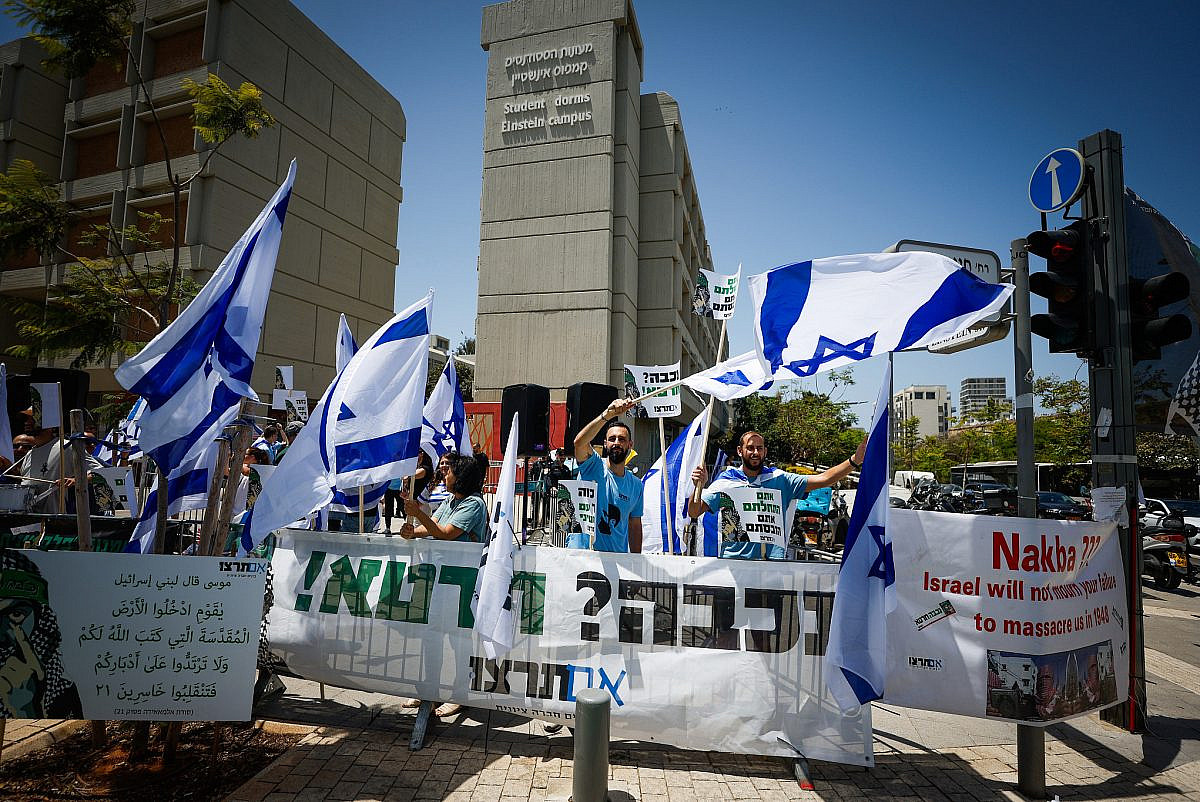
These precedents set off a murky wave of persecution over statements made by Arab students largely outside the university setting. Within a short time, dozens of requests for assistance with disciplinary proceedings reached the Haifa-based legal center Adalah, involving students at 40 of Israel’s 61 accredited universities and colleges. A particularly large number of proceedings were conducted at Bezalel Academy of Arts and Design in Jerusalem, the University of Haifa, the Technion and the College of Management, across its various branches.
Earlier this month, Adalah published “Apartheid in Israeli Academia,” a comprehensive report on the discriminatory disciplinary policies used against Palestinian students at Israeli universities and colleges since October 2023. The persecution involves “manufactured cases,” in which accusations and disciplinary measures preceded factual investigations, leaving Palestinian students to prove their innocence over opinions expressed beyond campus.
By contrast, Jewish students enjoy complete freedom of expression, and institutions’ disciplinary committees have no authority to judge them outside the academic context. Different treatment and a different legal process are nothing less than apartheid.
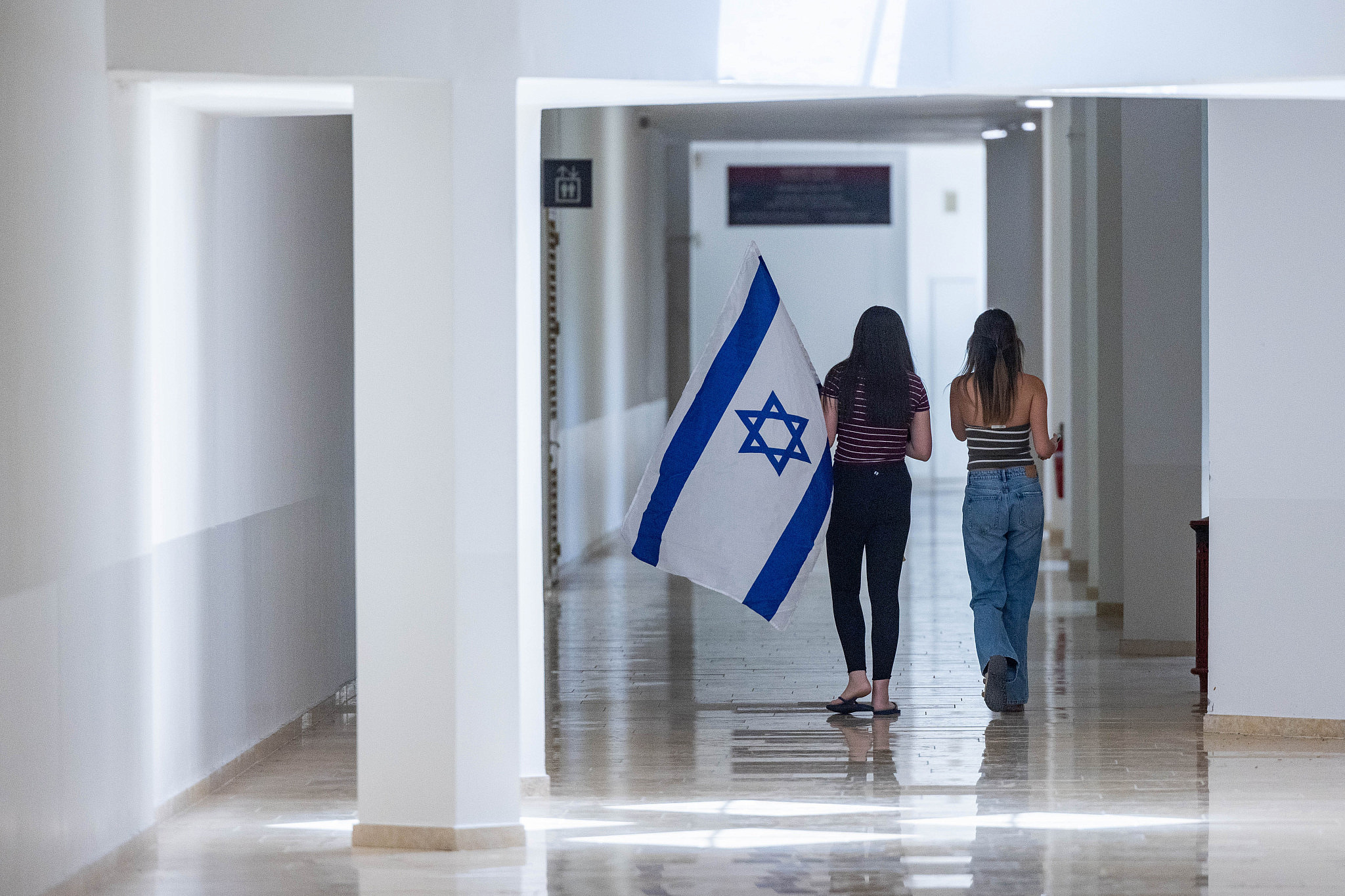
The study is based on the cases of 132 Palestinian students (101 women and 31 men) who faced disciplinary proceedings at their institutions and sought Adalah’s assistance. Yet those cases represent only part of the broader crackdown. A 2025 report by the Israeli group “Academia for Equality,” for example, mentions 53 cases, including 21 Bezalel students summoned to disciplinary proceedings (sometimes while temporarily suspended from their studies) for “expressing an opinion on social media.”
‘Suspicion preceded investigation’
The Adalah report reviews numerous procedural flaws in disciplinary proceedings opened against Palestinian students. In some cases, students were summoned for questioning without even being told what they were accused of.
On October 18, 2023, for example, a student at the Multidisciplinary Academic Center in Jerusalem (formerly Hadassah College) received a letter from the center’s president ordering her immediate suspension “in light of information that has come to our attention regarding an offensive publication constituting support for terrorism and the murder of innocent people.” When Adalah’s lawyers asked to see the publication in question, the college refused, telling them that “your client should have information regarding publications that were published.”
At other times, administrators made basic errors, such as failing to check when the posts in question had been published, attributing prewar statements to the events of Octcontext of the war. For example, at Peres Academic Center, disciplinary proceedings were opened against a student who, during the 2022 FIFA World Cup, wrote: “The World Cup is in Qatar, while the World Cup of masculinity, resistance, and pride is being played in Palestine.” The center claimed that this post indicated support for Hamas’s attack, which took place about a year after the post was published.
In other cases, institutions failed to establish whether the posts even belonged to the students accused of publishing them. ORT Jerusalem College opened proceedings against a student over a social media profile picture showing a person holding a pistol, only for it to emerge that the profile did not belong to the student. As Adalah’s report notes, “Suspicion preceded investigation, and the accusation preceded the factual inquiry.”
Many other proceedings rested on mistranslations from Arabic into Hebrew, faulty interpretations of religious language, or guilt by the loosest of associations. At Kaye Academic College of Education in Beersheba, a female student faced disciplinary action after posting a Quranic verse. The passage, from Surah 110, refers to the Muslim conquest of Mecca and promises that God’s salvation is near and that victory will follow. The college translated the verse using Google Translate, rendering “God’s victory” as the Hebrew transliteration “Nasr Allah.” As a result, the student was accused of wishing for the victory of Hezbollah’s then-secretary-general, Hassan Nasrallah.

At Zefat Academic College, a female student was disciplined for publishing a du‘a, a personal prayer, for the safety of Gaza’s residents. Adalah, which represented her, submitted an expert opinion on Arabic language and literature explaining the text’s religious and cultural meaning. The college tribunal rejected it, relying instead on Google’s translation and concluding that there was no need for “convoluted interpretation.” Rather than “a professional inquiry by linguistic experts,” it argued, the prayer should be judged according to the “reasonable listener,” who it claimed would understand the prayer as an expression of support for terrorism.
Meanwhile, a student at Braude Academic College of Engineering in Karmiel was investigated after sharing an image containing a Quranic verse that had originally been published on another page. The verse (Surah 3:200) calls on believers to be patient and steadfast in their faith in order to attain success and salvation. The student was asked to explain the verse and prove that it contained no support for terrorism. The college later claimed she had “failed to meet the burden of proof,” since the original page on which the verse was published also contained other posts allegedly expressing support for terrorism.
Two standards of academic freedom
In all the legal proceedings, academic institutions relied on Section 16 of the Student Rights Law, which allows universities and colleges to establish a “code for the behavior of applicants and students regarding their studies at the institution, including behavior during class and while at the institution’s facilities,” as well as “disciplinary regulations that detail the expected punishments for violating the behavioral code.” Yet all of the proceedings concerned social media posts made outside the institutions themselves and unrelated to studies there.
In order to conduct the proceedings, the institutions thus effectively expanded the scope of their disciplinary authority beyond the interpretation of the law — but only when investigating complaints against Palestinian students. The report cites several examples in which universities took a different approach toward Jewish students.
In 2025, two Palestinian students filed a disciplinary complaint against the chair of the Technion’s student union after he posted a photograph of himself, while serving as a reservist in Gaza, drawing the student union’s symbol on the wall of a destroyed building. Despite the explicit connection between the act and the educational institution, the Technion rejected the complaint, according to documents in Adalah’s archive, on the grounds “that it is not within our authority to enter the boundaries of the army.”
A similar principle was invoked at the Hebrew University in May 2026, after a Jewish student was convicted of serious sexual offenses committed off campus and unrelated to his studies. The university explained in a public statement that because “the offenses were not committed at the university or as part of a university activity, the university’s regulations do not allow it to prohibit the student from coming to campus.” Later on, under pressure from female students and feminist groups, the university signed a restraining order with the student, who was barred from campus but allowed to complete his studies online.
Thus, two separate disciplinary tracks have emerged at universities and colleges in Israel. The first, which Adalah calls the “constitutional track,” is reserved for Jewish students: institutions generally observe the limits of their disciplinary authority and refrain from policing conduct unrelated to academic life. Jewish Israeli students, the report argues, have therefore remained “effectively shielded from disciplinary proceedings for speech that had no direct connection to their academic studies, even when that speech was racist, advocates for genocide, or calls for the total destruction of Gaza.”
Most read on +972
Palestinian students, by contrast, have been subjected to an “administrative track,” in which institutions have expanded their authority to adjudicate personal statements made outside the academic context. This has been accompanied by blatant and systematic violations of the fundamental principles of due process. “The Palestinian student is not treated as a civic subject with constitutional rights,” the report argues, “but as a figure cast as an ‘enemy,’ required to repeatedly prove his/her loyalty and conformity to the Zionist national ethos.”
Freedom of thought is at the core of academic learning and is arguably the very reason for its existence. Scholars are supposed to question prevailing theories and follow the course of thought wherever it leads. This can happen only in a place where there are no restrictions, no sanctions against unpopular opinions, and certainly no blatant discrimination and apartheid. Academia in Israel is betraying the principle on which its own claim to intellectual freedom rests.
A version of this article was first published in Hebrew on Local Call. Read it here.