


In partnership with

In recent days, “settler violence” — a sanitized term for attacks carried out by Israelis against Palestinians in the occupied West Bank, with the intention of displacing them from their land — has returned to the headlines. A further spike in pogroms and killings since the start of the Iran war has triggered an unusually large wave of condemnations from the Israeli right, including the chief of staff of the army, prominent right-wing commentators and journalists, and even far-right ministers. Prime Minister Benjamin Netanyahu, as is his custom, avoided commenting publicly on the matter, but held a closed “security assessment.”
While the volume of these denunciations goes beyond what we have come to expect, the fact that members of Israel’s government, military, and right-wing establishment are expressing concern about rising settler attacks is nothing new. Periodically, a particularly severe incident pushes this violence over its “normal” threshold, crossing an imaginary red line within the Israeli mainstream.
When that happens, as we see today, media coverage intensifies. Pundits and political figures speak of the need to “eradicate” a problem that “harms the settlement enterprise” and “damages Israel’s reputation abroad.” (Palestinians, you will notice, do not feature anywhere in these condemnations.) Typically, after a few days, the media storm subsides and the issue recedes into the background, where the ethnic cleansing of Palestinians can take place more quietly.
This time, the pressure to act appears to be driven in part by external pressure. U.S. Secretary of State Marco Rubio told reporters not only that the United States is “concerned” about settler violence but also that it expects to see the Israeli government “do something about it.” American officials have reportedly conveyed similar demands to Netanyahu himself.
As a result, many in Israel understood that it was no longer possible to claim, as Netanyahu did three months ago in a Fox News interview, that such brutal attacks on Palestinians are merely the actions of “around 70 kids from broken homes.” Indeed, there is an increasing willingness, at least rhetorically, to acknowledge that “Jewish terrorism” is a real and growing phenomenon.

But naming it is one thing, and confronting it is something else altogether. And so far, neither the government, the police, or the army have taken any steps — such as arresting the primary perpetrators — that would make a genuine difference on the ground. And the reason is simple: Settler violence is state policy.
305 attacks in 31 days
The Trump administration’s new-found scrutiny follows a sharp increase in unbridled settler rampages across the West Bank in recent weeks, after such attacks had already become commonplace over the past few years. Since the start of the war with Iran on Feb. 28, Israeli settlers have killed seven Palestinians, most of them in Area B which is ostensibly under the Palestinian Authority’s civil control. In several of these cases, the perpetrators were settlers wearing military uniforms.
The Israeli human rights organization Yesh Din recorded 305 incidents of settler violence during the first month of the war — more than 10 per day — including assault, property damage, land seizure, and the forced displacement of entire Palestinian communities. These attacks were documented in 139 different localities, and resulted in injury to at least 215 Palestinians. Settlers have also established new outposts during this time, including in Area A which is under the civil and security control of the Palestinian Authority.
What the recent denunciations of settler attacks tend to ignore, however, is that they are invariably carried out with the backing — or at least the tacit consent — of Israeli security forces. In one widely reported incident last week, a CNN crew was covering the establishment of a new illegal settler outpost near Tayasir, in the northern Jordan Valley, when they were assaulted by reserve soldiers. One of the soldiers grabbed a cameraman by the throat, put him in a chokehold, damaged his equipment, and told the reporter that “all of Judea and Samaria [the West Bank] belongs to the Jews.”
Shortly after, the army suspended from operational activity the entire battalion responsible for that attack, a rare move showing that the military leadership is also trying to contain the fallout. (It also dismantled the outpost, but settlers re-established it shortly after with military backing.) As CNN’s Jeremy Diamond noted after the attack, however, it is highly unlikely that we would have seen similar accountability if the victims had been Palestinian journalists or residents.

Indeed, such measures do little to obscure the broader reality that settlers and the army enjoy close relations. In regional defense battalions and reserve formations, many settlers serve in the very areas where they live. On a near-daily basis, Palestinians are driven off their land with the help of soldiers or settlers in uniform — whether they participate directly, block access to grazing areas, or protect the settlers carrying out the attacks.
There is no shortage of examples to underscore this pattern. Last month, an Israeli army commander visited vulnerable shepherding communities in the Jordan Valley and “recommended” that residents leave; days later, settlers launched a major attack in one of those communities. Elsewhere, the army has repeatedly declared closed military zones in places like Mukhmas and Duma where settler violence is particularly severe, preventing protective presence activists from reaching the area and thus leaving the communities exposed.
Just as the cyclical outrage against these attacks is not new, neither is the surge in violence. By several measures, 2025 was already the most violent year on record since the UN Office for the Coordination of Humanitarian Affairs began systematically tracking settler attacks around two decades ago. The ongoing escalation builds on the persistent failure or unwillingness of Israeli authorities — from the government to the army and police — to intervene.
Most read on +972
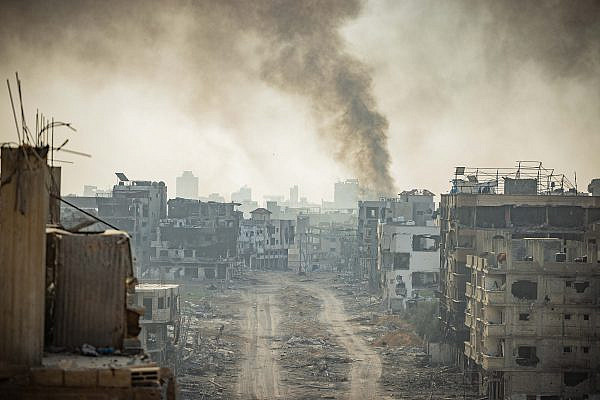
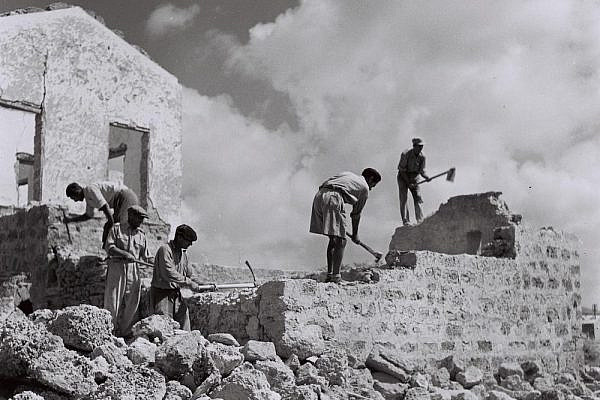
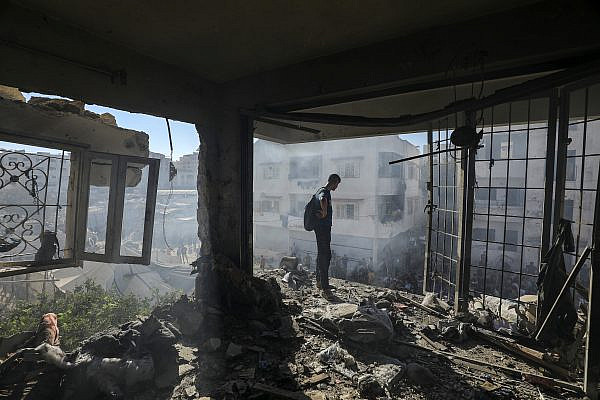
Last July, the commander of the Israeli police forces stationed in the West Bank stated openly that the police’s priority in the occupied territory is first and foremost to protect the settlement enterprise, which takes precedence over law enforcement and public order. And so it is in practice: The West Bank police, which never excelled in stopping settler attacks, no longer even bothers to create the impression that it is enforcing the law against violent settlers.
Last week, we published a comprehensive investigation on +972 revealing how settlers are systematically expelling community after community in order to squeeze Palestinians into the West Bank’s urban centers and take over their land for Israeli settlement. This process is intensifying day by day with the full backing of the government and security forces. Without genuine action beyond mere condemnations, it will continue long after the current wave of attention fades.