
In partnership with

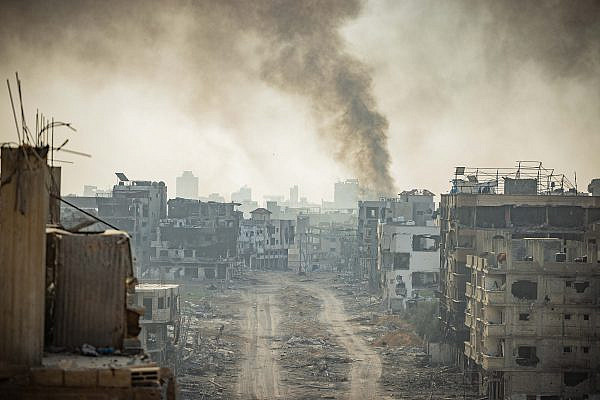
Amid the cruel reality in which we now live, writing about heritage, the past, and cultural preservation can feel trivial. These are days marked by the systematic annihilation of Palestinians from among the people of this land — their physical being, their homes, their livelihoods, and everything bound up with their identity. Everything that has been built and cared for in this place over centuries now resembles the “museum of dust” that Palestinian poet Mahmoud Darwish evoked in “The Dice Player”: fleeting particles whose movement is governed only by the hand of chance.
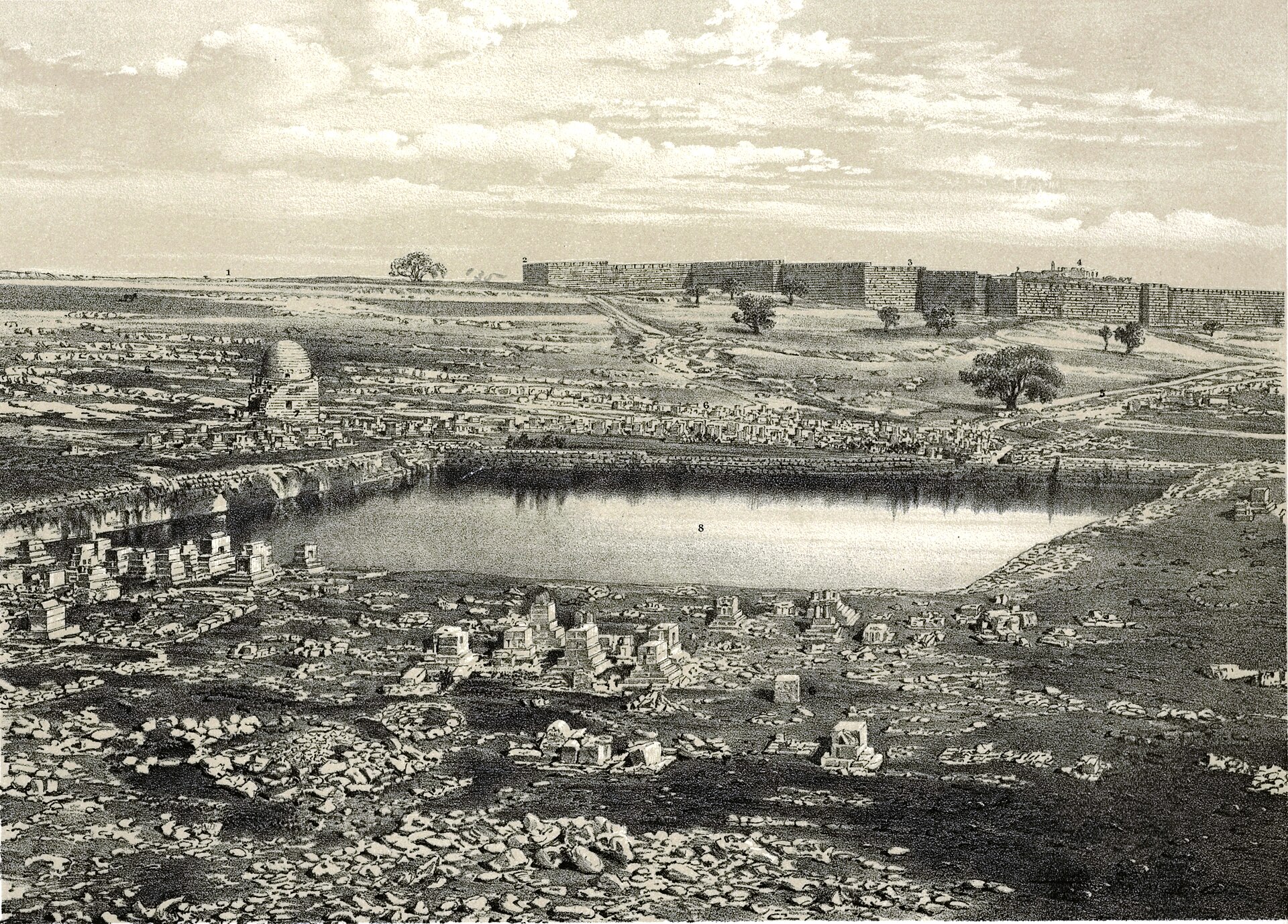
That same hand of chance shaped the Mamilla Cemetery in Jerusalem, a many-layered burial ground where the bodies of ordinary people, religious sages, and even some notables from the Mamluk and Ottoman eras were laid to rest. That hand also arranged the graves around a vast and ancient water reservoir, now known as the Mamilla Pool. Over time, dirt paths formed among the headstones and graves leading to the pool, creating a pocket of untamed nature amid Jerusalem’s landscape of concrete, asphalt, and stone cladding.
As the holidays of Eid Al-Fitr and Eid Al-Adha approached, relatives would come to visit the graves of loved ones who long ago passed from the physical world to the spiritual one. They cleared the earth around the graves, poured cool water over the headstones, and repainted the letters faded by time. Some lay green date palms across the stones, arranging four of them into a small shaded canopy over the grave; after those dried out, new ones would take their place.
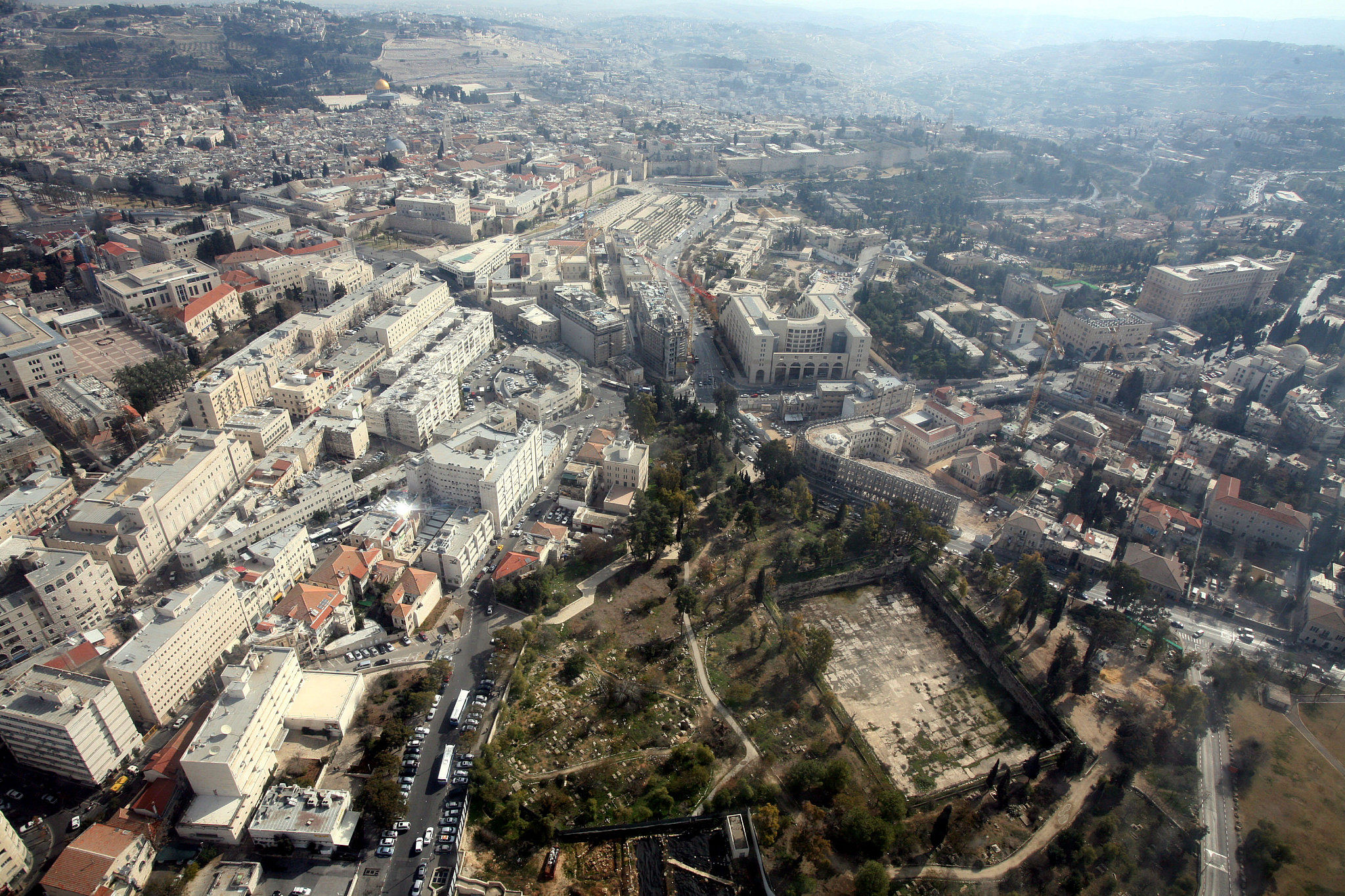
But the Mamilla Cemetery ceased to exist as a cemetery in any continuous sense after the Nakba of 1948, when it was torn to pieces and a large section became what is now known as Independence Park. Roads were paved across other parts — literally asphalt laid directly over graves — while still other sections became parking lots. And so what remains are ashla’a: fragments torn from the vast expanse of a burial ground that served Jerusalem for at least 1,000 years.
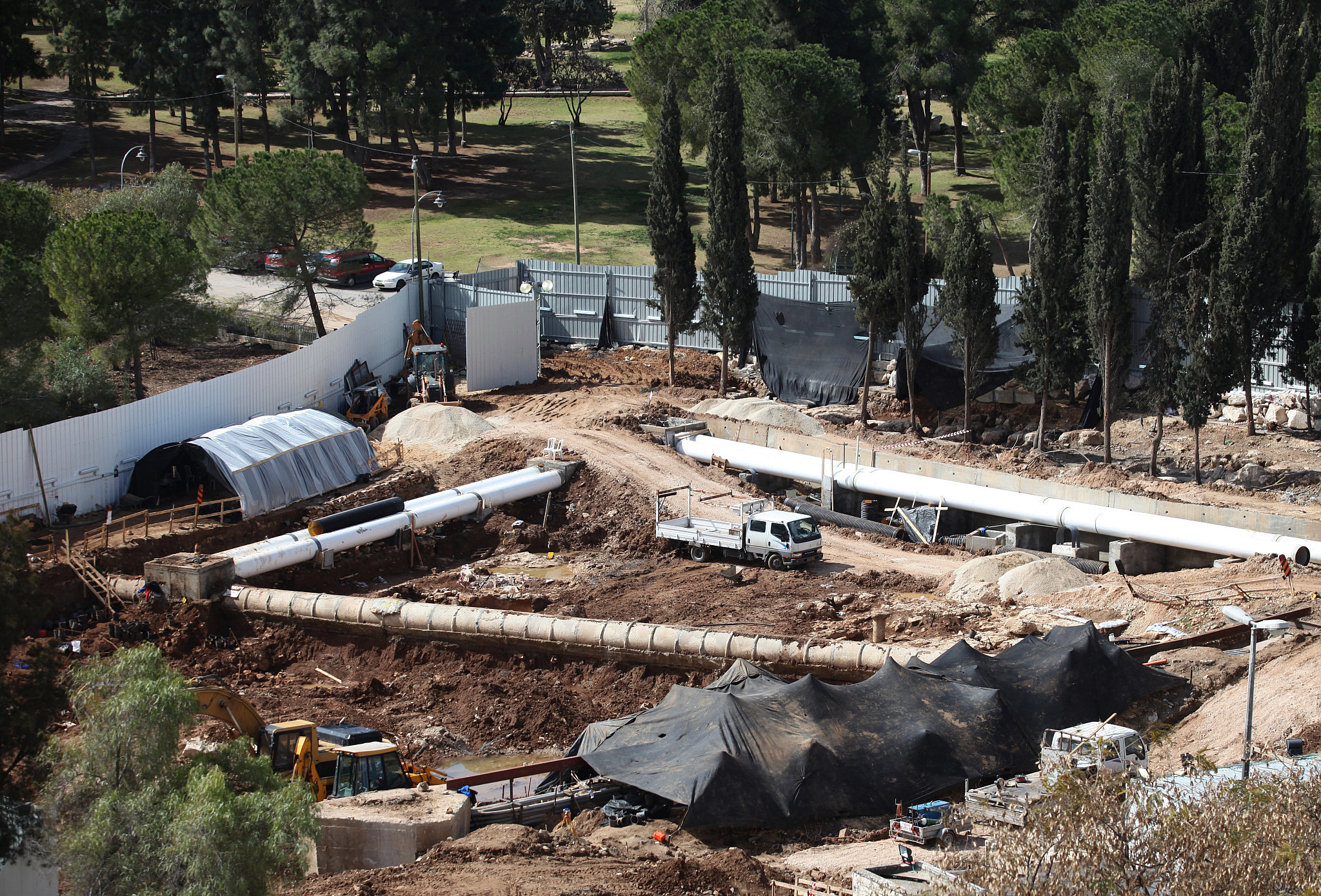
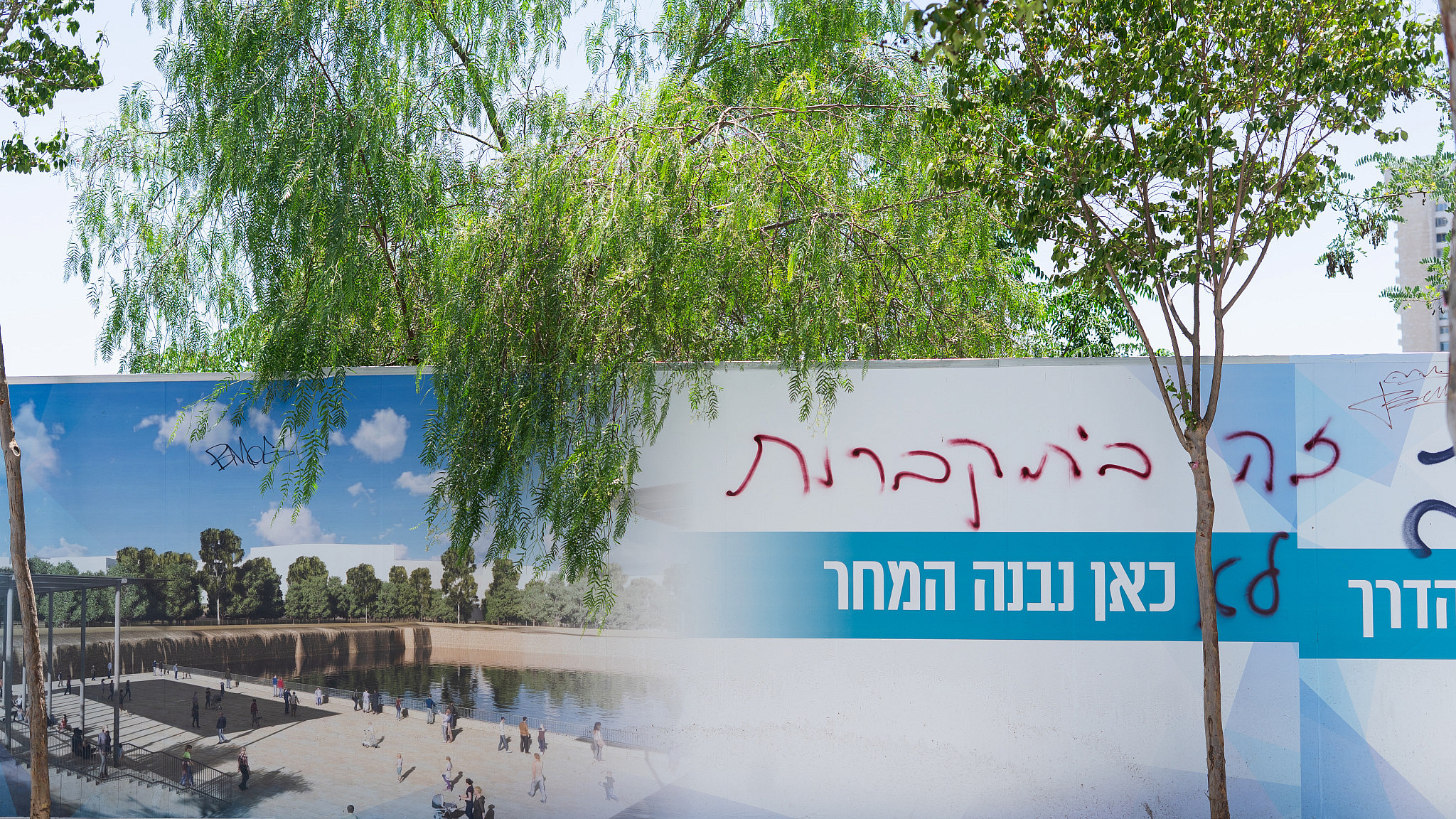
A few months ago, the pool itself — which dates back to at least the 6th century — disappeared behind a tall fence covered with renderings of what it is to become. The Jerusalem Municipality has announced the renovation with great fanfare: a reflection pool encircled by manicured lawns. Here and there in the renderings, a small rectangle appears that might hint at a gravestone — as though a fragment of the cemetery had slipped, almost accidentally, into the image of its future.
In a promotional video for the project, the mayor of Jerusalem and the Israeli prime minister are seen standing at the bottom of the emptied pool. There is no trace of the burial ground surrounding them, of the cemetery that once extended well beyond it. This is how an entire heritage is being erased.
In the name of tolerance
One of those parking lots built atop the Mamilla Cemetery was eventually designated as the site of the Museum of Tolerance. Here, approximately 20 years ago, the story took a different turn. The graves would no longer lie undisturbed beneath lawns, asphalt, or pavement. They were uprooted by the thousands.
We will never know exactly how many skeletons, bone fragments, and skulls were removed. Excavations continued all the way down to the bedrock.
All of this took place as part of the “construction work” needed to prepare the foundations for the Museum of Tolerance, which eventually opened in 2019. For years, professionals who call themselves archaeologists worked day and night to rid the burial ground of human remains. Layer by layer, they labored to remove them so that, God forbid, not even a trace of impure spirit would remain beneath the foundations of pure tolerance.
Since then, I have returned to the cemetery several times a year. Sometimes I climb up to the Dajani tomb on its western side, where municipal gardeners have built a storage shed over the gravestones. Sometimes I walk down toward the eastern edge, near the intersection of Agron Street and King David Street. Beyond the fence stand orphaned gravestones, bewildered, perhaps, by the urban noise — the sound of blaring police and ambulance sirens around them.
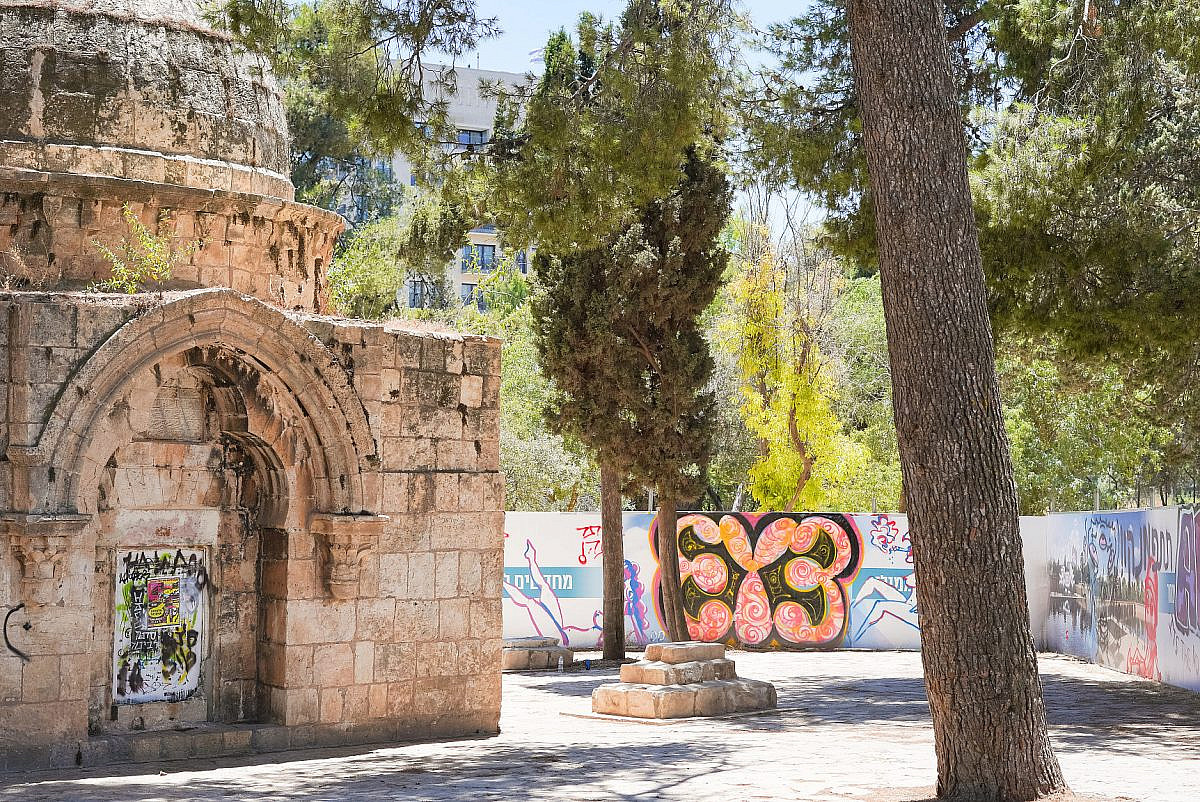
Almost always, I stop at the tomb of Alaa Al-Din Al-Kubaki, a high-ranking Mamluk government official who came to Jerusalem at the end of his life to study and deepen his religious devotion. The domed structure sits at the center of the path that cuts through what remains of the cemetery, connecting Hillel Street and Agron Street.
Sometimes I turn beyond the fence to the graves of a mother and daughter buried there in the mid-14th century. The rest of the plot, between Independence Park and the path where the domed tomb stands, has over the years become a beloved dog park. Wild vegetation thrives there among ancient shade trees.
The cemetery has survived this way: as fragments scattered through the modern city, each absorbed into something else.
A thought experiment
Now let us enter the realm of imagination.
Imagine walking eastward into the future and ascending to the Mount of Olives, to a cemetery that has been in use for centuries — under Ottoman, then British, then Jordanian, and finally Israeli rule. Land in Jerusalem is extraordinarily expensive; the city is crowded, and everyone is searching for another plot on which to build. And who, after all, wants a cemetery next door?
The cemetery remains active to this day. My father’s friend, a rabbi living far away in the lowlands, brought his mother there to be buried facing the Temple Mount/Al-Aqsa Mosque.
But let us imagine that the authorities declared one of the trees on the Mount of Olives — overlooking the city and Al-Aqsa from the hilltop — to be sacred. In order to preserve it, they decided to level the surrounding area and build a plaza honoring the tree and its magnificent canopy, burying beneath it the gravestones of those laid to rest on the mountain over hundreds of years.
Beside the sacred tree, they might build a Museum of Thuggery, commemorating all the legendary tyrants who ruled the Holy City — from Nebuchadnezzar to Titus and Pontius Pilate, and many others besides.
Philanthropists from Las Vegas would send millions for excavation and construction. After all, Jerusalem cannot remain frozen in time. Every corner contains some piece of the past. If we preserved everything, how could anyone possibly live here?
Now let us leave the realm of fantasy and return to reality. Such a plan would of course be considered laughable. But why is Mamilla not afforded the same protection as the Mount of Olives? How long can the past and present of one people be destroyed for the sake of preserving the past and present of another?
The latest controversy at Mamilla Cemetery has garnered a little attention thanks to a toad that the renovation of the pool might displace from its comfortable home at the bottom. I wish that someone would discover a unique beetle in the tomb of the Al-Qaymari family warriors on Strauss Street.
Members of the family have rested in that magnificent mausoleum since at least 1250. But after October 7, the tomb was transformed into Benjamin’s Tomb, son of the Jewish matriarch Rachel and patriarch Jacob. Its decorations were painted blue. Tombstones were remade with fictitious names. The spirit of the place was revived, but in a different language.
Long live Benjamin, and to hell with Shia Al-Din Al-Qaymari, who lost his head in one of the internal struggles among the emirs of the Ayyubid dynasty in the 13th century.
Living, breathing heritage
The Al-Qaymari tomb is not alone. Along another of Jerusalem’s sacred routes stands David’s Tomb, a site holy not only to Jews but also to Muslims, and whose restoration the Ottoman authorities once invested heavily in. They adorned what Christians know as the Cenacle or Upper Room where the Last Supper is said to have taken place — which sits above the tomb — with delicate, colorful stained-glass windows. On the burial level below, rooms were lined with ceramic tiles, some bearing Arabic inscriptions.
Then, in late 2012 and early 2013, two separate but clearly related acts of vandalism destroyed every last Islamic tile and inscription inside the tomb. The fragments were removed and discarded as a site long sacred to Judaism, Islam, and Christianity was effectively transformed into a synagogue.
The destruction took place in the midst of a “renovation”— a less than apt description of what occurred — overseen by the Israel Antiquities Authority, the body tasked with protecting such heritage from disappearance. The authority did not stop the desecration; it merely cleared away the shattered tiles. It could have intervened, and could even have restored the tiles to their original place, but did neither.
That failure amounted, in effect, to tacit consent: The destruction happened while the authority was present at the site and being paid to preserve it.
It is doubtful the shattered tiles of David’s Tomb will ever return to their place. Thus the memory of Amalek — those who dared to sanctify David and guard his tomb for centuries — can be erased.
The same fate has befallen the name of the Al-Qaymari family — still living in Jerusalem — and the building in which its members have rested for centuries. And so, for decades, an entire cemetery has been gradually disappearing.
Nor is this confined to Jerusalem. In Safed, the city’s Palestinian heritage has been under attack for decades, with centuries-old Arabic inscriptions destroyed as though they were of no consequence.
But Mamilla is not merely an archaeological site. It is not the remnant of a vanished people who are no longer with us. It is a living, breathing heritage.
Most read on +972
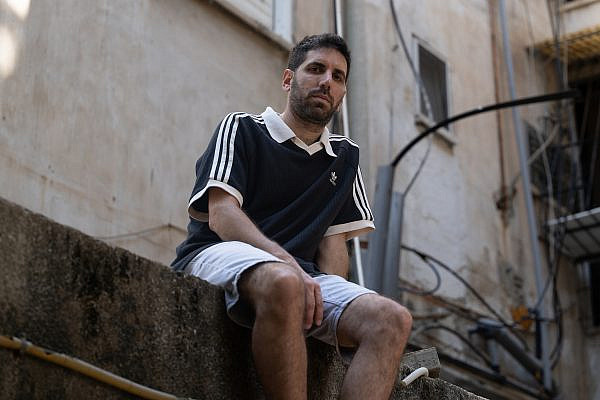
In Jerusalem and beyond, the relatives of those buried there are still alive. They know who their kin are. The stones and tombstones still hold meaning for the living. The Dajani family, whose relatives are buried in Mamilla and at David’s Tomb, is not a figment of the imagination nor an attempt to resurrect some vanished glory. Family members live within walking distance of the graves and their relatives.
If only someone could discover a potion capable of turning all such sites across the country into rare toads; only then will they be cherished by nature lovers and conservationists, studied by experts in flora and fauna, and granted the attention of municipal and regional planning committees. Until then, we will live among the shards of a memory we have chosen not to see.
A version of this article was first published in Hebrew on Local Call. Read it here.