
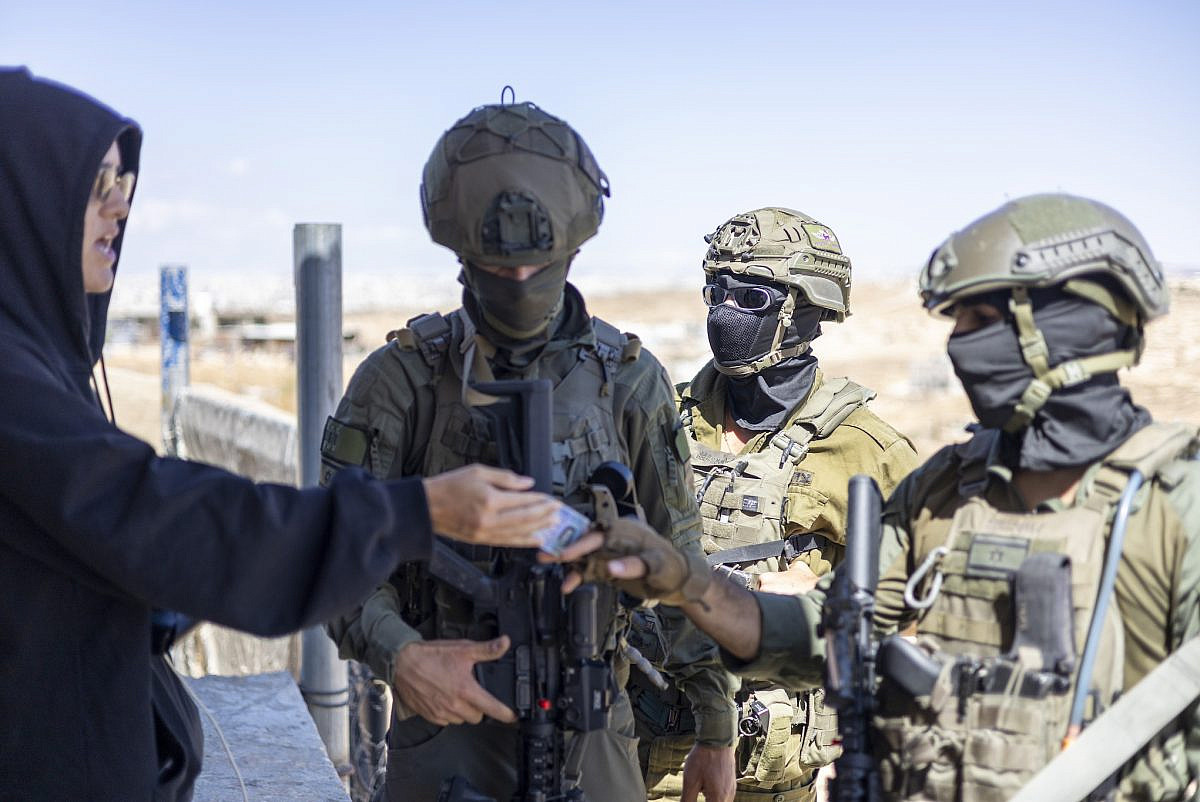
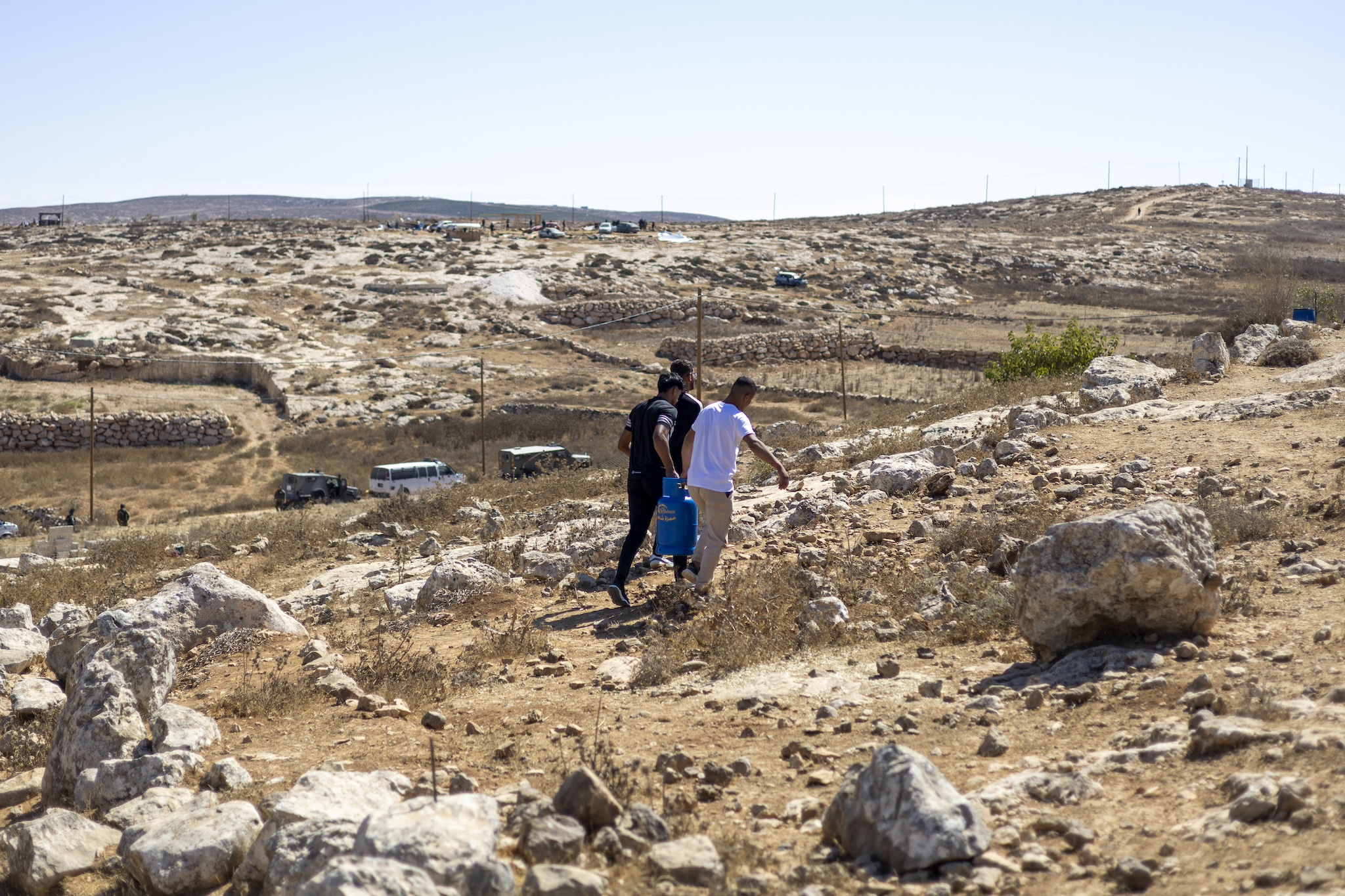
For more than six weeks, Israeli forces have imposed severe restrictions on movement in Masafer Yatta, leaving some 2,000 Palestinians in 12 communities in the southern occupied West Bank increasingly cut off from the outside world. Residents are struggling to bring in essential supplies, while vehicle confiscations and growing settler control over access roads have made even routine travel dangerous.
The new restrictions, imposed since the beginning of October, have hit the area’s shepherding communities particularly hard. With agricultural tractors confiscated and deliveries of animal feed obstructed, families are struggling to sustain the flocks on which their livelihoods depend. Teachers and schoolchildren, meanwhile, have been detained or attacked while traveling between villages.
For residents, the cumulative effect amounts to a siege that threatens their ability to remain on their land. Israeli authorities have justified the restrictions by invoking the area’s designation as a military firing zone, while introducing a coordination mechanism that makes everyday tasks contingent on nearly impossible bureaucratic requirements.
“We’re not talking simply about confiscating vehicles,” Nidal Abu Younis, the mayor of Masafer Yatta, told +972 Magazine. “We’re talking about imposing a siege on an entire population and preventing people from accessing the most basic necessities of life.
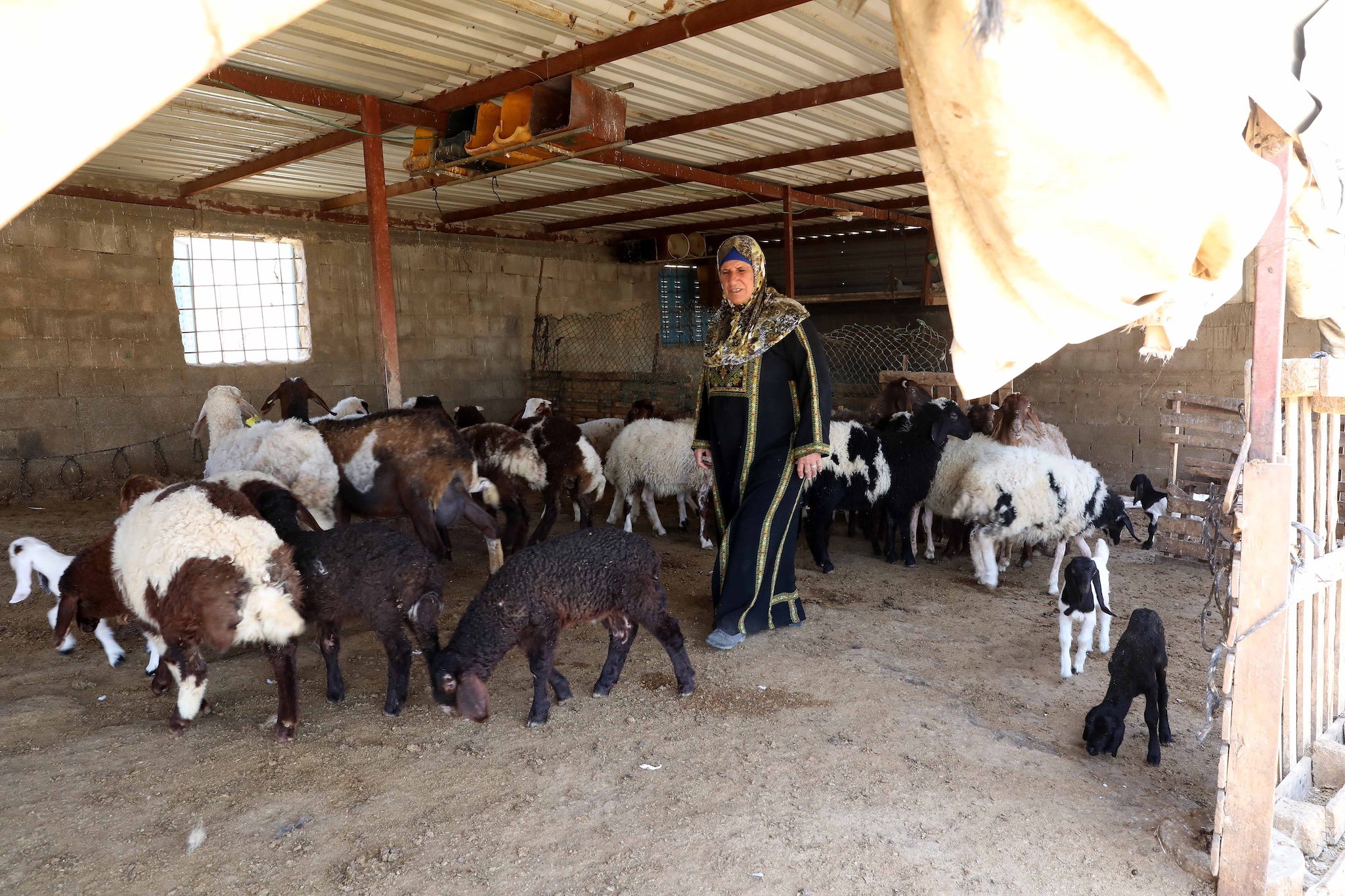
“We’re talking about around 2,000 people, alongside more than 13,000 sheep,” he continued. “For many families, these animals are their only source of income. Today, both the people and their livestock are being pushed toward starvation.”
The restrictions coincide with the Israeli military’s resumption of artillery training in Firing Zone 918, an area encompassing several of Masafer Yatta’s Palestinian communities that has long been at the center of legal battles over residents’ right to remain on their land.
Regavim, a far-right Israeli organization that has spent years campaigning against Palestinian construction in the area, celebrated the renewed exercises as a victory. “For the first time in years, IDF artillery units resumed training in Firing Zone 918, the very area at the center of [“No Other Land”],” the organization declared on X, referring to the Oscar-winning documentary that chronicles the displacement of Palestinian communities in Masafer Yatta.
“This is an important step for Israeli sovereignty, and one we’ve worked toward for years,” Regavim said. “Still, we won’t rest until all the work is done.”
In the village of Umm Al-Khair, this situation has been further compounded in recent days after settlers from the Israeli settlement of Carmel began establishing a new outpost on village lands. Among the settlers leading the work is Yinon Levi, the man indicted for the murder of Palestinian community leader Awdah Hathaleen in July 2025, who nonetheless remains free to terrorize the village. Residents attempting to protest the land theft have been arrested by Israeli police.
“This is what happens in every case of settlement expansion,” Eid Hathaleen, a resident of Umm Al-Khair, told +972 Magazine. “Complete complicity between Israeli occupation forces and settlers, facilitating their takeover of Palestinian land and the resources on which local communities depend for their daily lives.”
Suffocating livelihoods
On Nov. 5, two agricultural tractors carrying animal feed were intercepted near the village of Al-Halawa. One belonged to the local village council and the other to resident Ahmad Abu Aram.
According to residents, settlers pursued the tractors and summoned Israeli soldiers, who forced the Palestinians to unload the feed before confiscating both tractors and an accompanying vehicle. The two tractors were released 24 hours later.
The incident followed the confiscation of 11 other vehicles that were being held by Israeli authorities. For communities heavily dependent on livestock farming, the loss of tractors and other vehicles has made it increasingly difficult to bring in animal feed, water, food, and other necessities.
The restrictions have come at a particularly precarious time for local shepherds. The lambing season is an important source of income, allowing families to sell newborn lambs, repay debts incurred from purchasing feed and veterinary medicine, and support their households.
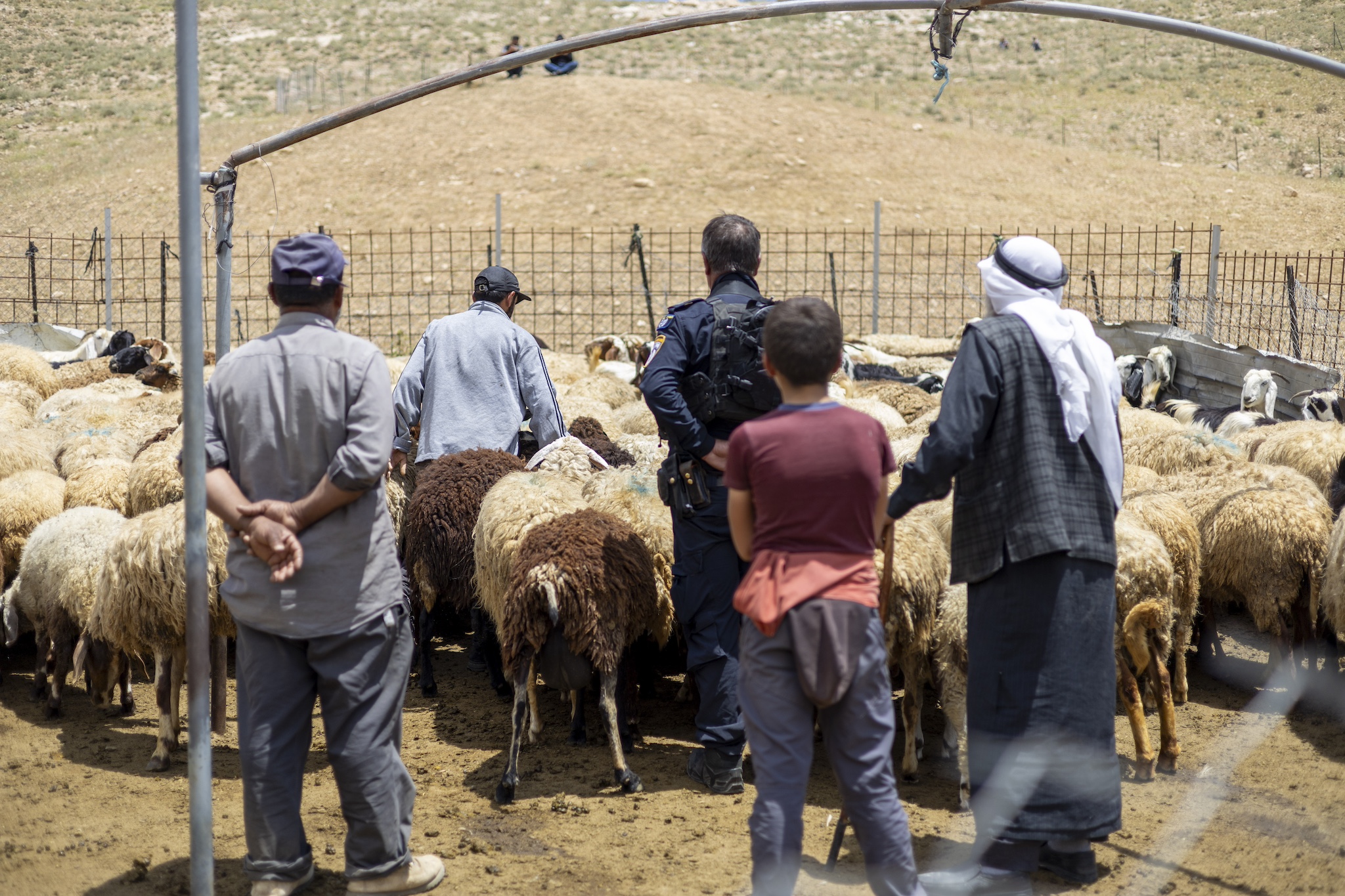
But with supplies increasingly difficult to obtain, farmers have been forced to ration what little feed remains. “A shepherd who normally needs 10 tonnes of feed to sustain his flock for a month is now forced to ration it because he does not know whether he will be able to bring in more,” Abu Younis explained.
“The objective of raising sheep is not simply to keep them alive,” he continued. “It is to maintain their productivity. If an animal becomes weak and undernourished, loses its ability to produce milk, or its newborn lamb dies because its mother is not receiving enough food, what is left of the investment?”
Even if the restrictions are lifted, Abu Younis warned, their effects could last well beyond the current season, leaving families with weakened livestock, reduced production, and mounting debts.
“Families may save some feed today, but they will pay a much higher price tomorrow. The animals become weaker, production declines, newborn lambs are at risk, and families may have to spend even more on treatment and recovery. This is how you destroy the remaining savings of people who depend entirely on their livestock.”
Residents have sought relief through the Israeli courts. On Oct. 15, they filed a petition demanding the return of confiscated vehicles and an end to the movement restrictions. In its response, the Israeli prosecution argued that the area is designated as a firing zone and that entry must be coordinated with the military in advance.
According to Abu Younis, however, residents had already submitted dozens of coordination requests through the Palestinian liaison office following the first vehicle confiscation in Jinba, without receiving answers.
“After more than 40 days of siege, the response we received was not an agreement to lift the restrictions. Instead, they presented us with a new coordination mechanism,” he said.
Under the proposed arrangement, residents can coordinate access only on Mondays and Wednesdays during designated hours, and for just three purposes: bringing in food and animal feed, supplying water, and allowing essential medical personnel and teachers to enter.
The arrangement leaves unanswered how teachers are supposed to reach schools throughout the week, or how residents can obtain emergency medical care outside the permitted hours.
Those already living inside the designated firing zone face additional requirements. According to Abu Younis, residents must identify their homes using building numbers assigned to structures classified by Israeli authorities as illegal, and provide court injunctions suspending enforcement proceedings against them.
“How can you ask people to obtain a court order freezing demolition or enforcement proceedings when they have not even received a demolition notice? Why should someone be forced to identify their home as illegal and go to court to stop an enforcement procedure that has not been initiated against them?
The new mechanism has offered little practical relief. The petition remains before the court, but the restrictions continue to disrupt residents’ access to basic necessities.
“We submitted our response to the court, and we are still waiting for a decision,” Abu Younis said. “But while the court deliberates, people are living under siege. Their lives cannot be put on hold until a judge decides whether they are allowed to bring in food and water.”
Assaulted on the way to school
The restrictions have also made ordinary travel between Masafer Yatta’s communities increasingly dangerous. Residents report repeated encounters with soldiers and settlers while transporting supplies, taking children to school, or returning home from work.
On Nov. 2, nine teachers from Jinba school were detained by Israeli soldiers as they traveled home together after the school day. According to residents, soldiers took them to an army base, handcuffed them behind their backs, blindfolded them, and forced them to lie on the ground for five hours without speaking to one another.
Two days later, settlers intercepted a vehicle carrying students from Isfi to Al-Fakhit school. The settlers summoned Israeli soldiers and assaulted the driver, beating him and breaking his glasses. His wife attempted to film the incident, but soldiers prevented her from doing so for approximately two hours. The students and driver were held on the road before eventually being released.
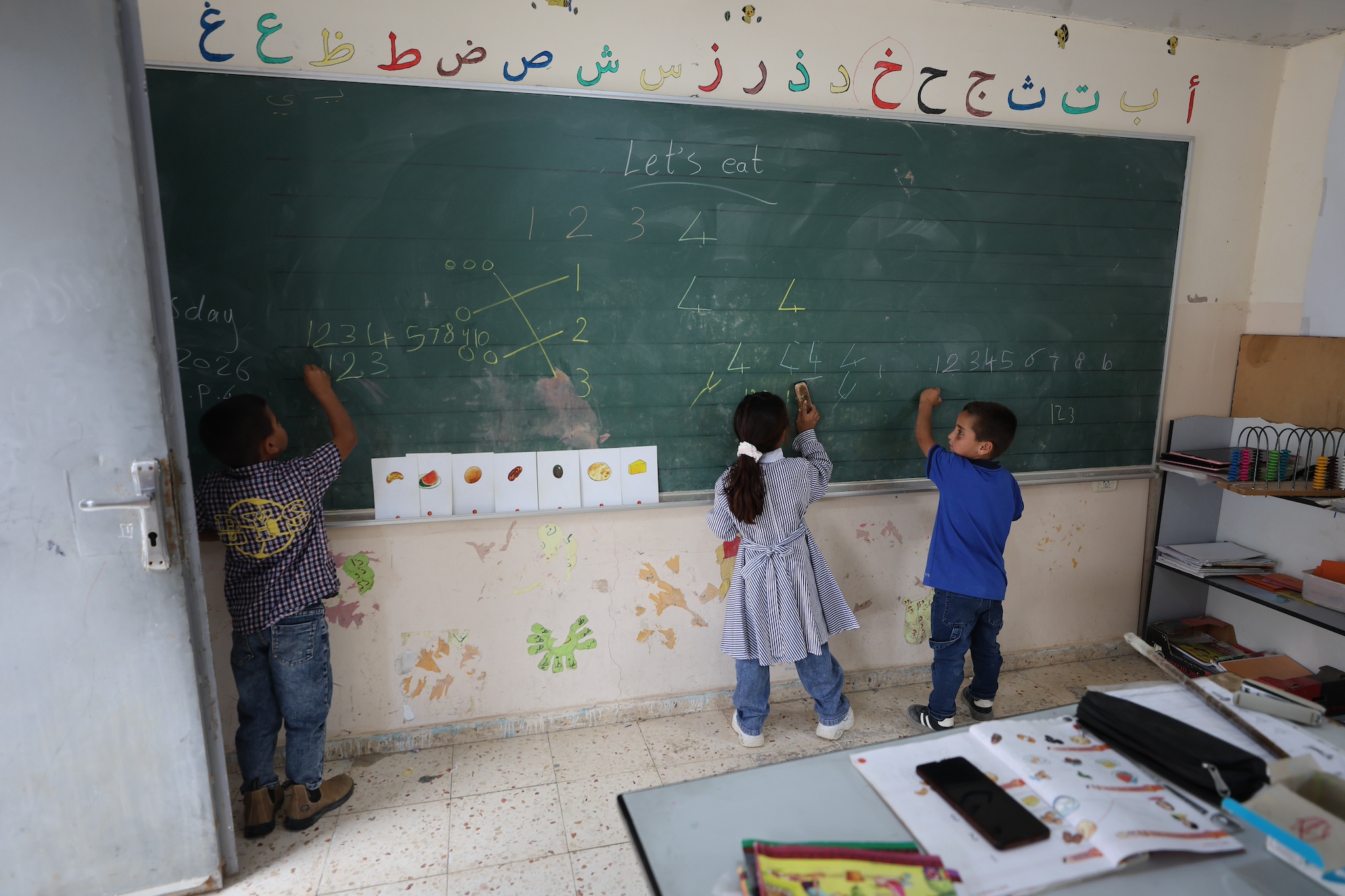
Mohammad Abu Aram, a resident of Al-Halawa who transports schoolchildren, described a similar encounter last month, when he was returning to his community with two tractors carrying food and animal feed.
“Along the road, settlers stopped us, made us pull over and contacted the Israeli occupation army,” he recalled.
When soldiers arrived, they accused the group of transporting construction materials, which Israeli authorities have sought to prevent from entering the area. “I told them to search the vehicle. I said: ‘Go ahead. There is nothing here except food for the sheep and food for us.’ They searched but found nothing.”
Despite finding no construction materials, soldiers confiscated both tractors, each carrying approximately three and a half tons of animal feed, along with a vehicle Abu Aram also used to transport schoolchildren. The group asked for the return of personal belongings, including medicine and milk for the children, but only some were handed back.
Days later, Abu Aram said, settlers hiding beside the road threw stones at his vehicle, shattering its windows. “Thankfully, nobody was injured,” he said. “The stones broke the windows, but no one was hurt.”
Settlers have also tightened their control over one of the area’s main roads, which connects Masafer Yatta and neighboring bedouin communities through Umm Al-Khair. Last week, settlers from the nearby settlement of Carmel installed two additional gates along the road, adding to one erected by Israeli forces in February.
Residents say settlers frequently close the route and attack Palestinians attempting to use it, forcing people to abandon their vehicles and walk long distances. The road is a vital link not only for transporting supplies and reaching schools, but also for accessing medical care, visiting relatives, and traveling to work.
As a result, university students living in Yatta are struggling to visit their families, while residents face obstacles when traveling to see sick relatives or attend social gatherings.
The road has also become a flashpoint for attacks on those documenting the restrictions. Israeli journalist Andrey X and American journalist Jasper Nathaniel were assaulted by settlers near the gate installed in February, according to accounts of the incident. Police subsequently arrested both journalists, and a court barred them from entering the West Bank for 60 days.
Arbitrary arrests
As residents struggle to move between their communities, Israeli forces have also increased their presence inside the villages themselves.
In early November, soldiers brought heavy military vehicles, including an armoured personnel carrier and a tank, through the villages of Jinba, Al-Halawa and Al-Mirkez, firing smoke canisters near homes and filming their movements through the villages.
Military raids and confiscations have also continued elsewhere in the region.
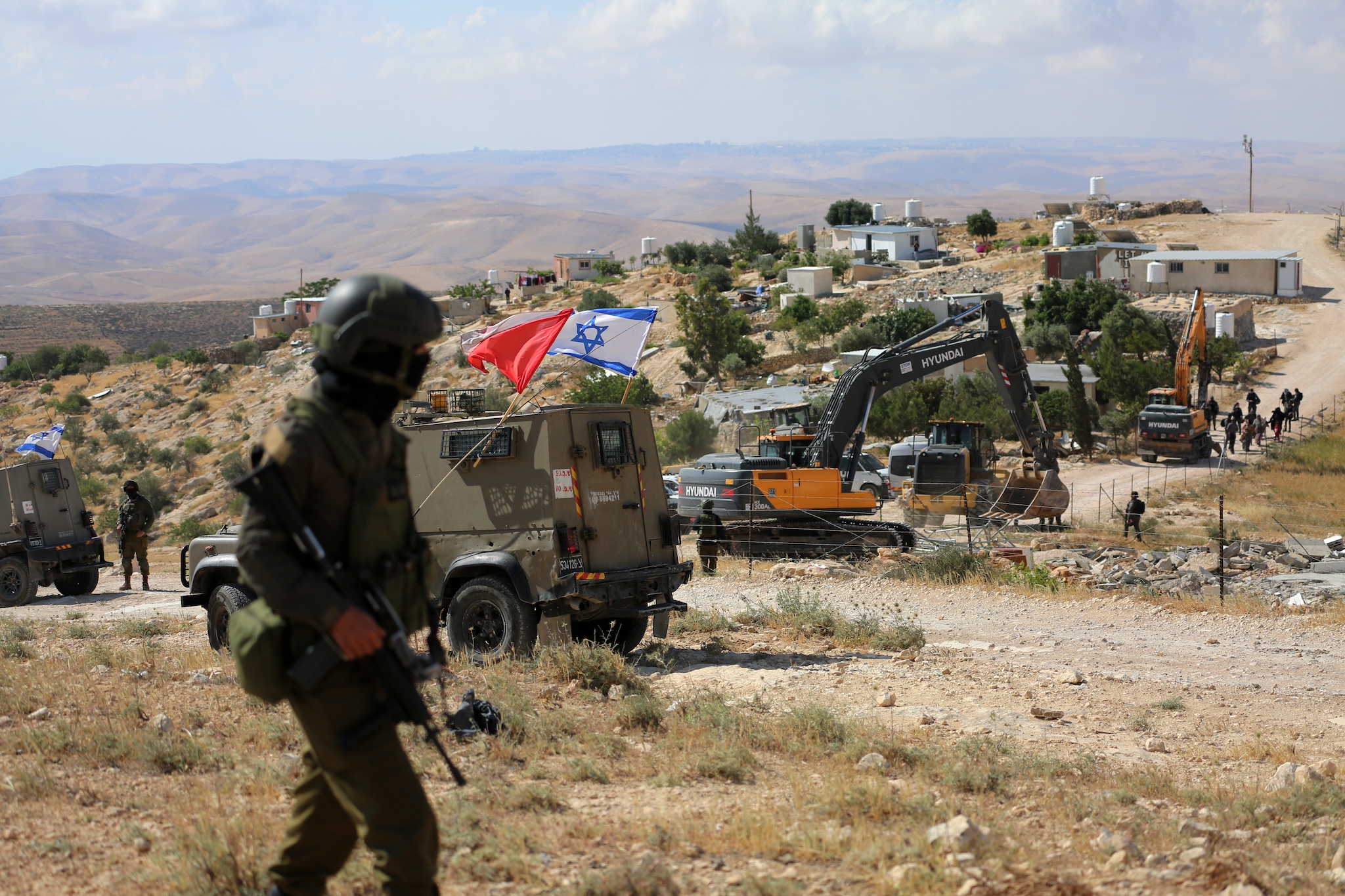
On Nov. 5, Israeli soldiers accompanied by a settler entered Khirbet Khashem Al-Daraj, a Palestinian village of approximately 1,000 residents located 5 kilometers east of Umm Al-Khair. According to 23-year-old resident Adam Fayez Al-Hamadeen, soldiers searched several homes, detained two children, both around 12 years old, who had been grazing sheep nearby, and arrested six residents.
Among those arrested was 16-year-old Yousef Abu Zeid, who had been discharged from the hospital that morning after suffering fainting episodes.
Another detainee was Adam’s father, Fayez Al-Hamadeen, 53, who had come from the nearby village of Al-Fakhit to attend a relative’s wedding. “It was supposed to be a happy occasion, a chance for the family to gather and celebrate,” he recalled. “Instead, I ended up spending the entire night detained by Israeli forces.”
Al-Hamadeen said soldiers searched nearby homes while holding men and women under separate guard, preventing them from entering the buildings or seeing what was happening inside. “They did not even let us smoke or talk,” he said.
A man Al-Hamadeen believed to be a settler, who was dressed in an Israeli military uniform, helped soldiers operate a tractor and a Toyota vehicle that were subsequently confiscated.
Soldiers also emptied a water tanker brought in for the wedding and confiscated more than 15 mobile phones from the house where the women had gathered, according to Adam. Video footage of the incident shows water pouring from the tanker onto the road as the tractor is driven away behind an Israeli army vehicle.
The six detainees were taken to a military base near Jinba, where they were held overnight. “They kept us outside, next to one of the caravans, under guard throughout the night,” Al-Hamadeen said.
He said the men were blindfolded and handcuffed throughout their detention. “They didn’t interrogate us or ask us any questions about why we were there or what had happened. They simply made us sit outside while the soldiers watched us.”
Most read on +972

Al-Hamadeen said the detainees were given no water and had to repeatedly ask soldiers for permission to use the toilet. “If you needed to urinate, you could spend an entire hour calling out to them before a soldier finally came to let you out.”
The following morning, soldiers transferred the detainees to a police station in the settlement of Kiryat Arba, where an officer checked their identification documents but did not question them about the incident. They were taken back to the military base and released nearby early that afternoon. The confiscated tractor was returned on Nov. 9.
With vehicles confiscated, roads blocked, livestock going hungry, and access to schools and medical care disrupted, even the most basic aspects of daily life now depend on navigating military restrictions and the threat of settler violence.
For Abu Younis, the issue extends far beyond the return of confiscated vehicles. The question is whether the communities can continue to sustain themselves under conditions that have made bringing in food, water, and animal feed a daily struggle — and whether their residents will be able to remain on their land at all.
+972 contacted the Israeli army for comment. Their response will be added if and when received.