

In partnership with

Ten minutes before the opening hearing of the first defamation lawsuit brought by five Israeli soldiers against Palestinian actor and filmmaker Mohammad Bakri — who passed away last week — I met him in the lobby of the courthouse on Weizmann Street in central Tel Aviv. It was 2003. I was a very young lawyer, working in the office of veteran civil-rights attorney Avigdor Feldman, and had been sent to argue that the soldiers lacked standing to sue.
The lawsuit stemmed from “Jenin, Jenin,” Bakri’s documentary about the Israeli military’s invasion of the Jenin refugee camp during Operation Defensive Shield in 2002, at the height of the Second Intifada. In what would later be known as the Battle of Jenin, Israeli forces entered the densely populated camp with tanks, helicopters, infantry units, and armored bulldozers. Large parts of the camp were left in ruins; at least 52 Palestinians and 23 Israeli soldiers were killed. While the film includes accusations of war crimes against the Israeli army, it does not attribute any specific crime to any individual soldier.
When Bakri realized we had a few minutes before the hearing began, he smiled and said, “In the meantime, listen to this monologue.”
And so there, in the courthouse’s vast inner plaza, with the Magistrate’s Court on one side and the District Court on the other, as dozens of lawyers in black-and-white clothes hurried past, Bakri performed for an audience of one. He recited an excerpt from “Week,” a play by Israeli playwright Shlomi Moskowitz, in which he was then starring at HaBima, Israel’s national theater in Tel Aviv.
At first, I felt awkward. But within seconds, I was transfixed. Bakri’s presence seemed to swallow the space whole, dissolving the surrounding commotion. His gaze locked onto mine, refusing to let it wander. Passersby slowed, astonished by this strange pairing: a lawyer and his client, suddenly turned into an actor and his audience (in reverse roles). Bakri was utterly in the moment. He continued the monologue as we walked to the elevator, inside it, and down the hallway after we exited, all the way to the courtroom. Only when we entered was he forced to go silent.

A threat to ethnocracy
Feldman, my then-boss, once wrote that in the Israeli legal system, Palestinians can have a biography but not a history. The distinction captures one of the animating forces at the core of Israeliness: the systematic dismantling of Palestinianness as a collective identity, and its forced reduction into a shallow, individuated personal identity.
So long as Bakri was seen as an actor who happened to be Arab, Israeli society knew how to embrace him. The moment his image changed into that of an Arab who happened to be an actor, he was violently cast out.
It did not help that he was a gifted and mesmerizing symbol of the possibility of Jews and Palestinians living together in this land; that he embodied a humanist tradition rooted in an unwavering belief in the human spirit; that he devoted much of his artistic and public life to the struggle for equality and dignity for all. As long as he refused to relinquish his national identity, as long as he resisted the erasure of his people’s past and present, as long as he insisted on naming the dispossession at the heart of Zionism, he never stood a chance.
Precisely because of his immense talent; precisely because he could, and wanted to, play Mordechai the Jew in Amos Gitai’s “Esther”; a Jewish father in “Benghazi-Bergen-Belsen,” a play based on Yossi Sucary’s book about the Holocaust of Libyan Jewry; and to write and act with his sons in “Eye Drops,” a tender, lyrical film about a Holocaust survivor living alone in Tel Aviv; precisely because he made it easier for Jewish audiences to imagine an equal, shared life, Jewish ethnocracy could not allow Mohammad Bakri any space for political existence.
When Bakri insisted on handing the microphone to his brothers and sisters living under occupation and apartheid, and on speaking openly about war crimes committed by Israeli soldiers, the most powerful Israeli institutions — the government, the army, and the judiciary — mobilized to crush him. The blue-eyed Arab that Israelis had loved to love, who had once starred in the first Israeli film nominated for the Academy Award for Best Foreign Language Film, “Beyond the Walls,” was branded a traitor and a collaborator with terrorism.
By the time I represented Bakri in a second defamation lawsuit over “Jenin, Jenin,” filed fully 15 years after the film’s release, he was among the most decorated and widely recognized actors Israel had ever produced. And yet he could barely find work in his country of birth.
The case, which by any reasonable legal standard should have been dismissed outright under the statute of limitations, became a political spectacle. Generals, Knesset members, and cabinet ministers packed the courtroom to demonstrate their support for the soldier suing Bakri. In an unprecedented move, the attorney general intervened on behalf of the plaintiff, despite the fact that the case was a civil dispute between private individuals.
Judge Hila Salish watched this procession of senior officials, heard the framing imposed by the mainstream Israeli media, and internalized the message. The political atmosphere prevailed over the law.
The court capitulated to a years-long campaign of vilification: The film was banned from public screening, physical copies were ordered destroyed, and Bakri was forced to pay hundreds of thousands of shekels to a man he had never accused of anything. To secure this outcome, the Supreme Court even revised the prevailing interpretation of the statute of limitations, ruling that so long as a film remains publicly accessible, any allegedly defamatory content it contains constitutes an ongoing offense.
Most read on +972
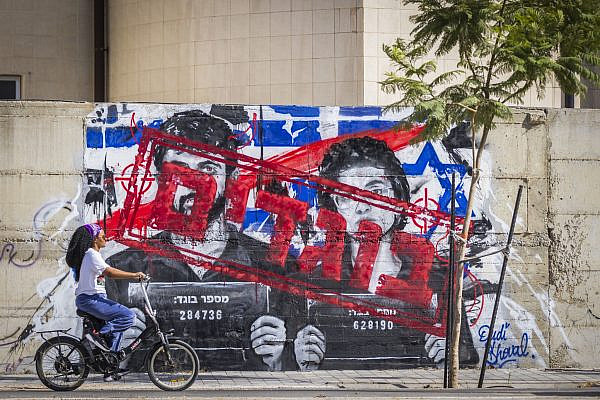


And yet, he was not crushed.
Until his final day, Mohammad Bakri remained faithful to the human values that guided his entire life. He did not allow his persecutors to bend him, to break him, or to destroy his spirit. Years of incitement and relentless legal harassment did not diminish him by a single millimeter, nor did they erode his loyalty to his identity or his principles. He remained what he had always been: an extraordinary artist, a committed humanist, and a person of rare moral clarity and human beauty.
A version of this article was first published in Hebrew on Local Call. Read it here.