

In partnership with
Nazareth has taken on an unusual air of vibrancy and celebration in recent weeks. After two years in which Christmas events were canceled or significantly scaled back, the city’s full slate of festivities returned — transforming Nazareth once again into a destination for thousands of visitors.
According to Bassem Asfour, chair of the Orthodox Council of Nazareth, the turnout far exceeded expectations. “About 100,000 people visited the area near Mary’s Well [on Dec. 20] alone, and the numbers have been similar in recent days,” he told +972.
For Asfour, the celebrations have “helped return Nazareth to center stage, both nationally and globally,” with live broadcasts on the council’s social media pages drawing international audiences. The renewed atmosphere has also brought much-needed economic relief for local businesses. “We saw the joy on shop owners’ faces — as if hope had returned to them after a long period of darkness,” Asfour added.
The sense of revival has resonated beyond the city’s Christian and Muslim residents. Jewish Israeli visitors have described Nazareth as offering “a European touch and a nod to the Middle East” only “an hour-and-a-half from Tel Aviv,” and some have urged followers on social media to come “because it’s beautiful, welcoming, delicious, and feels like being abroad near home.”
“Thousands from Jewish society have visited the city,” Asfour noted. “This year, Nazareth has established itself as the capital of Christmas. Nazareth has always been, and will always remain, a city that welcomes its guests with open arms.”
Alongside the Orthodox Council’s celebrations, other Christian denominations in the city also held festive events, including Christmas markets and tree-lighting ceremonies organized by the Al-Mawakeb Association, the traditional Christmas parade, and a range of additional performances. Private initiatives — from pop-up markets to cultural programs — further filled the city’s streets over several days.

Yet the holiday atmosphere masks a deep unease: Nazareth, long known as the capital of Palestinian public life inside Israel, is grappling with prolonged legal, economic, and political crises. In June, the Interior Ministry dissolved the city council, ousting longtime mayor Ali Salam, and replaced it with a temporary appointed committee. Citing the municipality’s dire financial situation along with its failure to provide basic services — from garbage collection to the enforcement of building violations — the ministry found that Salam and the council were unable to lead Nazareth’s recovery.
Then in December, police arrested Salam, along with his son, the former city treasurer, several other senior municipal officials, and figures linked to organized crime, as part of an investigation dubbed “The Money Maze.” Police have alleged that higher-ups in a known crime organization in Nazareth, in collaboration with Salam, local businessmen, and current and former senior officials of the Nazareth municipality, infiltrated the city government and diverted public funds to their illegal activities. This scheme reportedly helped to exacerbate the city’s deficit, now estimated at hundreds of millions of shekels.
The case has also been linked to a separate probe involving Meni Binyamin, head of Lahav 433 — the investigative bureau inside the Israel Police — who is suspected of leaking information to Salam about a covert investigation being conducted against him.
An uncomfortable silence has prevailed in Nazareth since the arrests. Wary of entanglement with criminal organizations, many political activists and public figures have avoided commenting on the affair. One of the few to break that silence is Sharif Zoabi, who served as head of the Hadash faction on Nazareth’s city council before it was dismissed in June.
The city’s temporary committee is led by Yaakov Efrati, who has held senior positions in local and national government bodies, including the Jerusalem Municipality and the Israel Land Authority — and who was also arrested on corruption charges in 2010, before being acquitted four years later. Zoabi recently announced the formation of a “shadow council” to monitor the work of Efrati’s committee.

“What happened in Nazareth is surprising, and at the same time not surprising,” Zoabi told +972. “What is astonishing is the scale of the allegations forming, according to police claims — the depth of the infiltration and the alleged close ties between capital, government, and the criminal world. But anyone who looked at the numbers and the functioning of the Nazareth municipality knew there was a serious problem. I admit we did not understand that what is now being exposed might be only the tip of the iceberg.”
An ‘impenetrable wall’ of corruption
According to Zoabi, the warning signs were visible for years. “During the last two terms [since 2013], we repeatedly sounded the alarm and presented the problems and budgetary gaps in the municipality,” he explained. “We saw grandiose, wasteful projects the city did not need, alongside neglect of essential infrastructure and services — all without any intervention by the Interior Ministry, despite our repeated warnings and alerts.”
The severity of the situation became especially clear during the campaigns for the most recent municipal elections, held in February 2024. Several months before the elections, mayoral candidate Musab Dukhan withdrew his candidacy after being shot and wounded. Zoabi also recalled that during the campaign, “the mayor released a video denying the existence of any deficit, claiming that if it were true, an accompanying accountant would have been appointed to the municipality.”
Intimidation was evident on election day itself. “We encountered an impenetrable wall of capital, government, and the [criminal] underworld,” Zoabi said. “There were constant threats — against candidates, voters, polling stations, and election committees.”
Zoabi added that the Interior Ministry’s conduct effectively shaped the election’s outcome. “We also know that the day after the elections an accompanying accountant was appointed, and a few months later the mayor was removed and an appointed committee installed. The Interior Ministry’s failure to intervene for 10 years [during Salam’s mayoralty] was, in effect, active interference in the election system.”
Today, according to Zoabi, the city remains in a state of collective, prolonged shock. “People feel deceived,” he said. “We hope that this time the police will not back down, that they will complete the investigation and expose the depth of the rot, allowing for a thorough reckoning and a fresh start for the city and its residents.”

Among residents, criticism of Salam is widespread, but many place the primary blame for the city’s woes on the state. “I see the government as the real executioner,” said a political activist who asked to remain anonymous.
Citing the lack of industrial zones, academic institutions, high-tech companies, and other economic engines afforded to Jewish cities of a similar size, the activist argued that Nazareth has been affected by systemic discrimination — like all Palestinian localities inside Israel. “This is a large city with a large population whose main source of income is almost exclusively residential property tax. That is insufficient even with full collection, let alone the partial and ineffective collection that characterized Nazareth for years.”
Others who also requested anonymity due to the sensitivity of the situation framed the crisis as the product of long-term policy choices. The state, they argued, has allowed crime and corruption to flourish in plain sight in Nazareth and across Palestinian communities inside Israel, while the city has steadily lost its standing as a center of social, national, political, and cultural life. This erosion unfolded not only before the authorities’ eyes, but also before the local political leadership, which failed to mount an organized response.
The depth of Nazareth’s crisis raises questions about power and representation: Who will lead Palestinian politics inside Israel, and how, if its most important city is effectively paralyzed?
Christmas controversy
Since taking over the city’s management in June, Nazareth’s appointed committee has already come under criticism from residents and local politicians, who are both frustrated with its limited progress in restoring municipal services like garbage collection, and wary of its longer-term intentions for the city.
Among the committee’s detractors is Ahmed Zoabi, a former city council member who ran for mayor on behalf of the Islamic Movement. “I do not support Ali Salam, and I always confronted him over his mistakes,” he said. But he rejected the premise that the appointed committee led by Efrati will save Nazareth. “It came to extract more money and to deepen the city’s social and economic isolation and decline. This is a humiliation for Nazareth — we must wake up and stand against the committee, not celebrate with it and not applaud it.”
In early December, additional controversy erupted over a conference held by the committee to mark the opening of the Christmas season. Activists objected to the fact that the event was conducted entirely in Hebrew, including the countdown to the lighting of the Christmas tree.

For Asfour, who attended the conference, the criticism in this instance was misplaced. Because the event was primarily aimed at senior officials from government ministries, he explained, and focused on mobilizing state support for Nazareth during the Christmas season, the presentations were delivered in Hebrew.
Asfour noted that cooperation with the appointed committee contributed to the overall success of this year’s Christmas events, though not without friction. The Orthodox Council had planned to hold a large public tree-lighting ceremony on Dec. 14, as in previous years before the war. But the police, in coordination with the municipality, imposed stringent conditions that led the council to cancel the public ceremony and instead settle for lighting the tree at a small press conference.
“Since the Mount Meron disaster [a 2021 crowd rush during the holiday of Lag B’Omer that killed 45 people], limiting attendance at official events has become routine, and we understand that,” Asfour said. “Police representatives and the professional authority from the municipality came and set a participant limit [for the tree lighting ceremony] far lower than we had planned. We were willing to accept that, but they also conditioned entry on the issuance of tickets, which we refused — this tree belongs to all of Nazareth.”
The council proposed alternatives, but rejected the committee’s final demands. The police, Asfour said, “even demanded the closure of nearby businesses as a condition for holding the event. Our central goal is reviving the city’s businesses — how could we agree to such a step? We made it clear that the dignity of our people comes first.”
The holiday celebrations, however, have not had much of an effect on organized crime in the city. On Dec. 20, a father and son were murdered in the Al-Krum neighborhood, bringing the total number of homicides in Nazareth in 2025 to 16. Another father and son were shot and killed this evening, and gunfire and explosions are reported almost daily. Nazareth appears to exist in two parallel worlds: one characterized by the festive crowds that fill the city on weekends and during Christmas season, the other saturated with violent crime, extortion, and deep-rooted corruption, which visitors rarely encounter.
“What we can do is continue the positive momentum of restoring Nazareth’s social, cultural, and economic standing,” Asfour affirmed, pointing to development plans, cultural initiatives and religious events that will continue after the Christmas season. “We in the Orthodox Council are ready to cooperate with any public committee, institution, body, or private initiative working for the benefit of Nazareth and its residents.”
Most read on +972
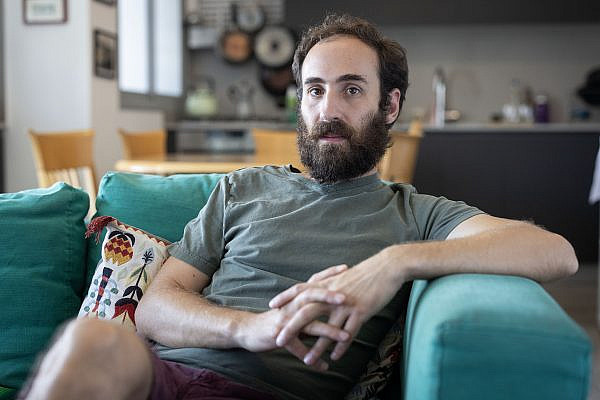
Despite his sharp criticism, Sharif Zoabi also said he is prepared to work with Efrati’s committee. “I extend a hand to the appointed committee, which is currently the only authority capable of restoring order in the city,” he said. “As an elected public official, I call on it not to hesitate or fear taking the necessary corrective steps.
“I believe in Nazareth, and I believe in its residents,” Zoabi added. “I promise it will once again become a vibrant urban center, the economic capital of the north — and the capital of the Arab public.”
A version of this article was first published in Hebrew on Local Call. Read it here.