
In partnership with

Just days before the Israeli election, Prime Minister Benjamin Netanyahu floated an unusual solution to the threat of international sanctions: cryptocurrency.
“We need to organize a parallel economy,” Netanyahu said in a television interview on Channel 10. Asked whether he was referring to cryptocurrency, he replied, “That’s exactly right.” While offering few specifics, he added that he had already requested a plan to use blockchain technology as an alternative to the international banking system.
The remarks were met with widespread astonishment. Israeli economists and commentators dismissed the idea of transitioning to a crypto economy as “outrageous nonsense” and “delusional,” and over 100 signed a letter expressing “grave concern and anxiety.”
The Bank of Israel also came out strongly against the prime minister’s proposal, in an unusual statement issued during Shabbat. “Cryptocurrencies cannot be used as a means to circumvent sanctions,” the statement read. “The right course of action for Israel’s economy is to maintain economic relations with our main trading partners and focus on preventing sanctions and their negative impact on the economy.”
The next day, Netanyahu responded in another interview. “I thank the Bank of Israel for their advice,” he said. “I listen, but I do what I think is right.”
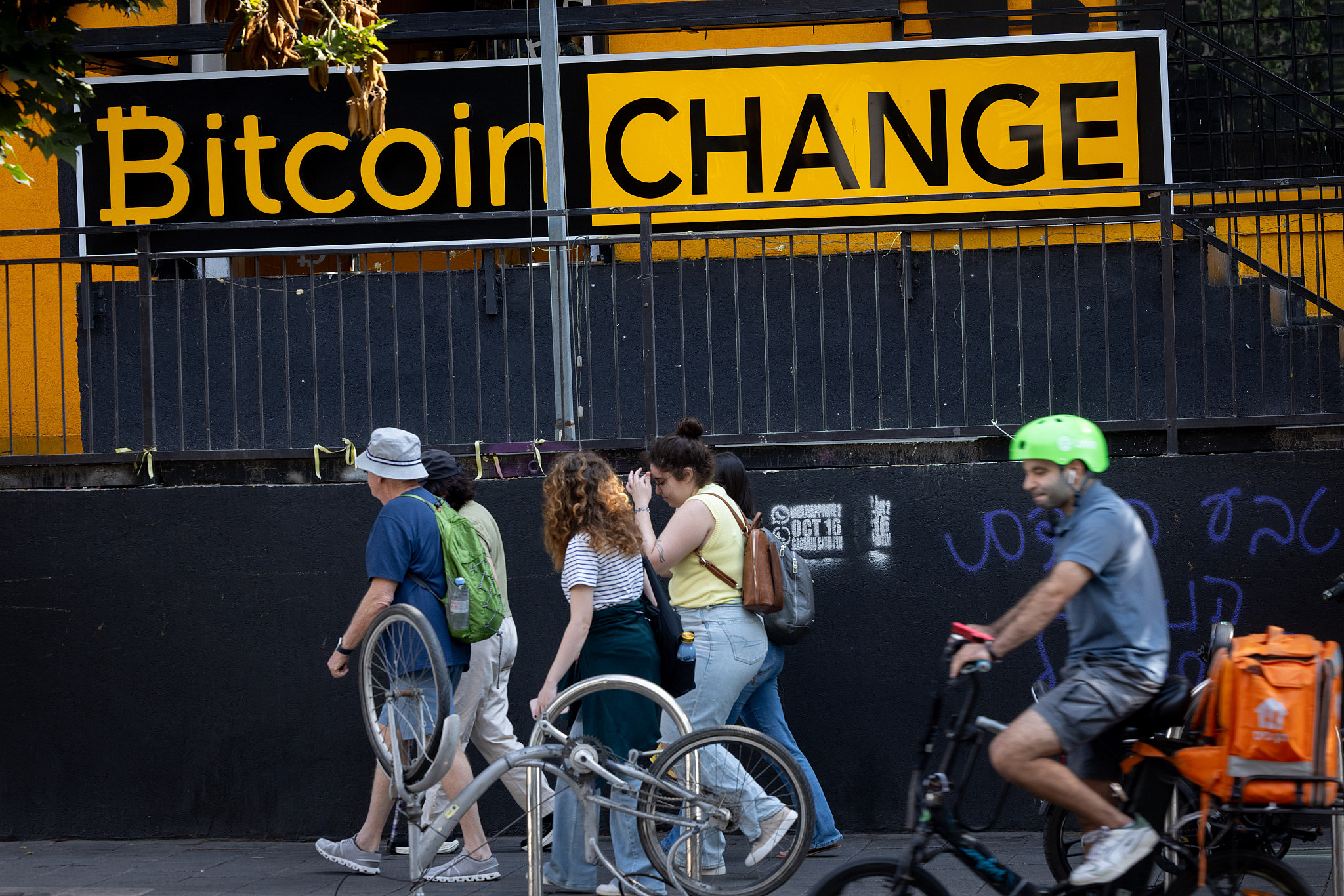
Yet the prime minister’s crypto scheme did not come out of the blue, as the reactions suggested. For years, members of his family and inner circle have maintained ties to prominent figures in the digital currency industry, some of whom have also played important roles in his election campaigns.
Meanwhile, at least in the United States, the industry itself has become an increasingly influential political force, with investors and entrepreneurs seeking to translate their financial clout into favorable government policies.
Netanyahu’s announcement may have offered little in the way of a credible solution to international sanctions. But coming just days before an election, it raises another possibility: that the prime minister was less interested in circumventing the global banking system than in courting a potentially valuable constituency.
Inside Netanyahu’s crypto circle
One of the most prominent figures connecting Netanyahu’s circle to the crypto industry is American billionaire Brock Pierce, a pioneer in the field who co-founded several major ventures. One of those is Tether, the issuer of USDT, which is the world’s largest stablecoin — a cryptocurrency designed to maintain a fixed value against the U.S. dollar.
In February 2022, Pierce visited Israel to meet with then-Prime Minister Naftali Bennett, as well as Netanyahu, who was serving as opposition leader. Speaking to the Jerusalem Post that month, Pierce explained that he regularly met with political leaders to brief them on developments in cryptocurrency and blockchain technology.
A year later, it was revealed that Netanyahu’s son Yair had met Pierce in Puerto Rico. In a July 2023 interview, Pierce declined to explain how the two became acquainted, but said that Yair had asked him how he could learn about cryptocurrencies.

Pierce was also an advisor to — and investor in — Bancor, an Israeli cryptocurrency venture whose founders included Eyal Herzog, a longtime Netanyahu associate, and Guy and Galia Ben-Artzi, the niece and nephew of Netanyahu’s wife, Sara. In June 2017, Bancor raised more than $150 million in just a few hours by issuing its own digital currency, which was one of the largest fundraising rounds of its kind at the time.
The offering came at the height of a cryptocurrency bubble, when entrepreneurs were raising billions of dollars by creating digital currencies and selling them directly to the general public.
Known as initial coin offerings, or ICOs, these sales allowed companies to raise money without going through the lengthy regulatory process typically required to issue shares on the stock market. Instead, investors paid in established cryptocurrencies, such as Bitcoin or Ether (ETH), in exchange for newly created digital “tokens.”
Although these tokens were for the most part designed for use on the platforms being developed, many buyers purchased them in the hope of selling them later at a higher price.
Bancor’s platform allowed users to exchange cryptocurrencies directly through software that automatically calculated exchange rates, without relying on a conventional exchange to hold and trade their assets. The company helped pioneer this approach, but its own token has since lost more than 97 percent of its peak value, following the trajectory of many cryptocurrencies launched during that period.
The significance of Bancor’s ties to Netanyahu extends beyond family connections. Herzog, one of its founders, has been involved in the prime minister’s political campaigns for years.

During the March 2020 election, Herzog and Guy Ben-Artzi, alongside crypto entrepreneur Benny Hakak, helped Likud manage voter data and run its field operations. Netanyahu personally thanked them in his victory speech. “You don’t know these people so well, but they volunteered and did an amazing job,” he told supporters. “Suddenly, the Likud had data. Did you see what a difference that makes?”
Herzog continued working with Likud in subsequent elections. In early October 2026, Ynet reported that he was overseeing the party’s technological operations for the latest campaign, alongside Netanyahu’s close advisors Yonatan Urich and Topaz Luk. The same month, Haaretz revealed that Urich and Israel Einhorn, two Netanyahu associates at the center of the Qatargate investigation, had proposed creating a digital currency for Qatar.
These relationships do not establish definitively that the cryptocurrency industry influenced Netanyahu’s latest proposal. They do, however, suggest that it didn’t come out of nowhere — which is only reinforced by the industry’s overt lobbying efforts.
The Trump playbook
In September, as Israel’s elections approached, the Israeli Crypto, Blockchain, and Web3 Companies Forum, an industry advocacy group, launched a campaign called “Israel Chooses Crypto,” seeking to encourage politicians to adopt policies favorable to the sector.
The organizers said they had drawn inspiration from a similar campaign in the United States ahead of the 2024 presidential election, which helped bring Donald Trump closer to the industry.

Trump’s reversal on the issue was indeed striking. In 2019, he declared that he was “not a fan” of Bitcoin or other cryptocurrencies, claiming that their value was “based on thin air.” Five years later, he was already pledging to make the United States the crypto capital of the world.
Speaking at a Bitcoin conference in Nashville in July 2024, Trump promised to ease regulation of the industry and explicitly acknowledged its electoral appeal. “175 million people, in some form, are involved with this world of crypto,” he told the audience. “So they said, ‘Let’s be nice to them, at least until after the election.’”
As Trump embraced the industry politically, his family entered the business itself. His sons Eric and Donald Trump Jr. became involved in founding a crypto company named World Liberty Financial, while Trump and his wife Melania launched their own “memecoins” — cryptocurrencies whose value depends largely on the couple’s publicity, speculation, and the popularity of figures associated with them.
A Reuters investigation published in June estimated that the Trump family had earned at least $2.3 billion from its crypto ventures since his return to the White House. More than a million investors in the projects examined, meanwhile, had suffered cumulative losses of roughly the same amount.
Trump is not the only populist leader to be entangled in the cryptocurrency business. In February 2025, Argentine President Javier Milei promoted a new digital currency called $LIBRA on his official X account, sending its market value soaring into the billions before it crashed by approximately 95 percent within hours.

Among those involved in $LIBRA’s launch was Hayden Davis, who had also participated in launching Melania Trump’s cryptocurrency. Milei denied knowing how the venture operated, and last month, a judge closed the criminal investigation against him and 10 others involved in the affair.
No replacement for banks
Whatever political advantages Netanyahu may have seen in embracing cryptocurrency, his proposal to use it to circumvent sanctions faces a fundamental economic obstacle: Transferring money is not the same as conducting international trade. Blockchain technology allows money to move between digital wallets without a bank approving each transfer. But that does not mean it can overcome the legal and commercial barriers imposed by international sanctions.
Consider an Israeli manufacturer trying to purchase equipment from a German supplier after sanctions have restricted Israeli banks’ access to international payments. The manufacturer might offer to pay in Bitcoin instead of euros. But the German supplier would have to agree to accept it — and then find a way to convert it into money to pay employees, suppliers, and tax authorities.
That conversion would generally require a cryptocurrency exchange and access to the banking system, where sanctions could still prevent the transaction. And if the German company were legally prohibited from trading with the Israeli manufacturer, paying in Bitcoin would not make the deal permissible.
Nor does cryptocurrency offer the anonymity often associated with it. Most blockchain transactions are recorded on a public digital ledger, allowing anyone to see transfers between wallet addresses. Although the owners’ names are not automatically disclosed, specialized firms can often connect those addresses to identifiable individual people and organizations, enabling authorities to trace transactions involving sanctioned parties.
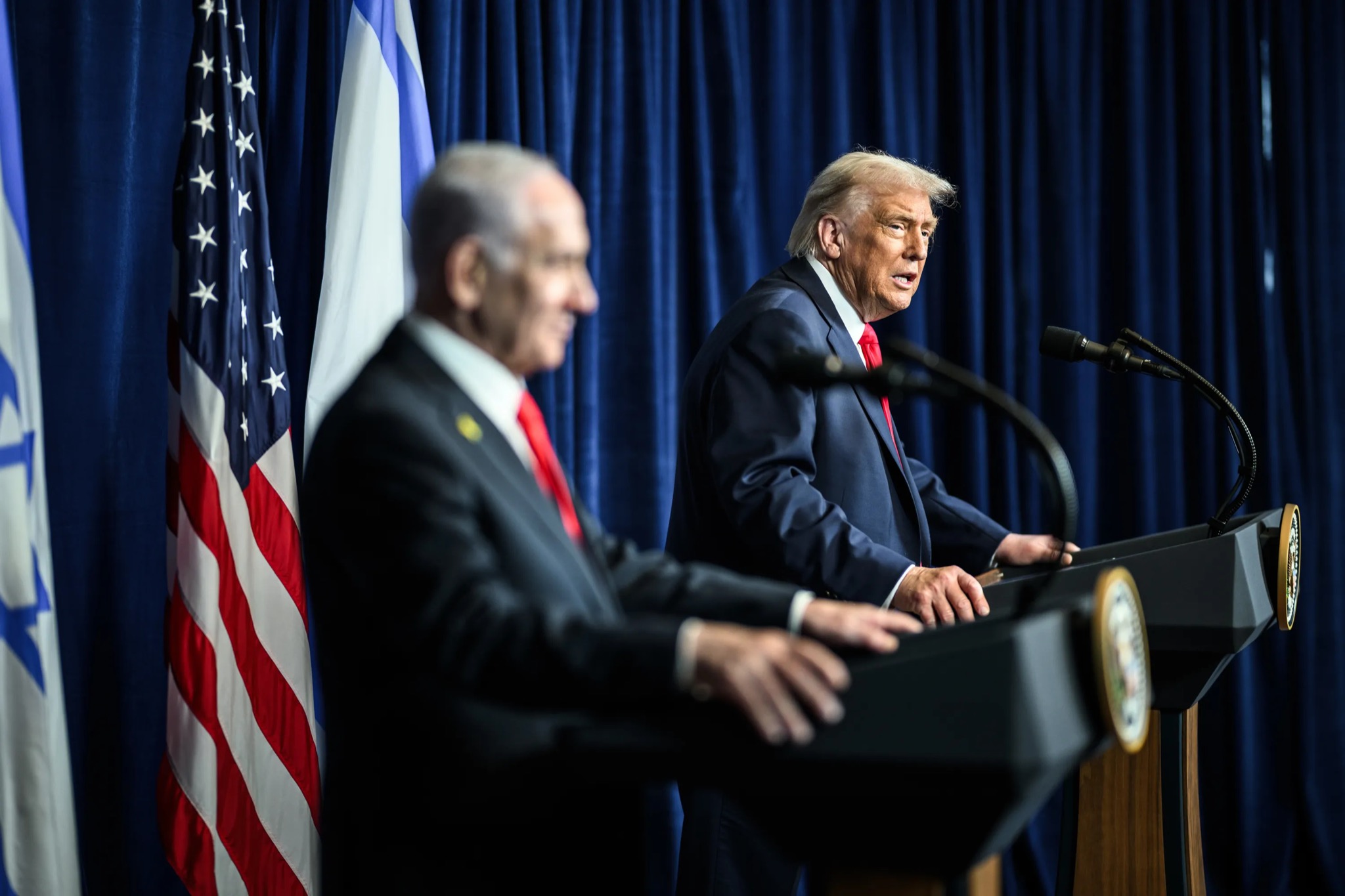
As early as 2021, the U.S. Treasury confirmed that sanctions compliance obligations apply to cryptocurrency transactions just as they do to conventional financial dealings.
The value of cryptocurrencies like Bitcoin and Ether can also fluctuate dramatically, adding another complication for conducting international trade. One apparent solution would be to use stablecoins, digital currencies pegged to the dollar. The largest of these is Tether’s USDT, co-founded by Brock Pierce, who met with both Benjamin and Yair Netanyahu.
But stablecoins introduce another vulnerability: Unlike Bitcoin, which has no central issuer capable of freezing funds in a private wallet, Tether can block the use of its tokens at specific digital addresses.
In February 2026, Tether told Reuters that it had frozen approximately $4.2 billion worth of tokens over suspected links to illegal activity. Among those affected was Garantex, a Russian cryptocurrency exchange sanctioned by the United States. So even a digital currency designed to function like the dollar is not necessarily beyond the reach of the authorities enforcing sanctions.
Cryptocurrencies have nevertheless helped countries under sanctions move money across borders. Russia, whose access to Western financial institutions was severely restricted following its invasion of Ukraine, has developed alternative payment arrangements that incorporate digital currencies.
One example is the A7 network, which created A7A5, a cryptocurrency pegged to the Russian ruble. The system facilitates payments involving sanctioned Russian entities and, according to the U.S. Treasury, has also helped Iranian entities evade restrictions.
Yet the network’s operations reveal just how difficult it is to replace conventional banking. In a recent report, the Treasury detailed how A7 had established or acquired hundreds of intermediary companies around the world, maintaining accounts at approximately 435 financial institutions across at least 83 countries.

Cryptocurrency helps move funds within the network, but the companies handling payments on the other end still rely on ordinary currencies — including dollars, euros, Chinese yuan, and UAE dirhams — to pay suppliers.
Contrary to eliminating the need for banks, the Russian system depends on an elaborate international network of companies and financial institutions willing to facilitate transactions. And that network itself is a target of sanctions: In October 2025, the European Union banned transactions involving A7A5.
Iran has also turned to cryptocurrencies in an attempt to circumvent sanctions, but its efforts likewise depend on alternative financial networks, willing trade partners, and intermediaries prepared to assume the risks.
Israel has no comparable infrastructure. More importantly, its economy relies heavily on trade with Western countries. In 2025, the European Union alone accounted for 31.7 percent of Israel’s merchandise trade. A cryptocurrency payment system could not compel European companies to continue buying Israeli products or selling goods to Israeli businesses if their governments imposed restrictions on such trade.
Netanyahu’s proposal therefore offers no credible substitute for the economic relationships Israel would risk losing under sweeping international sanctions. And given his inner circle’s longstanding ties to the crypto industry, it is worth asking whether the announcement was primarily intended to solve an economic problem at all.
The electoral appeal behind the crypto pitch
Earlier this year, the Israeli Crypto Companies Forum commissioned the polling firm Geocartography to survey 1,015 adult internet users about their involvement in cryptocurrency and political preferences.
According to the results, 21 percent of respondents owned digital currencies, a figure the forum extrapolated to approximately 1.2 to 1.5 million Israelis. More significantly, 42 percent said they would be more inclined to vote for a particular party that promoted regulation of the crypto sector.
The survey was commissioned by an industry group with a clear interest in demonstrating its political influence, but its findings help explain why cryptocurrencies might appeal to politicians looking for new constituencies. Netanyahu may have recognized the same opportunity Trump seized in 2024: a community of investors and entrepreneurs eager for political recognition and favorable regulation.
Rather than outlining a detailed plan to regulate cryptocurrency, protect investors, or support the industry, Netanyahu made a far more dramatic announcement, presenting blockchain as a potential answer to international isolation.
Most read on +972



The overwhelming opposition to Netanyahu’s proposal focused on its technical aspects — questioning if he really understood cryptocurrency and whether blockchain technology could technically replace international banking. However, the public debate glossed over the reasons behind Netanyahu’s plans for sanctions in the first place: global opposition to Israel’s genocide in Gaza and ethnic cleansing in the West Bank.
That framing turns a political and diplomatic crisis into a technological problem in need of an ingenious workaround. But no money-transfer technology can erase the actions driving the growing demands for Israeli accountability.
A version of this article was first published in Hebrew on Local Call. Read it here.