In partnership with

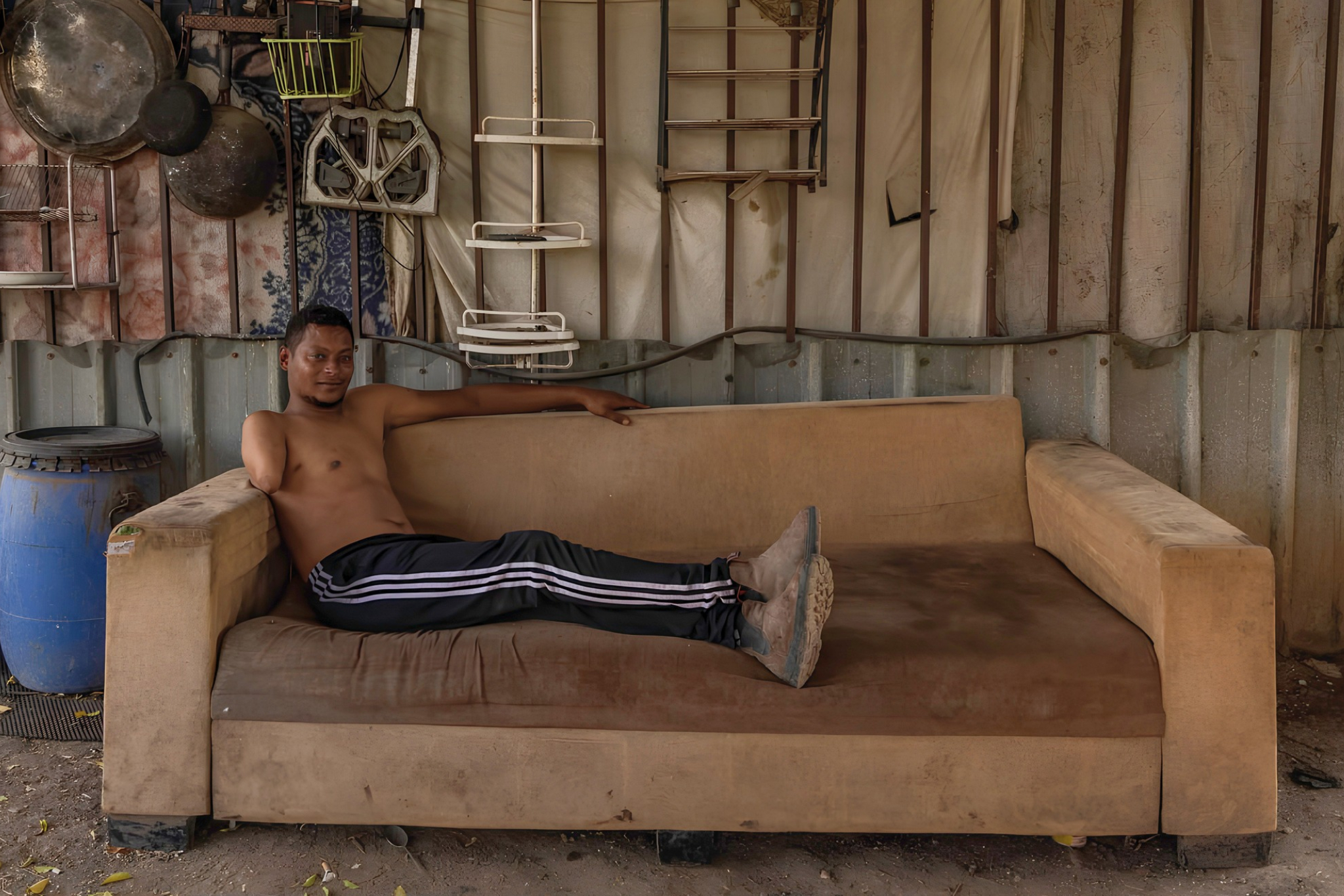
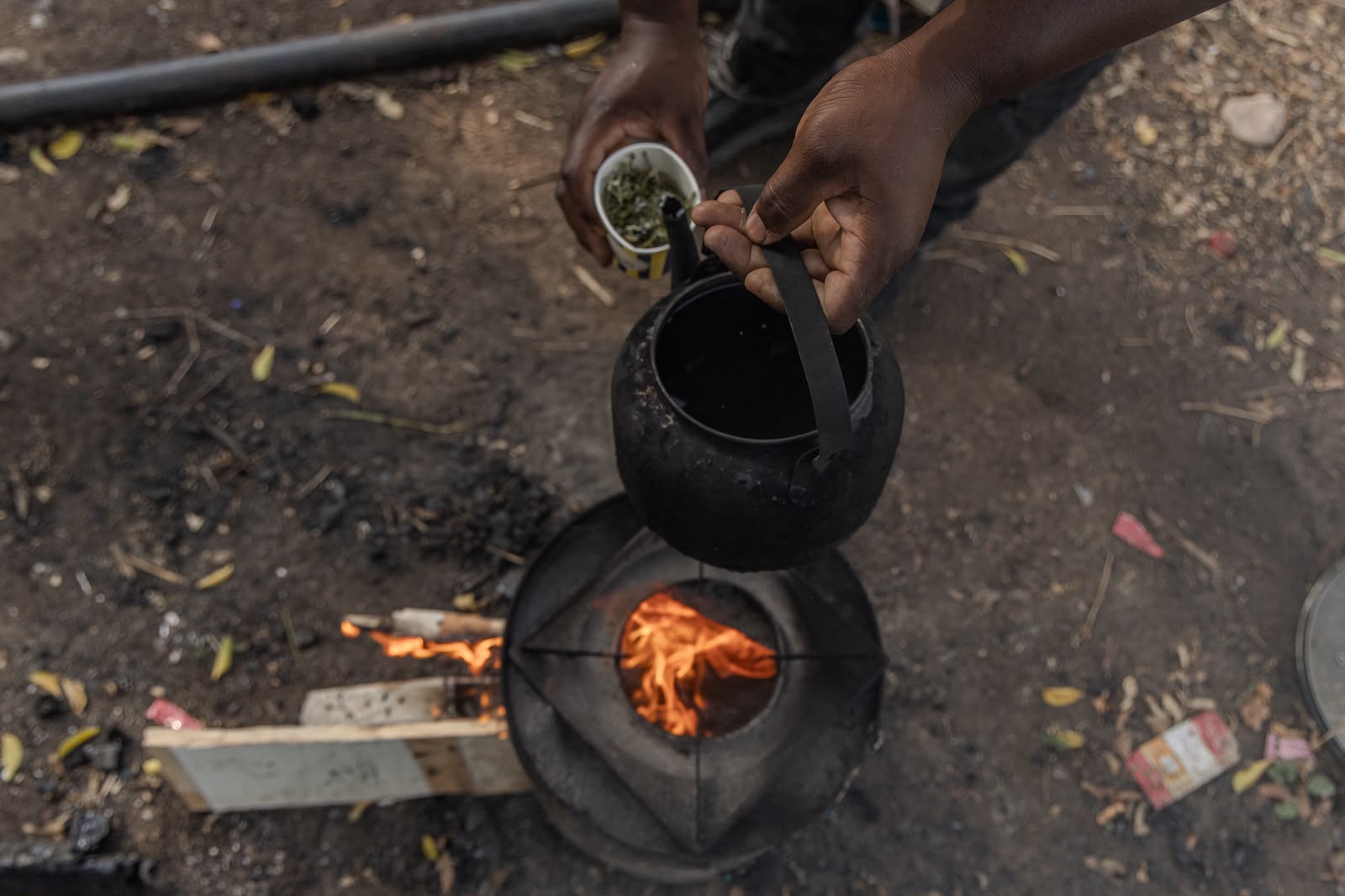
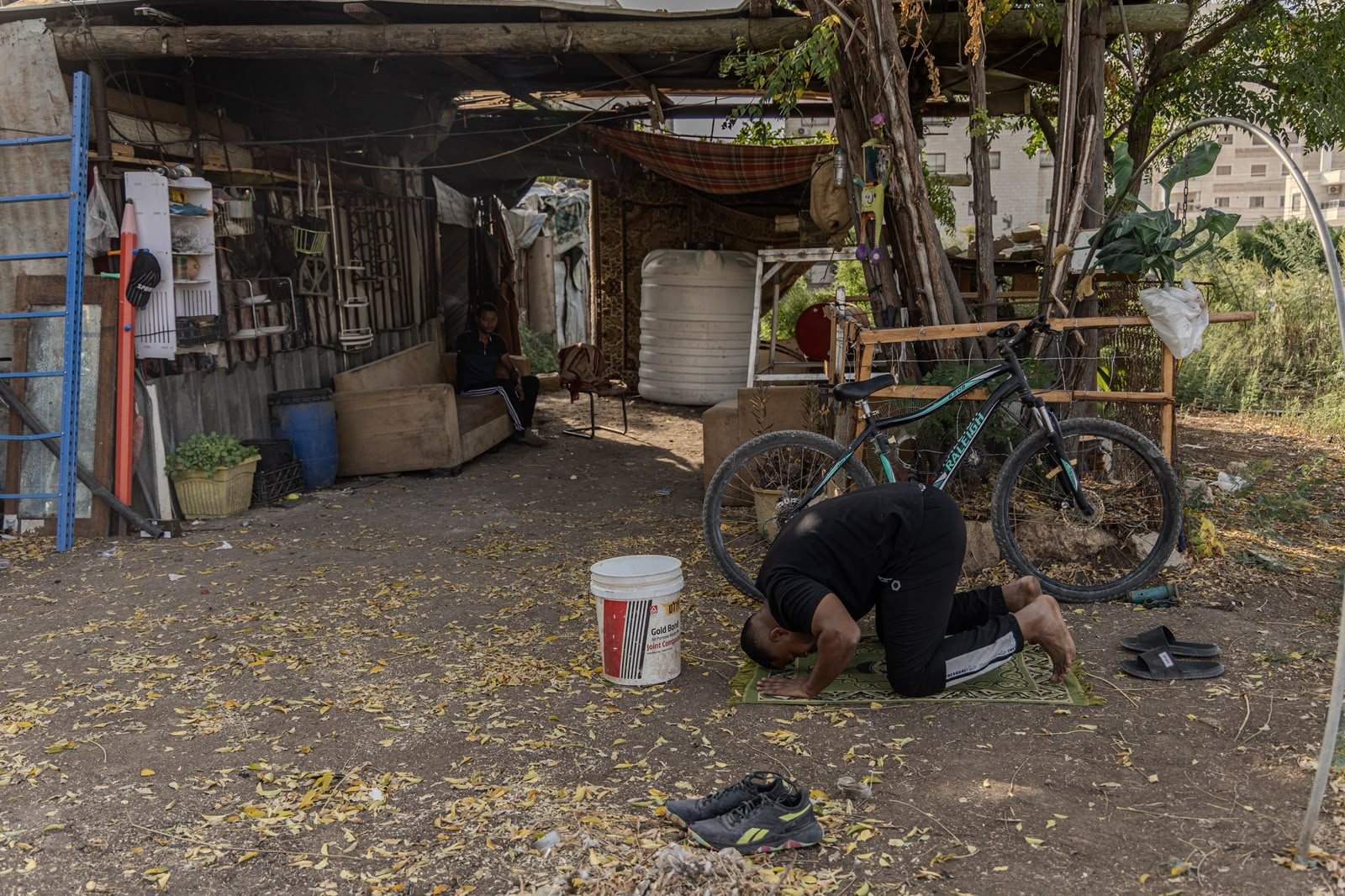
Makeshift structures of corrugated metal, plastic tarps, and wooden planks line a narrow stretch of farmland east of Tulkarem. Families displaced from the Tulkarem and Nur Shams refugee camps by Israeli military raids that began after October 7, 2023 — and intensified dramatically with the launch of “Operation Iron Wall” in January 2025 — cook over open fires and sleep beneath flimsy coverings that offer little protection from the rain.
Ahmad Mohammed Ghanem is among those living in a tin-roofed shack on the farmland. Israeli gunfire set his home in Tulkarem camp ablaze, destroying his identification documents, property deeds, and medical records. A military bulldozer later demolished what remained of the house.
“The Israelis burned all my personal papers, my ID, and my passport,” he told +972. “I don’t even have the money to get new ones.”
Without his documents, Ghanem says he cannot access services from the local council or from Palestinian Authority (PA) offices. His family sleeps on a tarp spread over the dirt floor, which turns to mud when it rains. They rely on open fires for cooking and warmth.
“We don’t know where we will go this winter,” he said. “We are displaced, homeless. Sometimes we even sleep on chairs.”
Nearby, Ahmad Jamal Ghanem, 32, lives in another makeshift shelter, just a few hundred meters from the refugee camp. A former construction worker in Israel, he lost his hand after being shot by an Israeli sniper during a raid on Tulkarem camp shortly before October 7. The military siege prevented him from reaching a hospital in time, and doctors were forced to amputate.
Today, he can see his former neighborhood from the shelter but cannot return to it. “My house is gone, as is my neighbor’s — they destroyed them both. I have nowhere to go.”
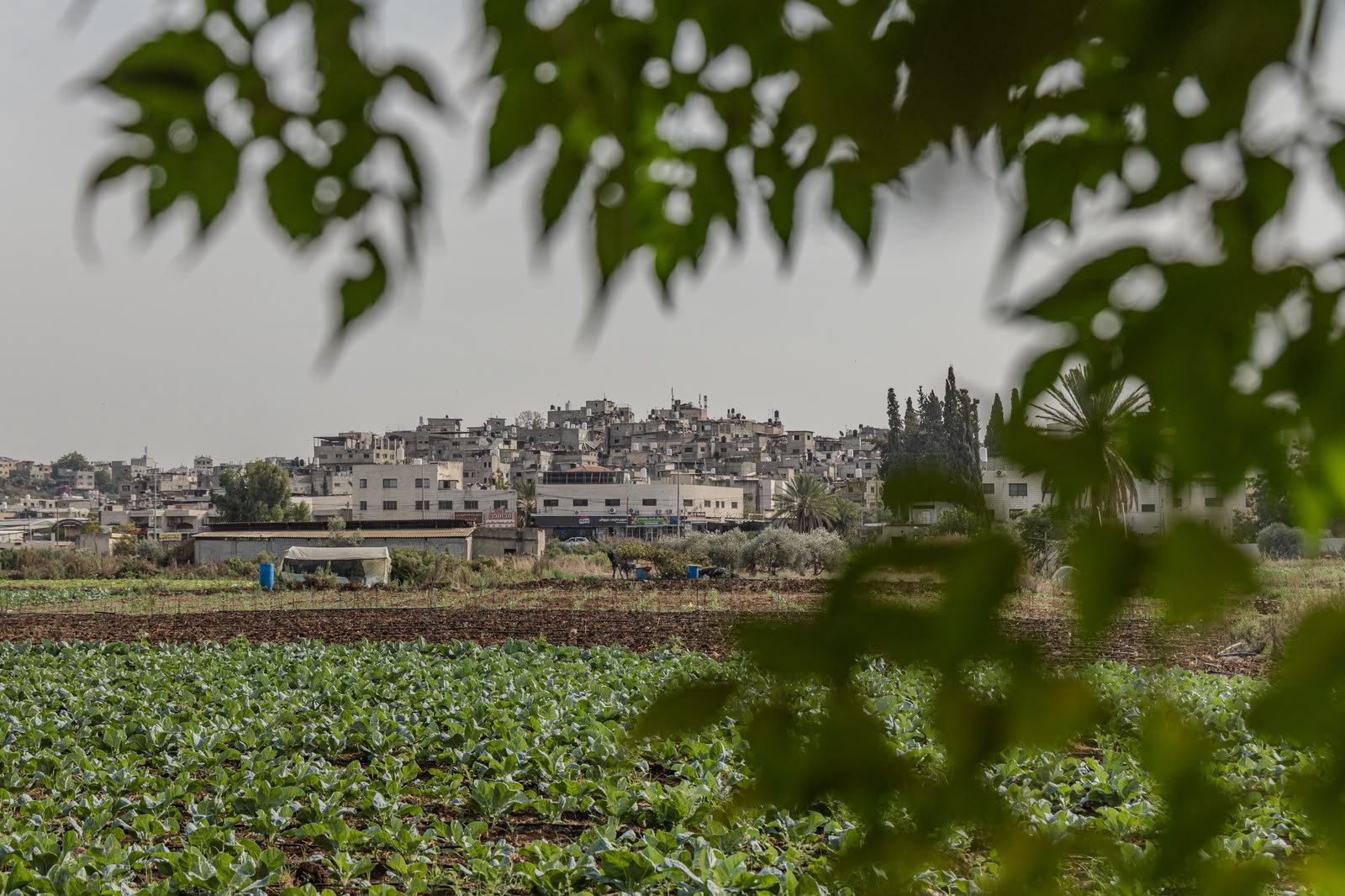
Unable to work, Ghanem has no way to support his family or repay the NIS 120,000 ($37,000) he owes to Al-Najah Hospital for his treatment. His disability benefits were cut off by the cash-strapped PA after six months, leaving him without an income.
“I’m unemployed and I have two children to feed,” he explained. “My benefits are also gone, so here I am, with no support.”
The two men were displaced before “Operation Iron Wall” in January 2025, which dramatically accelerated the uprooting of Palestinians from refugee camps across the northern West Bank. Since the operation began, more than 33,000 Palestinian refugees have been displaced including more than 21,000 people in the Tulkarem district alone.
Although the military operation in Tulkarem ended months ago, the Israeli army has refused to set a date for their return. Entire neighborhoods have been demolished, families scattered across surrounding towns and villages, and livelihoods destroyed.
Local leaders, analysts, and human rights organizations say the devastation goes beyond the military’s stated objective of combating terrorism. They describe it as part of a deliberate strategy of “spatial engineering” — reshaping the refugee camps, uprooting their populations, and strangling the local economy.
Camps remade by the military
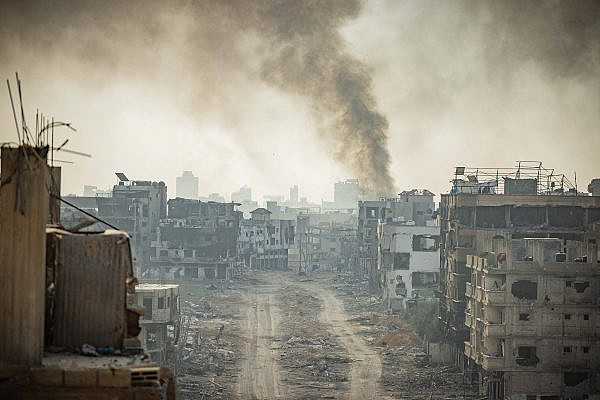
According todata published by the Office of the United Nations High Commissioner for Human Rights (OHCHR), Israeli military operations destroyed or severely damaged 48 percent of structures in Nur Shams camp and 36 percent of buildings in Tulkarem camp. Military authorities issued demolition orders for 514 structures containing approximately 1,500 housing units across Tulkarem, Nur Shams, and Jenin, the three refugee camps targeted in the northern West Bank.
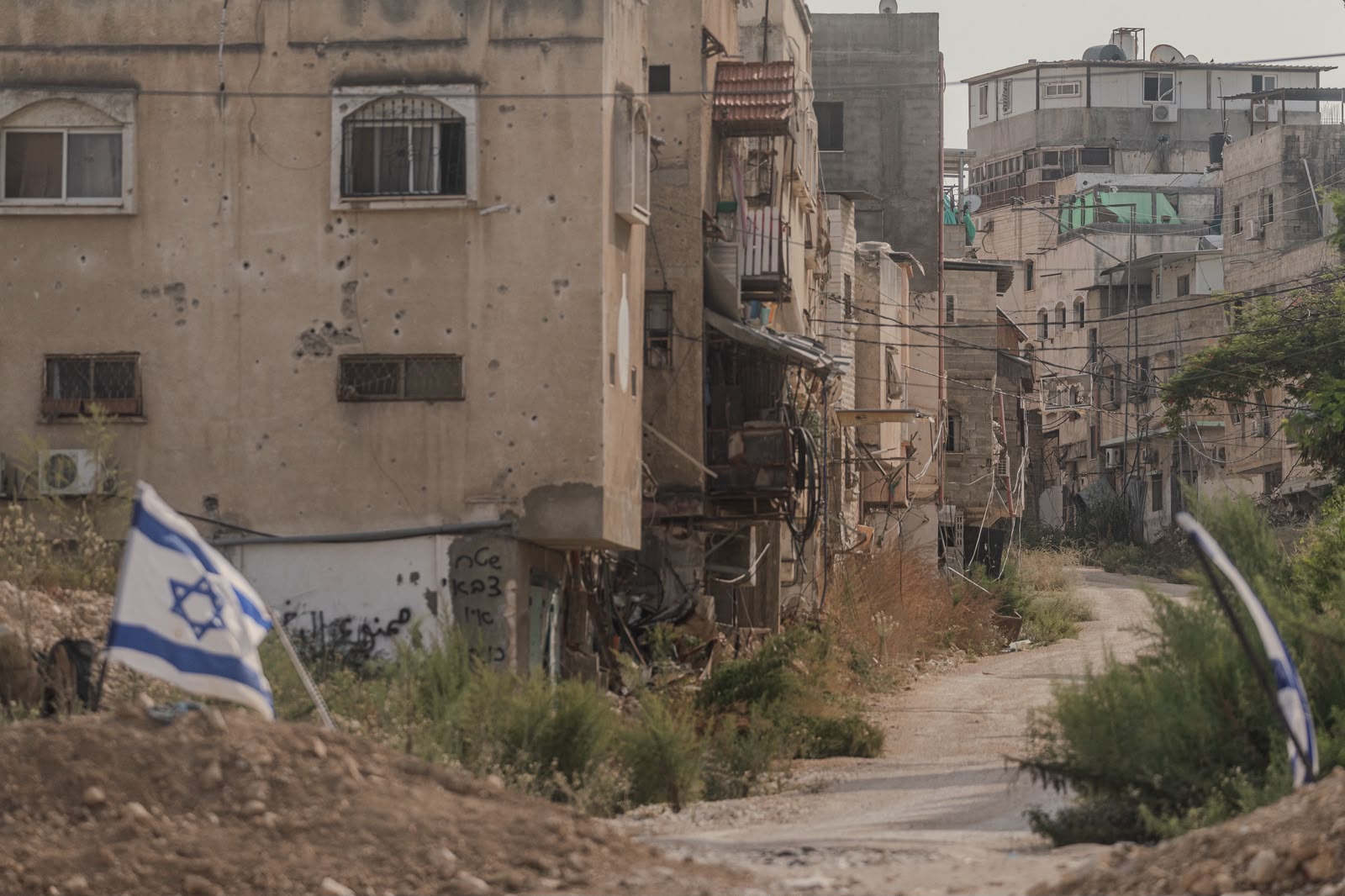
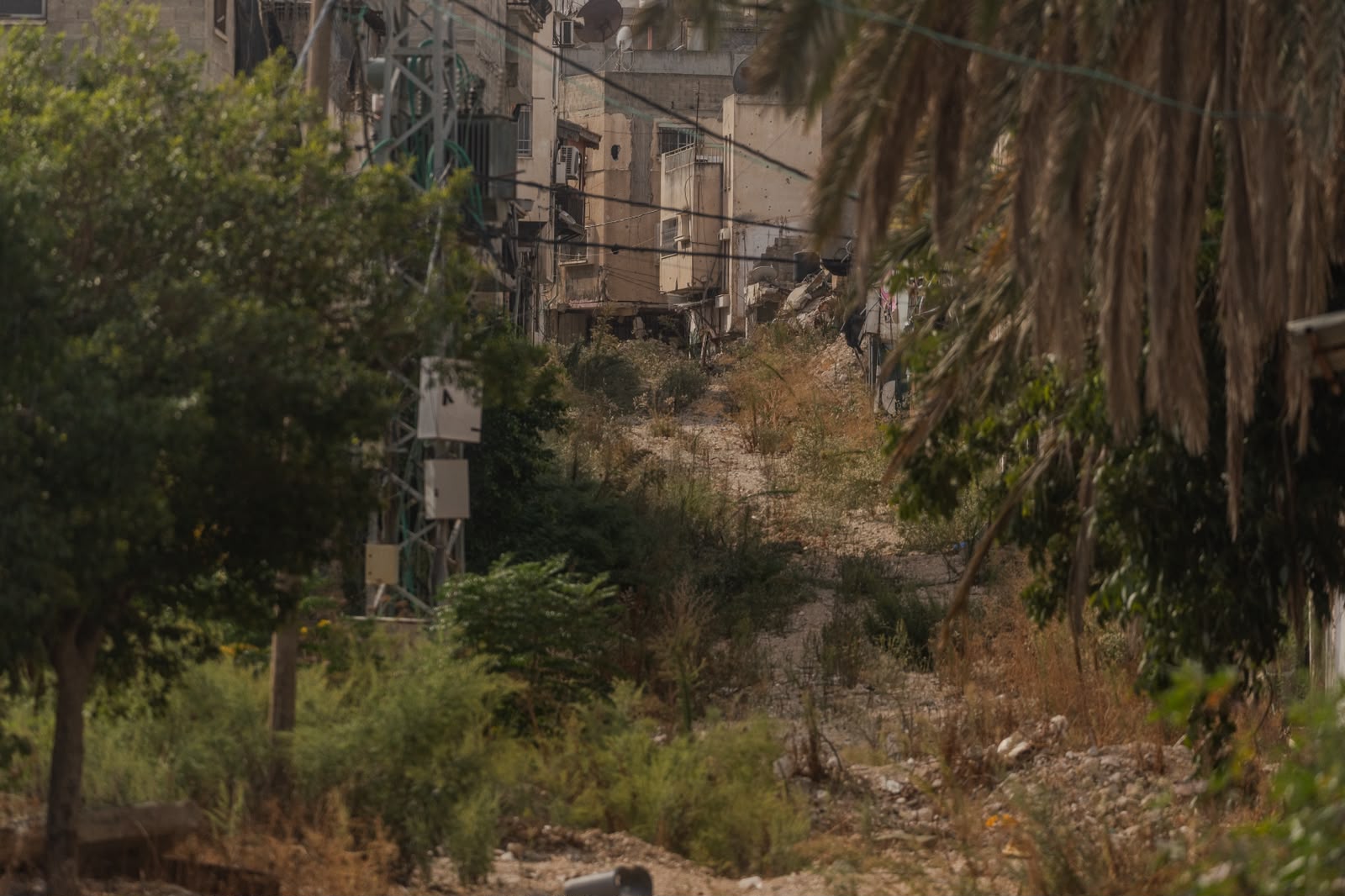
The operations have fundamentally altered the urban fabric of Tulkarem and Nur Shams, built over decades by Palestinian refugees displaced during the Nakba of 1948. Armored bulldozers flattened multi-story residential buildings and carved 23-meter-wide corridors through the camps’ narrow alleyways to accommodate military vehicles.
Hassan Ghanem, a resident of Tulkarem camp, told +972 that bulldozers demolished his two-story home, which also served as a commercial storage space, to clear a path through his neighborhood. He said the demolition took place without warning or compensation, leaving his family homeless.
In Nur Shams, Israeli forces have turned evacuated residential neighborhoods into a military training compound. Ma’mun Abu Al-Hija, a former camp resident and head of security at Kadouri University in Tulkarem, was forced from his home on Oct. 27, 2023, a week after his 15-year-old son, Wa’di, his uncle, and 11 other Palestinians were killed in an Israeli attack on the camp.
Now living in Iktaba, a village east of the city, Abu Al-Hija says he hears gunfire almost every morning from his former neighborhood, where soldiers train among the emptied homes. He believes the stress of his displacement and the repeated attacks on Tulkarem contributed to the stroke that ultimately killed his mother.
The destruction of Tulkarem’s refugee camps cannot be viewed in isolation from the PA’s own security operations against armed groups in the area. In December 2024, Palestinian forces launched “Operation Defenders of the Homeland,” targeting local armed groups. Security forces imposed closures on the Jenin, Nur Shams, and Tulkarem camps, established checkpoints, and restricted media access.
The crackdown fueled resentment among camp residents, many of whom saw it as an attempt to undermine their ability to defend themselves. They accused the PA of targeting the armed groups while failing to protect the camps from repeated Israeli military raids.
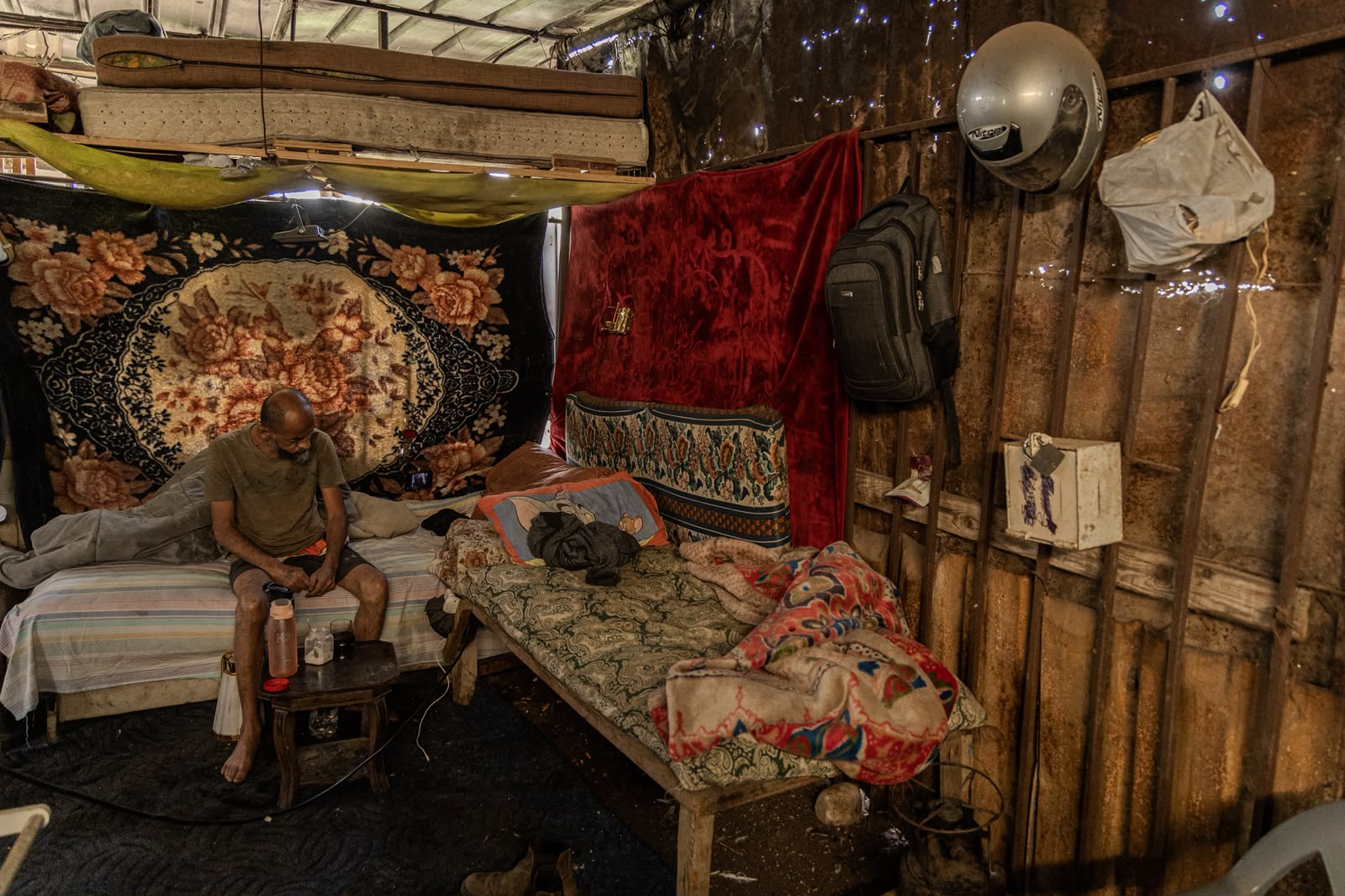
The subsequent destruction of the camps has scattered thousands of families across Tulkarem and its surrounding communities, overwhelming local housing and services and forcing many into increasingly precarious living conditions.
According to a study published in September by Al-Marsad — a Palestinian research organization focusing on socioeconomic issues — approximately 21,180 people from 5,295 families have been displaced from the Tulkarem district. Of those forced to leave their homes in the district, 53 percent come from Tulkarem refugee camp, 44 percent from Nur Shams, and another 2.5 percent from elsewhere in the area.
The mass displacement has torn apart longstanding social networks. Many families have sought shelter in Tulkarem city, while others have moved to nearby villages including Iktaba, Danaba, Barta’a, Bala’a, and Al-Ras. With housing and public services stretched beyond capacity, hundreds have resorted to building makeshift shelters.
Others have been pushed into more isolated rural areas. One displaced resident, who requested anonymity, said he rented an apartment in Tulkarem for a year before exhausting his savings. Unable to keep up with the rent, he built a small concrete shelter on his father’s land in Al-Jura, a remote area between Bala’a and Kafr Al-Labad. The site has no paved roads or connection to the electricity grid. His family relies on a generator that frequently breaks down and an expensive private water supply.
An economy under siege
The displacement has compounded an already deepening economic crisis in Tulkarem, where military closures, the loss of access to jobs in Israel, and restrictions on trade have brought much of the local economy to a standstill.
According to Qais Awad, president of the city’s Chamber of Commerce, Industry, and Agriculture, commercial activity has fallen by 75 percent over the past three years. Al-Marsad data puts unemployment at 37.4 percent, while 16 percent of residents now live in extreme poverty.
More than 23,000 workers lost their livelihoods due to the revocation of their work permits in Israel after October 7. Military closures have also disrupted trade with Palestinian citizens of Israel, long an important source of income for the city’s businesses.
Meanwhile, the influx of displaced families has driven up housing costs in an already strained market. Amid a severe shortage, landlords have sharply raised rents, with monthly payments for displaced residents rising from NIS 1,100 ($340) to 2,500 ($770).
Suhaib Slate, whose home and restaurant in Nur Shams camp were destroyed, is struggling to pay the rent on a small apartment in Tulkarem while trying to rebuild his business. For now, he has had to resort to working at another restaurant in the city, where he is paid by the day.
“It’s tough when you’re forced to work in a restaurant that’s not your own,” he said. “I don’t have a steady income. One day I make NIS 50, another day I make NIS 40.”
For merchants still operating in the city, business has plummeted. One restaurant owner, who requested anonymity for security reasons, says his daily revenue has fallen by 90 percent, from NIS 3,000 ($925) to just NIS 300 ($92.50).
Sources at the Tulkarem police report a sharp rise in bounced checks, leaving nearly half of the city’s merchants and business owners facing arrest warrants over unpaid debts.
In an effort to revive commercial activity, the Tulkarem Chamber of Commerce organized the city’s Fourth Trade Festival under the slogan Bina’amraha 2 (“We Will Rebuild It 2”), held on the Kadouri University campus.
Awad, the Chamber’s president, and Salam Mar’i, its secretary, described the festival as an emergency response to the city’s economic paralysis. Dozens of merchants, property owners, and local food producers took part, while displaced young people found temporary employment.
The event brought some money back into circulation and offered families a brief reprieve from the trauma of displacement. For its organizers, it was also an effort to keep Tulkarem’s commercial life alive despite the restrictions that have crippled the city.
A battle to return
Yet for tens of thousands of displaced residents, the most pressing question remains whether they will ever be allowed to return to their homes.
In September 2025, months after the military operation in the northern West Bank refugee camps had ended, the Association for Civil Rights in Israel (ACRI) petitioned the High Court of Justice to compel the military to allow residents to return.
“People who have been forcibly displaced must return; this is anchored in Article 49 of the Fourth Geneva Convention,” Reut Sha’ar, an attorney with the organization, explained. She added that while the Convention allows temporary evacuations on grounds of military necessity, displaced residents must be permitted to return once that necessity no longer exists.
In its response to the petition, the Israeli state claimed that residents had left voluntarily rather than being forced out by the military. But Sha’ar says the court questioned how their departure could have been voluntary if the army was now preventing them from returning.
“There’s really no answer,” Sha’ar said. “People told us — and we submitted affidavits — that soldiers entered their homes and told them they had 15 minutes to get out, that drones dropped leaflets to that effect, all while tanks were rolling into the camps.” At a subsequent hearing, High Court justices asked military representatives to provide a timetable for the residents’ return.
Statements by Israel’s political leadership, however, suggest that the government has little intention of allowing residents back.
In a video posted from a visit near Tulkarem’s refugee camps, Prime Minister Benjamin Netanyahu declared that residents would not be permitted to return. “These aren’t residents; they’re terrorists,” he claimed. Defense Minister Israel Katz also ruled out their return, saying he would advance “special legislation in the Knesset,” if necessary, to prevent it.
Most read on +972
According to the Israeli newspaper Makor Rishon, the army planned to tell the High Court that residents’ return would depend on measures taken by the PA and on “the IDF’s completion of the area’s reshaping, including paving roads according to routes determined by the army.”
The reported conditions went further, calling for the elimination of “the characteristics of a ‘refugee camp’ and the ethos associated with it, effectively transforming the area into an ordinary urban neighborhood.”
For Palestinian political analysts, these demands suggest that Israel’s objectives extend beyond military control. They see an attempt to dismantle not only the physical infrastructure of the camps but also their identity as communities of refugees displaced in the Nakba of 1948, whose continued existence embodies the unresolved question of Palestinian return.“The Palestinian Authority would be committing political suicide if it agreed to these conditions,” said Sha’ar.
A version of this article was first published in Hebrew on Local Call. Read it here.