
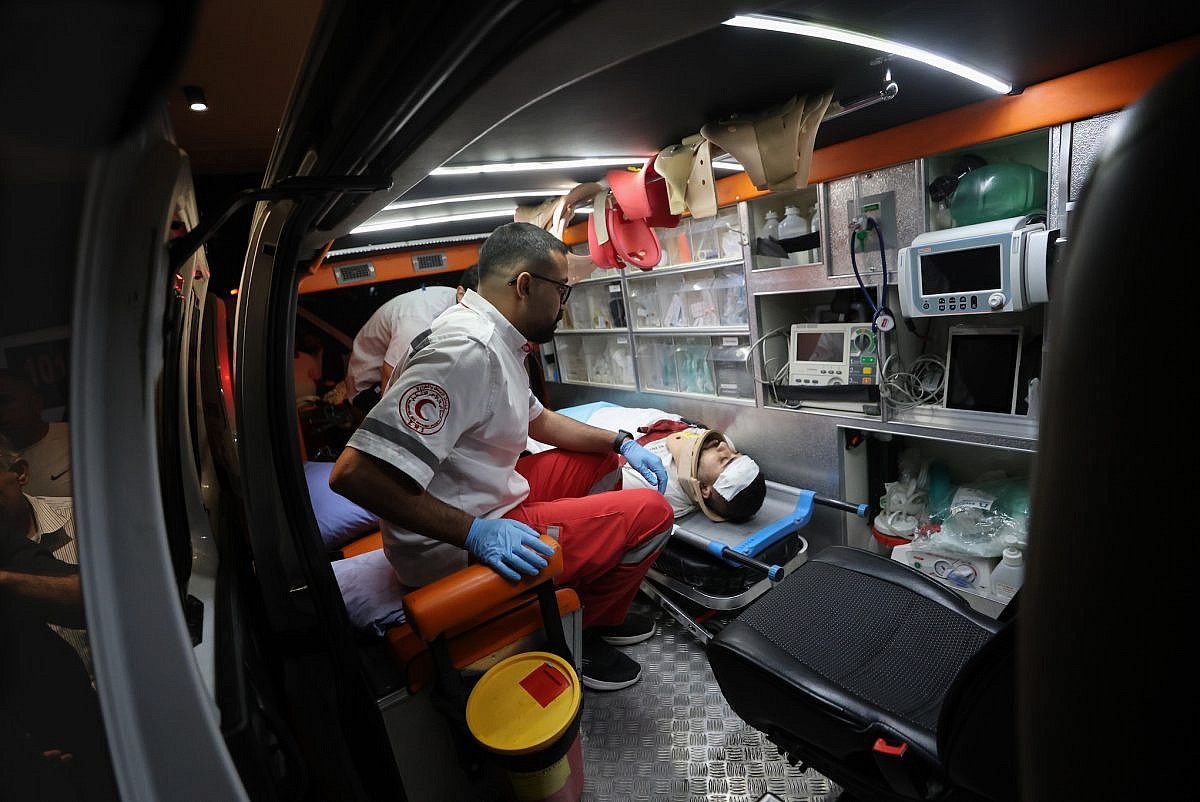
For over two months, one of the most prominent Palestinian doctors in the West Bank has been languishing in Israeli prison. In a pre-dawn raid on June 21, Israeli soldiers arrested Dr. Mazen Rantisi at his home in the Al-Tireh neighborhood of Ramallah.
Known as the “doctor of the poor,” Rantisi had spent decades providing care to low-income and marginalized Palestinian communities — a service that has grown more essential in recent years, as Israel’s withholding of Palestinian Authority revenue has significantly reduced access to public healthcare. Like many Palestinian prisoners, Rantisi has faced medical neglect and physical abuse while in detention, prompting widespread concern among Palestinian health and civil society organizations.
Rantisi is also the chair of the board of the Health Work Committees (HWC), which makes his arrest and ongoing detention particularly significant. Founded in the 1980s, HWC emerged from a network of grassroots and popular committees that sought to provide basic services outside structures controlled by the Israeli occupation.
Healthcare was central to this form of popular resistance: The committees’ clinics focused especially on rural and underserved communities, where access to care was limited and Israeli policies of de-development had left essential infrastructure chronically vulnerable.
This model treated healthcare as much more than simply the provision of a service. Instead, HWC belonged to a broader movement that understood building independent Palestinian institutions — through which communities could sustain themselves and, ultimately, lay the foundations for political liberation — as a means of resisting colonial domination.
That history is especially relevant today, as Israel takes aim at the Palestinian health sector itself. Last month, the World Health Organization (WHO) documented 37 attacks on healthcare in the West Bank — including assaults on health facilities and medical vehicles, forces obstructing access to facilities, incidents involving the use of force, and the arrest or detention of health workers and patients. This represents a sharp rise compared to eight in June and a monthly average of 10 during the first six months of 2026.
Israeli checkpoints, military closures, and restrictions on ambulances have also continued to prevent access to care and impede treatment. Human Rights Watch has documented cases in which Israeli forces blocked or delayed ambulances from reaching patients or hospitals — delays that, as +972 recently reported, have in some cases contributed to patients’ deaths.

Nor is Rantisi the only Palestinian doctor to be personally targeted. On Aug. 18, Israeli forces arrested Palestinian gynecologist Dr. Dima Muhammad Amin Barakat from her home in Ramallah. While in Israeli custody, Barakat suffered a heart attack and was hospitalized, where she underwent cardiac catheterization. She was subsequently returned to detention at Jerusalem’s Russian Compound, with marks from the shackles still visible on her wrists. A judge has extended her detention for another five days.
Israel’s attacks on the Palestinian health sector come as the West Bank experiences one of its largest waves of ethnic cleansing since the Nakba. Nearly 127 Palestinian communities have been partially or entirely displaced since January 2023, affecting more than 6,390 people. And after displacing many Palestinian communities in Area C of the West Bank (which, under the Oslo Accords, falls under full Israeli military control), Israeli settlers are setting their sights on those in Areas B and A.
These pressures are unfolding alongside accelerating settlement expansion and what rights groups and analysts have described as Israel’s de facto annexation of the West Bank. Healthcare is among the sectors being steadily degraded in the process. For rural and marginalized communities — increasingly cut off from basic services due to checkpoints, road closures, and settler violence — losing access to medical care can make an already precarious existence nearly unlivable.
Healthcare as popular resistance
The HWC has itself long been a target of Israeli authorities. In 2020, Israel outlawed the group, declaring it a “terrorist front.” The designation was part of a wider crackdown on Palestinian civil society organizations whose work spans healthcare, human rights, agricultural development, and community organizing.
But the HWC’s history as part of the wider Palestinian anti-colonial struggle helps explain why attacks on such institutions have consequences beyond the organizations themselves. The popular committees from which it emerged were built precisely because Palestinians living under military rule needed institutions capable of sustaining communal life beyond those controlled by the occupying power.
The infrastructure that developed through the 1970s and 1980s encompassed health and women’s groups, agricultural and voluntary-work committees, trade unions, and student groups. During the First Intifada, popular committees operated across villages, refugee camps, and urban neighborhoods, organizing healthcare, food distribution, alternative education, and agriculture, particularly during curfews and closures.

In 1988, Israel declared the popular committees illegal, with membership punishable by up to 10 years in prison. It was precisely their capacity to sustain everyday life and build forms of independent collective organization that made them a target of Israeli repression, and part of the reason Israel continues to go after Palestinian civil society today.
Weakening the HWC and similar institutions therefore undermines not only Palestinians’ access to essential services but also their capacity for civic organization — the very foundation of sovereignty.
In communities facing displacement and accelerating settler takeover, those effects converge. A village deprived of reliable healthcare, water, education, and freedom of movement becomes progressively harder to inhabit. The degradation of these services can accelerate the same process of fragmentation and displacement already driven by settler violence, land seizures, and military restrictions.
In this context, Rantisi’s arrest matters not just because he is a prominent physician. As the head of an organization rooted in four decades of Palestinian grassroots healthcare, he represents a tradition that understood health as inseparable from the political, economic, and social conditions shaping Palestinian life.
Beyond providing medical services to communities neglected by the occupation, the health committees challenged a centralized and medicalized model of care through an emphasis on prevention, primary healthcare, community participation, and the particular needs of marginalized groups. Care, in this tradition, was therefore both a means of sustaining Palestinian communities and part of a broader emancipatory project aimed at challenging the conditions that undermine their health in the first place.
A precedent in Gaza
As shocking as the arrests of Dr. Rantisi and Dr. Barakat are, they do not altogether come as a surprise. Fourteen Palestinian doctors from Gaza continue to be held without charge in Israeli prisons, among them Dr. Hussam Abu Safiya, the former director of Kamal Adwan Hospital, whom Israel detained in December 2024.
Gaza makes clear that the destruction of healthcare means the elimination of the conditions necessary for collective survival — a key element of Israel’s genocide.
Most read on +972
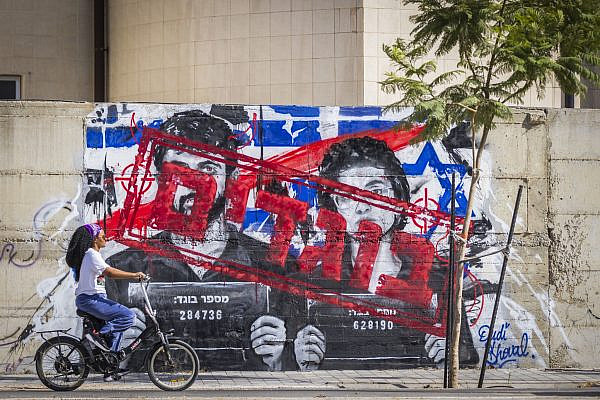
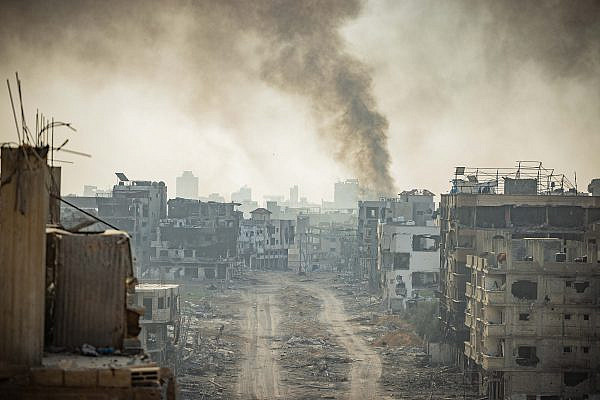
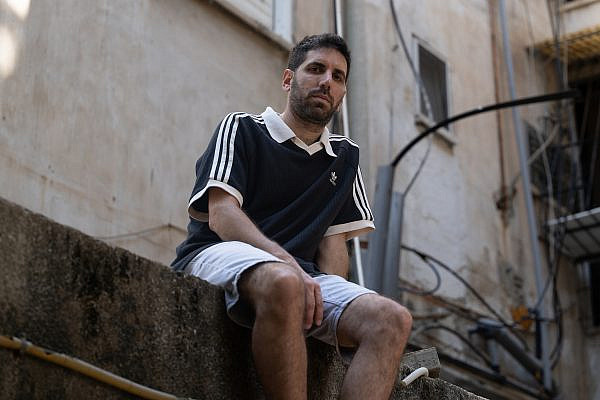
Over nearly three years, Israeli forces have systematically destroyed hospitals, killed and detained Palestinian healthcare workers and subjected them to torture, while severely restricting the entry of humanitarian aid, medical supplies, and other essentials for nearly 2 million besieged Palestinians. This is why South Africa, in its application to the International Court of Justice under the Genocide Convention, specifically cited Israel’s attacks on hospitals.
The scale of destruction in the West Bank is, of course, different. But attacks on and obstruction of Palestinian healthcare there are not new, and the recent intensification is unfolding alongside accelerating settlement expansion and widespread displacement.
Targeting the healthcare system in the West Bank must therefore be seen through the same lens as in Gaza. Both adhere to the same political logic, where destroying healthcare is directly tied to the wider Israeli project of removing Palestinians from the land.