


I grew up a 10-minute drive from Bondi Beach. My formative years were spent enjoying birthday parties in the parks, bar mitzvahs at Bondi Pavilion, excursions to the rock pools to look for mulberry whelks and sea urchins, and pizza at Papa Giovanni’s. As a teenager, I would sit with friends on the grass opposite the McDonald’s on Campbell Parade, hiding our Bacardi Breezers from the regular police patrols — but not too inconspicuously, lest anyone else be unaware that we were, in fact, drinking in public.
But now, the idyll of my 1990s Sydney childhood feels so shattered that it is like grasping at a hallucination.
Sunday’s attack on Jewish Australians celebrating the first night of Hanukkah on Bondi Beach was the country’s deadliest mass shooting in almost 30 years, and the worst that its Jewish community has ever experienced. The death toll at the time of writing stands at 15, including a 10-year-old girl, two rabbis, and a Holocaust survivor. Dozens more remain hospitalized with their injuries, among them a heroic Muslim bystander who tackled one of the gunmen.
Immediately, the perverse dance we have grown so accustomed to in recent years began playing out all over again. Before the blood of the victims had even dried, right-wing politicians and public figures — in Australia and around the world — were declaring the attack a consequence of growing anti-Zionist sentiment and pro-Palestine activism, without any proof or indication of the attackers’ motivations (the authorities have since linked the two men to ISIS).
Australia’s Antisemitism Envoy Jillian Segal connected the attack to pro-Palestine marches in Sydney, where participants were “waving terrorist flags and glorifying extremist leaders.” The New York Times published a column by Bret Stephens under the headline “Bondi Beach is what ‘Globalize the Intifada’ looks like.” New York City councilwoman Vickie Paladino went further: “We need to take very seriously the need to begin the expulsion of Muslims from western nations.”
Israeli politicians were also quick to weigh in. Prime Minister Benjamin Netanyahu slammed his Australian counterpart, Anthony Albanese, suggesting that the massacre in Bondi was fueled by his “call for a Palestinian state” earlier this year. Diaspora Affairs Minister Amichai Chikli retweeted far-right Dutch politician Geert Wilders who charged that “the growing antisemitism is fueled all over the world by both Islam and the Israel-hate of leftish liberal politicians, press and academia.” And Deputy Foreign Minister Sharren Haskel traced the violence back to pro-Palestine “hate march[es] in the streets, whether it’s London or Sydney.”
I wrote: "Your call for a Palestinian state pours fuel on the antisemitic fire. It rewards Hamas terrorists. It emboldens those who menace Australian Jews and encourages the Jew hatred now stalking your streets."
— Prime Minister of Israel (@IsraeliPM) December 14, 2025
It is obscene how quickly the right has seized on this horror to advance an Islamophobic, anti-Palestinian agenda. And it is disgusting to see Israel’s politicians almost gleeful at the opportunity to distract from their genocidal onslaught in Gaza by using our pain and grief as a political weapon.
It was also deeply troubling to see social media awash with posts about one of the victims, Rabbi Eli Schlanger, that justified or even celebrated his death, and by extension the attack as a whole. The fact that he clearly supported Israel’s genocide in Gaza — posing for photographs with soldiers in Israel after October 7 and even signing one of the army’s missiles — is certainly abhorrent, but it does not justify opening fire on a crowd of Australian Jews celebrating Hanukkah (there is also no indication that Schlanger was targeted because of his views).
Such sentiments represent a further attack on a community in mourning and betray a lack of understanding of political power. Rabbi Schlanger is not the source of Israel’s violence against Palestinians; Israel’s government and military, and the Western governments propping them up, are the ones we must hold accountable. Focusing on Schlanger is a distraction.
It may feel crass to be unpacking all of this when we have not yet even buried our dead, but unfortunately we do not have the luxury to grieve silently. It is our responsibility in these moments to balance the anguish we feel upon seeing the murder of our Jewish siblings alongside the need to say defiantly and clearly: We will not let this horror be weaponized to justify crackdowns on Palestine solidarity movements or violent retribution against Muslim communities, furthering the divide-and-rule politics that plagues so much of our world.
An antidote to grief
Over the past two years, Australia’s Jewish community, which numbers around 100,000, has experienced a major spike in antisemitic incidents. Synagogues have been vandalized and firebombed, a Jewish nursery and kosher deli were set alight, and Jewish schools have been targeted with graffiti inciting the death of Jews (some of these attacks were allegedly carried out by perpetrators working under orders from Iran). But even in this context, the attack on Bondi is a marked and disturbing escalation.

At the same time, these heinous crimes have been exploited by those who seek to repress pro-Palestine advocacy and solidarity. In July of this year, Segal, the antisemitism envoy, released a report recommending policies to “combat antisemitism” that came right out of Trump’s playbook, including inspecting university curricula and limiting immigration on the basis of antisemitic (read: anti-Israel) social media posts.
Moreover, that Israel has been slaughtering Palestinians for two years in the name of Jewish safety, and with the support of many Jewish legacy institutions, is not irrelevant to this story, even if it does not appear to have been the primary motivator in the Bondi attack. Research has shown that antisemitic incidents are more likely to occur when Israel’s violence against Palestinians intensifies; pointing this out is not to erase the agency of the men who pick up guns and open fire on innocent people, but rather to be honest about the conditions in which attacks like this are increasingly taking place.
Israel’s genocide in Gaza has generated deep-seated rage around the world. The international community’s failure to stop it has allowed that rage to fester while fueling conspiratorial ideas about Jewish power — all of which has combined to make Jews less safe.
This also stems from a decades-old process, with the Israeli government at the helm, to conflate Jewish people and their interests with those of a settler-colonial ethnostate, which went into overdrive after October 7 when that ethnostate began committing genocide. The almost unwavering support that Jewish leadership organizations around the world provided at every opportunity over the past two years as Israel bombed, starved, and obliterated Palestinians in Gaza has also likely put a target on our backs — and has diluted people’s ability to empathize with Jews facing the violent antisemitic blowback that we’re seeing now.
In response to the Bondi attack, it is tempting, as many on the Jewish left have done for years, to promote the idea of safety through solidarity, according to which the strengthening of bonds between different marginalized communities is the key to each other’s protection. But as a colleague said to me recently, the pursuit of safety may be a delusion. Such sentiments feel empty in the face of an attack like Bondi. Indeed, so few of these communities enjoy any sense of safety in the unfolding era of political violence and instability.
Most read on +972
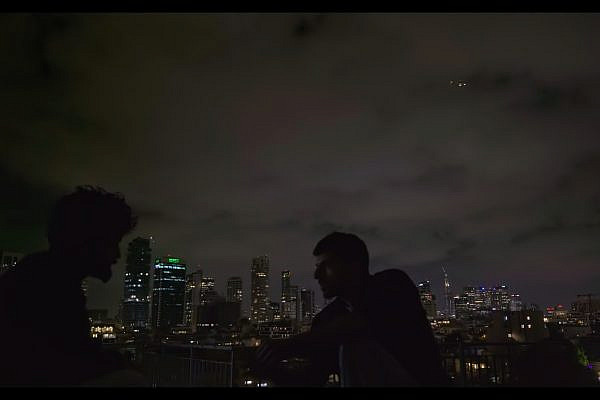
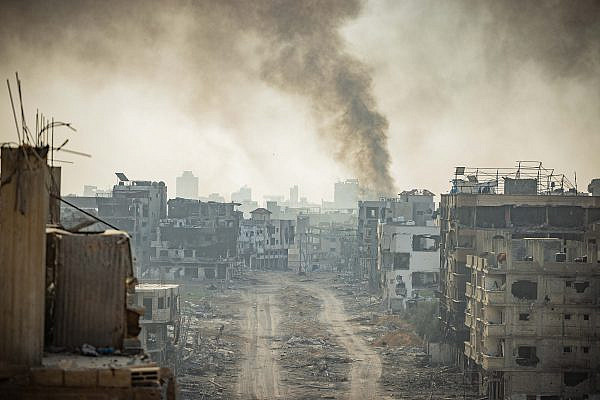
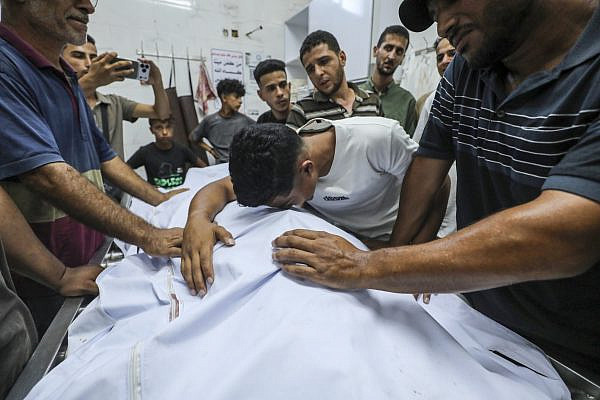
Palestinians have borne the brunt of this most viciously over the past two years, but we see it also in attacks on Jewish communities in Bondi and Manchester, and on Muslim communities, asylum seekers, and migrants across the Western world. Perhaps, if safety is currently unattainable, we should instead be aiming for a commitment to look after each other and face the risks ahead with clear eyes, and to resist the systems and politics that seek to erase our humanity. Ahmed Al-Ahmed, the Syrian immigrant who risked his own life to tackle one of the shooters and prevent further killing, is an embodiment of the antidote to the grief and darkness that seem to be engulfing everything around us.