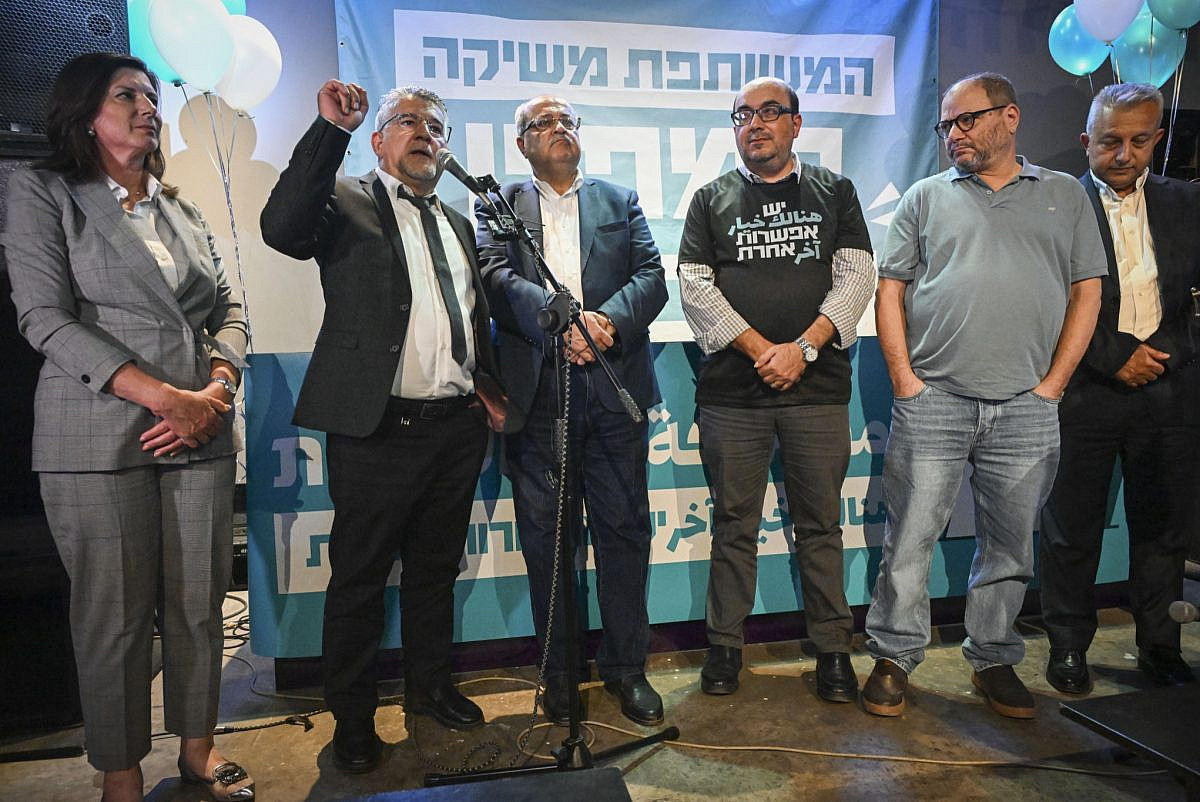
On the evening of Oct. 23, the reception hall at the Zionist Organization of America building in central Tel Aviv was packed with several hundred people. Most were Jewish Israelis, Gen Xers and boomers of a liberal persuasion, the kind you would have been likely to see protesting against the government’s judicial overhaul and, later, for a deal to return Israeli captives from Gaza.
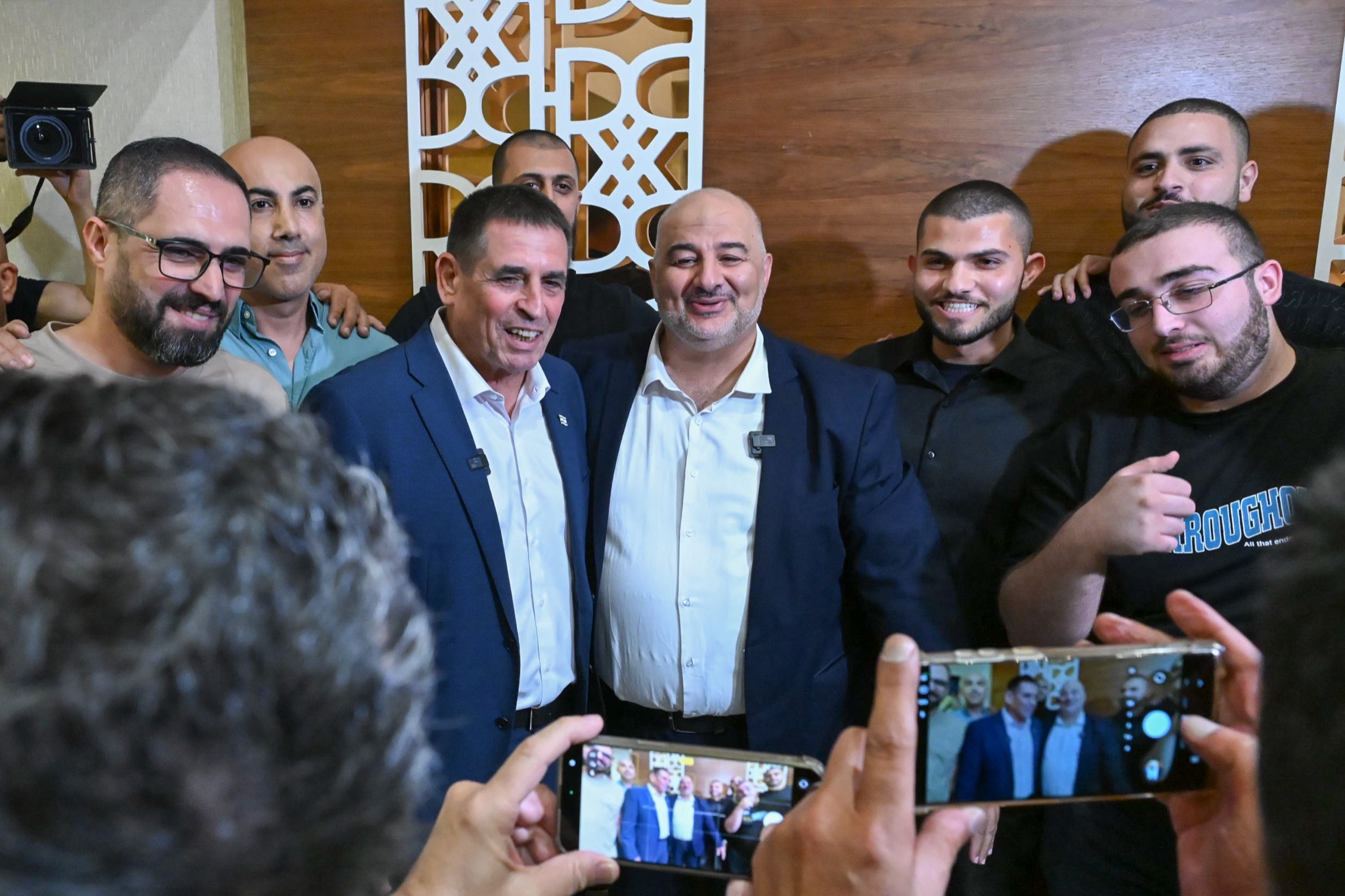
They had come to see — and, for the lucky ones, rub shoulders with — two unlikely co-stars of this Israeli election season: Mansour Abbas, the Palestinian Knesset member and leader of the Islamist United Arab List (known in Hebrew as Ra’am), and his newest recruit, former Yesh Atid lawmaker Yoav Segalovitz.
When Segalovitz entered the lobby and began mingling with the crowd, the room came alive. The stocky 67-year-old could barely take a few steps without being stopped for a selfie, a handshake, or a compliment. It was a strange reception for someone who, until recently, was just another face in Israel’s seemingly endless parade of centrist lawmakers.
Segalovitz’s decision to join Ra’am has transformed him, in certain Israeli circles, into a political celebrity. And whatever one makes of his politics, it was a bold move. In Israel in 2026, where politicians are routinely hounded for even vaguely left-wing or insufficiently hawkish statements, joining a Palestinian-led Islamist party that Netanyahu and his allies have smeared as Hamas supporters is hardly a recipe for political success. Segalovitz has almost certainly burned more than a few bridges.
For Ra’am, recruiting Segalovitz was no less audacious. He is a Zionist and a policeman through and through — a former head of the police’s internal investigations unit. For Palestinian citizens of Israel, who have endured years of police neglect amid an unprecedented surge in violent crime, his background could easily arouse suspicion. Ra’am is making the case that partnership with a former senior police official holds considerable promise for a community in a state of emergency.
But for the Jewish Israelis gathered in this Tel Aviv hall, the promise of this unlikely marriage goes well beyond what either politician might deliver for their respective constituencies.
“I think the State of Israel has absolutely no chance of continuing to function in any sane or reasonable way unless we form an alliance with the Arabs,” Tali, an art curator from Tel Aviv in her 70s, told +972 at the event. “And that is the most urgent thing we need to do: connect with Arab Israelis. In every sense. Morally, politically, emotionally, as human beings, in every possible way.
“I believe in both of these men. They’re people who speak to others as equals,” Tali added. “They talk about the things human beings actually need to talk about, rather than all sorts of Jewish symbolism or unity or other nonsense like that.”
For others, the significance of the Abbas-Segalovitz alliance is less about their national identities, and more about the kind of politics it signals. “Something I really liked is when Abbas and Segalovitz formed their union they didn’t sign an agreement,” Ittay Flescher, an activist from Jerusalem, told +972. “It’s actually very rare, because often when someone joins a party there’s a very detailed agreement — You can do this, you have to vote this way, etc. And they said no.
“Segalovitz said ‘I give you my word that anything I do I would consult with you,’ and Mansour said to Yoav, ’You have freedom of conscience to vote as you wish on certain issues where we might be at odds.’ And I think that shows that they’re coming with a lot of good faith. That’s something that’s missing most in the Knesset.”

But Ra’am is not the only Palestinian-led electoral list competing for the votes of Jews who believe that the country’s future depends on greater Jewish-Arab cooperation. The Joint List, an alliance of predominantly Arab parties with a long history of attracting Jewish voters, offers a different vision of that partnership.
An unlikely political marriage
Throughout Ra’am’s campaign rally in Tel Aviv, not a single speaker mentioned Gaza, the West Bank, or settler violence, let alone genocide or apartheid. Even the word “Palestinian” was nowhere to be heard. And for all the enthusiasm about moving beyond empty slogans, Abbas’ own speech at the event was hardly free of them.
“We are promoting a different kind of politics, one that brings people together. And this is not just about Jews and Arabs. We also need to talk about partnership among all citizens of the country, across all the different sectors and communities,” Abbas told the crowd.
“Jewish-Arab partnership can also strengthen Jewish-Jewish partnership and cohesion, as well as Arab-Arab partnership and cohesion, within the State of Israel,” he added. Reflecting on his time as a minister in the so-called “Government of Change,” Abbas continued, “Bringing Yamina and Meretz together into one coalition was possible because an Arab party was there, providing the broadest possible common platform and demonstrating that, yes, we can work together — even from the far end of the right to the far end of the left within Israeli society, within Jewish society.”
There is something jarring about celebrating the short-lived government under Naftali Bennett and Yair Lapid as a political achievement in itself, given everything that has unfolded in Israel, the occupied Palestinian territories, and the wider region in the years since. But to the Jewish Israelis gathered in this Tel Aviv hall, looking back from the political reality of 2026 — one defined by wars, economic uncertainty, and international isolation — that period appears almost utopian.
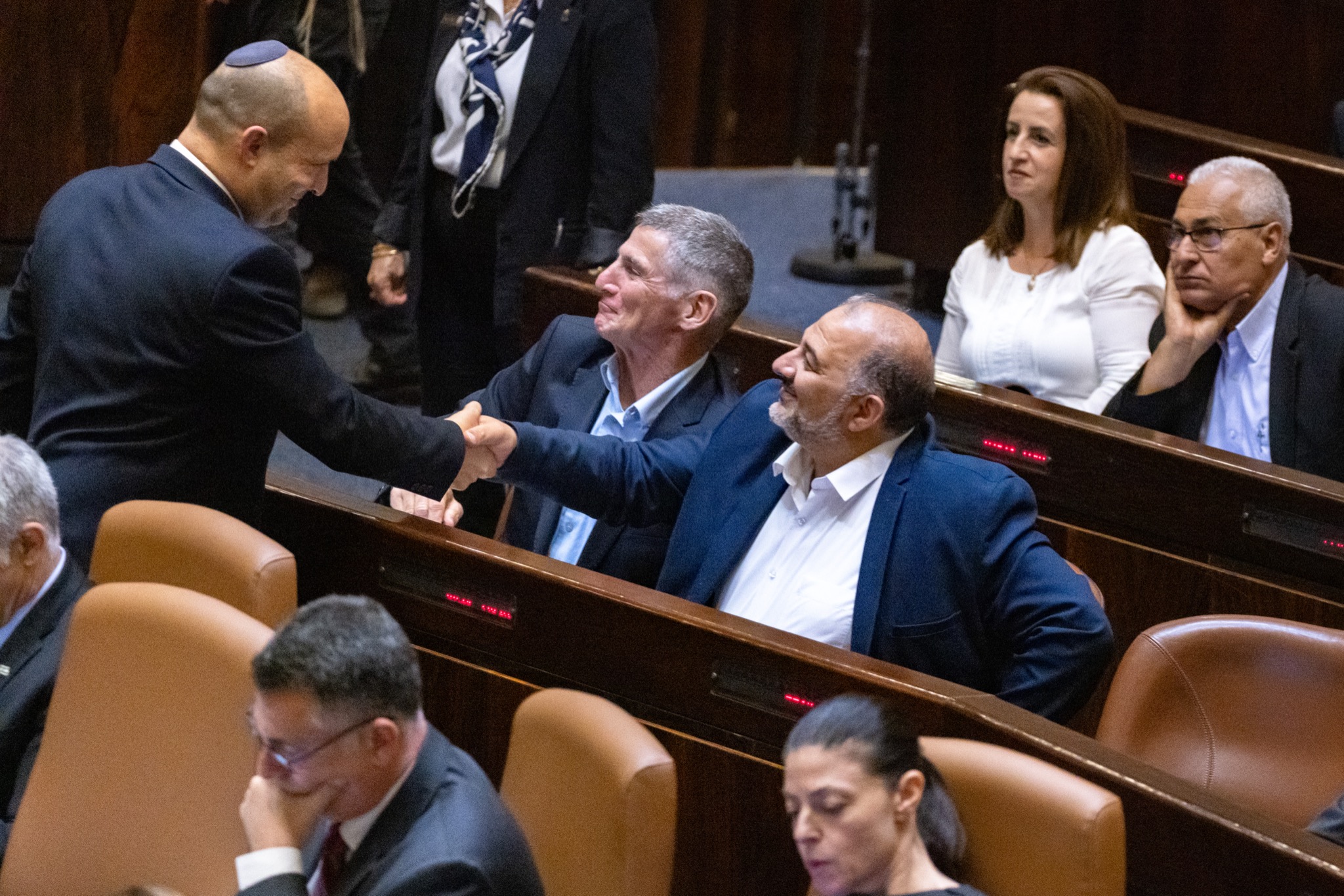
Beyond the novelty of the partnership, it is Abbas himself who has won over many of these voters. The quality they return to again and again is his supposed willingness to compromise across ideological divides in pursuit of a greater good.
“As someone who despises Bibi, [I believe] there was one thing he got right when he described Mansour Abbas as the Israeli Sadat,” said a 20-year-old, kippah-wearing, self-described moderate religious Zionist, who asked to remain anonymous because he serves in the army. The comparison was to the former Egyptian president who broke with the Arab world to make peace with Israel in 1979.
“Sadat was a deeply religious man. He had that little mark on his forehead, you know, from praying? And here comes Abbas, someone who is an imam from a mosque, someone who knows the Quran by heart, and precisely from that religious standpoint, he speaks about integration, peace, and reconciliation,” he said. “It’s extraordinary. It’s almost like a dream come true.”
Tali was equally taken by Abbas. “I’ve voted for Hadash [now part of the Joint List] in the past, but I have to say I’m very impressed by Mansour Abbas. There’s something direct, straightforward [about him]. He has common sense, he’s pragmatic.”
Abbas’ pragmatism has not always taken him in directions these newfound Jewish admirers would welcome. In December 2020, as Netanyahu’s coalition teetered on the brink of collapse, Abbas and fellow Ra’am lawmaker Walid Taha reportedly waited in the Knesset parking garage, ready to enter the chamber and vote alongside Likud to postpone the dissolution of parliament, should Netanyahu’s party need their help. The maneuver ultimately failed, but it offered a glimpse of Abbas’ willingness to cooperate with the Israeli right if he believed it could advance his political goals.
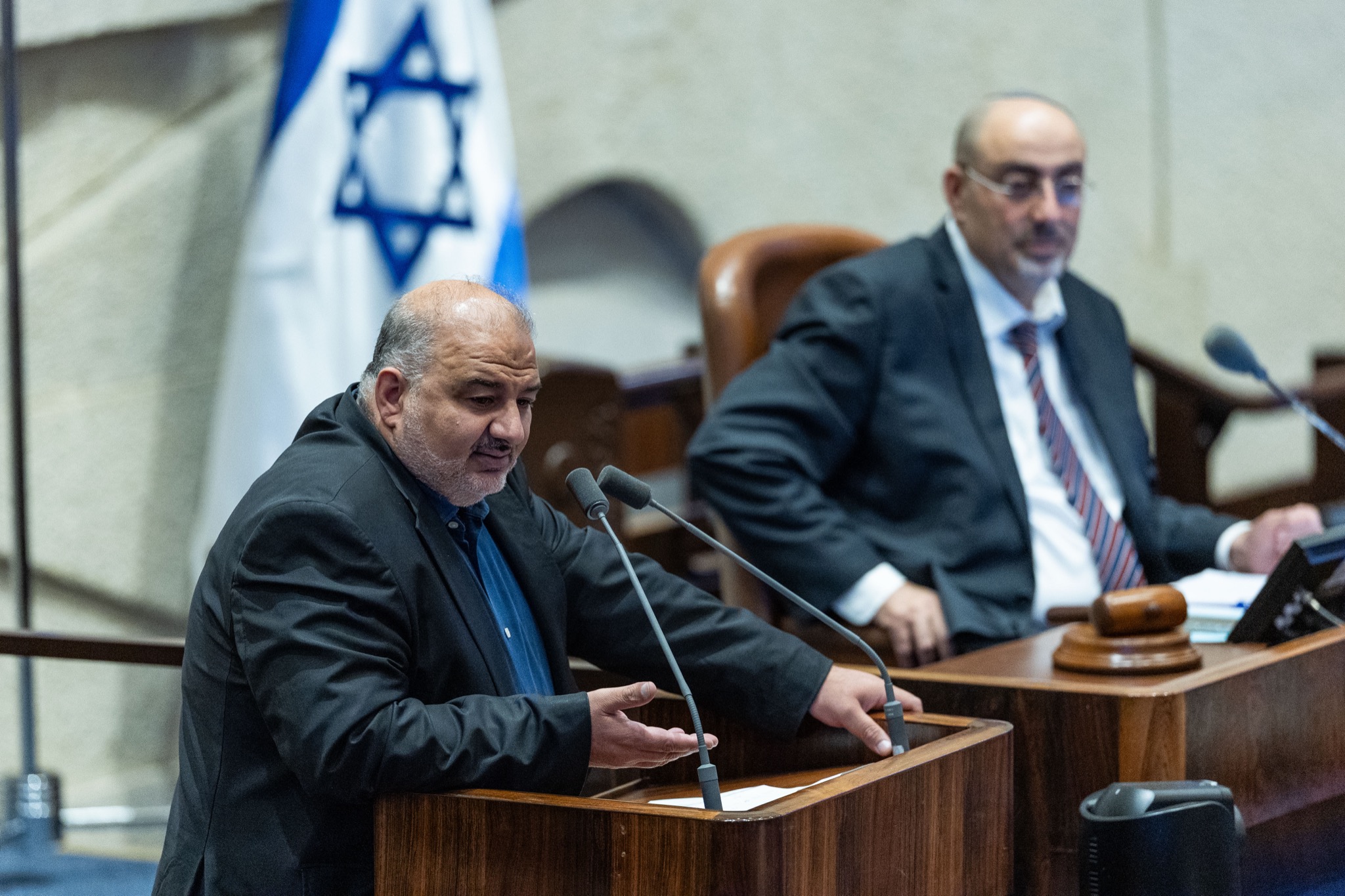
This time, however, his supporters seem confident that such a move is off the table. “People say that Abbas is so pragmatic that he might end up joining the right wing, but I don’t believe that. He won’t do it, certainly not with Segalovitz,” Tali said.
For his part, Segalovitz used his speech to articulate a conviction shared by many in the room: that Jewish-Arab partnership is essential to Israel’s future. “Anyone who thinks it is possible, right, appropriate, ethical, or moral to exclude 21 percent of the population fails to understand that this represents the deepest possible blow to national security, in the fullest sense of the term,” Segalovitz told the crowd.
“I’m not talking about the kind of national security we hear about in lectures all day long — Iran or Syria. Those things are important. But a country’s real national security lies in its social cohesion and solidarity. And solidarity cannot exist only with people who are like me. If solidarity exists only among people who resemble one another, we will create isolated islands within the State of Israel — and those islands already exist today.”
Such rhetoric in today’s Israel is certainly refreshing. Yet Segalovitz’s declaration that he had joined Ra’am “precisely because I am a Zionist, an Israeli and Jewish patriot” hints at the limits of the kind of solidarity he was advocating. His decision to join Ra’am came with two conditions: that he retain independence in his parliamentary work after the election, and that the party recognize Israel as the state of the Jewish people. Abbas agreed to both.
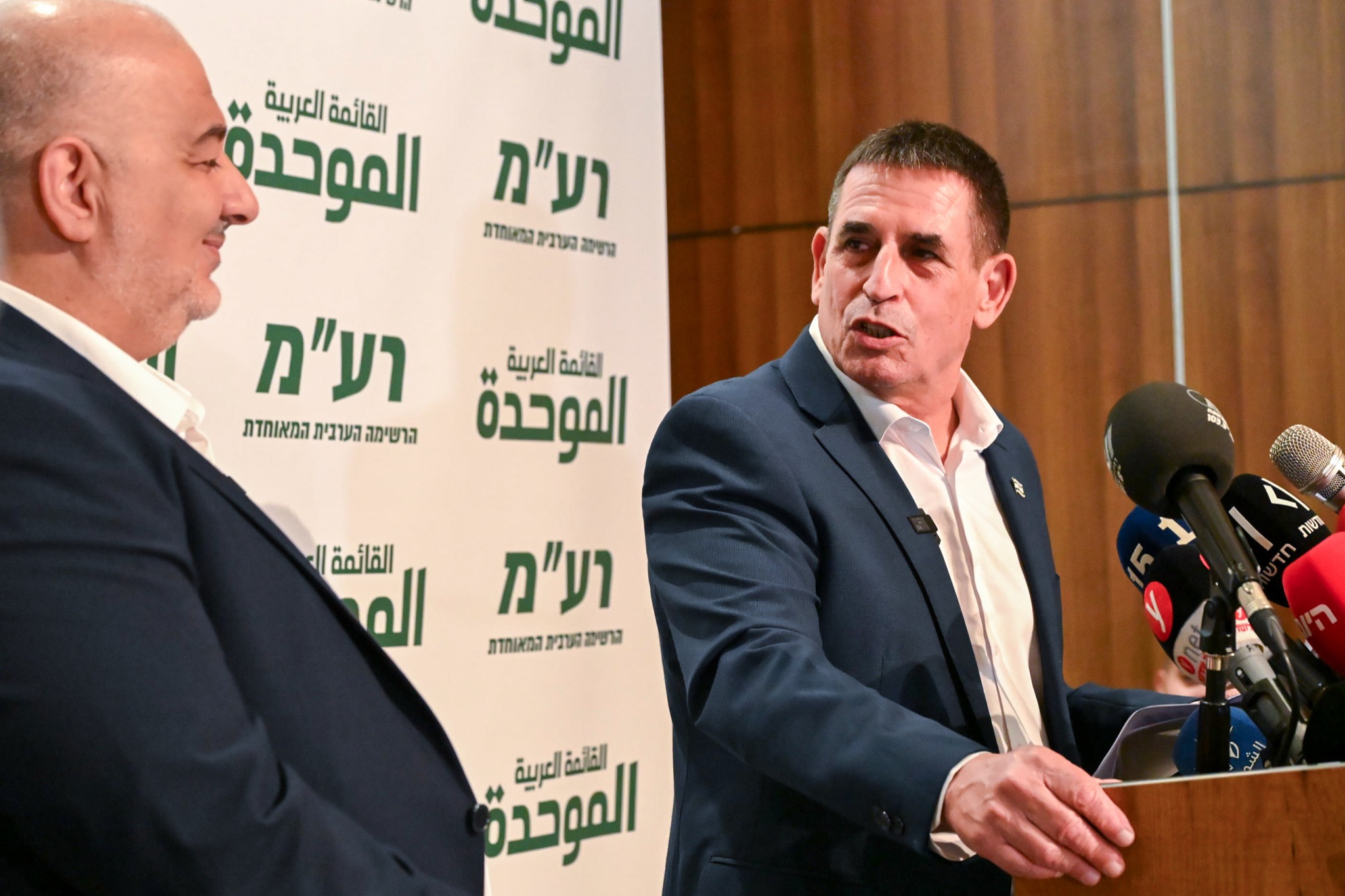
So while Segalovitz was unwilling to compromise on his own ideological identity, the Palestinian-led party he was joining had been asked to accommodate it.
For many of Ra’am’s new Jewish admirers, the party’s willingness to set aside contentious political demands in pursuit of a place in government is the main point of appeal. What others might see as a betrayal of Palestinian political aspirations and solidarity, they celebrate as a pragmatic foundation for a Jewish-Arab partnership.
“I value a lot of what the Joint List does as well. But this is where we get more into strategy,” Flescher said. “I feel that the likelihood of the Joint List being in a coalition is very low. I think Ra’am being in a coalition, Abbas and Segalovitz both being ministers and having real power to influence is much, much higher.”
A harder sell
First formed in 2015, the Joint List brought together four major parties representing Palestinian citizens of Israel — Hadash, Balad, Ra’am, and Ta’al — after the Knesset raised the electoral threshold in a move explicitly designed to weaken Arab political representation. The measure, spearheaded by current opposition figurehead Avigdor Liberman, ended up backfiring: It pushed the parties together, helped mobilize Arab voters, and eventually delivered a record 15 Knesset seats in 2020.
In that election, the Joint List received an estimated 20,000 Jewish votes — many who saw Jewish-Palestinian partnership as essential to a different future, but for whom that partnership could not be separated from ending the occupation, confronting apartheid, or recognizing Palestinian self-determination. That support subsequently declined amid the Jewish public’s rightward shift and internal divisions that fractured the alliance, most notably over Abbas’ apparent willingness to pursue closer ties with Netanyahu.
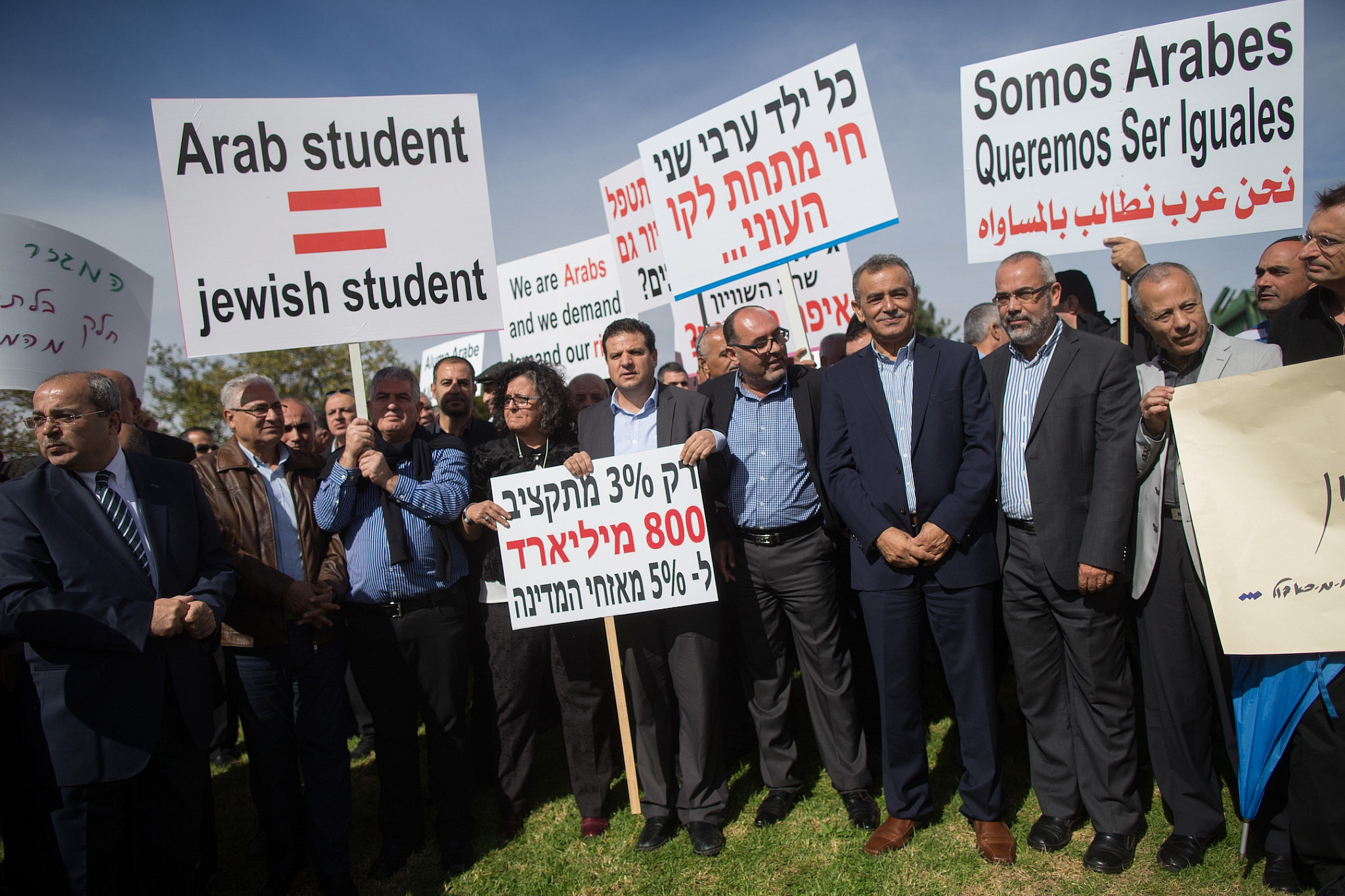
Now, with three of its original four parties running together and polls consistently projecting around nine seats, the Joint List is again looking to Jewish voters. But after October 7, that task has become considerably harder. Genocidal rhetoric has spread well beyond the Israeli right, and even liberal Jewish spaces have become hostile to positions that challenge the political consensus around the war.
Still, as in previous election cycles, the Joint List has mounted an extensive campaign to reach Jewish voters, with dedicated Hebrew-language social media outreach, activists canvassing across the country, and over 100 events aimed specifically at Jewish audiences. The party is also fielding two Jewish candidates: incumbent Hadash lawmaker Ofer Cassif in fifth place, and Orly Noy (a Local Call editor and +972 contributor), the first Jewish candidate to run on Balad’s ticket, in a largely symbolic 14th place.
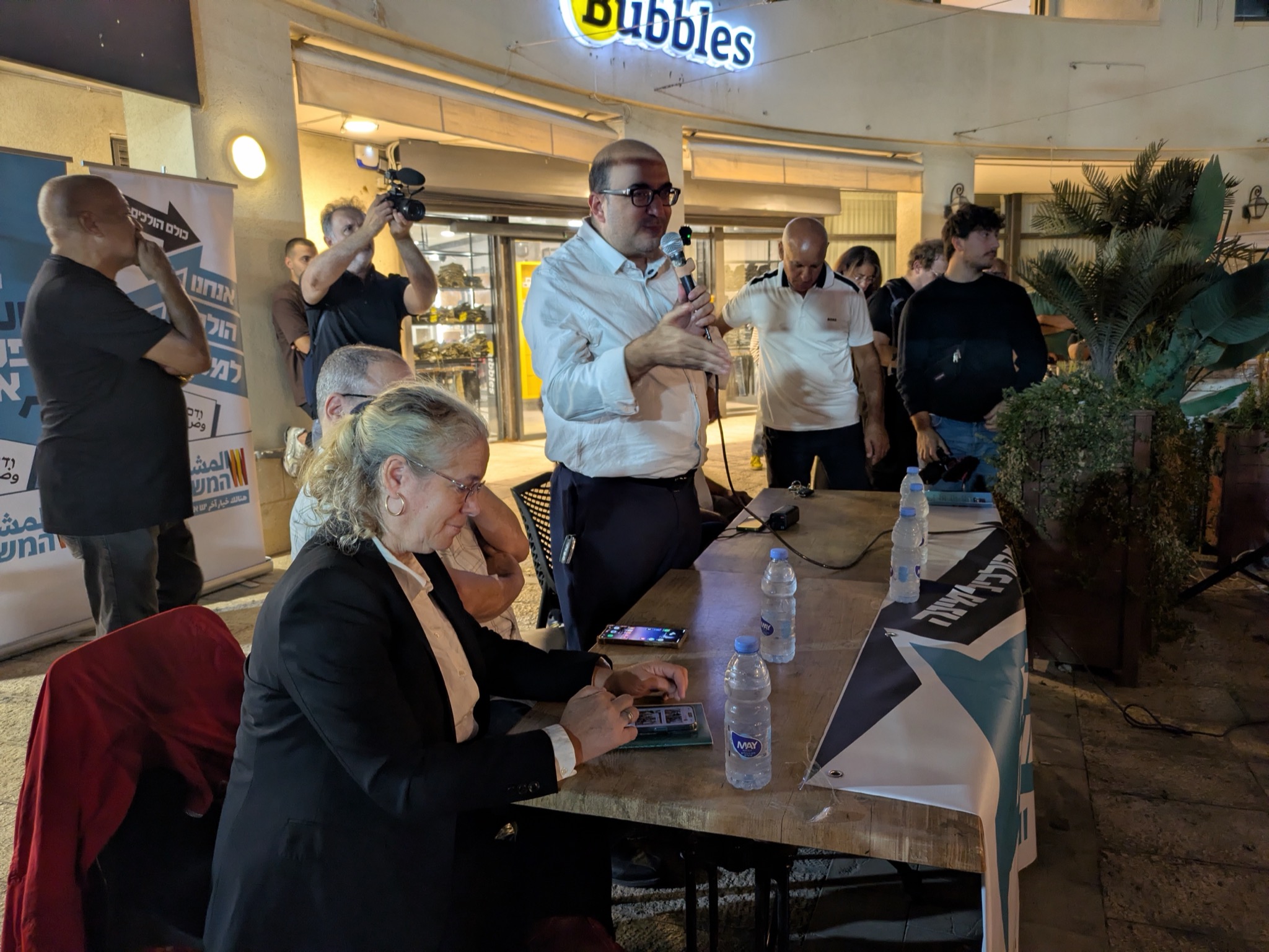
At one of the party’s final campaign events, held at an outdoor cafe in Jaffa, candidates and activists sounded surprisingly optimistic. Some even suggested that the rightward shift in Jewish politics could work in their favor, leaving voters who oppose the wars with fewer alternatives among Zionist parties.
“In 2020, we had a full Knesset seat for the Joint List from Jewish votes, and the situation then is quite similar to today,” Noa Levy, a Joint List candidate and the head of its Hebrew campaign, told +972. “Back then, the Labor Party and Meretz ran together on a single ticket, much like today [with the Democrats]. And political discourse and political reality in Israel was moving further and further to the right, and people were looking for something different.”
“Today, [the Democrats’ leader, Yair] Golan supported the war in Iran and the war in Gaza, he introduced a 100-days program which includes strengthening Israeli control in Lebanon and in Gaza, supported the disqualification of [Balad chair] Sami Abu Shehadeh, and refuses to speak about the two-state solution,” she said. “In this situation, I think that a lot of the peace supporters in the Jewish crowd are looking for a different answer, and the Joint List is giving them that answer.”
Historically, the Joint List’s main competition for Jewish votes came from the Zionist left, not from another Palestinian party. To distinguish themselves, Joint List officials, candidates, and activists are pointing to what Ra’am is prepared to say — and compromise on — to win Jewish support.
“While Ra’am is an Arab party that includes one Jewish Zionist member, they do not speak about the occupation, they don’t show any alternative, they don’t criticize the wars,” Levy said, pointing also to Abbas’ evasive response to a question about Israeli war crimes in Gaza.
“So when the liberal supporters of Ra’am think about their choices, they also need to think about what they believe in,” she continued. “And if that is an end to the occupation, they want to see prospects of peace, then Ra’am is not the party for them.”
But ideological differences are only part of the competition. An opposition government would likely need the support of Palestinian-led parties, leaving the Joint List to face a strategic challenge: convincing Jewish voters that supporting it would not come at the expense of removing Netanyahu from power, and that its influence would be no less significant even if it remains outside the government.
“I’m telling you that after the election on Oct. 27, we will make the responsible decision, the decision that demonstrates leadership, that will ultimately send Netanyahu home,” Joint List leader Yousef Jabareen told +972 at a campaign event in Haifa.
Longtime MK Ahmad Tibi, head of the Ta’al faction, similarly argued that a vote for the Joint List is not only the moral choice for Jewish Israelis, but “the strongest guarantee of bringing down the Netanyahu, Smotrich, and Ben Gvir government.”
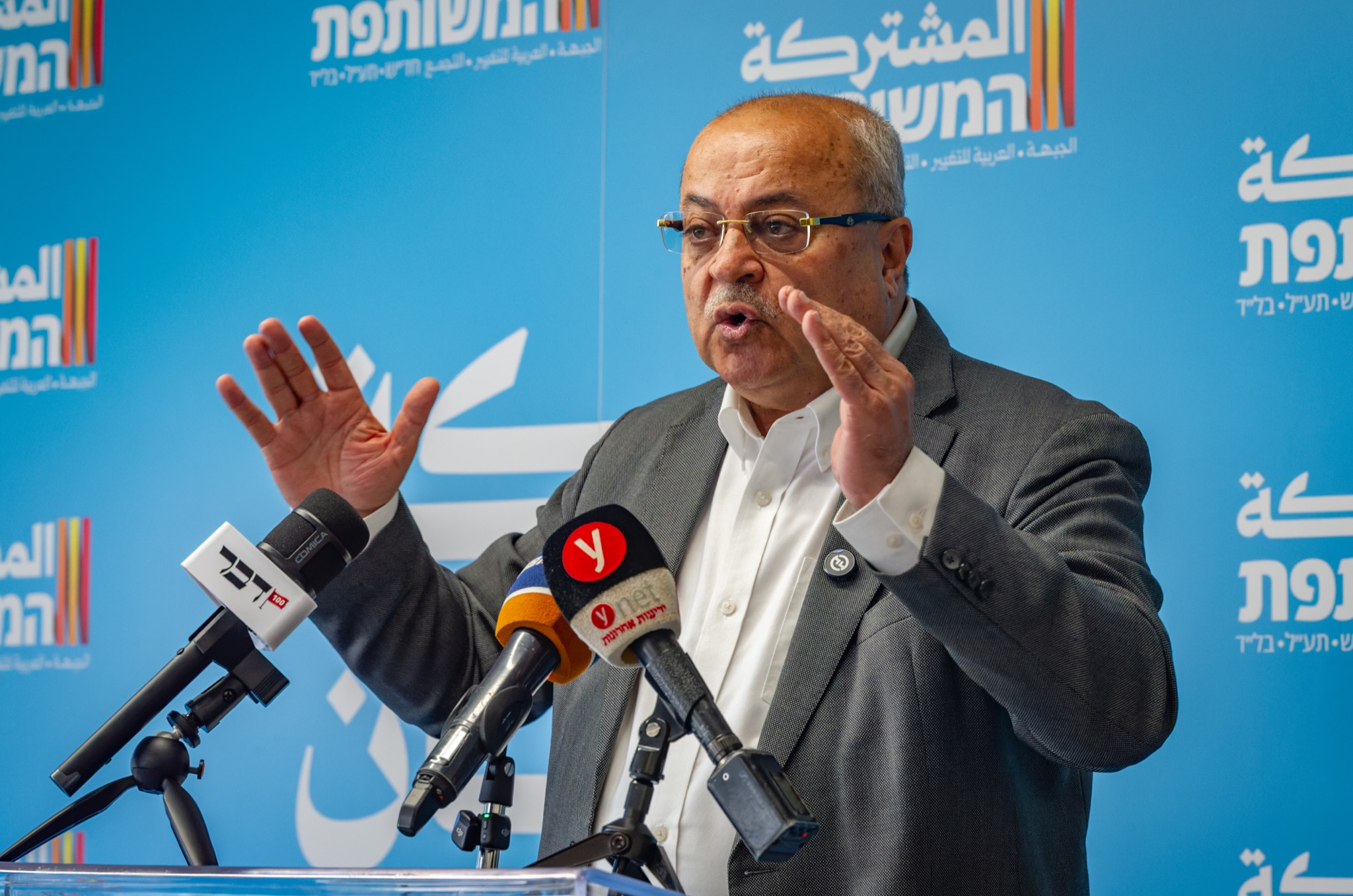
“The right-wing bloc polls at 51 or 52 seats. The opposition bloc has 50 or 51. It’s impossible to reach 61 seats, even if Ra’am, for example, is added. Therefore, without the Joint List, it’s impossible to tip the balance,” Tibi told +972 at the Haifa event. “That’s why I’m calling on people on the left, on people who want real change: The Joint List is your political home. Vote for the Joint List.”
Speaking to reporters, Tibi added: “Mark my words: After the election, we’ll get a phone call [from the opposition parties].” There are already signs that his expectation may prove well founded. According to a report by the Israeli public broadcaster Kan, parties in the anti-Netanyahu bloc have held preliminary discussions with the Joint List about what concessions it might demand in exchange for supporting the formation of a government.
Yet while party leaders speak confidently about their potential influence after the election, their Jewish activists describe a much harsher reality on the ground.
“The shift to the right after October 7 is very real,” said Iddo Elam, a 20-year-old Joint List activist from Tel Aviv. “You see it in the streets, more and more people only care about security, patriotism, nationalism.”
Most read on +972
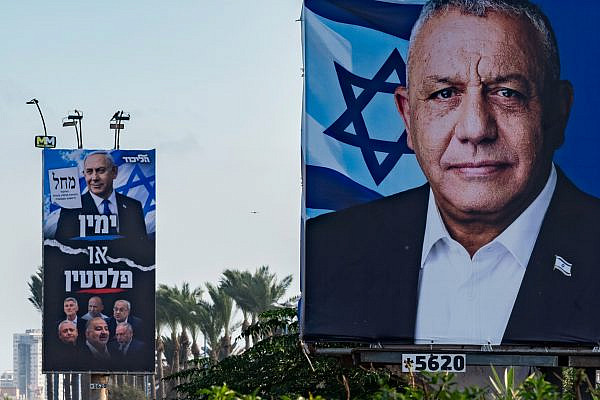
“We’re not many people, but we’re working very hard for the campaign,” said Michal, another 20-year-old Jewish Joint List activist. “We’re putting up posters, doing social media, etc. And it’s not easy. When my peers were going to Be’er Sheva [a traditionally right-wing city] to put up posters, I was like, ‘Oh my god, they’re gonna kill you.’ It’s very, very intimidating.”
Still, activists insist that reaching Jewish voters is both possible and necessary, even among those who have moved further to the right since October 7.
“If you talk with people in the streets, especially people my age, 20 year olds, teenagers even, they care about security because they feel unsafe, and because they feel like this government didn’t protect them and doesn’t care about them,” Elam added. “If you can convince them that a Jewish-Arab partnership is the way to that security, you can talk with them.”