

In partnership with

Since the October 2025 ceasefire between Israel and Hamas, we have supposedly entered the “day after” phase of Israel’s war on Gaza. Certainly as far as the average Israeli is concerned, that war is over. But anyone paying attention to the footage and testimonies coming from Palestinians in the Strip can see plainly that, even with the reduction in large-scale bombardment, the dispossession, expulsion, and erasure continue in other forms — policies that amount to an ongoing Nakba.
Under these conditions, and while Palestinians are not free to return home or rebuild their lives in any meaningful sense, the language of “rebuilding Gaza” feels detached, even willfully so. Yet in liberal discourse both inside Israel and around the world, conversations about reconstruction proceed as if it were a neutral, technical project — with little regard for the rights and needs of Gaza’s residents — rather than something constrained by political decisions.
The history of such efforts is not encouraging. “One of the things that the history of so-called reconstruction in Gaza teaches us is that there is no reconstruction under a policy of blockade and closure,” explains Dotan Halevy, a historian of Gaza at Tel Aviv University. He points to the Gaza Reconstruction Mechanism (GRM), established after Israel’s 2014 assault on the enclave, which subjected building materials to tight monitoring and coordination between Israel, Hamas, and the UN.
The result was predictable: “Instead of allowing materials to flow normally, everything was stuck in a slow, controlled process,” Halevy says. “People entered the current war still living among ruins from 2014.”
So if reconstruction is impossible without lifting the blockade, then what exactly is being proposed for Gaza’s more than 2 million residents — many of them displaced, orphaned, wounded, and grieving? For much of the Israeli public, one answer has gained alarming ground under the euphemistic term “voluntary emigration,” a nicer way of saying ethnic cleansing.

Yet neither indefinite enclosure under blockade nor expulsion elsewhere, both of which are grave moral crimes, guarantee anything but a future of more violence and destruction. If there is an alternative, it likely begins with rethinking the assumptions we have internalized about Gaza itself.
As Halevy puts it, “there is a Gaza beyond the Gaza Strip,” i.e. the piece of land whose borders were shaped by the Nakba of 1948 and Israel’s occupation of 1967. “Historically, Gaza existed as part of a broader, connected space. The ‘Gaza Strip’ is an imposed, abnormal condition — a kind of cage that cuts it off from its surroundings and possibilities.”
Taking seriously the idea of moving beyond the conceptual grip of the “Gaza Strip” means considering political possibilities often dismissed out of hand, including the right of return — not only allowing Palestinians to return to their destroyed homes within Gaza, but also to their original homes in what is now Israel, along with the descendants of all 750,000 Palestinians displaced in the Nakba.
‘Israel has almost totally erased the Palestinian space’
For Omar Al-Ghubari, a Palestinian educator with Zochrot — a non-profit working within Israeli society to promote Nakba awareness and redress — return rests on two principles: “Full support for the right of return, [meaning] any refugee who chooses to return has the right to do so. At the same time, return should not lead to mass displacement of others, even if they are your colonizers.”
Almost 80 years after Israel’s founding, the landscape has been transformed. Many of the more than 500 Palestinian villages depopulated in the Nakba have been totally destroyed, while some have been built over. “Refugees who haven’t been here since 1948 wouldn’t recognize the place,” Al-Ghubari explains. “Israeli colonialism has succeeded in building so many cities, settlements, and institutions here, and in almost total erasure of Palestinian life and the Palestinian space.”
That erasure — and the difficulty it creates in imagining return — serves the Israeli refusal outright to discuss the Palestinian right of return in a substantive manner. Practical objections often mask political refusal: The claim that “they have nowhere to go back to” rests on the assumption that the transformation of the land makes return impossible.
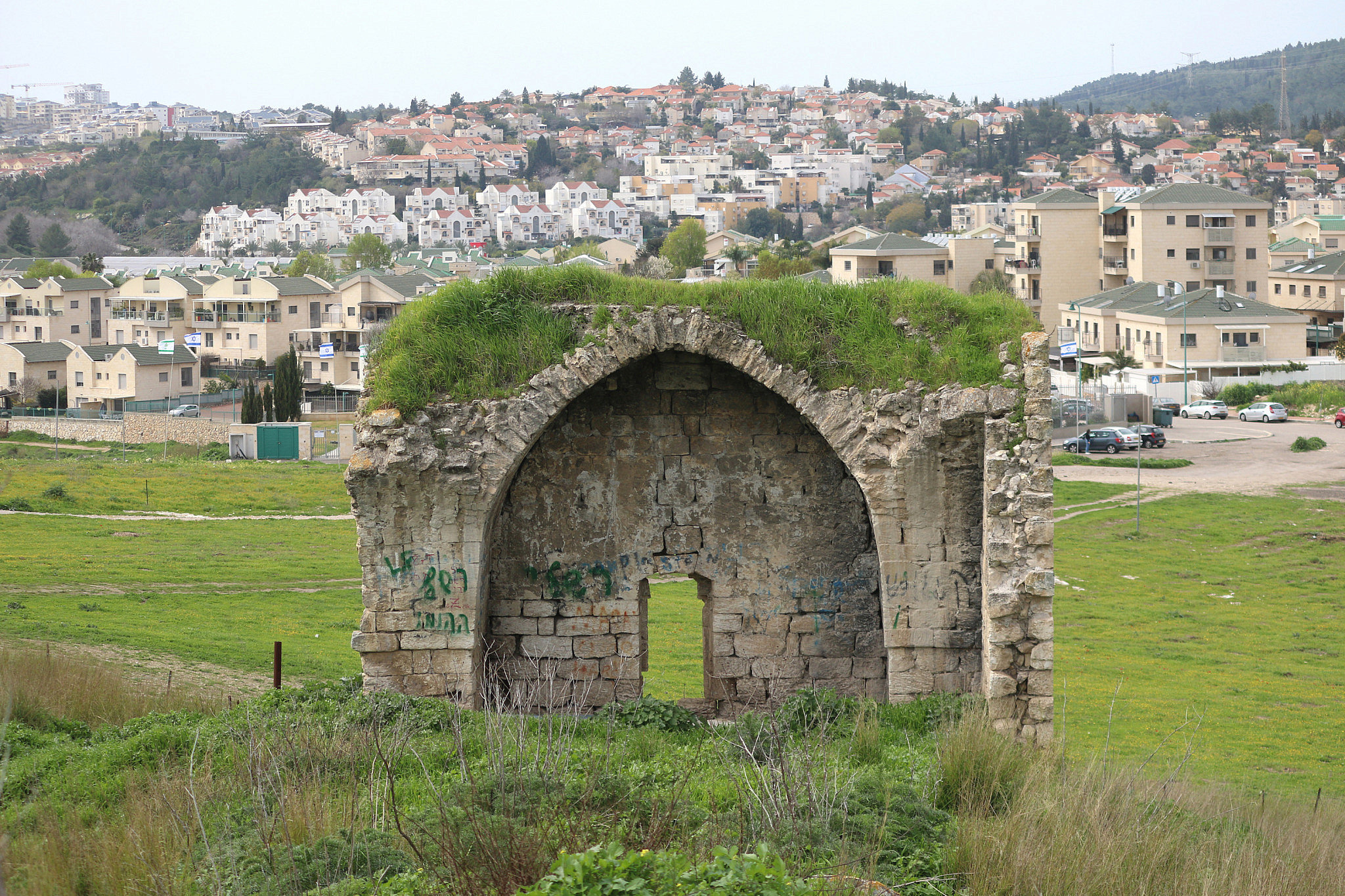
But that assumption is a contested one. According to Dr. Salman Abu Sitta, an engineer and academic who has spent decades mapping historic Palestine with the goal of planning refugee return — and who was forcibly displaced from his village of Ma’in Abu Sitta (today the Kerem Shalom area) at the age of 10 in 1948 — most of the land of destroyed Palestinian villages remains unbuilt.
“We have found that 88 percent of the Jews in Israel live on only 12 percent of Israel, or even less than that,” he says. “They are located in three cantons: the Tel Aviv-Jaffa area, western Jerusalem, and Haifa.” Much of the remaining land is divided between kibbutzim — many established after 1948 on the sites of Palestinian villages — and military zones.
What is more, according to Abu Sitta and others, around 80 percent of the land of destroyed villages is uninhabited. “They are open areas, meaning mainly either KKL-Jewish National Fund parks or agricultural lands,” explains Moran Barir, a long-time activist and facilitator of Jewish-Palestinian dialogue groups and board member of Zochrot.
When Barir first encountered the data, it challenged a common assumption. “It’s not this image that we say it’s either us or them. People say, ‘I’ll leave my house so that Palestinian refugees can live here?’’ Yes, there might be very few cases in which people will have to relocate. And I’m not saying that agricultural lands are not important, but I’m saying that it’s much more open to negotiation.”
The kind of negotiations Barir has in mind feels far-fetched in Israel’s current political reality. But if we want to build a future that isn’t dictated by the past — or defined by the horrors of the present — we need to exercise political imagination.
“This idea that ‘everything is terrible, we can’t even think about the future, we just have to cope with what’s happening right now’ — I completely reject that,” says Sari Bashi, a human rights lawyer, cofounder of the Gaza-focused legal center Gisha, and the current director of the Public Committee Against Torture in Israel. “Anyone who has enough to eat, anyone whose home isn’t being bombed, has both the privilege and the responsibility to imagine a future.”
To those who dismiss return as unrealistic, she asks: “What’s happening now — is that practical? Is what’s happening now not completely absurd?” For years, she notes, the settler right spoke of resettling Gaza and expelling all the Palestinians in terms that sounded “absurd, even messianic.” “Today, it’s happening.”

The lesson, she suggested, is as strategic as it is moral: ”We can use the same method, but for the opposite goal.”
For Bashi, who is married to a Palestinian who grew up in Gaza but with whom she now lives in the West Bank, the question is not abstract. Her husband’s entire family, displaced multiple times, remains in Al-Shati refugee camp. Her mother-in-law, who managed to leave approximately two years ago for Egypt through the Rafah Crossing before it closed, was displaced first as a child from Isdud (near what is now the Israeli city of Ashdod), and has been uprooted repeatedly since.
Certainly, Bashi says, her mother-in-law wants to return to Gaza when the situation allows, but the less concrete question of whether she would choose to return to Isdud if she could feels somewhat indulgent amid the distress she is experiencing over Israel’s genocide. “She’s much more concerned about her children, grandchildren, and great-grandchildren who are all in danger,” Bashi explains.
But the fact that Gazans may not be focused on much other than survival at the moment does not make the question of return irrelevant, she insists. “We have the responsibility to think, to imagine, and to make return into something real, not just theoretical,” Bashi says. “Gaza is in ruins, and all refugees — including members of my own family — have the right to return to their homes in Gaza. And they also have the right to return to the places they were expelled from in 1948.”
For others, return is not theoretical at all. Some internally displaced Palestinians in Israel live just kilometers, or even meters, from their original homes.
“My grandmother — I just want her to go back to Old Jaffa, and I wish I could be there too,” says Yara Shahine Gharablé, an activist and current PhD student in Middle Eastern history at the University of Oxford.
She grew up in the Ajami neighborhood of Jaffa, where her grandmother currently lives and where the city’s remaining Palestinians were ghettoized after the Nakba. It is only a short walk from Jaffa’s Old City, which today resembles an artists’ colony for well-to-do Israelis.

“It’s not just some material idea, like reclaiming property,” she says. “I think it’s much deeper than that. It’s about understanding how to recognize this injustice, how to truly see it — and how justice can take a real, practical form, not just exist as some abstract slogan.”
‘We hold on to this idea that it’s us or them’
If what is required is political imagination, then how can this be practiced? For some, that work begins in small, deliberate spaces of study and collective thinking. About a year ago, Bashi joined one such group organized by Zochrot, in which participants started thinking about the physical landscape itself.
On a tour through Jaffa, she recalls, they walked through “the ruins of Al-Manshiyya [where Tel Aviv now stands], through the remains of Ajami, through areas where Palestinian homes once stood and were destroyed,” and asked a simple question: What if you just set up tents there now, and housed people who currently have nowhere to go in Gaza?
The point was not only to speculate; it was about training one’s own perception. “If you look closely, on those beautiful hills [on the beach in Al-Manshiyya and Ajami], you can still find pieces of those [Palestinian] homes. It’s all still there — we just don’t see it,” Bashi says. “If those homes are just beneath this green, manicured landscape, then that landscape could also become housing again.”
Even proposals that sound disruptive — transforming parks or coastal areas into housing — are, in her telling, less improbable than they seem. “There are a lot of public buildings in Jaffa. Take the Etzel Museum [which commemorates the pre-state Zionist paramilitary group responsible for some of the worst crimes of the Nakba], for example — you could turn that into a beautiful home [which it once was], or a community center. So there’s a lot you can already do with existing structures. Yes, there would also be a need to build, but there is space.”
Much of the landscape, Bashi adds, was intentionally reshaped. “The Zionist regime has used green spaces as a way to erase the memory of Palestinian villages — first demolishing homes, then covering the land, planting trees over it.” Maintaining those spaces, she argues, cannot come “at the expense of people whose right to return is being denied.”
Still, one of the most immediate barriers to imagining return has nothing to do with whether or not such an endeavor is practical: the fear that the return of Palestinian refugees would spell the end of the Jewish-Israeli collective, the fear of giving up the privileges that Zionism has bestowed on Jews in this country, and the fear of revenge.
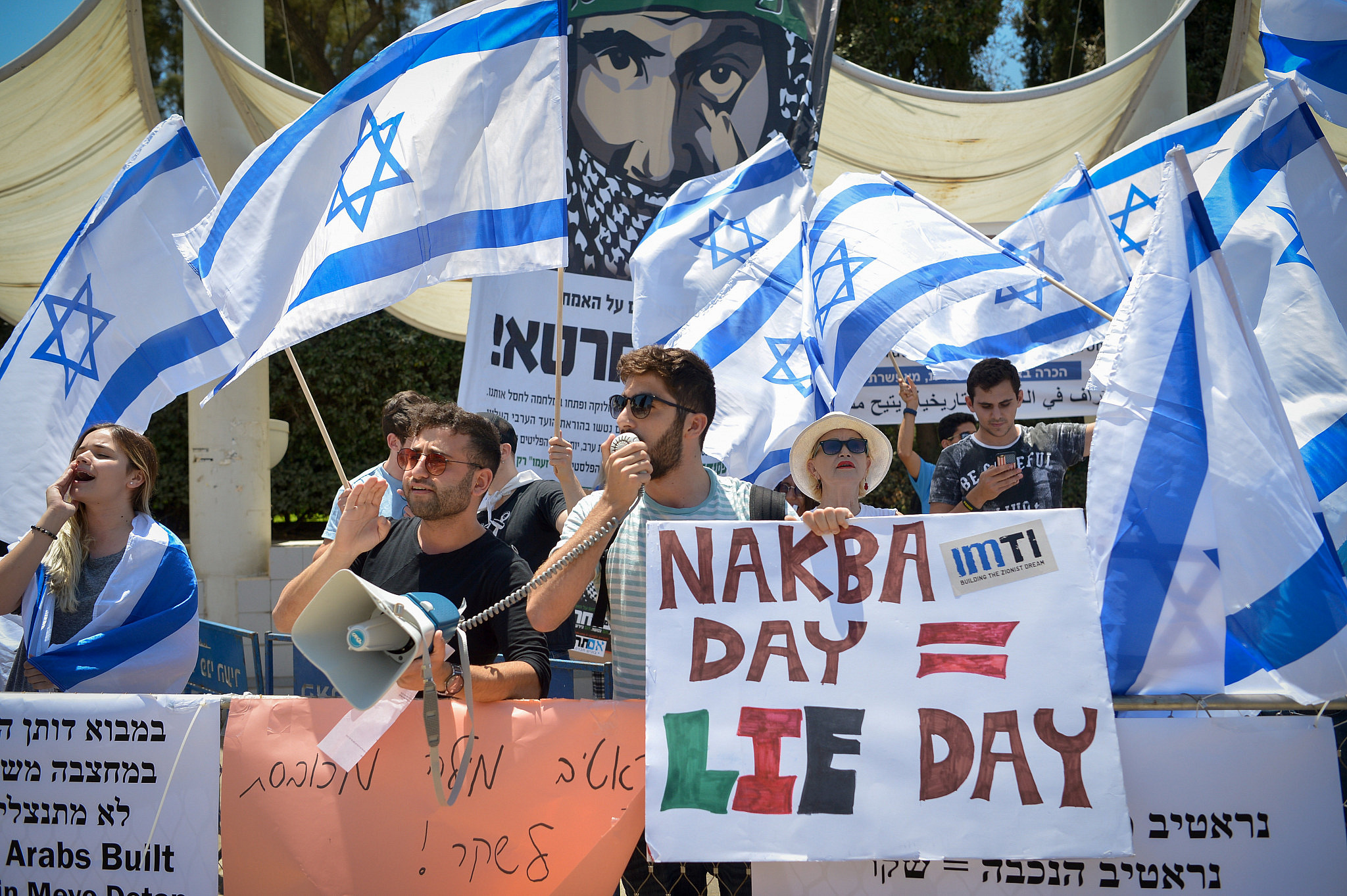
“It’s an understandable fear,” says Barir. “As an Israeli, I relate to it. I’ve felt it myself.” That fear is rooted partly in the historical trauma of persecution of Jewish communities — especially in Europe — but also in Israel’s predominant political narrative built around a zero-sum logic.
“We hold on to this framework very tightly — this idea that it’s us or them,” she continues. “And because that’s the only system we know, we end up thinking that’s the only way things can exist.”
What political imagination then requires is a deeper process of unlearning, recognizing that what often feels like immutable reality is, in fact, constructed. As Barir puts it, it is about “going back to the narratives I was raised on, and recognizing where they’re biased, where certain facts are being used to tell a particular kind of story.”
In this light, it is important to understand that history is not deterministic. “On the one hand, we say, “this is the DNA of the Israeli-Zionist state,” Barir goes on, “but on the other hand, at any given moment — at any turning point — it could have gone differently. This shift opens the possibility of moving from zero-sum thinking toward frameworks of collective responsibility for the crimes of the Nakba and the current genocide.”
For activists and organizers, that work has already begun to take concrete form. “The first groups that dealt with this issue began about 10 years ago,” Al-Ghubari explains. “We started touching on the meaning of practical return. There was one group that focused on Jaffa and wrote a document available on our website called the ‘The Jaffa Documents.’ Another group worked together with a Palestinian organization in Bethlehem, BADIL, and together we conducted discussions and a shared learning process.”
Over time, these efforts have led to a more nuanced understanding: not of a single model, but rather multiple potential forms that return could take.
“There are different types of return,” Al-Ghubari continues. “There is no logic in destroying an Israeli city in order to uncover five Palestinian villages that were erased underneath it.” Instead, he says, each place needs to be approached in its specificity.

In some cases, for example where formerly Palestinian land is now covered by forests, rebuilding in the original location may be straightforward. In others, such as Al-Shaykh Muwannis, on top of which sits Tel Aviv University (whose dormitories are built on its cemetery), it may involve building nearby — alongside compensation, acknowledgement, and shared governance.
“There is enough land that once belonged to Al-Shaykh Muwannis, reaching toward Yarkon Park,” Al-Ghubari explains. “But the university will have to acknowledge that it is built on the land of Al-Shaykh Muwannis. The university will have to ask permission from the [Palestinian former] residents to continue operating on their land and pay rent to them.”
The goal, as he describes it, is to “be creative in order to implement return, but not commit new crimes against people.”
‘We will probably become a minority, and that’s fine’
This emphasis on practicality extends even to detailed planning. Within Zochrot, participants have begun mapping possibilities at the level of neighborhoods and infrastructure, identifying existing buildings that could house refugees, and developing frameworks for how return could be implemented without producing overcrowding or new inequalities.
Others have imagined the transformation more broadly, not only within the confines of present-day borders but across the wider region. One anonymous study group participant described “think[ing] of Palestine in a wider regional context of Bilad Al-Sham,” or the Levant, to “challenge the logic of Sykes–Picot [the British–French colonial agreement that drew the region’s present-day borders] and all the redivision of the modern Middle East.”
Another imagined the literal movement of return like rewinding a film: “I see these caravans of refugees from 1948 — not the same people anymore, of course, but the third generation — moving through open spaces, some of which are no longer open, some are roads, highways, settlements, and forests, and I think we need to receive them with open arms: ‘You are home.’”

For Yosef.a Mekayton, who lives in the southern Israeli city of Be’er Sheva (formerly Bir Al-Saba’), that sense of possibility is grounded less in abstraction than in the marks of the past visible in the present. “It doesn’t even require much imagination,” he says. Indeed, the physical traces of the city’s Palestinian past remain in the form of buildings, streets, and even the railway station, where a sign still reads “Bir Al-Saba’.”
What has been lost, in Yosef.a’s view, is not only memory but spatial logic. “During the late Ottoman period, this place was a central hub not only for Palestine but for the entire region.” Bir Al-Saba’, he continues, “lost its logic with Zionism. It lost the ability to connect Hebron and Gaza.” The task, he suggests, is simple to state, though difficult to realize: “Let’s reconnect it. Let’s connect the dots.”
Many of the visions that emerge from these imaginative exercises are strikingly ordinary, like shared schools, bilingual education, joint planning bodies, and public acknowledgement of past violence. “It is so simple and obvious that it almost feels ridiculous that we even have to say it,” one participant in a Zochrot group reflected.
At the same time, others emphasize that such a future would require deeper processes of transitional justice — mechanisms for addressing harm, acknowledging pain, and building new forms of coexistence.
For Barir, part of that future also involves relinquishing a foundational assumption of the current system: the necessity of a permanent, Jewish majority. “At some point, we will probably become a minority, and I think that is completely fine,” she says. “I understand the trauma of Jews being a persecuted minority, but you can create a system where all minorities are protected and everyone is equal. Why are we so hardwired into thinking that one group must dominate and impose its character?”
Bashi, too, situates these questions within a broader historical frame. “We will live in a way not so different from how people lived in the Middle East before colonialism,” she says — imperfect, but multi-lingual and multi-religious. “In our home, we speak three languages. At home, we can be ourselves.”
Most read on +972
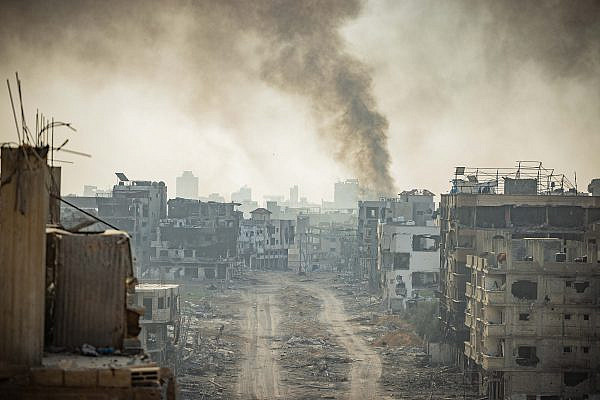
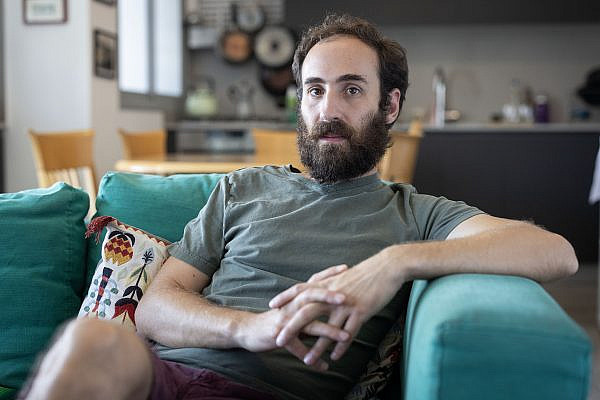
But such a future is far from guaranteed. As Bashi notes, the current trajectory seems to be moving in the opposite direction. “We are destroying ourselves — physically, mentally, morally, infrastructurally. It will take decades to rebuild Gaza, even environmentally, in terms of its ability to sustain life.”
And yet it is precisely in moments of collapse where space for transformation opens. “I think we are at a critical moment in time,” Bashi insists, “because there is a certain openness to think: maybe the problem is not only the current government or the last two and a half years, but something inherent in the Zionist project of maintaining a Jewish majority in a territory where that cannot exist without dispossession.” That realization, she says, is an opportunity for polarization — in a good way.
For activists, the task now is not to retreat into comfortable silos, but to meet those beginning to question the status quo where they are. “We need to start speaking with people who are asking questions, with patience and openness,” Bashi continues, “because something is happening. Something is shifting here.”
This article is adapted from the final episode of Zochrot’s four-part Hebrew-language podcast series “Remembering and Returning,” which you can listen to here. To learn more about Zochrot’s work on envisioning return after the genocide in Gaza, read their new vision document in English and Hebrew here.