
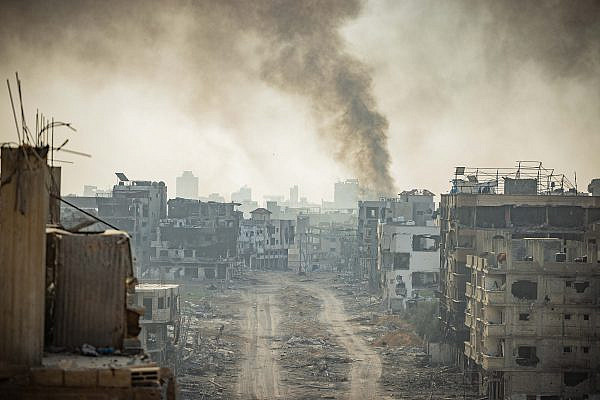
On Salah Al-Din Street, the main north-south highway through Gaza, silence carries a different weight when a tank is watching you. Nearly 20 of us were crammed into a tarp-covered cart hitched to an old, barely moving car, which had broken down in the middle of the road — surrounded by a rubble-strewn wasteland.
A few dozen meters away, an Israeli tank idled on a sandbank, its turret slowly turning in our direction. Above us came the consistent hum of military aircraft. The relentless buzz of drones filled the air, punctuated by distant gunfire.
Along the road, brightly-painted concrete blocks marked the edge of the “Yellow Line” — or “the death line” as it has become commonly known among locals. Reaching our weekly meeting in Gaza City means traveling along this corridor, where approaching the wrong area can be lethal and where Palestinians fear being detained or shot. The blocks had been moved farther onto the road since we had last passed, leaving us unexpectedly close to the area under Israeli military control.
With the tank turret still turning and the yellow blocks only meters from our wheels, we climbed down. No one spoke. No one looked toward the tank. We changed the tire in silence, our hands shaking and our eyes fixed on the ground.
Turning around suddenly seemed dangerous too; we feared any unexpected movement would be misinterpreted as suspicious. We could only hope whoever was watching would recognize us for what we were: civilians stranded with a flat tire. At moments like this, death in Gaza can be frighteningly impersonal and automated.
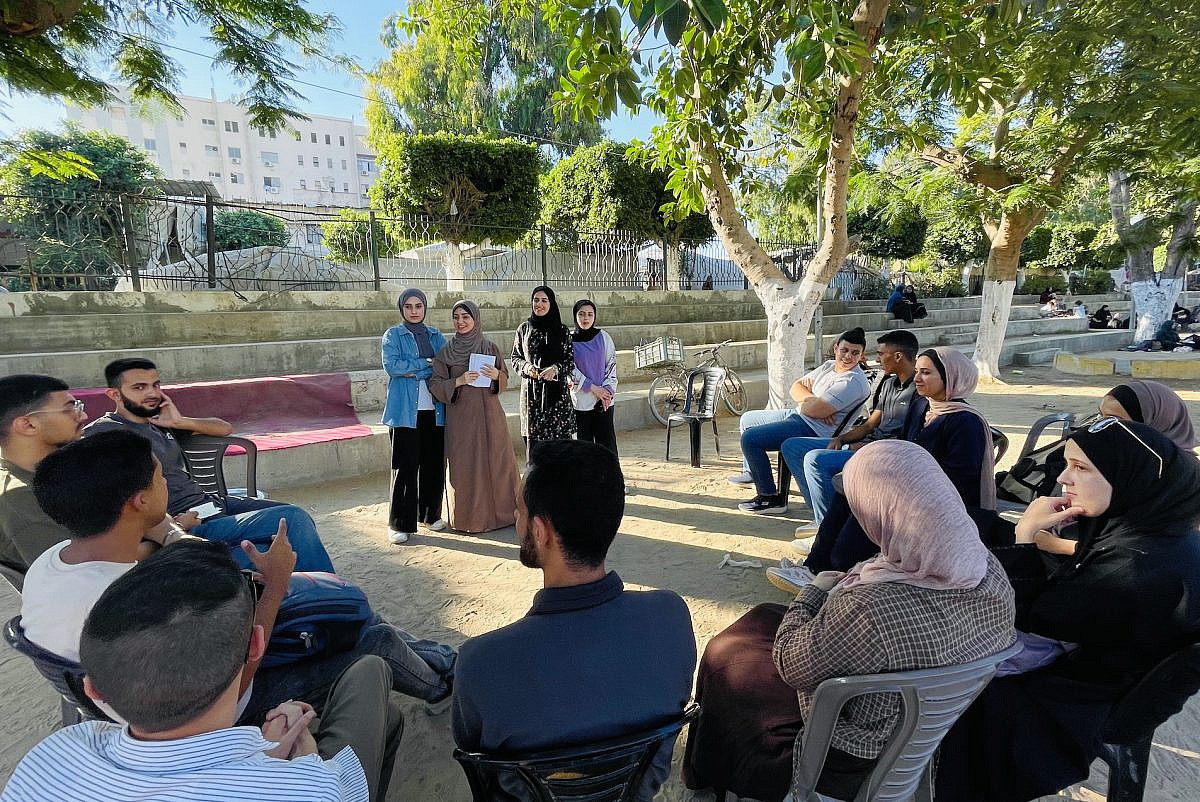
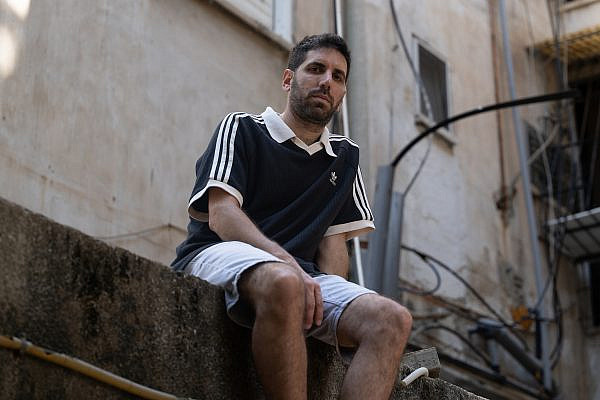
Luckily, we made it out alive and soon reached our destination, a small rented room in Gaza City. In March, I founded a community called “Gaza English Corner.” I chose the name deliberately: I wanted something rooted in Gaza, a “corner” that belonged to us. I initially created it to help English learners improve their speaking and communication skills. But it quickly became something much larger — a space for learning, connection, and survival amid destruction.
What began as an informal English-speaking group has grown into a community of more than 200 Palestinians from northern, central, and southern Gaza. Each week, several of us traverse damaged roads and passes close to Israeli-controlled zones to reach Gaza City, paying around $15 each for transportation and the rented room.

In Gaza, where families are rationing food and calculating the cost of every basic necessity, spending that much money to practice English is an extraordinary sacrifice. Yet people continue to come because English has become more than a language skill. It can mean access to scholarships and education abroad, while the meetings themselves offer something increasingly rare here — a place to speak, grieve, connect, and imagine a less bleak future.
Keeping focused on our future
For my family in Al-Maghazi refugee camp, in central Gaza, mornings are no longer about washing our faces, making coffee, or writing a to-do list for the day. They begin with questions of survival: How far is the Yellow Line from our house today? Is it moving closer? Will we have to evacuate tomorrow to avoid finding ourselves inside a military area? A good morning in Gaza is simply a safe one.
After the ceasefire was announced in October 2025, new lines appeared on maps dividing Gaza into areas of control — the Yellow Line landing nearest to us. At first, it did not run through the inhabited parts of our neighborhood, and we hoped Israel would eventually withdraw eastward as the ceasefire progressed. Instead, what had existed first as a line on a map began to materialize on the ground in the form of large yellow concrete blocks.
Then the line began moving westward. By March of this year, it had swallowed our family’s land east of Al-Maghazi and reached areas where homes once stood. That was when the fear became more immediate: If it could reach our land, what would stop it from continuing toward our house and deeper into the camp?
The Yellow Line now runs along the eastern edge of Salah Al-Din Street, the road many of us must travel to reach Gaza English Corner. Before the genocide, the trip from central Gaza to Gaza City could take 15 minutes. Today, damaged pothole-dotted roads and rubble can stretch the journey to over an hour.
We do not gather in a university classroom or a modern language center, since much of Gaza’s educational infrastructure has been destroyed or damaged. Instead, 15 to 18 of us squeeze into a cramped commercial space in Gaza City. Because Gaza English Corner has over 200 members, I select a different group for each session. The venue costs $40 for two hours. Prices that would once have seemed absurd have become commonplace amid scarcity, high fuel costs, and the expense of running generators.

Inside, the air is heavy and still. Fans and air conditioning are luxuries no one can afford. We keep windows open on the street. The view of destruction outside is an ongoing reminder that we are still unsafe and the war is not over yet. We can’t stand the choking smell of the processed diesel used to power generators because gasoline remains blocked from entering Gaza. Our past can be seen through these windows, but we keep our focus on a better future inside.
In Gaza today, English also has an urgent, practical function. The war has devastated Gaza’s universities and forced much of higher education online — a cruel irony in a place where reliable electricity and internet access are themselves hard to find.
For many university students, normal academic life has effectively disappeared, and scholarships abroad now represent one of the few remaining ways to continue their education. But those scholarships almost always require proof of English proficiency through exams such as IELTS or TOEFL. You cannot hone your speaking skills alone in a dark tent. To become confident in another language, you need other people.
What steadfastness looks like
Members of Gaza English Corner are not risking their lives and spending scarce money simply to memorize vocabulary or to perfect their grammar to prepare for a test. They come, in part, to feel human again.
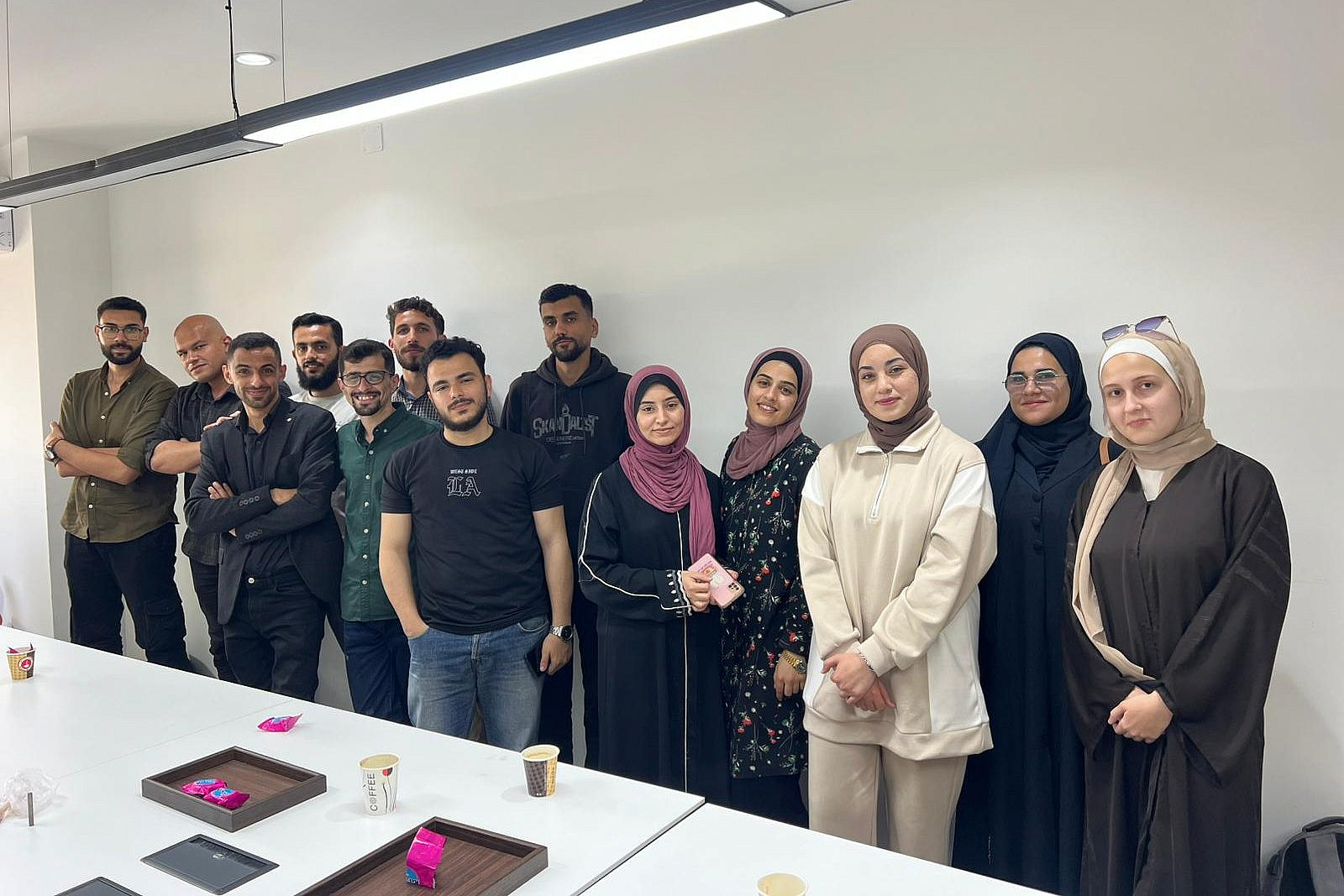
During one of our early meetings, a 25-year-old engineering student sat quietly in the corner while we went around the room talking about our lives. She wore a guarded expression that I recognized immediately. Many of us have learned to carry ourselves that way after struggling for so long simply to survive. Looking at her, you might have thought nothing could break through that composure.
Then it was her turn.
We asked how she was coping. Her eyes filled with tears. She began speaking not about engineering or her ambitions, but about her family killed in an Israeli airstrike. Their names came from her lips in soft, trembling English. When she began talking about her husband and her two children, several of us closed our eyes.
In that small, overcrowded room, the lesson plan disappeared. We did not correct her grammar. We did not interrupt her pronunciation. We simply listened. We made room for her grief, and some of us wept with her.
In a reality where Palestinians are so often reduced to casualty figures and statistics, Gaza English Corner has become a place where individual lives can re-emerge. It is a rare space where people can mourn, speak openly, and remind one another that their lives, ambitions, and stories still matter.
When I founded Gaza English Corner, I thought I was creating a helpful resource for my students. I never imagined it would become part of my own survival too. For all of us, it was a space for emotional healing against the traumas of war. In a reality where the Yellow Line inches closer to our homes each day, threatening to swallow more of Al-Maghazi Camp, organizing these meetings gives structure to my days and a reason to keep imagining what comes next.
Most read on +972
Steadfastness is often discussed as an abstract political idea. For me, it looks much simpler: young people pooling their last dollars, making a dangerous journey along Salah Al-Din Street, and squeezing into a hot, overcrowded room because they still believe there is value in learning how to support and care for one another as much as how to speak to the world.
We refuse to let war erase our voices or determine the limits of our futures. Every week, we keep gathering. We keep paying. We keep traveling. We keep speaking — stitching our futures back together, one English word at a time.