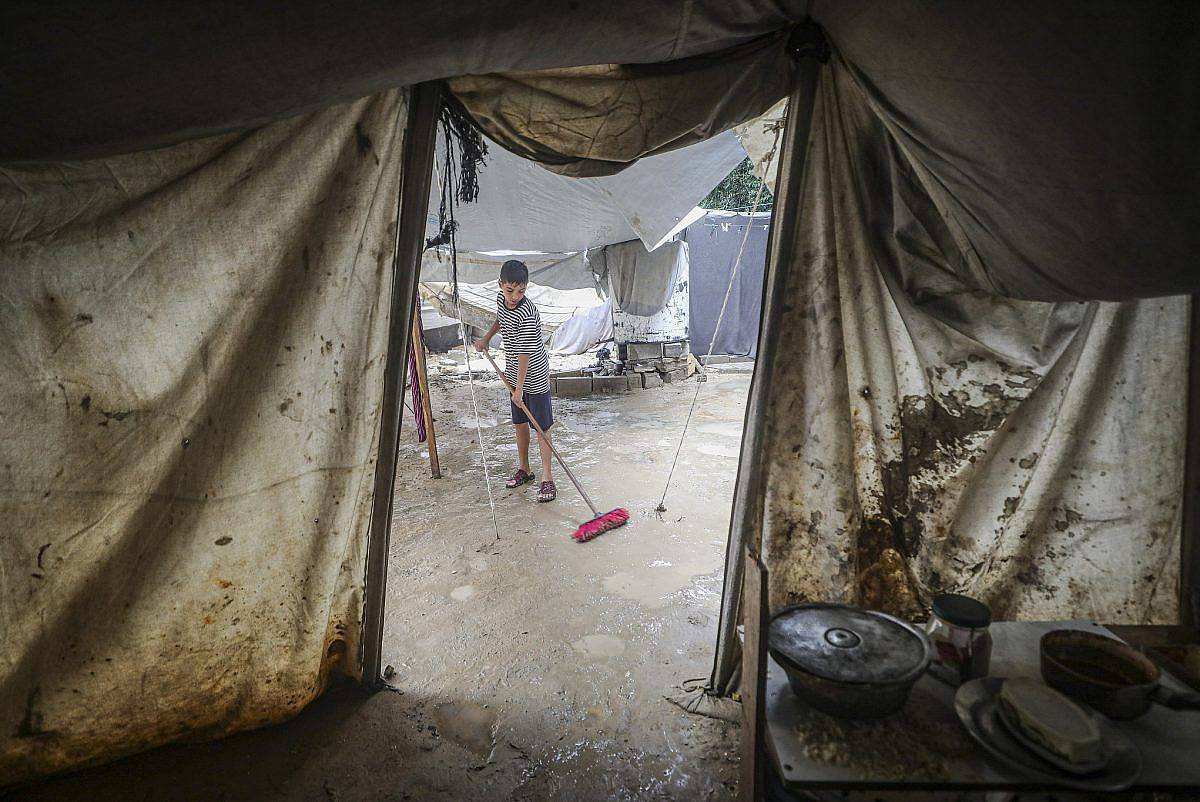
Since heavy rain swept through Gaza earlier this month, Reem Mansour has begun checking the weather forecast every morning and night.
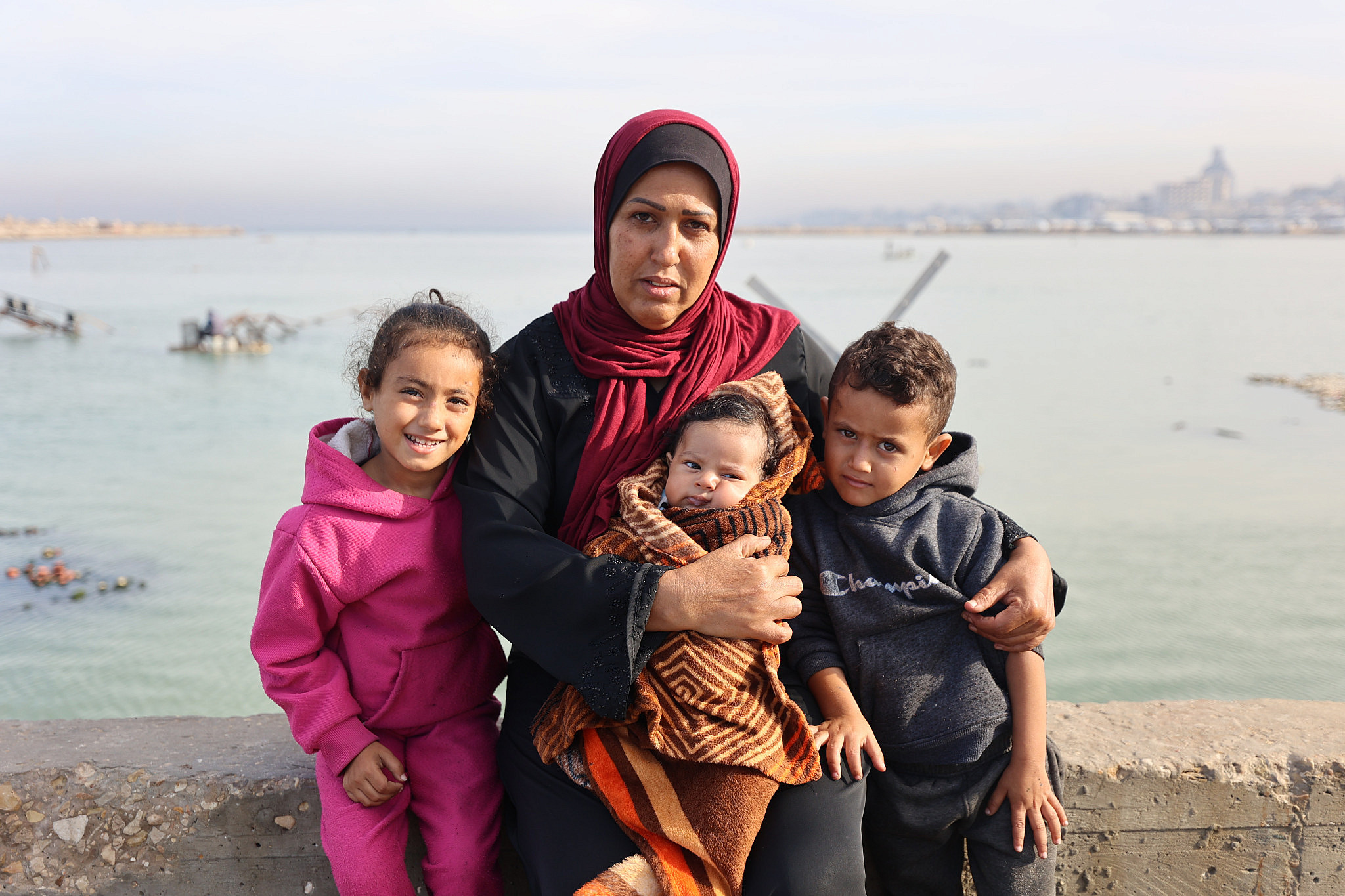
The 48-year-old is living in a makeshift tent on the coast, west of Gaza City, with eight relatives — including three grandchildren under the age of 5. The latest downpour left their mattresses, blankets, clothes, and food soaked for nearly a week. For her family, Mansour told +972 Magazine, rain has become “worse than bombing.”
“The rain flooded the tent, and the wind kept shaking the tarpaulin,” she recounted. As the waters rose, she added, her children cried at the sound of the wind and crashing waves, which reminded them of airstrikes.
“My two-month-old grandson turned blue from the cold and wet,” Mansour continued. “We were afraid of losing him. I started rubbing his hands and feet to warm him, and I put him and the other children on chairs so they would be above the water.”
Mansour and her family are among hundreds of thousands of displaced Palestinians entering a third winter in tents that have deteriorated under exposure to extreme heat, rain, and wind.
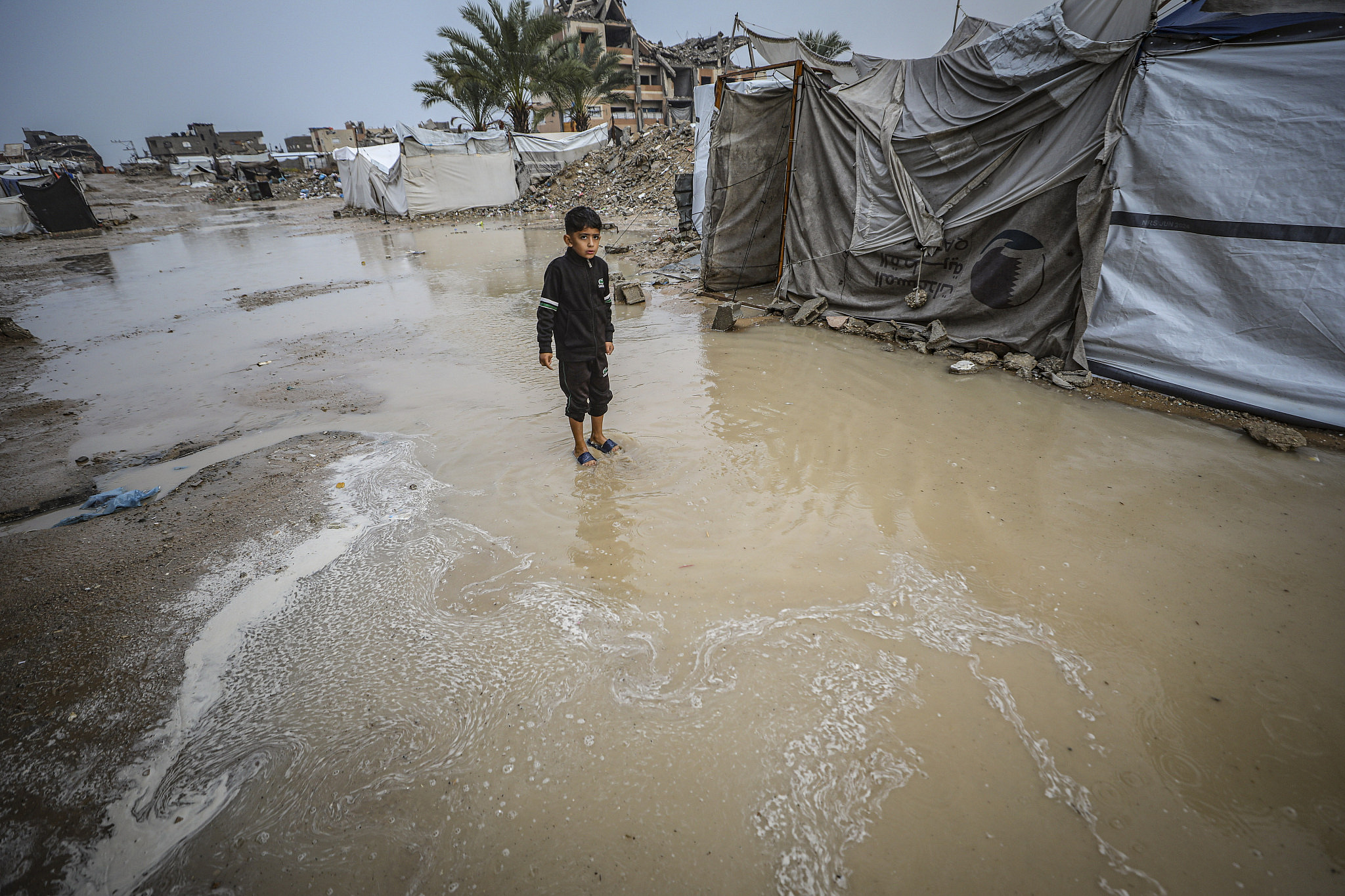
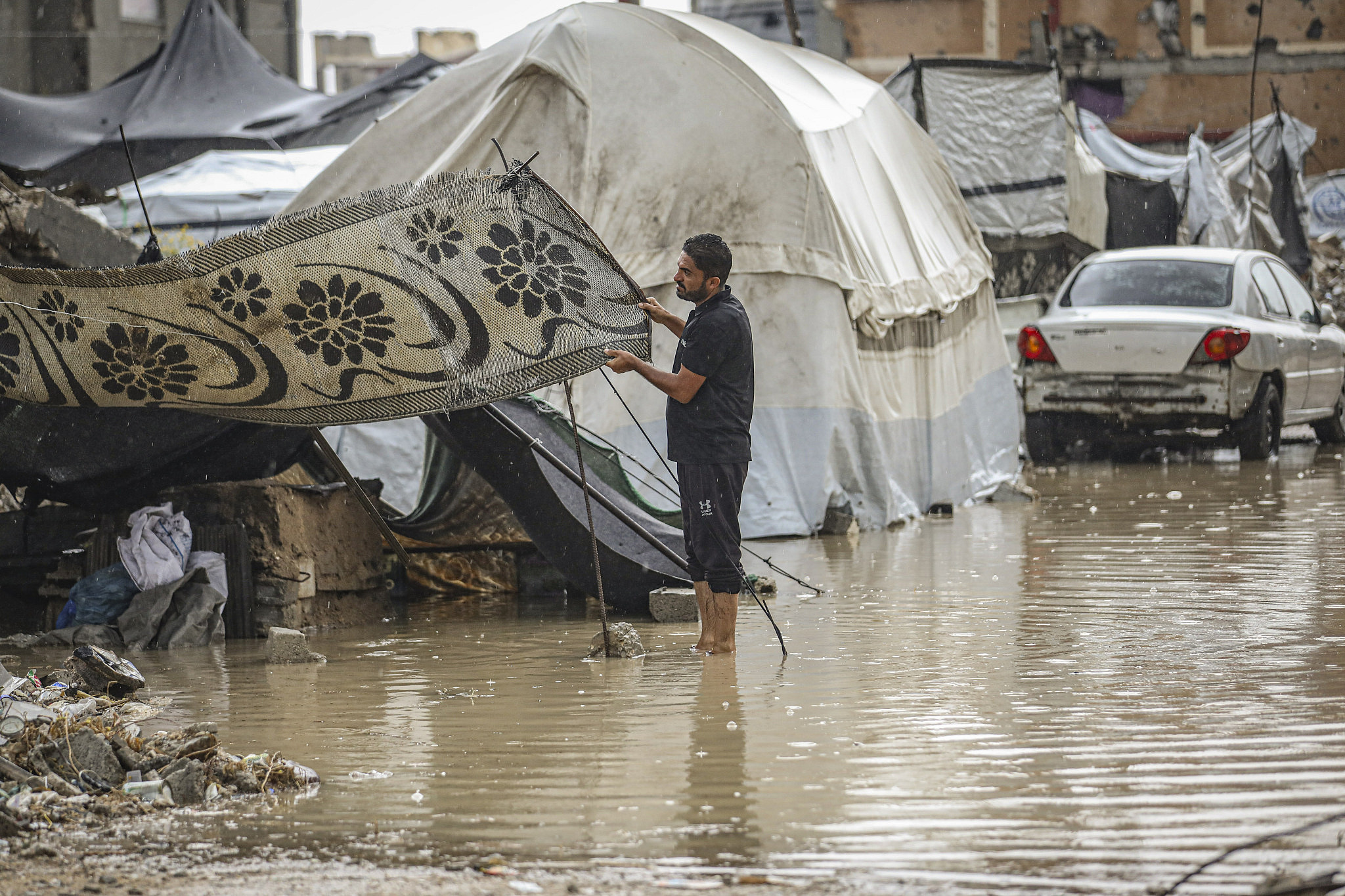
The latest storms have already caused widespread destruction: According to Gaza’s Government Media Office, approximately 70,000 tents were flooded in just 12 hours on Nov. 7, while preliminary UN figures released a week later indicated that more than 46,000 families had been affected by heavy rainfall and over 40,000 shelters damaged.
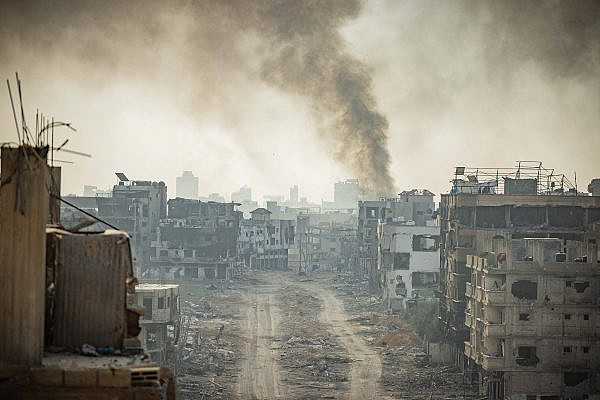
With Israel’s bombardment having destroyed much of Gaza’s housing, and adequate replacement shelters remaining in desperately short supply due to the ongoing siege, even a few hours of heavy rain can leave entire families dangerously exposed to the elements.
According to Dr. Ismail Al-Thawabta, director of the Government Media Office, the crisis has been compounded by the destruction of more than 93 percent of Gaza’s sewage and rainwater drainage infrastructure. Without functioning drainage systems, rainwater accumulates in displacement camps, flooding tents and contaminating living areas. The recent storms also caused walls and sand embankments to collapse, killing and injuring people who had sought refuge nearby.
Salem Al-Safadi, director of the Response Department at Gaza’s Emergency Committee, warned that conditions this winter are even more precarious than in the past.
“The previous two winters brought widespread suffering due to rain, cold, and displacement,” he told +972. “However, this winter arrives amid even more severely damaged infrastructure, worn-out tents, compromised drainage and sewage networks, and a critical shortage of the resources needed for an effective response.”
The Emergency Committee has called for urgent supplies of tents, tarpaulins, mattresses, blankets, and other essentials to be distributed through emergency storage facilities across the Strip. But Al-Safadi stressed that preventing future flooding will also require water pumps, heavy machinery, fuel, and repairs to drainage networks and pumping stations –– resources that Gaza’s municipalities are struggling to obtain.
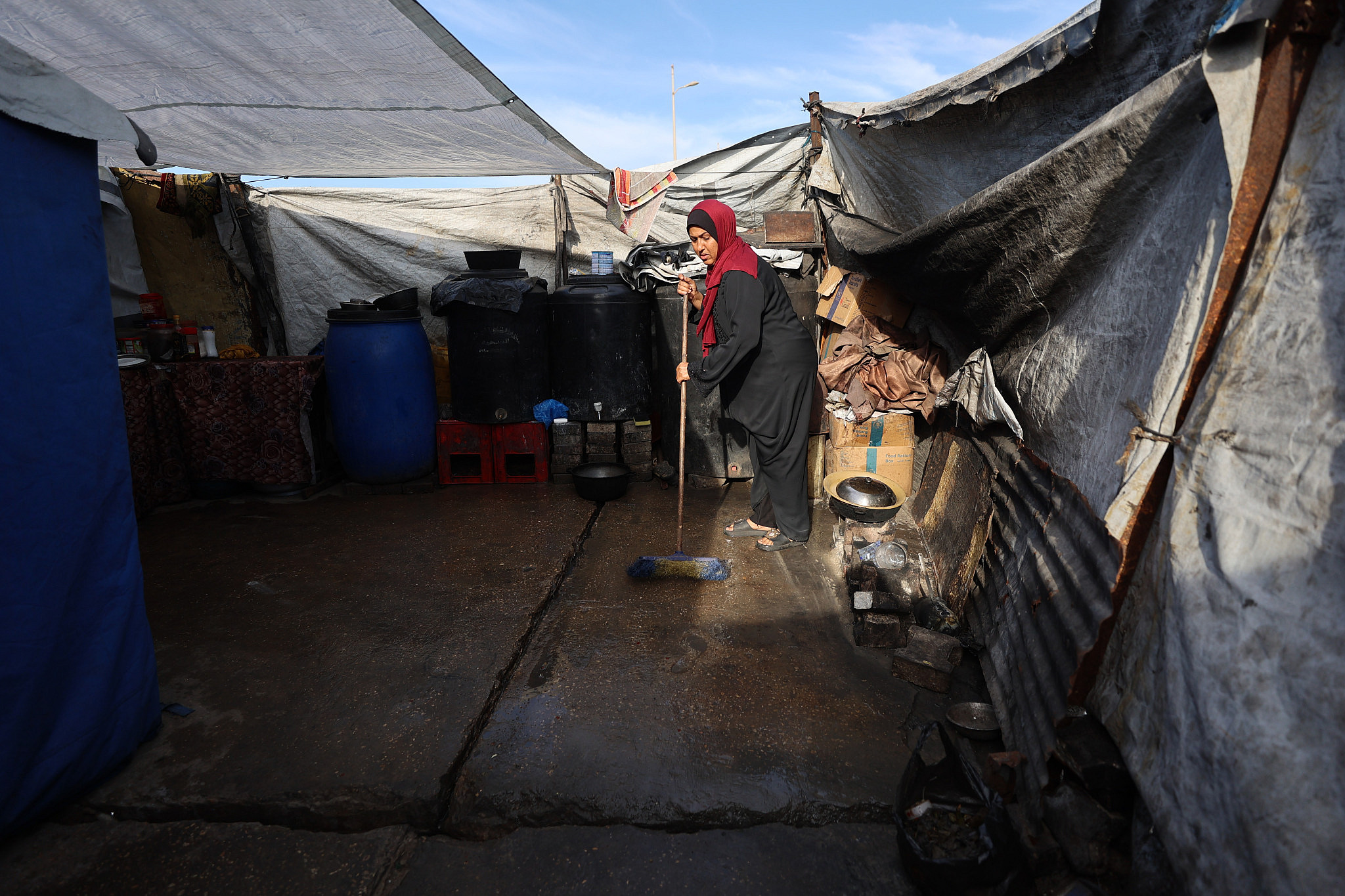
For families like Mansour’s, the danger is acute. Displaced from their home in Beit Lahiya after it was destroyed by an Israeli airstrike, they have spent the past two years living along the shoreline in the same tent — which offers less protection with each passing storm. They have too few blankets to keep everyone warm at night, so the adults huddle with the children beneath layers of clothing.
When it rains and the water rises, they still remain inside the tent because there is nowhere else to go. Afterward, they squeeze the water from their mattresses and lay them in the sun, if there is any, hoping they will dry before the next storm.
“There is no way to dry our bodies or clothes quickly, so we stay in wet clothes and sleep on wet mattresses,” Mansour explained. “Sometimes there is no sun. We don’t have the equipment or electricity to dry ourselves. All my children and grandchildren get cold, and develop coughs and fevers that last for days.”
A replacement tent would cost around $500 — a price they cannot afford to pay. Mansour’s husband, Mohammed, worked as a farmer before the war but has been unemployed since it began, leaving the family entirely dependent on humanitarian assistance.
Mansour reminisced about how, before the war, winter meant gathering around the heater with the family while the children would play with their toys. “Today,” she said, “we are helplessly trying to protect ourselves inside this piece of fabric.”
‘The water reached our knees’
For some displaced families, the recent storms have destroyed what little shelter they had left.
Khadijah Al-Majdoub, 42, has been living with her three children in a tent near Gaza City’s port for more than two years. She described their life there as “hell”: The fabric provides little relief from summer heat or winter cold, while rodents routinely damage food supplies and tents. A few weeks ago, her 9-year-old son, Yamen, was bitten by a rat in his sleep, leaving him with inflammation that lasted a week.
And then came the latest downpour. “The heavy rain and the sight of water rushing into the tent before it collapsed were so terrifying that my children started screaming,” Al-Majdoub recounted. “I looked at them and started crying too. Then my son Yamen fainted.”
With their tent destroyed and no replacement available, the family has been forced to seek shelter with neighbors, squeezing into spaces already occupied by other displaced families.
Al-Majdoub said journalists and activists documented the family’s situation, but her appeals for help went unanswered. “All I wanted was a tent and winter clothes to keep my children warm. These are even more important to me than food right now. But I received nothing, like many other people, because humanitarian distributions are limited.”
Her children are now afraid to sleep, fearing another storm will arrive while they are defenseless. “I try to calm them down by telling them that tomorrow will be sunny and they will be warm,” she said. “But deep inside, I am the one who is afraid that if it rains again, we will all be flooded and soaked.”
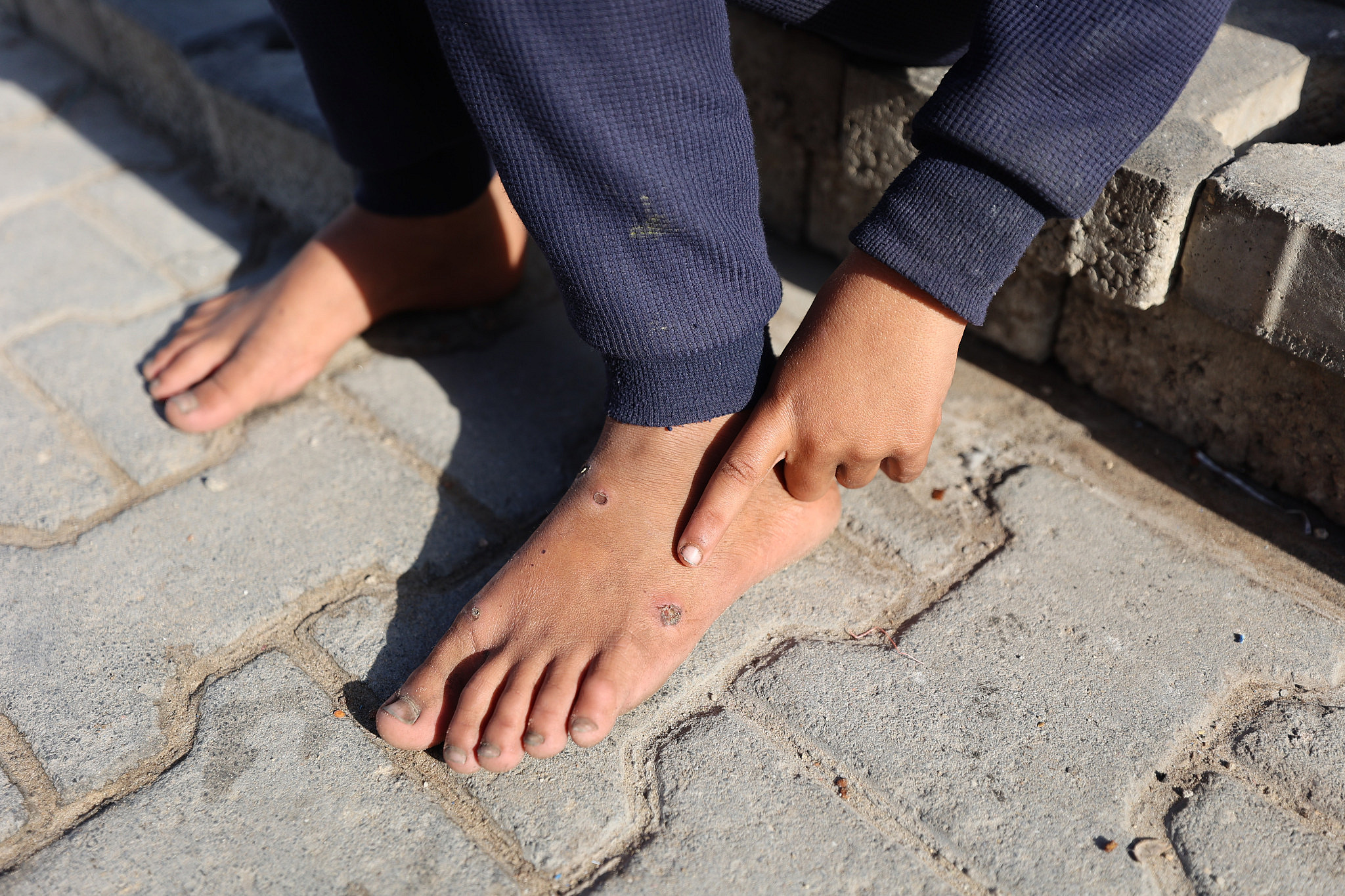
Sabreen Al-Tartour, a researcher and fieldworker in Gaza with the Palestinian Center for Human Rights, told +972 that the conditions inside displacement camps are considerably worse than what photos and videos are able to convey.
The dangers are particularly pronounced for older people, those with disabilities, the wounded, and families with young children, she said. Many displaced Palestinians have lost their livelihoods as well as their homes, leaving them unable to purchase even basic materials to repair damaged shelters.
“People in Gaza lack even the simplest of their basic rights: shelter, security, privacy, food, and dignity — rights that international law guarantees to every human being,” Al-Tartour explained.
Even if their tents remain standing, displaced families are contending with rapidly deteriorating sanitary conditions. Many spend hours queuing for food and water, while the destruction of sanitation facilities has left entire camps dependent on a handful of toilets. Some residents have resorted to using buckets, and standing water brings additional risks from insects and rodents.
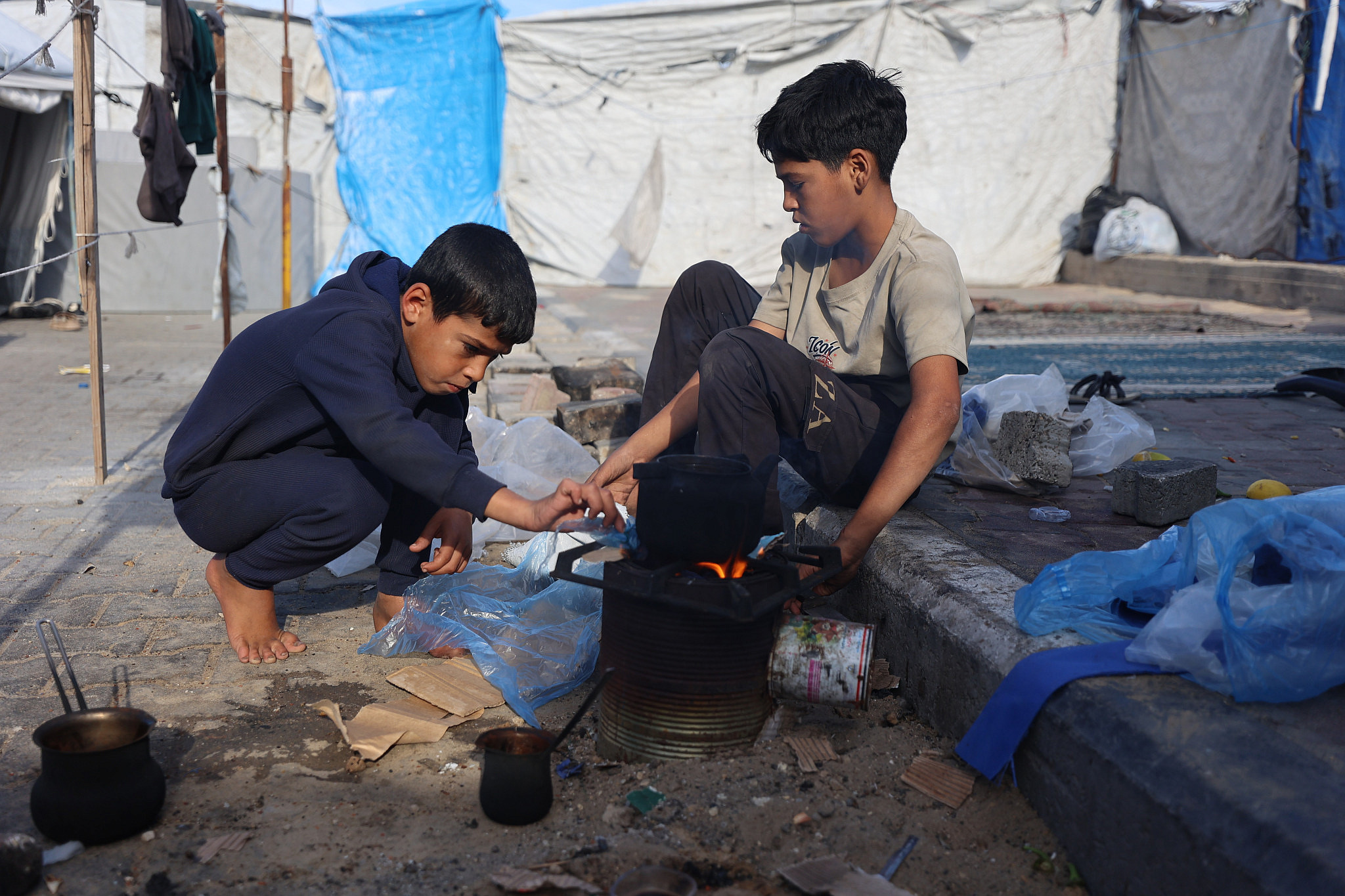
Even starting a fire has become a difficult endeavor. “Lighters used to cost NIS 1 [around $0.30], but now they cost around NIS 90 or even NIS 100 [$30],” Al-Tartour explained. “Without a lighter, families struggle to cook, heat water, or meet other basic daily needs.”
The same is true of cooking gas. “Under the current distribution system, families may receive just one gas cylinder every 70 days,” Al-Tartour said. “This leaves households struggling to meet even their most basic cooking needs, particularly because buying gas outside the distribution system is extremely expensive.”
Even an upswell in aid provisions would provide only temporary relief. “Life is not only about having a tent,” she said. “There must be international pressure to force the Israeli occupation to withdraw from Gaza and open the crossings to allow all the humanitarian aid and products people need to enter. There must also be a clear plan to begin rebuilding Gaza so people can return to their homes.”
‘The danger came from the mountain’
The flooding is also deepening Gaza’s health crisis. According to Dr. Ahmed Al-Farra, the head of pediatrics at the Nasser Medical Complex in Khan Younis, cases of acute respiratory infections have risen by 33,000 compared to last year as families struggle to keep warm in waterlogged tents.
Gaza’s hospitals, already devastated by Israeli attacks and severe shortages of medicine and equipment, have little capacity to treat the growing number of patients suffering from cold-related illnesses.
“The hospital is grappling with a massive accumulation of overlapping crises,” Al-Farra said. “We face a relentless series of shortages, lacking medicines, medical equipment, and available hospital beds.
“Consequently, we are seeing a surge in respiratory illnesses caused by the harsh cold inside these tents,” he continued. “The hospital, however, lacks the capacity to provide care for such large numbers of patients due to its severely limited resources.”
Nasser Medical Complex itself has continued to come under attack in recent days. On Nov. 13, an Israeli airstrike on the men’s surgical ward killed six people and wounded dozens more, forcing staff to relocate patients into pediatric wards and field tents.
The consequences of the harsh weather have already proved fatal, too. Al-Farra recounted how a father arrived at the hospital carrying his nine-month-old son, Kinan Raqiq, from Al-Mawasi in Khan Younis, who had died after “his heart had simply stopped due to the extreme cold.”
This infant is not the only casualty of the winter so far. Ahmed Khaled Nabhan, 40, lost his two children — Salah, 8, and Mariam, 6 — as well as his 36-year-old wife, Tahrir, who was seven months pregnant, when a sand embankment collapsed onto their tent on Nov. 8, following the major storm. Also with them was Tahrir’s 34-year-old sister, Reem Al-Zein, who sustained serious injuries, and Reem’s 4-year-old daughter, Habiba, who was killed.
Displaced from Jabalia refugee camp in northern Gaza, Nabhan and his family found a plot of land to pitch their tent in Deir Al-Balah. “I chose this spot because there was nowhere else to go; danger is everywhere in Gaza,” he explained. “I never imagined the hill next to us posed a threat.”
In a freak accident, he explained, “a massive boulder, embedded within the hill, broke loose and crashed onto our tent.” He quickly managed to pull out Salah and Mariam, followed by Habiba; all of them had sustained severe contusions and were rushed to hospital, where they were pronounced dead.
Most read on +972
Recovering his wife’s body was more difficult, taking nearly an hour: The boulder had fallen directly onto her, killing her instantly.
“I never imagined this could happen,” Nabhan said. “I even took precautions against the low-lying terrain by raising the floor of the tent, fearing flash floods. But the danger came from the mountain above us. Now I am left all alone, in a state of deep shock. I cannot even begin to describe what I am feeling.”
+972 approached COGAT, the Israeli army unit responsible for the entry of humanitarian aid into Gaza, for comment. Their response will be added here if and when it is received.