


In partnership with

The ceasefire agreement signed between Israel and Hamas in October brought about the release of nearly 2,000 Palestinian detainees, including some 250 who were serving lengthy or life sentences in Israeli prisons. There were celebrations in Gaza and the West Bank as families were reunited, but also disappointment over Israel’s refusal to free high-profile prisoners like Marwan Barghouti and Ahmad Sa’adat. Yet one group of incarcerated Palestinians was largely absent from the headlines.
Despite also being classified as “security prisoners” — a label Israel applies almost exclusively to Palestinians and which entails much harsher jailing conditions — Palestinian citizens of Israel were excluded from the deal altogether. Around 20 of them have spent more than 35 years behind bars, going back even before the Oslo Accords. Dozens more are serving shorter terms or being held in administrative detention without charge or trial. Israel also continues to withhold the bodies of seven others, most prominently that of Walid Daqqa, who died of cancer in custody last year.
“Based on what came up in the first discussions [between Israel and Hamas] after October 7, and the slogan [often heard in protests in Israel calling for a hostage deal] ‘Everyone for everyone,’ the prisoners expected to be released this time,” Basel Ghattas, a former member of Knesset for the Balad Party and former prisoner himself, told +972. But by the time negotiations concluded, he explained, Palestinian mediators had little leverage left.
“When the Israeli side retracted the release of senior figures like Barghouti, Ibrahim Hamed [commander of Hamas’ military wing in the West Bank], and Sa’adat — even though their names appeared in the agreement signed in Sharm El-Sheikh — the Palestinian side was left with no bargaining cards,” Ghattas continued.
This was hardly the first time that Palestinian prisoners who hold Israeli citizenship were excluded from political agreements. “The pre-Oslo prisoners were supposed to be released in 1993, but [Prime Minister Yitzhak] Rabin refused to do so,” Ghattas recalled. Rabin, he said, instead opted to improve the prisoners’ conditions rather than release them.
Nor, Ghattas argued, did the Palestinian leadership at the time offer these prisoners any meaningful support. “They failed to mention them in the [Oslo] negotiations and did not demand their release, citing Israel’s complete refusal to do so,” he explained.

Because these prisoners hold Israeli citizenship, Israel has long framed their incarceration as an “internal matter” — a rationale Ghattas dismissed as “an excuse.” Jewish “security prisoners,” he noted, receive defined sentences, visitation rights, better living conditions, and even furloughs or sentence reductions, benefits systematically denied to their Palestinian counterparts.
After Rabin’s assassination, the situation deteriorated further. During the 2014 Israeli-Palestinian peace negotiations mediated by U.S. Secretary of State John Kerry, Israel agreed to release 104 Palestinian prisoners in several phases, postponing the release of those with Israeli citizenship to the fourth and final stage. But Israel ultimately canceled that stage and collapsed the talks.
“It was the only time that Palestinian prisoners with Israeli citizenship were even officially mentioned, but it ended without implementation,” Ghattas explained. “Even the leadership of Arab society [in Israel], especially Knesset members whose immunity allows them to raise such issues, did not dare to demand the rights of the prisoners or their release in the deal.”
Caught between two systems
In the first truce after the start of the Gaza war in November 2023, several Palestinian female students with Israeli citizenship — arrested on suspicion of “incitement” after October 7 — were included in the prisoner exchange. Yet some of their parents tried to object, fearing their daughters could face future harm due to being associated with Hamas.
“We, the lawyers, agreed to voice our opposition to their inclusion out of concern that they would be defined as belonging to Hamas,” Hussein Manaa, an attorney who represented some of the students, told +972. “But after their release, it became clear that our concerns were unfounded.”
That realization, he said, raised hopes that the latest deal might include some Palestinian prisoners with Israeli citizenship — both the long-serving inmates and the dozens arrested during the past two years, especially minors.
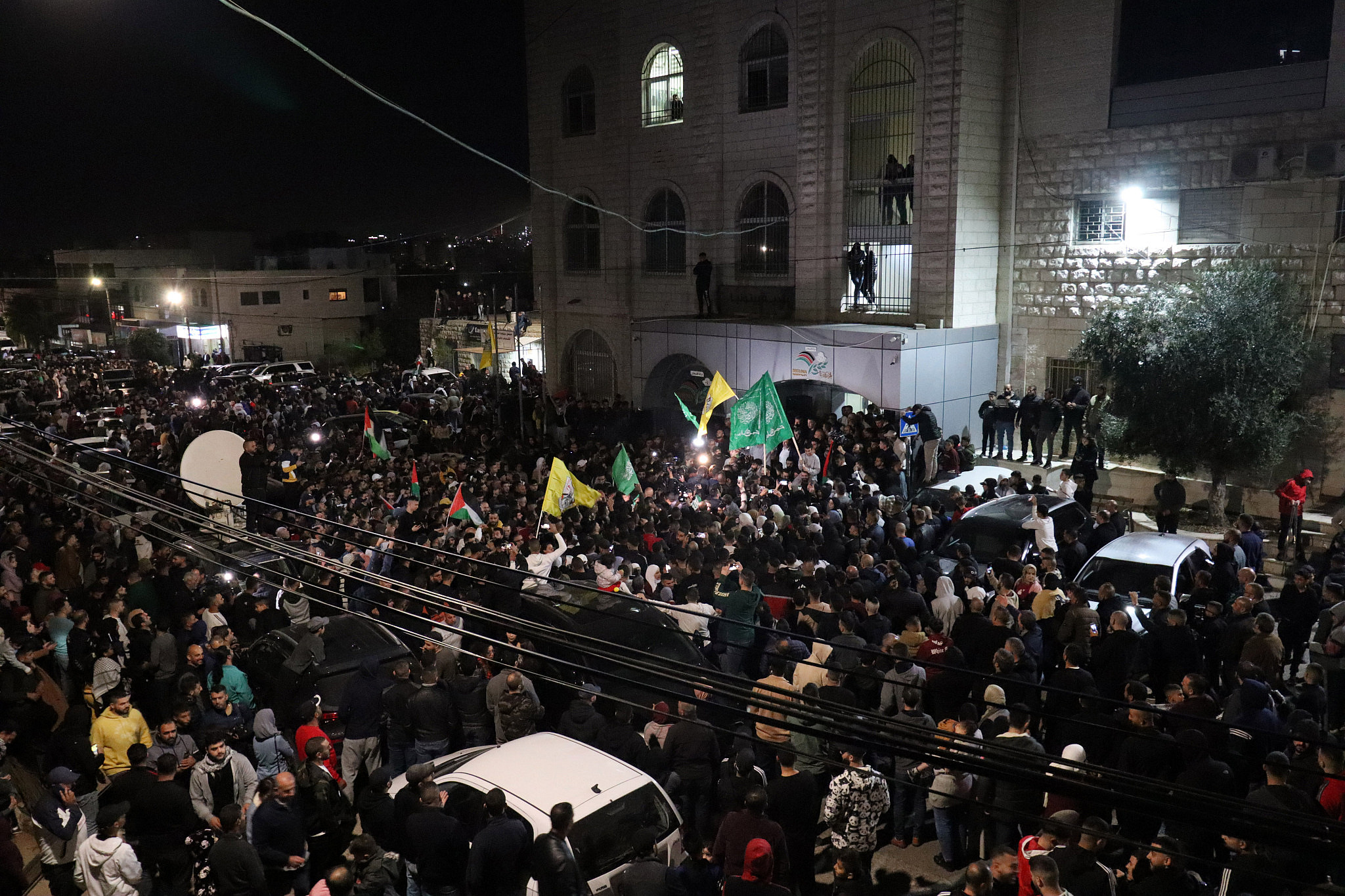
Those hopes were ultimately dashed. “The circumstances were too difficult for the Palestinian side to demand their release,” Manaa said. “The prisoners found themselves completely lost. If they are not freed in a deal of this magnitude, when will they ever be released?”
A similar dynamic was visible three years earlier, following the events of May 2021, when Palestinian protests against expulsions in the East Jerusalem neighborhood of Sheikh Jarrah escalated into an 11-day war in Gaza and widespread unrest across Israel-Palestine. The disparity in how Palestinian prisoners with Israeli citizenship were treated compared to their Jewish counterparts quickly became evident.
“The [Palestinian citizens of Israel] arrested in May 2021 are not considered security prisoners in the traditional Palestinian sense, since they participated in popular demonstrations,” Ghattas explained. “But Israel nevertheless treated them as security prisoners and handed down heavy sentences.”
Their cases underscored a harsh reality: Palestinian prisoners with Israeli citizenship fall between two systems, belonging fully to neither. With no Israeli institution willing to advocate for them and no Palestinian authority able to represent them, they are left with far fewer protections than either Jewish prisoners or non-citizen Palestinian prisoners.
There is a “complete lack of representation,” Manaa told +972, leaving families to cover legal fees, manage paperwork, and coordinate with lawyers and activists on their own. To help fill the void, Manaa has been involved in establishing the Al-Karama Al-Hukuki Center to support these prisoners, though he insists that civil initiatives cannot substitute for genuine political pressure.
‘If not in such a deal, then when?’
The unequal treatment of imprisoned Palestinian citizens doesn’t end with their death, as the case of Walid Daqqa exemplified. A symbol of the struggle both of “‘48 Palestinians” and the broader national movement, Daqqa was arrested in 1986 and completed his sentence in March 2023, before being forced to serve an additional two-year sentence over the smuggling of phones into the prison. He remained behind bars until his death from cancer last year — a decision his brother As’ad describes as a “slow assassination,” alleging that Walid was denied the medical treatment he needed.
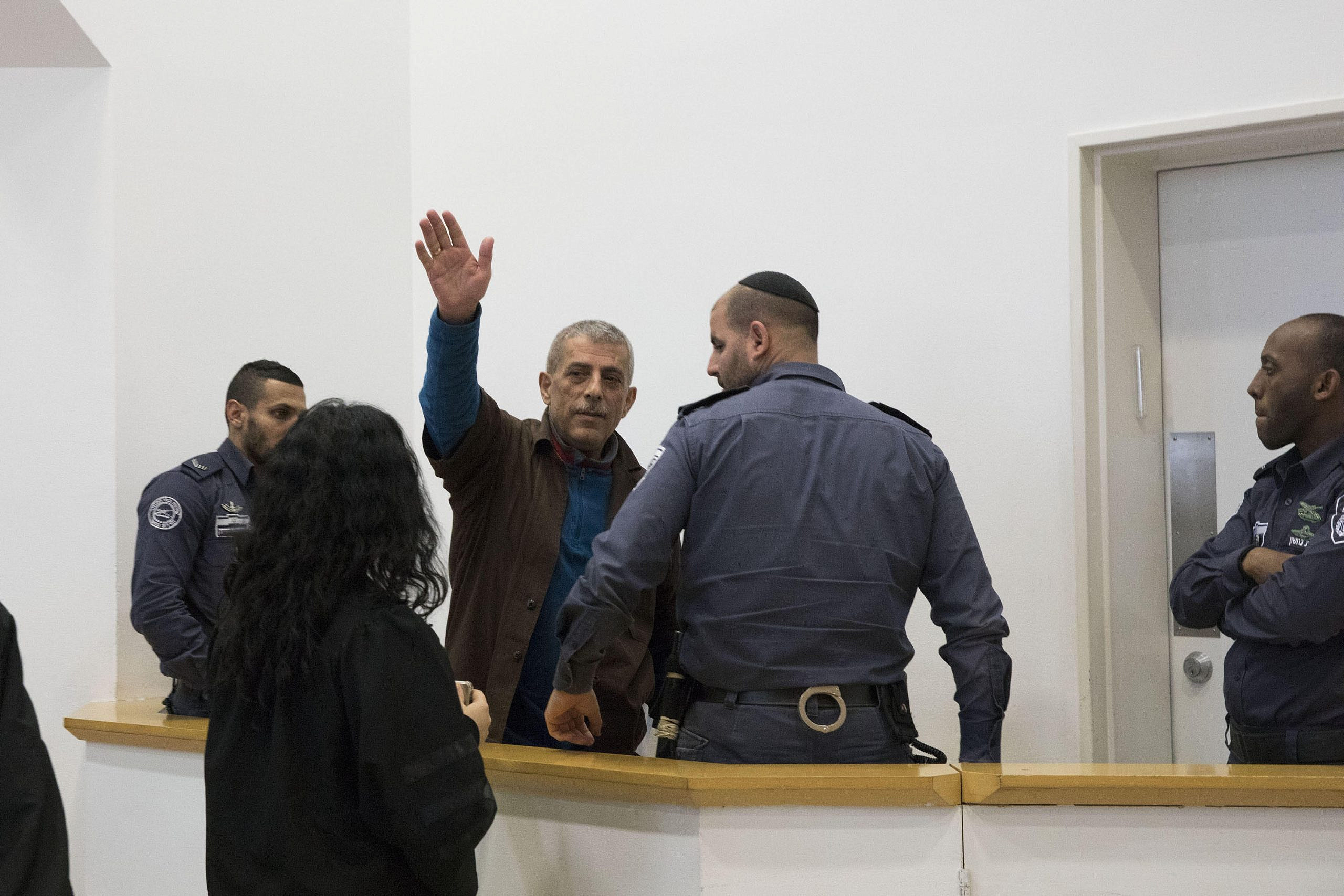
As’ad recalled how deeply the family invested in trying to secure his release. “My mother met with [then-PLO leader] Yasser Arafat himself and accused him of returning to Palestine while the prisoners remained in prison,” he told +972, referring to the period of the Oslo negotiations. “The PLO, the Palestinian Authority, and various NGOs did not act to release them, but only to improve their prison conditions.”
After Daqqa’s death, the family demanded the return of his body. Israel refused, arguing that it would serve as a bargaining chip in future negotiations with Hamas — a position later upheld by the Israeli High Court. Yet when the latest ceasefire agreement was reached, Daqqa’s body was not included. “If his body was not used in a prisoner exchange, what is the point of holding it? No one understands under what clause Israel is continuing this policy,” As’ad said.
A relative of another prisoner whose body is still being held — who asked to remain anonymous — voiced similar despair. “If a body is not released in such a deal, when will it be released?
Most read on +972

“We cannot blame Hamas or the Palestinian negotiating team; we know the circumstances and understand that, in the shadow of destruction and starvation [in Gaza], a deal must be reached at any cost,” the relative continued. “But we feel abandoned. I believe Israel is doing this deliberately because dividing and tearing apart Palestinian society is an Israeli goal. The prisoners provide an ideal opportunity to do that.”
Caught between Israel’s entrenched refusal and the absence of Palestinian political advocacy, Palestinian prisoners with Israeli citizenship find themselves excluded from every arrangement and every deal. While the balance of power shifts with each round of negotiations, they remain stuck without a horizon — an open wound that no one is tending.
A version of this article was first published in Hebrew on Local Call. Read it here.