
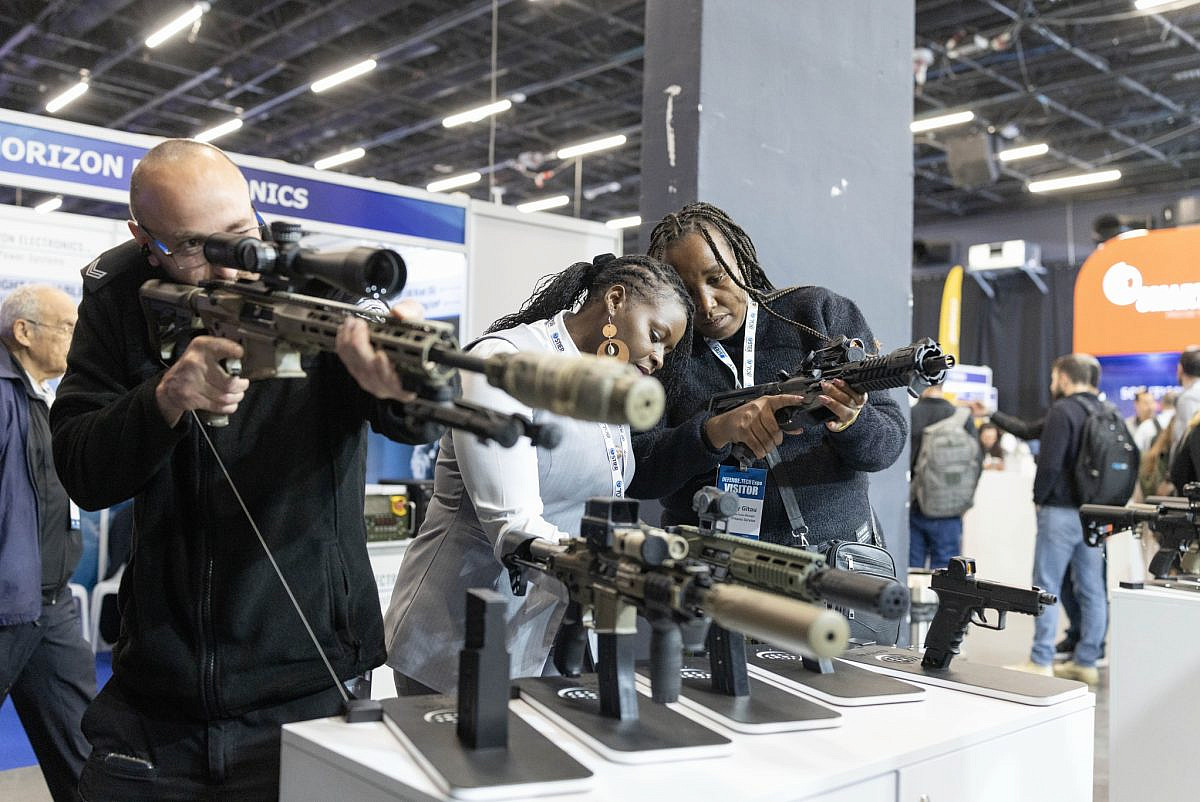
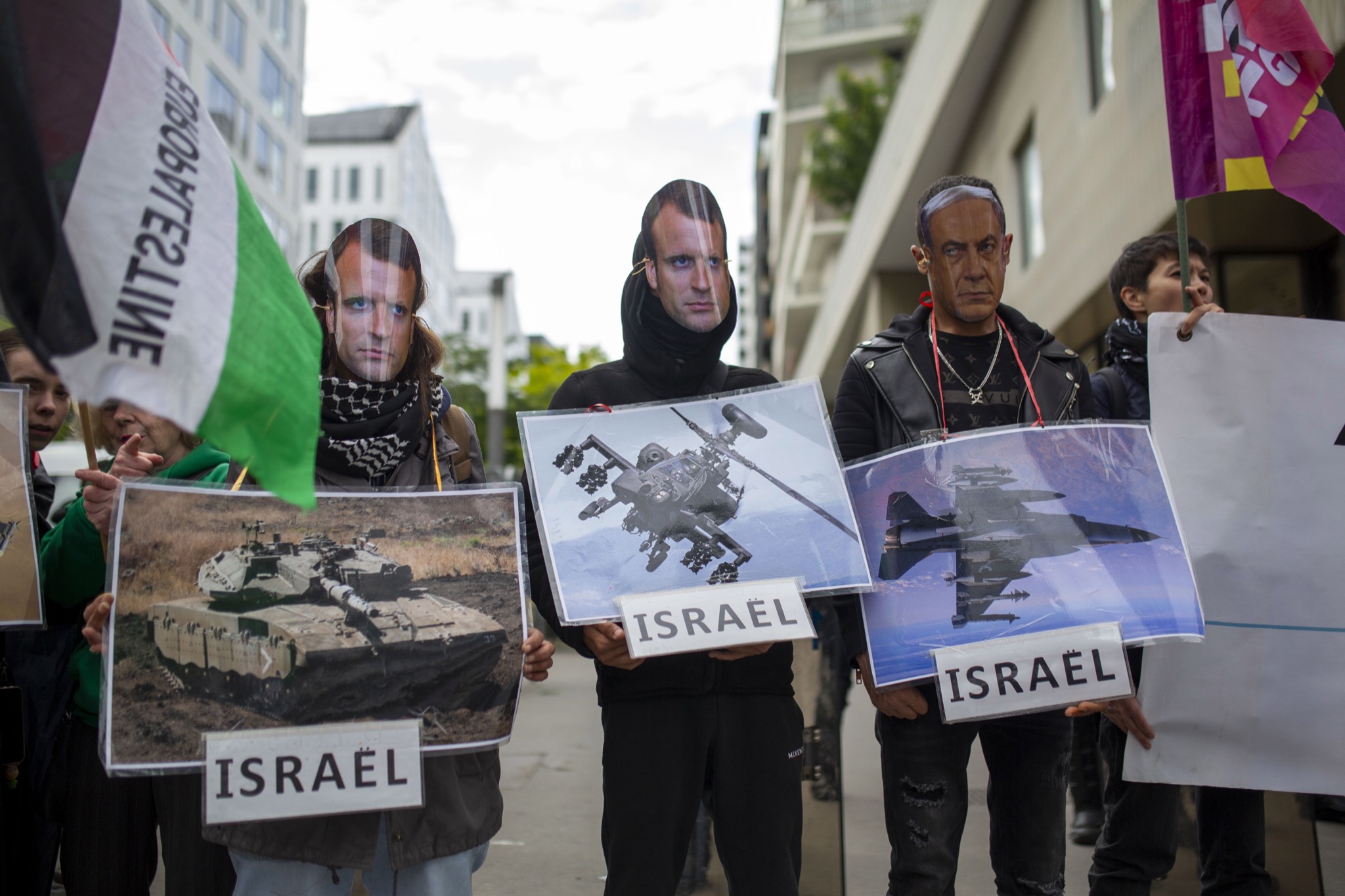
In recent years, more and more governments have begun to recognize that words alone will not hold Israel accountable for its crimes against Palestinians. One of the clearest responses to this realization has been a growing push to restrict military trade with Israel — a demand that has also been a central slogan of pro-Palestine protests around the world.
Images of bombs bearing U.S. serial numbers, German-made tank engines, and European-manufactured components recovered from the sites of massacres of Palestinian men women and children have mobilized people to demand their governments end their own complicity in Israel’s military campaigns. And those efforts have begun to bear fruit.
Since the start of Israel’s genocide in Gaza in October 2023, two-dozen countries have announced plans to halt or restrict arms transfers to the occupying power. In the past year alone, even amid the so-called ceasefire between Israel and Hamas that began in October 2025, Spain, the United Kingdom, and the Philippines have canceled deals with Israeli weapons companies.
Yet while international scrutiny has largely focused on the foreign companies and governments supplying Israel with arms, far less attention has been paid to the flow of weapons in the opposite direction: Israel’s own military exports. Over the same period, the country’s defense industry has greatly expanded its sales abroad, generating billions of dollars in revenue for Israeli companies — and, crucially, for the state itself.
It may feel crass to discuss this period in financial terms when tens of thousands of Palestinians have been killed and the death toll continues to rise. But a state’s ability to sustain a prolonged war depends in no small part on its ability to pay for it. If arms embargoes are intended to constrain Israel’s capacity to wage war, then the money flowing into the country through weapons exports demands equal scrutiny.
Military campaigns are extraordinarily expensive; multi-year campaigns on the scale of Israel’s genocidal assault on Gaza even more so. The past two and a half years of Israeli warfare are estimated to have cost the state more than $100 billion, encompassing ammunition and weapons procurement, military personnel, compensation for damaged property, and other wartime expenditures.
Israel’s arms industry has helped to replenish some of those resources. Several of the country’s major defense manufacturers are state-owned, meaning that a share of their profits can flow directly into public coffers. In 2025, Israel Aerospace Industries (IAI) paid the state nearly $700 million in cumulative dividends, including payments owed from previous years. Rafael, meanwhile, paid the state $121 million that year, following nearly $100 million in 2024, while the smaller state-owned Tomer Industries contributed another $5.5 million.
Dividends, however, are only one channel through which the industry generates state revenue. Both state-owned and privately held defense firms pay corporate taxes, with Israel’s largest military companies contributing around NIS 1 billion (approximately $335 million) in corporate income tax in 2024. And because a substantial share of Israel’s tax revenues is collected through taxes on labor, the contribution extends well beyond corporate profits.
Based on the companies’ public reports, employment at Elbit Systems, IAI, and Rafael is estimated to have generated an additional NIS 8.6 billion ($2.9 billion) in income and payroll taxes, bringing the state’s total annual tax take associated with these companies to roughly NIS 9-10 billion.
The growing importance of military exports becomes even clearer when set against the performance of Israel’s wider export economy. Between 2022 and 2024, Israel’s overall goods exports fell by roughly NIS 13.4 billion ($4.5 billion), according to the Central Bureau of Statistics, reflecting a broader economic downturn that included losses in the agricultural sector and mounting international boycott pressure. Over the same period, however, defense exports increased by approximately NIS 7 billion ($2.3 billion), according to SIBAT, the Defense Ministry’s international defense cooperation directorate.
In other words, the growth in weapons exports offset nearly 52 percent of the decline in Israel’s other goods exports over those two years. At a moment when waging a genocide in Gaza has placed extraordinary demands on the Israeli economy, the defense industry has become an increasingly indispensable source of foreign revenue, tax income, and direct payments to the state.

The export reserve
A few days after October 7, rapid-response squads in Jewish communities in the Upper Galilee opened black crates containing gleaming new rifles delivered directly from Israeli weapons manufacturer EMTAN Karmiel. According to the investigative outlet Shomrim, they were surprised to find that the weapons bore “an embossed police emblem from an Asian country.”
The episode was the result of a deal struck amid the chaos that followed the Hamas-led attack. The very next day, four Israeli weapons companies gained a new domestic client: the National Security Ministry, headed by Itamar Ben Gvir. To meet the unprecedented demand for small arms inside Israel, the companies diverted weapons that had originally been manufactured for foreign buyers into the hands of the far-right minister.
But the underlying policy long predates October 7. One of the most salient lessons Israel drew from the 1973 Yom Kippur War was that it needed a much larger domestic arms industry, capable of meeting the military’s needs during a major and unexpected war. Yet maintaining production capacity on that scale could not be justified by the military’s routine needs alone — even accounting for the weapons required to sustain Israel’s ongoing occupation of Palestinians in the West Bank and Gaza.
Export markets provided the solution. They allowed Israeli manufacturers to keep factories active between large-scale offensives, while preserving the capacity to rapidly redirect production back toward the Israeli military when demand suddenly surged.
That logic remains central to Israel’s defense industry today. As the state comptroller explained in 2012, military exports help preserve “the industrial infrastructure, the know-how, and the human capital” needed to give the Israeli military “a unique qualitative edge.” They also serve what the comptroller described as the “political, strategic, and economic interests of the State of Israel.”
The same principle extends beyond small arms to more advanced defensive and offensive systems. Israel’s interceptor production, for example, was expanded through a new manufacturing line for Arrow missiles opened in 2024 to fulfill a major sale to Germany. Although the deal had been signed before October 2023, the added production capacity also increased Israel’s ability to replenish its own stocks during the war.
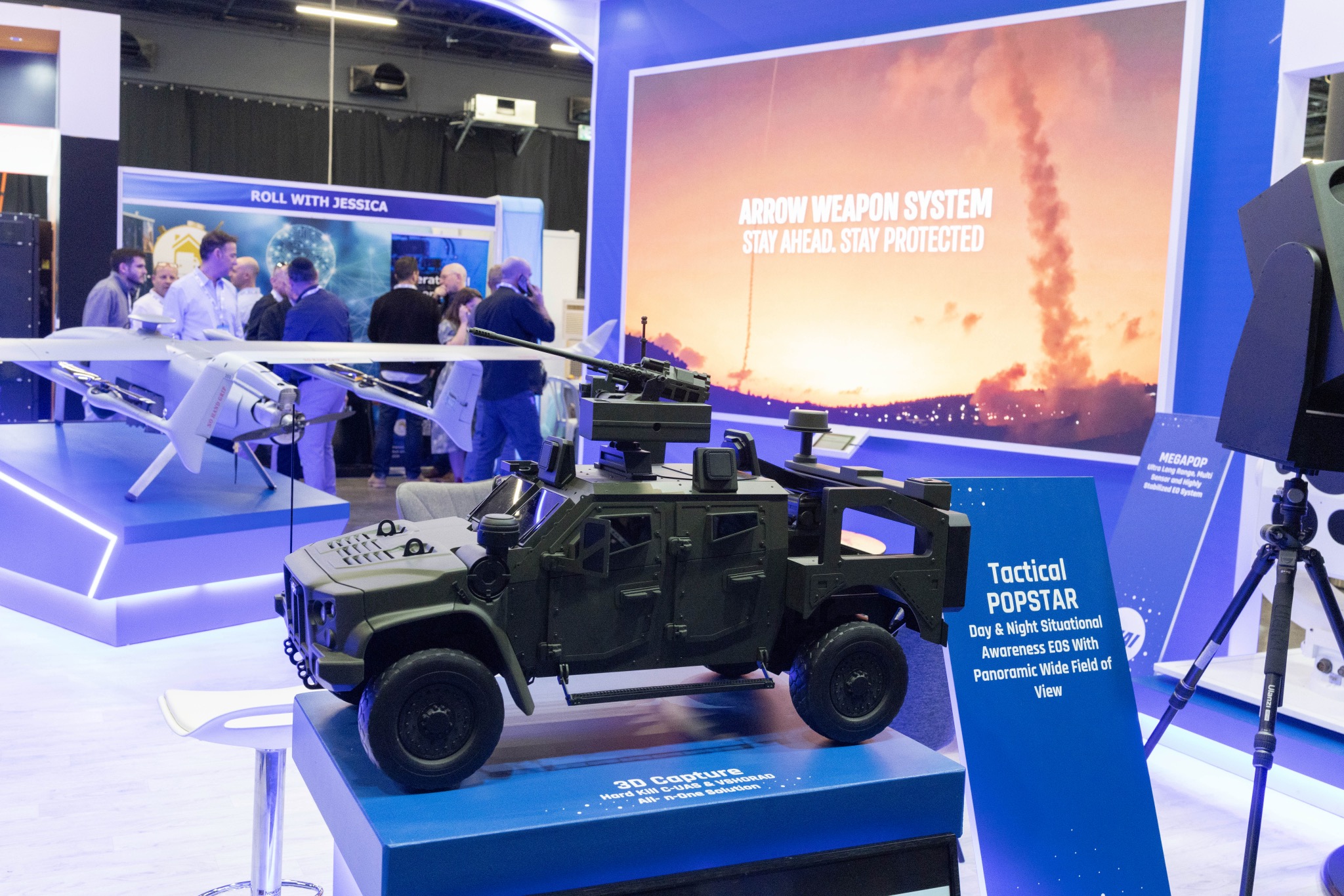
And in January 2024, Israeli financial news site Calcalist reported that Israeli arms manufacturers had postponed roughly $1.5 billion worth of weapons deliveries to foreign customers. The delayed shipments reportedly included mortars, tank ammunition and spare parts, air-defense systems, small arms, and other equipment — all material that could instead be prioritized for domestic military needs.
This, then, is one of the broader functions of Israel’s arms exports. By purchasing Israeli weapons and components, foreign customers do more than enrich arms manufacturers and their shareholders. Their orders sustain production lines, technical expertise, skilled labor, and industrial capacity that can be redirected toward Israel’s own military needs in wartime. In doing so, they help maintain the military-industrial infrastructure underpinning Israel’s genocidal assault on Gaza, its invasion of Lebanon, and its capacity to wage future wars.
Weapons without borders
If arms exports are as integral to Israel’s war-making capacity as arms imports, then countries seeking to divest themselves of complicity in Israeli crimes cannot simply stop selling weapons to Israel — they must also stop buying from it. In practice, however, that is easier said than done.
The global arms industry is built around deeply integrated supply chains. A single weapons system — a fighter jet, tank, or air-defense system — may contain components and technologies produced by companies in several countries. Governments can therefore halt direct purchases from Israeli firms while continuing to buy weapons that incorporate Israeli technology, thereby continuing to generate revenue for Israel’s defense industry.
Norway ran up against this reality after deciding both to stop selling weapons to Israel and to stop purchasing Israeli-made weapons. “We do not sell weapons to Israel, and we do not buy stand-alone Israeli weapons systems,” Defense Minister Tore O. Sandvik declared in April. But he immediately added that excluding Israeli-made components embedded in larger foreign weapons systems would be “completely out of the question.” Doing so, he argued, “would make it completely impossible to build up the [Norwegian] defense forces,” while making integration into NATO “very difficult.”
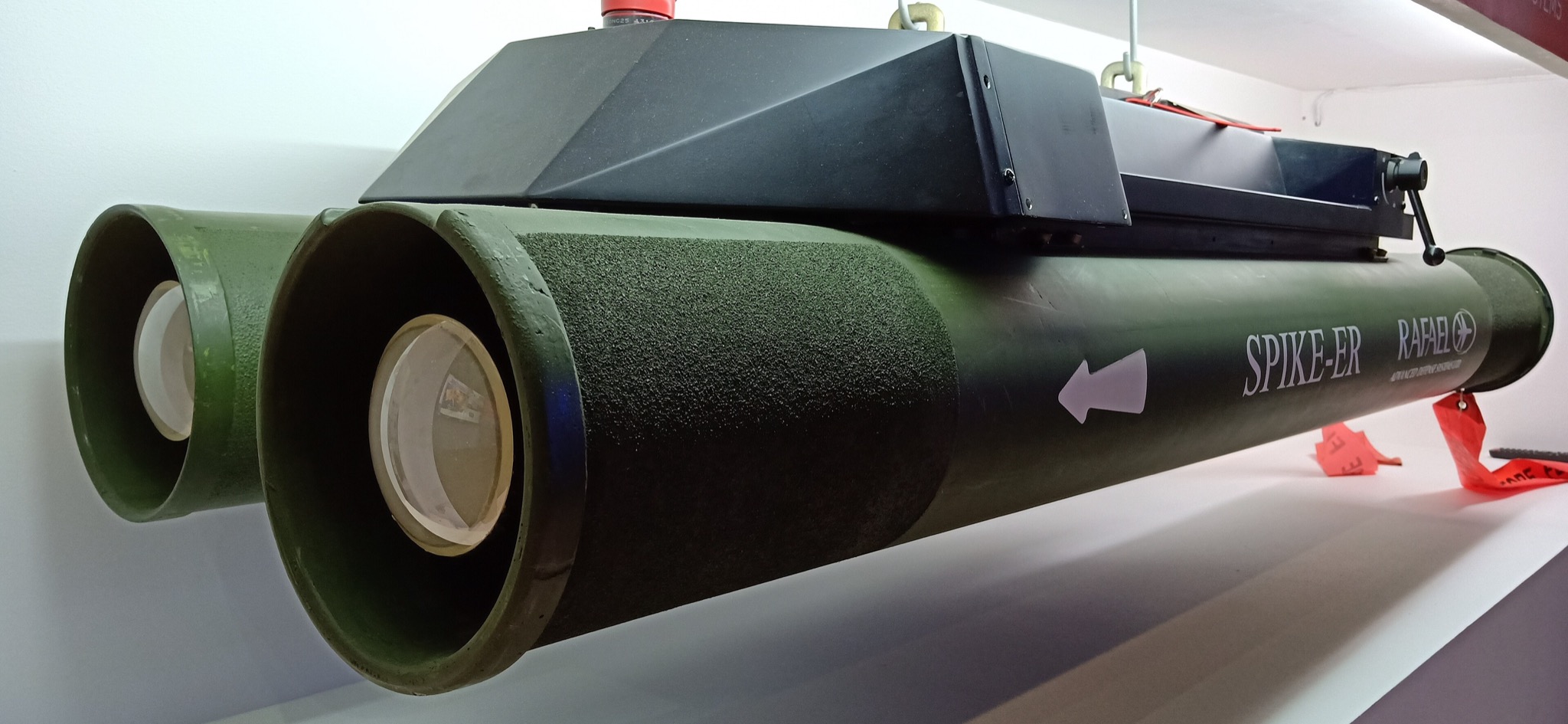
Joint ventures — companies or projects jointly owned and operated by firms from different countries — make the boundary even harder to draw. Spain, Croatia, and Slovenia have all declared that they support an arms embargo on Israel, including restrictions on both imports and exports. Yet all three have purchased the EuroSpike missile, a European-manufactured version of Rafael’s Spike missile produced through a joint venture between the Israeli state-owned company and the German firms Rheinmetall and Diehl Defence. The missiles may be manufactured in Europe, but their sale still generates revenue for one of Israel’s largest state-owned weapons manufacturers.
Europe’s financing of Israel’s military industry also extends beyond weapons procurement. Israel is an associated member of the European Union’s Horizon Europe research program, giving Israeli universities, research institutes, and technology companies access to the bloc’s €95.5 billion research budget. Since 2021, at least 10 Israeli military companies — including Elbit Systems, IAI, Rafael, and Aeronautics Defense Systems — have collectively received at least €34.95 million ($40 million) in EU research grants for weapons development projects.
The problem, then, is far more complicated than simply halting weapons shipments to Israel during a particular war. Over decades, Israeli defense companies have embedded themselves in international supply chains, joint ventures, and publicly funded research networks. These relationships continue generating money, expertise, and industrial capacity even when direct arms transfers are suspended.
Breaking the cycle
During Israel’s 2008-9 assault on Gaza, the United Kingdom, Belgium, and Norway all halted or revoked certain export licenses to Israel. Norway was the only one of the three not to subsequently return to its previous policy. During the 2014 assault on Gaza, the British government again reviewed its arms licenses and threatened suspensions. And amid the ongoing genocide in Gaza, the UK and Belgium once again imposed restrictions on military exports in 2024.
The emerging pattern is one of sanctions imposed only after Israeli violence reaches a level that makes continued military cooperation politically untenable, and then abandoned as soon as the immediate aggression recedes. Such measures have done little to halt these campaigns in real time, and even less to dismantle the relationships and infrastructure that facilitate future ones.
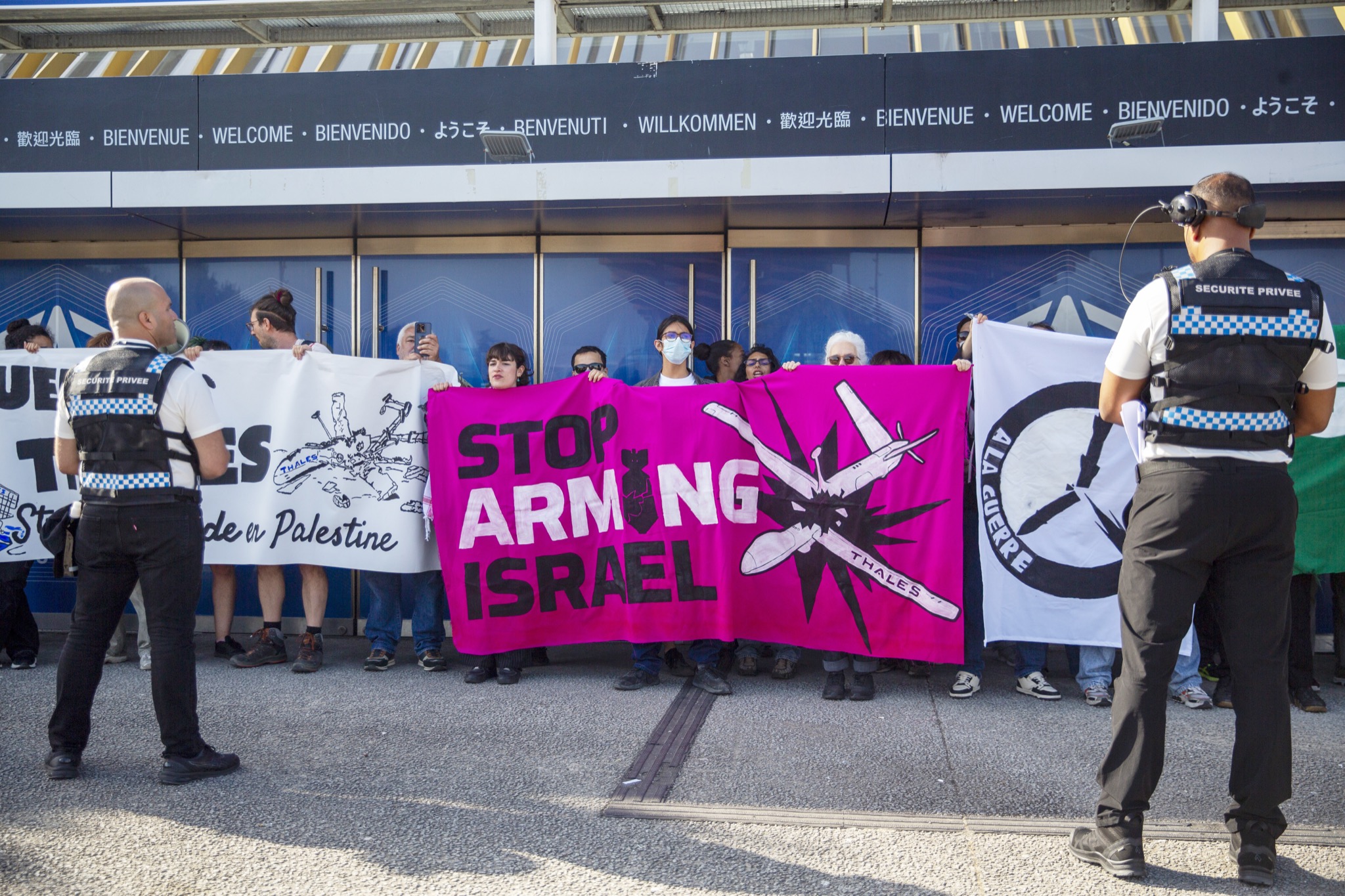
None of this means that divestment or arms embargoes are ineffectual. It means that military cooperation cannot be understood as something that begins when a war starts and ends when a ceasefire is declared. Governments cannot simply flip a switch, suspending complicity while the bombs are falling and resuming business as usual once international attention moves elsewhere.
A joint venture, research grant, or procurement contract established years before a war can leave a foreign government implicated in — and materially sustaining the infrastructure behind — war crimes committed decades later. The distinction that governments draw between Israel’s war of annihilation in Gaza and the supposedly more routine violence of occupation, apartheid, and siege obscures this continuity. The military research, financing, and industrial cooperation sustained during those supposedly quieter years are precisely what enable Israel to escalate its violence to genocidal levels — and to better withstand the sanctions imposed once that violence reaches its most extreme form.
Most read on +972
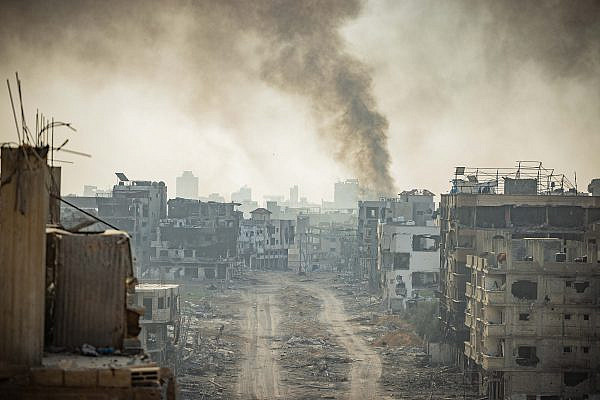


There is no meaningful “peacetime” under an ongoing military occupation. That is especially important for the Palestinian liberation movement to articulate now. As global attention on Gaza recedes, and with the prospect of an outwardly more moderate Israeli government after the upcoming election, foreign governments may seize the opportunity to roll back existing restrictions, shelve proposed legislation, and restore military relationships suspended or curtailed during the genocide.
The argument against doing so should be straightforward: Military trade with Israel does not merely supply the machinery of its current war. It sustains the industrial, technological, and financial infrastructure that makes the next genocide possible. By the time that happens, it will already be too late to dismantle it.