
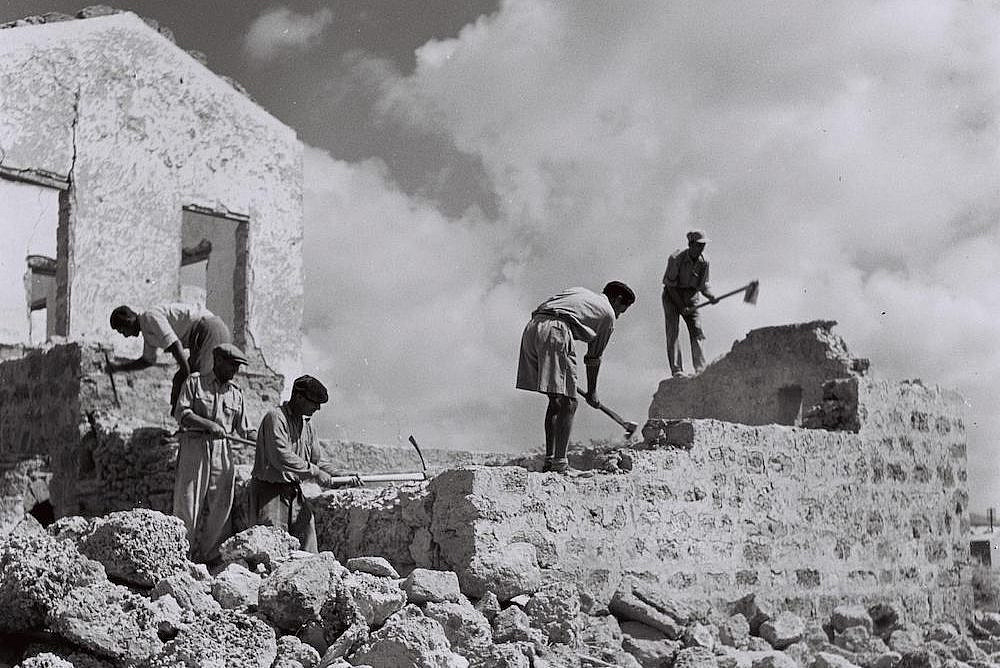
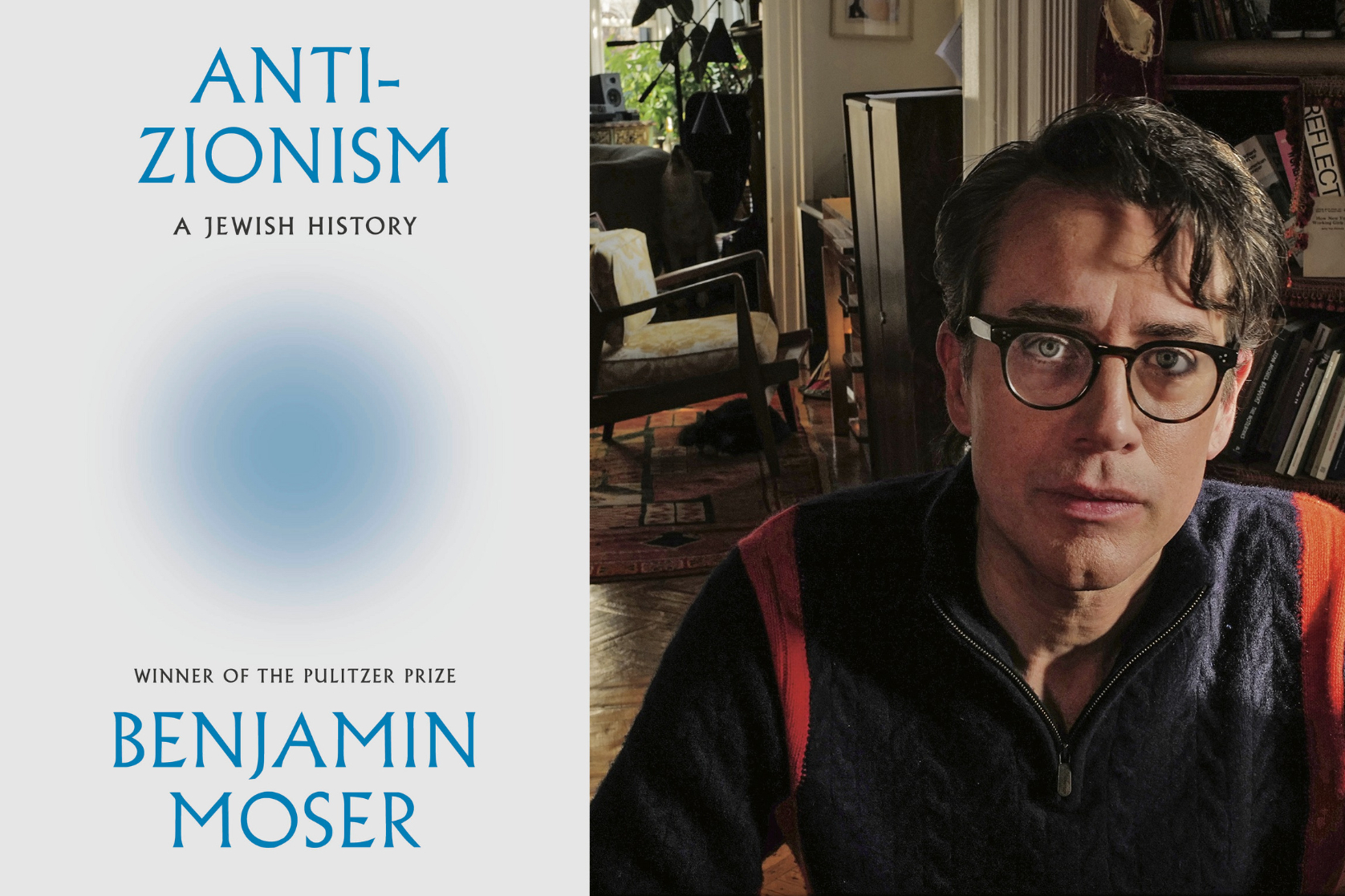
“Anti-Zionism: A Jewish History,” by Benjamin Moser, Doubleday, 2026
Few words in contemporary public life have undergone so rapid and punitive a narrowing as “anti-Zionism.” Once a contested political position, argued across Jewish religious and ethical traditions, it now arrives pre-condemned, treated less as a historical idea than as evidence of moral contamination. The word no longer describes only a position regarding nationalism or statehood; it has become an instrument of foreclosure, capable of collapsing distinctions and histories into accusation.
That collapse happened fast. In December 2023, less than two months after the October 7 attacks, the U.S. House of Representatives voted 311 to 14 to resolve that anti-Zionism and antisemitism are equivalent. This resolution was not only an attempt to delegitimize the growing wave of protests against Israel’s genocide in Gaza. Alongside subsequent legislative efforts, it has served a deeper purpose: to erase a long and serious Jewish tradition of opposing Zionism on religious and political grounds.
Benjamin Moser’s “Anti-Zionism: A Jewish History” sets out to recover that tradition. A Pulitzer Prize-winning biographer, Moser has spent his career restoring figures who lived at the edges of what institutions were willing to acknowledge — among them the American critic Susan Sontag in her contradictions and the Brazilian writer Clarice Lispector in her strangeness. He brings that same instinct here, to a chamber of Jewish intellectual history that others had long declared sealed.
What biography teaches, perhaps, is that a life fully rendered presents an argument deeper than any polemic. A thesis can be refuted. A person, witnessed truly, tends to persist.
Each of the book’s 12 chapters is devoted to a different world of opposition: a Polish rabbi whose pacifism emerged from Torah study; a British cabinet minister whose objection to Zionism was fundamentally patriotic; a Dutch poet who arrived in Jerusalem as a Zionist and left as something the Zionists found unforgivable; an Egyptian communist who wrote, in Arabic and under an Arabic name, the most prescient indictment of Zionism before the Nakba; an American Reform rabbi who led a nationwide movement against Zionism until, when the pressure came and the tides shifted, he recanted; a historian radicalized by his own archives.
The remaining six are no less various: a philosopher whose book was attacked by a campaign that reached into the highest circles of Israeli power; a French polymath who named the colonial structure of Zionism before the vocabulary for it had settled; a Polish-born Israeli lawyer who closed her office rather than serve as a democratic facade for an undemocratic system; a Brazilian Sephardic journalist who reported from Cairo during the 1973 war while concealing that she was Jewish; a South African communist who as a boy planted trees over a razed Palestinian village and spent his life learning what he had done; and a photographer guided by an ethic of bearing witness.
This is the moral force of choosing portraiture over polemic. Moser’s method works by accumulation: Each life proves that the tradition existed, that it was serious, and that its suppression was never inevitable. But portraiture has its limits. The dissenters can be restored to history more readily than the Palestinians whose dispossession gave their dissent its urgency.
The cost of dissent
No two of the 12 figures arrive at the same conclusion by the same road. Moser makes no effort to unify them into a single movement, because they did not constitute one. They were scattered across continents and languages, largely unaware of one another, each arriving independently to oppose a project they recognized, from their own angle, as a moral error. What they share is a cost, and that cost is the book’s real subject.
The most unambiguous cost is borne by Jacob Israël de Haan: a man shot three times on Jerusalem’s Jaffa Street on June 30, 1924, on his way out of evening prayers. His assassin was Avraham Tehomi, a Haganah operative acting under the authorization of Yitzhak Ben-Zvi. No one was ever brought to justice. Ben-Zvi became the second president of the State of Israel. Tehomi spent much of the rest of his life in Los Angeles.
De Haan had arrived in Jerusalem as a Zionist, a Dutch Jewish poet of considerable reputation, carrying the romantic conviction that the land could be reclaimed without anyone being wronged. What he found disabused him almost immediately. He learned Arabic, visited Arab villages, and gradually came to understand what the settlers neither knew nor wished to know about the people already living in the country they had come to claim.
This access made him dangerous. He wrote about what he saw in Dutch newspapers with international readership; his opinions were broadly shared among the Orthodox communities he represented, and only deepened their convictions. Tehomi found him outside his synagogue and issued a warning, but de Haan did not stop writing. Shortly before de Haan was due to set sail to England, Tehomi came back to the synagogue and shot him as he left evening prayers.
Moser does not make de Haan a martyr in the sentimental sense. He shows us instead a devout and courageous man of genuine contradiction: a homosexual Orthodox Jew whose willingness to look at what was actually happening in Palestine was treated by the Zionist leadership as a crime requiring a permanent solution.
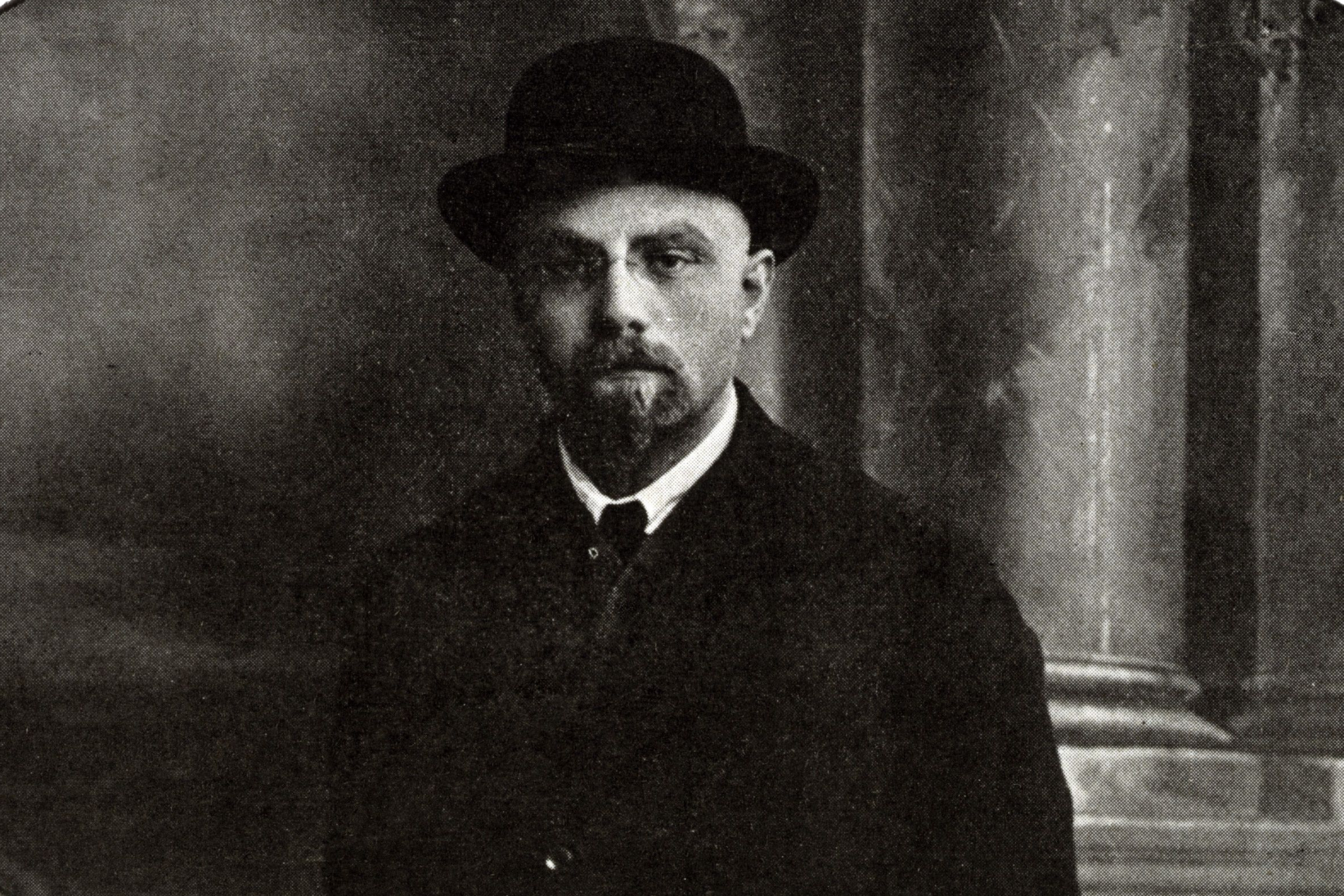
Moser writes that the “Quatrains,” De Haan’s collection of short poems that “dramatized the struggle between soul and body,” were published in Amsterdam shortly after his death and “greeted as one of the most sublime achievements in the history of Dutch poetry.” What had been done to him, those in power declined to name.
Hannah Arendt’s persecution was of a different order; she survived it. But the campaign deployed against her was no less organized, and ultimately reached into the highest circles of Israeli power. When “Eichmann in Jerusalem” appeared in 1963, the response bypassed disagreement entirely: it entailed a coordinated effort to ensure that what Arendt had actually written would be replaced, in the public mind, by a fabricated version that was easy to denounce.
She was accused of saying that Jews had colluded in their own murder. The Anti-Defamation League led the attack, circulating a five-sentence summary that cast Arendt as blaming Jews for their own destruction, a charge soon repeated across the United States. Moser also notes that Siegfried Moses, a high official in the Israeli government, came to her in person to demand she halt publication of the book, and Arendt learned from other Israeli sources that Prime Minister David Ben-Gurion himself had intervened.
“The image they had created was that of an ‘evil book,’” she wrote; “now they had to prove it was written by an ‘evil person.’”
What the campaign could not survive, and knew it could not survive, was any honest look not only at the historical links between Zionism and National Socialism in the Ha’avara Agreement, but also the uses to which the Eichmann trial was being put: a state that had begun to turn the memory of the murdered into political currency. The substance was never addressed. The noise was sufficient.
Felicia Langer spent 22 years attempting to use the Israeli legal system to defend Palestinians under occupation, losing most of her cases, winning a few, and arriving eventually at the conclusion that her work itself had become a form of collaboration. The system required her: A Jewish-Israeli lawyer representing Arab clients gave the apparatus of military justice the appearance of fairness it could not otherwise have claimed.
When she finally closed her office in 1990, it looked, from the outside, like defeat. What it was, precisely, was a refusal to serve as an alibi. By then, decades of hostility had taken their toll. She had been, Moser writes, “mocked in the press, spat upon in the street.” She came to believe that even her Palestinian clients were punished more harshly for being represented by her.
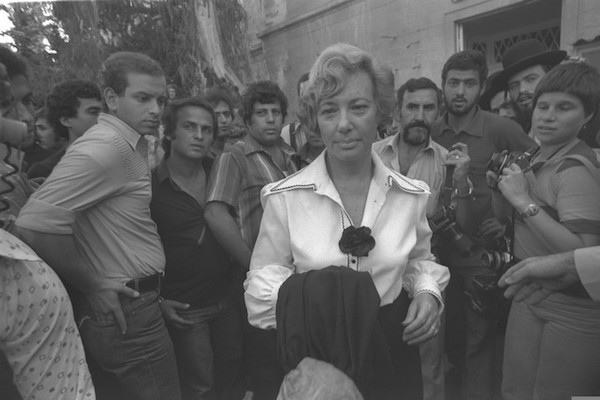
Upon leaving Israel, she moved to Germany, where her son lived, and settled in Tübingen. Moser notes the bitter symbolism of the choice: It was “a declaration that she was freer as a Jewish woman in Germany than in the so-called Jewish state.”
As a boy, Ronnie Kasrils planted trees. He was 10, an enthusiastic young Zionist in Yeoville, Johannesburg, collecting coins for the Jewish National Fund, framing the certificates of his donations and hanging them in his bedroom. The trees were planted in Israel in a forest whose purpose, as he later learned, was to cover the ruins of the Palestinian village of Lubya, whose inhabitants had been driven out in 1948.
Kasrils’ anti-Zionism grew out of the struggle that had already shaped his life. Sharpeville helped drive him into the ANC and the fight against apartheid; in exile, he watched Israel deepen its relationship with the South African regime, a connection that Moser says stiffened his opposition to Zionism.
After apartheid fell, he increasingly understood Palestine through the political experience that had formed him. In 2001, he authored a “Declaration of Conscience by South Africans of Jewish Descent.” Six years later, in an ANC pamphlet, he compared Palestinian dispossession to South Africa’s Bantustans and argued that the lesson of South Africa was that different peoples could live together in a democratic state.
The response carried a price: A Zionist Federation spokesman questioned whether he was “a proper Jew”; he was sued over comparing Jewish Israelis to Nazis; and by the time he left government, Moser writes, Kasrils had become persona non grata among many Jews.
What these four lives share is an unwillingness to look away from what was actually occurring, at whatever personal cost that clarity demanded. The tradition Moser is recovering was not one of comfortable dissent. They paid for naming what they observed, but never stopped naming it.
Two irreconcilable inheritances
Before the 12 portraits, Moser’s introduction to the book begins with an inheritance: his grandfather’s copy of Herzl’s collected writings, a heavy blue volume carried from Breslau across an ocean to Houston. Moser describes it as a talisman, something he kept for decades without fully reading. When he finally did read it, what he found horrified him: Herzl as an antisemite and megalomaniac, a man to whom the Palestinians simply did not occur. The inheritance remained. What changed was the meaning of holding it.
“Anti-Zionism: A Jewish History” is unusually clear about its own limit. Moser says so plainly in the introduction: “Though this book is necessarily about Jews, it exists only because of Palestinians.” At the close of the introduction, he expresses the hope that those who encounter this tradition will “shed the solipsism that has ever been a fault of the Jews” and place “the real victims of Zionism, the Palestinian people, at the heart of all they do.”
These are not casual sentences. They mark, with some precision, the outer boundary of Moser’s project. A recovery of Jewish conscience, however thorough and morally serious, speaks primarily to the community whose conscience is being recovered. Its audience is chiefly those who needed to be reminded that opposition to Zionism grew from within Jewish intellectual and spiritual life. This work matters. It arrives, by its nature, from one direction.
What Moser’s method cannot supply is the view from the other direction: the life that bore what those 12 consciences opposed. The figures in this book were, for the most part, witnesses to Palestinian dispossession rather than its inheritors. They saw clearly and paid for speaking, while the dispossession continued. Their opposition was real. Its insufficiency belongs to the same record. The two facts coexist the way a correct diagnosis coexists with a death it could not prevent.
There is a kind of moral consolation that the book, to its credit, declines to offer too cleanly. It might say that Jewish resistance to Zionism carries the seed of a different future. Perhaps. But consolation has a way of drifting toward the consoled, and the question of what this recovered tradition means to those who lost their homes while it was being suppressed is one the book can approach but not answer.
To read Moser’s book as a Palestinian writer is to feel, at intervals, the particular estrangement of being the occasion for a conversation conducted largely without you. The recovered conscience is genuine, and the cost borne by those who preserved it should not be minimized. Yet the houses in which my grandparents lived were emptied during the same decades these dissenters were arguing and losing, and the houses did not wait for the matter to be settled before they were taken.
My grandmother Rabiha Dajani founded the women’s section of Al-Quds Radio and was among its first Arab broadcasters. Her voice carried across a Palestine that still existed as a coherent place, a country with a broadcasting service and a national poet, its musical life serious enough to need a subdirector. My grandfather Yahya al-Lababidi held that position at the Palestine Broadcasting Service in Jerusalem and collaborated with Ibrahim Tuqan, whose poems became the songs of a people trying to hold together under immense pressure.
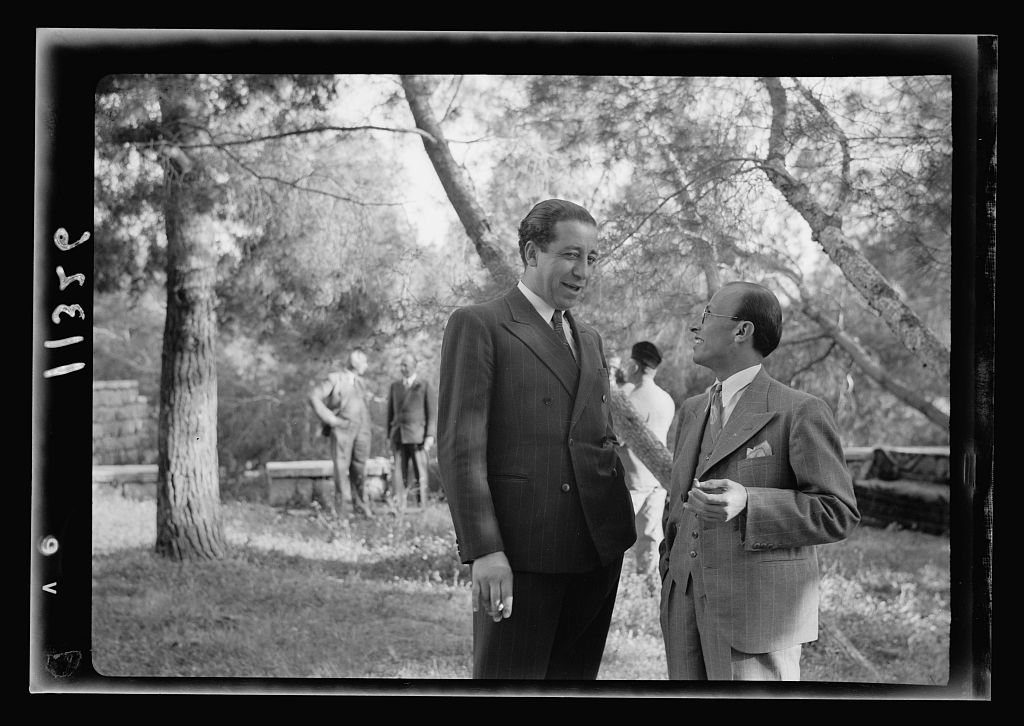
In 1948, my grandmother was displaced at gunpoint. The broadcasting service was dissolved, the music archive scattered. What had been a life inside a continuous culture became, in a season, the first chapter of an exile that has not ended.
Moser’s inheritance is a book preserved across borders and generations, readable but morally transformed by reading. Mine is a country that did not survive those years: a voice cut from the air, an archive scattered, a home left on the assumption of return. These two inheritances are what the book holds without being able to reconcile them: the blue Herzl volume and the silence where Al-Quds Radio once broadcast. Both are real. Only one can be passed down.
Insisting on an alternative
Before Herzl, the first page of Moser’s book offers a dedication: “To the Palestinian people.” Then comes a prayer drawn from Byzantine liturgy: “Grant to them the Fatherland of their desire, / And make them again citizens of Paradise.”
To read this book as it asks to be read, toward those whose loss is the silent premise of nearly every life within it, is to begin to understand what this recovery accomplishes and what it cannot reach. My own family’s losses were not exceptional. They are the common losses, the ones Moser’s dissenters were trying to prevent and could not, the ones the dedication addresses with a prayer that has no political program behind it, only the oldest human request: Grant to them the Fatherland of their desire.
There is a Hebrew phrase that recurs in the history Moser reconstructs: “Ein breira,” or “There is no alternative.” It was the logic behind the dispossessions, the wars, and the refused negotiations that archival evidence has now made irrefutable. Jabotinsky articulated its harder, earlier candor: The Arab population would resist, he conceded, had every right to do so, and would need to be beaten into submission before any accommodation could follow. No alternative. As though history had narrowed to a single corridor and the people already living in it had simply been in the way.
What the conscience of the dissenters could not alter was this narrowing. Aaron Samuel Tamares predicted it in Poland before 1905. Edwin Montagu warned of it in Whitehall in 1917. Ahmad Sadiq Saad documented it in Cairo in 1947, one year before the Nakba that his book, in its terrible precision, had foreseen. The warnings accumulated. The record of their accuracy is now extensive, documented in archives Moser has read and in the books Israel’s New Historians wrote from them. The history was not hidden, but suppressed.
Recovery of this history does not answer the prayer Moser offers. He knows it is inadequate: It cannot restore what was taken. It cannot return a broadcast to the air. It cannot reassemble a composer’s archive. It cannot lead an old woman back to the house she left believing she would return to in weeks.
What it can do, and what Moser’s book genuinely does, is to restore a moral genealogy, the knowledge that Jewish opposition to Zionism was possible and costly. It is to say there was an alternative: a tradition that contains Tamares and Arendt and Langer and Kasrils, serious people who recognized and resisted Palestinian erasure.
Most read on +972

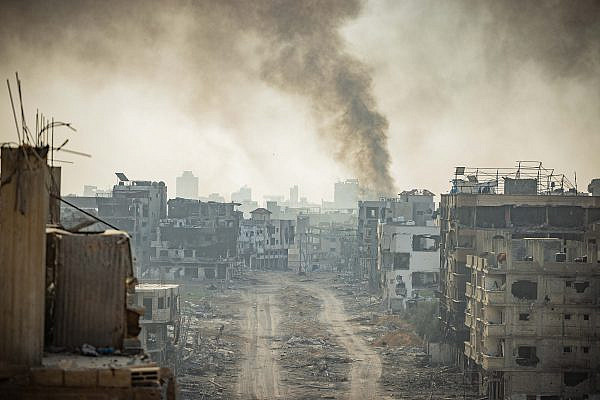

Near the end of his final chapter, Moser writes a sentence that might serve as the book’s second dedication: “We feel our own determination strengthening. We feel the ever-stronger bonds that connect us to each other, and to the Palestinian people who suffer so much in our name.” It is written in the first person plural, the we of Jewish anti-Zionists, of those who have found each other across the decades of suppression this book recovers. The suffering, he acknowledges, is done in their name. The determination is theirs to offer in return.
The accounting is honest because it never claims to be a remedy. A book that ended in the confidence of its own sufficiency would have betrayed the prayer it opened with. Instead, “Anti-Zionism: A Jewish History” closes as it begins, in the awareness of a distance it cannot cross, toward people it can name but not restore.
“Grant to them the Fatherland of their desire, / And make them again citizens of Paradise.”
Again. The word carries everything. Again, as return. Again, as restoration. Again, as the acknowledgment that something was taken from people who had it, and that what was taken has a name, and that the name is still being spoken, in Arabic and in exile, with a longing that has no political program behind it and requires none. It is the oldest request, and it is still waiting.